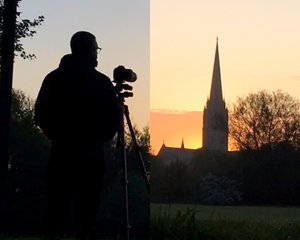
Each week I send out a short, fresh reflection from the road – photographs, sketches, and observations from old places that still have something to teach us. What follows is a moment from that ongoing journey.
Henri Cartier-Bresson
“To photograph is to hold one’s breath, when all faculties converge in the face of fleeting reality.”
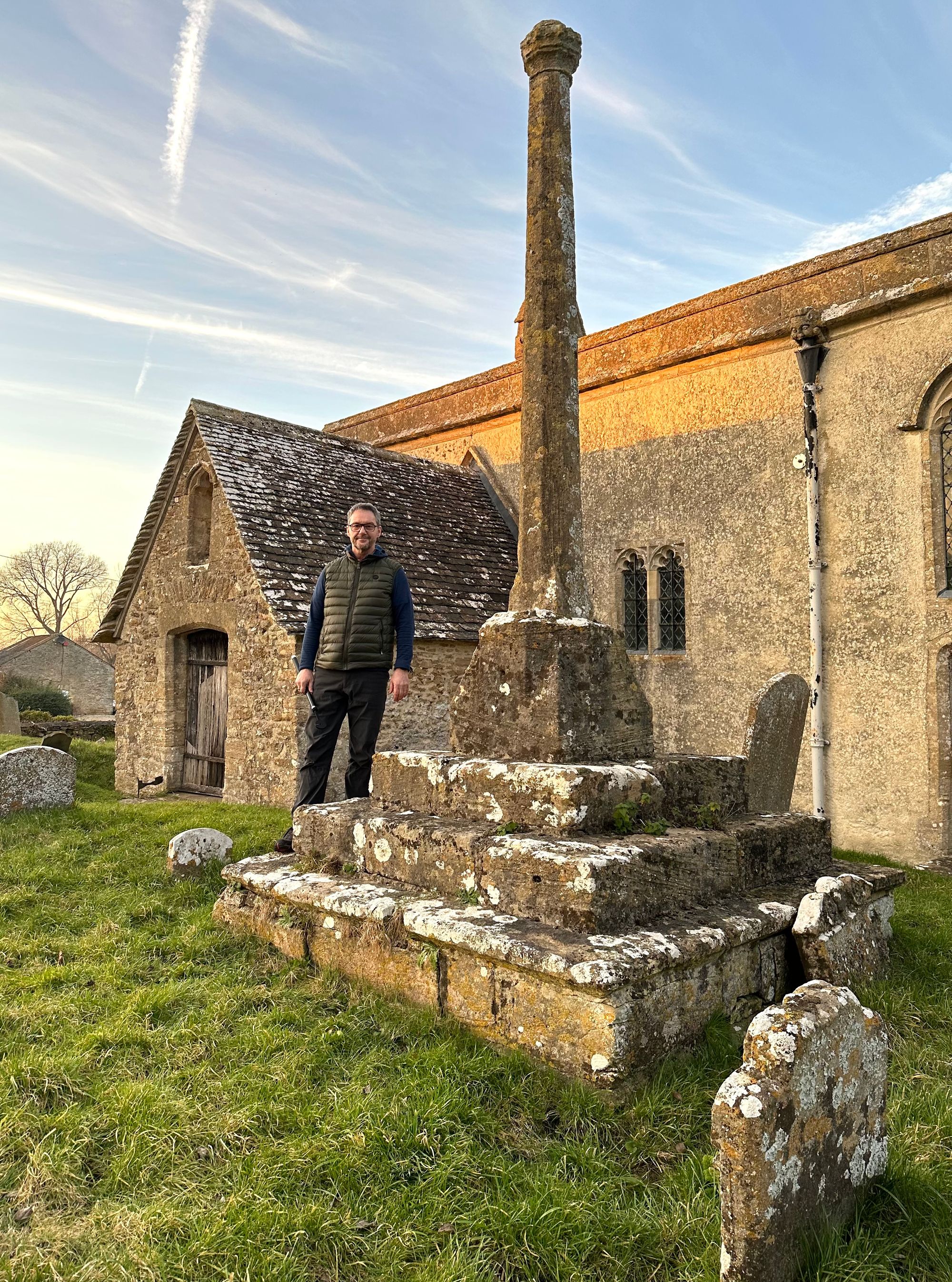
It's remarkable how some places - buildings, parks, landscapes can change a perception or take you in a different direction. Some places are saturated with meaning, and it just takes a few silent, uncomplicated moments to stop, see and listen to what they have to say.
St. John the Baptist in Inglesham was a place that taught me how to see.
The church sits at the end of a lane at the meeting point of two rivers: the Thames and the Coln. It’s a humble looking building, made up of a simple two cell plan with an interior full of filtered light. Tamped within its angled walls are several hundred years of history that seems to leach into the honeycombed pockets of space.
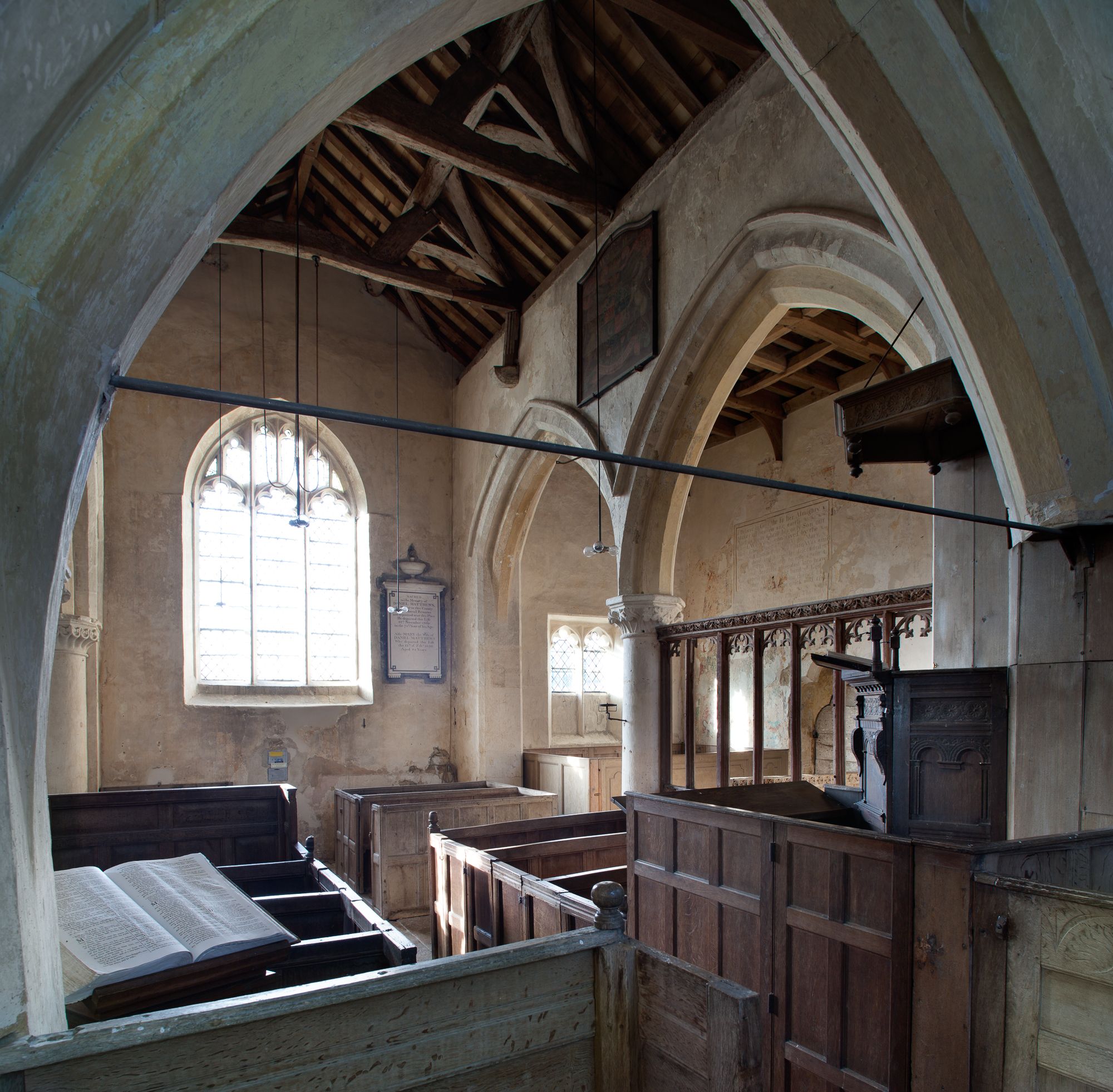
One day, many years ago, whilst photographing Inglesham, I became the instrument and not the camera.
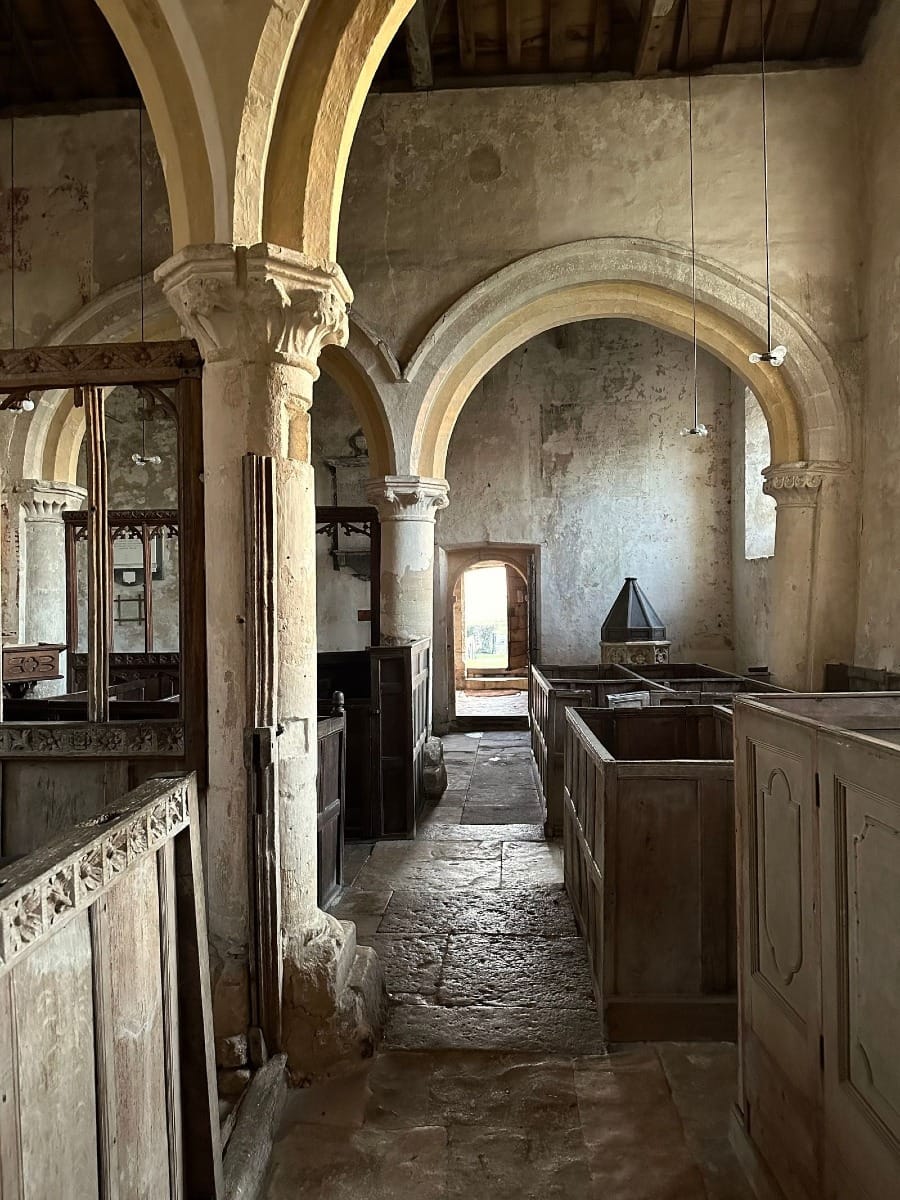
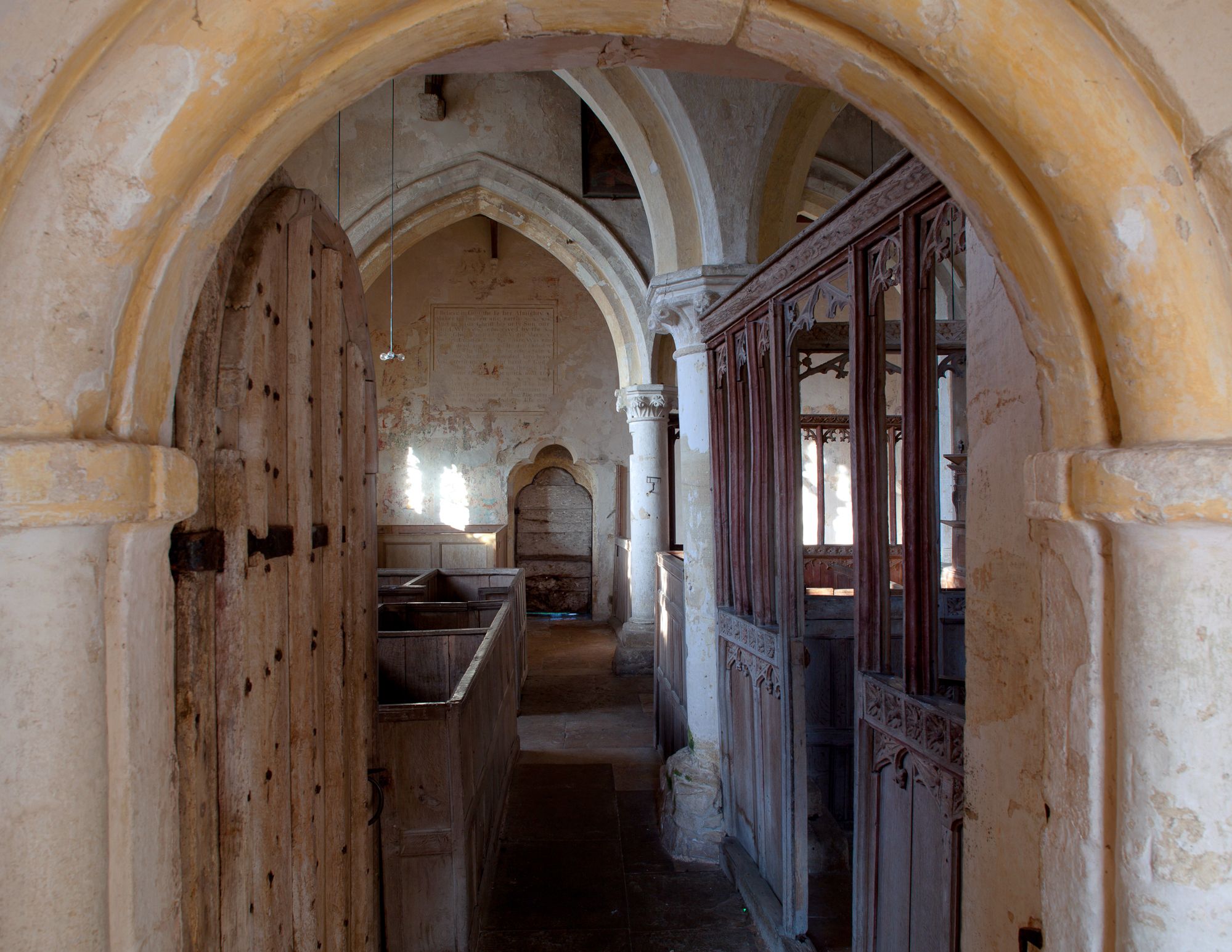
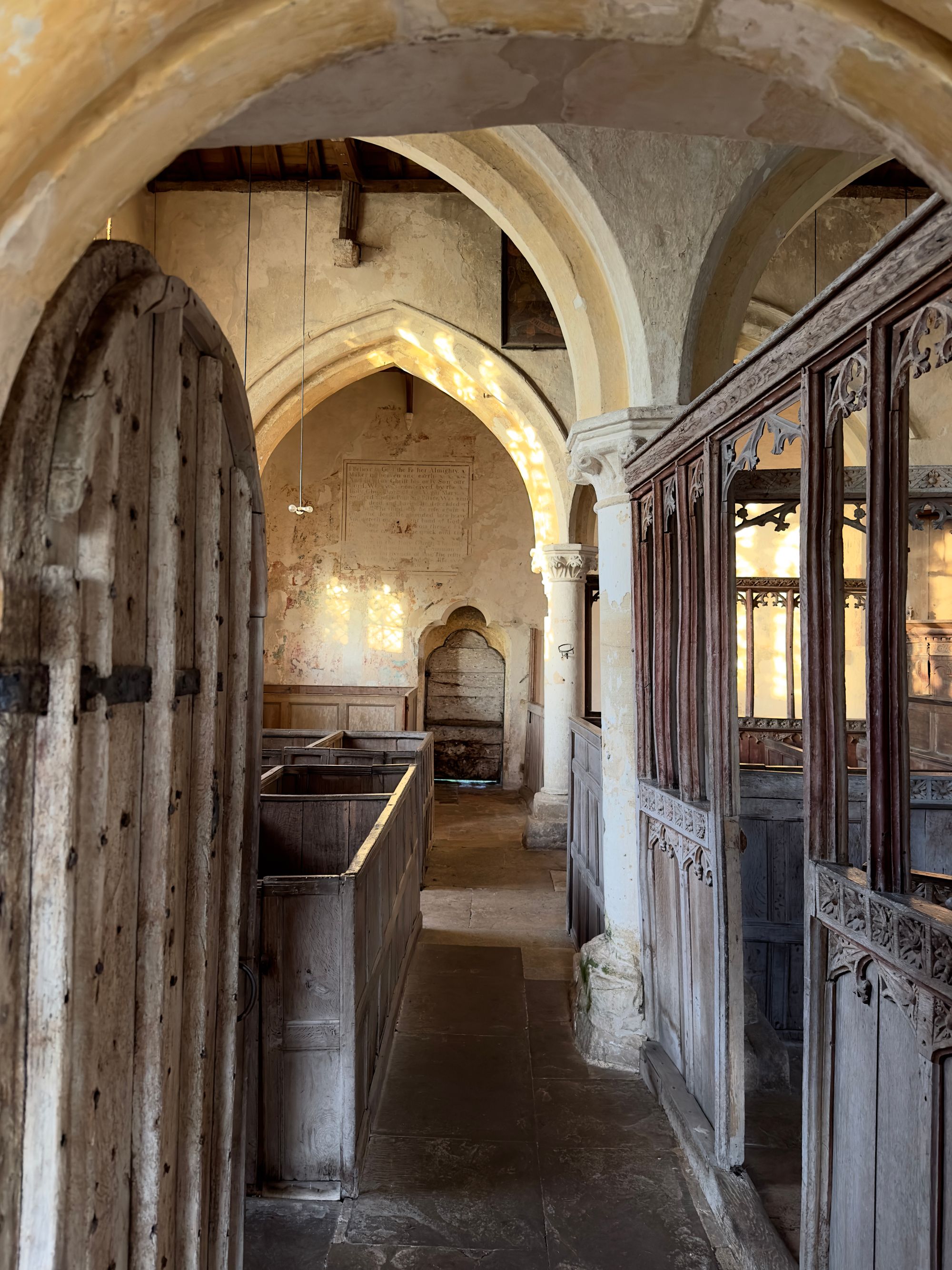
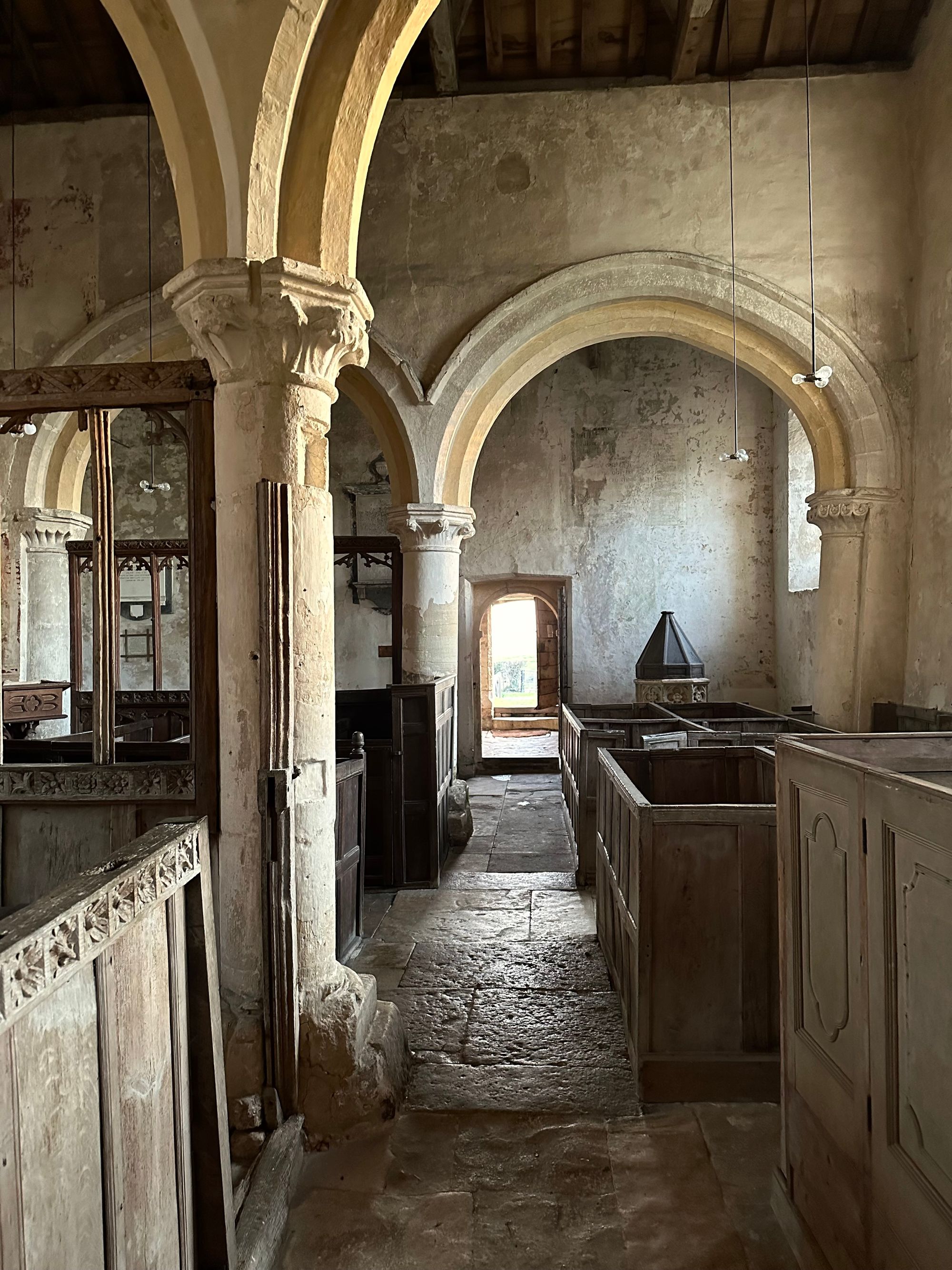
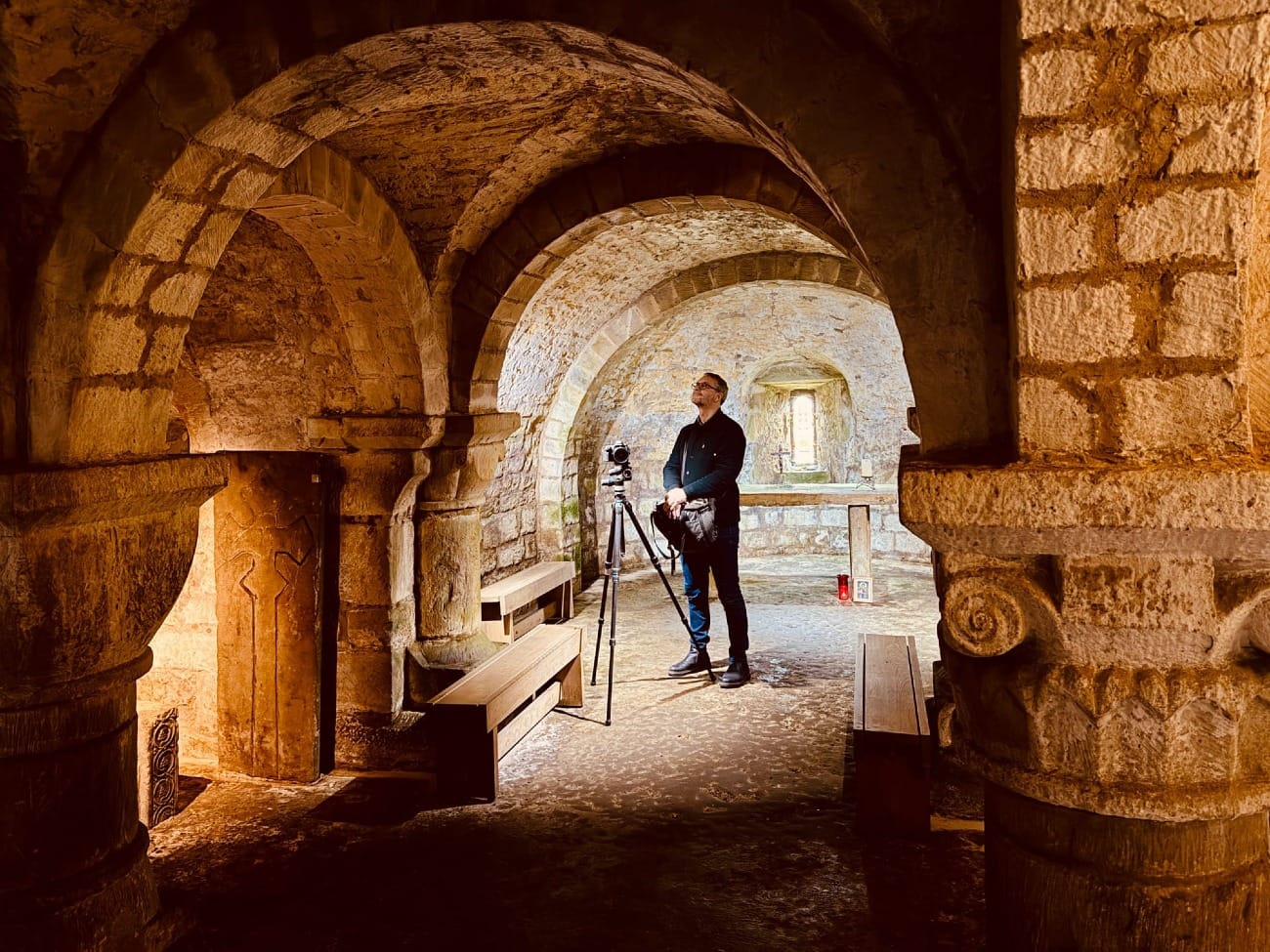
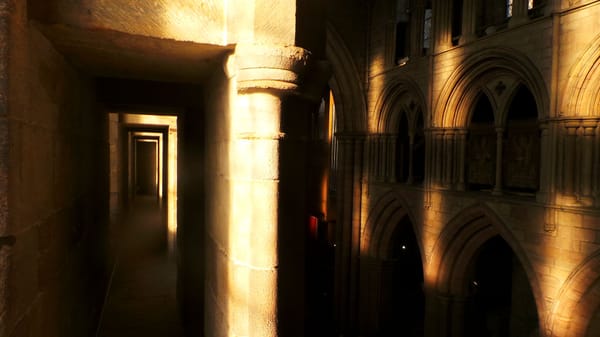
My intention, on that day, was to take a photograph that captured the layering of the space, so I chose a zoom lens with a focal length that would pull, concertina like, the rooms together. To add an extra layer to the final image, I positioned my tripod outside the porch to embrace the door. I felt like an archaeologist, uncovering the stratigraphy of the church with my camera.
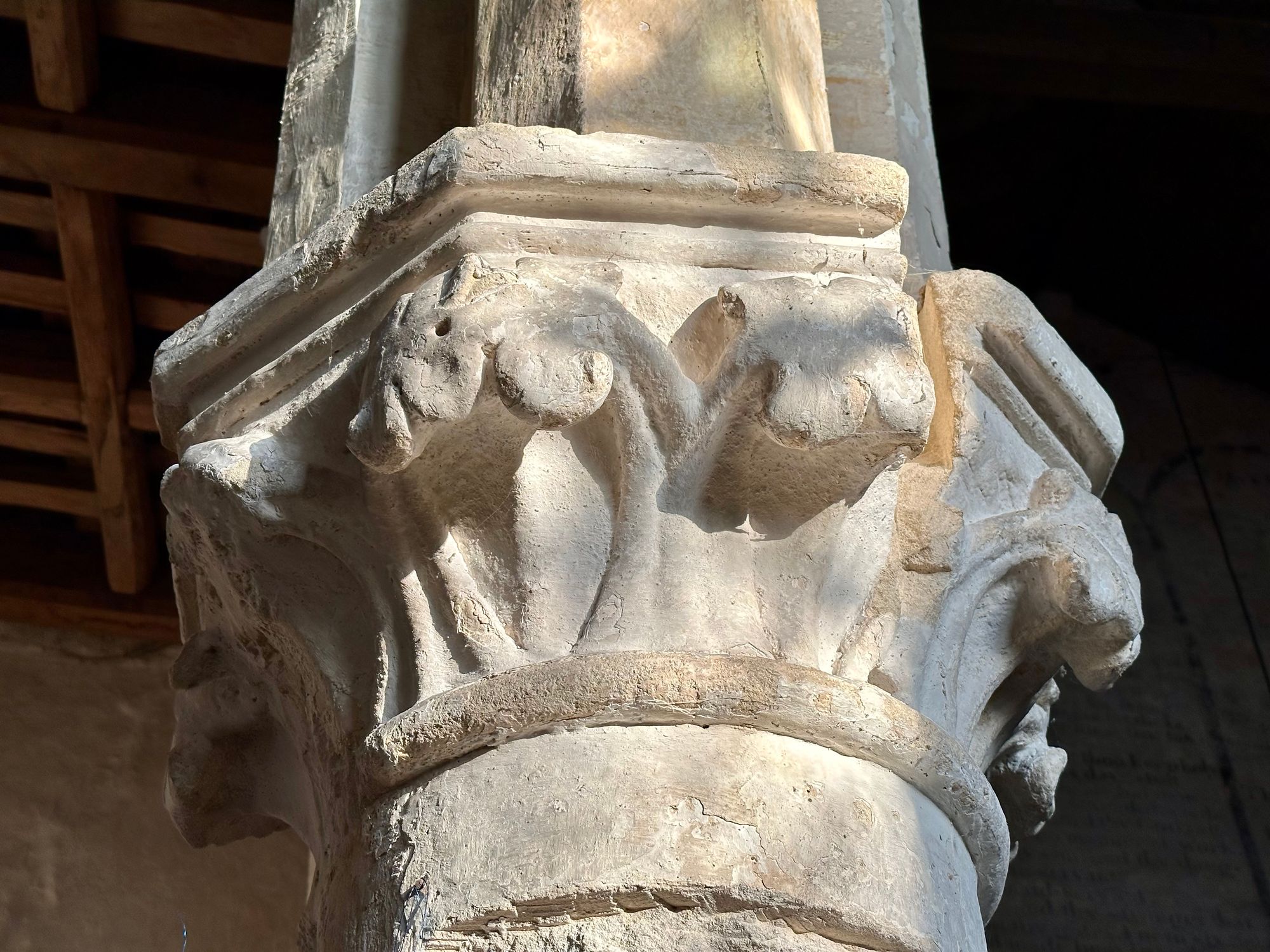
I stood for some time with my bag and tripod, checking the sun’s movement through an app on my device. Whilst I waited, I double checked my camera settings and fine tuned the composition. Deeper into my task I stalked the light. Its angled presence was needed to embolden the parclose and enliven the walls. When the light reached the nave, I fired off a few shots for review. As I thumbed through the images, the click of the function wheel made the camera sound like it was purring. I reduced the exposure to take into account the extra light in the space. A burgeoning glow brought on a faster pace of review. When the shadows lengthened, I set about the golden section: lining up the stiff-leaf capitals and intersecting doors.
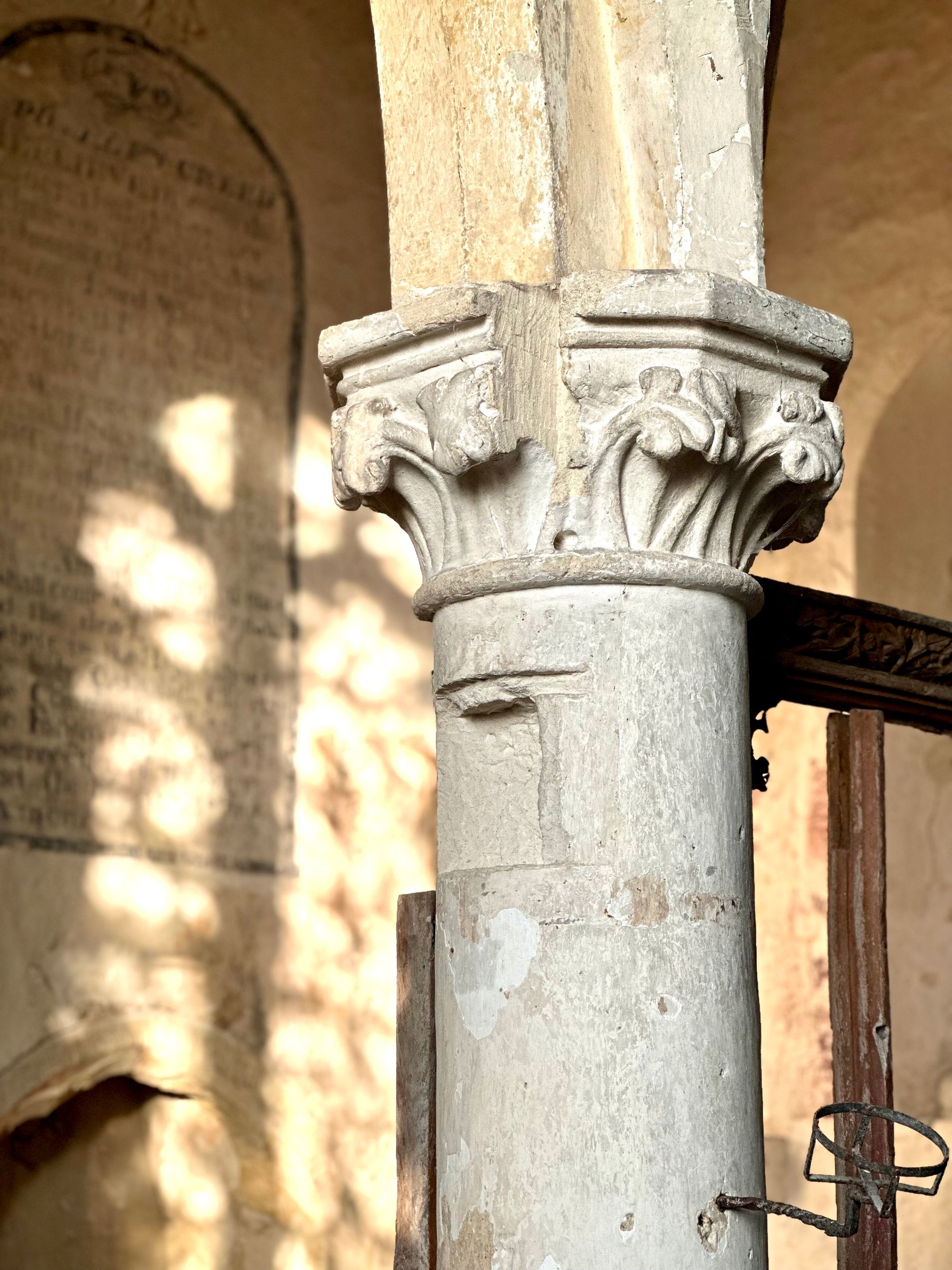
"When the shadows lengthened, I set about the golden section: lining up the stiff-leaf capitals and intersecting doors."
But the light was too strong, until an hour later, after several stops of camera calibration, the arcading took root and grew in contrast against the lime-washed wall. The space began to hover, refreshed and bathed in a golden light, with textures fizzing in the low-angled sun. I placed my face against the camera and felt the cup of the viewfinder on my cheek. I felt as if I was in the space, rather than observing it. The camera was ready, the building composed, the mind engaged.
Then click..
The final photograph is one of my most cherished; created by a type of photographical dowsing. It was taken from an intuitive route of beating heart, purring machine and sun-spindled spaces.
And so, I find myself once more at a place so pivotal in my development as a photographer. Every now and then I need to go to a place where nothing changes. A place that dissolves the pressing moments of the day. A space where the walls will soak up the detritus of the modern world .
That place, for me, is Inglesham.
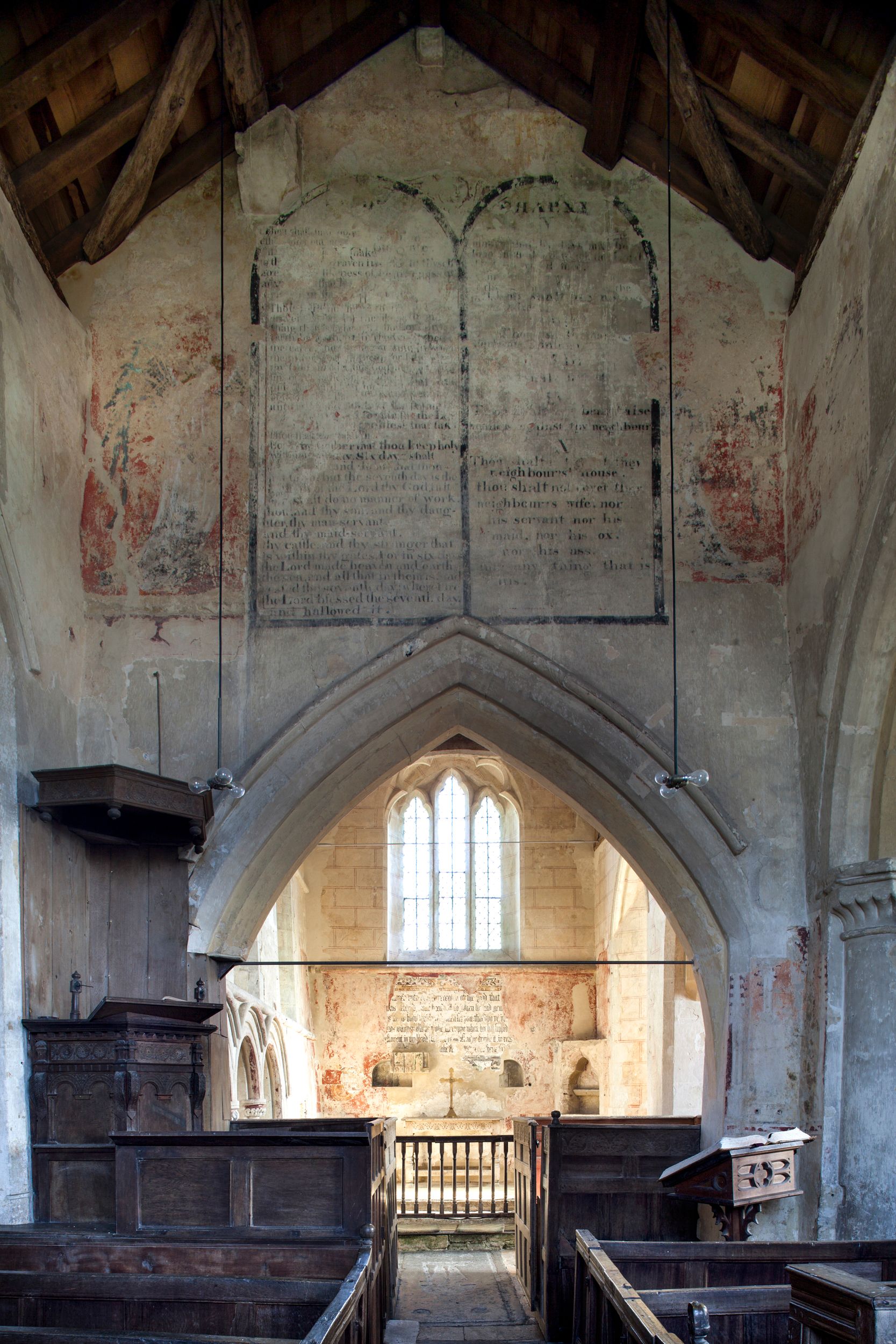
St. John the Baptist, Inglesham, Wiltshire.
I was lucky enough to meet the late Candida Lycett Green many years ago. She was giving a talk on churches and used some of my photographs of Inglesham. She had fond memories of travelling down the Thames with her father, John Betjeman and lunching at Inglesham.
Perhaps Betjeman was inspired by Inglesham when he wrote in his Churchyards poem:
"Our churches are our history shown
In wood and glass and iron and stone."
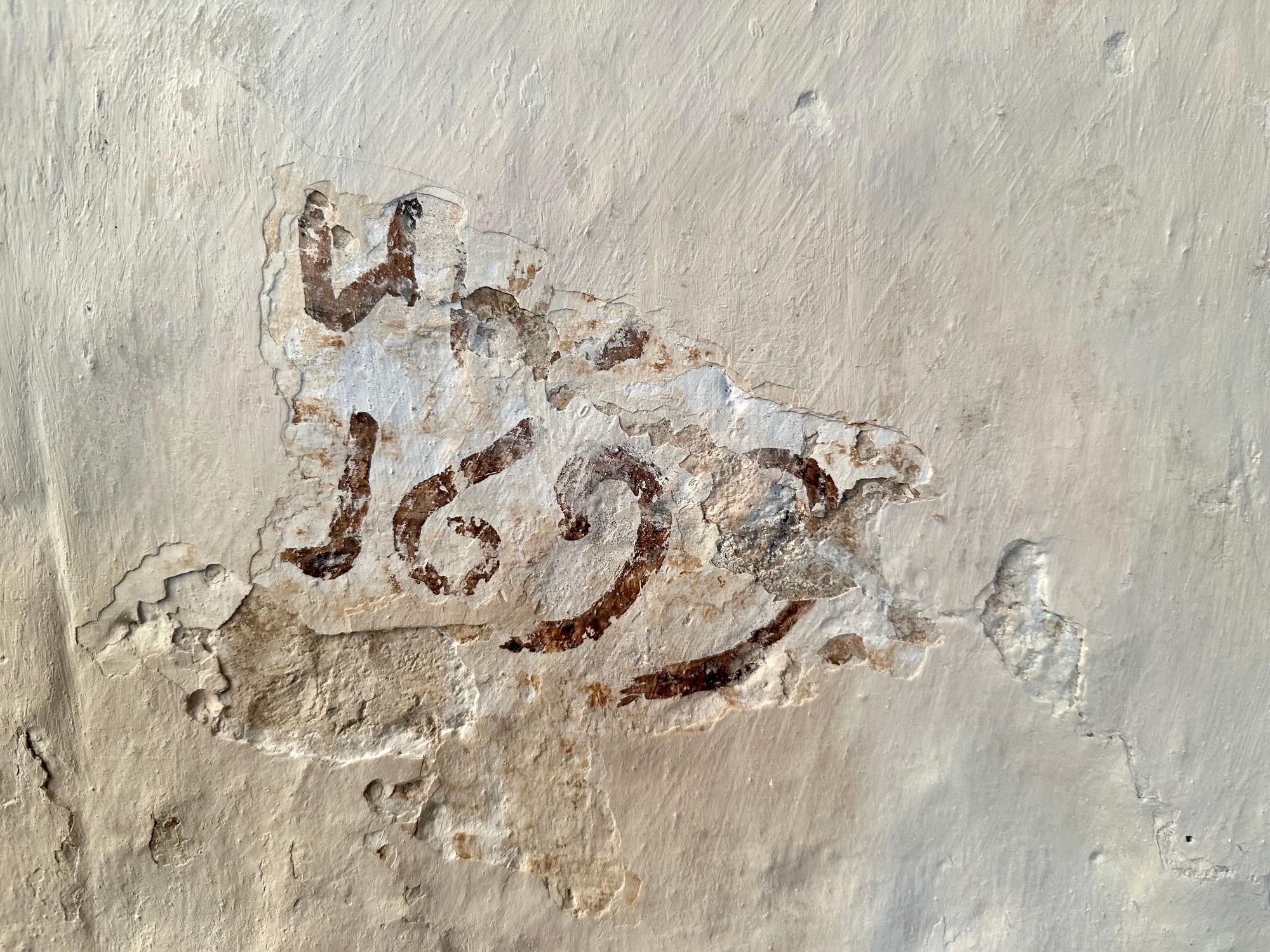
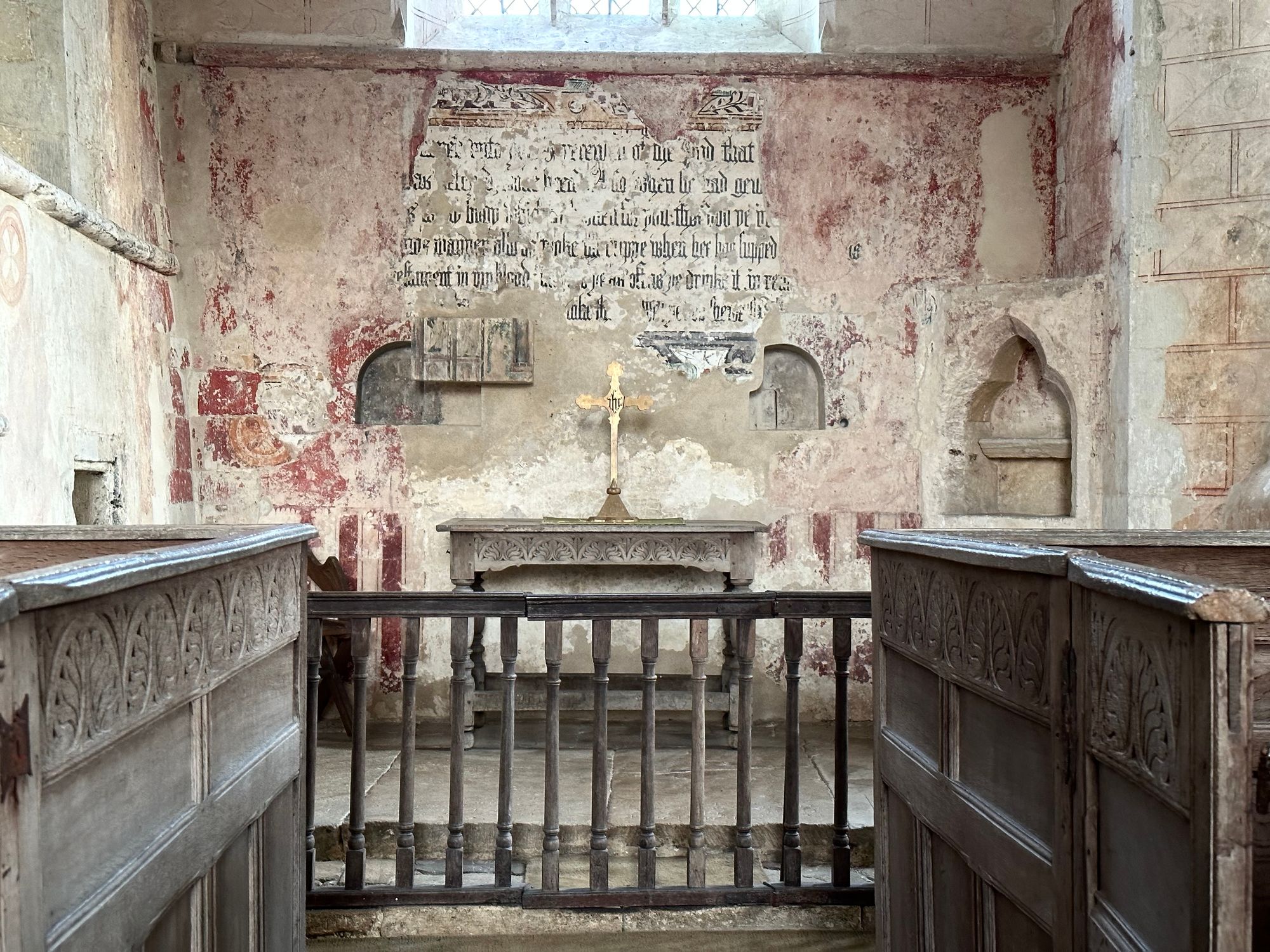
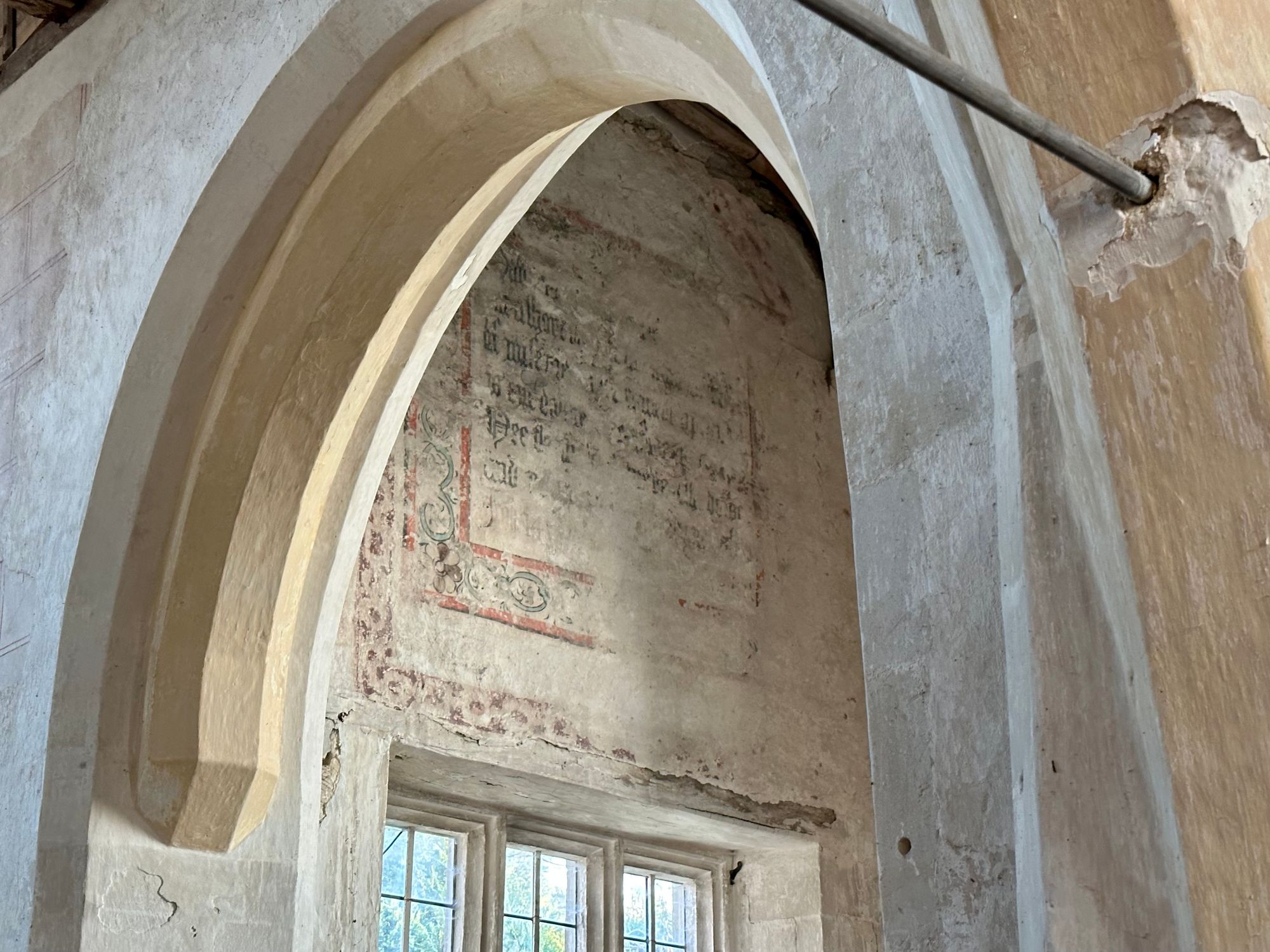
Every inch of Ingelsham is steeped in history from the lettering on the walls
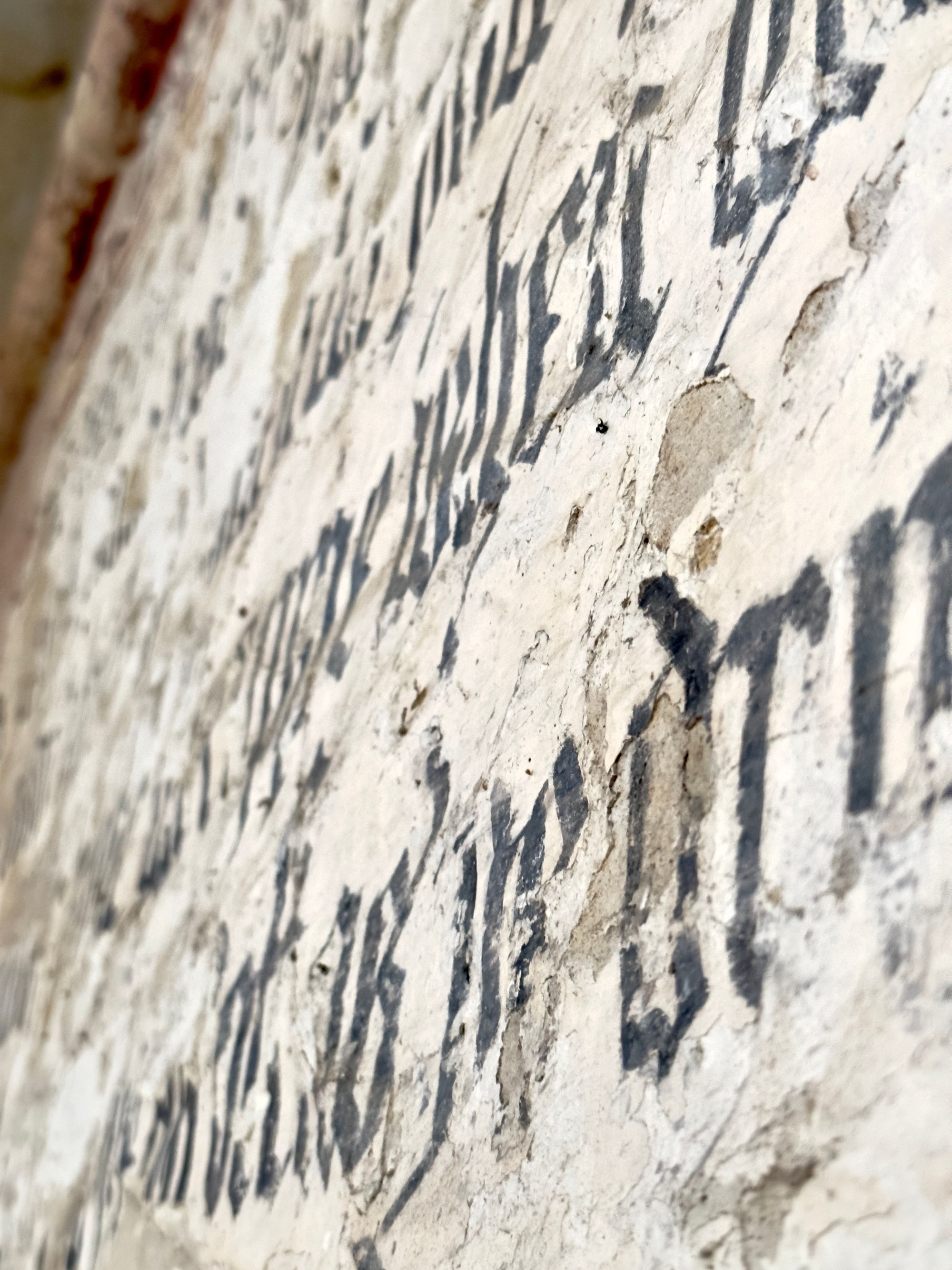
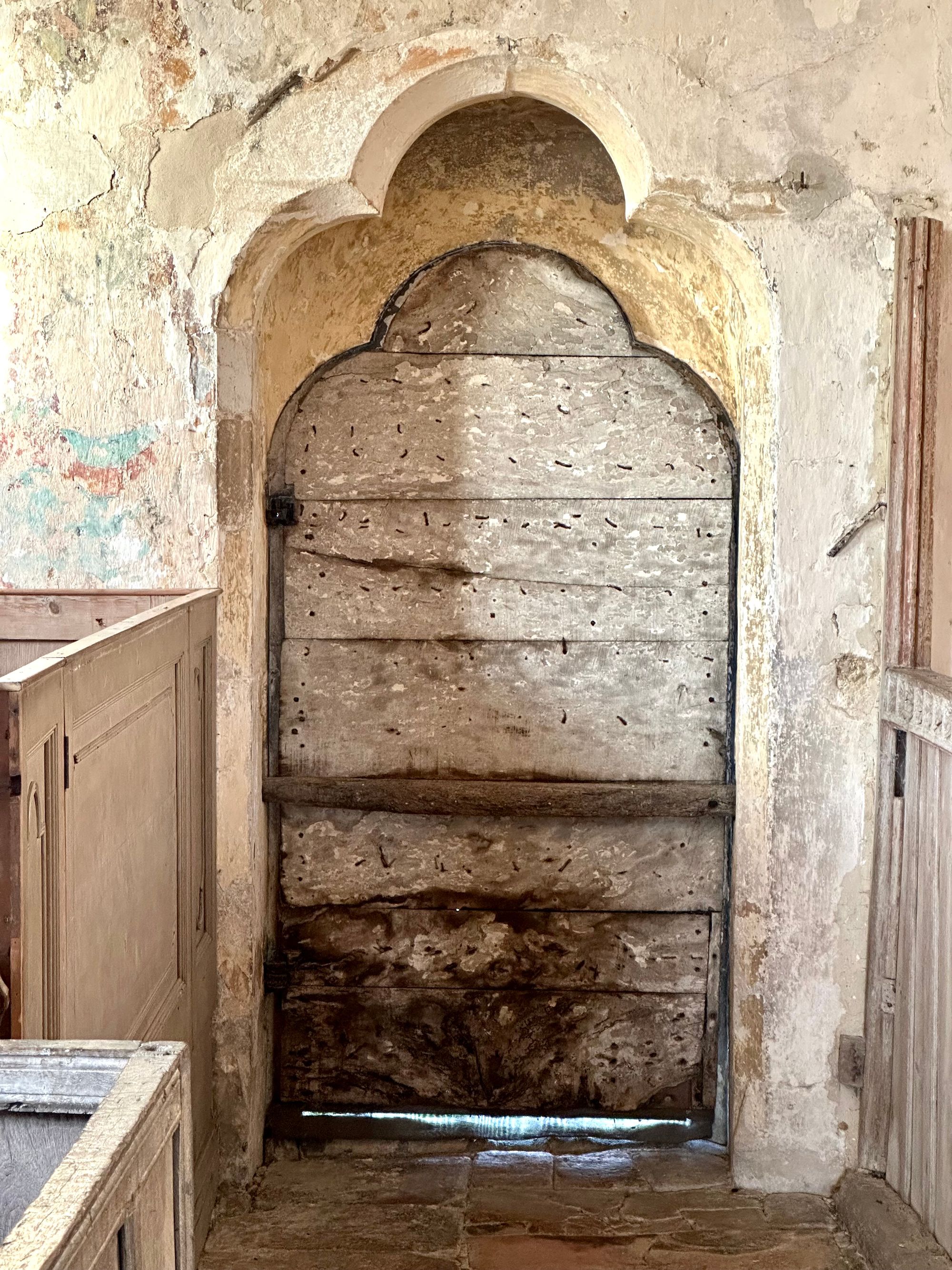
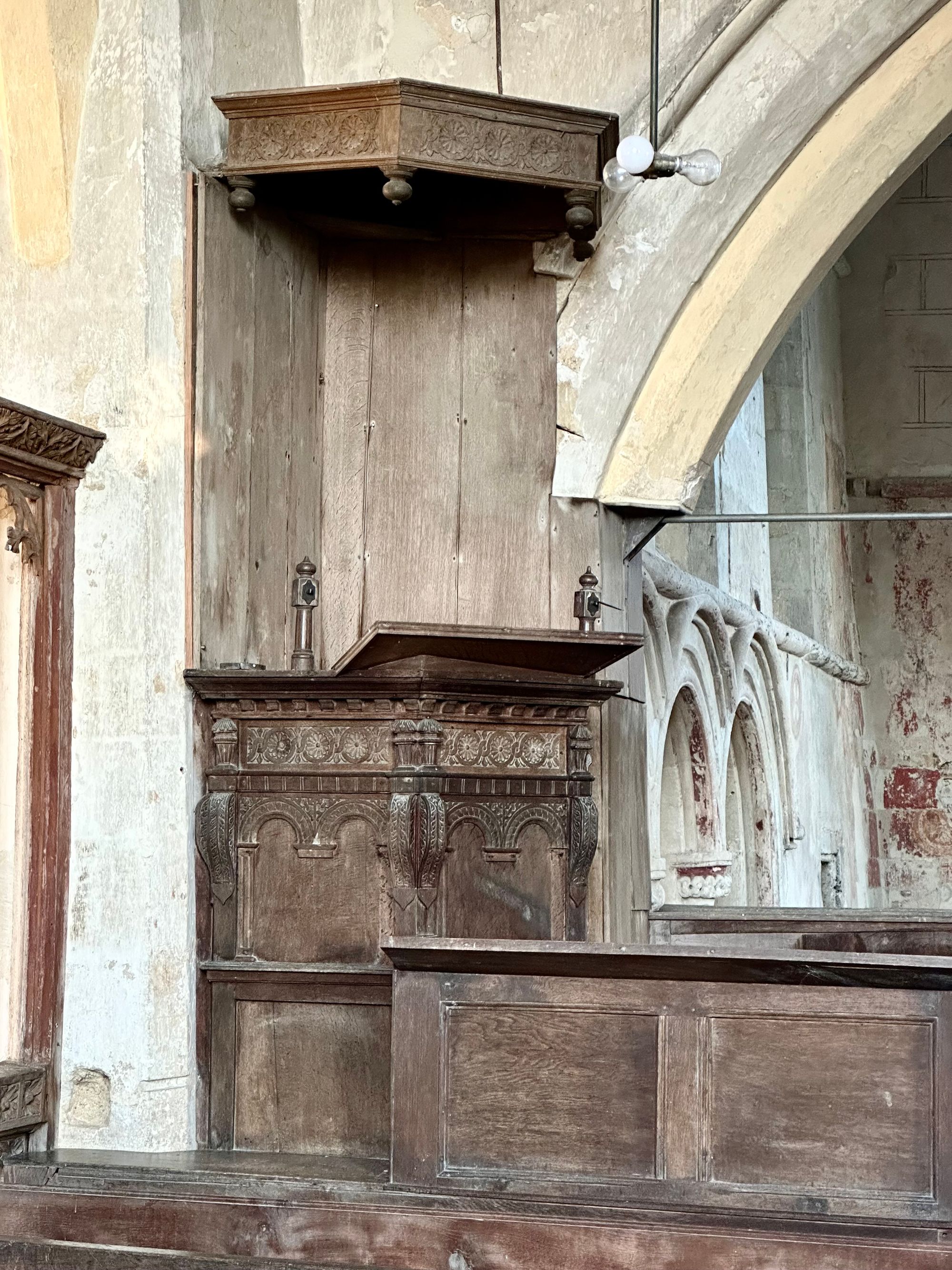
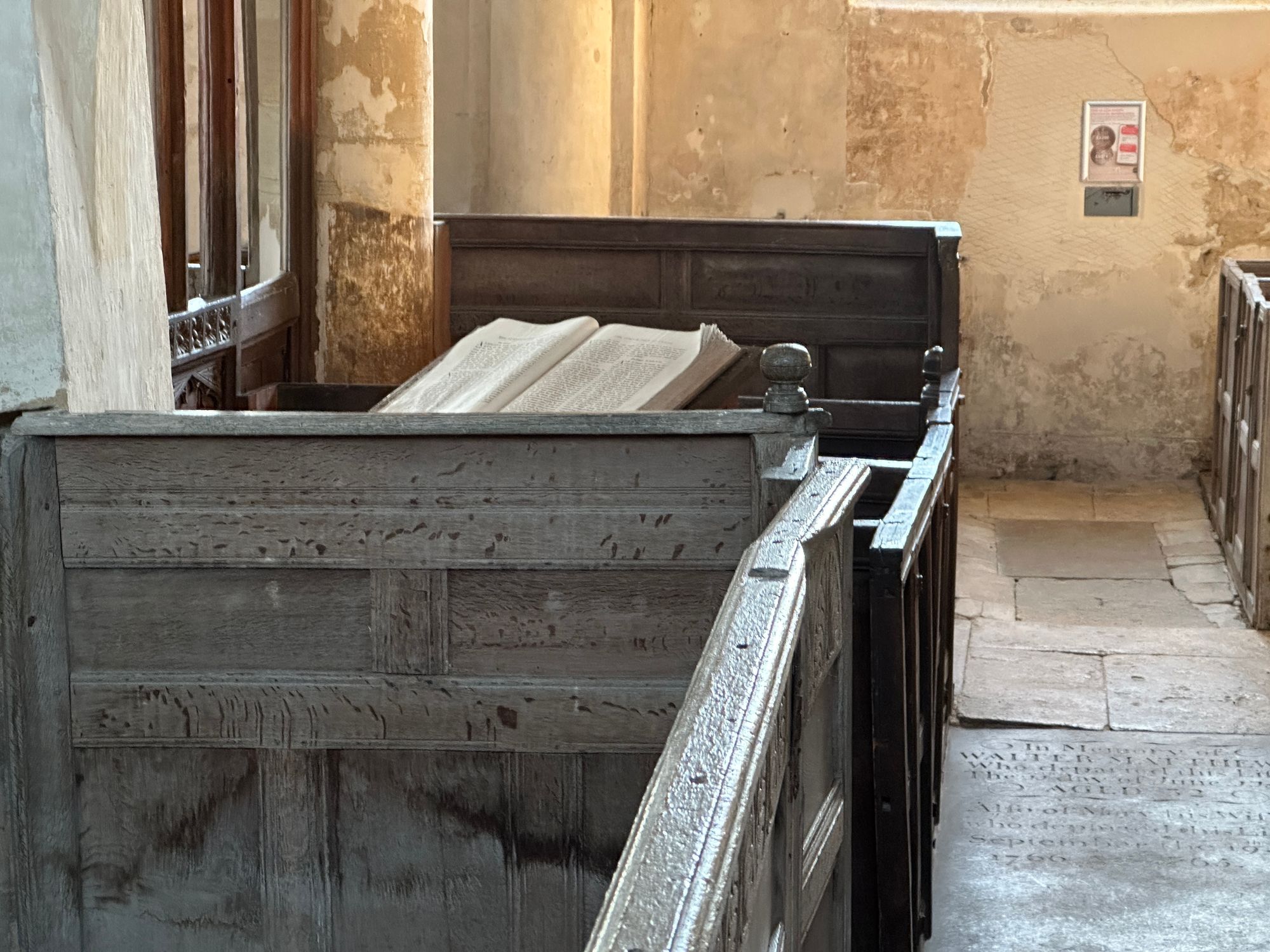
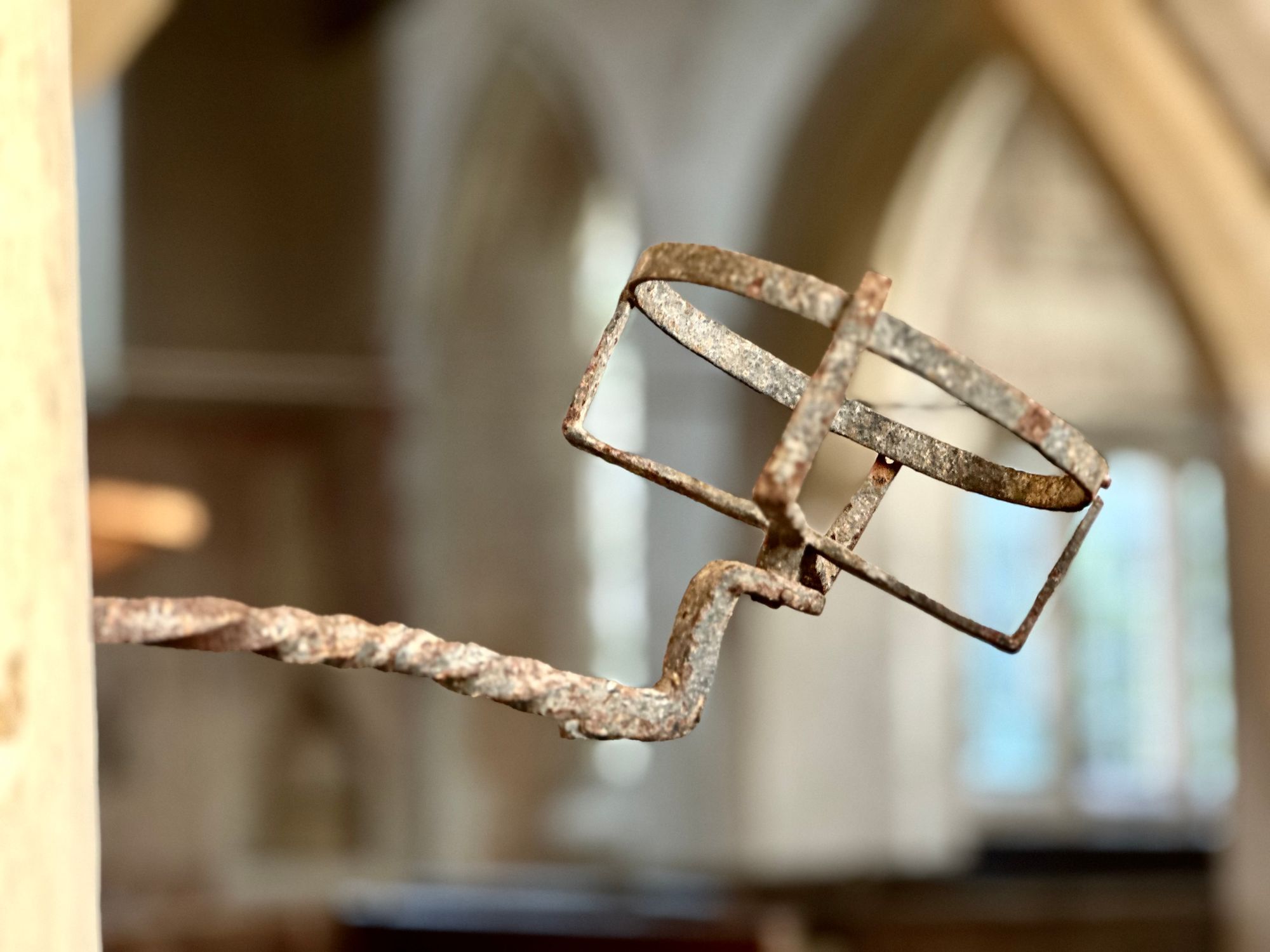
to the hinges on the box pews...
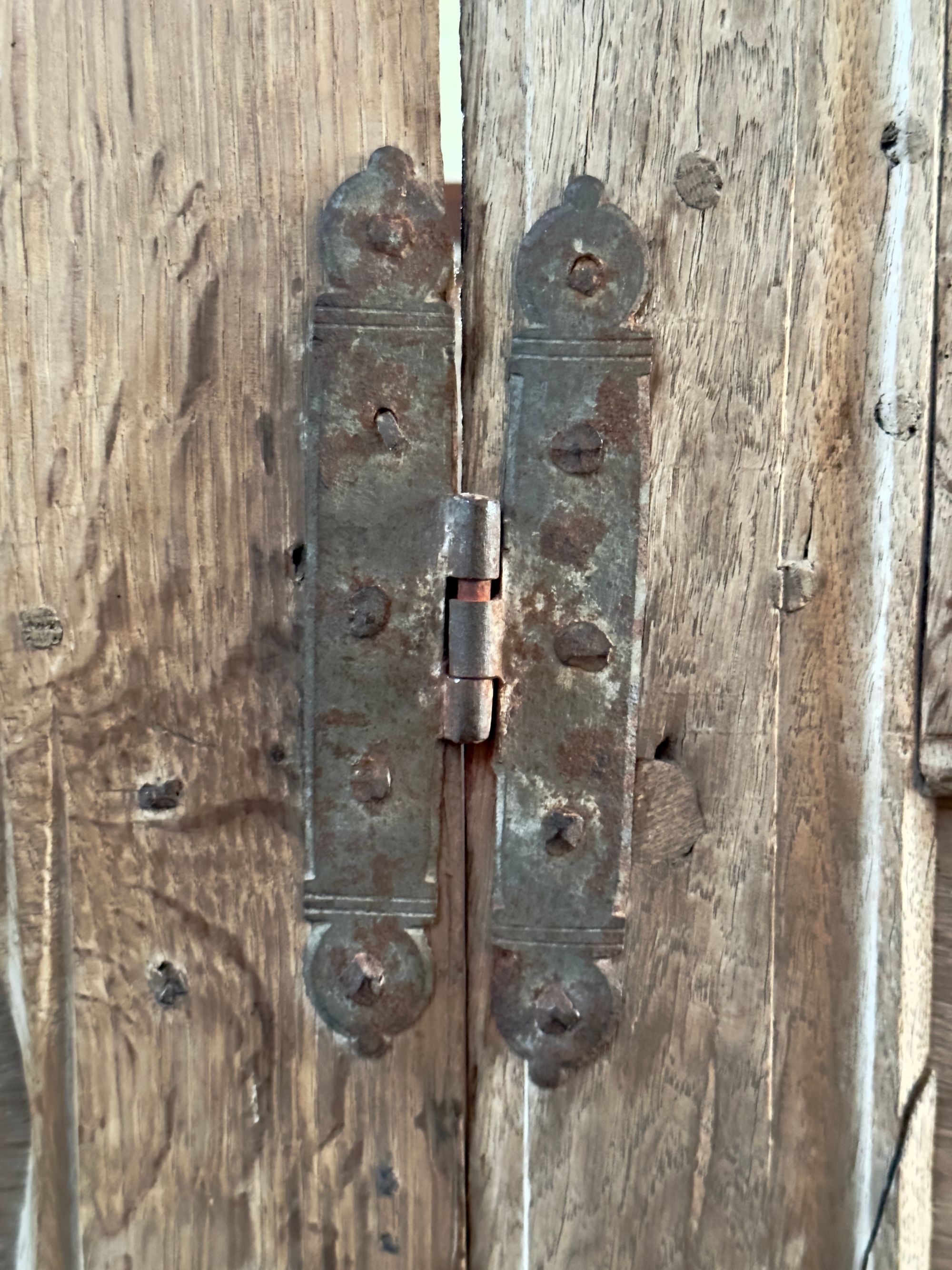
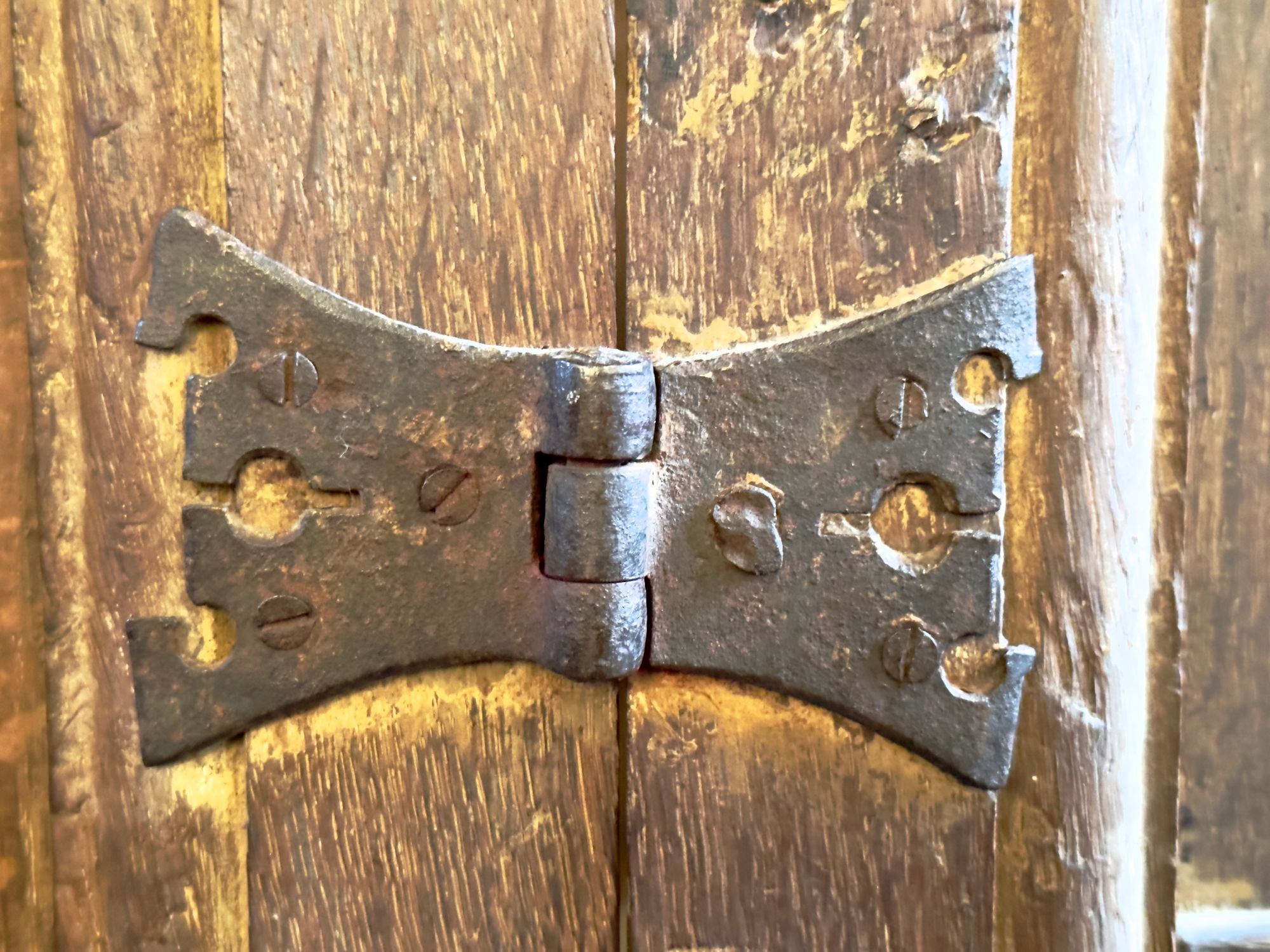
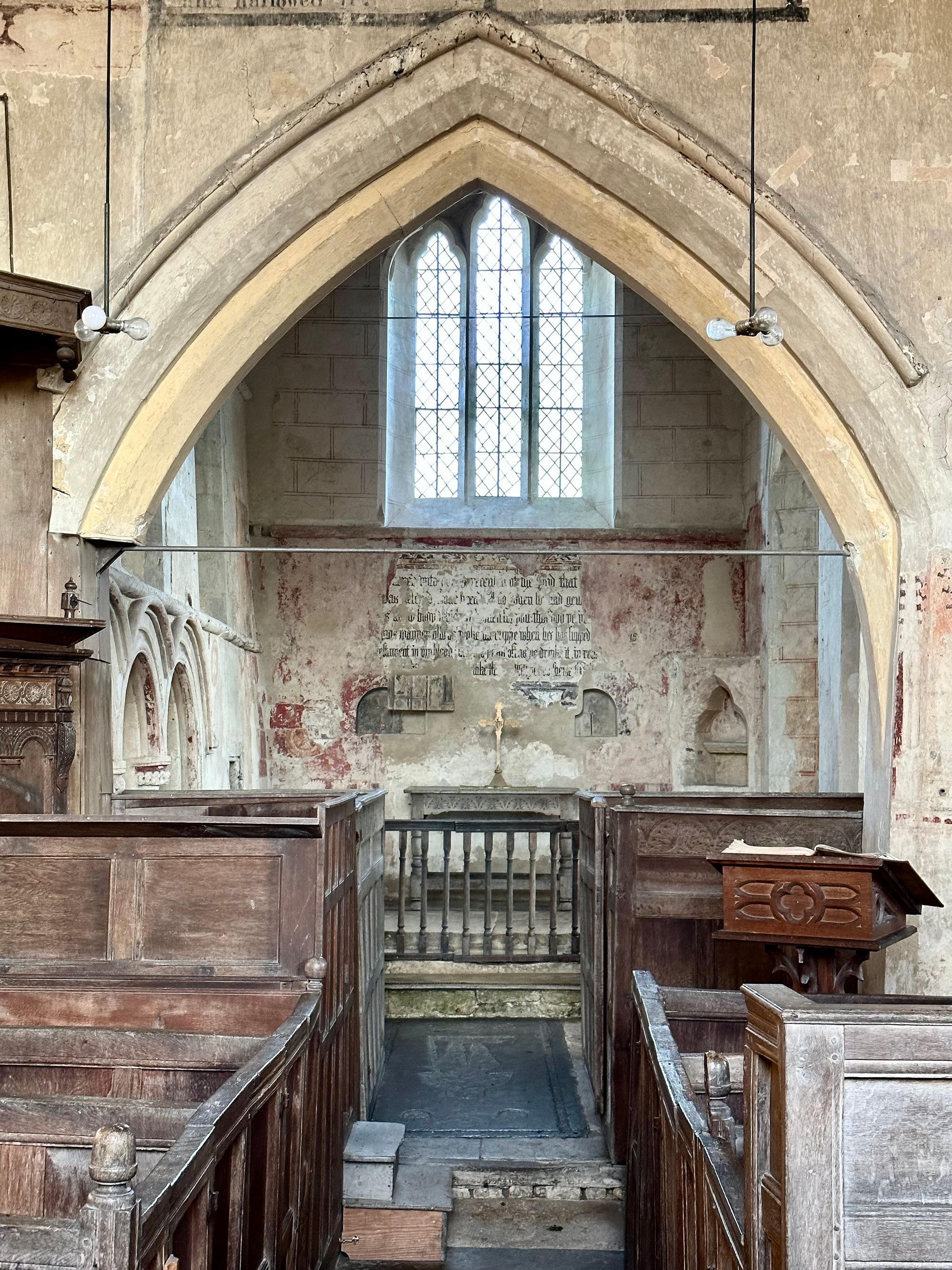
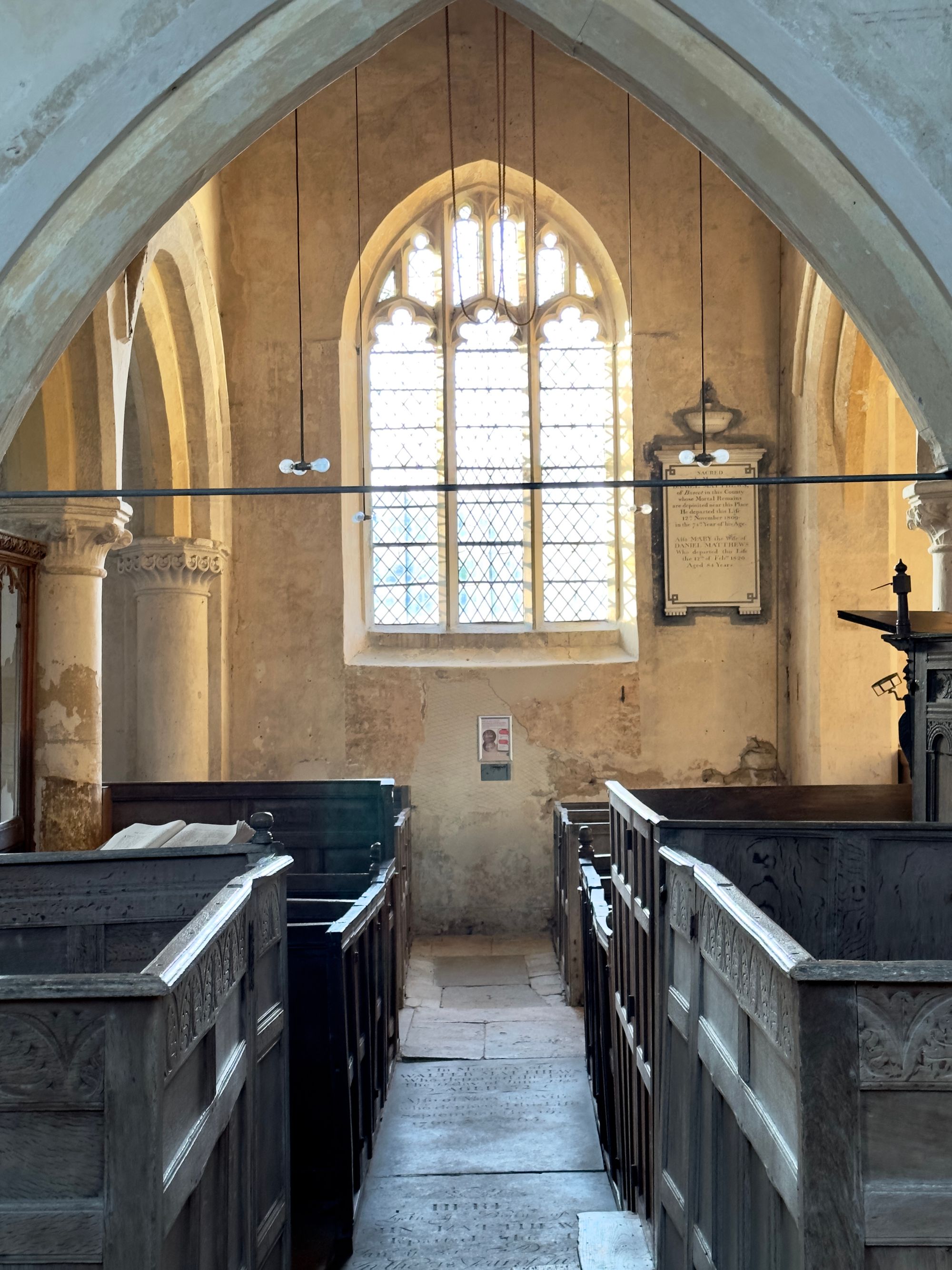
Inglesham is so unusual with its partition and parclose - small spaces that are delineated by punctured screens that cast shadows like zebra hide in all directions.
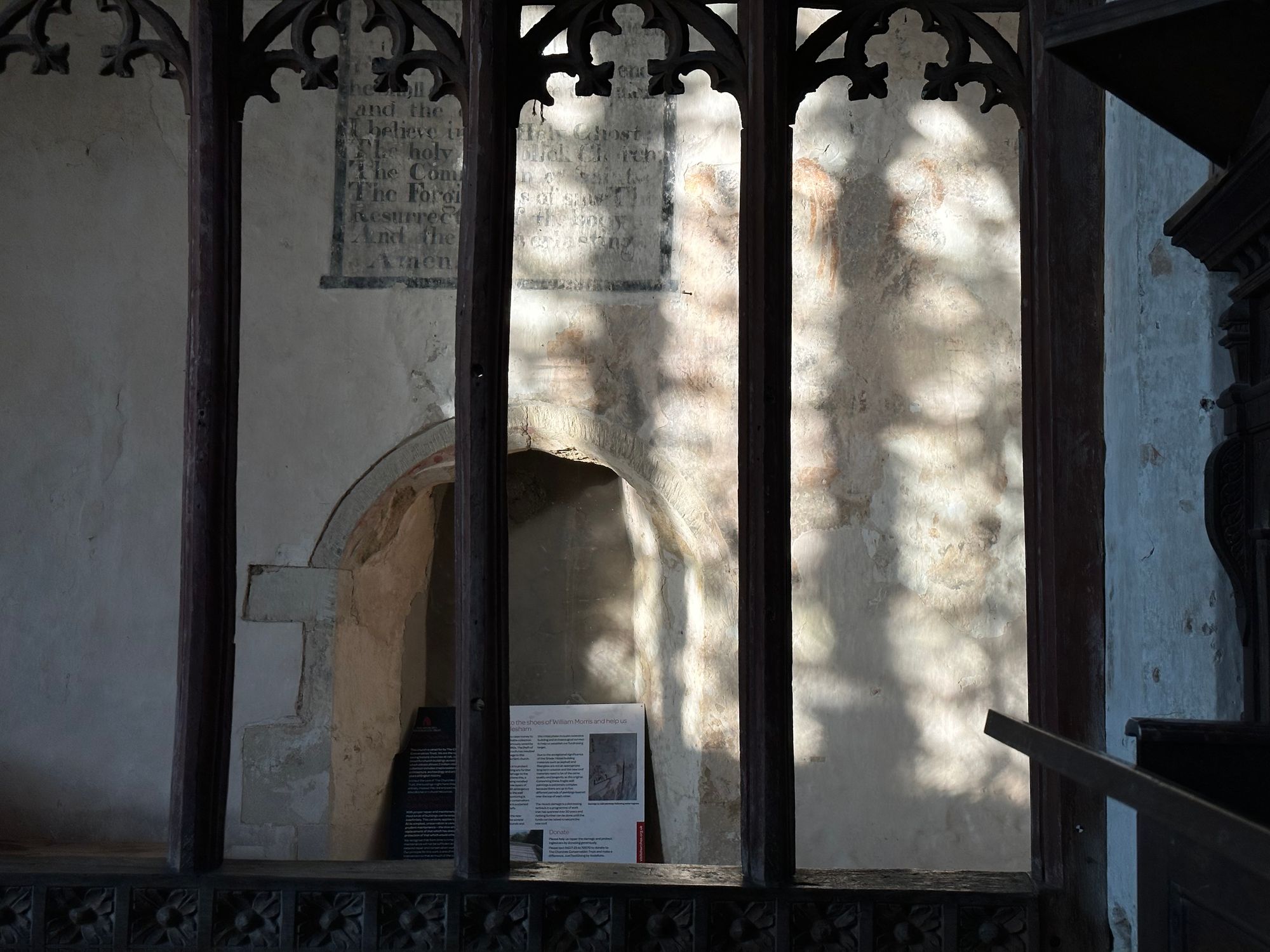
I've spent so long visiting and photographing this place that I've grown to realise that Inglesham has a particular quality of light that is refined and percolated into the building.
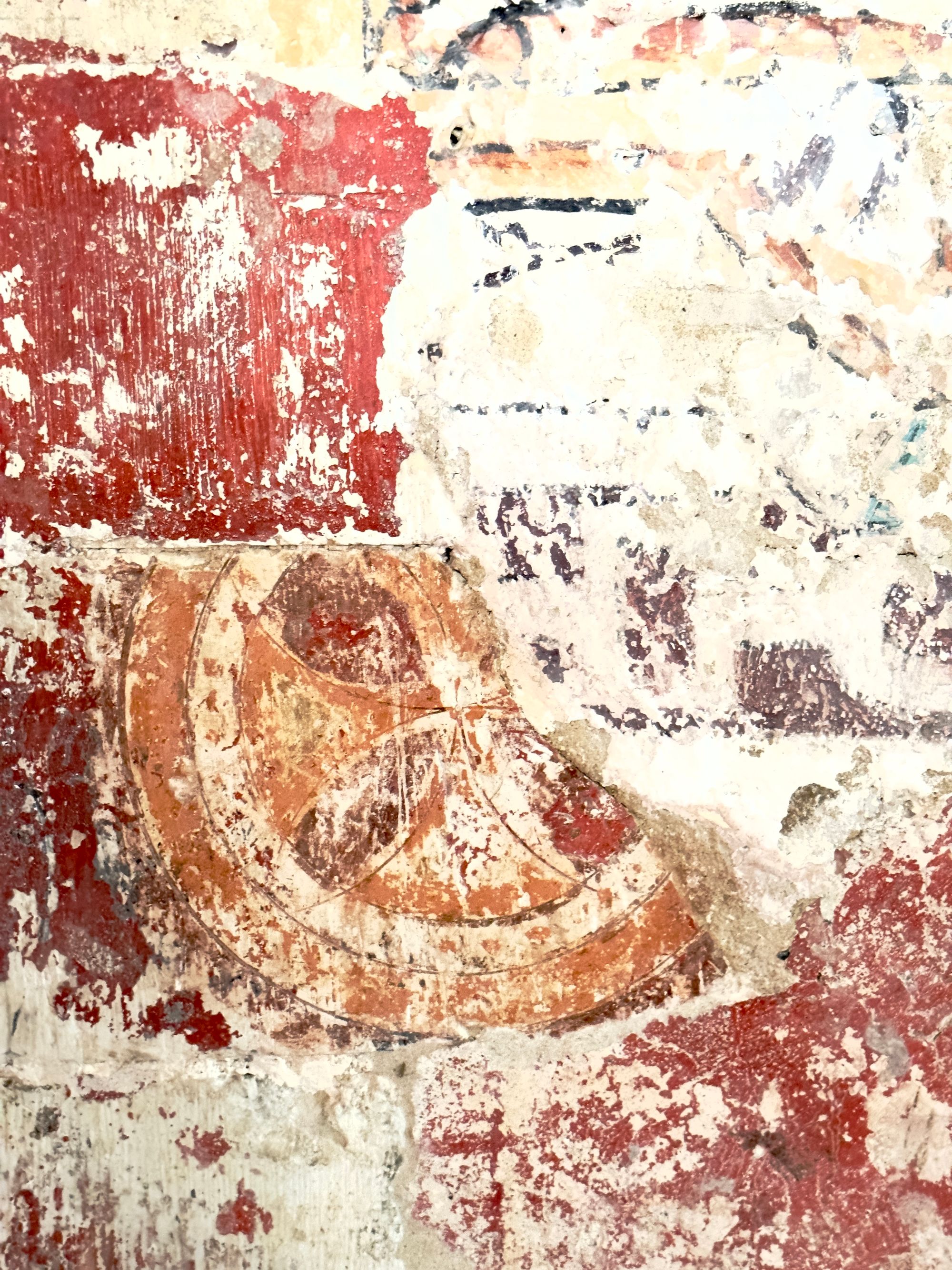
Not many churches have their original consecration marks surviving on the walls from its first day of use in the C13th, after its Saxon core was expanded upon.
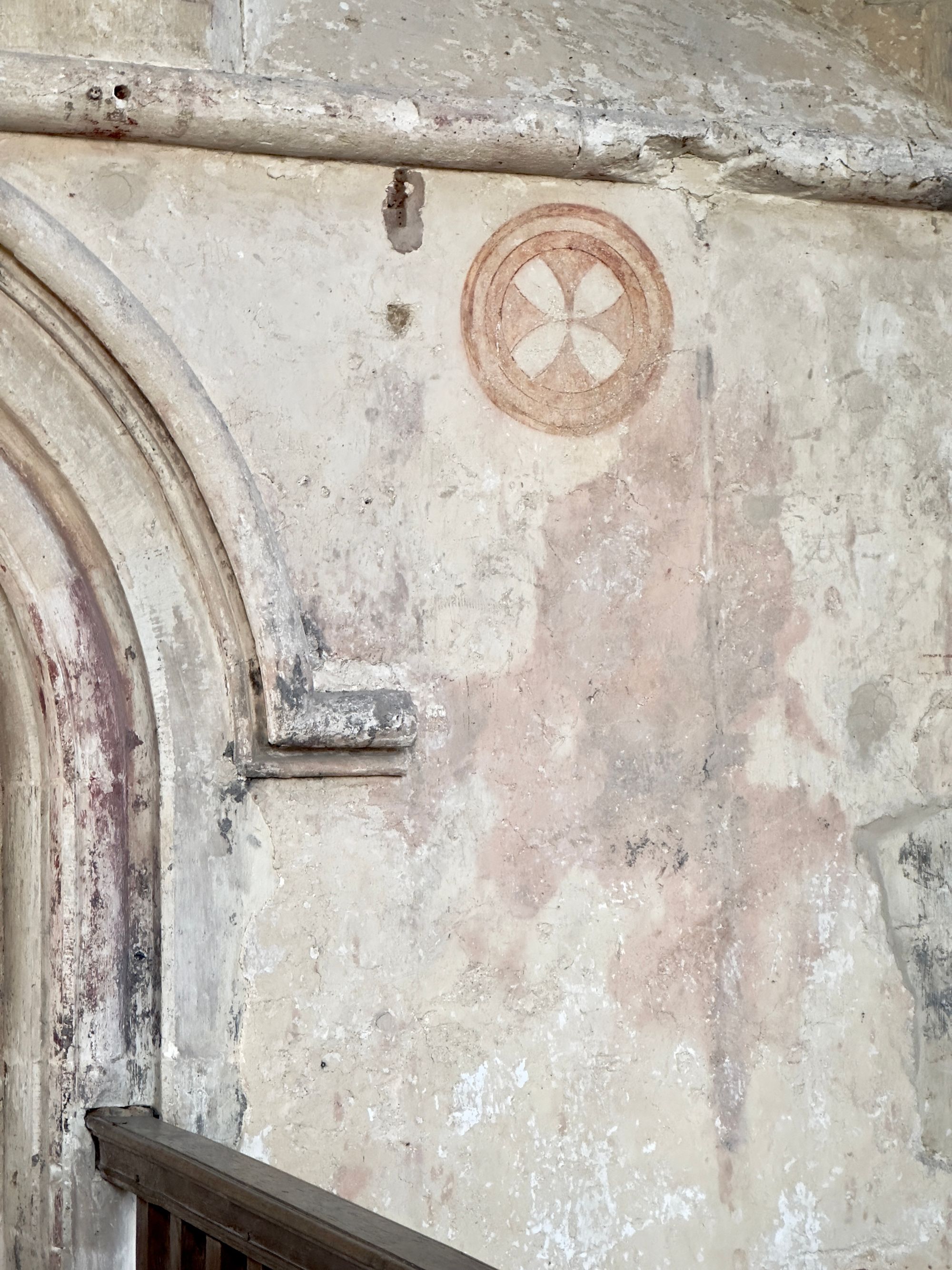
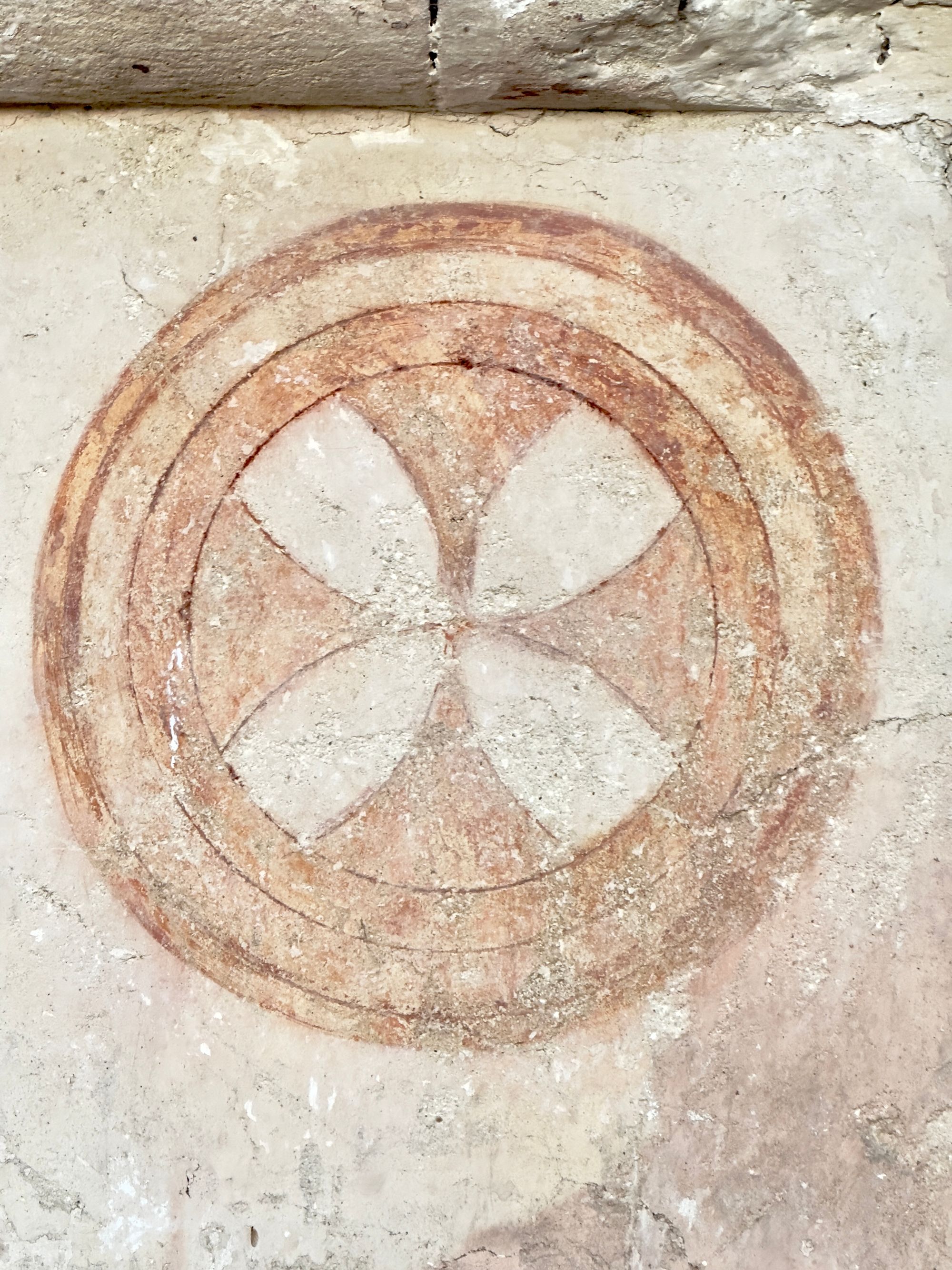
Several hundred years have given the walls a rare patina - one that only comes with time. One that allows the spaces to hover on the cusp of the present.
It isn't without intervention. Our C21st selves are driven by the shiny and the new, to paint over and to scrape off. When William Morris helped repair the church in the 1880's - his motto was 'minimum intervention'.
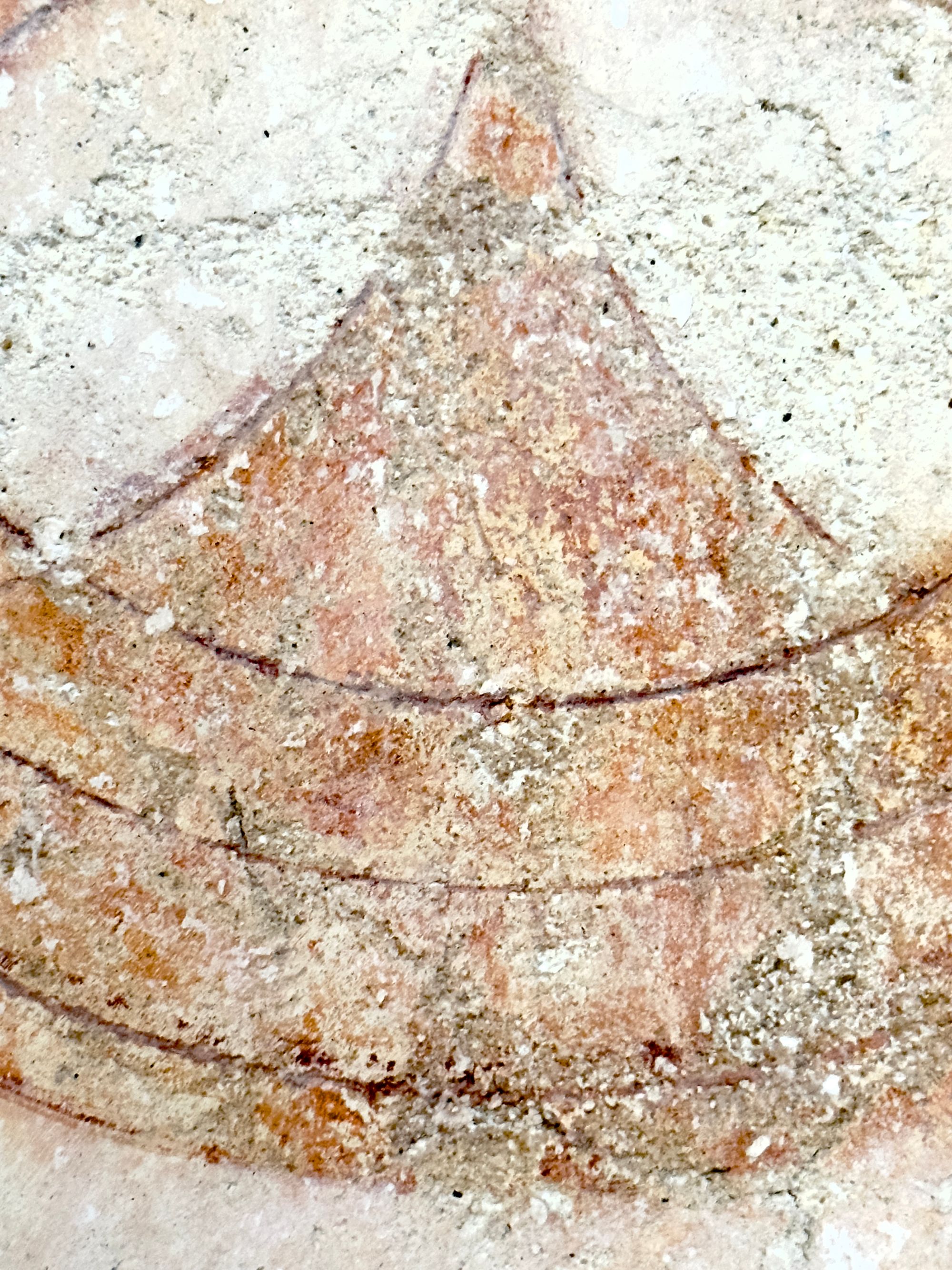
Some buildings, by the happy accident of their construction, allow us to re-connect with our feelings, in the same way that Betjeman expressed his feelings through the built form. In his poem Death in Leamington - he depicts the end of a life through the building:
Do you know that the stucco is peeling?
Do you know that the heart will stop?
From those yellow Italianate arches
Do you hear the plaster drop?
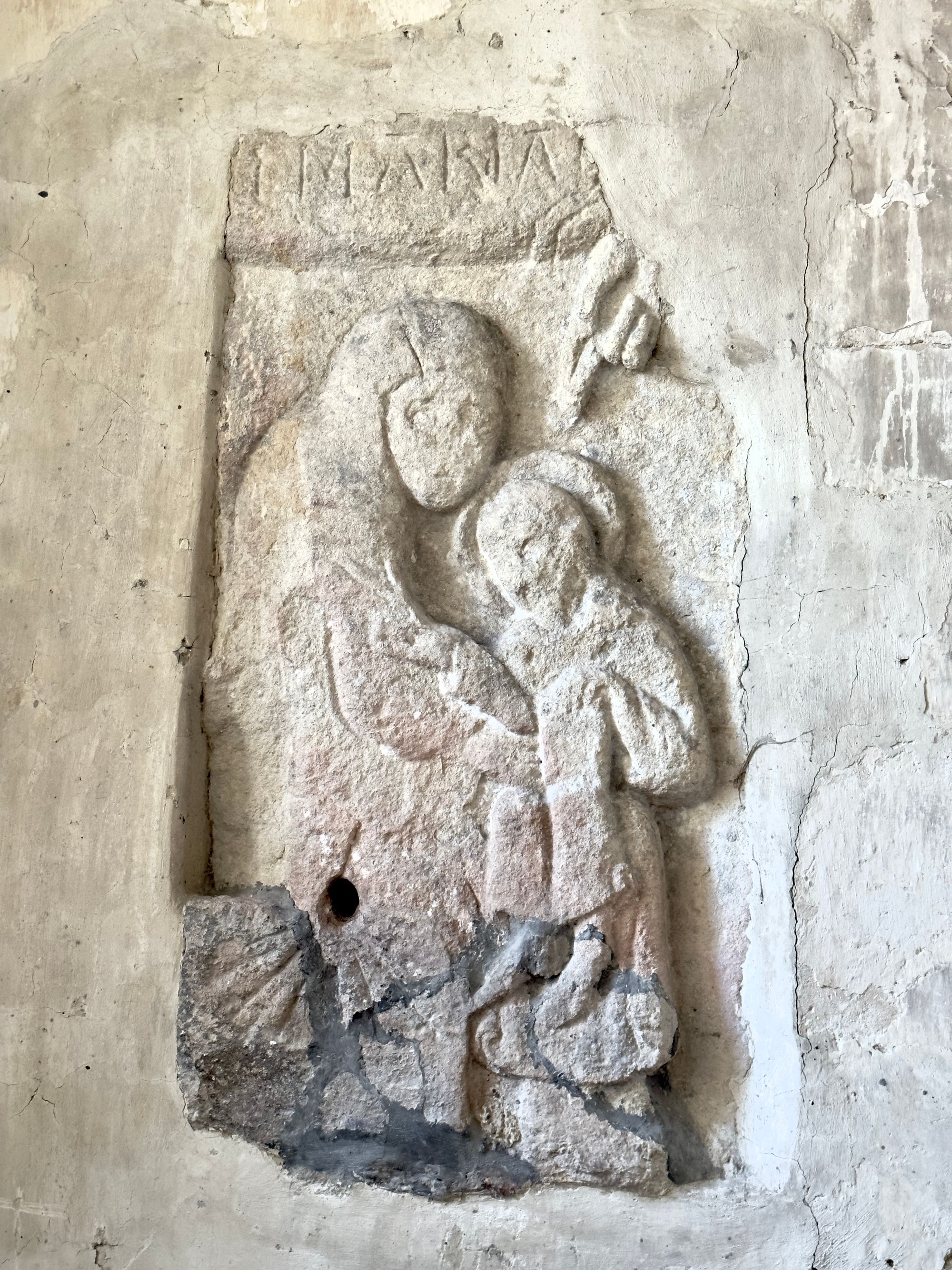
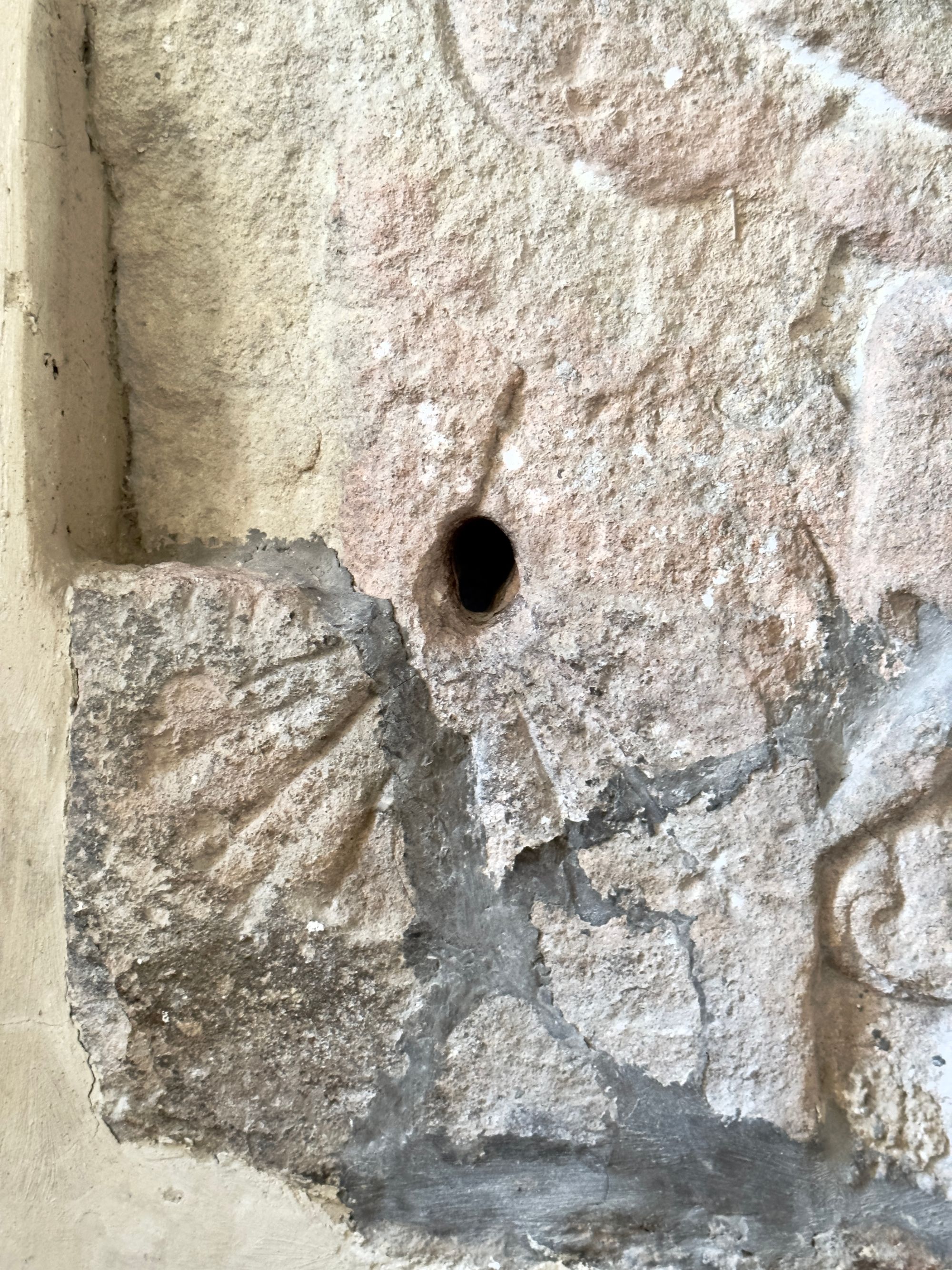
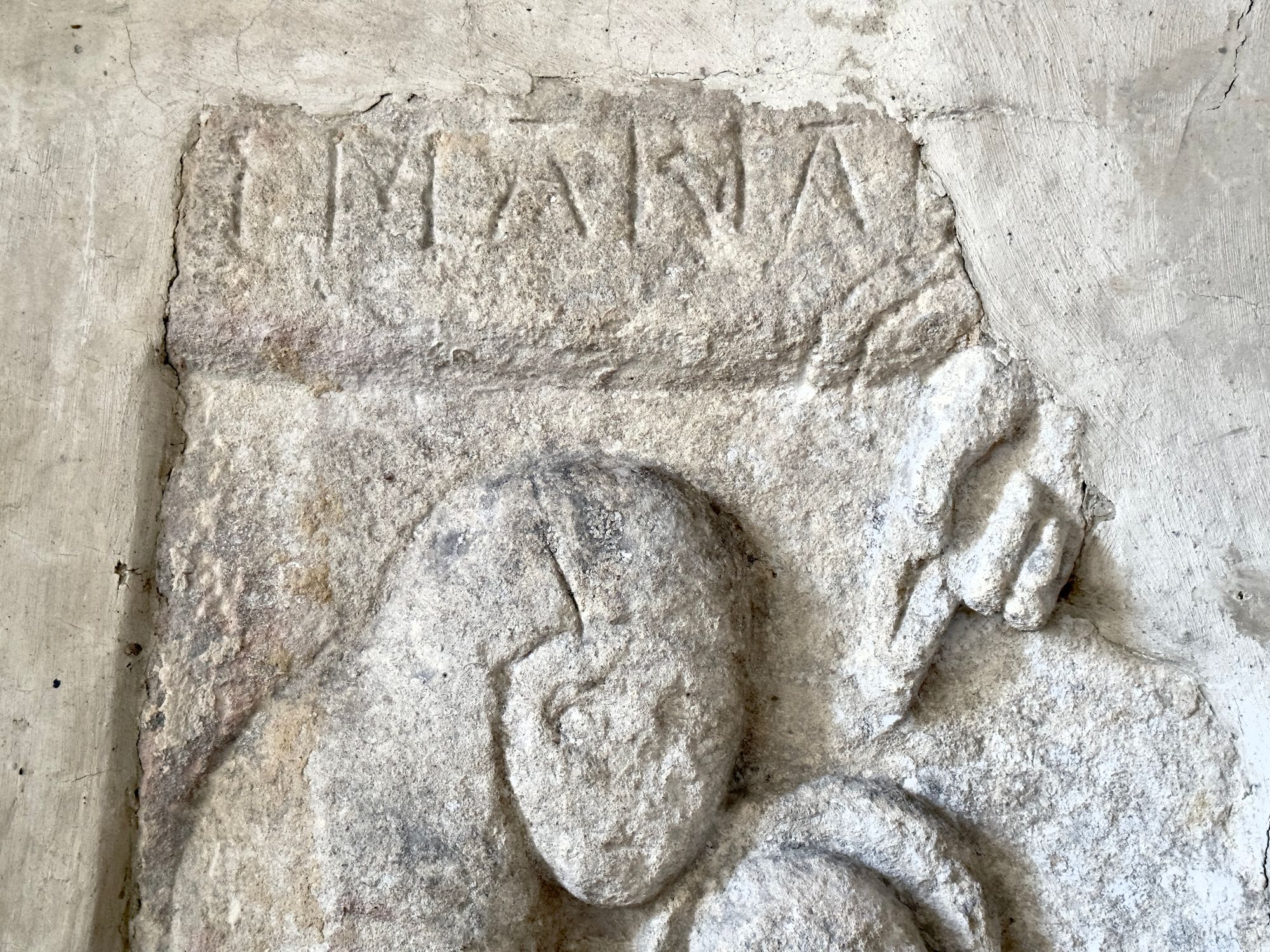
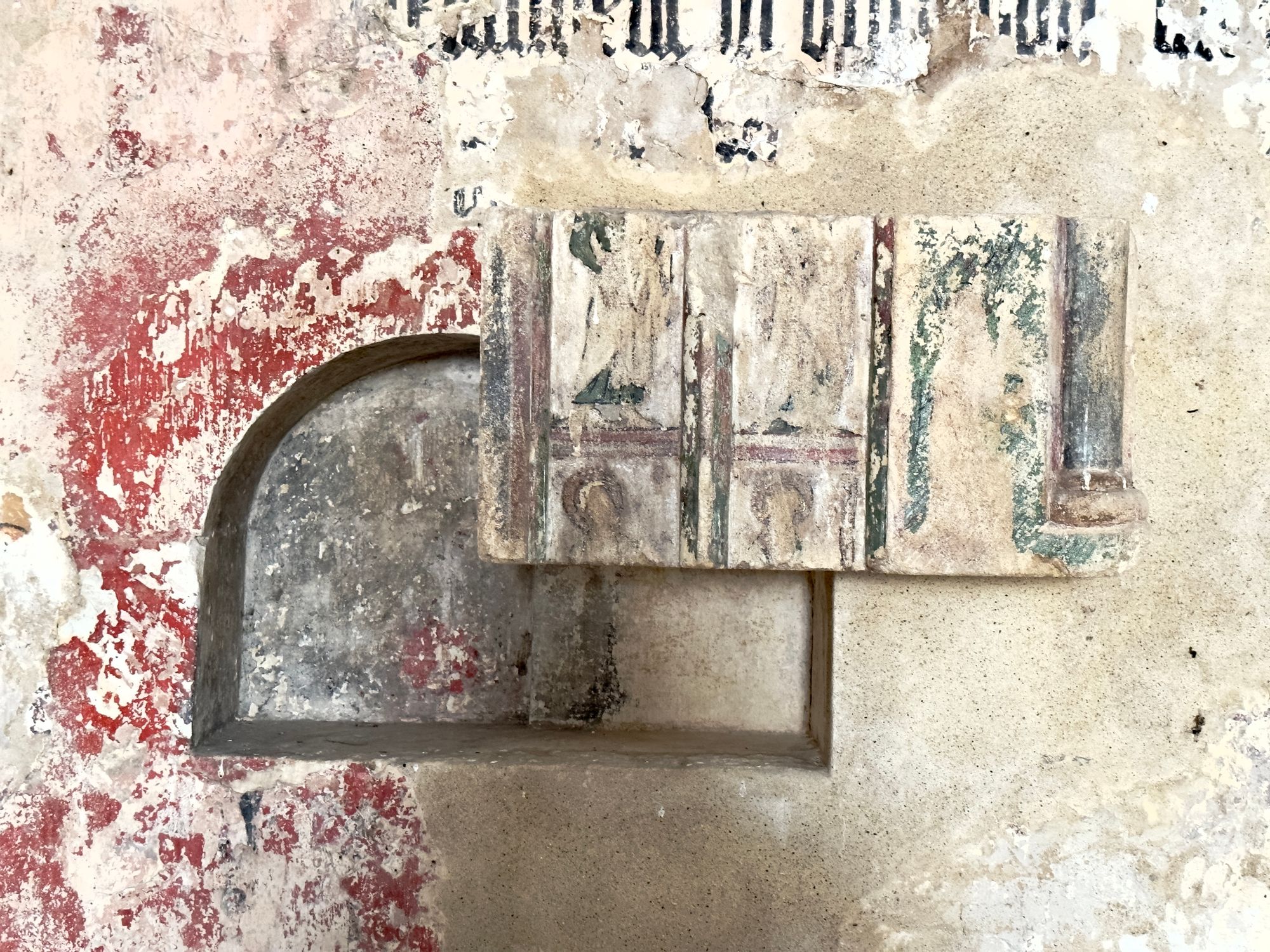
During the church reconsecration - the Saxon Madonna and Child - (which bore the vagaries of the weather outside, and had the misfortune to be used as a scratch dial to measure the canonical hours) was brought inside, as a matter of continuity, and survives resplendent in the side chapel.
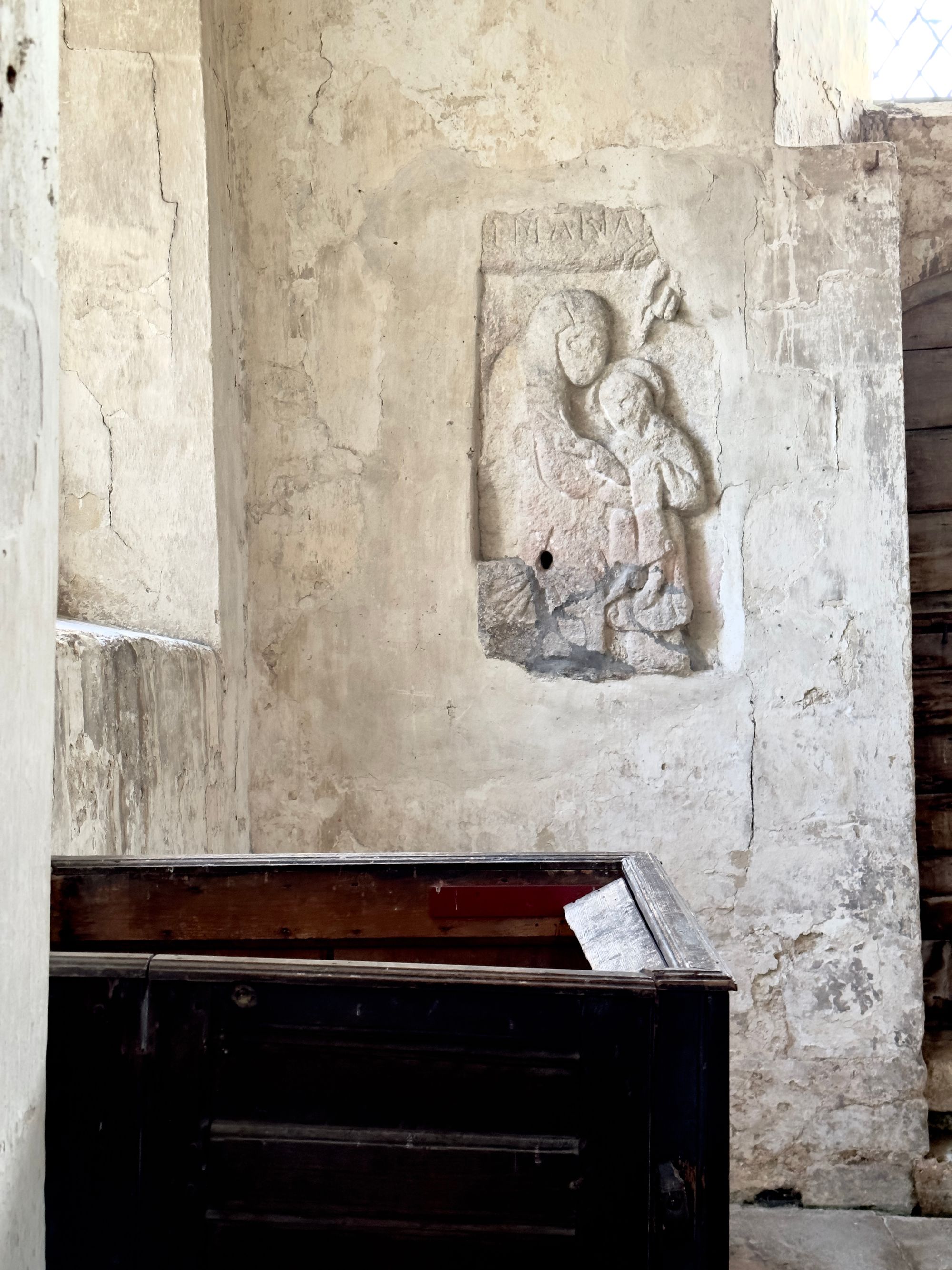
In this little church of scintillating Gothic, the Madonna is an anomaly. The stylistic references to Rome and the Byzantime are obvious. The mid to late Saxon period saw an increase in references to Rome and its material culture as a way of underpinning the legitimacy of kings. The insertion of the carving into the wall of the 'new' building helps keep the Anglo Saxon backstory alive through the material culture.
It is the layering up of ages that strikes me most - that peculiarly pre-modern and comforting disregard for symmetry and 'perfection'.
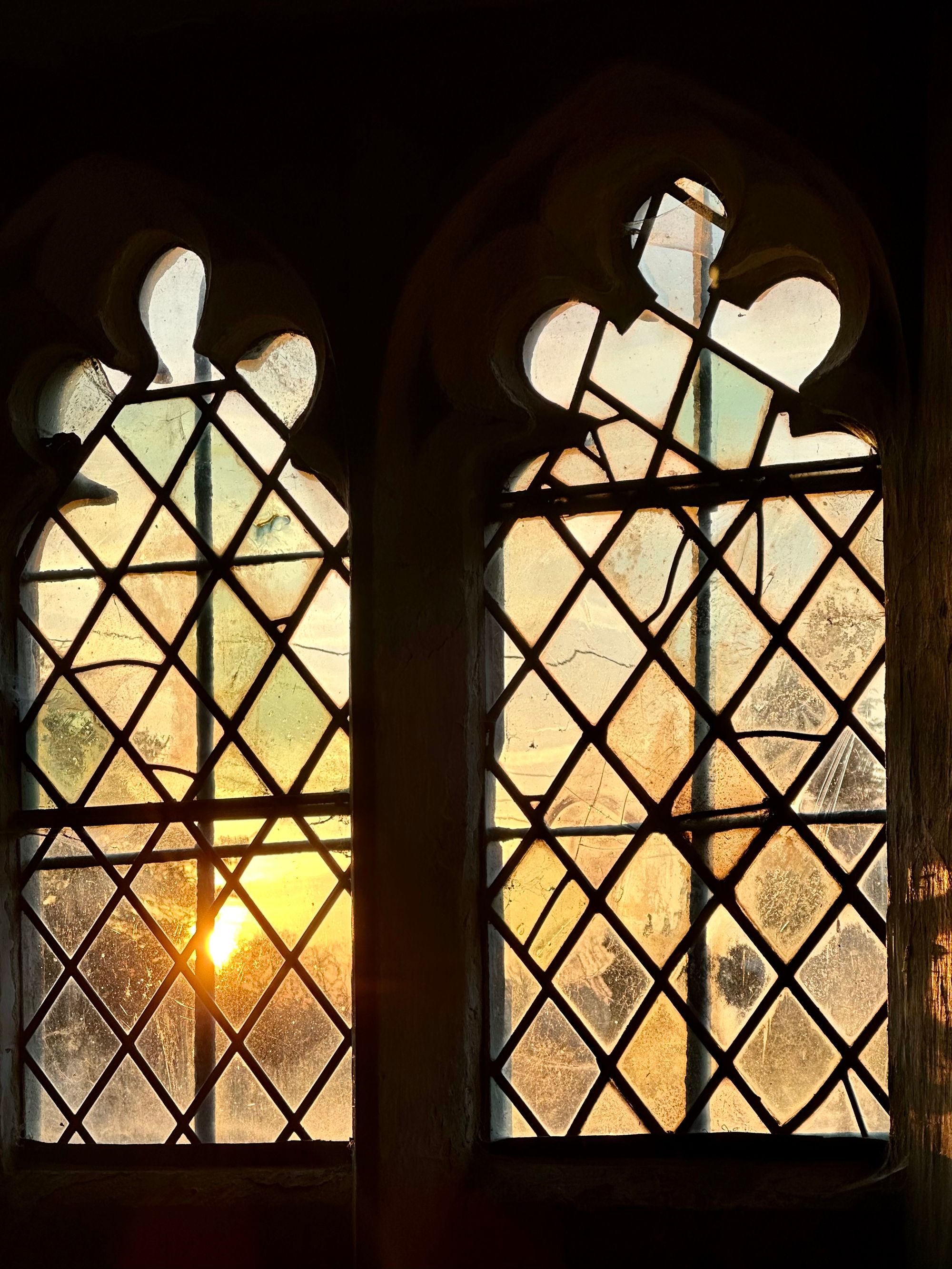
J.B Priestley equated the time continuum to an omelette.
Add Inglesham to the mix and time is a soufflé. Inglesham is like an odd bend in the road of time.
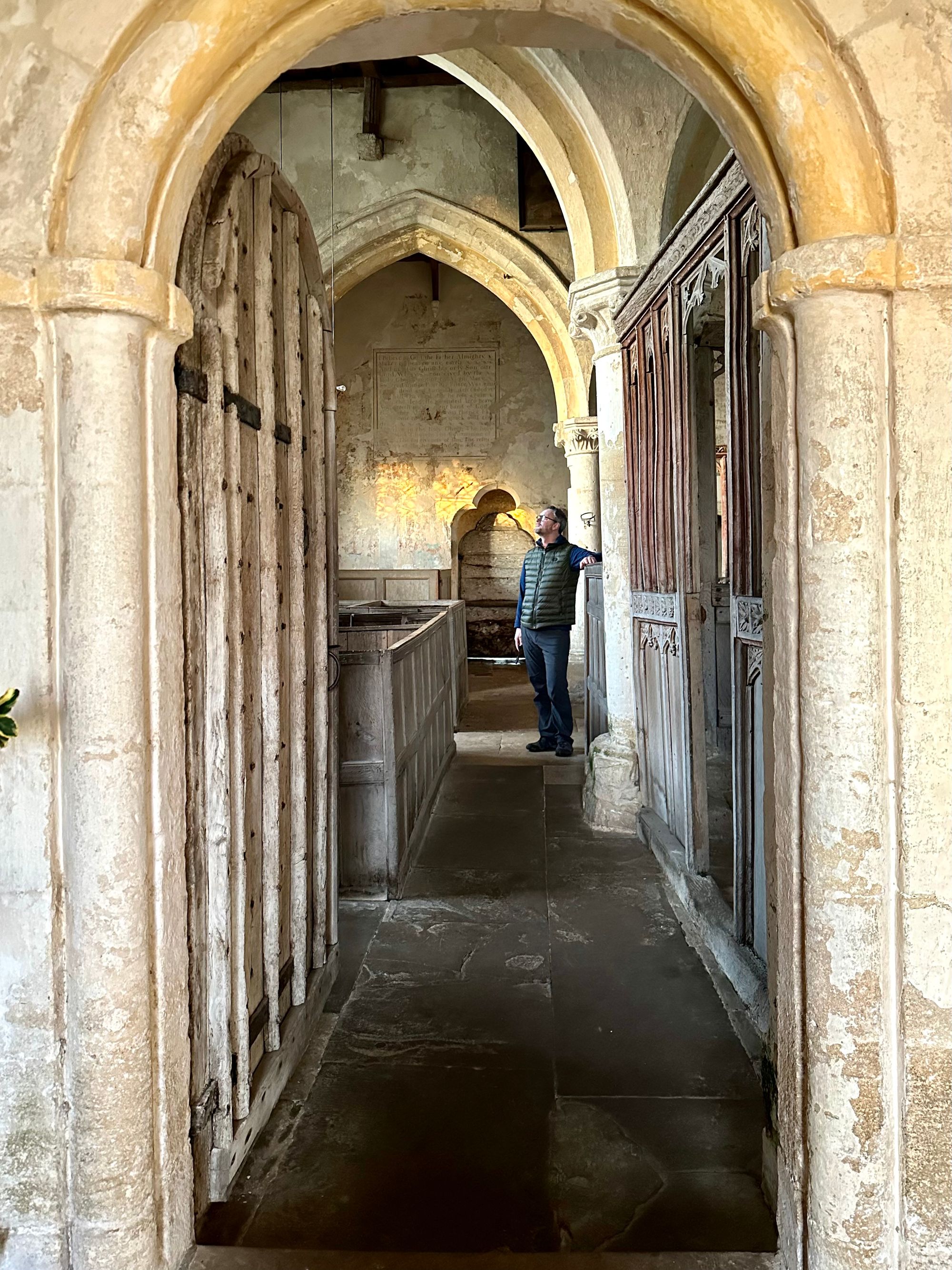
This lovely little country church is looked after by The Churches Conservation Trust and inside, on an information board, they share a poem from an anonymous author that rings true:
Defeated? A Sonnet to Empty Churches
Come on. You lot have survived worse things:
Black Death, Plague and two World wars,
The Reformation (Cromwell clipped the wings Of angels in the roof); and there are scars
On ancient faces, marble noses cropped And poppy heads beheaded like the King;
And modern vandals too. But you've not stopped
Your ageless plain ability to sing
Of something quite indifferent to the now;
Built with a trusting love and potent faith
You stand there still in testament to how
Beauty is not a wafted fleeting wraith,
A ghost which chance can whimsically destroy;
You can be filled, if not by faith, with joy.
Travel with me weekly - subscribe to my Genius Loci Digest for free
Each week, this Digest offers a small pause – photographs, sketches, and reflections from historic places that still carry meaning. It’s a weekly practice of noticing, continuity, and learning to see more deeply.
SubscribeThis work is sustained by a small group of tier members who value time, care, and continuity. If that resonates, there’s a more immersive path you can step onto. Become a Tier Member:
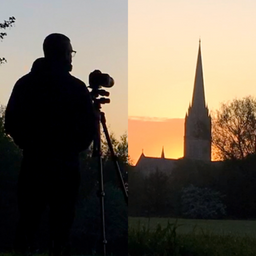 Andy Marshall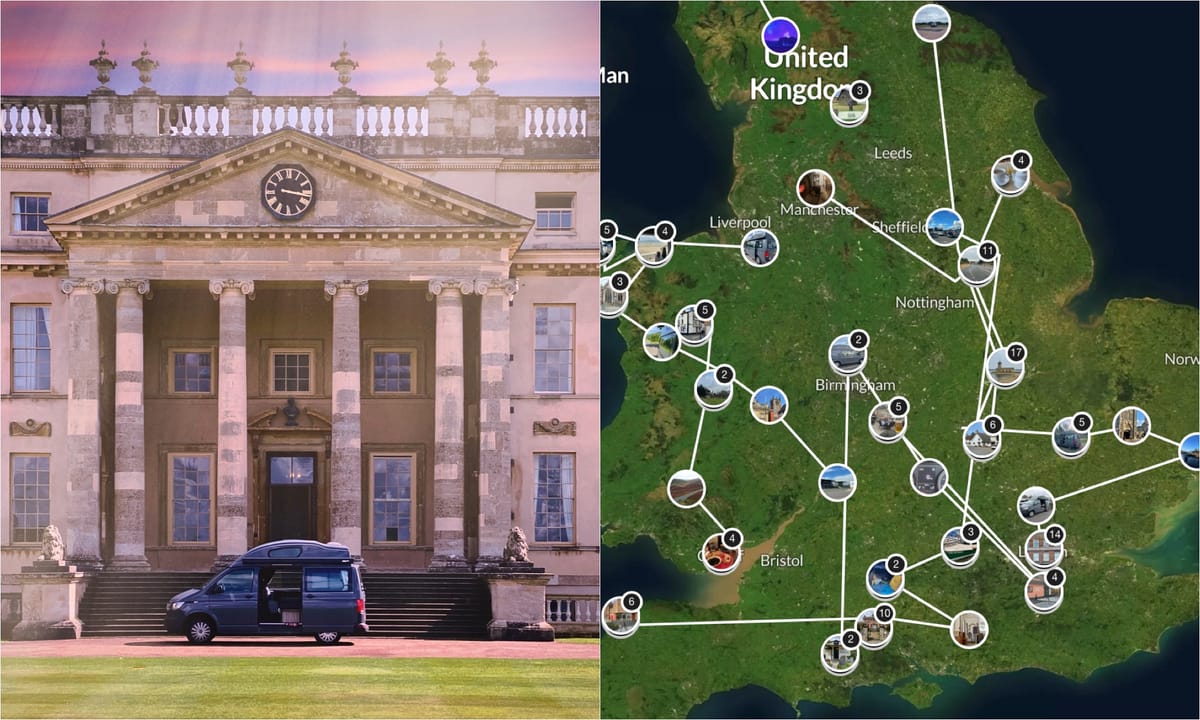
Spirit of Place * History * Material Culture * Heritage * Continuity * Photography * Travel * Architecture * Vanlife * Ways of Seeing * Wellbeing * The Historic Environment * Churches * Art * Building Conservation * Community * Place Making * Alternative Destinations * Hidden Gems * Road Trips * Place Writing *
"That aura, those echoes-the muted light is transporting. What a space to feel rooted in history. I'd love to make that journey myself; you've stirred the opera lover and architectural dreamer in me."
@sonatasips via X
Genius Loci has rapidly become the highlight of my Friday morning mailboxes, Andy!
David via Linkedin
"In reading & seeing Andy's work I always struggle to know which is more impactful - his writing or photos. In truth, the two combined are greater than their parts, he allows you to explore the importance of place and time from the comfort of home."
Peter from Bluesky
"Andy your work is becoming wonderful, remarkable. A so-called breakdown has been milled into its constituent parts, becoming profound construction: through perception, architecture, the lens and the pen."
Stephen via Email
Connect with me on: Bluesky / Instagram / Facebook / X / Tumblr / Flickr / Vimeo / Pixelfed / Pinterest

Member discussion