I have a particular fondness for the Romanesque, for as a young architecture detective, I found this particular style to be the easiest to spot.
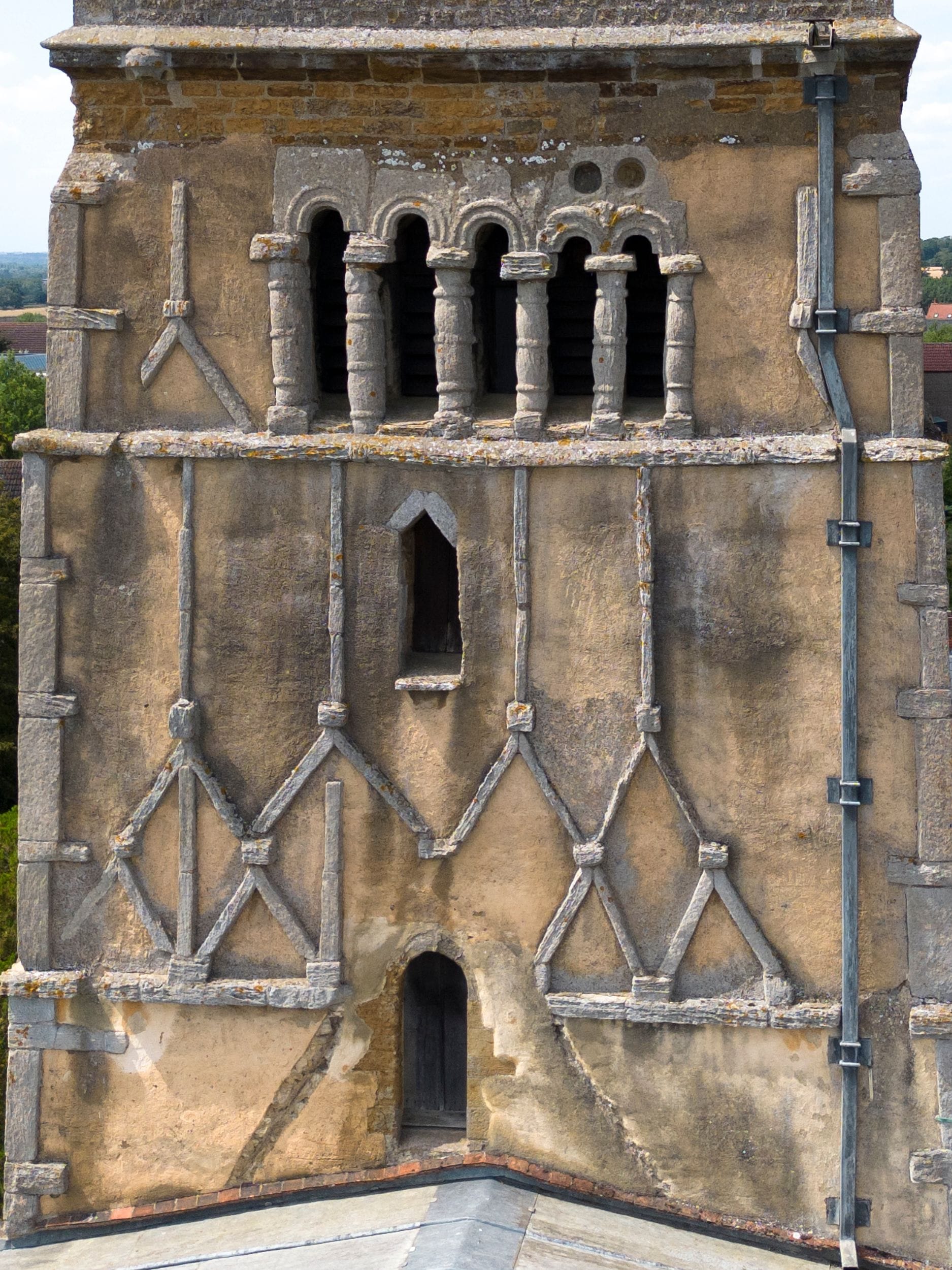
Surviving Romanesque architecture in Britain was largely built by the Normans, but both Anglo-Saxon and Norman architecture in Britain were hold echoes of the Roman tradition.
The arcading on the window at the Anglo-Saxon tower at Earl's Barton has a Roman influence.
But, Norman Romanesque developed its own distinctive style, influenced by their Norman precursors such as these jamb shafts I saw in the Cluny in Paris
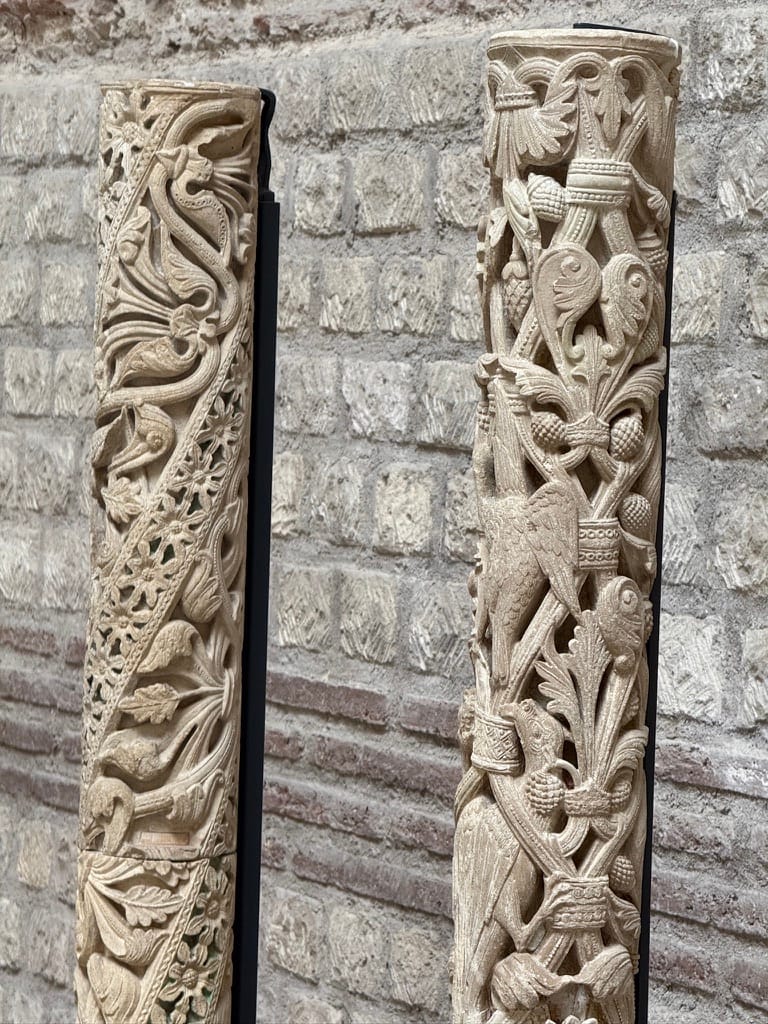
Compare them with the shafts on the west front at Lincoln Cathedral
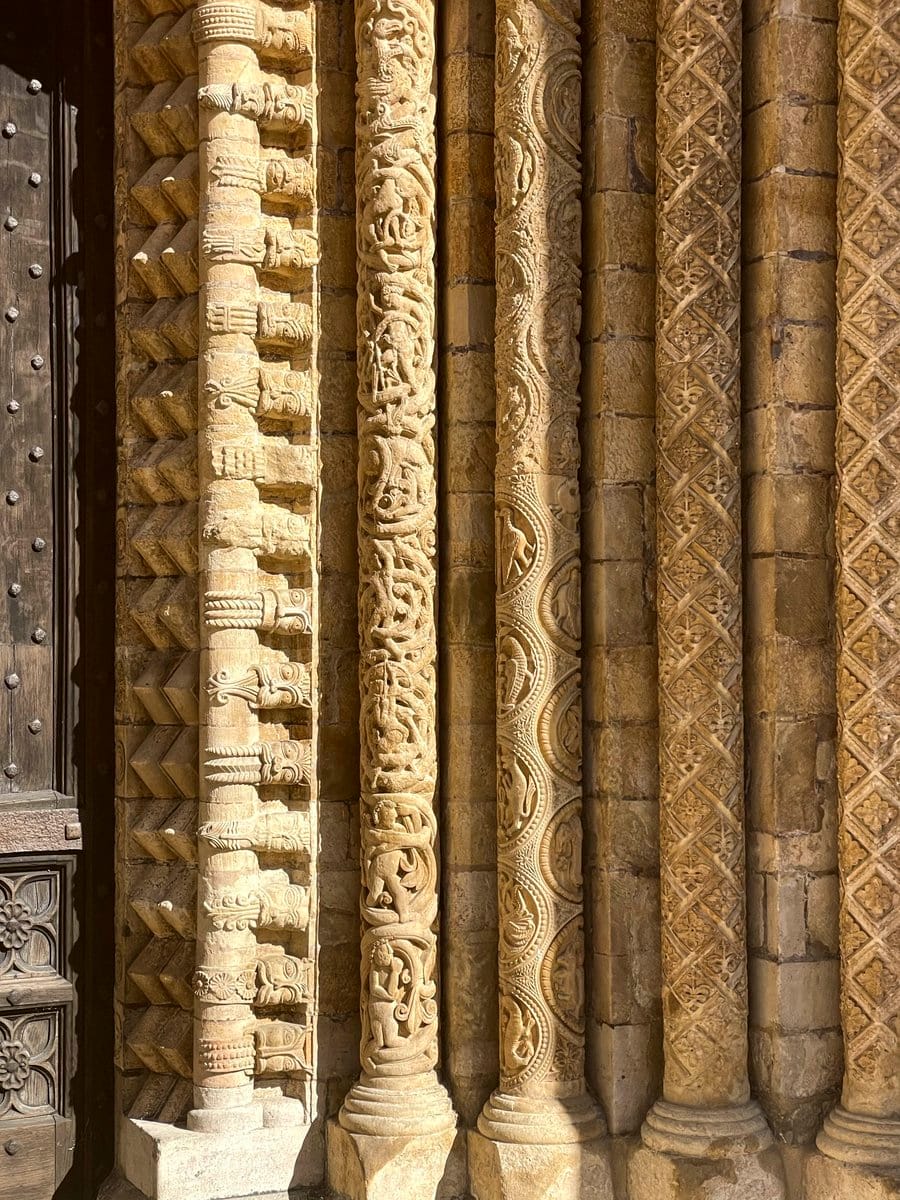
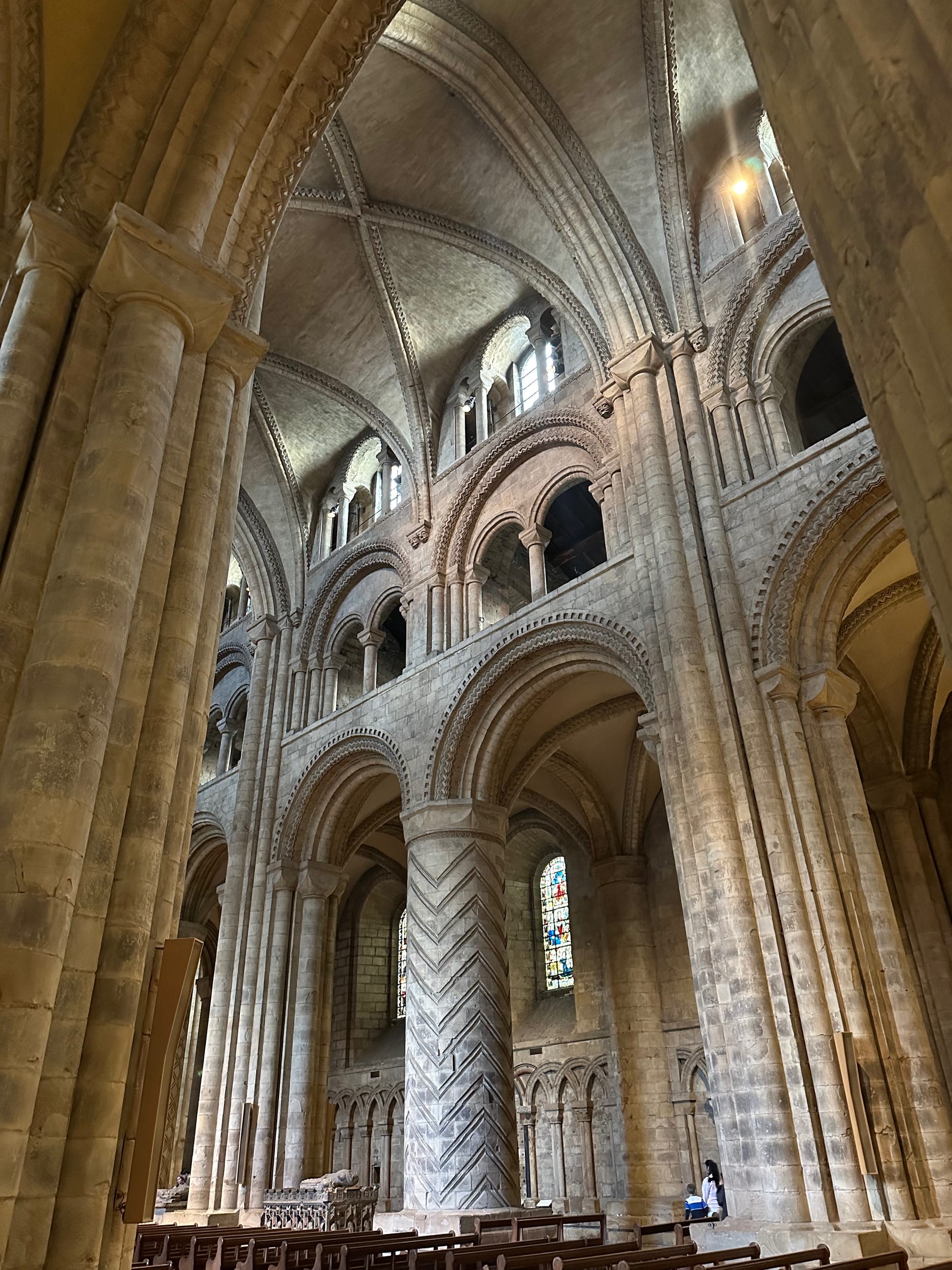
In Britain, Romanesque architecture dates broadly from the late 11th century to the late 12th century, approximately 1066–1190. Durham Cathedral is a beautiful example of the Romanesque style of architecture and was one of the first buildings I sought out when starting out on my career.
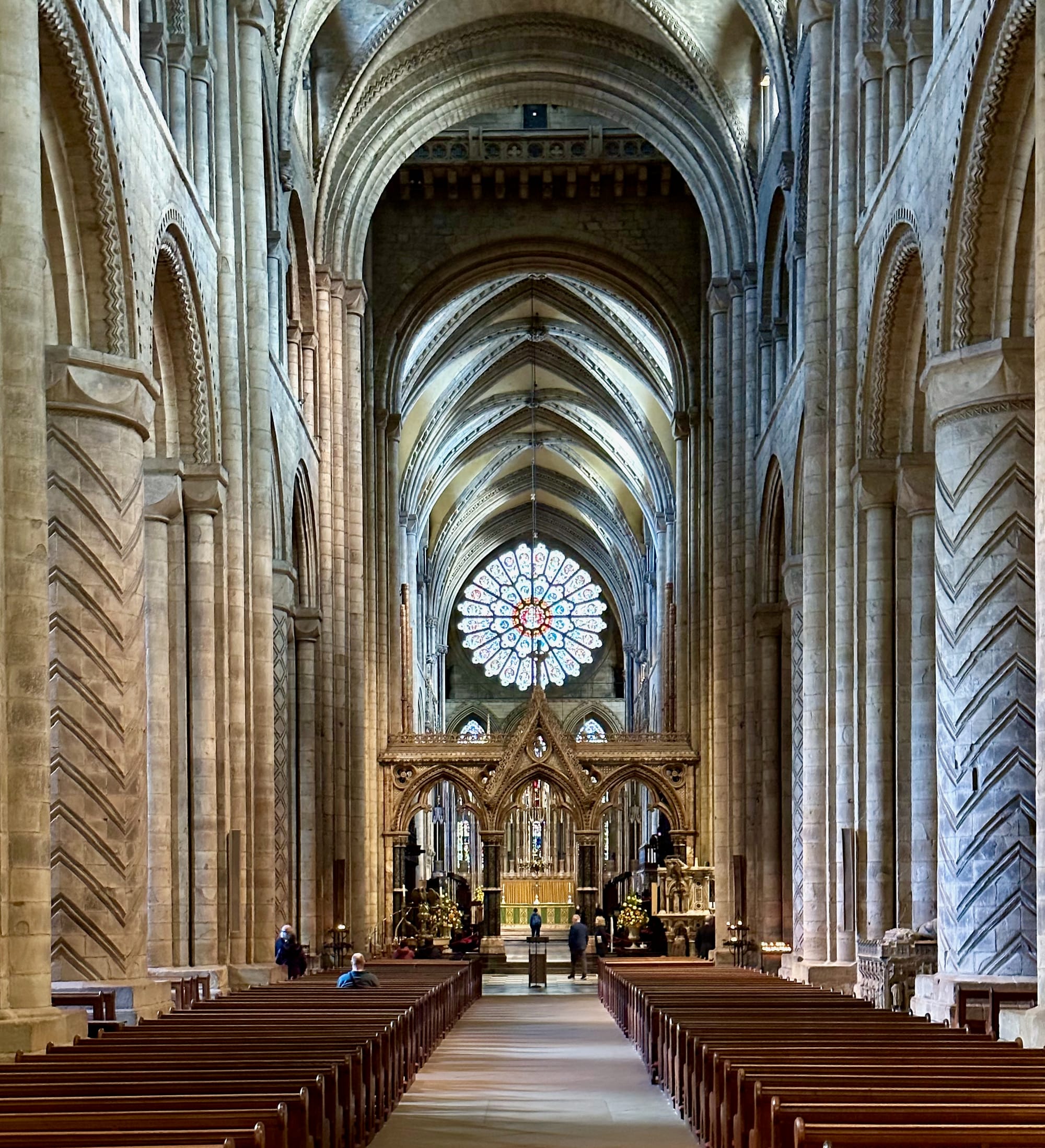
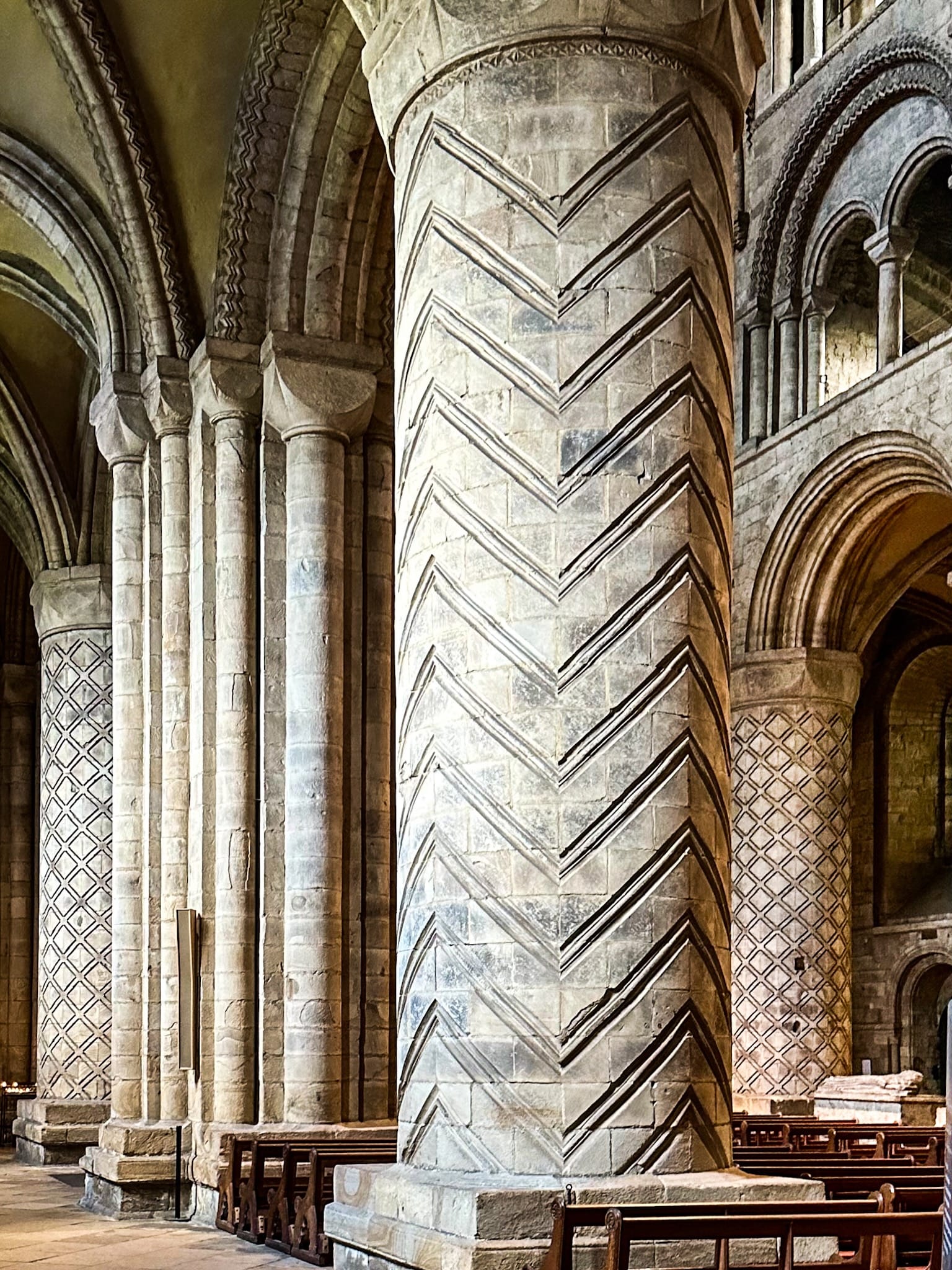
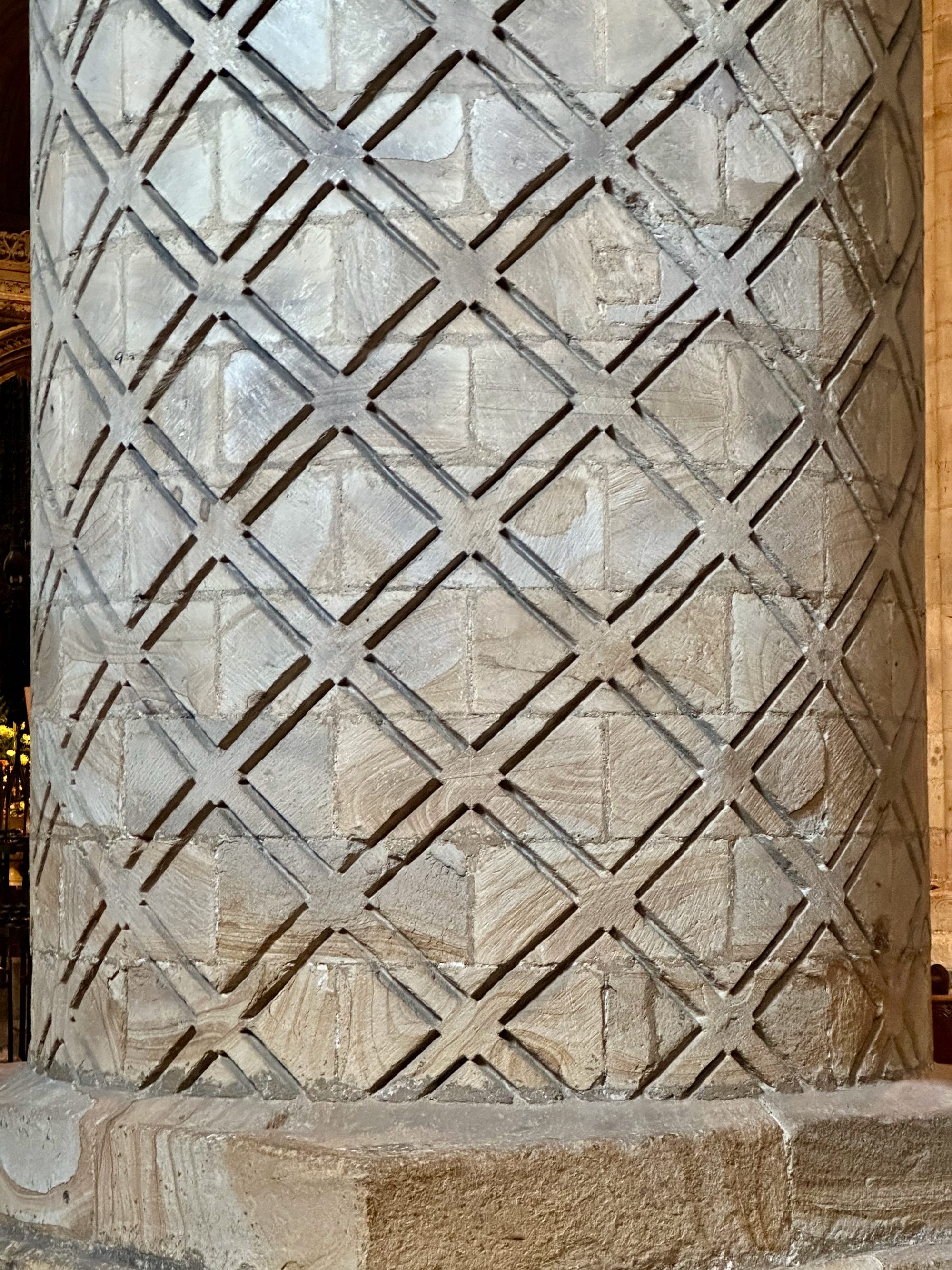
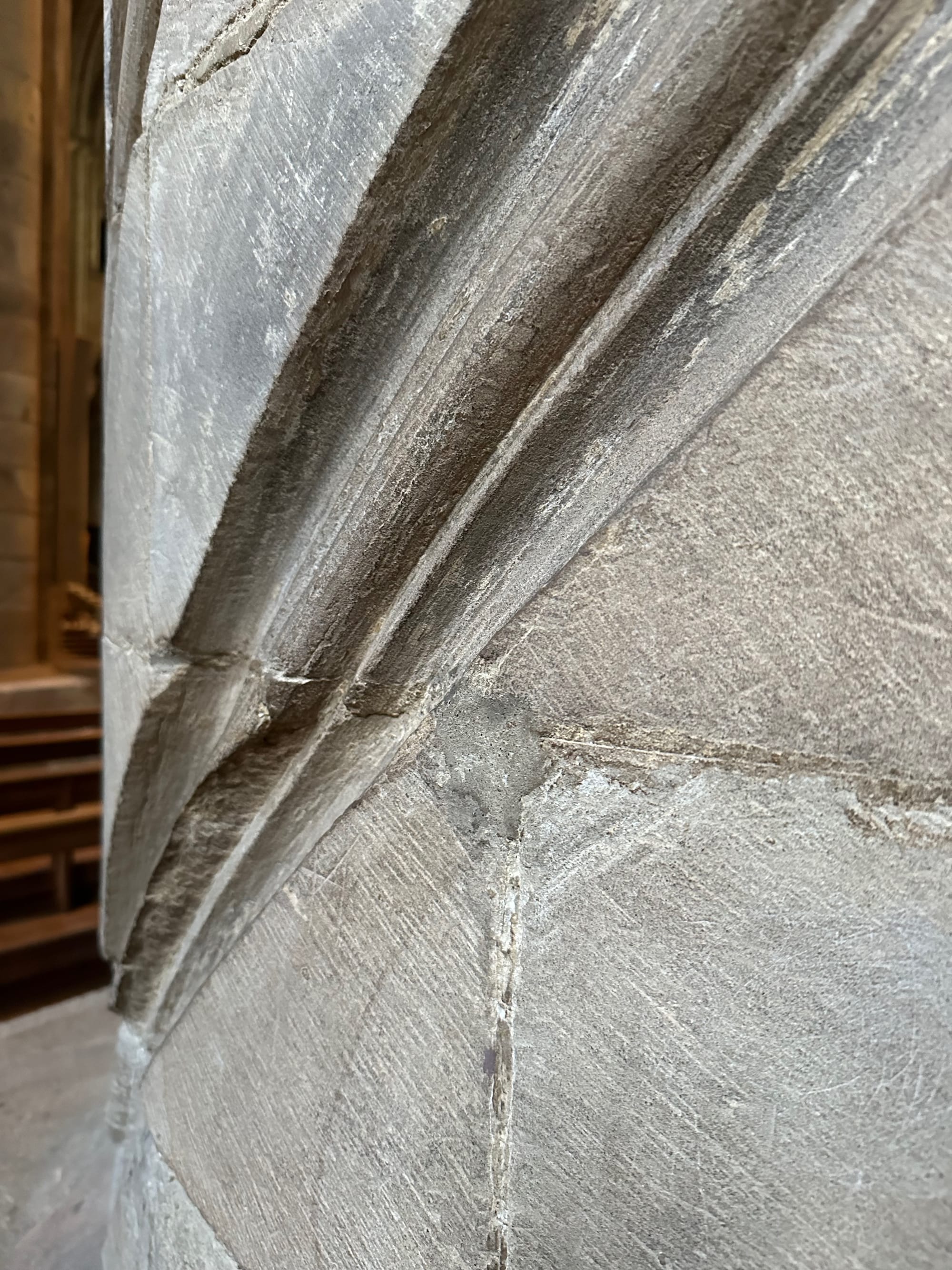
One common feature found throughout is chevron, or zigzag, decoration as here at St. Mary's in Iffley.
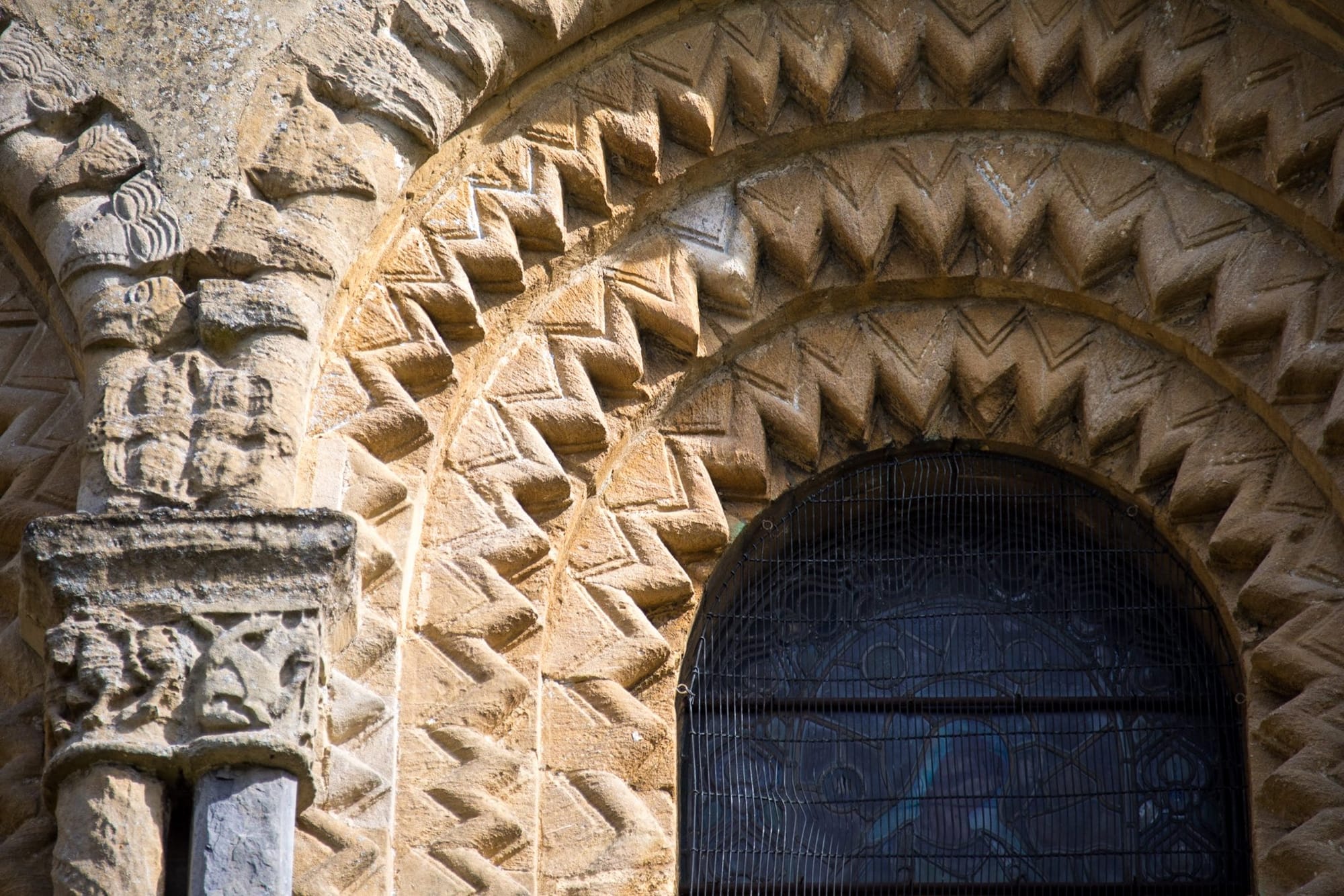
and here at St. John the Baptist in Burford
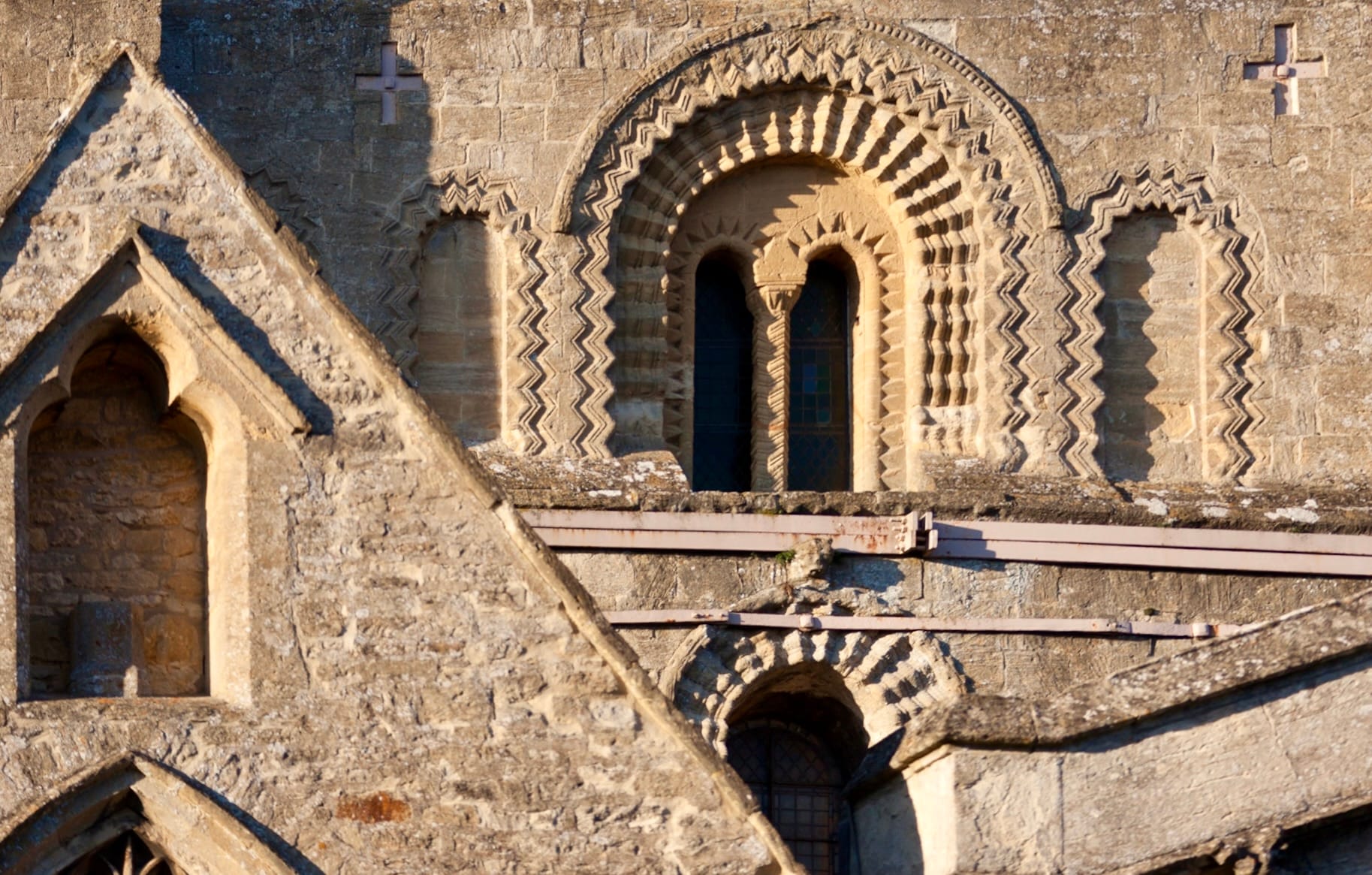
Romanesque architecture is also defined by its thick masonry walls and massive piers, round-headed arches—as opposed to pointed Gothic arches—deeply recessed doorways with stepped orders and shafts, and lively geometric decoration incorporating foliage, animals, monsters and biblical figures.
St. George, Hampnett (with later Victorian speculative decoration)
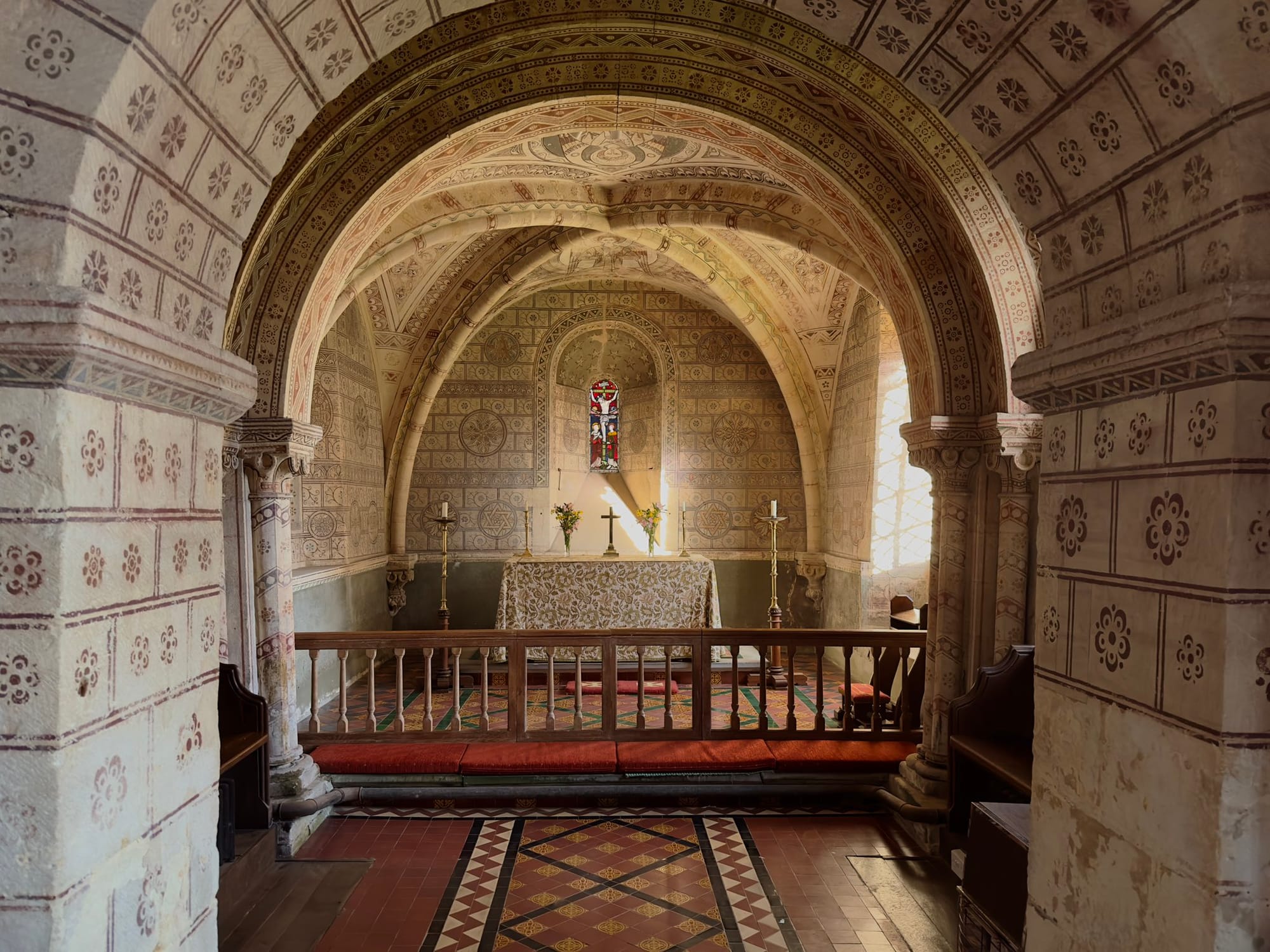
St. John the Evangelist in Elkstone
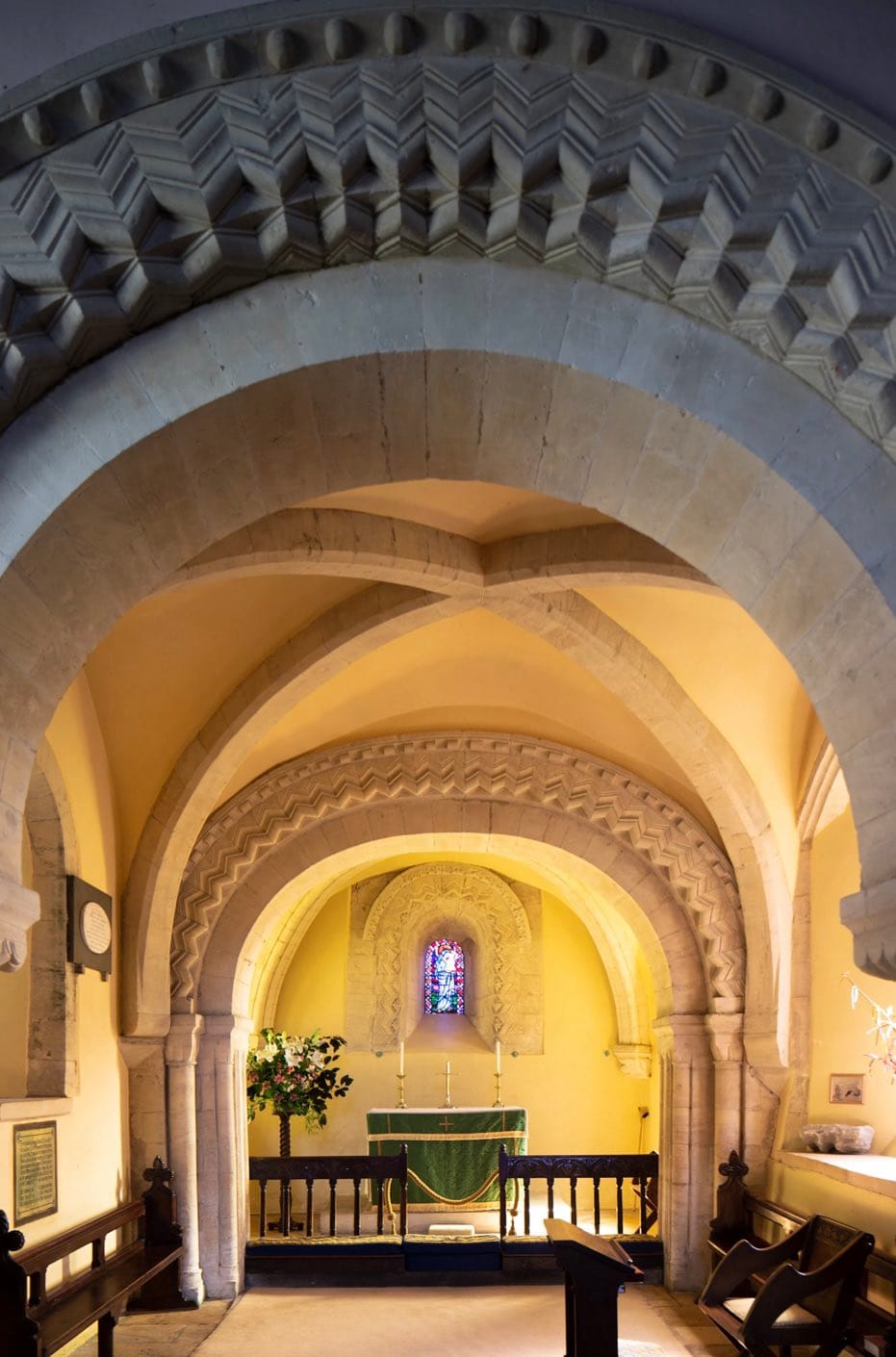
Malmesbury Abbey
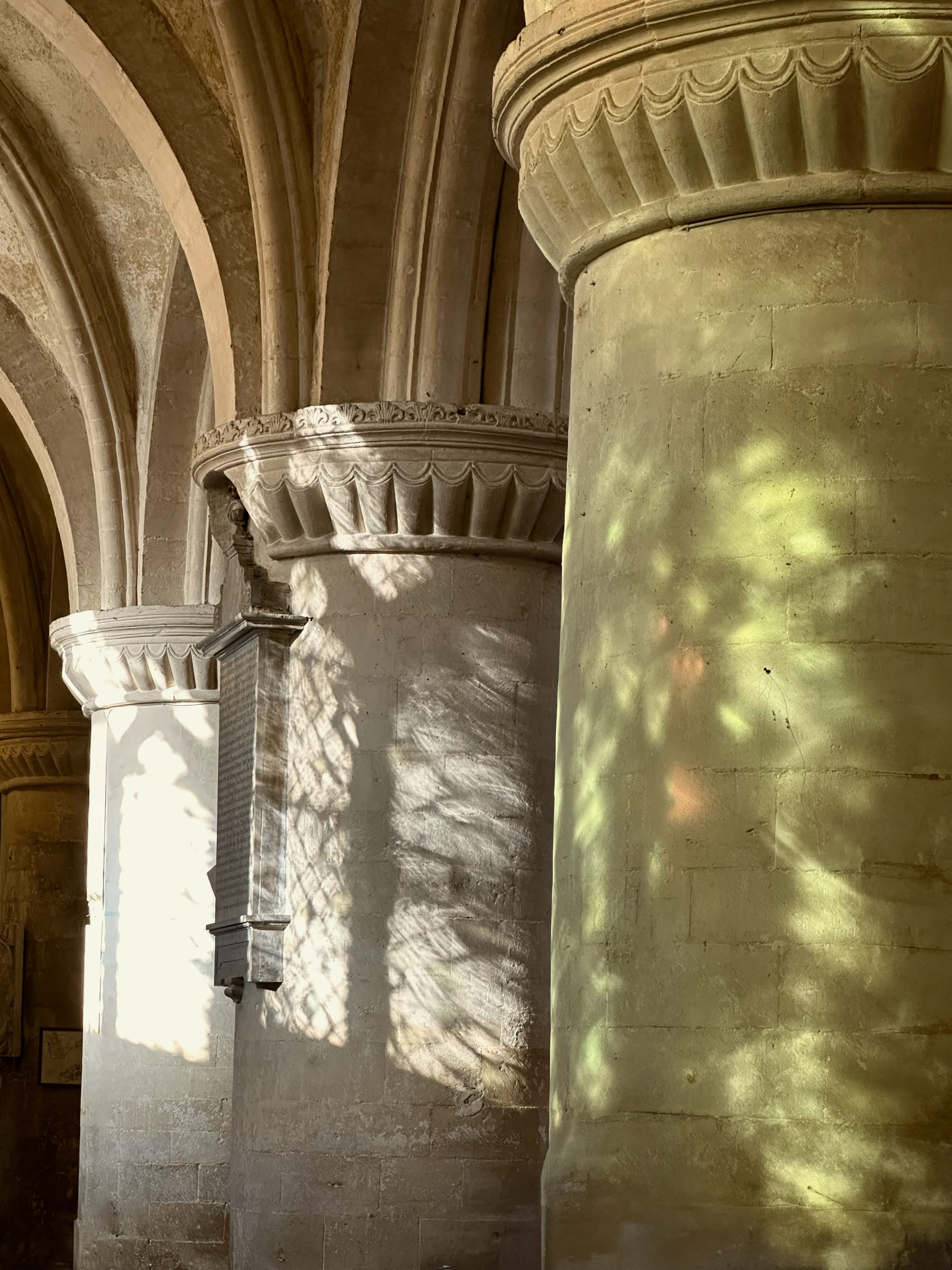
St. Andrew's, Bolam - watercolour my own.
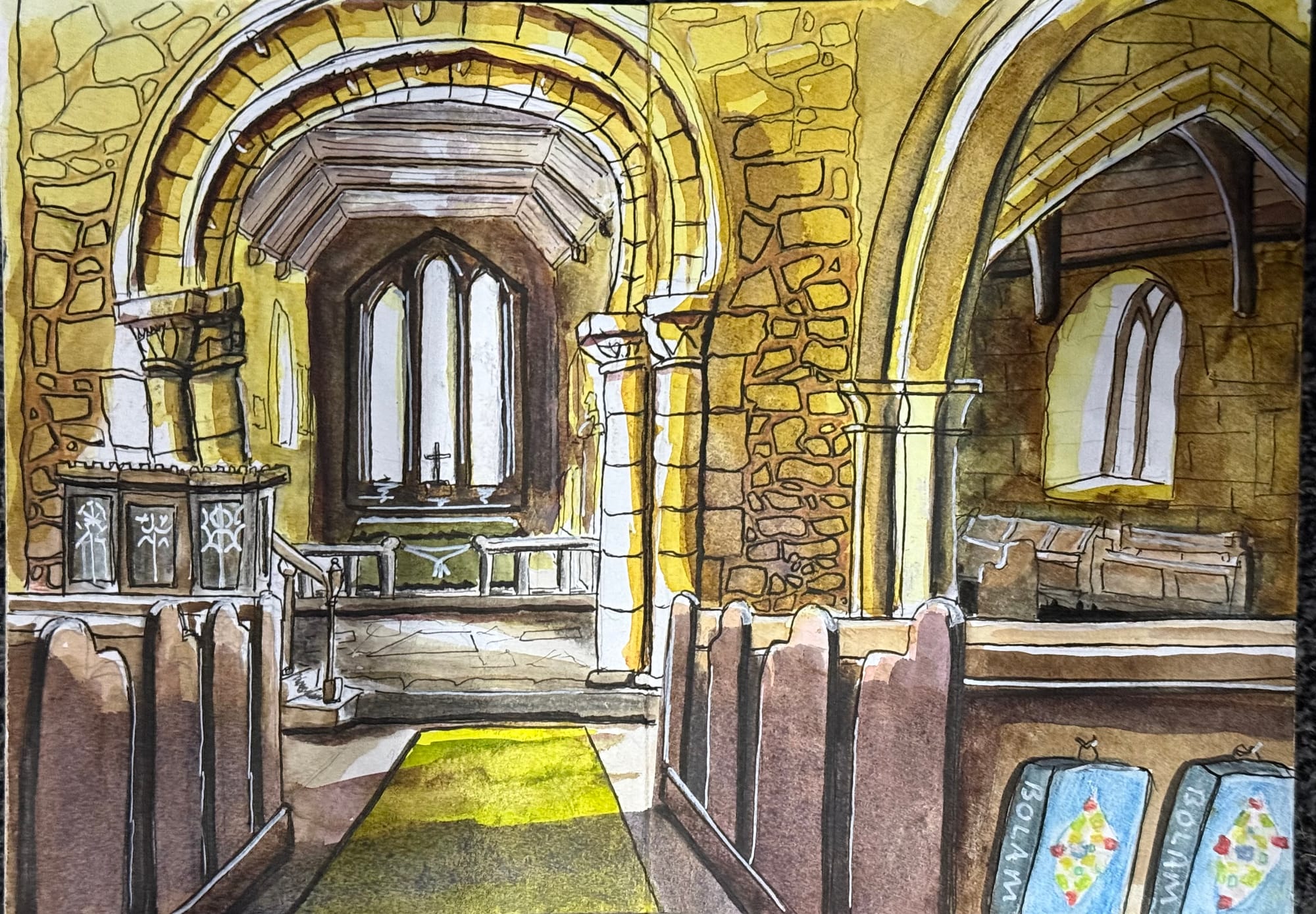
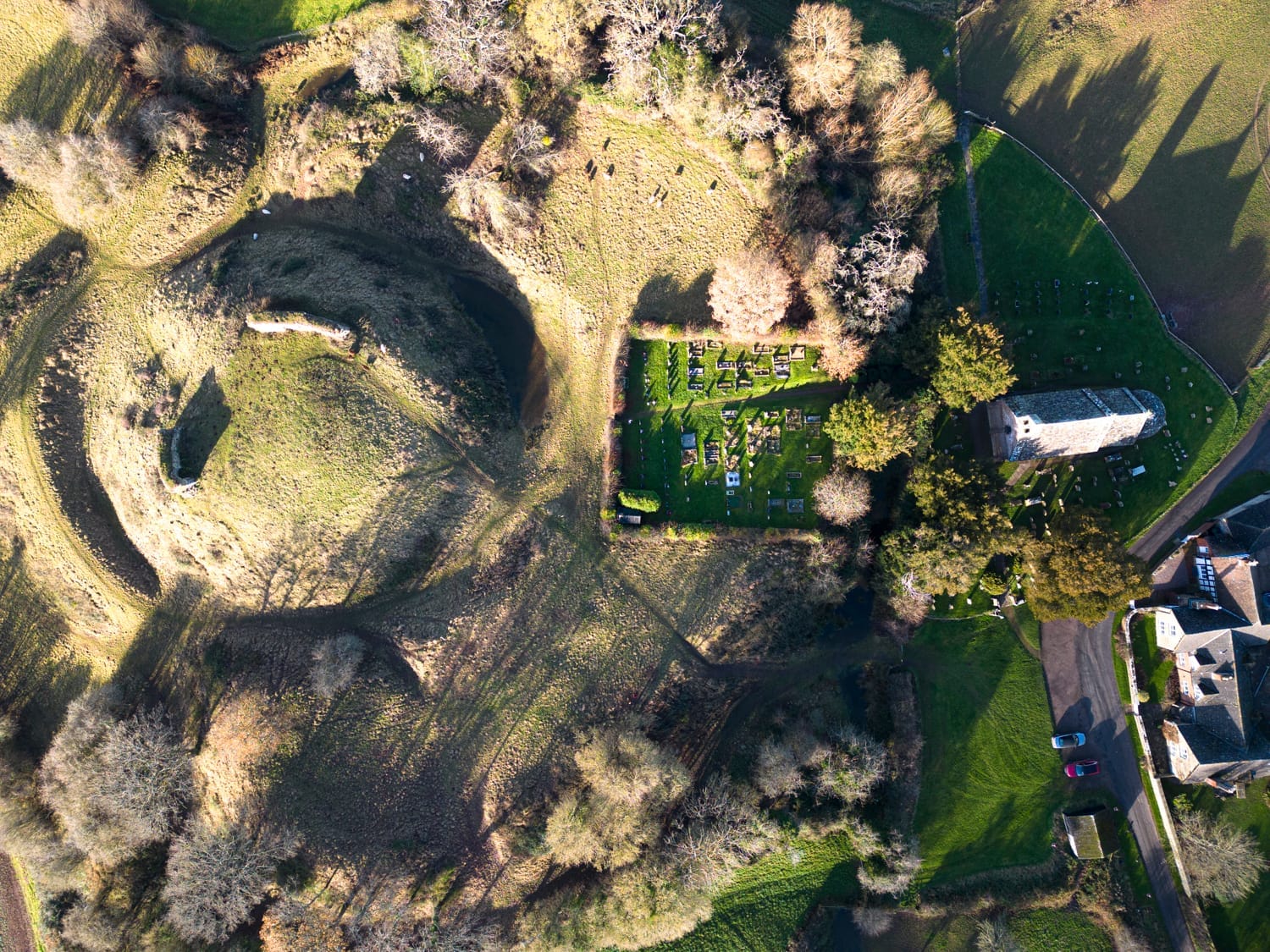
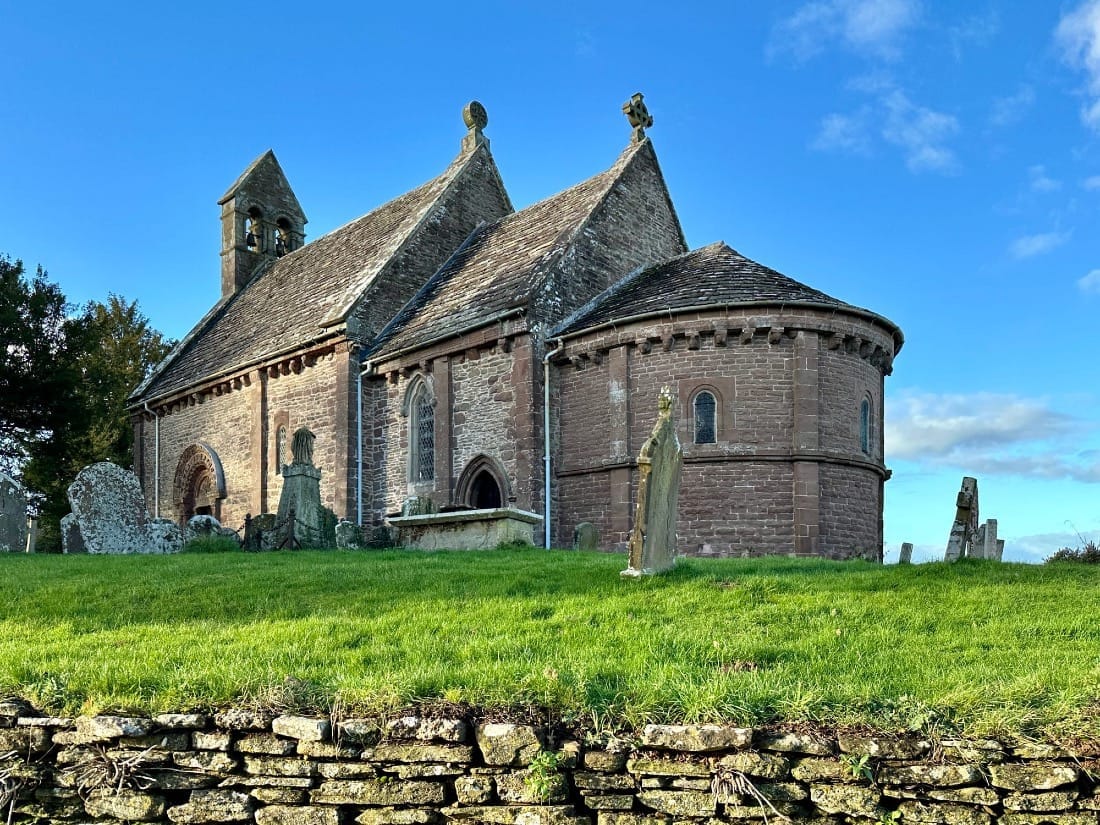
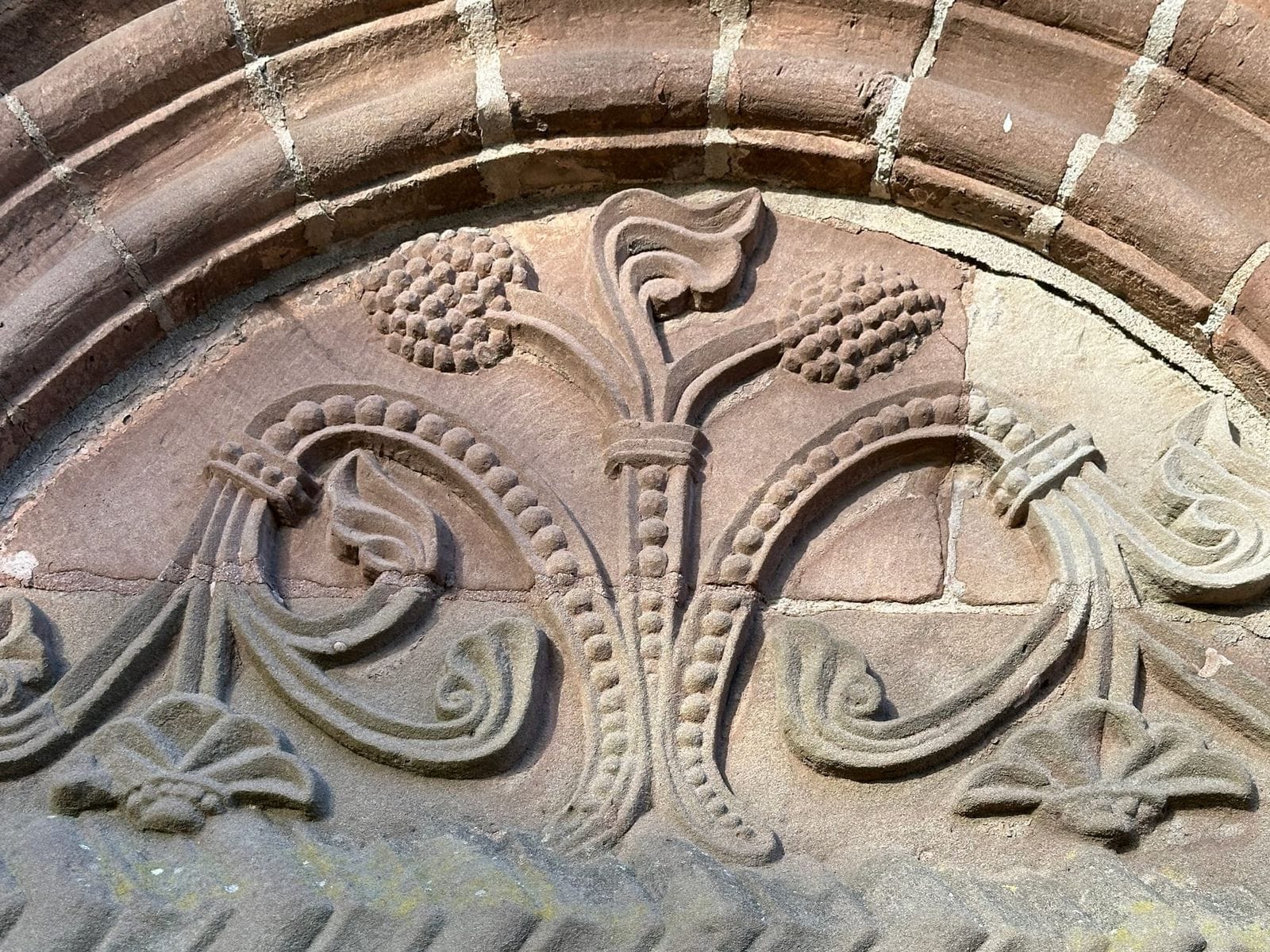
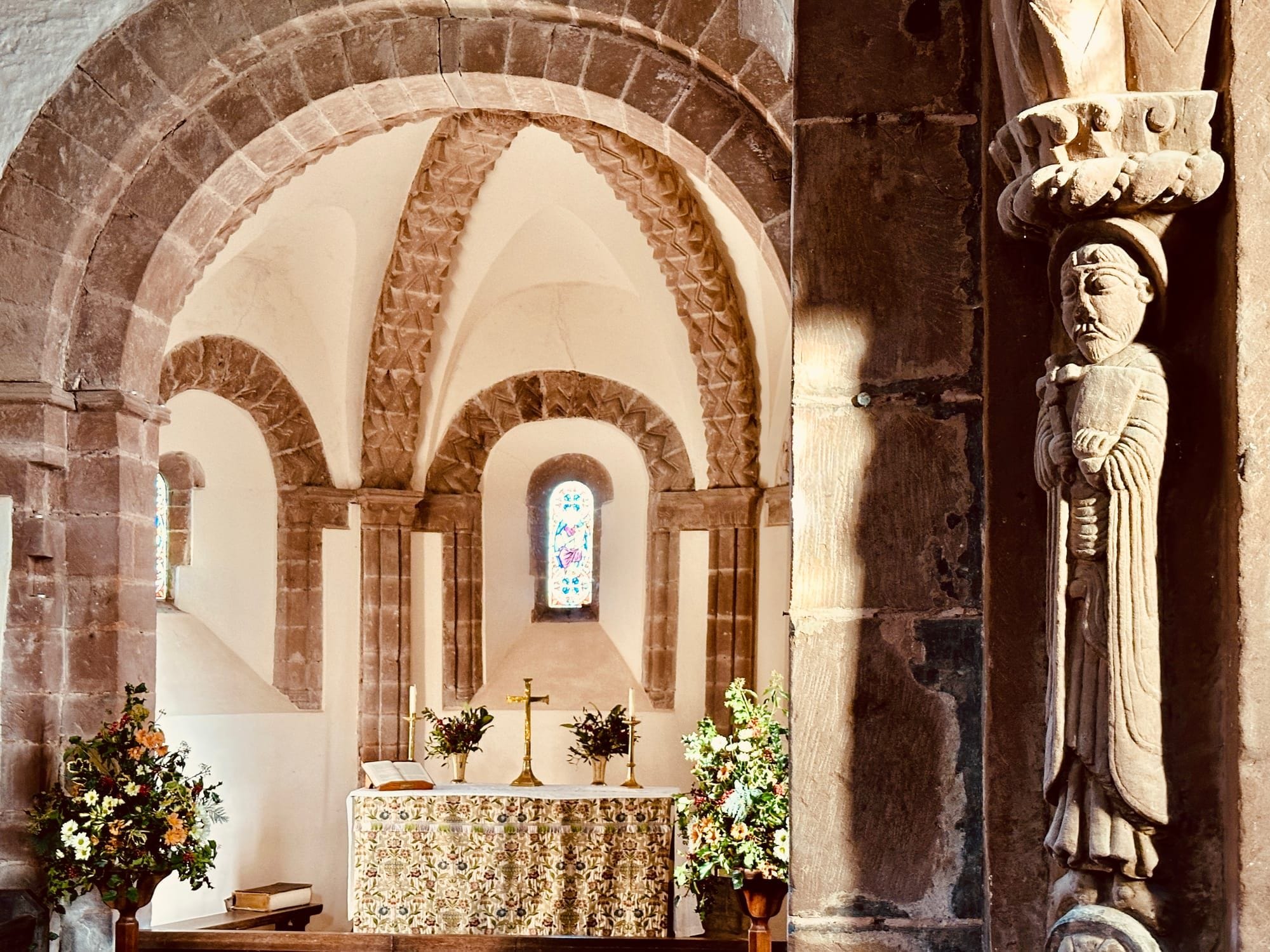
St. Mary and St. David's, Kilpeck
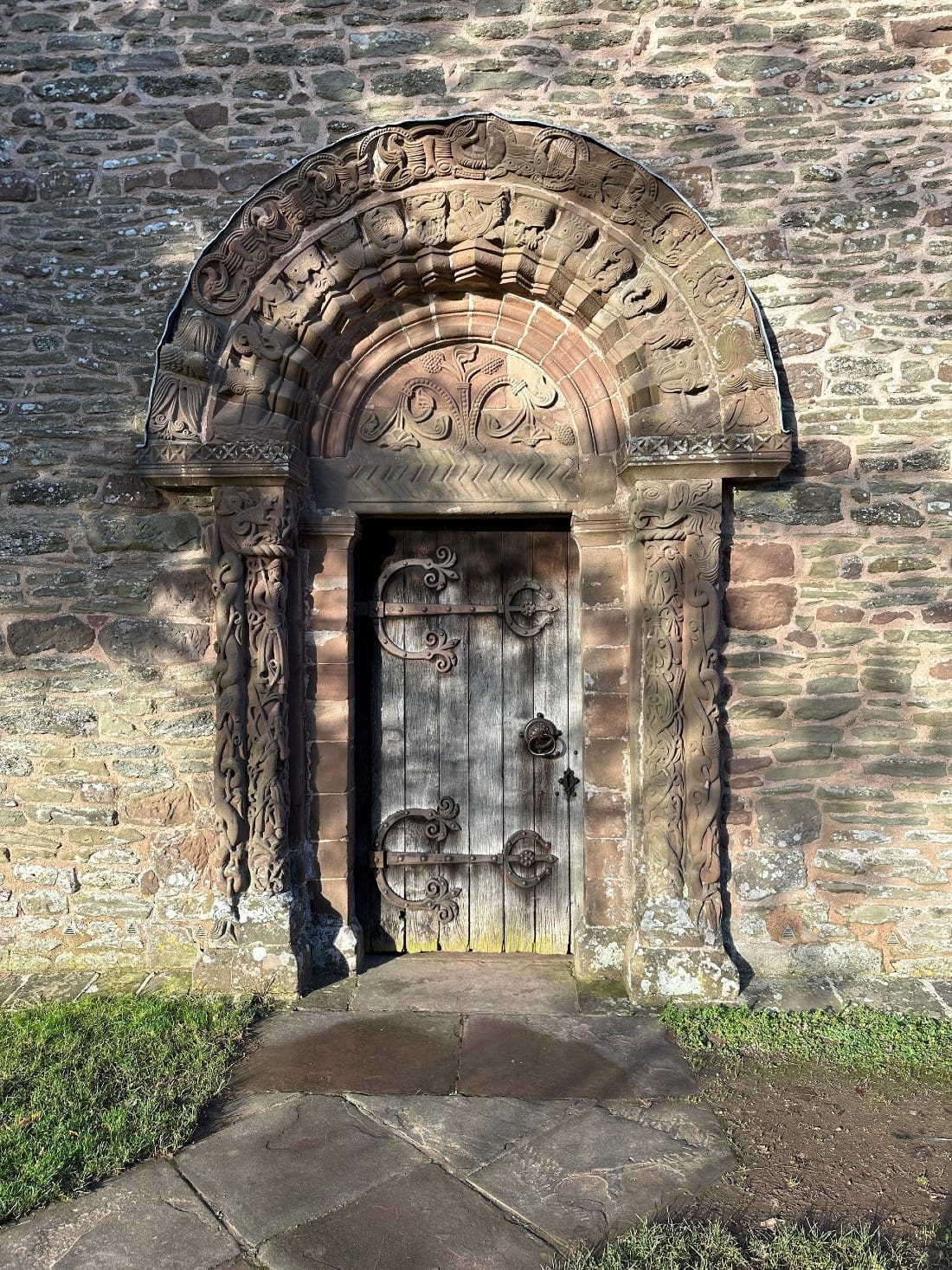
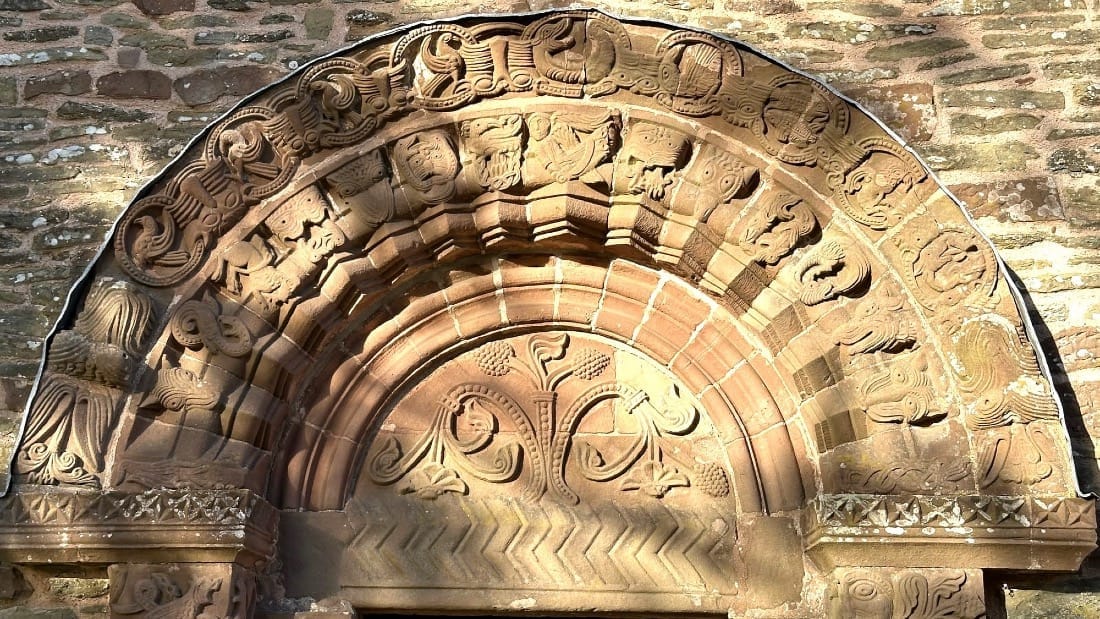
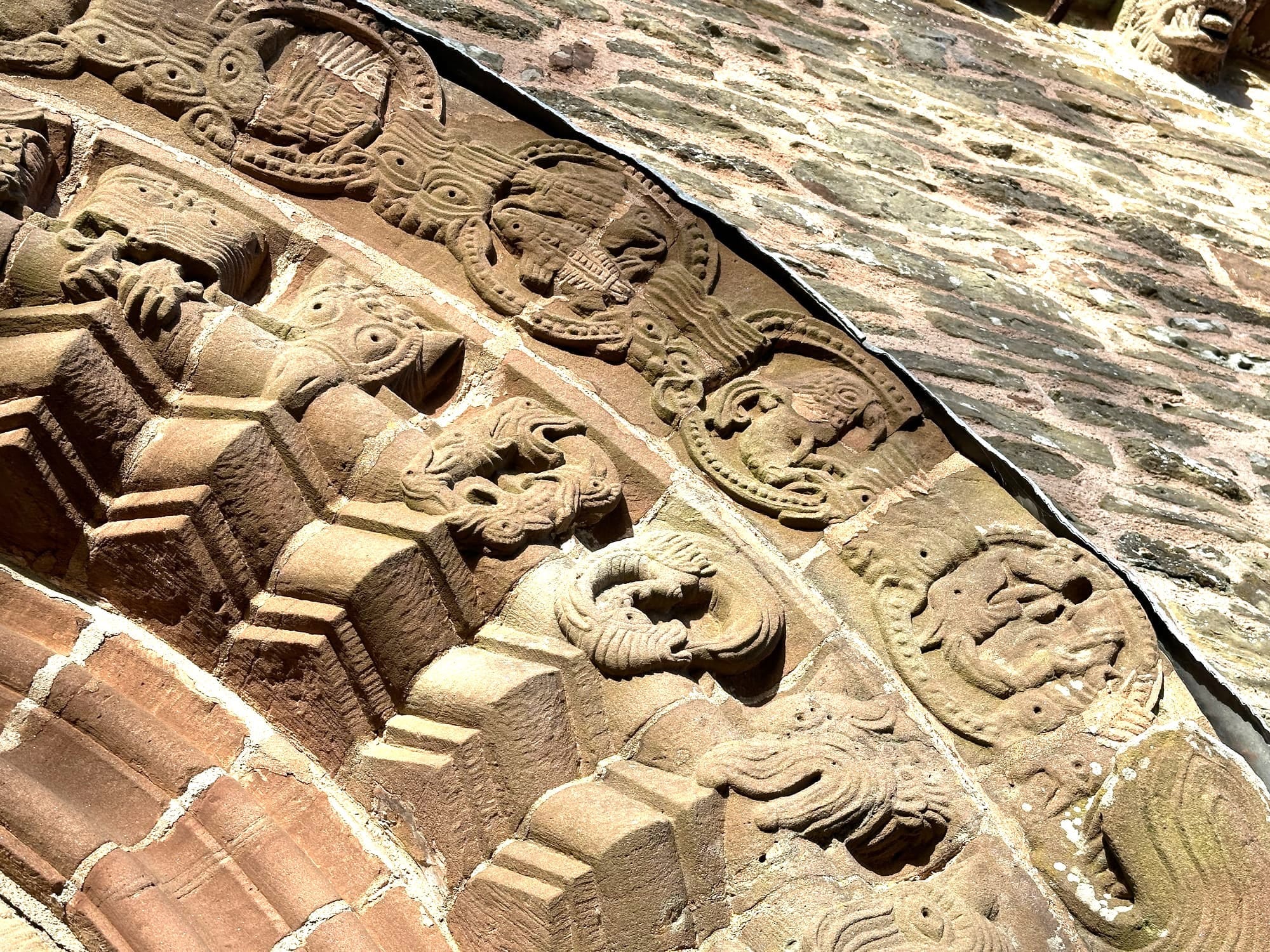
Norman architecture in Britain is also known for its distinctive beakheads—small, creature-like heads that appear to bite down upon the mouldings around doors and windows.
St. Mary, Iffley
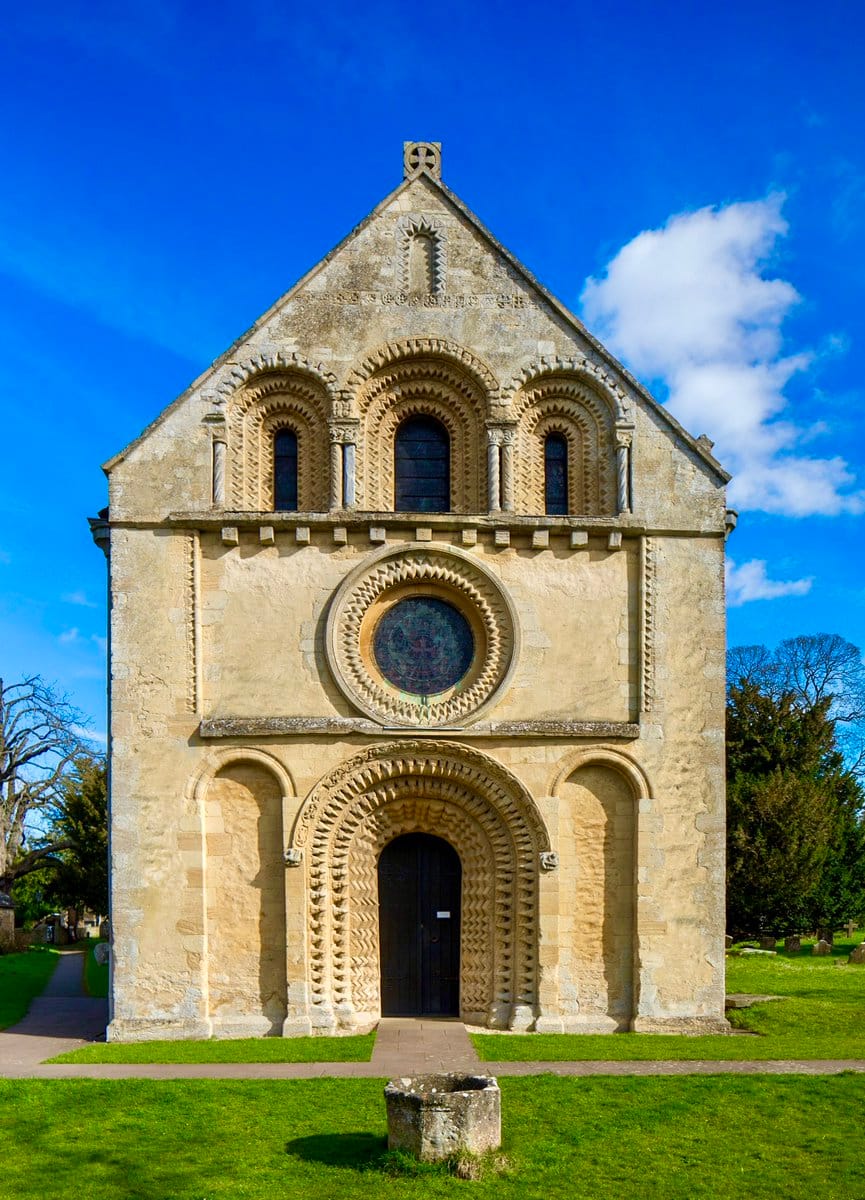
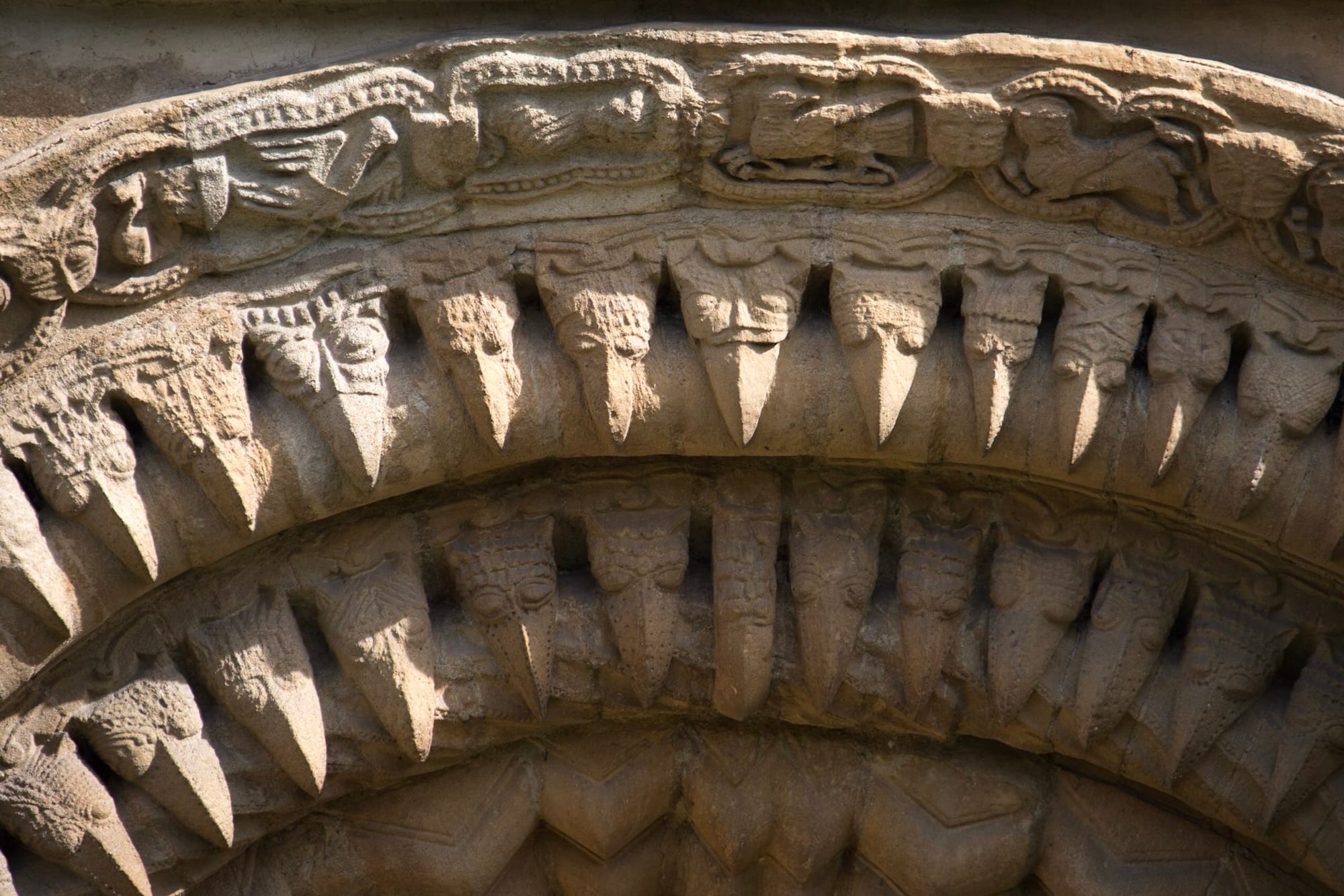
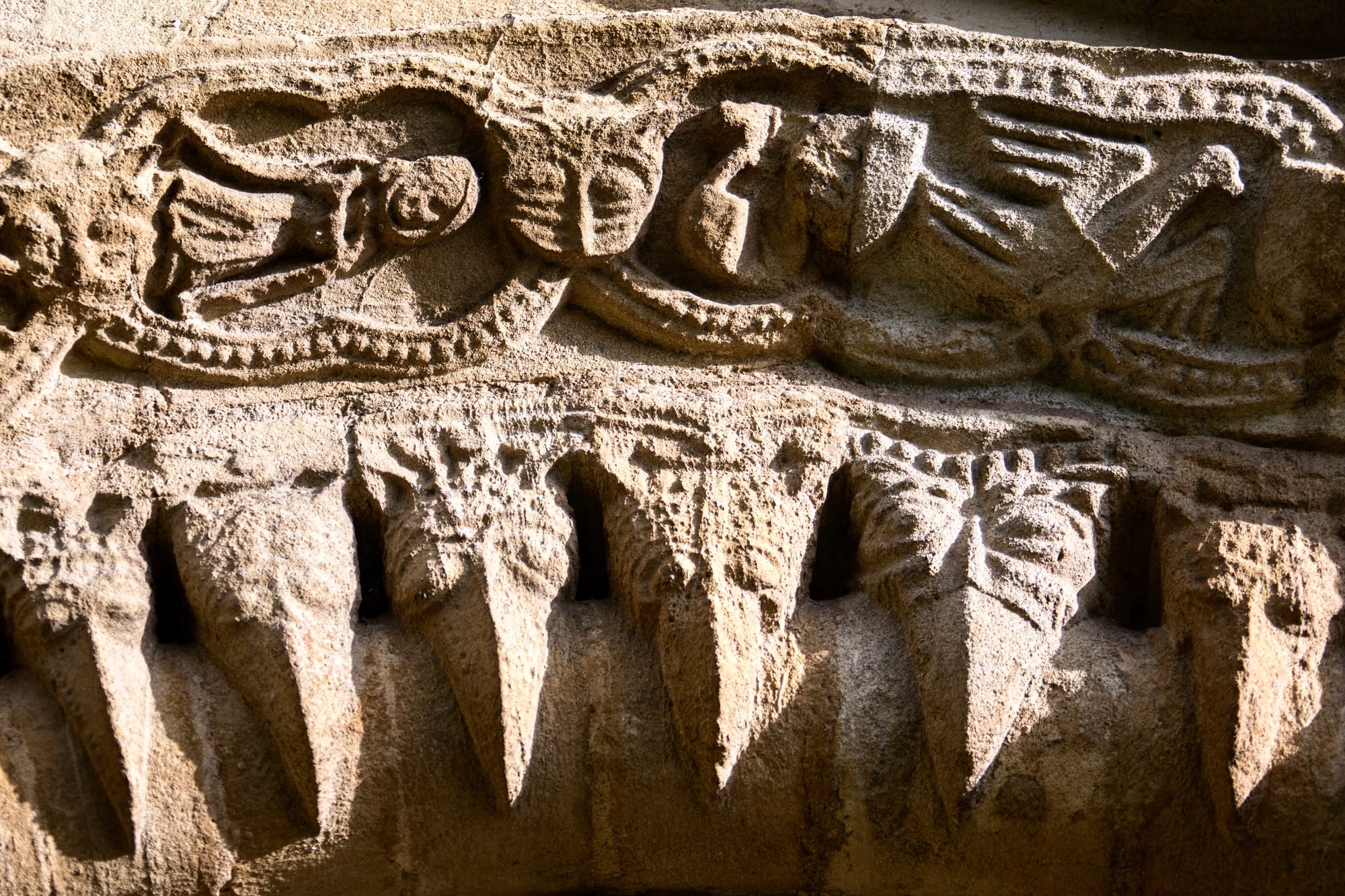
The Normans’ Scandinavian ancestry—their name derives from “Norsemen”—may help explain the unmistakably Nordic character of some Norman ornament.
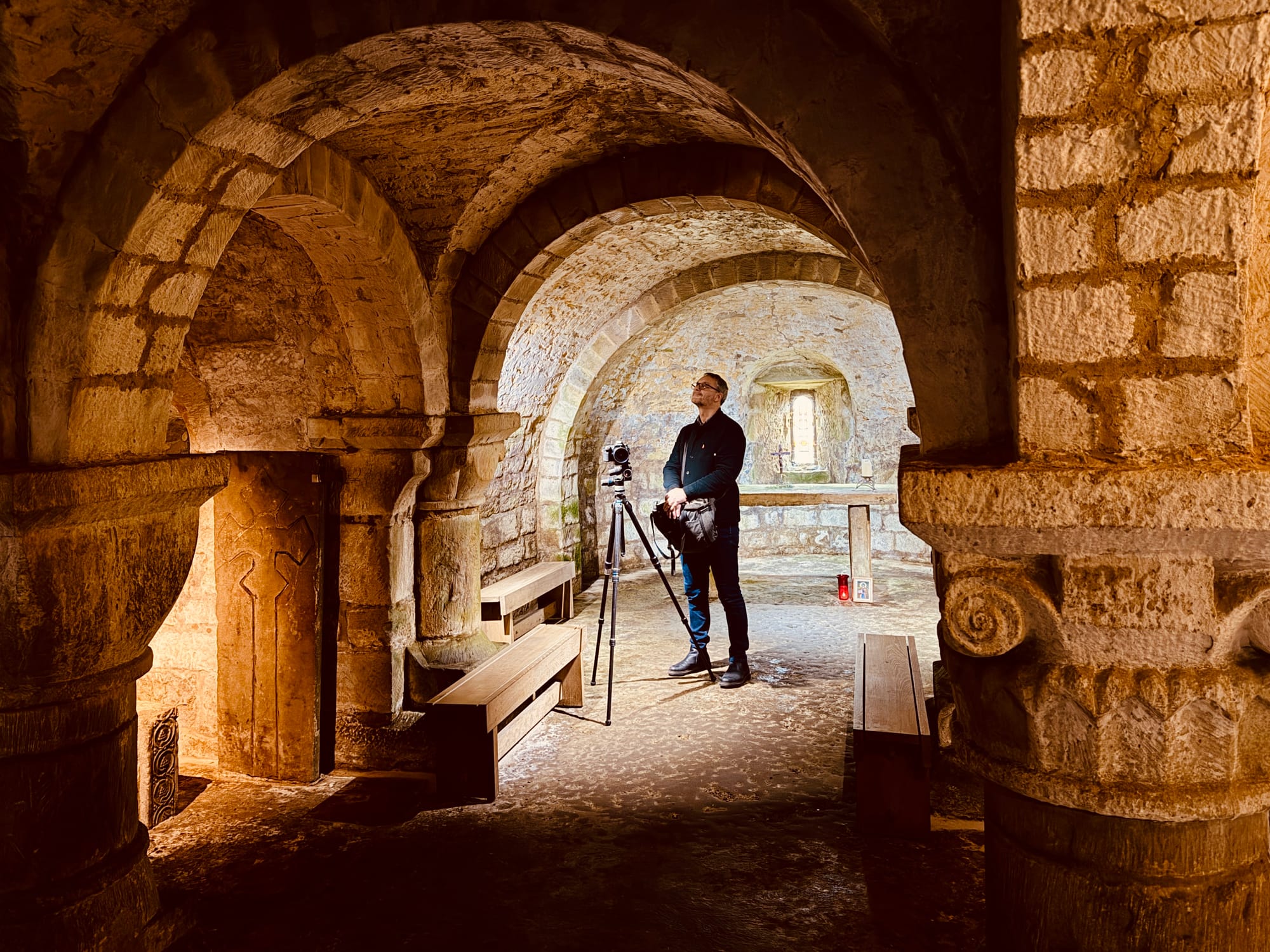
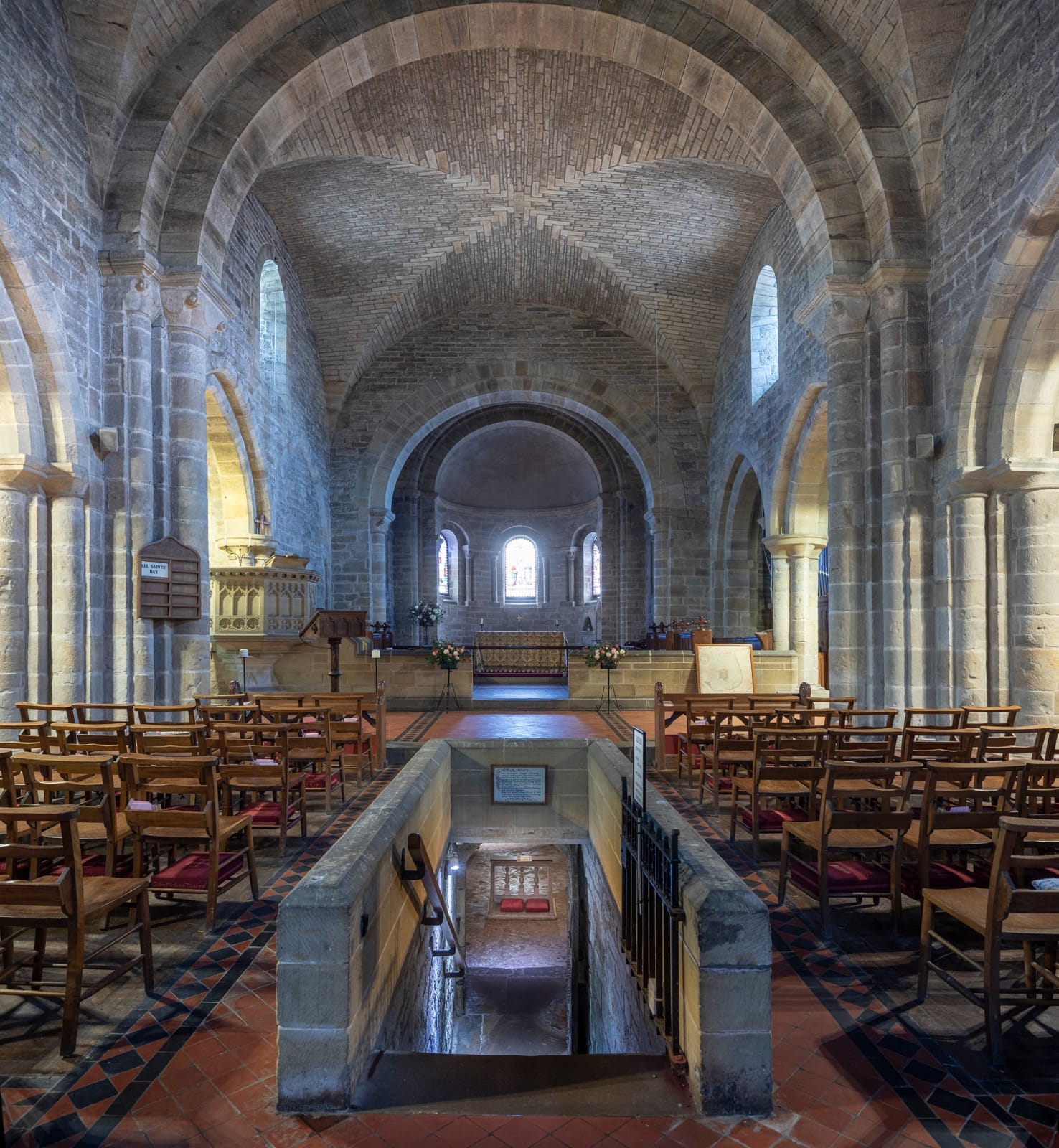
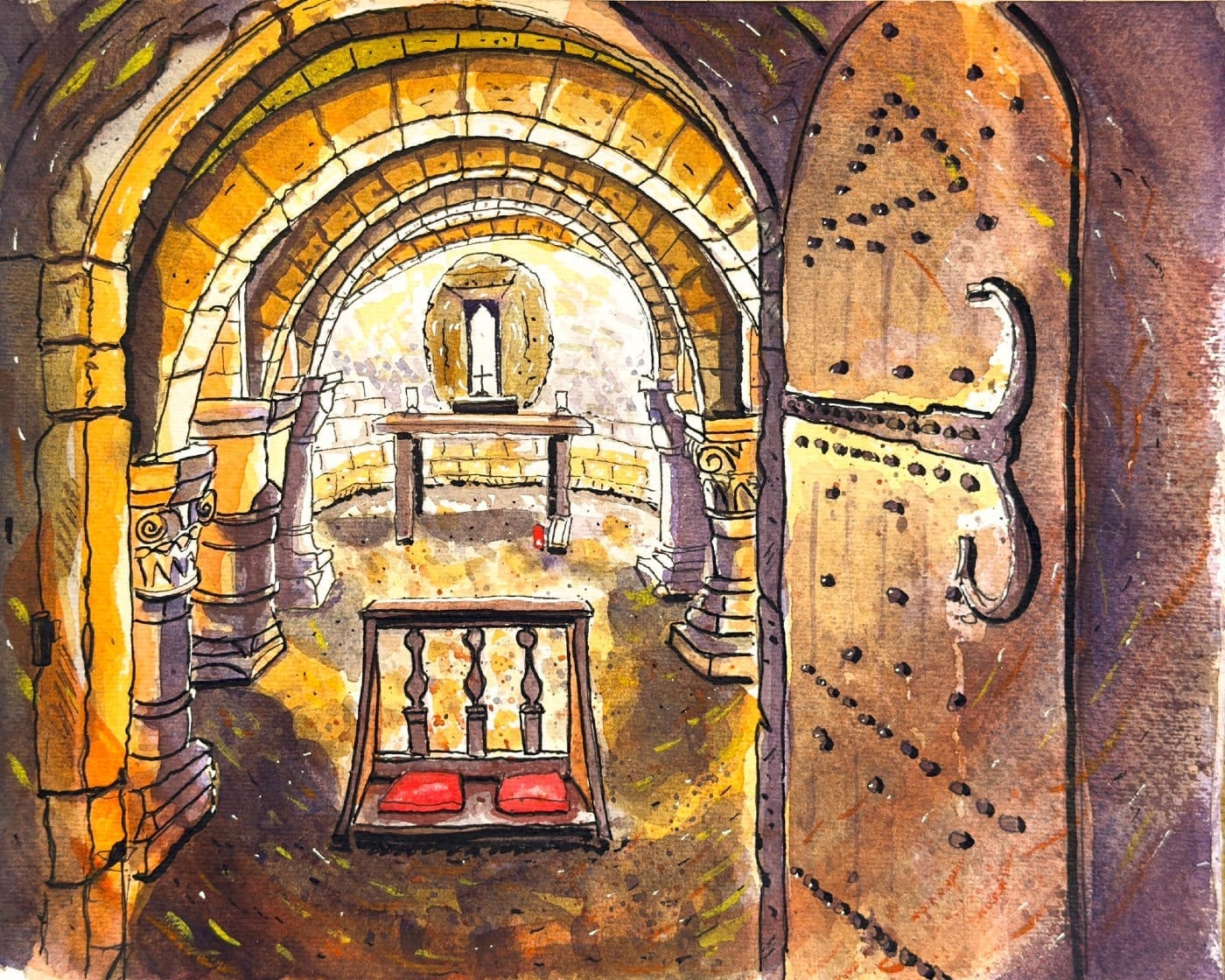
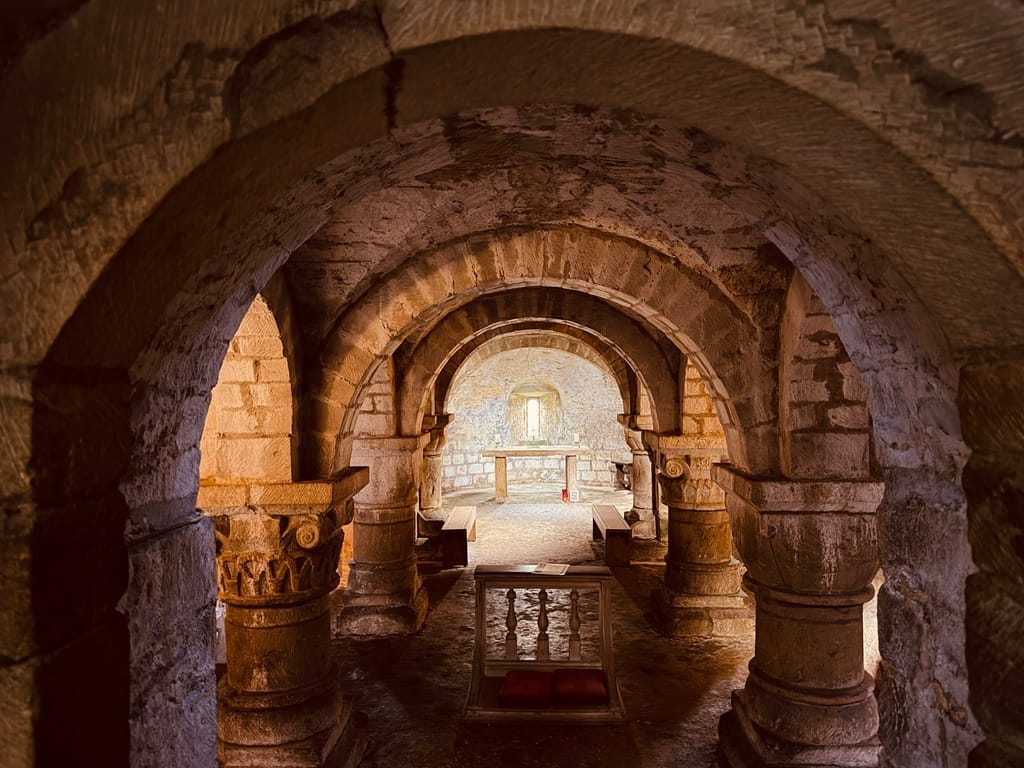
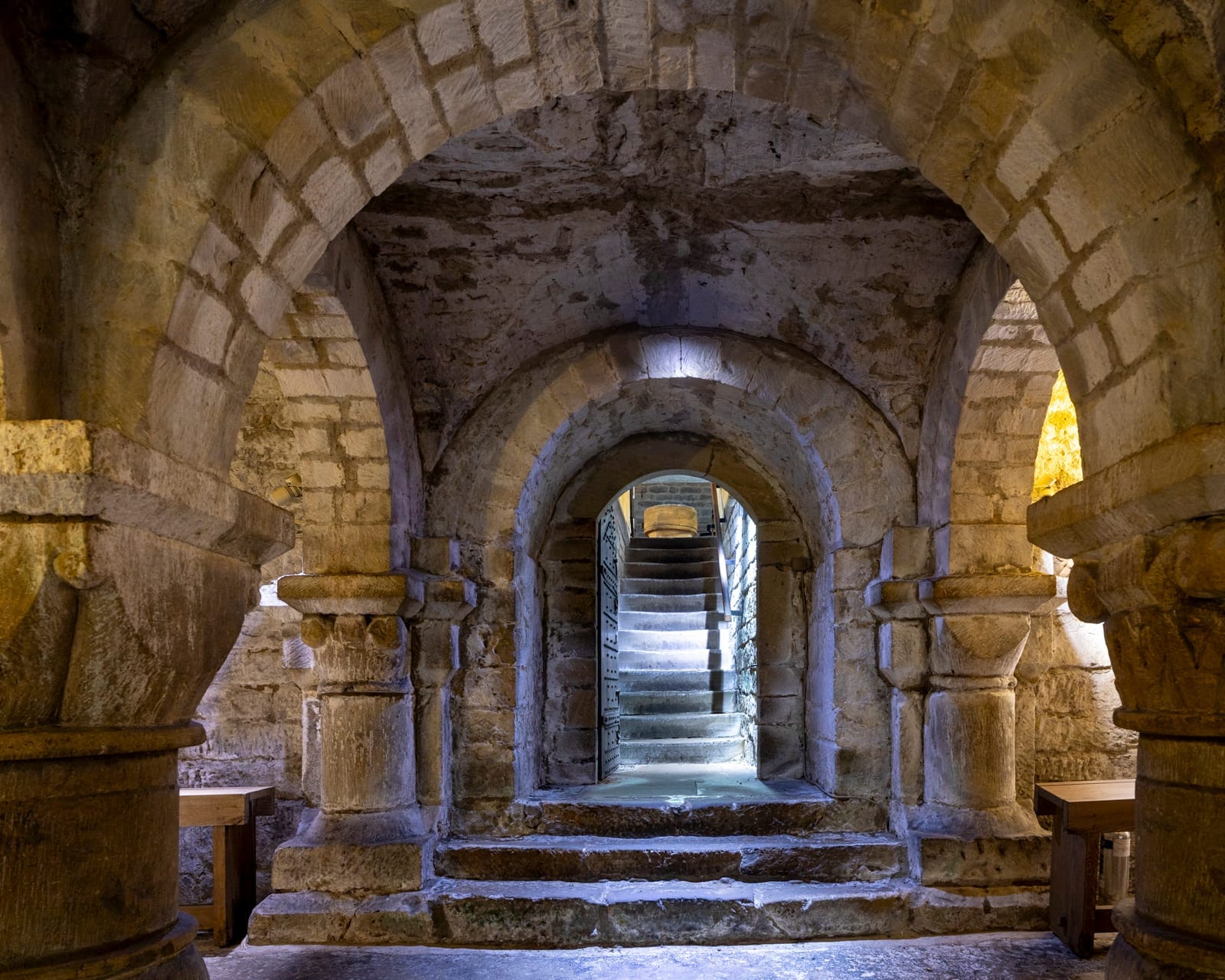
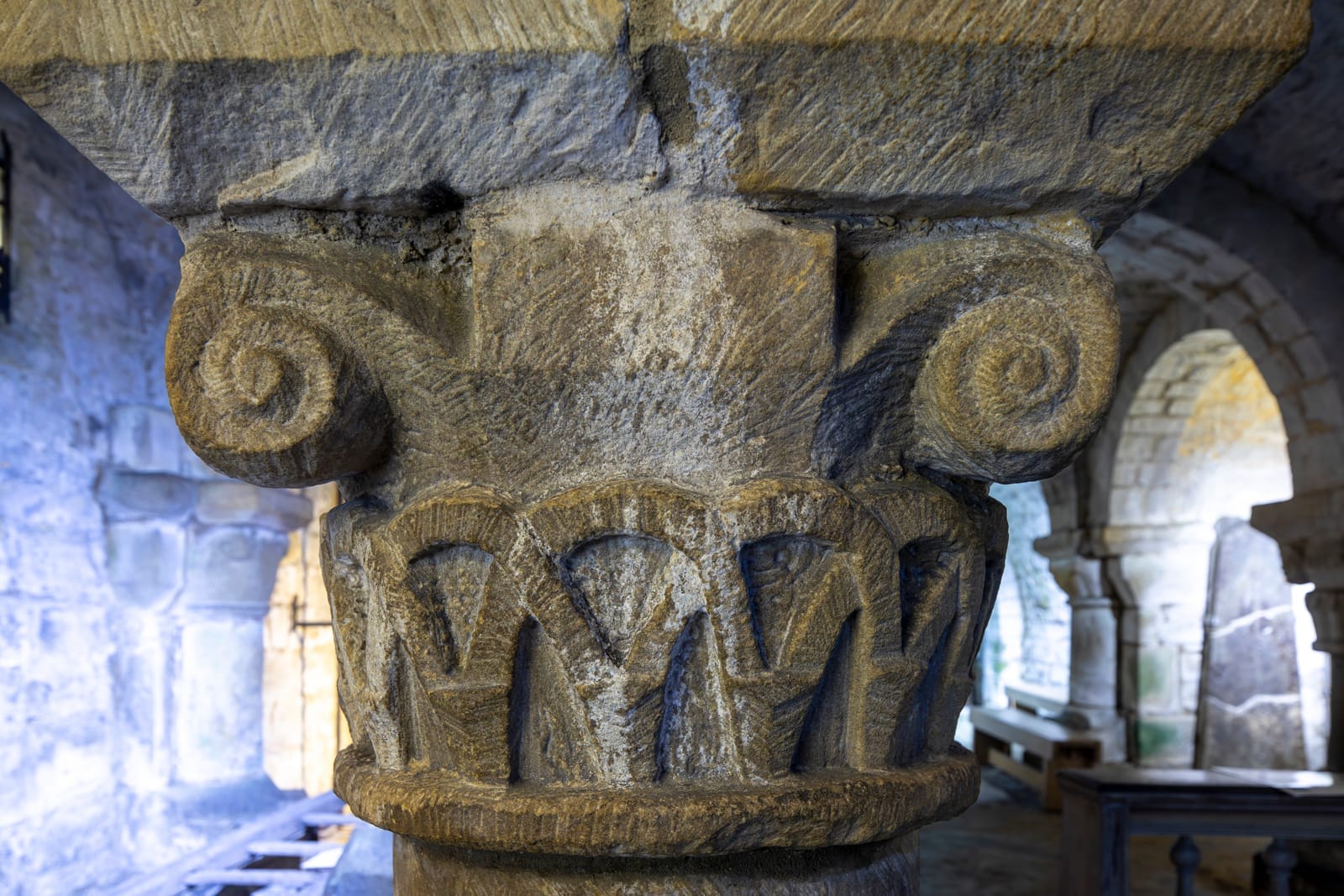
The crypt at St. Mary, Lastingham
The Rabbit Hole · Romanesque
Down we go.
Three buildings. Three encounters with the Romanesque
Choose a thresholdThree lenses on
the Romanesque
Romanesque, to me, always feels muscular and grounded and yet the cut of the stone takes it into the supernatural.
Newport · fragments into coherence
A building that remembers.
“Each generation refusing to discard what came before, instead incorporating, re-carving, re-expressing, and carrying it forward.”
Enter NewportKilpeck · a place between
An oddity in the English landscape.
“That such an exotic thing with Angkor Watt curves can be hidden within the ballast of a grim winter’s day is quite remarkable.”
Follow the carvingsMalmesbury · the observer enters
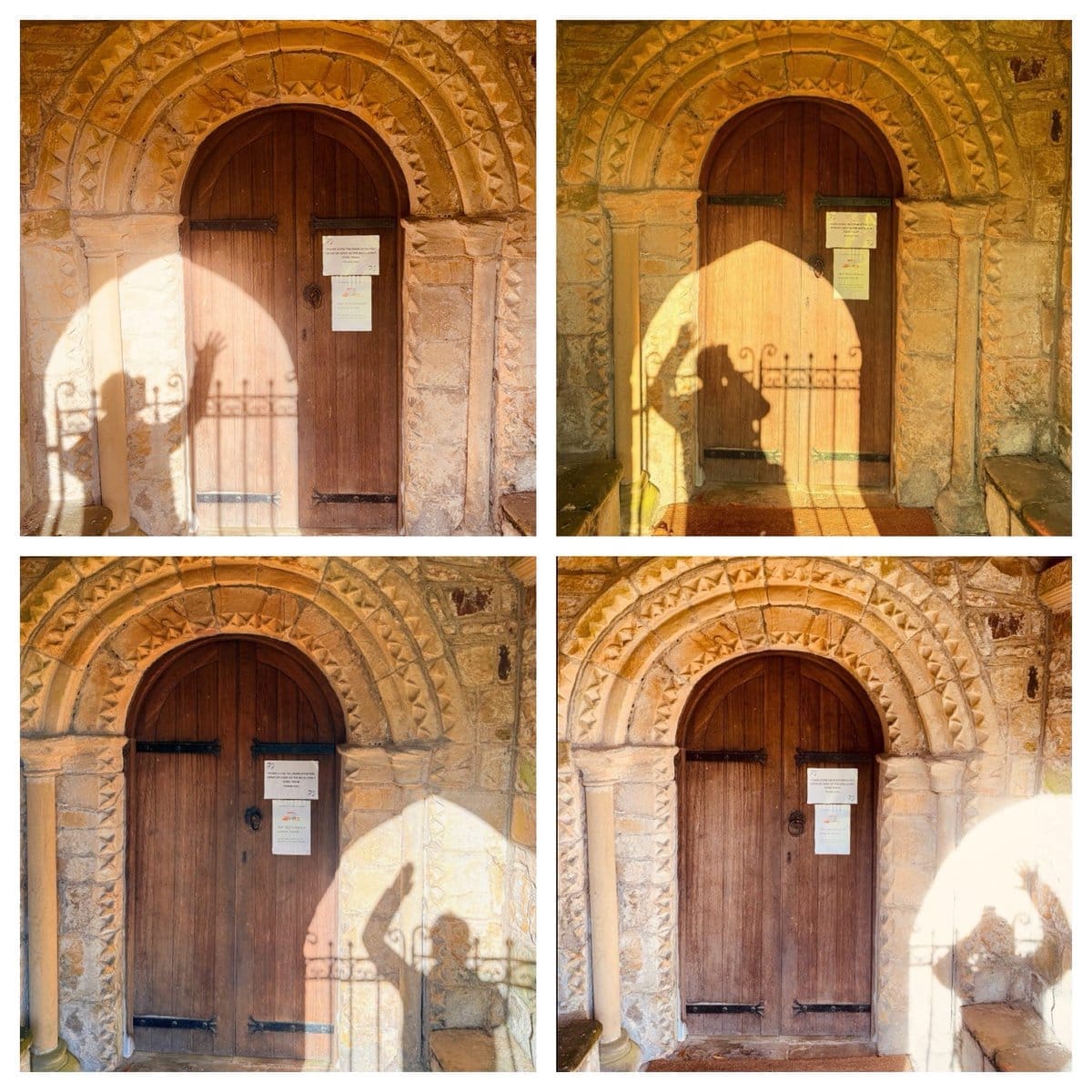
A porch becomes a time machine.
“The light is storyboarding the building and unravelling the beliefs, hopes and fears of the medieval mind.”
Step into the porch
Member discussion