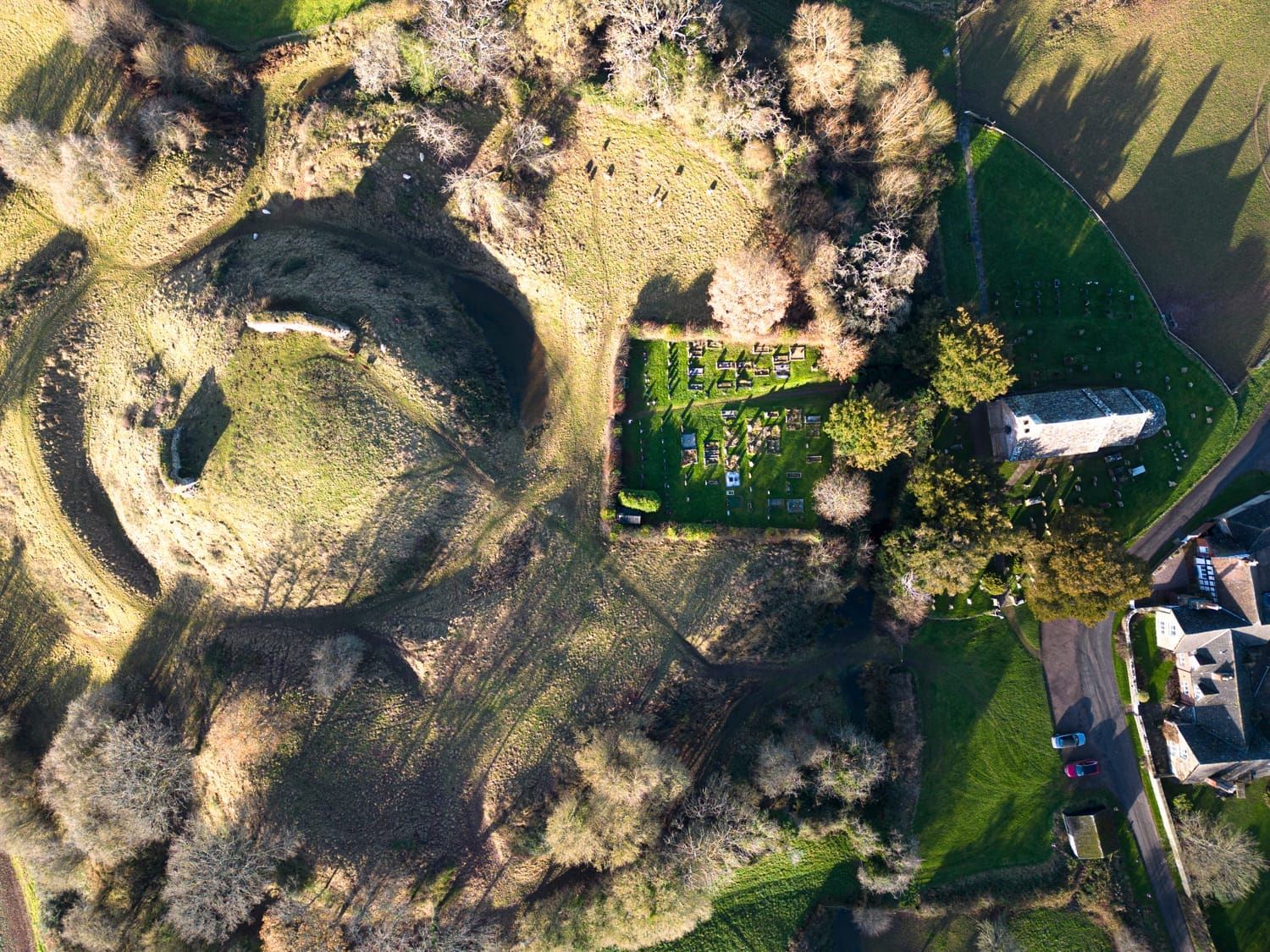
Kilpeck, Herefordshire
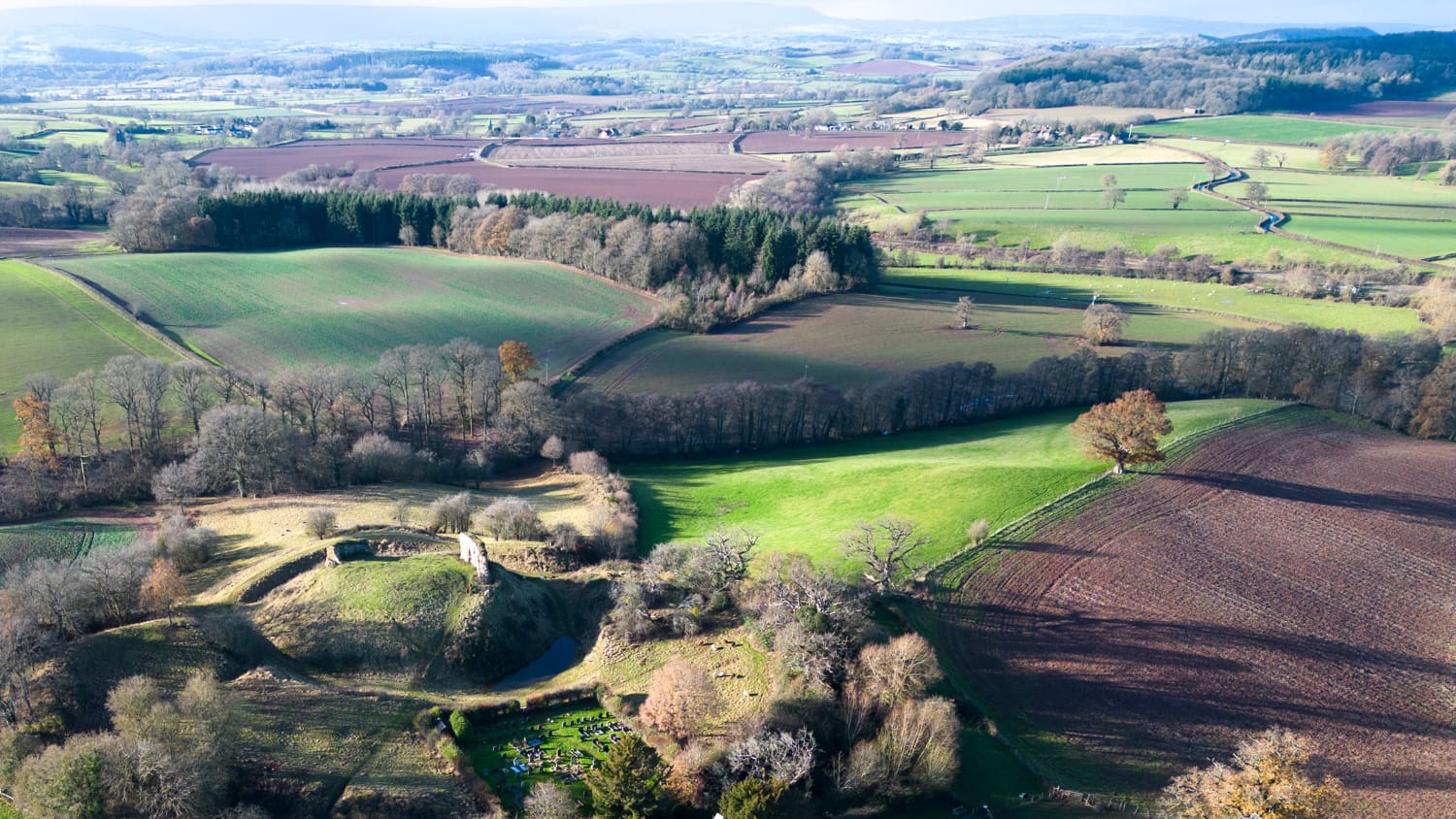
I'm driving through a bleak winter landscape. The season has de-saturated the colour in the fields. Bony fingered branches rise up towards me and then pass as I drive along the lane. The Mynd is a haze.
Then I can sense a shift in atmosphere. The van wheels are a portent: they change from a hum to a gravelly crunch. The lanes are getting narrower and just beyond the horizon I can see my destination: St. Mary and St. David's, Kilpeck.
That such an exotic thing with Angkor Watt curves can be hidden within the ballast of a grim winter's day is quite remarkable.
Kilpeck is in Herefordshire, England but was originally a part of the Welsh kingdom of Ergyng and the Welsh language remained strong here until the C19th. This is a place between - between two cultures, two identities, two histories. It is from this unique co-mingling of identity that such a remarkable building has come about.
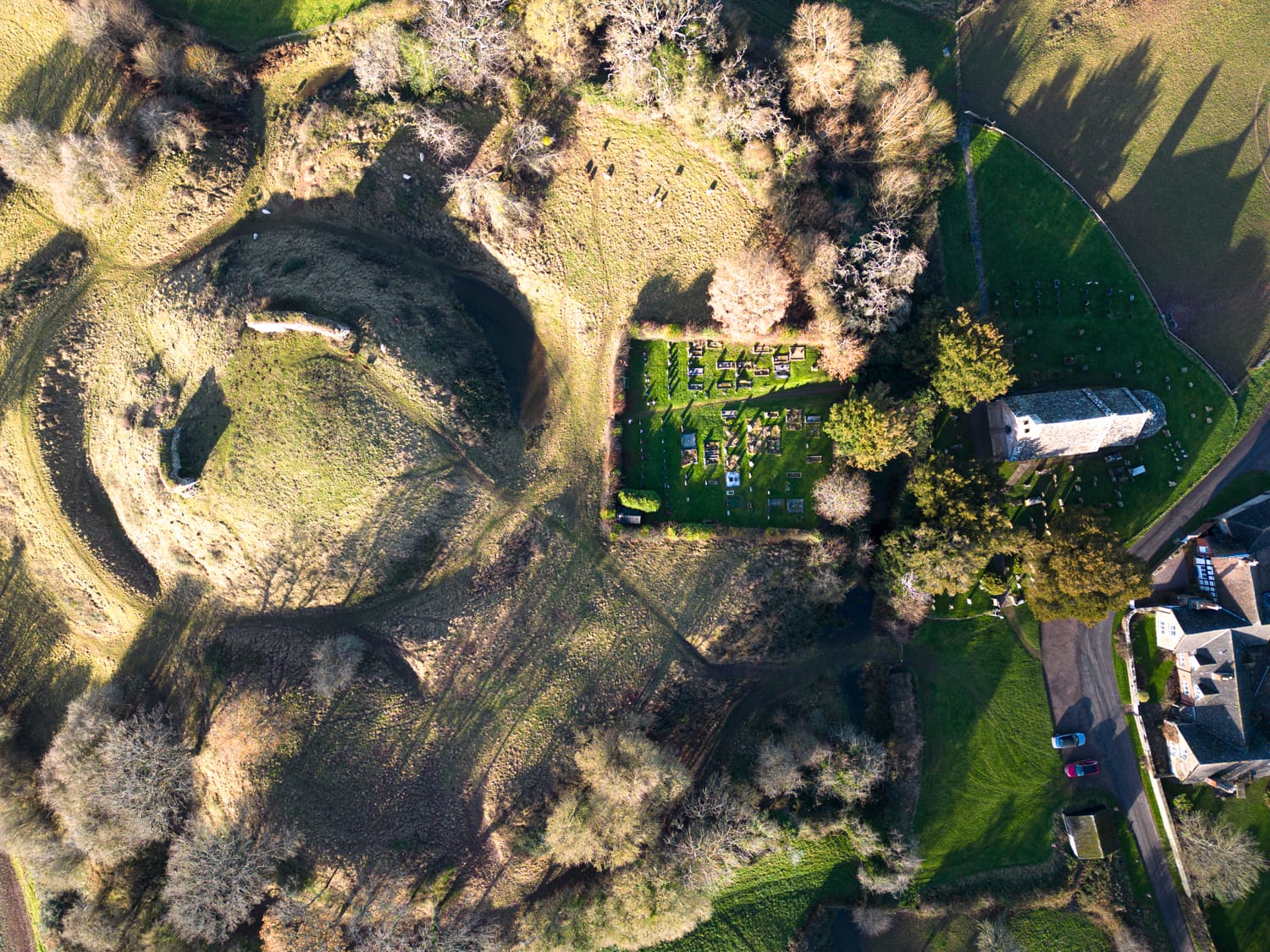
The church lies to the south of a deserted medieval village site. The remains of the motte and bailey of the castle are evident within the landscape to the west of the church.
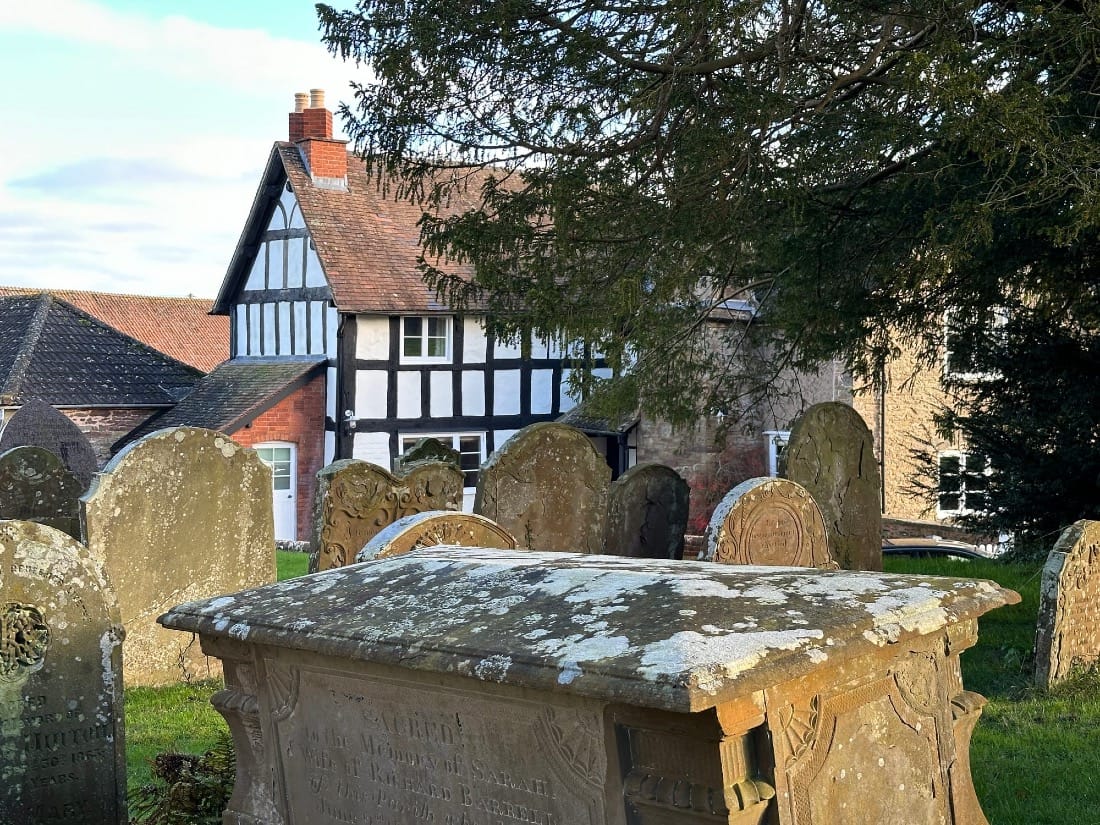
Every time I visit this place, the air feels charged, my senses are piqued. More than the building, it is the Romanesque carvings that draw me in.
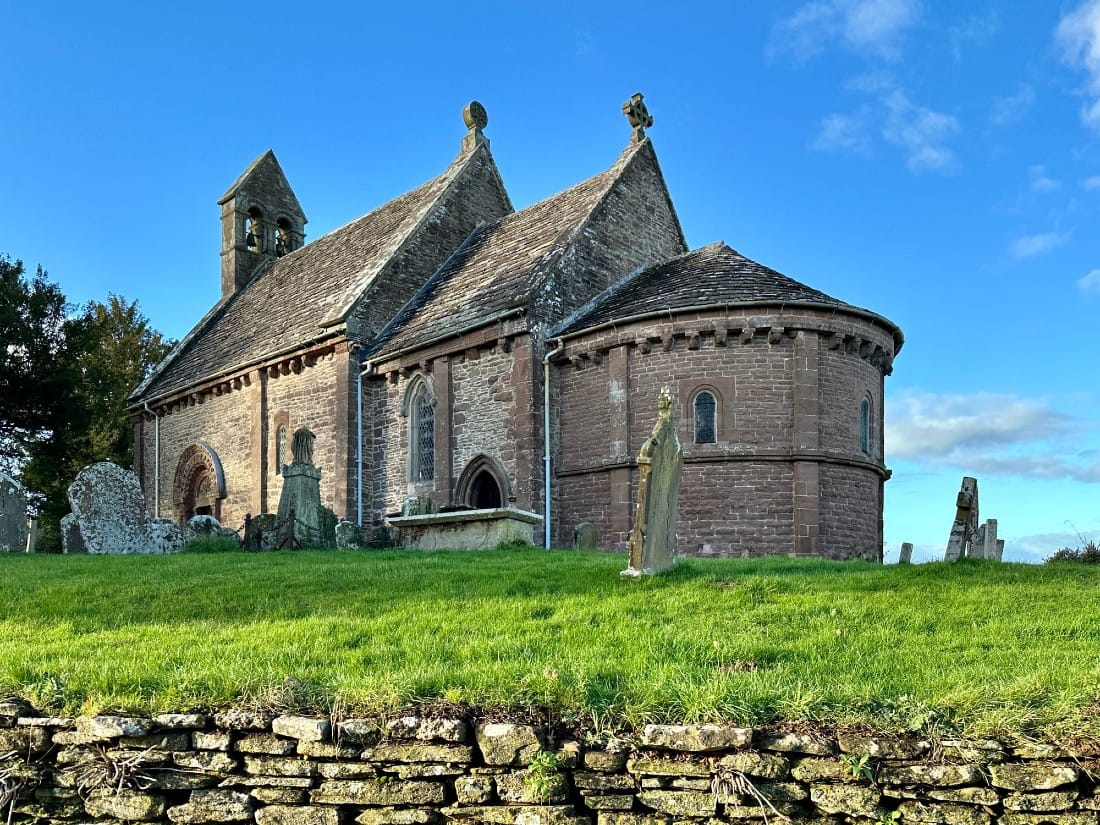
Caught around the perfect proportions of a three cell C12th Romanesque plan is a lavish and eclectic mix of carving that fire the imagination and defy one's preconceptions of a Christian church.
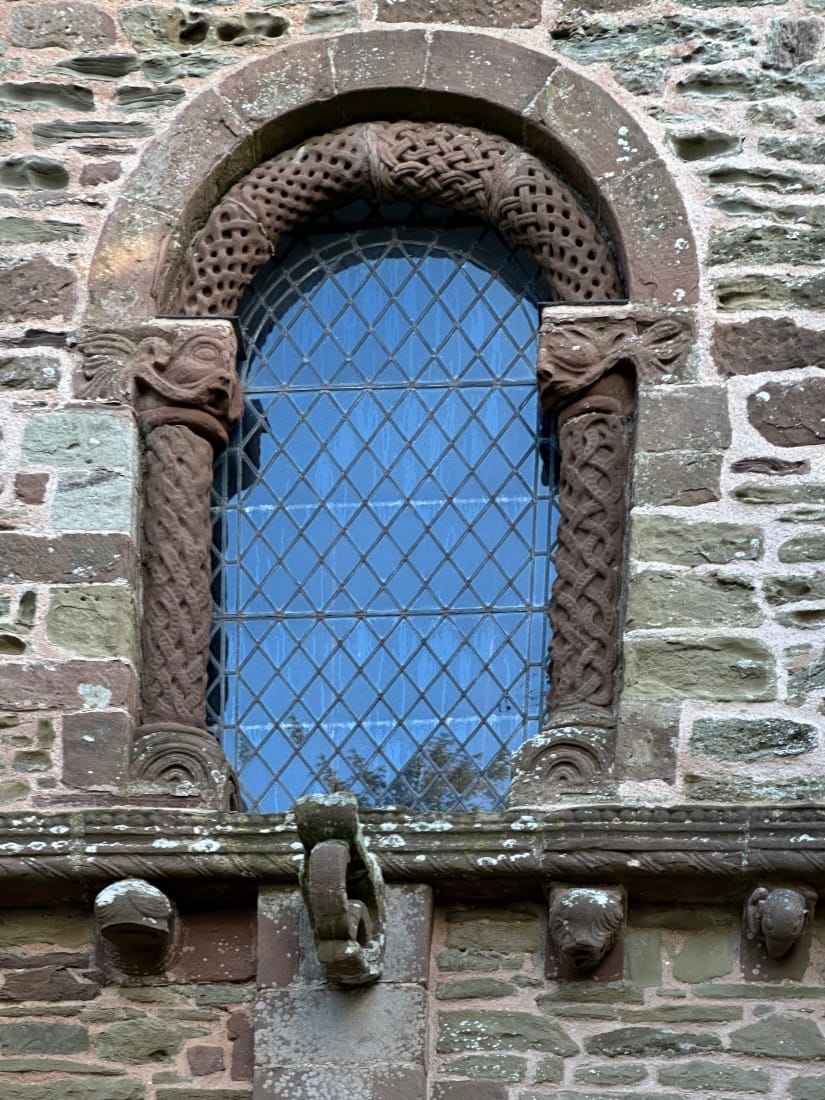
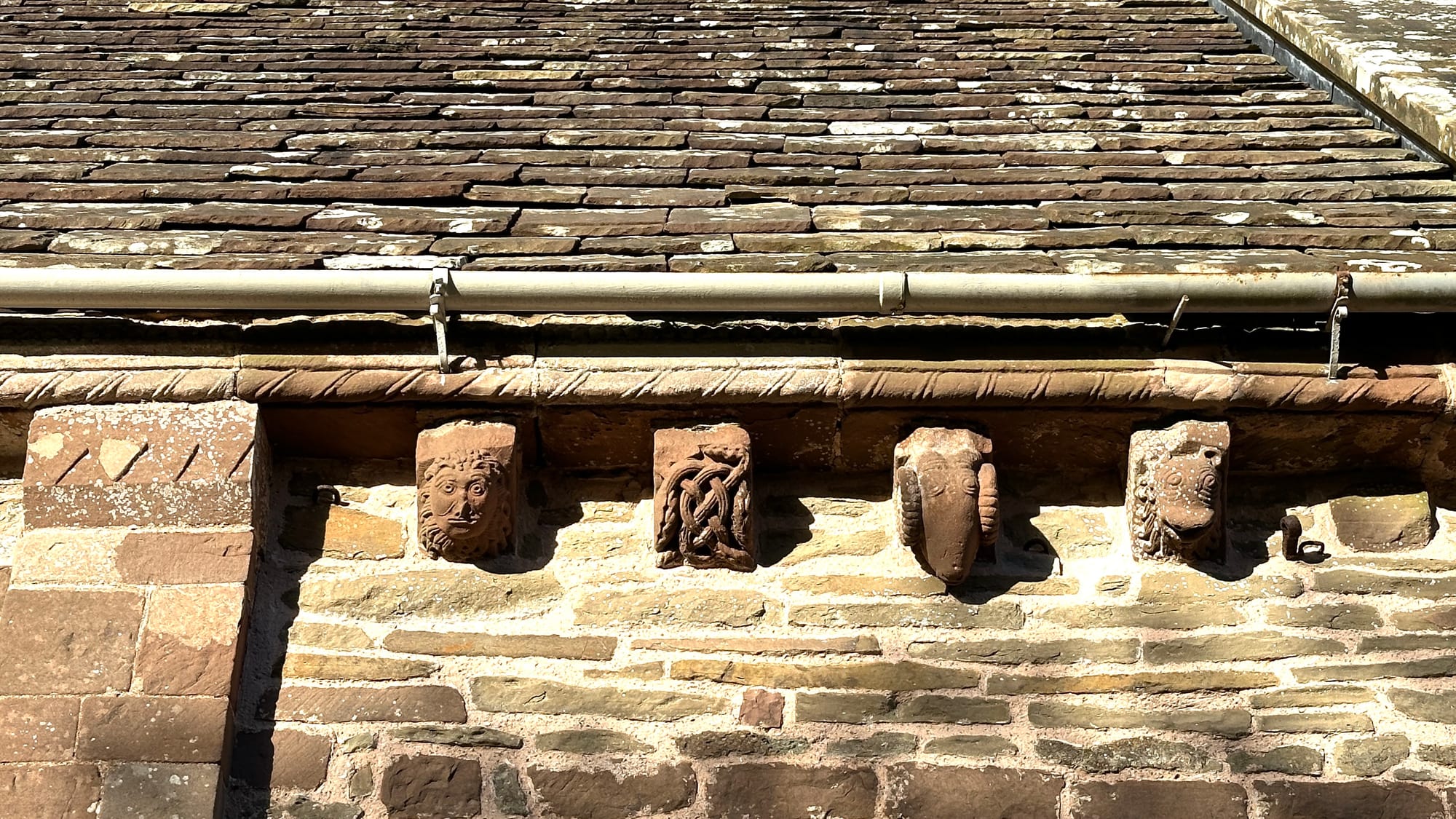
If there were the cultural equivalent of the health addage of 'having five a day' - the corbel table on the exterior of the church would be bounty enough. It is jam packed with visual and metaphorical nutrients.
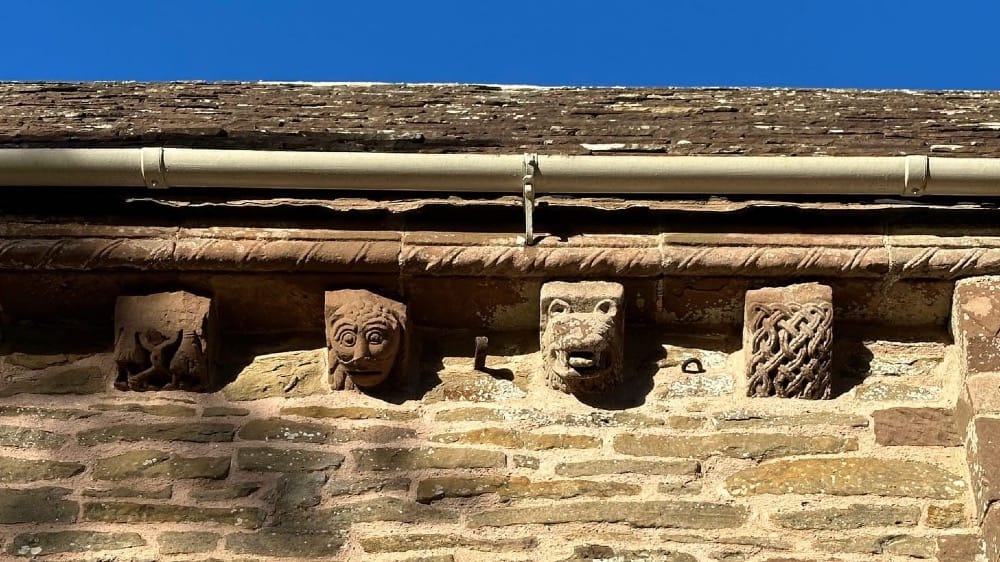
Each one is divinely crafted, each one has a meaning and every one is rooted in the Bestiary's of the medieval world and, beyond that, into the texts of ancient Greece.
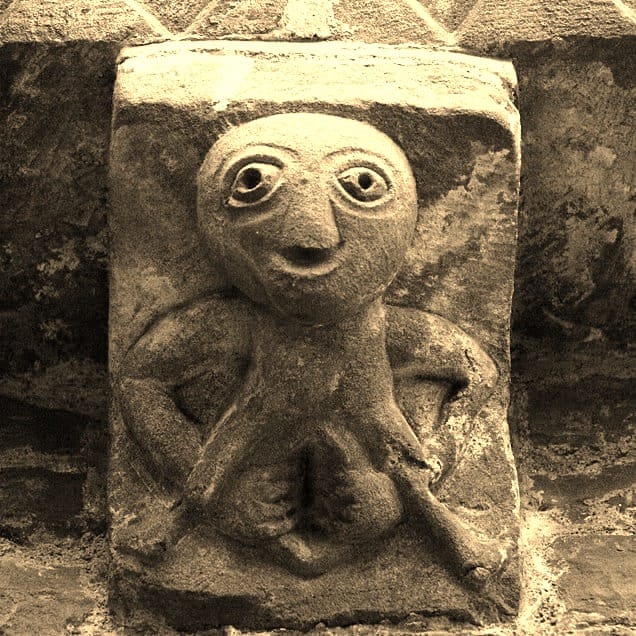
The most surprising addition is the Shela-na-Gig.
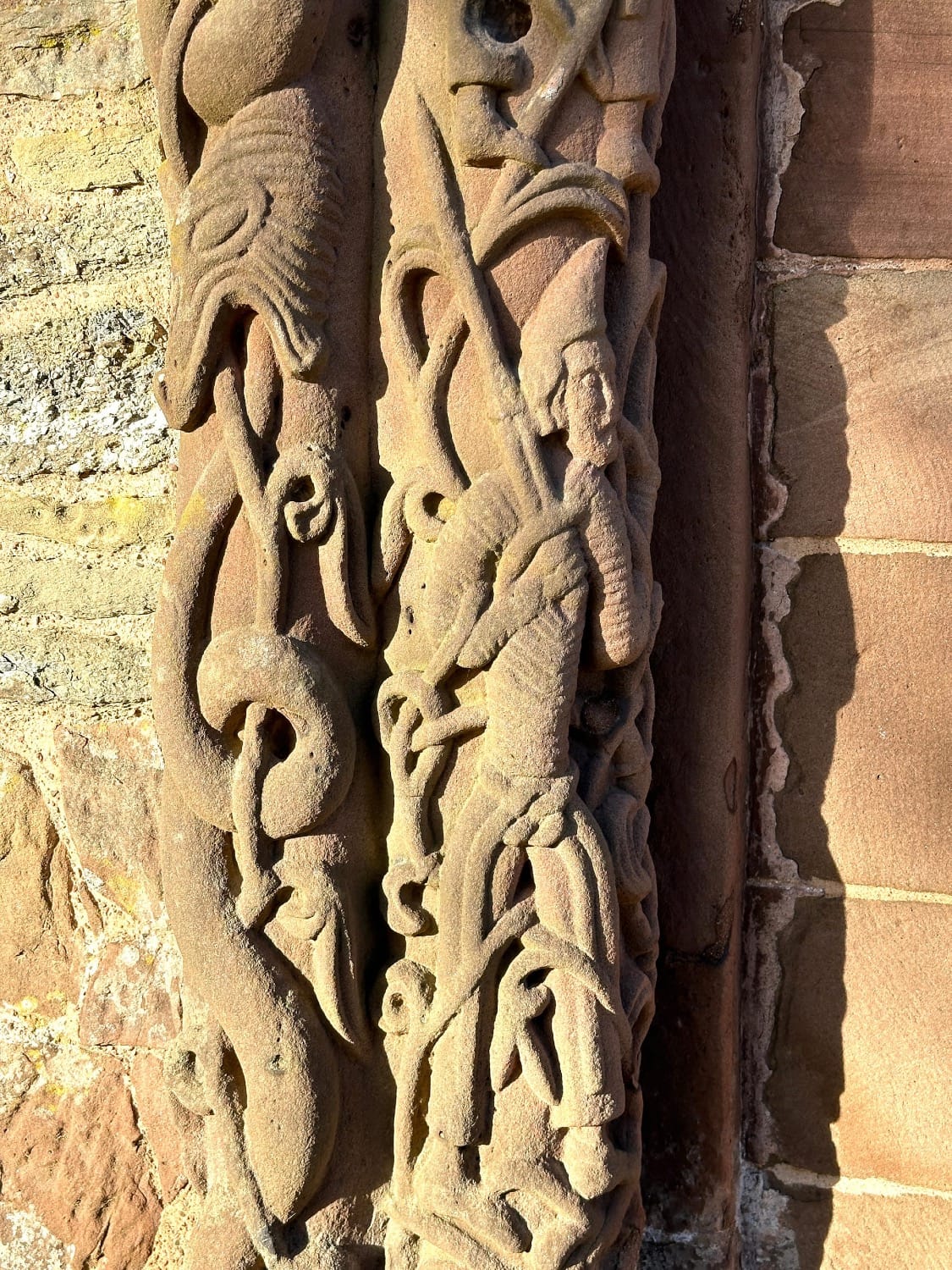
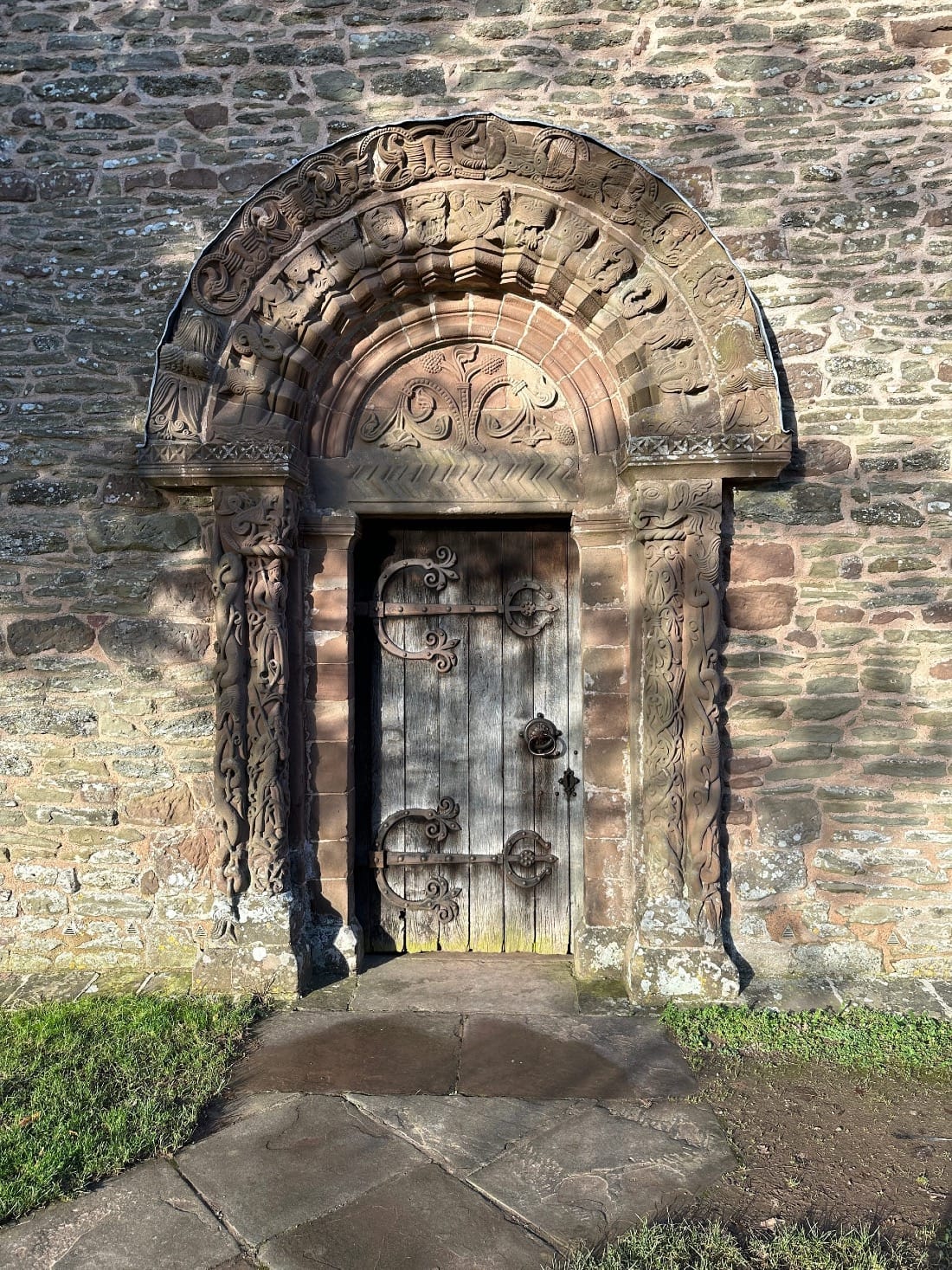
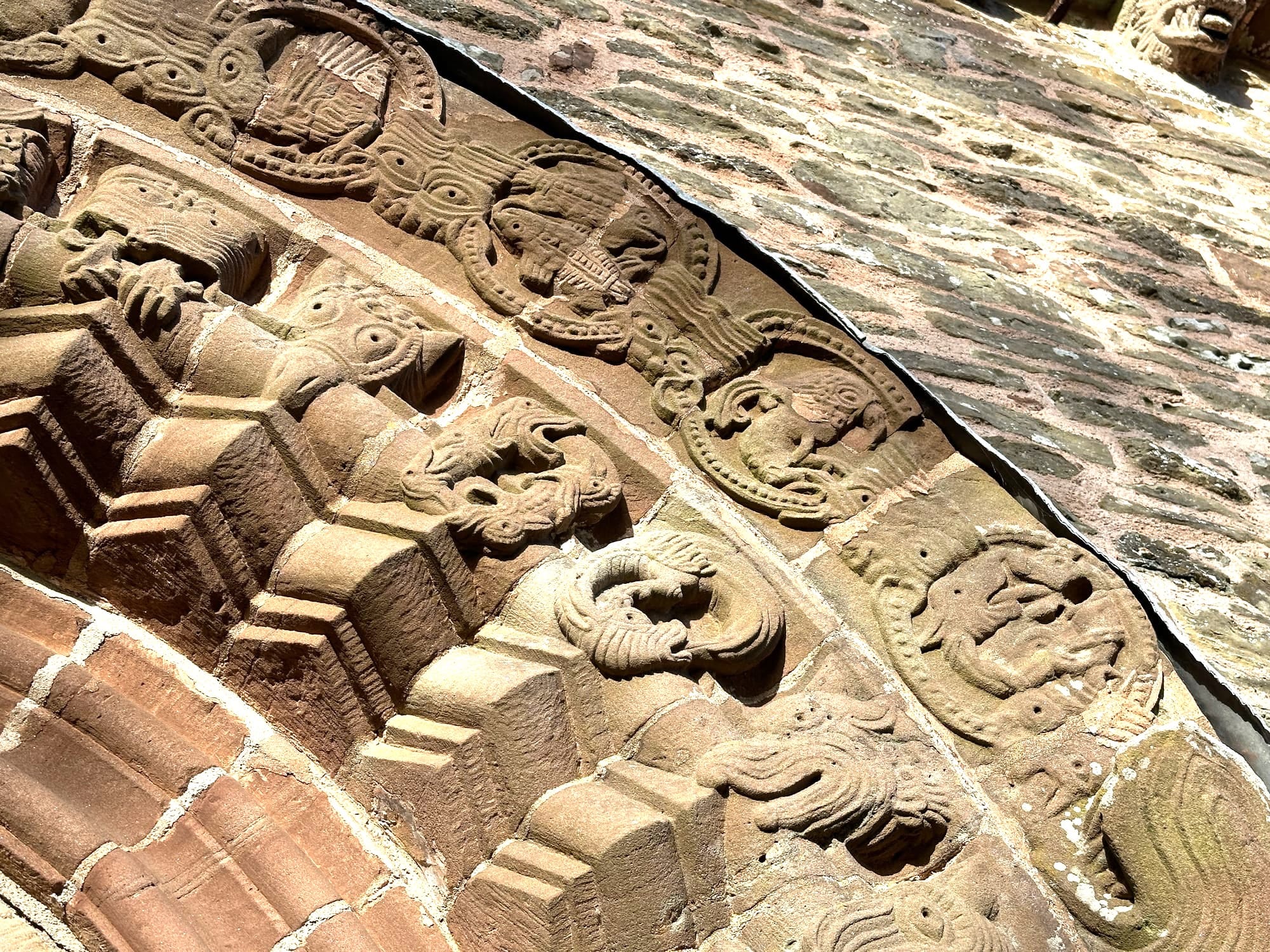
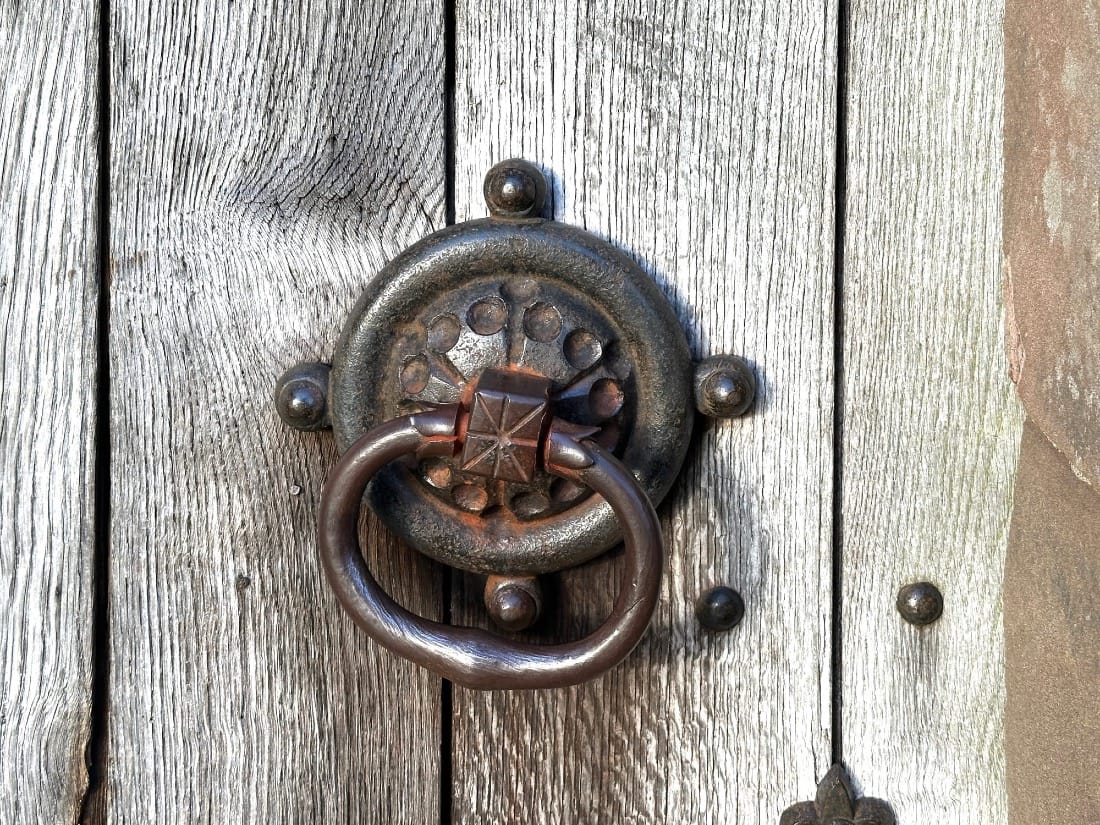
The south door is one of the best preserved in the country. Full of exotic carving depicting beasts and warriors.
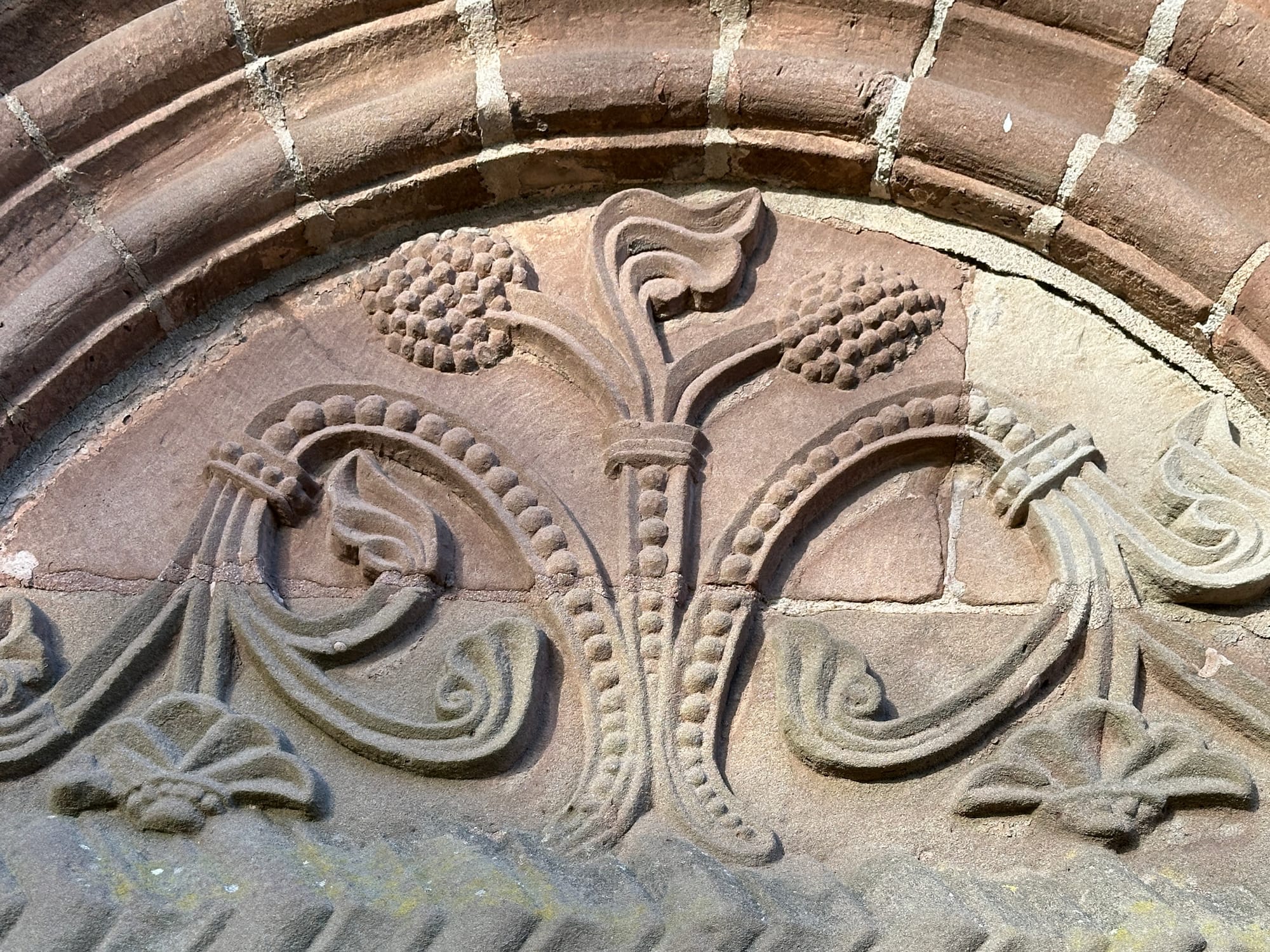
And there it is on the tympanum - a grape.
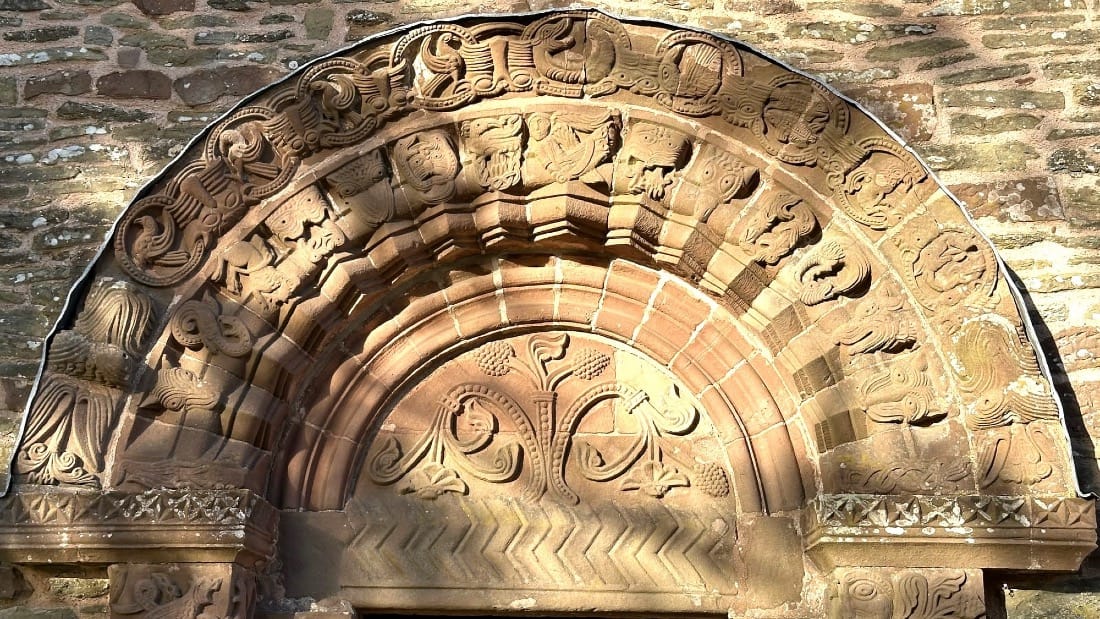
The tympanum has depictions of, amongst others - an angel, a phoenix, a dragon and birds, plus beakheads with an overbite.
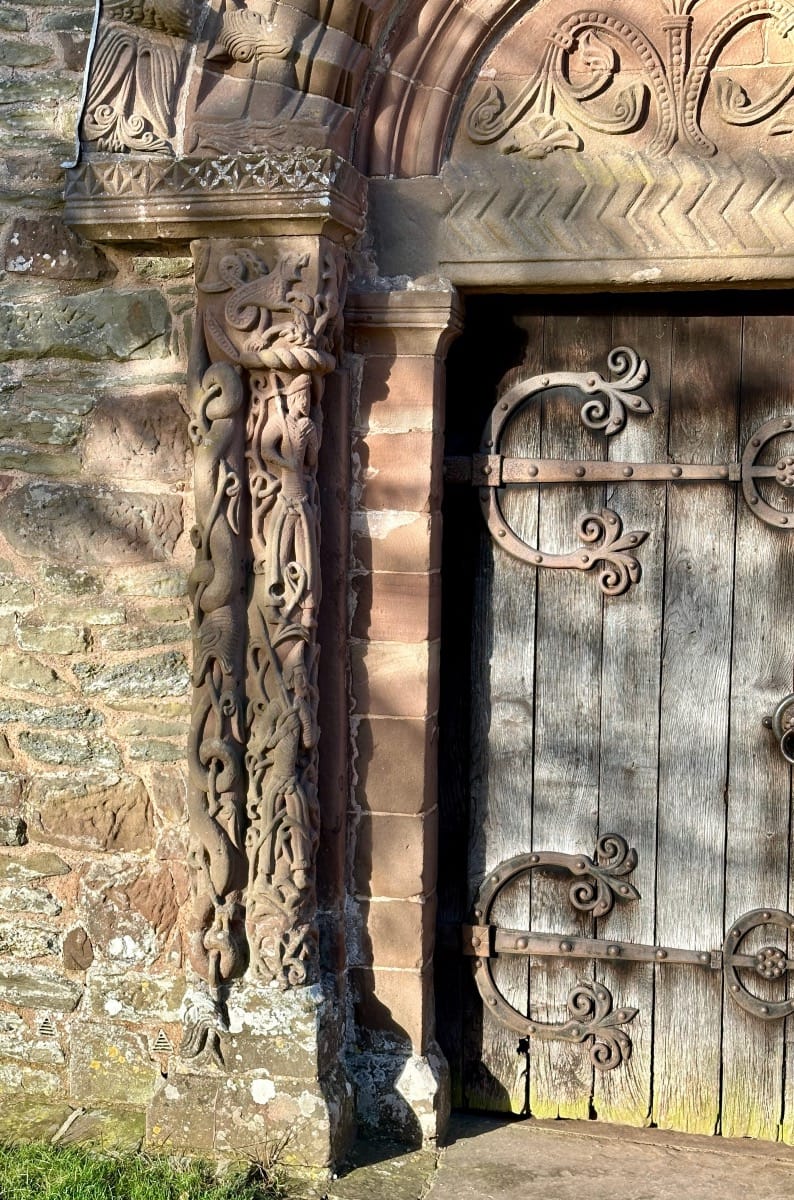
I see connections with Norse tradition with the Celtic world, with Santiago de Compostela and the Byzantine. What a melting pot.
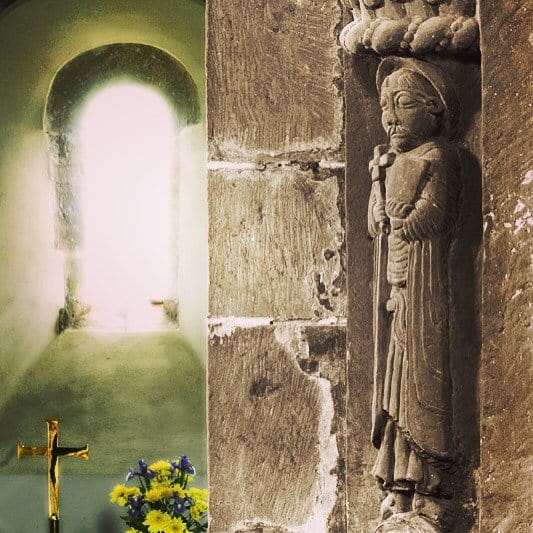
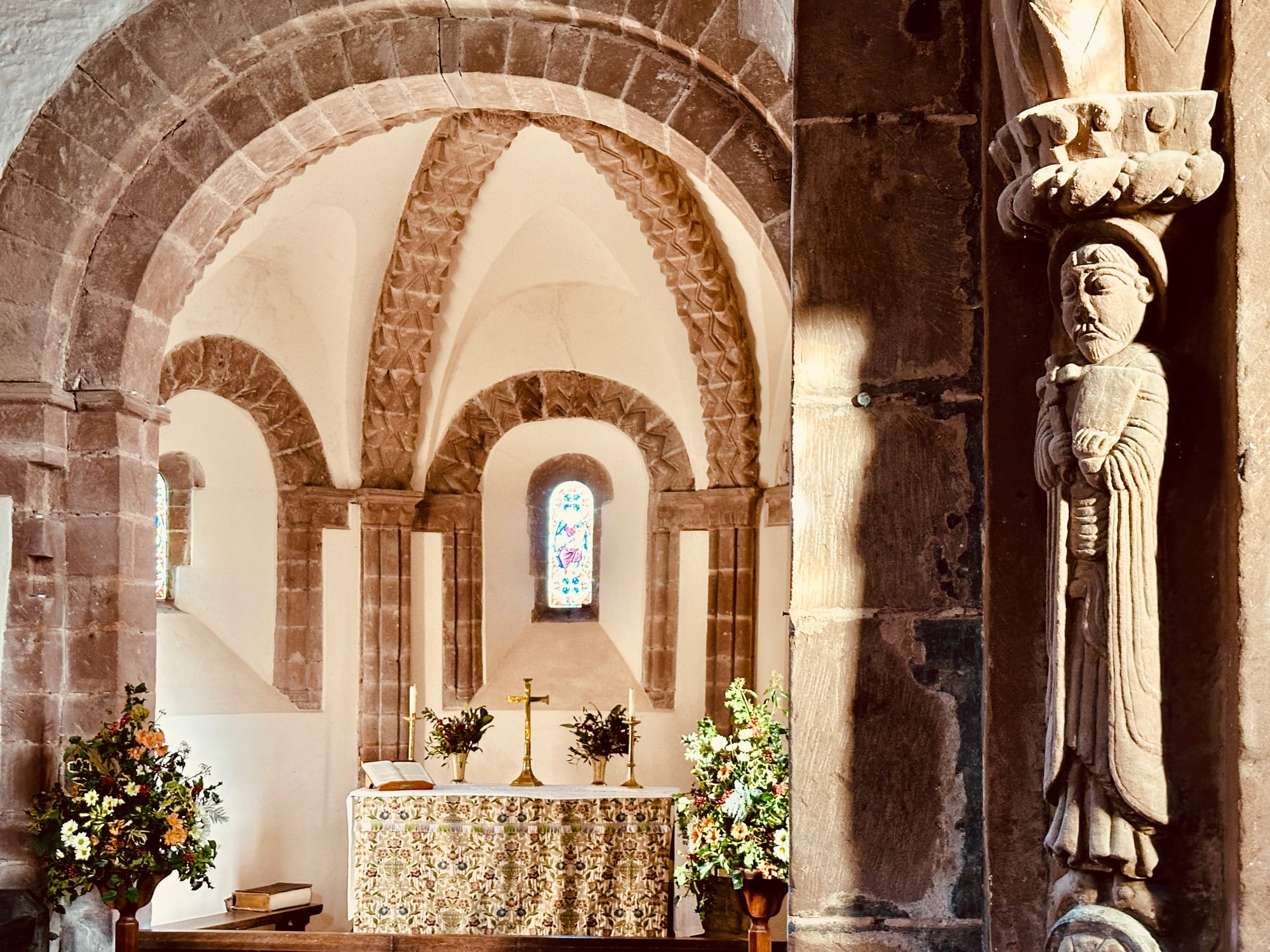
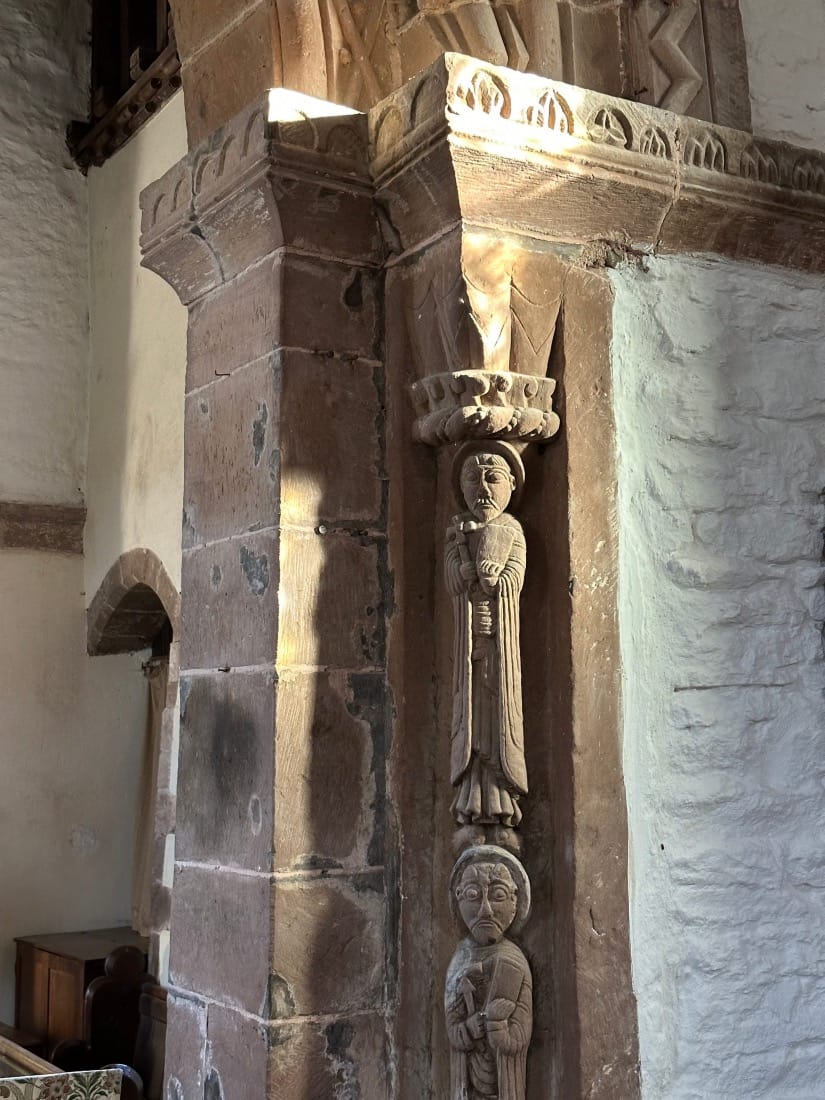
The interior also has some wonderful carving to the chancel arch. The carvings depict martyrs or saints, including one carving of St. Peter.
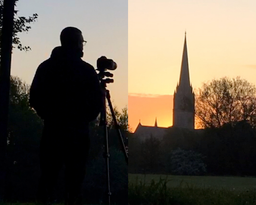
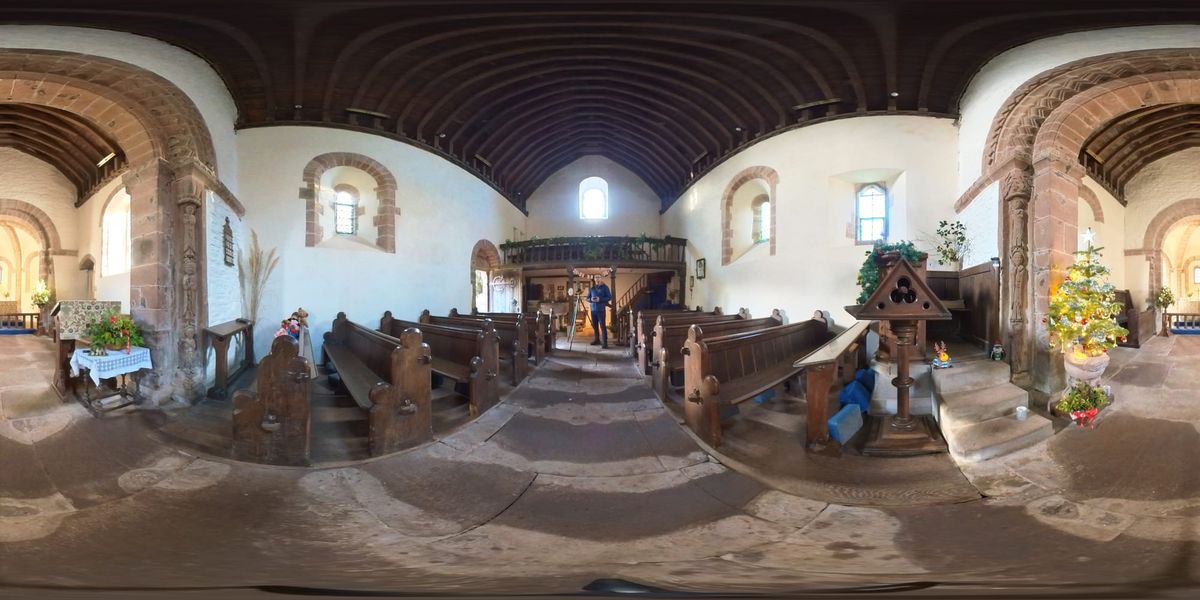
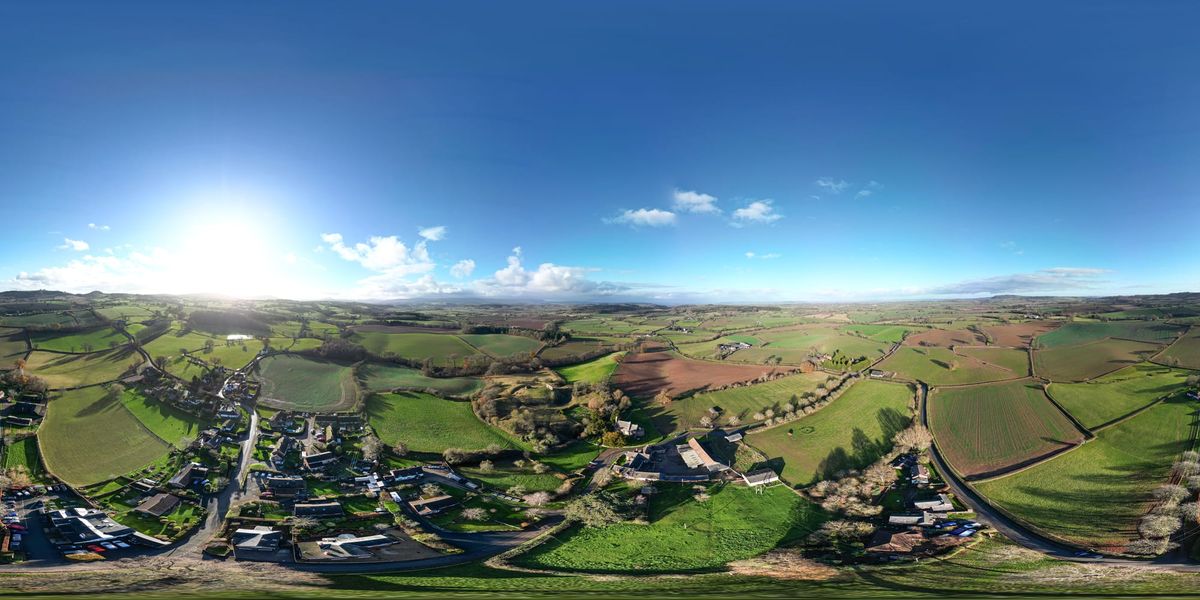
Members get to see some immersive extra content on Kilpeck including VR's of the exterior and interior and a wonderful aerial video that shows Kilpeck in context. Click the boxes below for more:
 Andy Marshall
 Andy Marshall
 Andy Marshall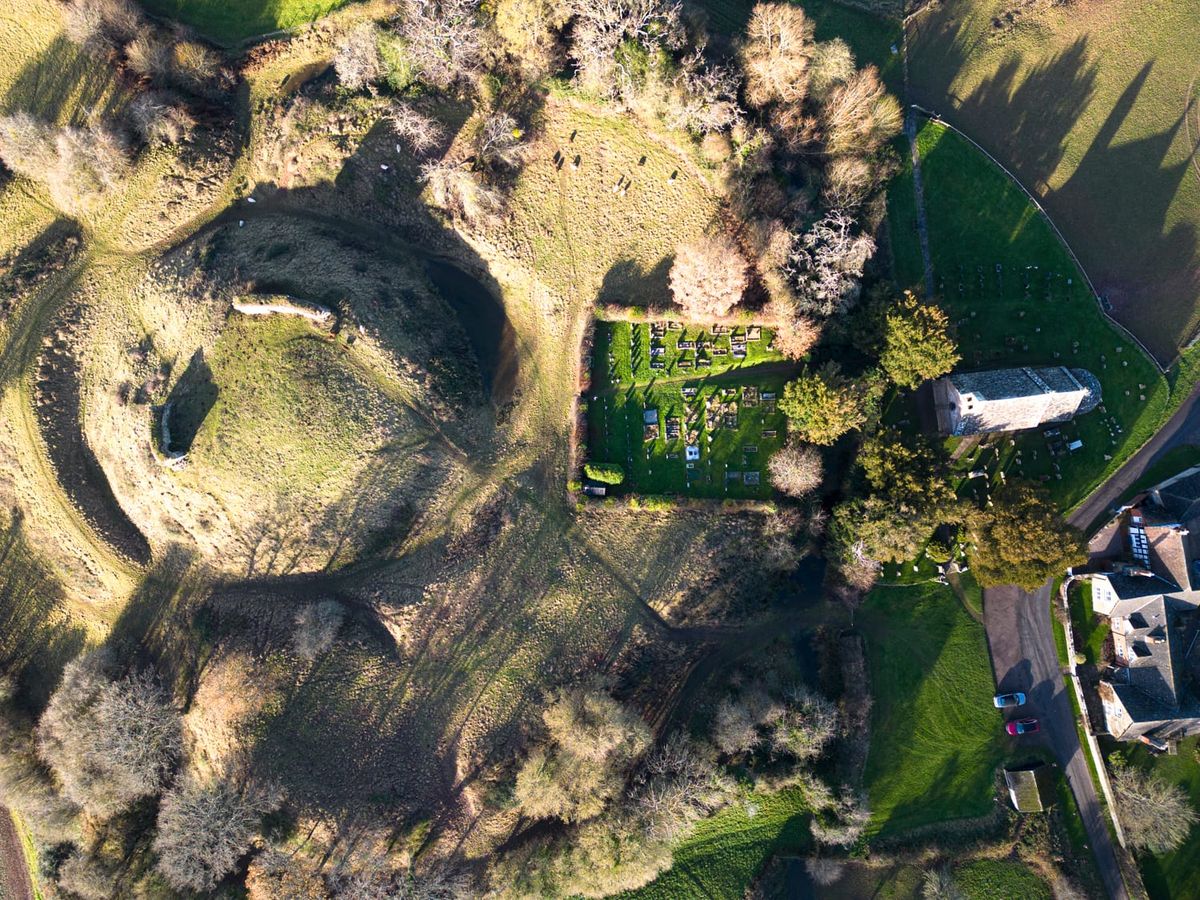
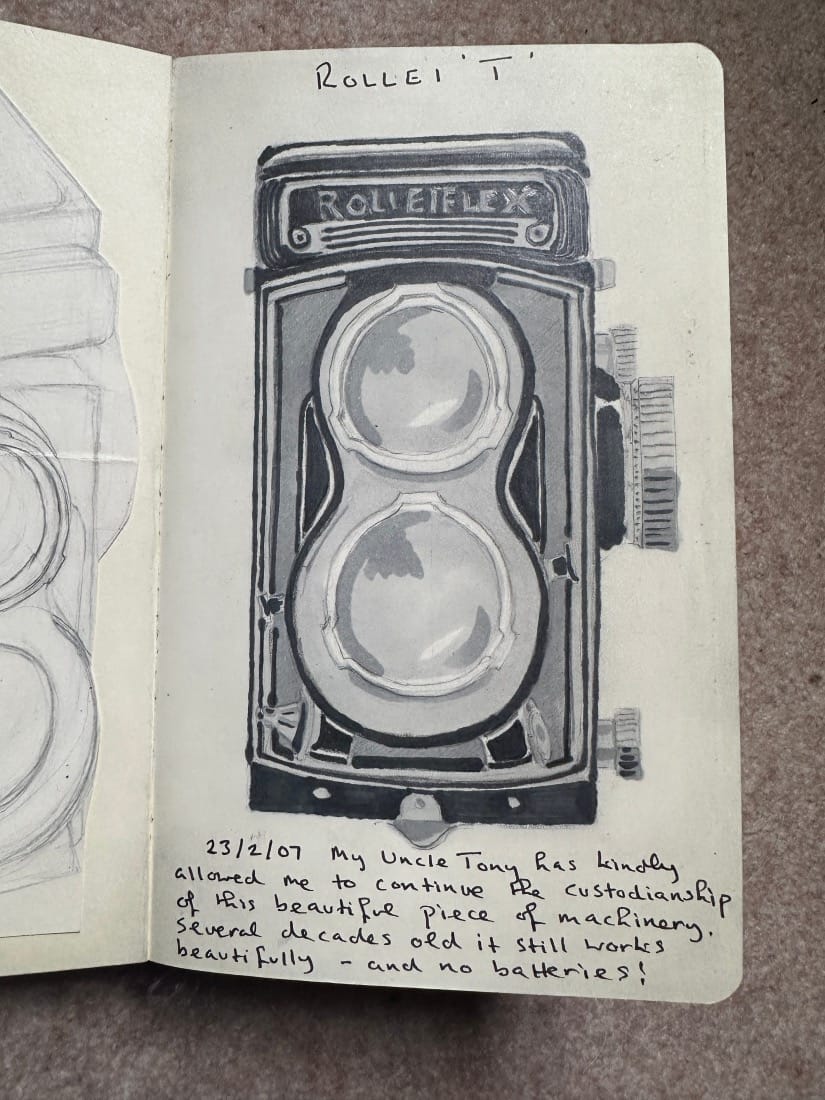
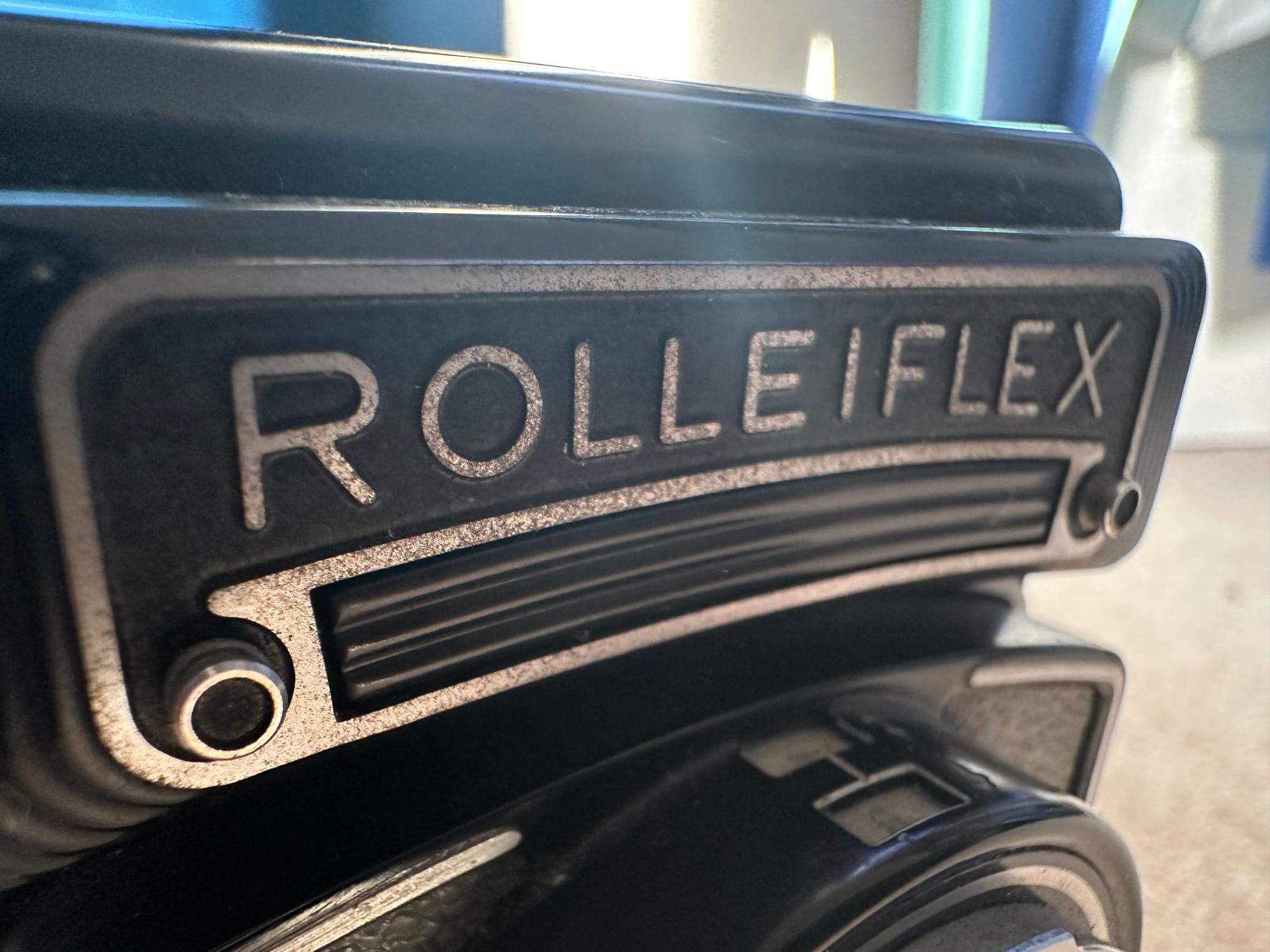
For this very special place I've brought a very special camera - my Rolleflex film camera.
The Rollei is a process in itself, and being supplicant to its needs, gives me the time to absorb the atmosphere around me. It helps bring about a creative space.
Firstly, I take time to load up the film in the pub the week before I visit Kilpeck.
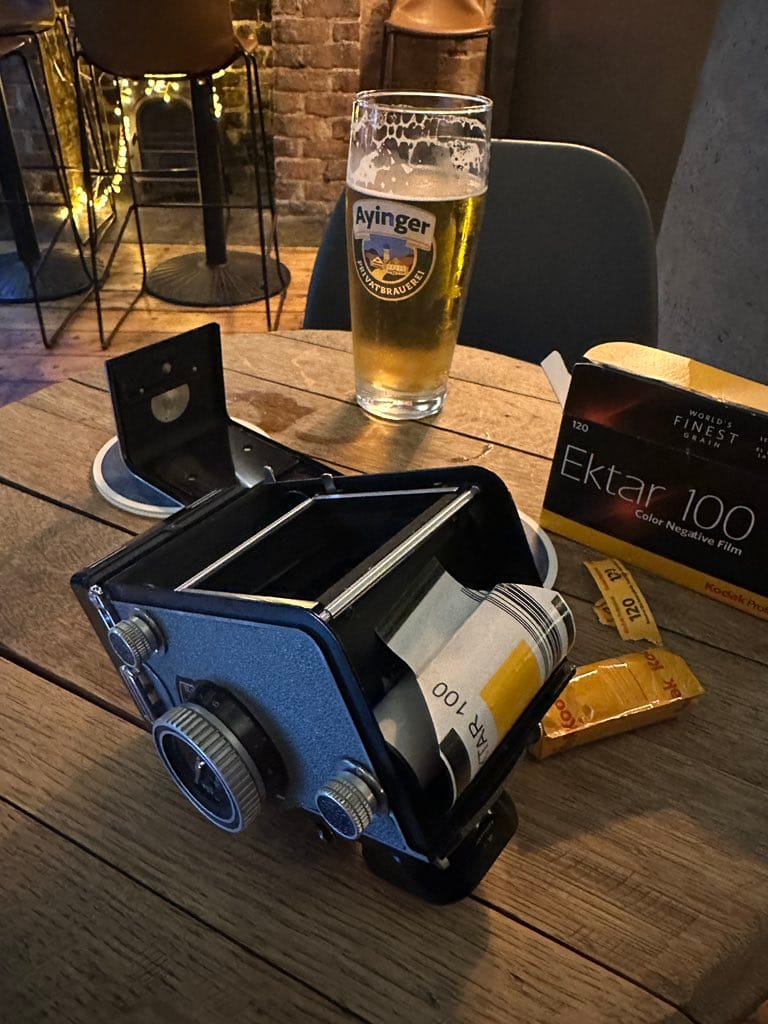
Then, later at Kilpeck, with a little reverence, I remove it from the bag in the van with an air of anticipation. I take it into the nave, carefully set up the composition, and set about my work.
I take a light reading and then plumb the information into the camera. The dials are mechanical and tactile with a sweetness of sound that is reminiscent of when the camera was made in the 1950's.
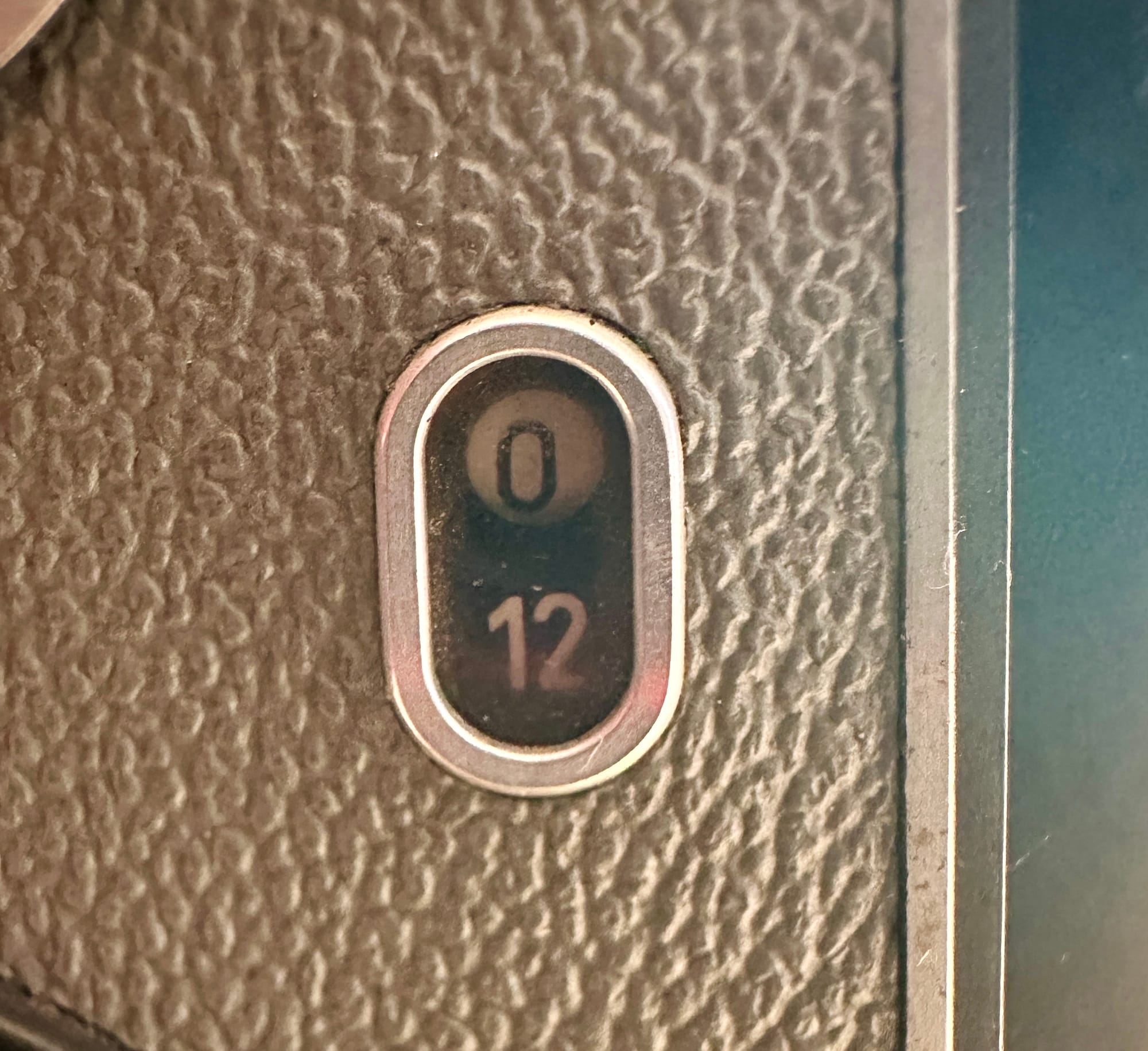
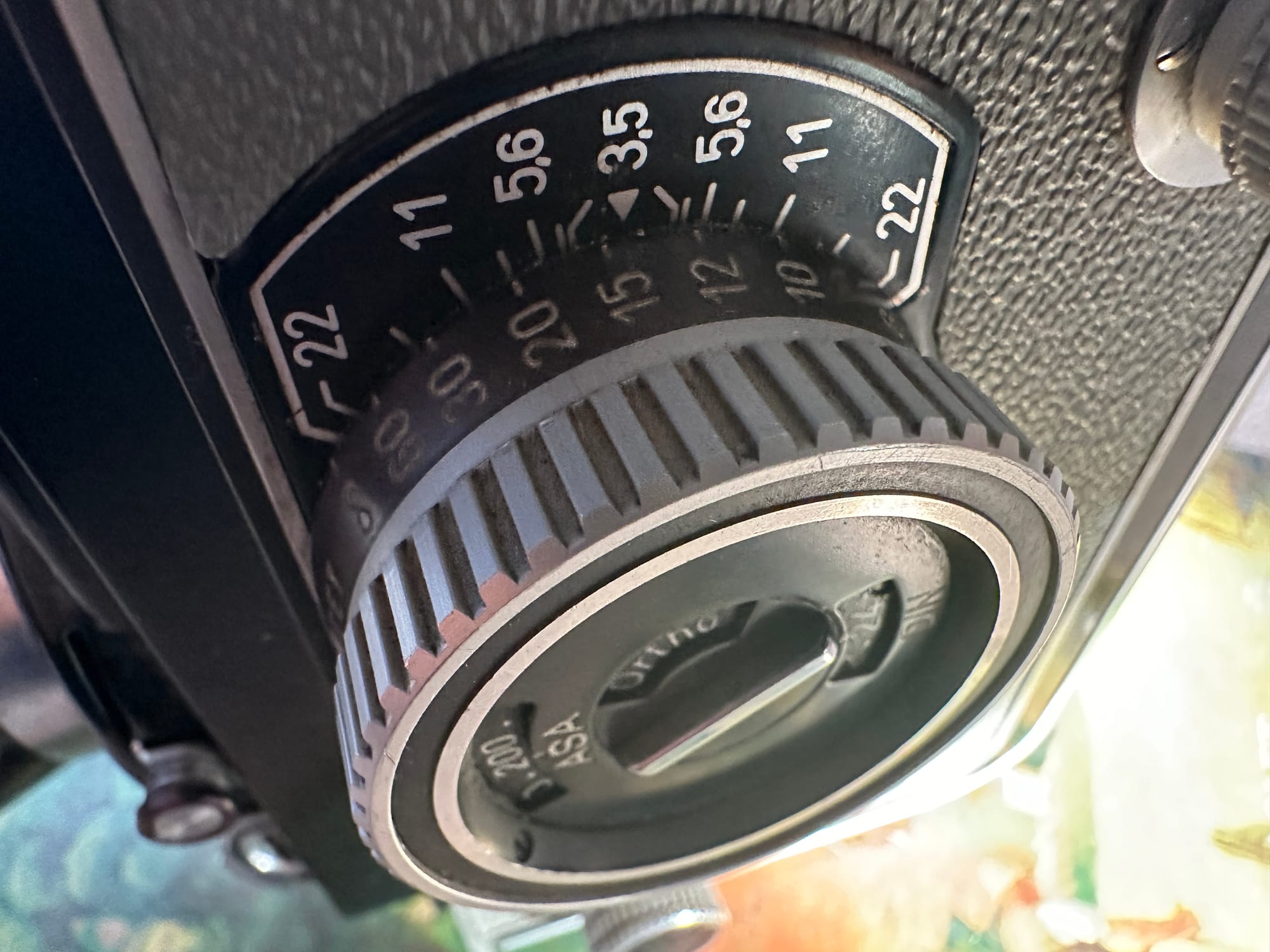
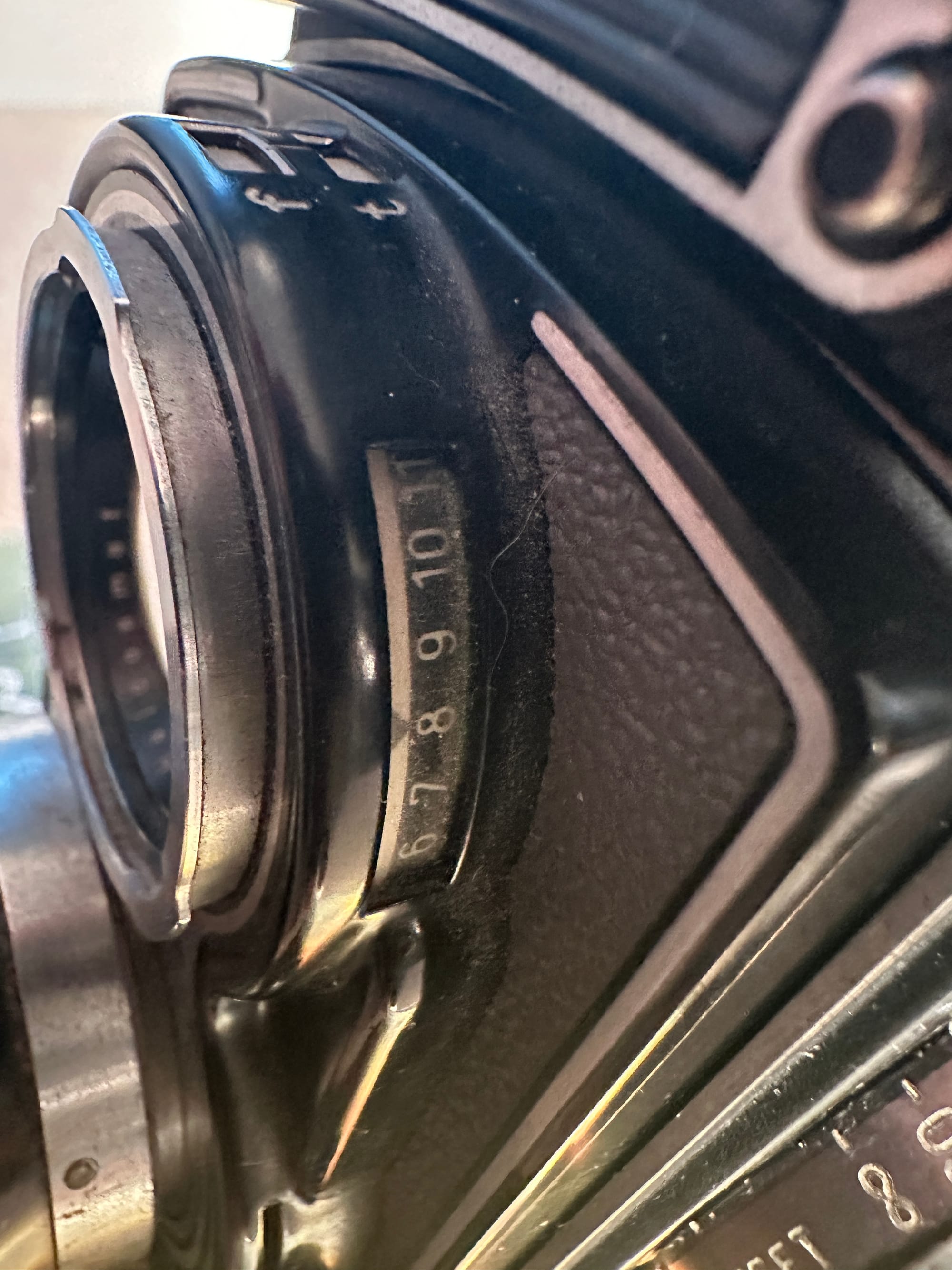
I stand and wait for the light to move around to the chancel arch and then take another reading until the sweet spot of the day comes about.
I press the shutter release and wait for three seconds until I hear it close.
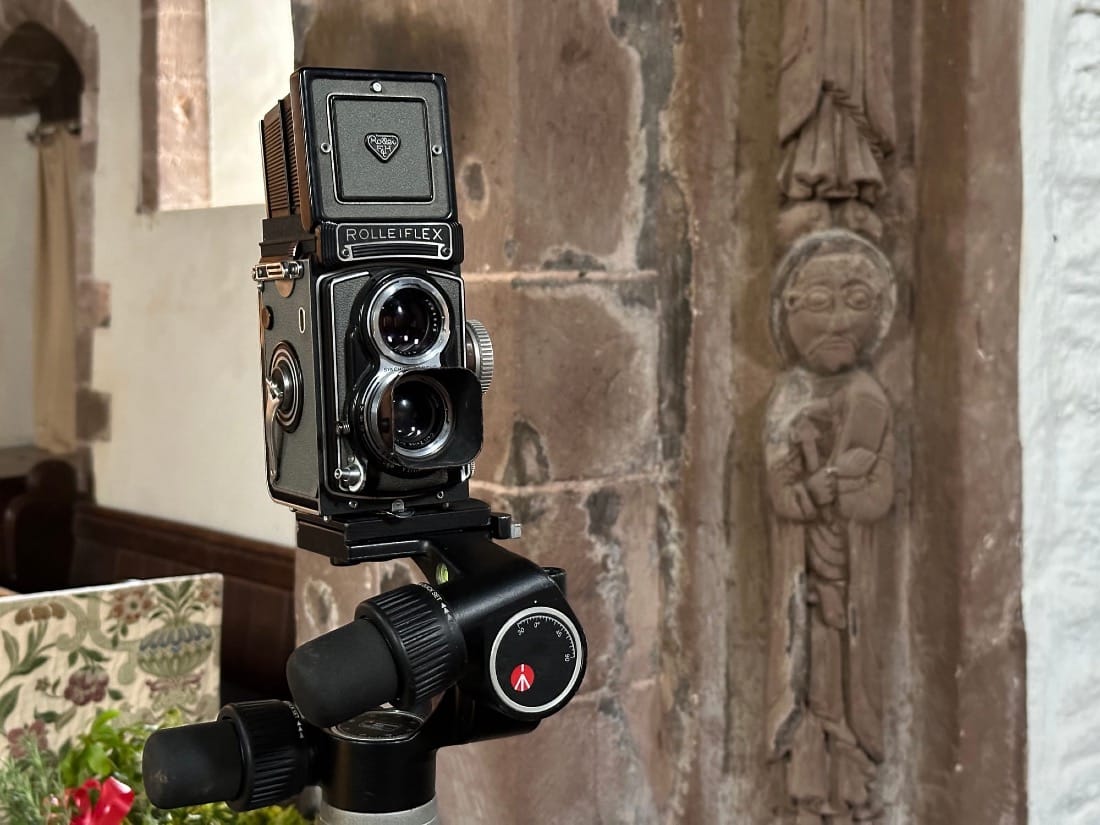
I feel like a connosieur, at the peak of my game - a magician with light, until a week later I develop the film.
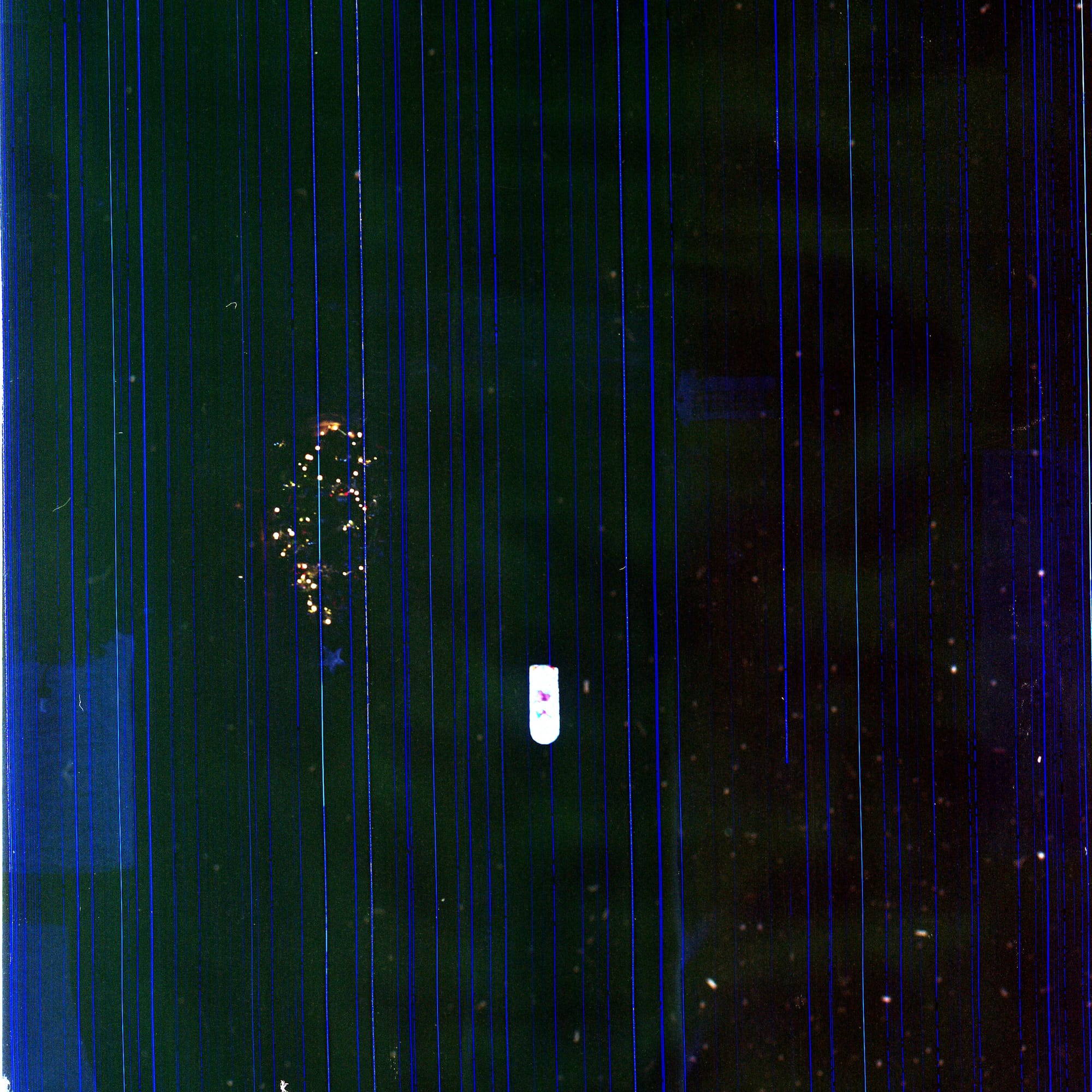
"What a nob." I think to myself.
Connect with me on: Bluesky / Instagram / Facebook / X / Tumblr / Flickr / Vimeo / Pixelfed / Pinterest
Member discussion