
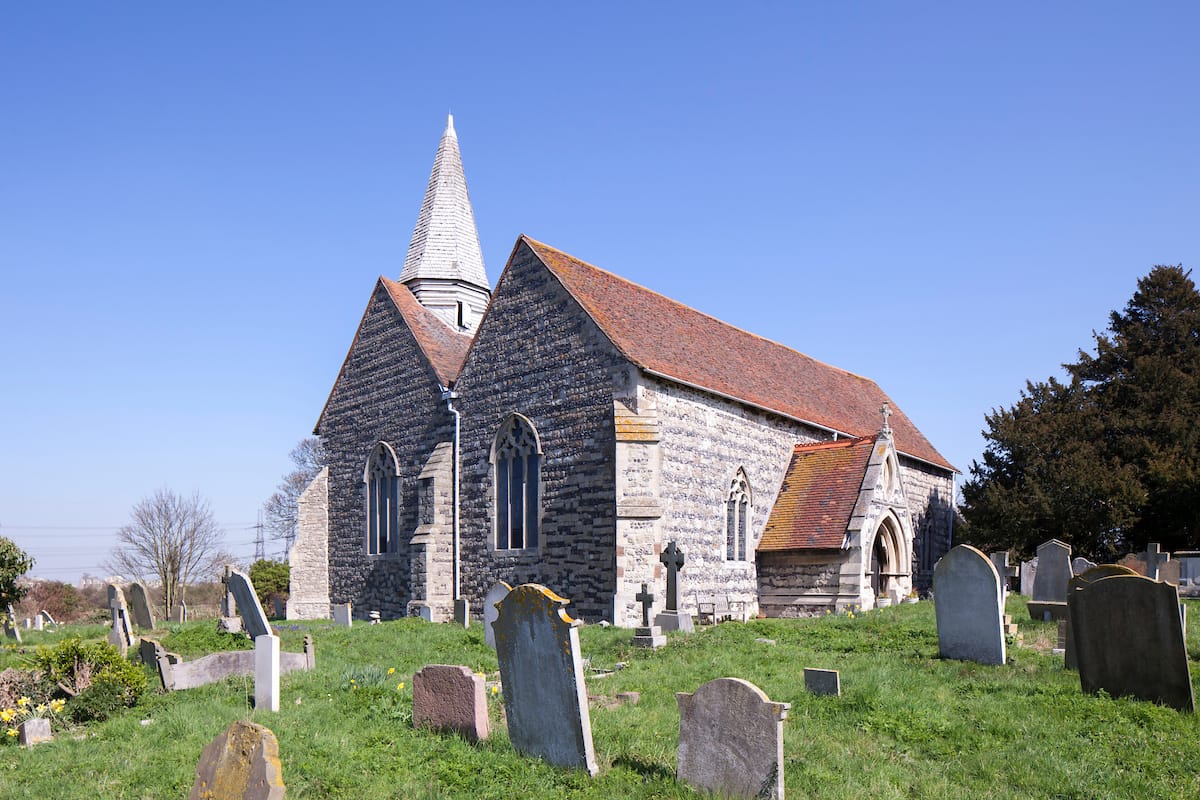
St Mary’s stands apart from the modern village of Higham, close to the wide Thames marshes. Norman in origin, the church was substantially enlarged during the fourteenth century, possibly in association with the nearby Benedictine nunnery. Its striped walls of ragstone and knapped flint enclose an unusual interior of two naves and two chancels, together with an exceptional survival of medieval woodwork.
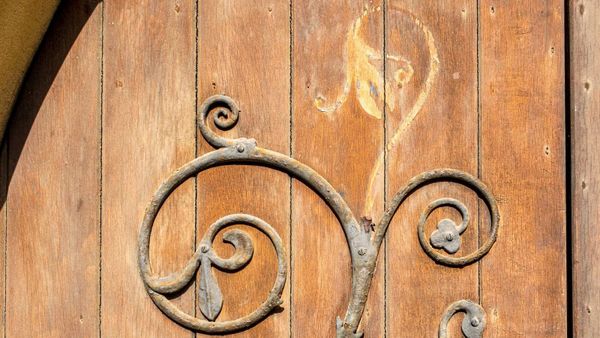
The south door is its most joyful treasure. Fashioned from oak, it is not treated as a plain barrier but as a piece of miniature Gothic architecture. Four vertical divisions rise and branch like the lights of a stone window, forming cusped arches and tracery across the timber.
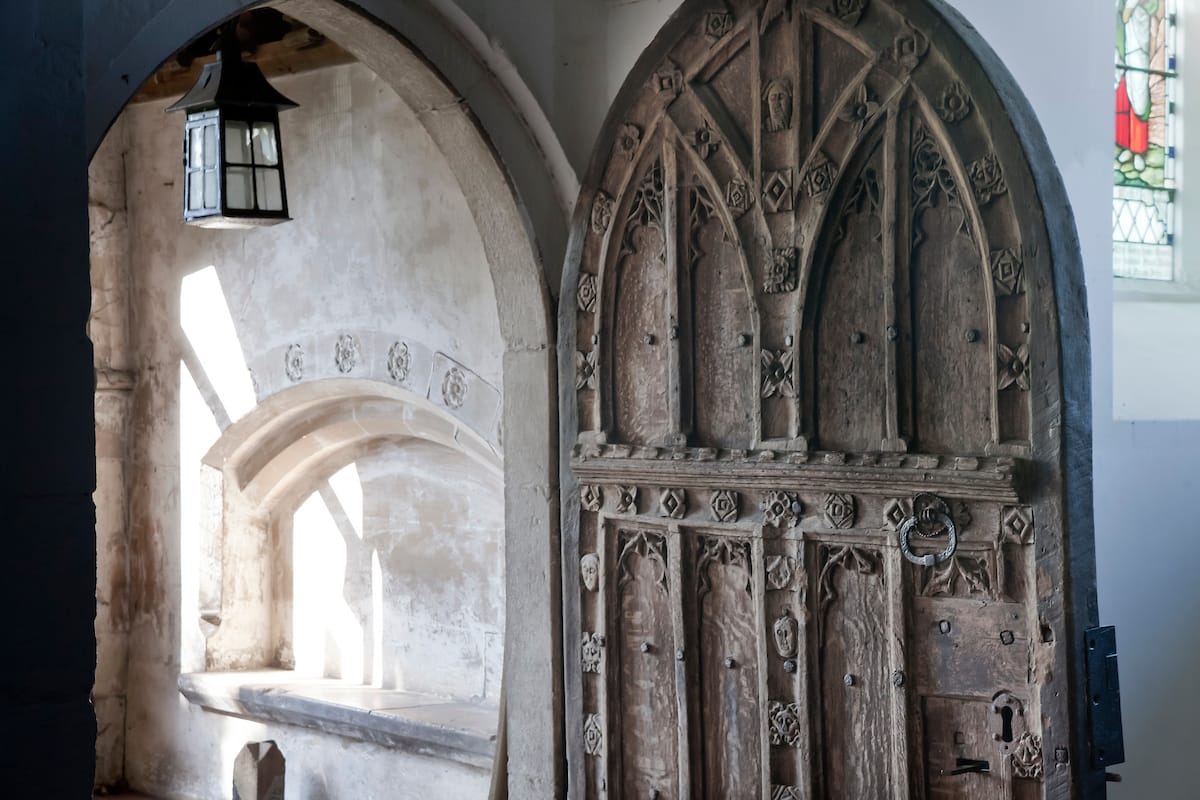
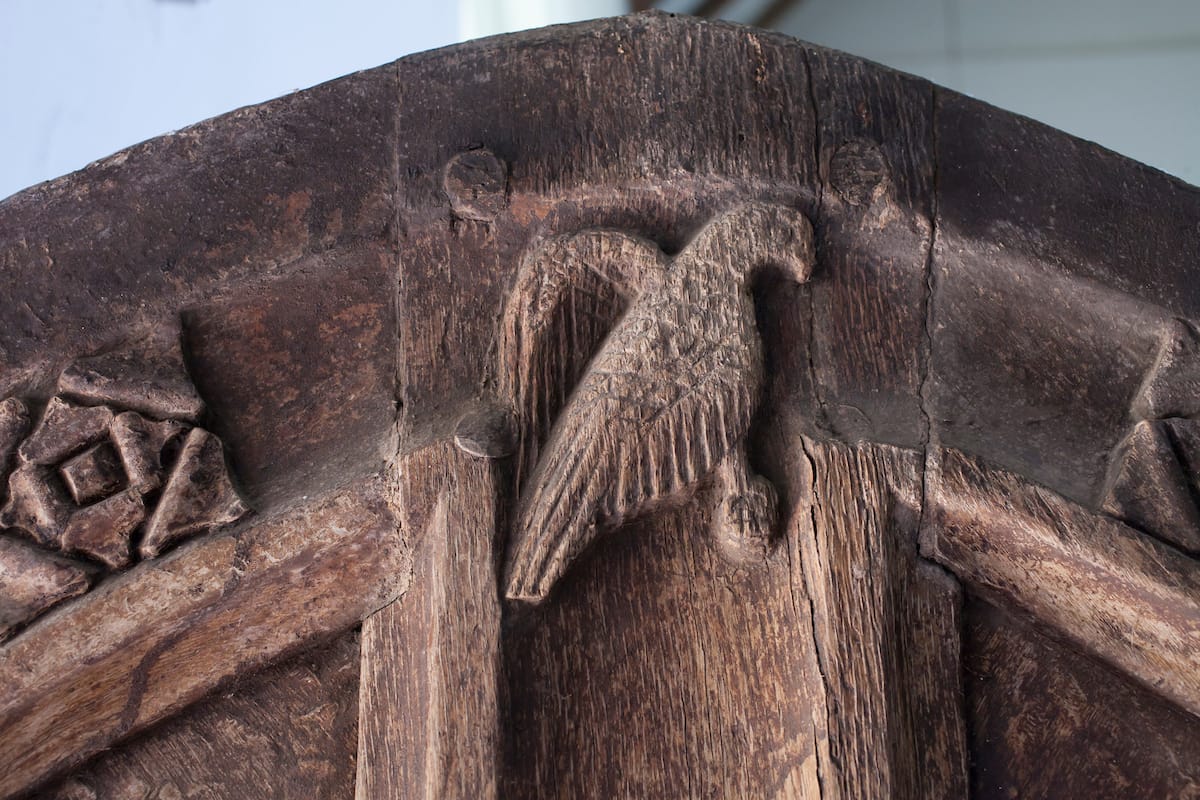
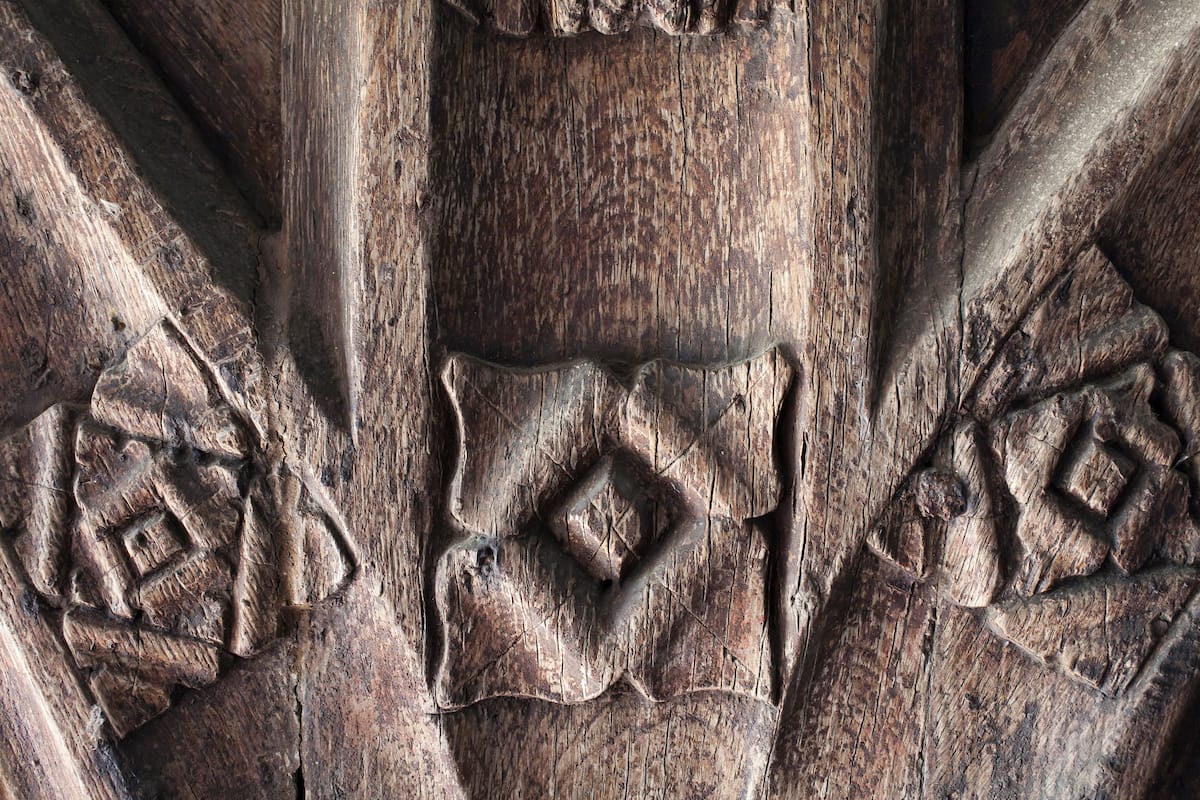
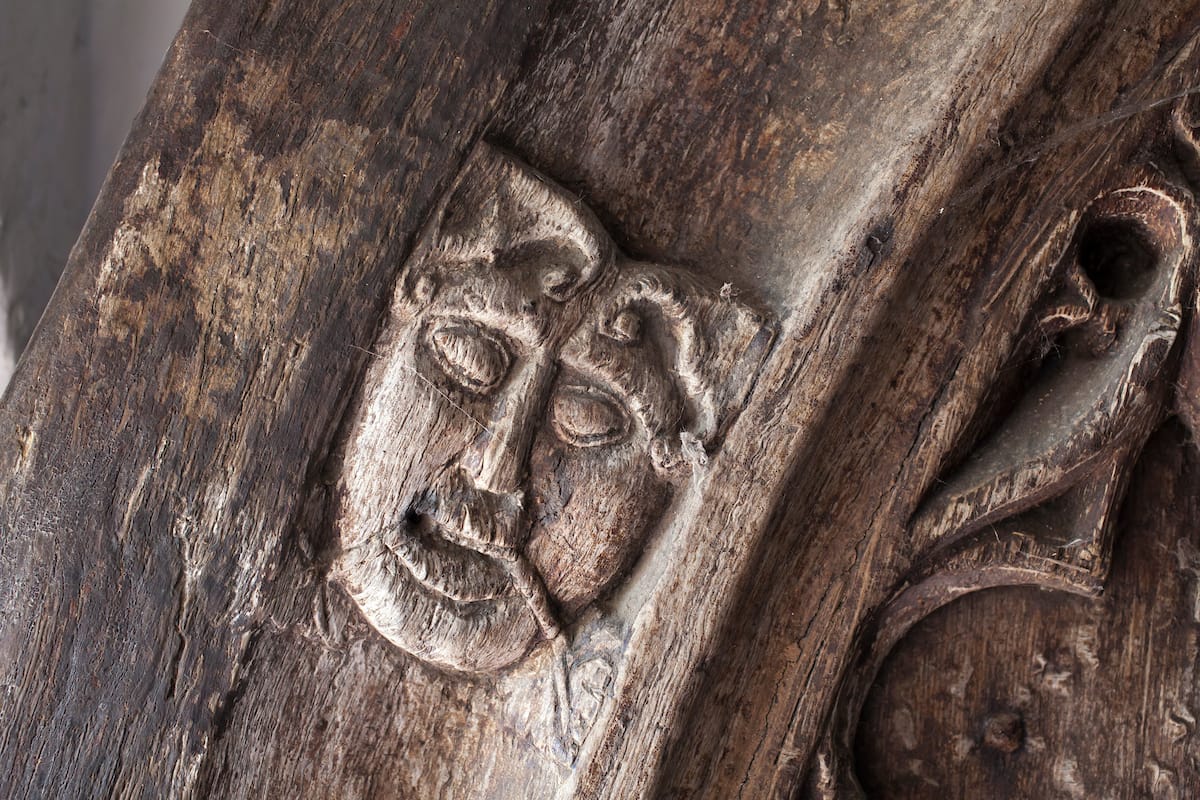
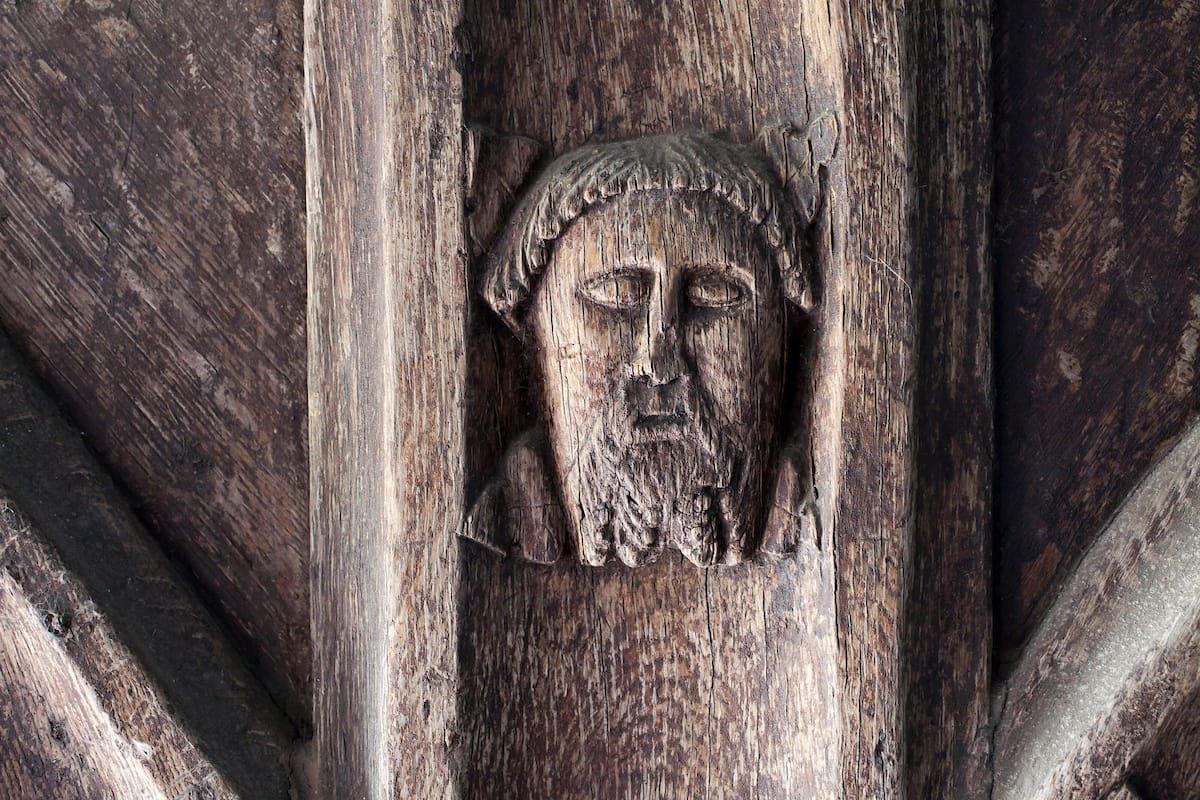
Within this framework are roses, lilies, foliage and small human faces, along with a Green Man, an old bearded figure and a bird. Parts of its original ironwork also remain.
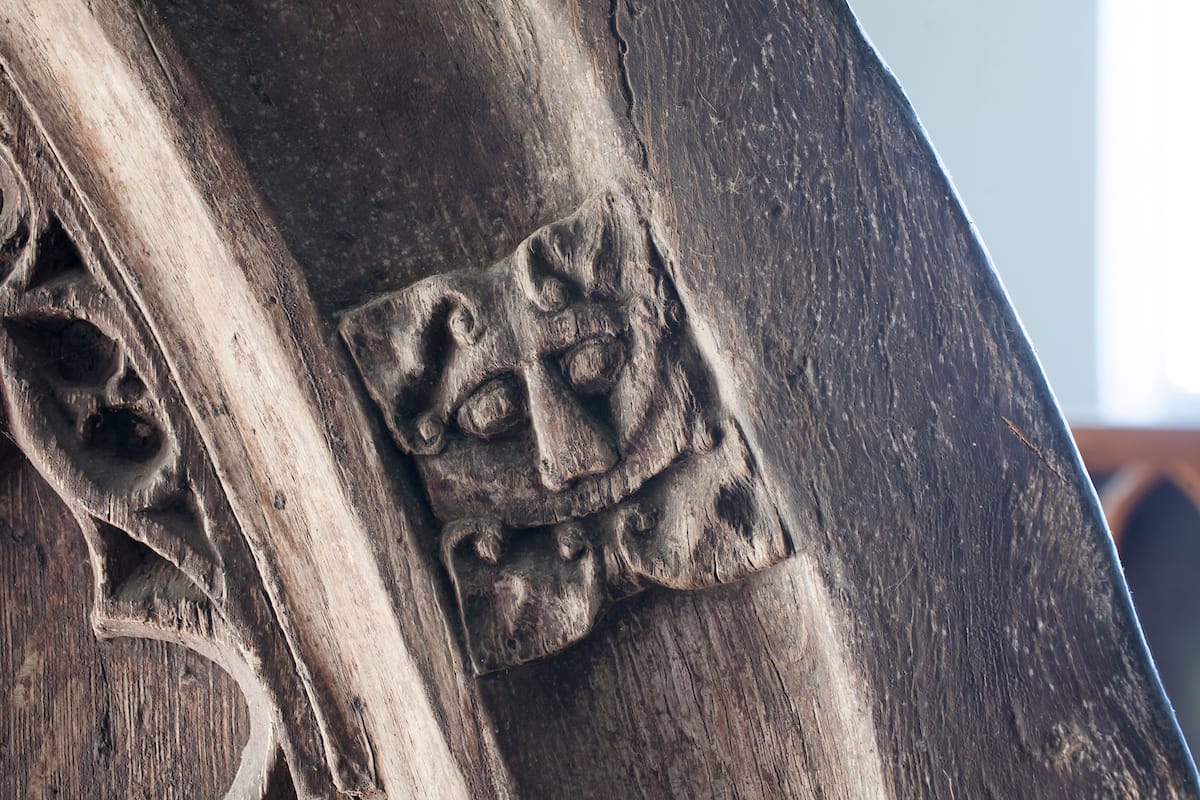
These details reward slow looking before entry. Light catches the worn ridges and deep shadows, and the door seems alive. Yet its greatest pleasure comes from use: as it opens, carved wooden tracery gives way to the church’s stone arches, screens and windows. Crossing this threshold becomes more than simple arrival. It prepares us for the layered medieval interior beyond.
Connect with me on: Bluesky / Instagram / Facebook / X / Tumblr / Flickr / Vimeo / Pixelfed / Pinterest

Member discussion