
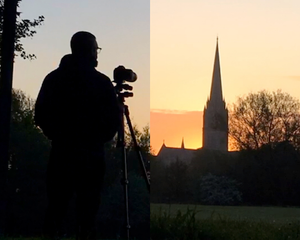
The church I’m visiting today is St Wystan’s in Repton, Derbyshire. Repton was a principal religious centre for Anglo-Saxon Mercian royalty, and some of that significance lies beneath the church in one of the most complete Anglo-Saxon spaces I’ve seen.
Mercia was one of the most powerful Anglo-Saxon kingdoms, occupying much of what is now central England. It was largely defined by its borders - its very name, from Old English Mierce, means "border people" or "borderland." The River Mersey marked Mercia’s northern boundary, its name reflecting its role as a frontier.
It is widely believed that the crypt was originally built as a baptistery in the first half of the 8th century, during the reign of King Æthelbald of Mercia (716–757). Sunk 1.2 metres into the ground over a natural spring, it was designed with a deep, stone-built drainage channel running eastward.
Later, the crypt was repurposed as a mausoleum, possibly to receive King Æthelbald himself, and went on to serve as the final resting place for Mercian royalty. King Wiglaf (d. 840) was laid to rest here, along with Wiglaf’s grandson, Saint Wystan, who was murdered in 849.
"Have you come to see the crypt?" says the verger, as she flicks the lights on in the nave.
"Yes, if possible," I reply, my heart racing with anticipation.
"It’s over there," she says, nodding towards a doorway. "Just flip the light switch on your way in, and be careful on the stairs!"
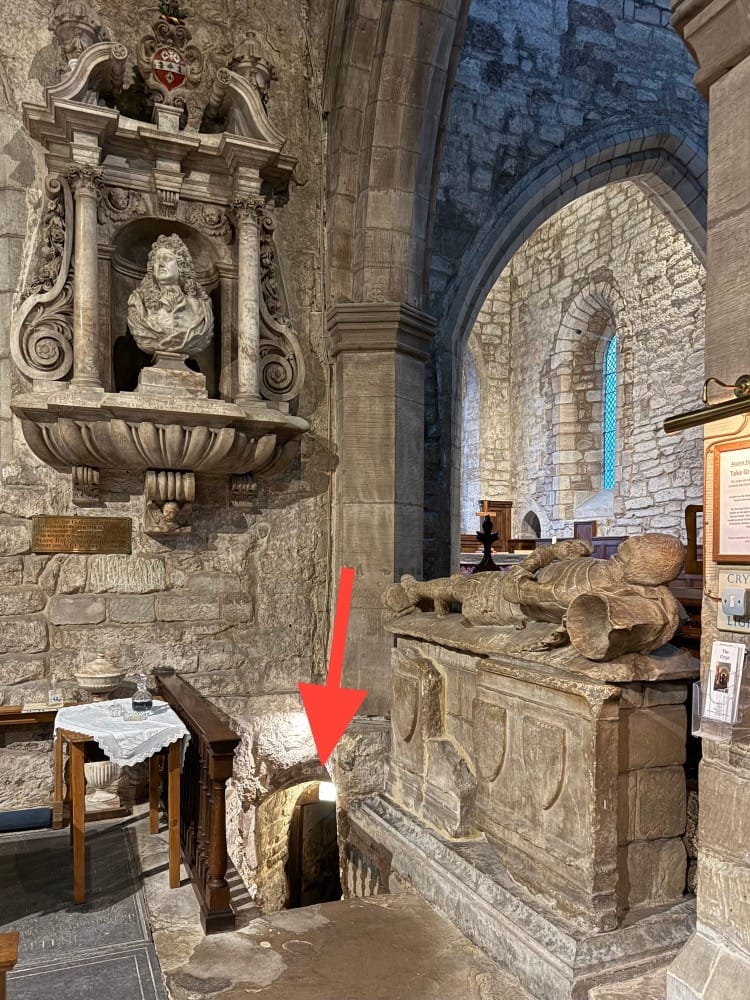
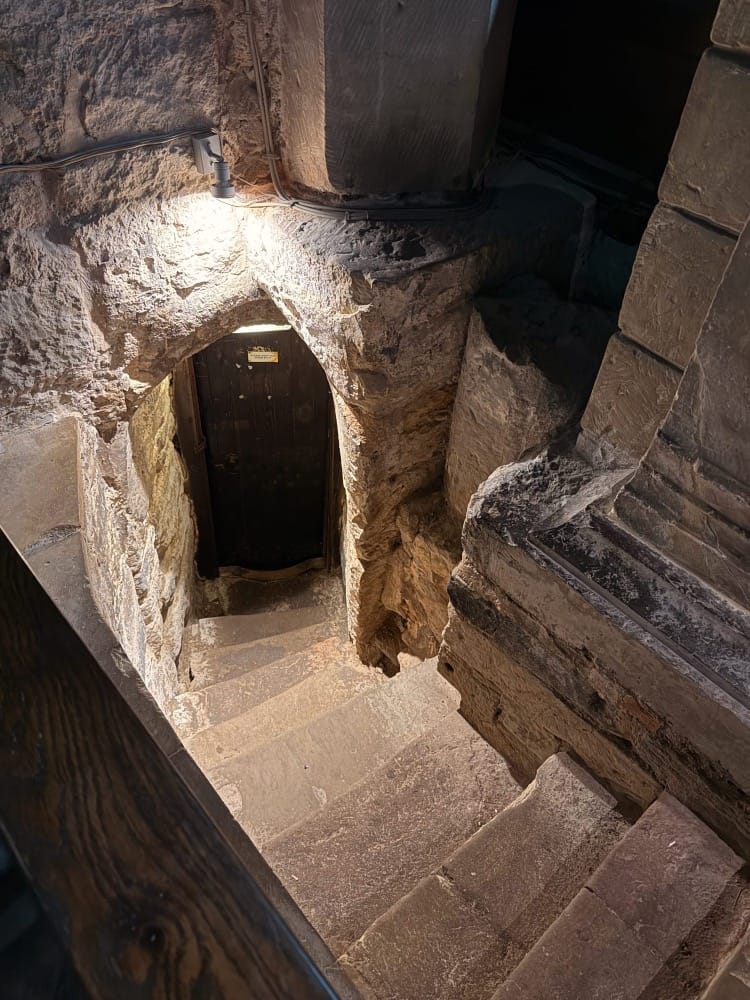
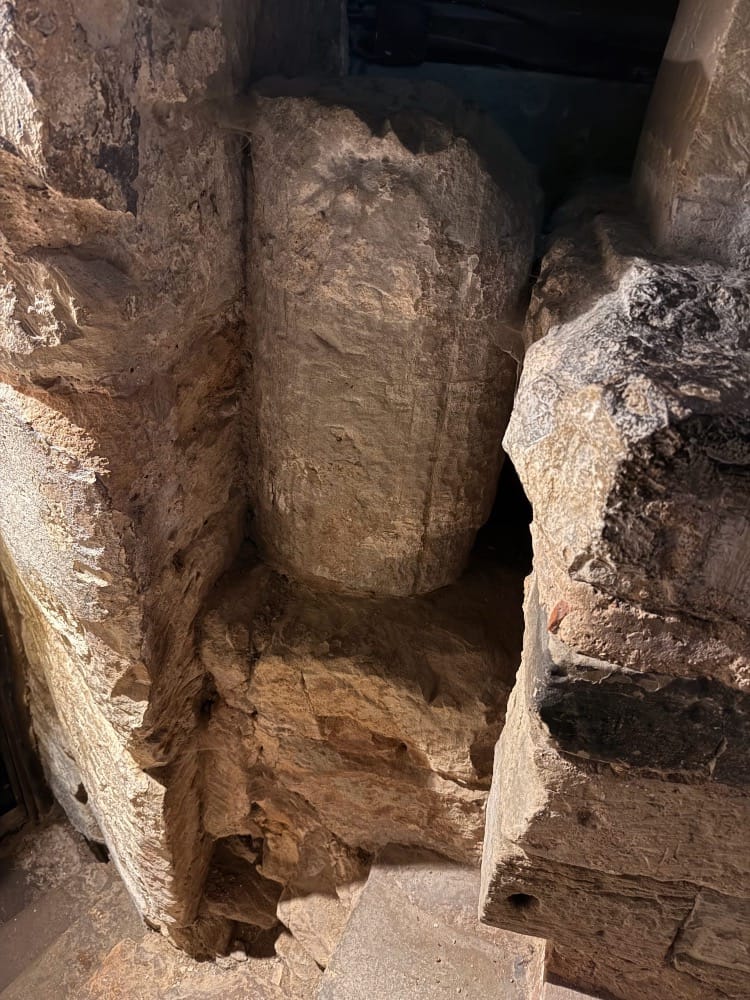
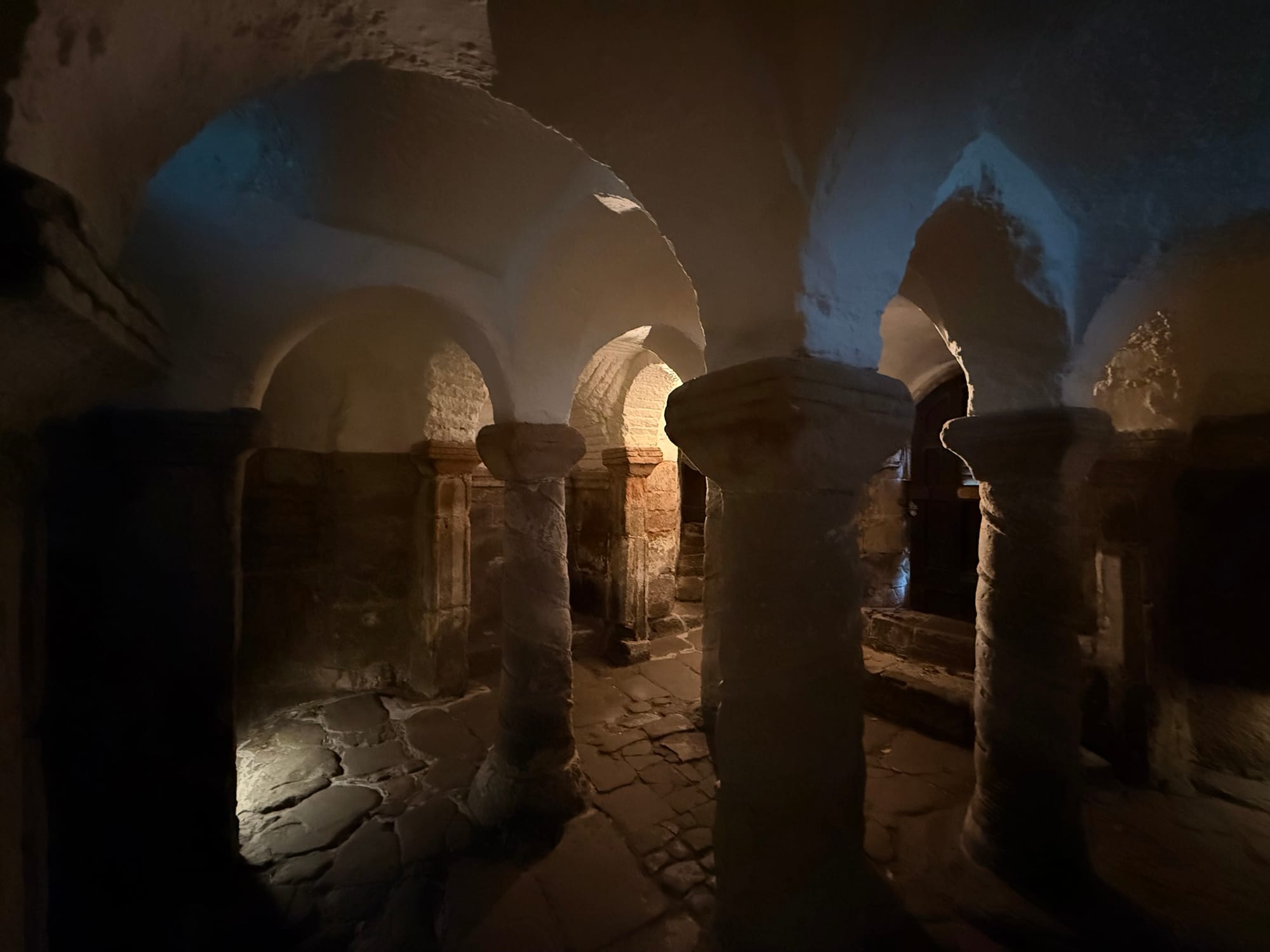
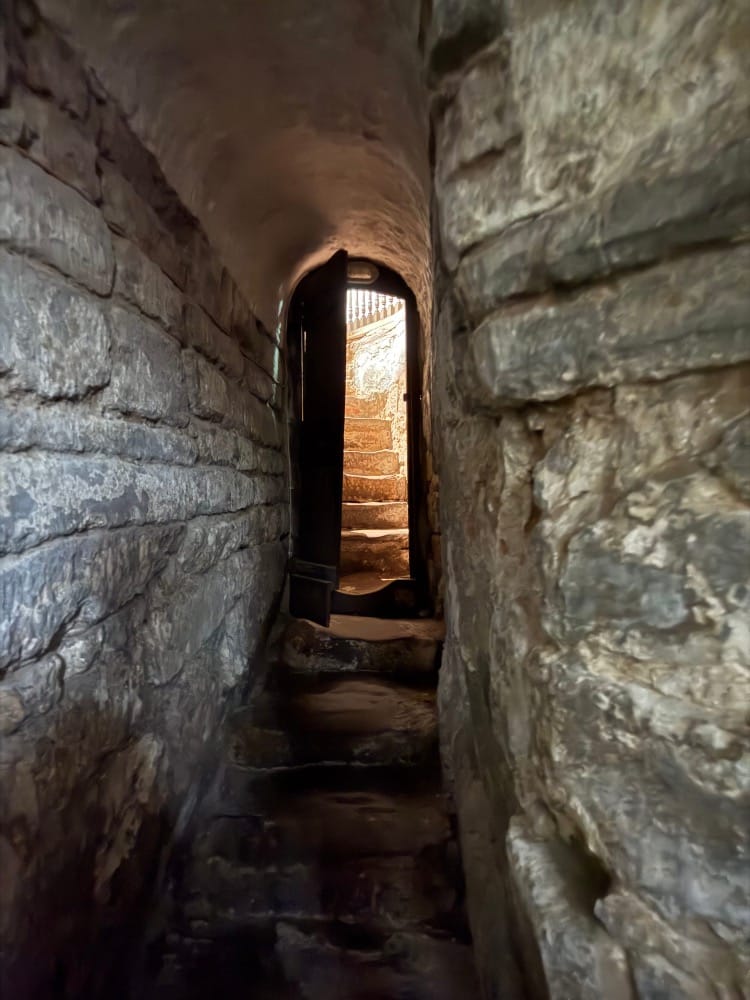
I can’t believe that I’ve been given full agency over the crypt – the first to enter (out of how many over the millennia?) on this new day. I carefully negotiate the steps, noting the spectral Saxon column beside the stairway, and then stop at the door.
I’m moving into the shadows, so I reach for the switch, but pause before I switch it on. I decide to leave it off.
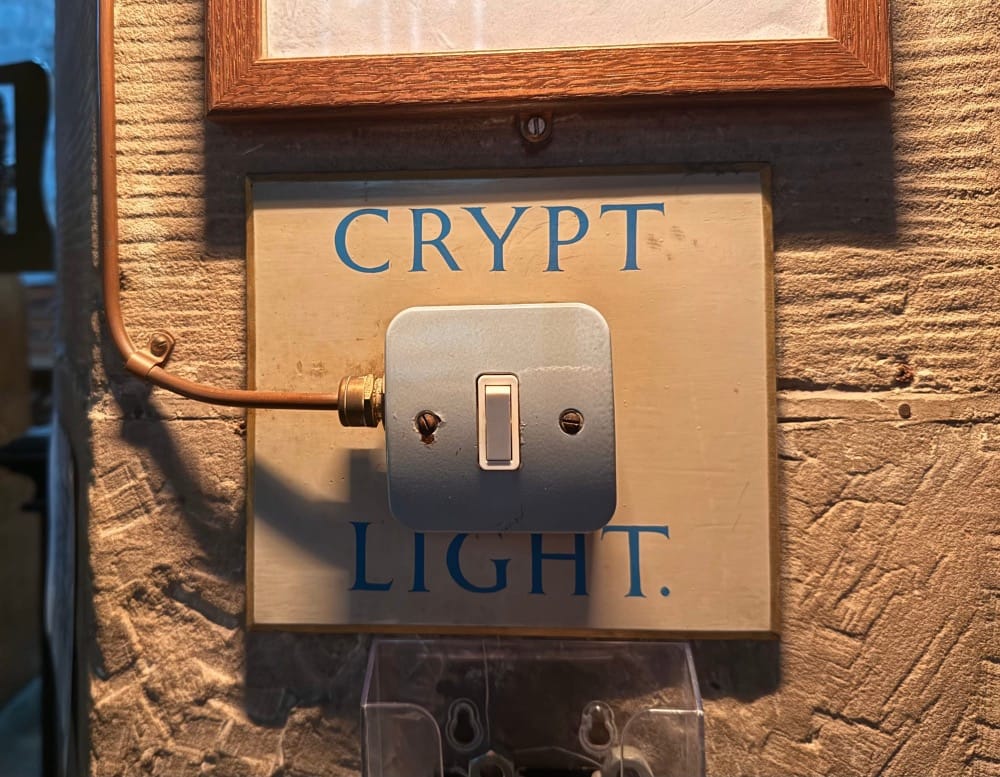
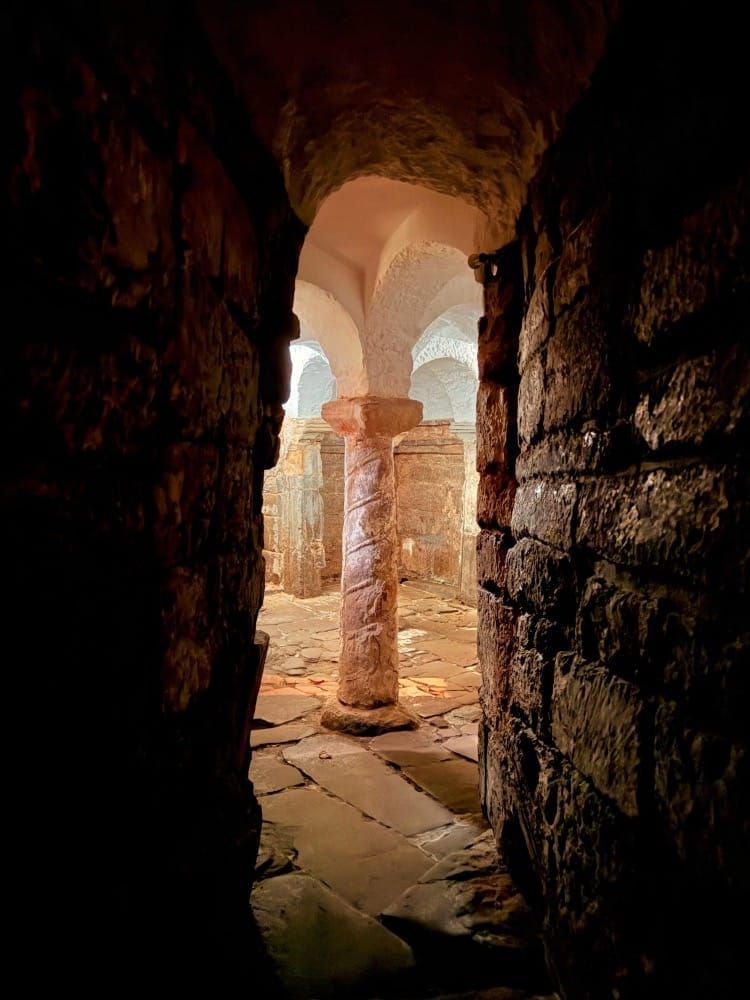
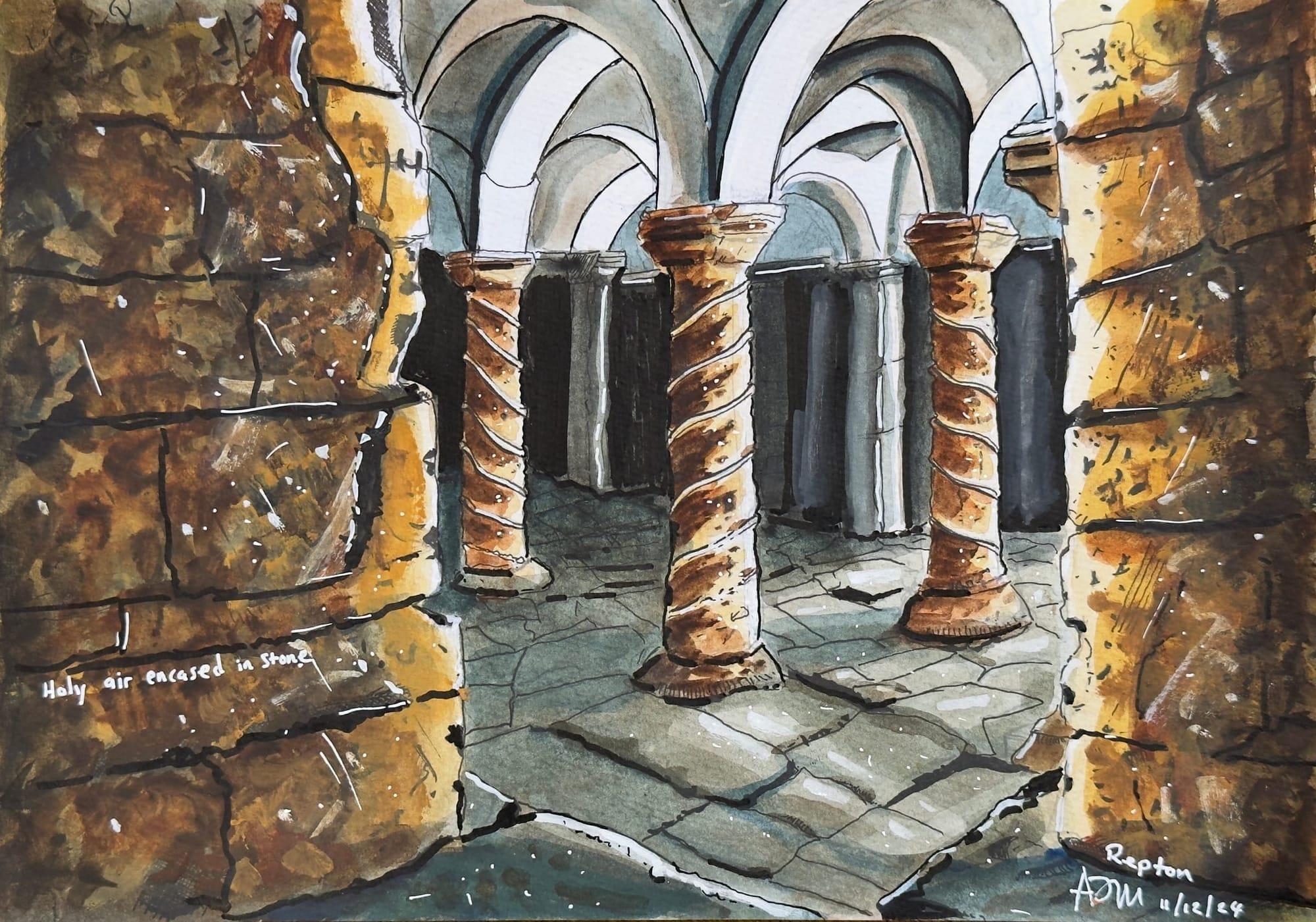
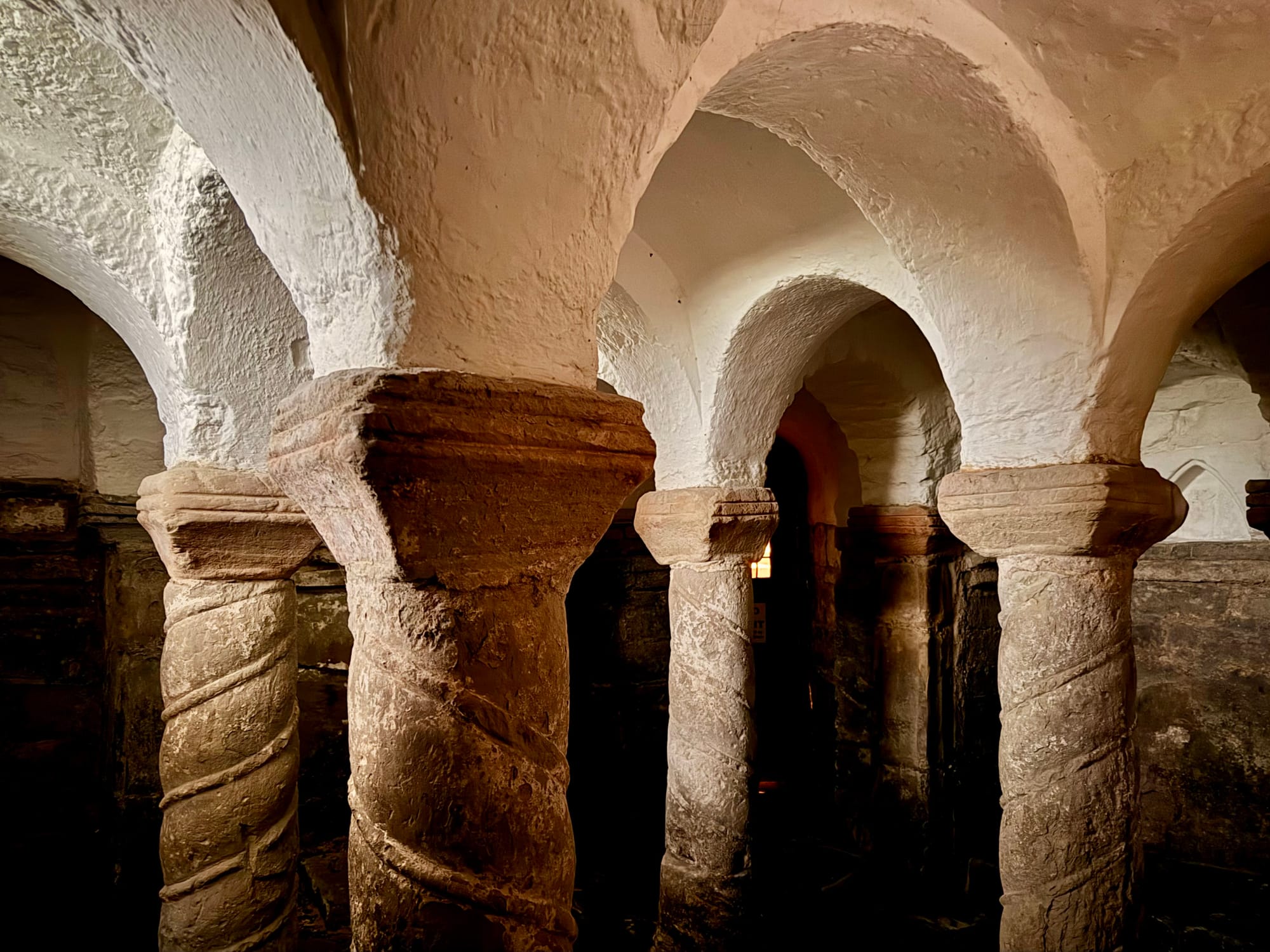
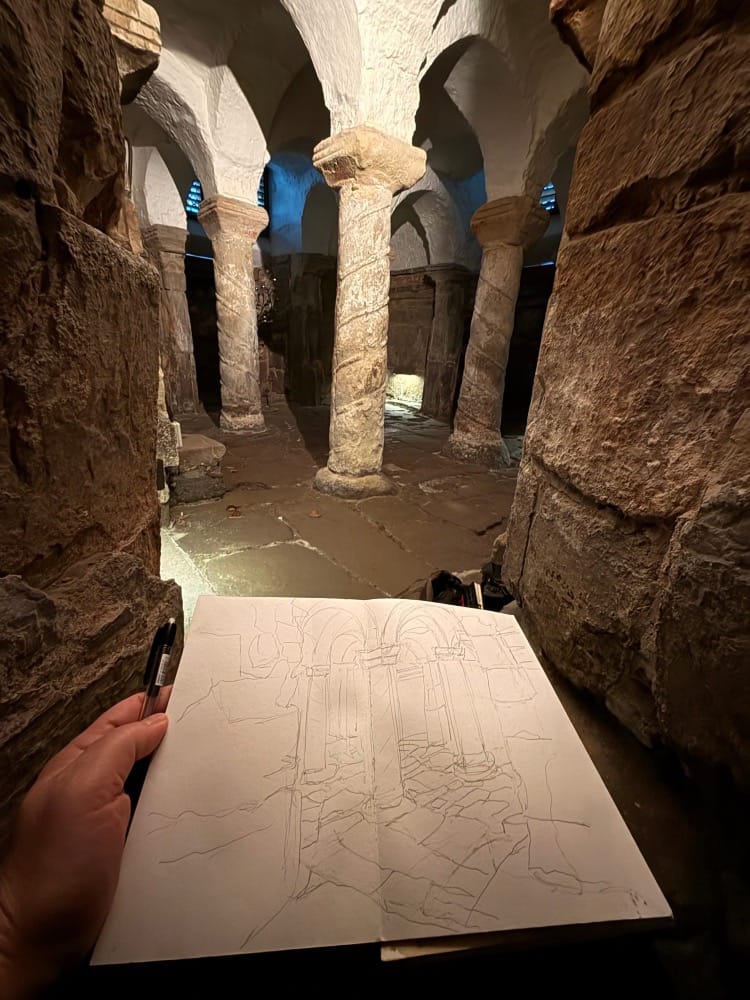
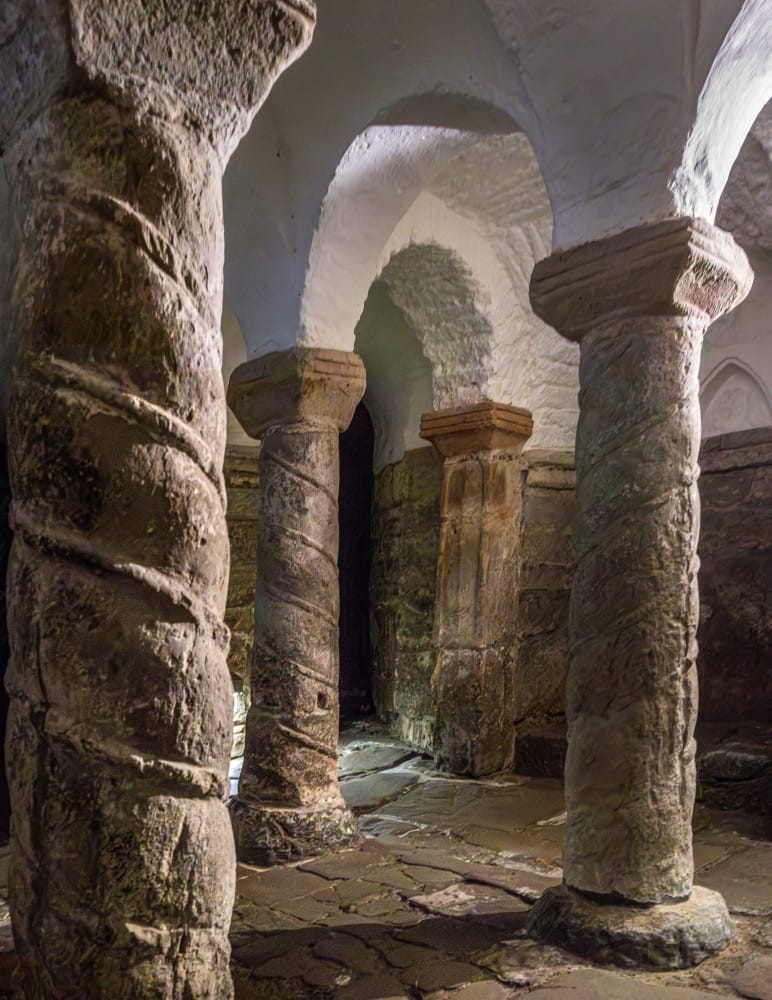
Instead, I prolong my gratification by slowly opening the door revealing the space in its natural light. A corridor of heavy-hewn, monolithic masonry stretches before me, accompanied by a faint hint of petrichor. The passage leads to a twist of vaulted columns, largely silhouetted but also touched by a buff, filtered light. The columns themselves are remarkable – spiralled, as if frozen mid-turn, glowing faintly in the half-light. Their forms pulse with energy, like the schoolchildren skipping past the church just moments ago.
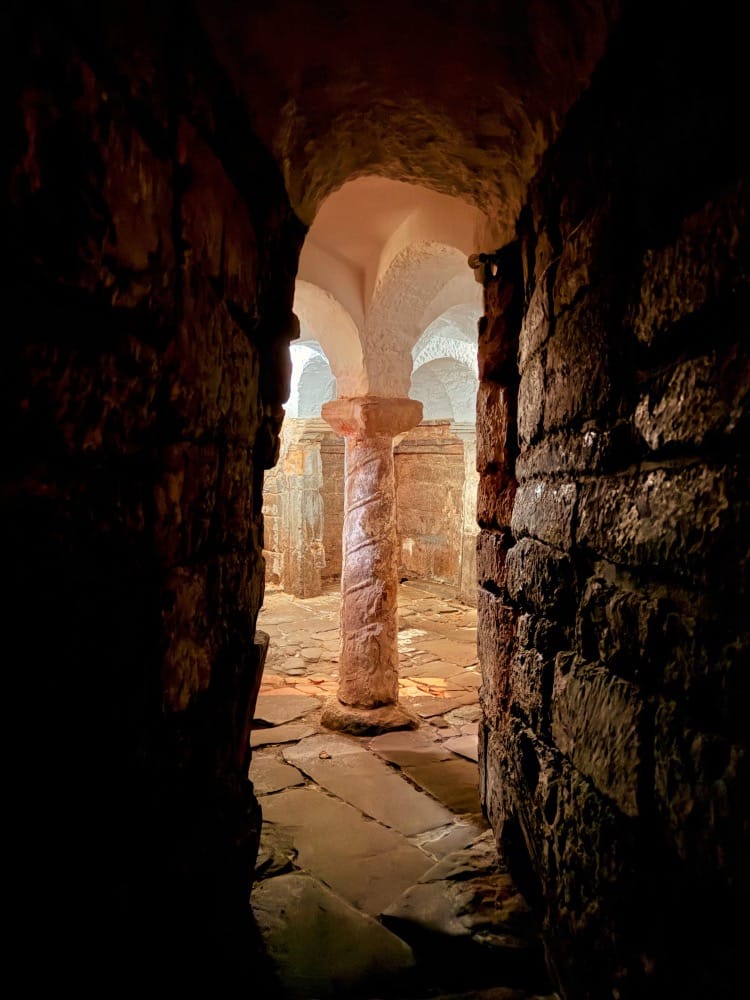
How do you leave the life force of your generation behind in built form? Perhaps you reject convention – where others build in wattle and daub, you build in stone. And if stone alone is not enough, you carve it, twist it, shape it into something that is alive. You make columns that rise and turn in opposition to one another, a helix of movement held forever still.
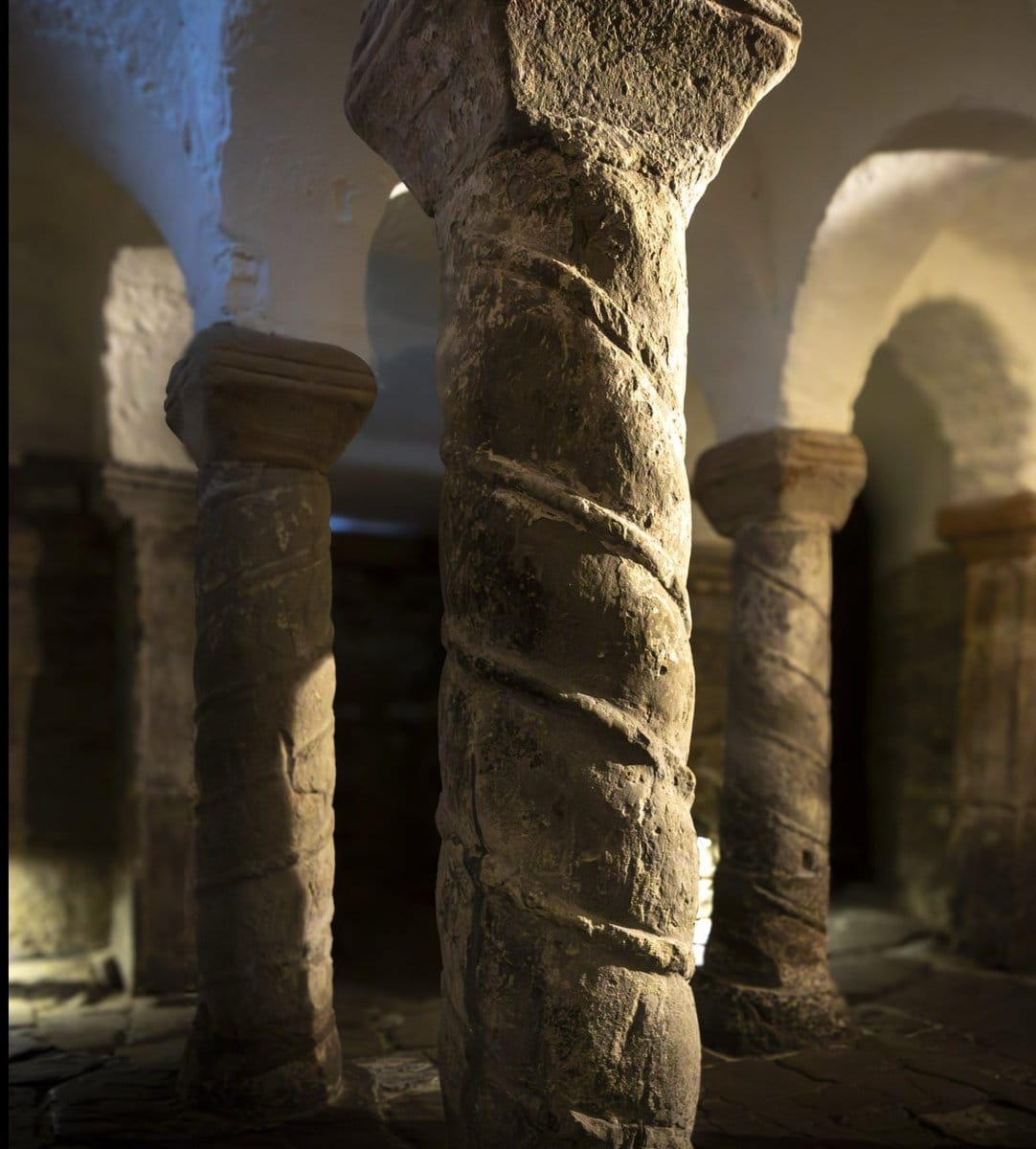
The weight of history here is a press. I am so taken in by what I see that I sit down on the cold slab to absorb it. This is a place that has held fast in the eddying tides and swells of chaotic times. The arcade sprouts from the 8th century, above a sacred spring, hammered into deep time by a simple vault.
I am caught up in the dance of light along the vaulting. The corridor walls seem to sparkle in patches, snagging on imperfections, whilst in front of me, dust motes move in murmuration. There is a delightful combination of stone, slab and plaster that augments the space – exactly as John Betjeman described it: ‘Holy air, encased in stone.’
Connect with me on: Bluesky / Instagram / Facebook / X / Tumblr / Flickr / Vimeo / Pixelfed / Pinterest

Member discussion