Welcome!
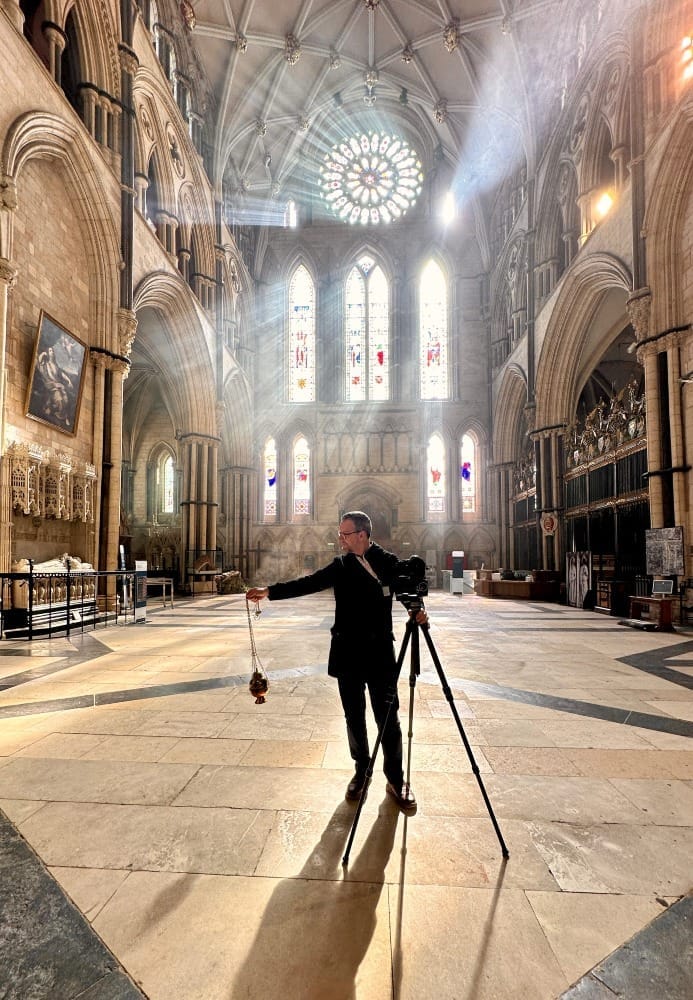
Coming soon: Celebrating St. William of York
An Art Commission from York Minster
Kind words about the Genius Loci Digest
For all those who find solace in our ecclesiastical heritage & religious buildings in all their architectural glory, this account is one of the very best. Elena on Twitter.
⚡️ View the latest digest and the full archive here.
📐 My Goals ℹ️ Donations Page & Status 📸 MPP Status 🛍️Shop
🔗 Connect with me on: Bluesky / Instagram / Facebook / X / Tumblr / Flickr / Vimeo / Pixelfed / Pinterest / Flipboard/ Fediverse: @fotofacade@digest.andymarshall.co
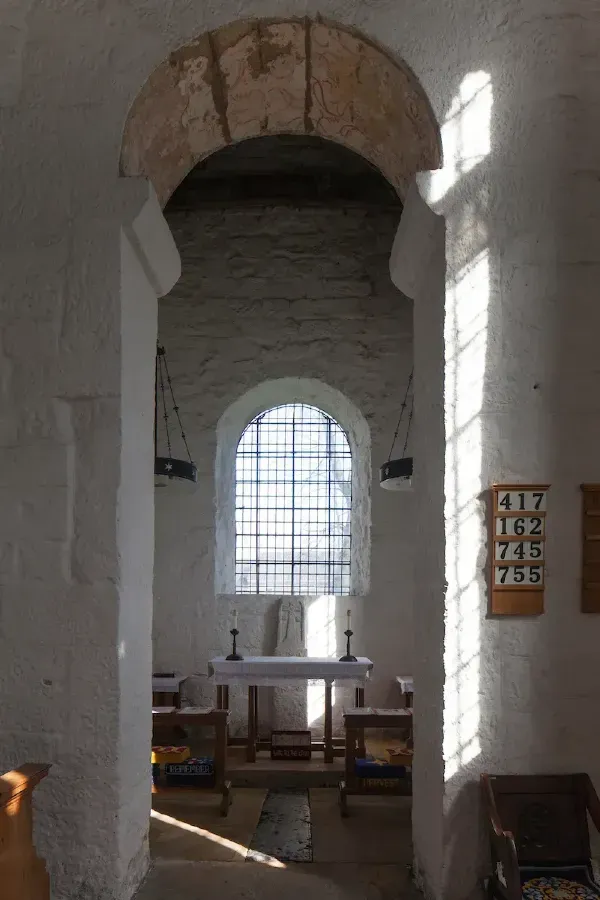
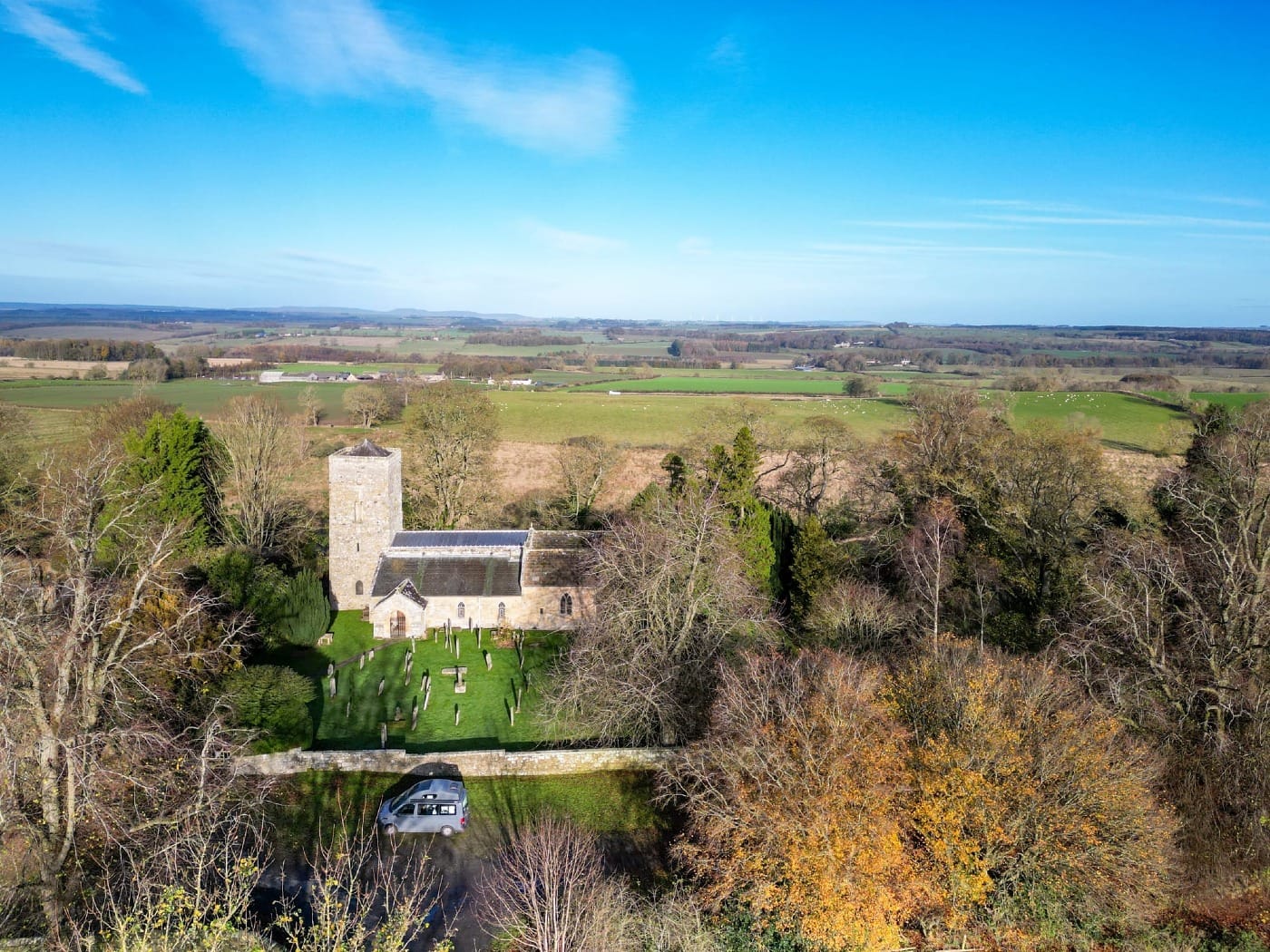
Built when Bede was a baby. Light and shade at the Anglo-Saxon church at Escomb in the Wear Valley which was built around 675AD. It is thought to be one of the most complete Anglo-Saxon churches in England.
“These results demonstrate the health impact of the arts at a biological level.
They provide evidence for arts and cultural engagement to be recognised as a health-promoting behaviour in a similar way to exercise,”
Professor Daisy Fancourt. Guardian Newspaper Article.
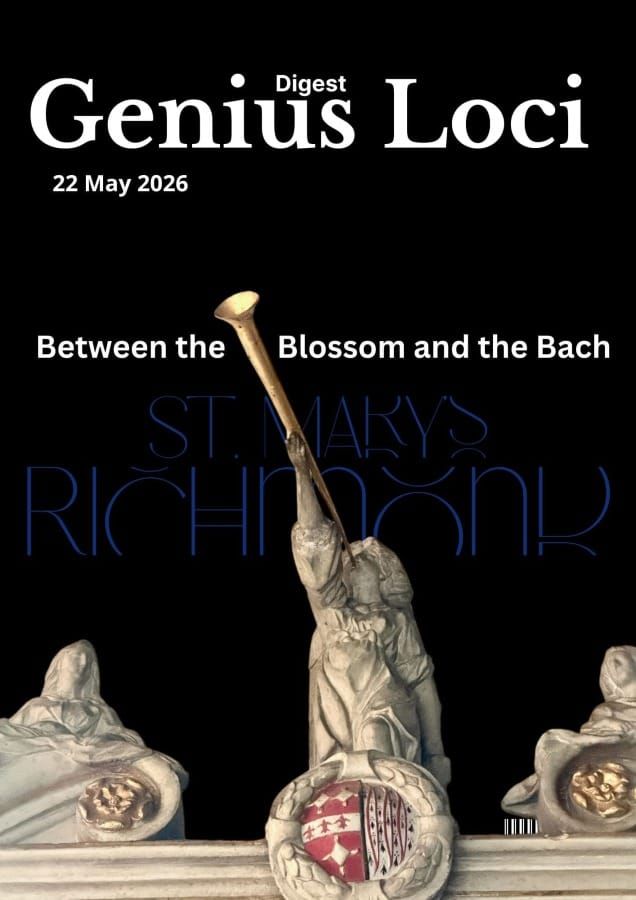
Between the Blossom and the Bach.
Every now and then, we come across a handful of words that seem almost disarmingly simple - and yet they stay with us for years, altering the way we see the world.
I’ve carried one such passage with me for a long time now. The words came from the writer Michael Ventura, but when I first encountered them they felt less like a quotation and more like a summons - a reminder that, in an age of noise, speed, and curated amnesia, there are still people and places that hold the line between memory and forgetting.
“What each of us must do is cleave to what we find most beautiful in our human heritage - and pass it on……And to pass these precious fragments on is our mission.”
Sometimes those precious fragments are not grand monuments or sweeping historical narratives, but deeply felt acts of care, remembrance and creativity - things that carry something essential forwards into the future.
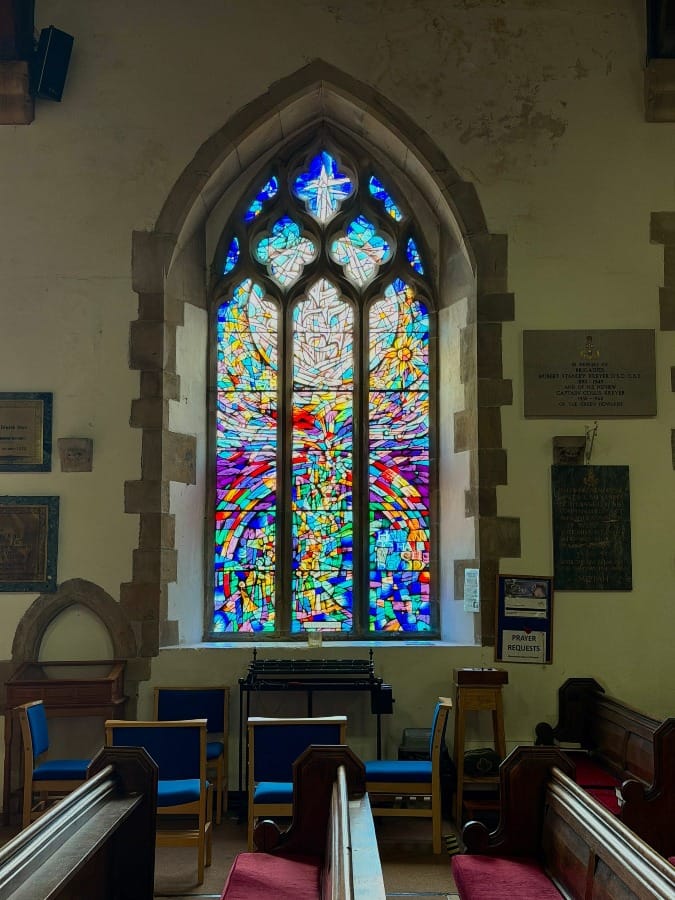
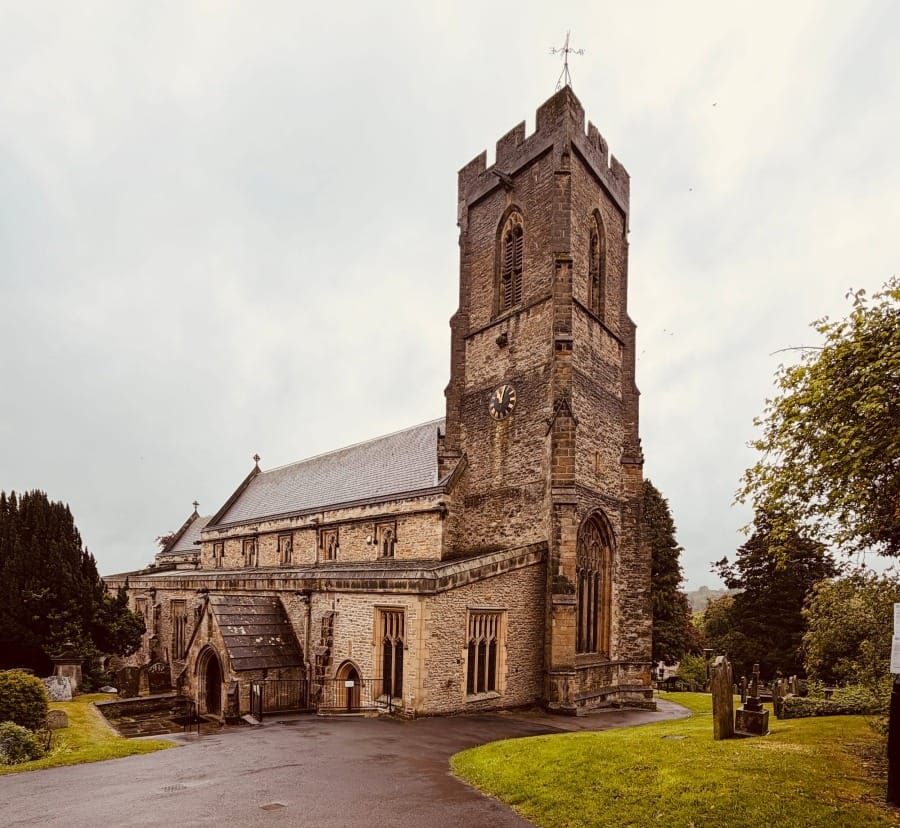
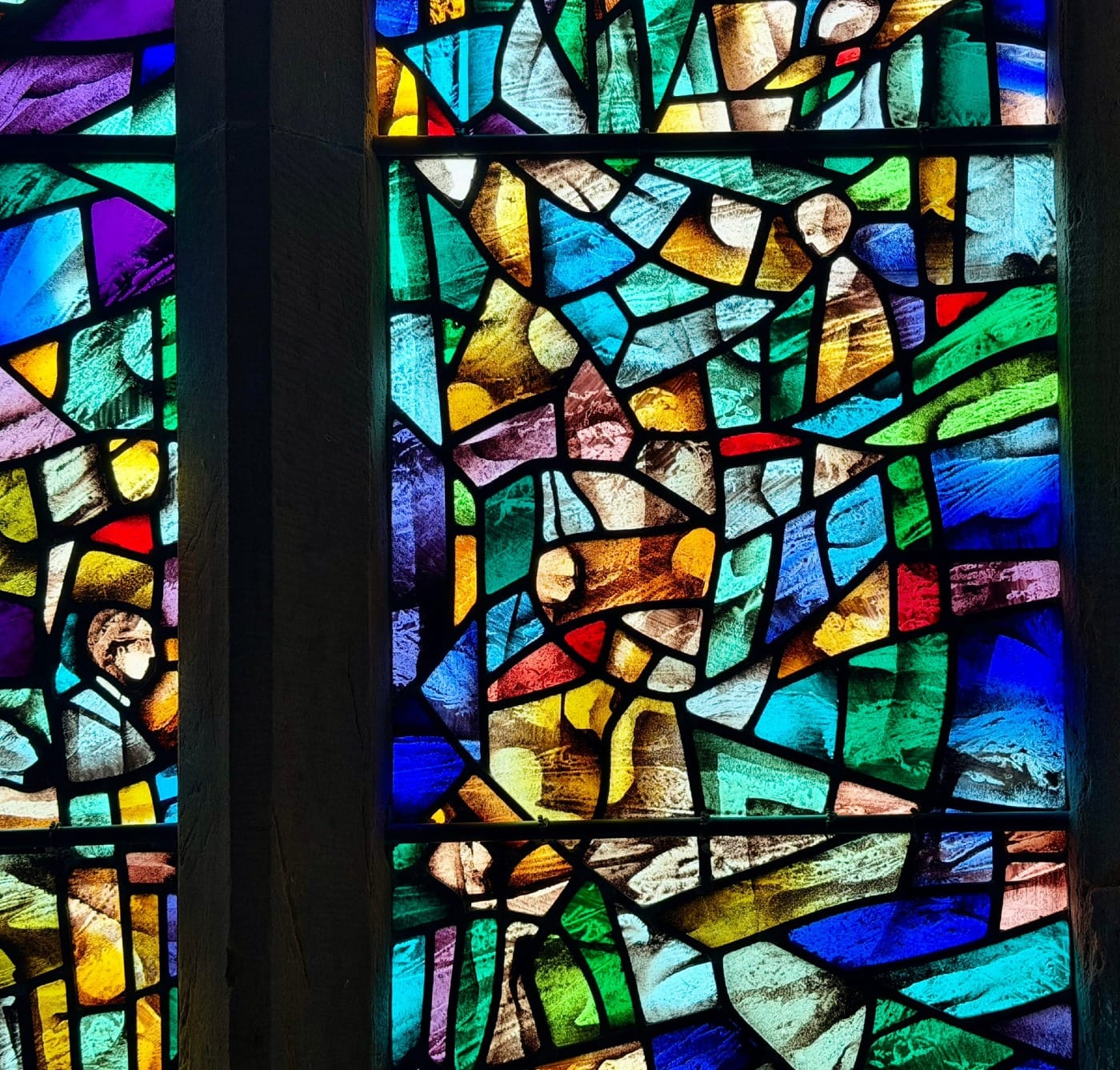
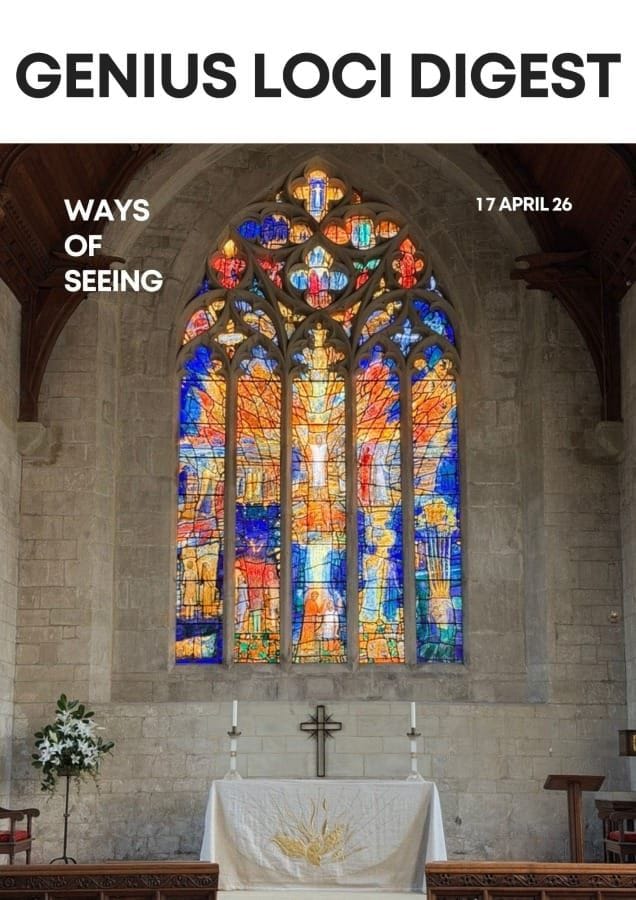
And so, in the spirit of Ventura, I want to pass on a work of art that I came across in a church in the town of Richmond in Yorkshire. The artwork is a piece of modern stained glass - a memorial to a young girl called Ruth. It is known as Ruth’s Window and it mirrors her hopes, loves and expectations before she was taken from us at the tender age of eighteen.
The window is by stained glass artist Alan Davis, who has also created windows for Manchester Cathedral and Hexham Abbey.
Inside St Mary’s Church, and in front of the glass, I stand for several moments undisturbed other than by the distant clipping of stems and the barely audible notes of a piano. Music practice is underway and the flower lady is in. As I observe the window, the fresh aroma of spring blossom drifts through the church intertwined with the dulcet tones of Bach.
Surrounded by such creativity, I’m convinced that artists perform a vital and often overlooked task within our world. They absorb complexity, grief, beauty and contradiction - turning over the soil of experience and breaking down what might otherwise overwhelm us. In doing so, they create the conditions for memory, meaning and renewal.
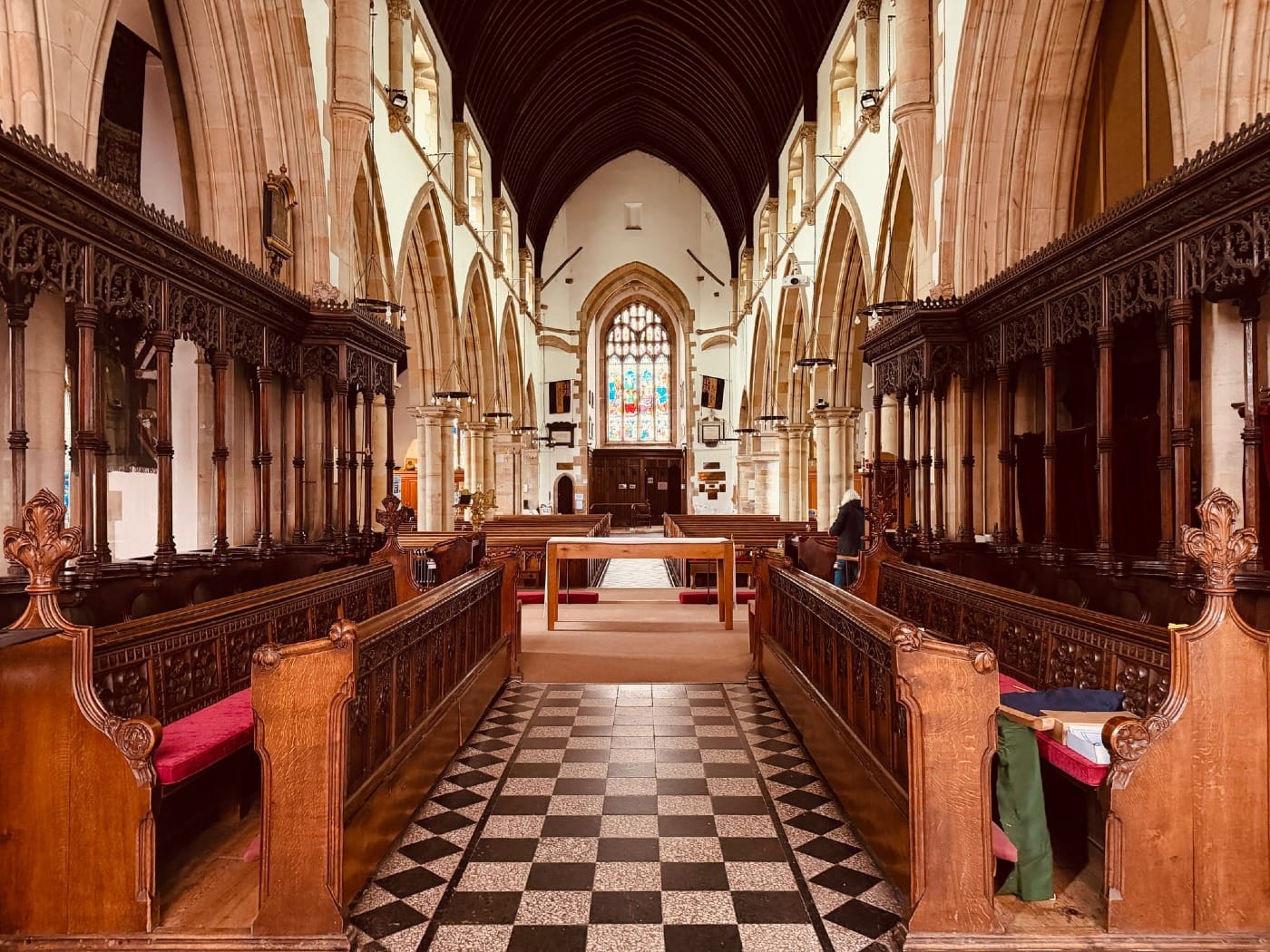
For a moment I stand back and look away towards the flower lady who is now dancing her hands around the heads of the flowers like a hairdresser applying the final touches. Then something draws me back into the window - a shift in tone and colour. The sun appears briefly and the glass deepens in hue. The colour temperature rises and certain facets of the window - little imperfections that make the whole - begin to sparkle.
To think that works of art like this are freely available - and that, most of the time, we can sit in silence before them; conduits hidden in plain sight to what it means to be human.
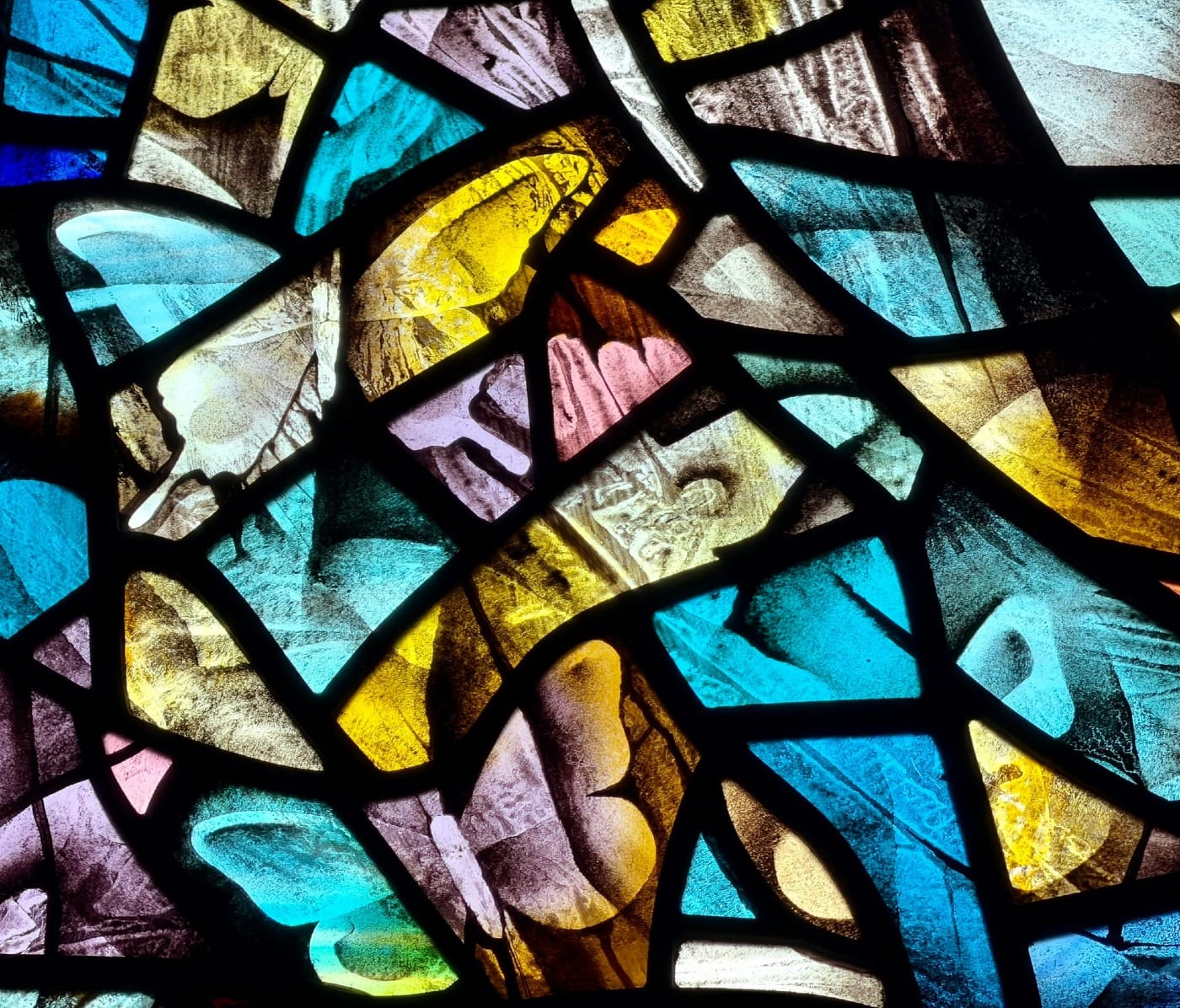
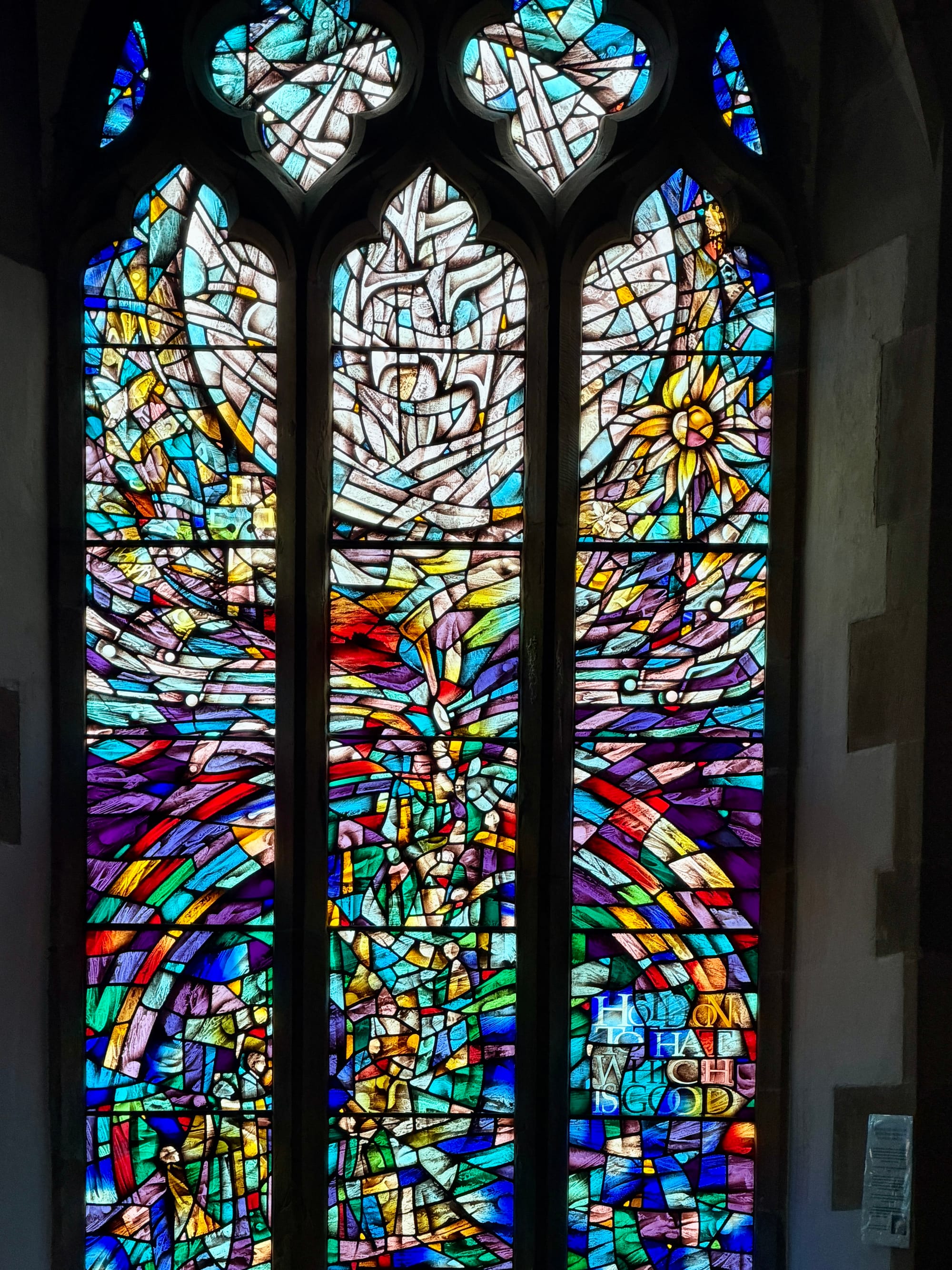
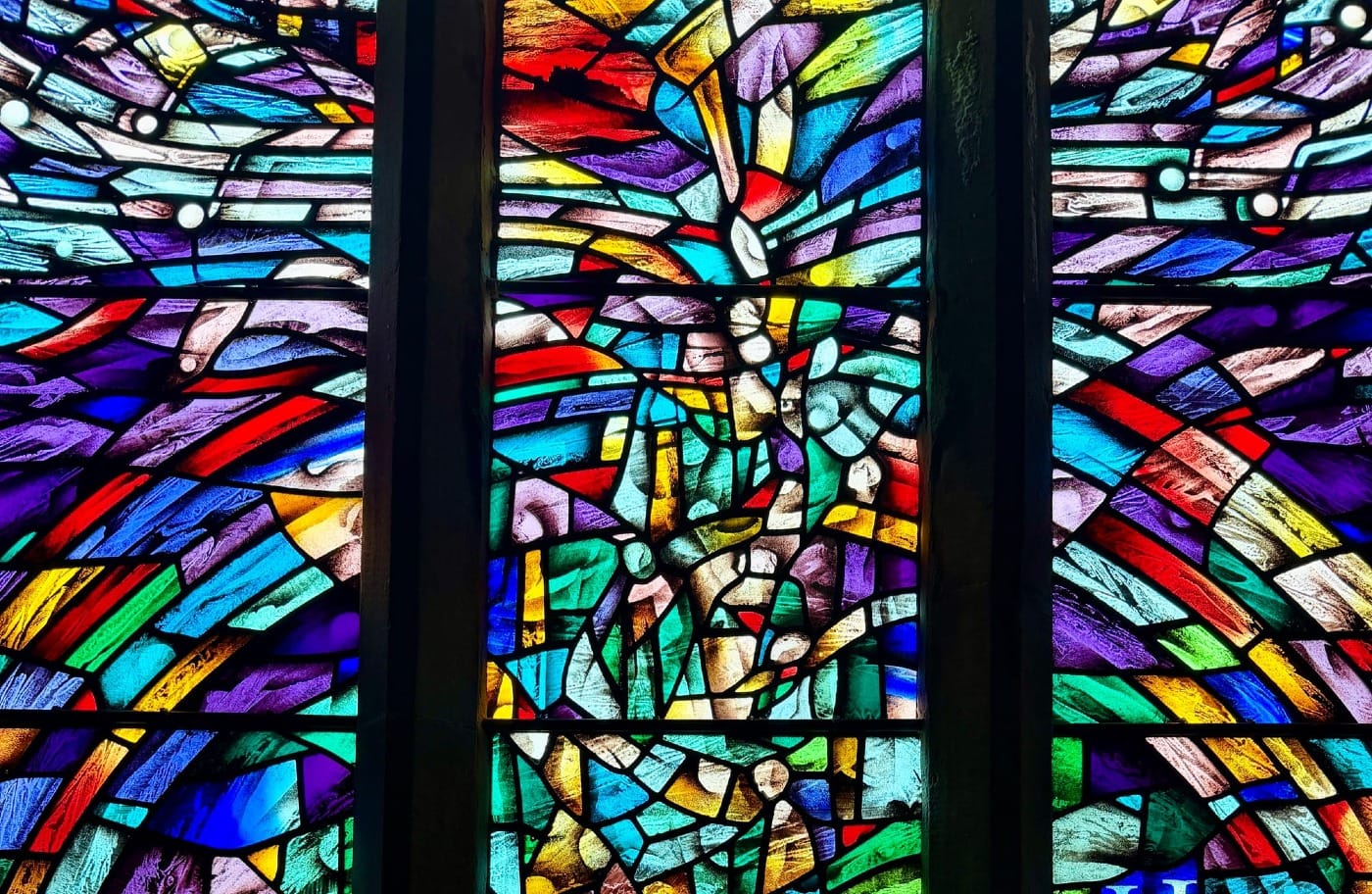
And oh, this window reveals precisely that - connection, love, integrity, loss, remembrance and hope. Alan Davis has created something here which feels profoundly moving. It isn’t simply a piece of stained glass - it is the beginning of a journey. One that starts with geometry and movement - with a sense of something vast and greater than ourselves - before offering brief glimmers of recognition: of people and place, of nature and the cosmos, of the tangible and intangible.
I timelapse the window into a thousand years from now. Watch the colours muddy, the tracery fail, the cames buckle and then see it folded back into the ground. I imagine archaeologists - bent on seeing beyond our smoke and mirrors, digging into the earth and finding bits of the window. At first they find the buff-brown tracery and then comes a whoop of joy as they discover the first fragments of coloured glass. They would try to interpret it of course and put together various hypotheses. But none of that would account for the joy of that first find - that individual fragment of colour held in the hand while the archaeologist rubs away the soil and angles it towards the sun. At that point - at the whoop of joy - they stop being an archaeologist and become human.
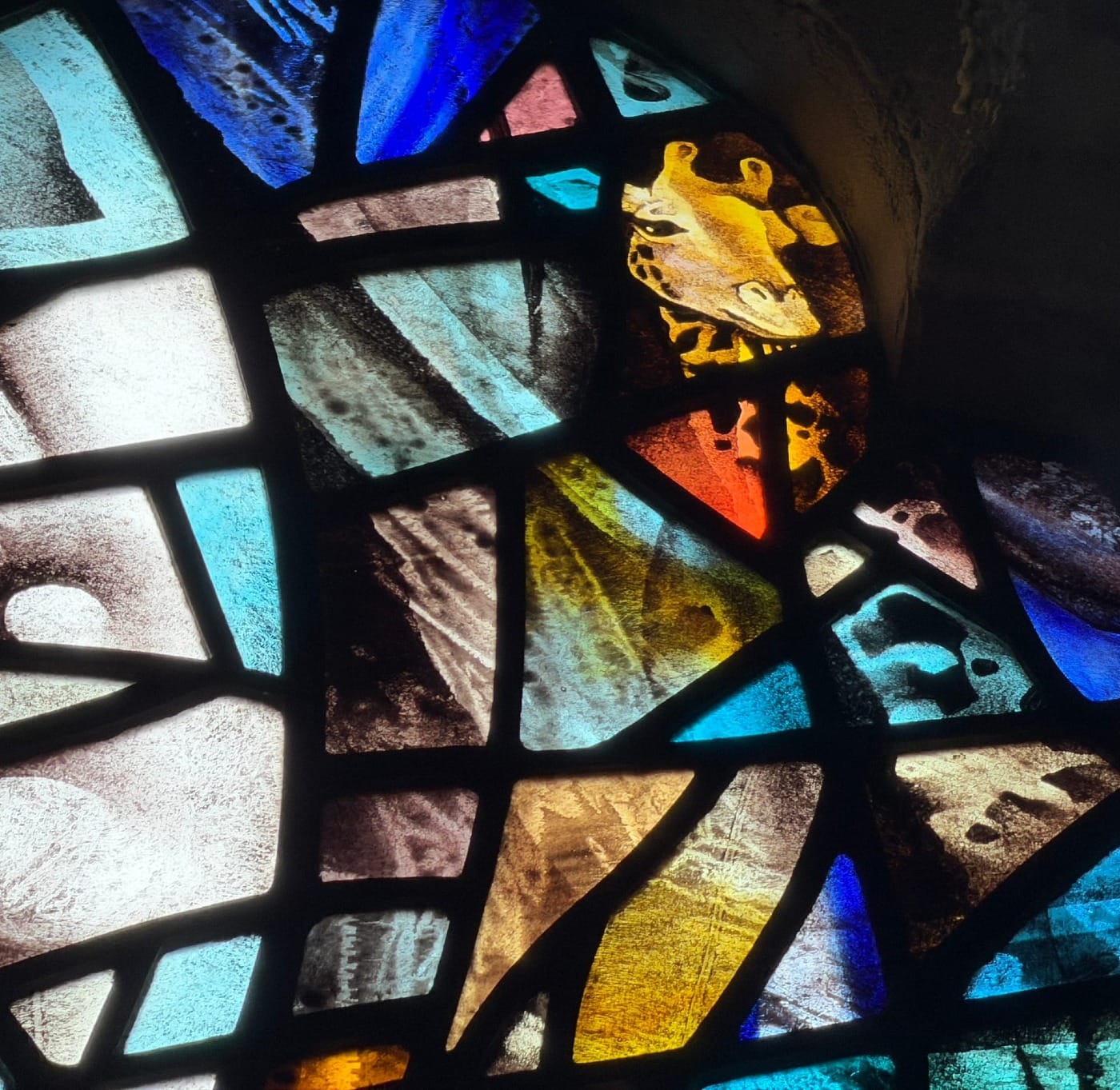
And all that effort, all the digging, all the commitment - for a single sherd of coloured glass.
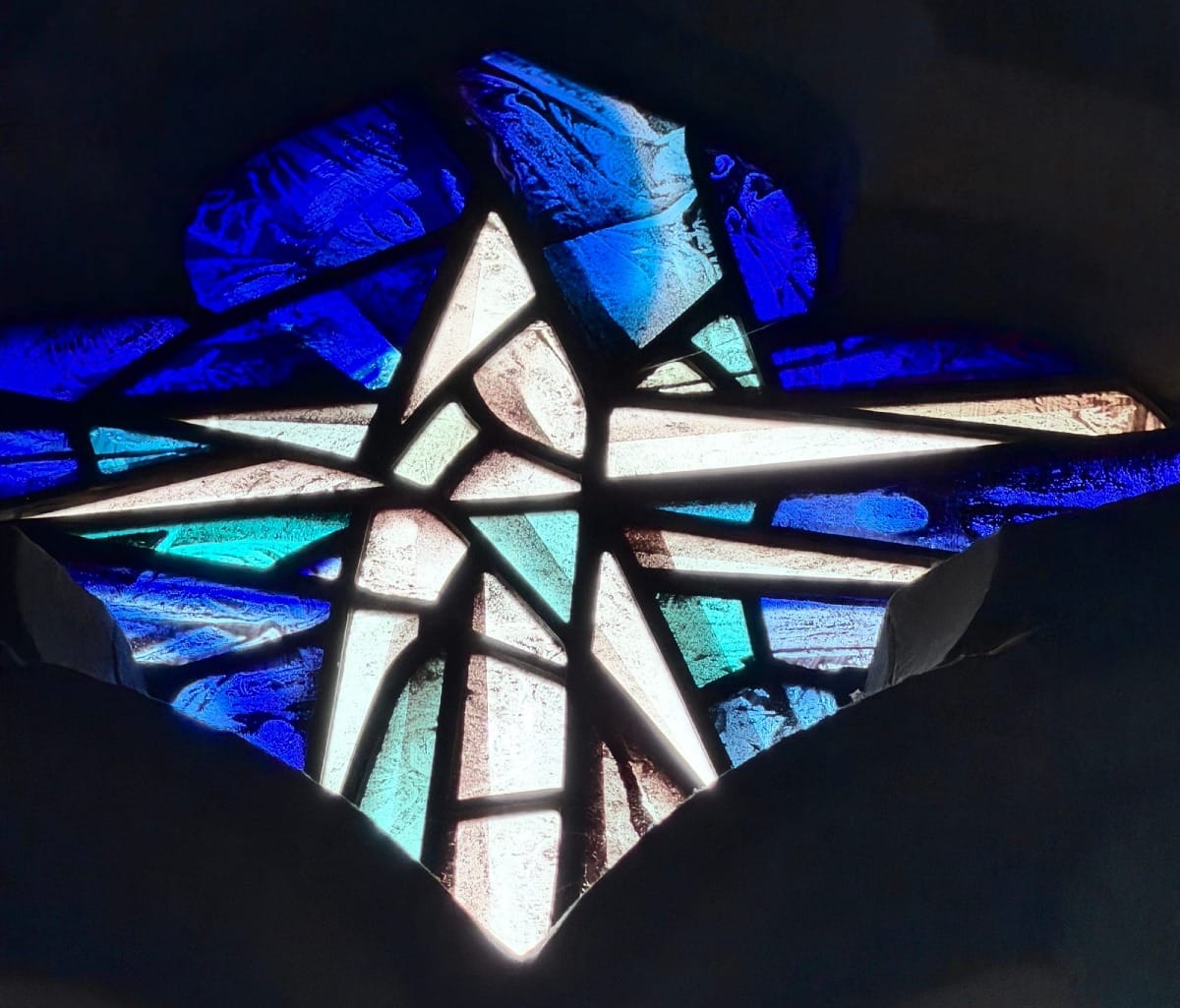
And with that in mind, here inside this place, with every morsel still held within a gloriously coordinated whole, I realise how precious the million-petalled flower of the present is.
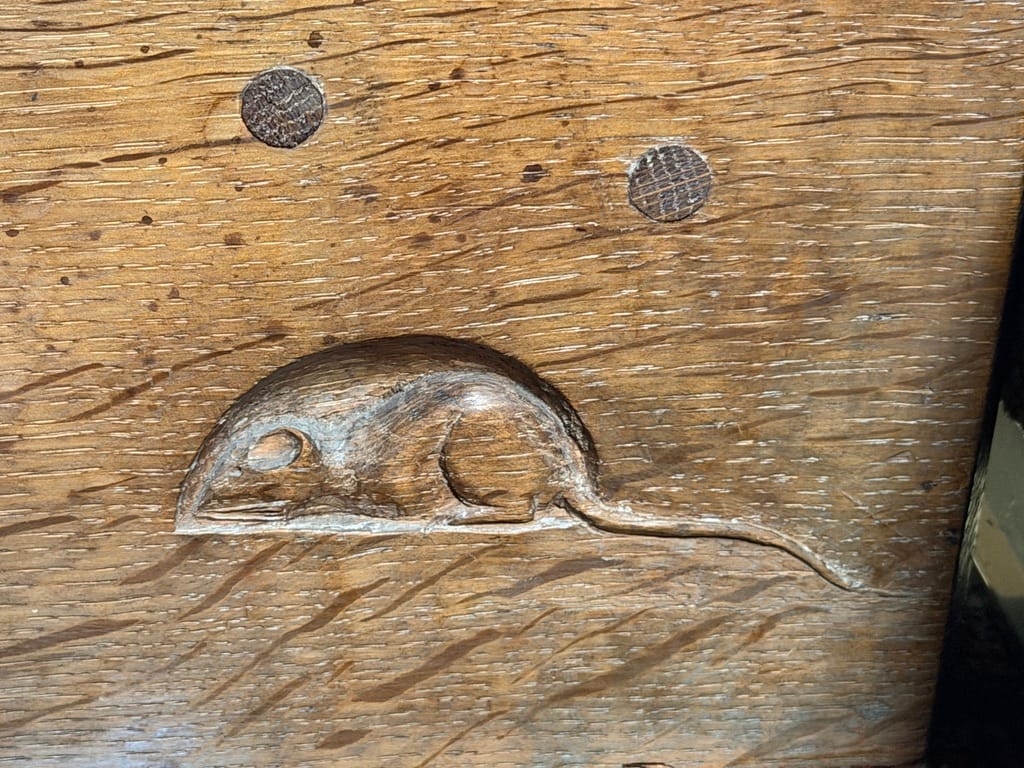
Every time, without fail, I walk into buildings like this, I find something that moves me deeply. I’m struck by the remarkably simple and obvious notion that I feel better in some places than others - and that I have a choice in that. I can put myself in the way of beauty.
There are times when I feel a spiralling sense that the mechanisms which keep me balanced in this world are beginning to fail me. A sense of being unheard, swept aside, unable to gain purchase on the sheer velocity and division of modern life. But this window rubbed away the cataracts of the present and reminded me how astonishing a gift it is to be here at all - to stand in the path of light filtered through enduring imagination, craft and hope.
For a moment, the world stopped feeling closed to me. The contract with the present felt renewed. And I found myself thinking - with unusual clarity - that I will never give up on this world while places like this, and the people capable of making them, still exist within it.
A recent study suggests that encounters with art can slow the pace of biological ageing.
It makes me wonder whether, somewhere between photons and feeling, quarks and consciousness, grief and beauty, there exists a different understanding of continuity altogether. One in which a life does not end cleanly at the edge of death, but continues outwards through the lives it touches and transforms - so that, in some small but tangible way, Ruth still lives on, not just in the memory of the window itself, but through the lives that continue to gather before it.
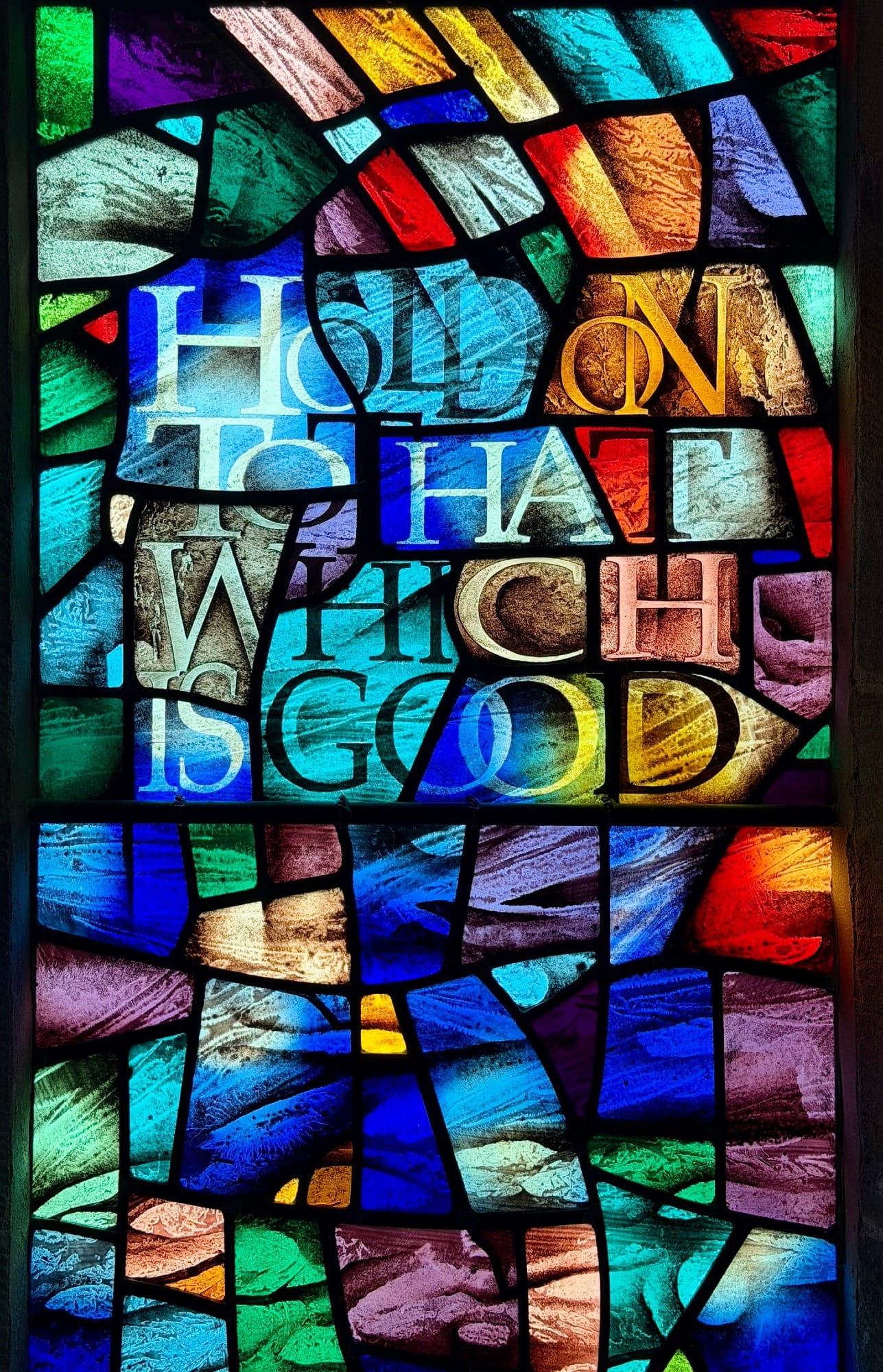
During my final moments in St Mary’s, surrounded by a cosmos of creativity - the church, its fittings, the blossom and the Bach - the window draws me upwards into a swirling firmament, outwards into the beauty of the natural world and then gently carries me along the Fibonacci arc of an invisible line towards seven simple words held beyond the ephemeral colours of a rainbow:
HOLD ON TO THAT WHICH IS GOOD.
Places like St. Mary’s remind me that art, architecture and story still help us navigate the world more carefully. If today’s digest resonated with you - membership helps me continue travelling, documenting and passing these precious fragments on.
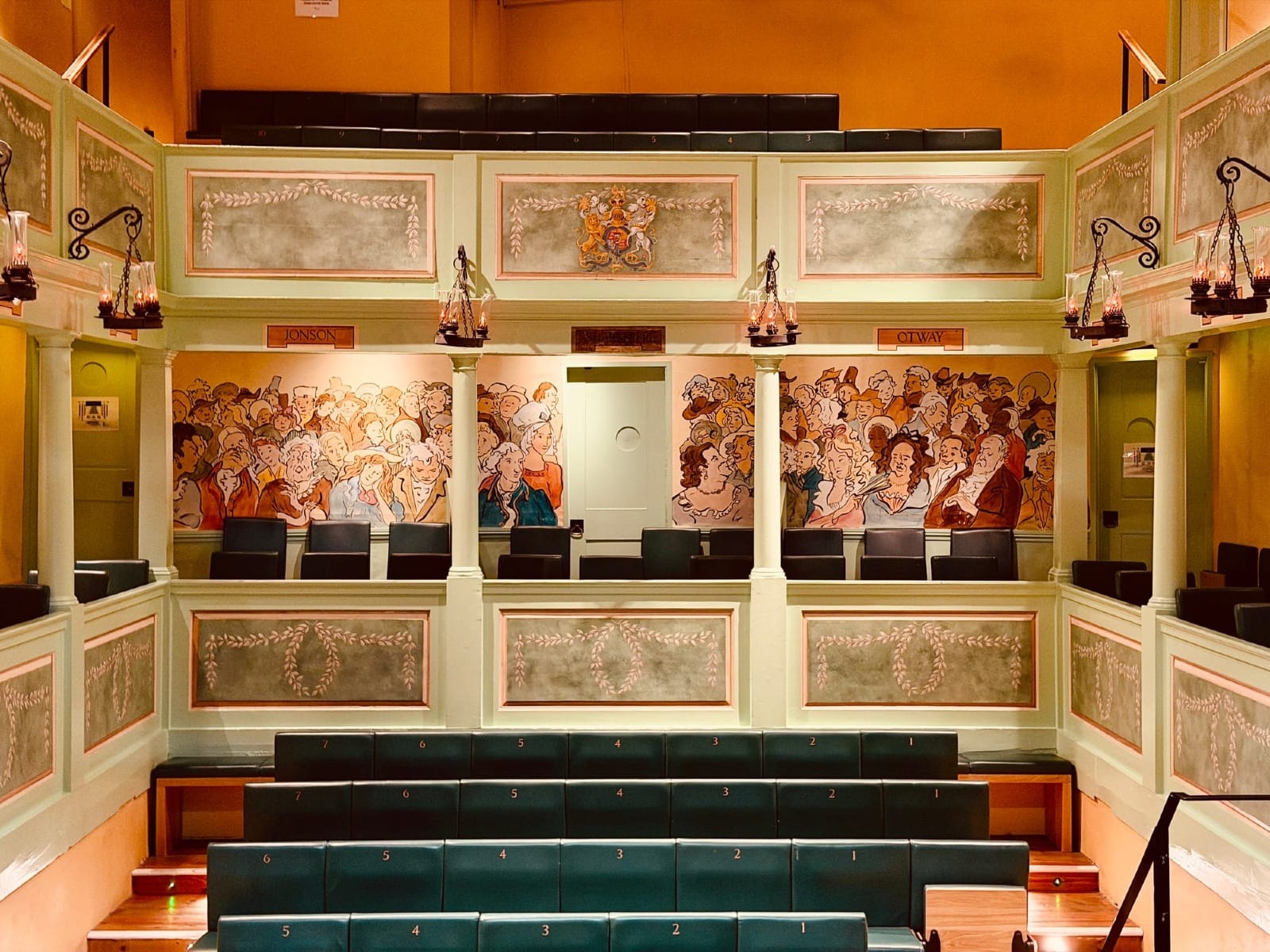
The Georgian Theatre Royal, Richmond.
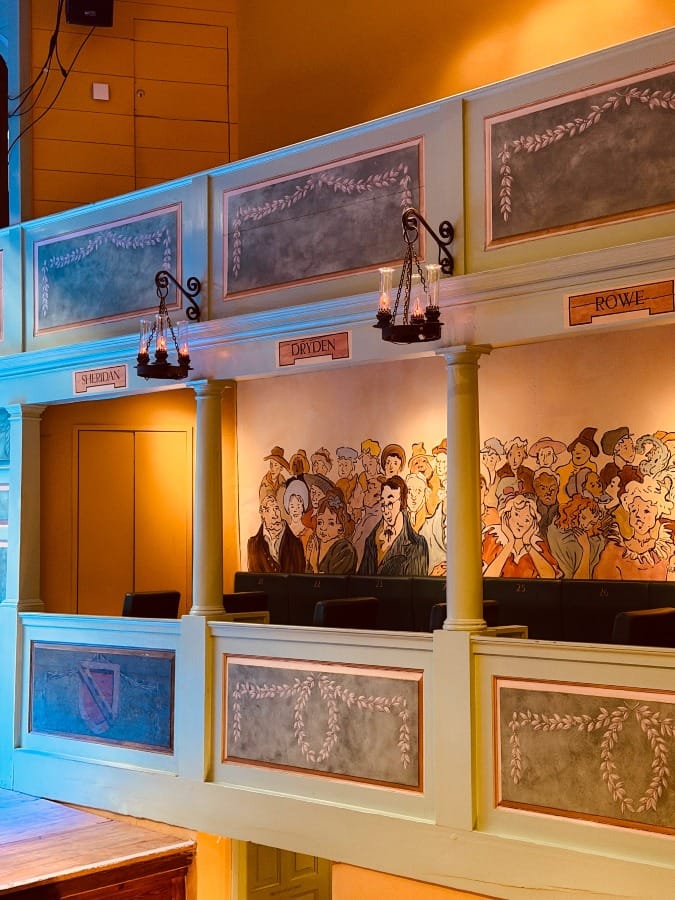
Perhaps artists help us navigate existence by repeatedly placing new lenses before our eyes - subtly correcting our vision until the world, and our place within it, comes back into focus. And there was something deeply moving about viewing Ruth’s Window accompanied by the presence of other artists working away in the background - the flower lady arranging her blooms, the musician drawing Bach out into the church and beyond.
Later in the day, elsewhere in Richmond, I visited the Georgian Theatre Royal - another conduit to sharpening our focus on things. Imagine all of the lessons absorbed within those walls over the centuries - audiences encountering the hubris of Macbeth, the crumbling pride of Ozymandias, the great dramas and cautions of existence unfolding beneath candlelight.
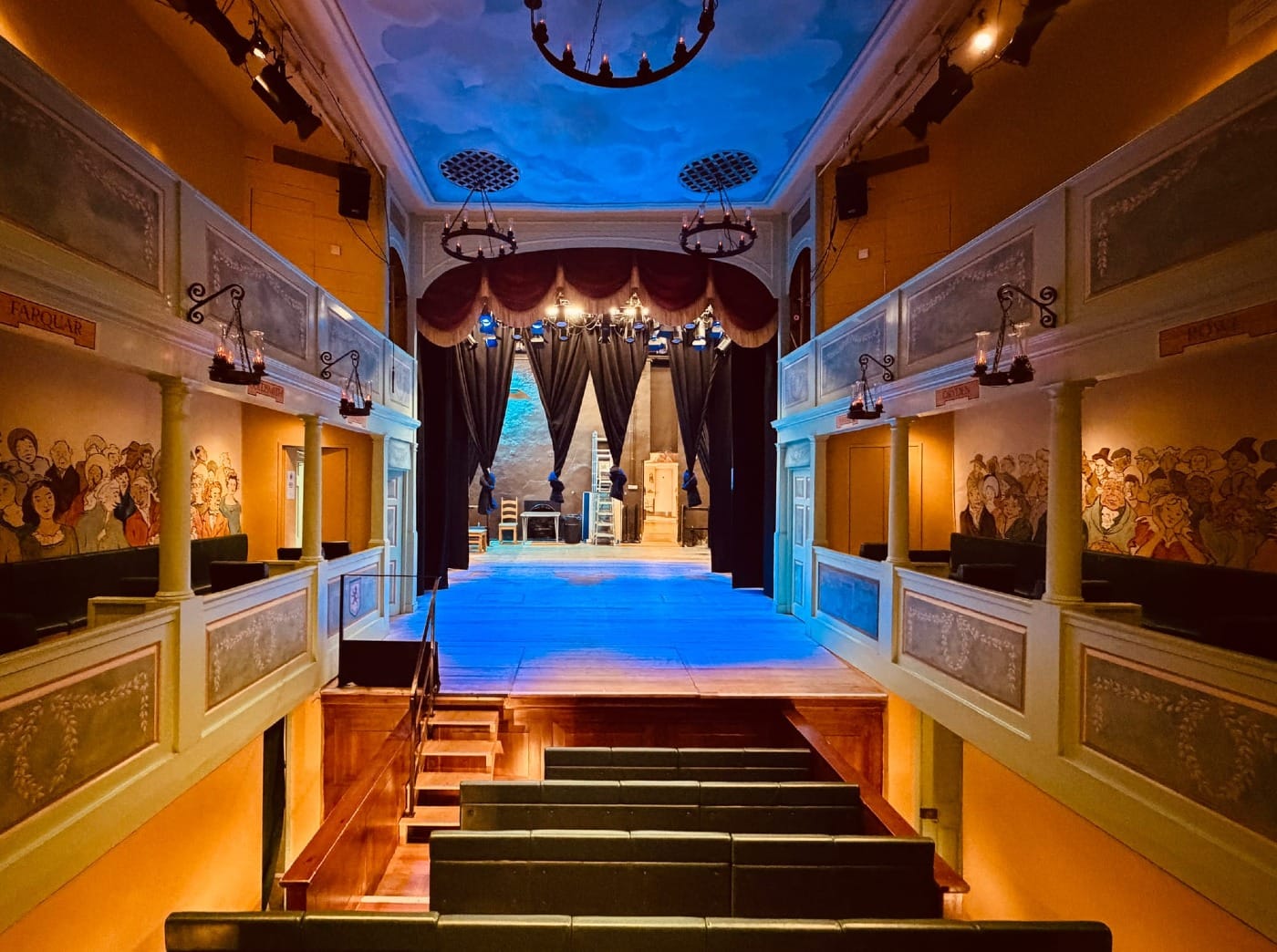
The theatre is Britain’s oldest surviving Georgian playhouse still in its original form and one of the oldest working theatres in the UK. Built in 1788, it escaped major Victorian alteration, preserving an intimate eighteenth-century auditorium that offers an extraordinarily rare glimpse into the atmosphere of Georgian performance and social life.
Over twenty years ago there was another artist trying to focus his lens upon this place. I was commissioned by the Society for the Protection of Ancient Buildings to photograph the theatre for their magazine.
Other than comfier seats, nothing has changed since then, and I find that enormously encouraging. During the theatre’s heyday, social conventions were vastly different to our own - audiences shouting at actors, cheering, jeering, climbing over one another, hundreds packed tightly into the room. And yet, despite all the changes in fashion, politics and technology that separate their world from ours, the essential desire remains recognisable: to gather together in a room and make sense of existence through story, performance and imagination.
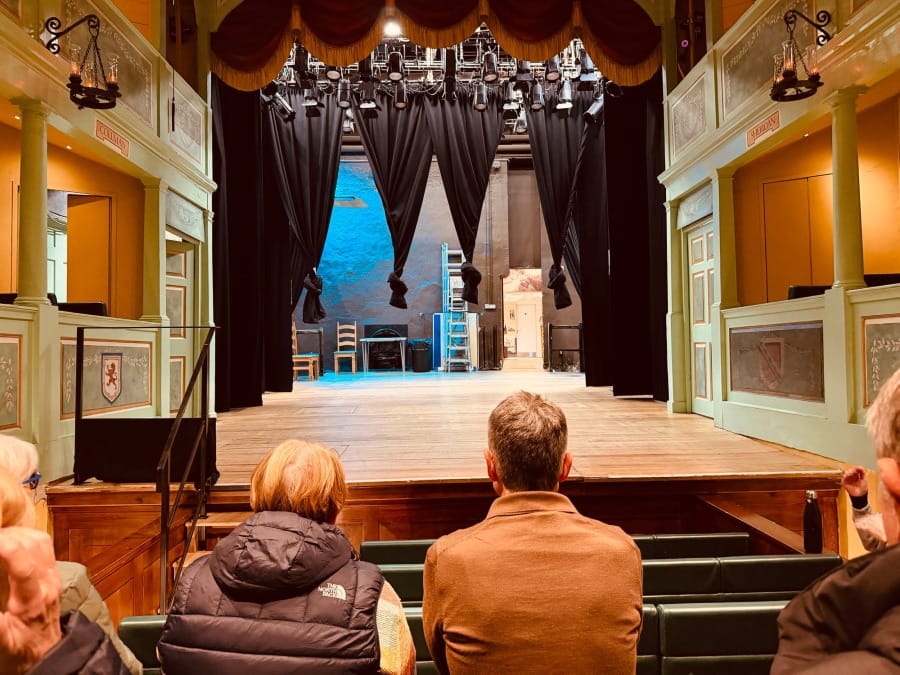
I do recommend the tour which takes you to front and back stage.
Oh no it doesn't!
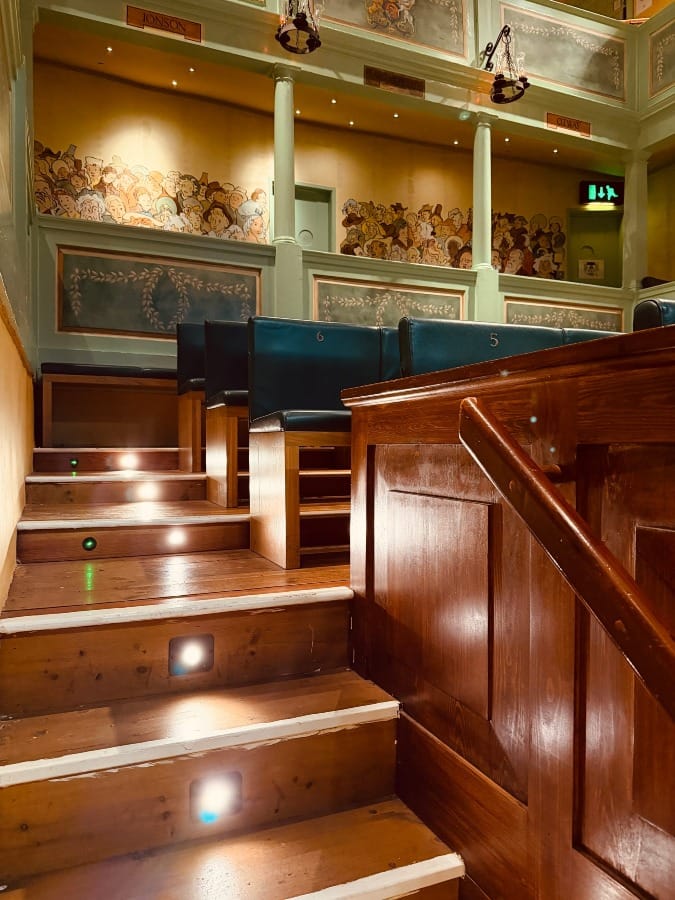
Here are more photos:
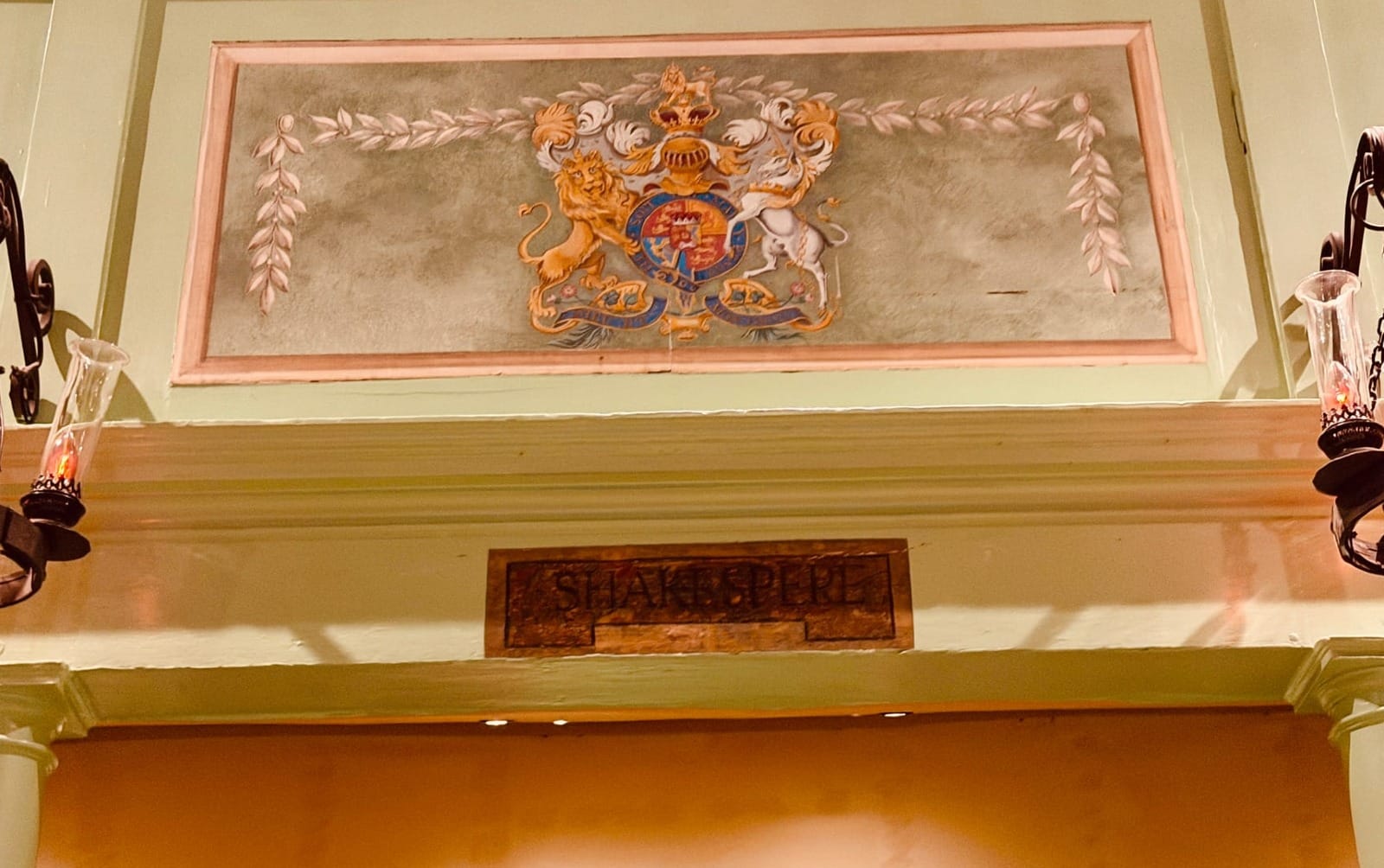
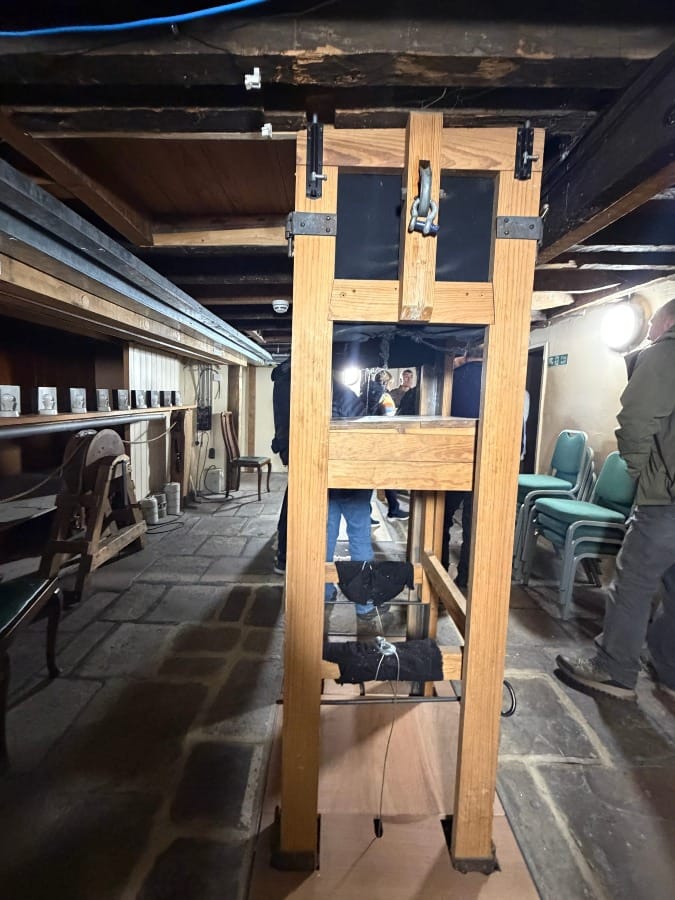
Beneath the stage is an authentic reconstruction of the lift to the trap door. They do weddings here - and it has been known for the groom to suddenly appear on the stage via the trapdoor.
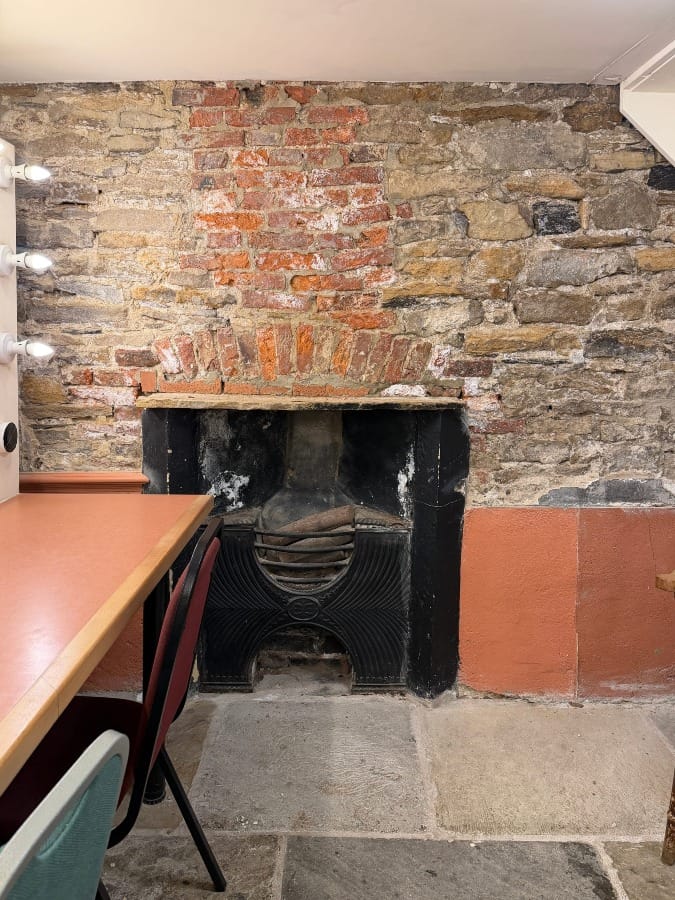
Actors have a cosy Georgian fireplace to keep them warm during change of sets.
View from the stage.
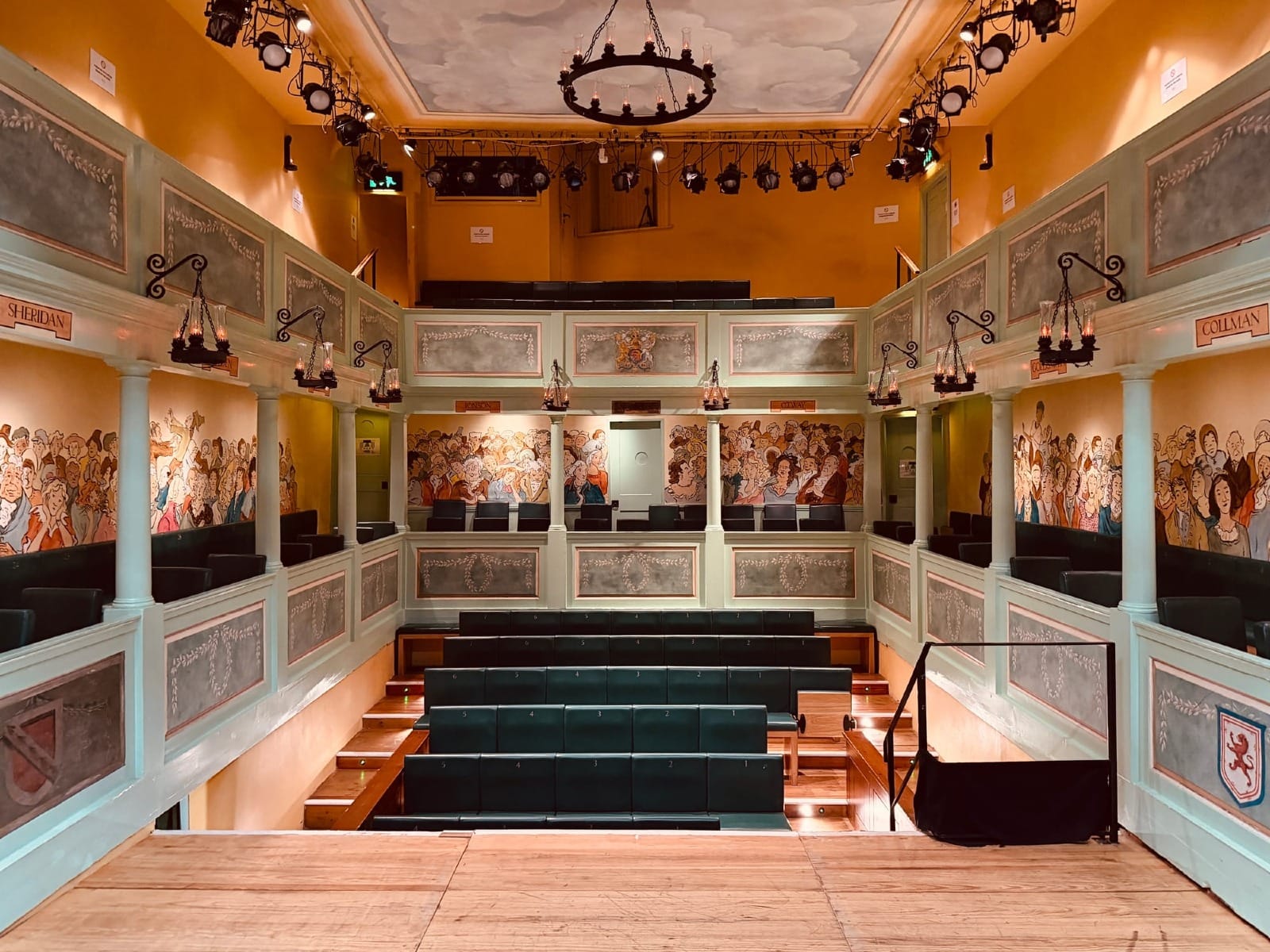
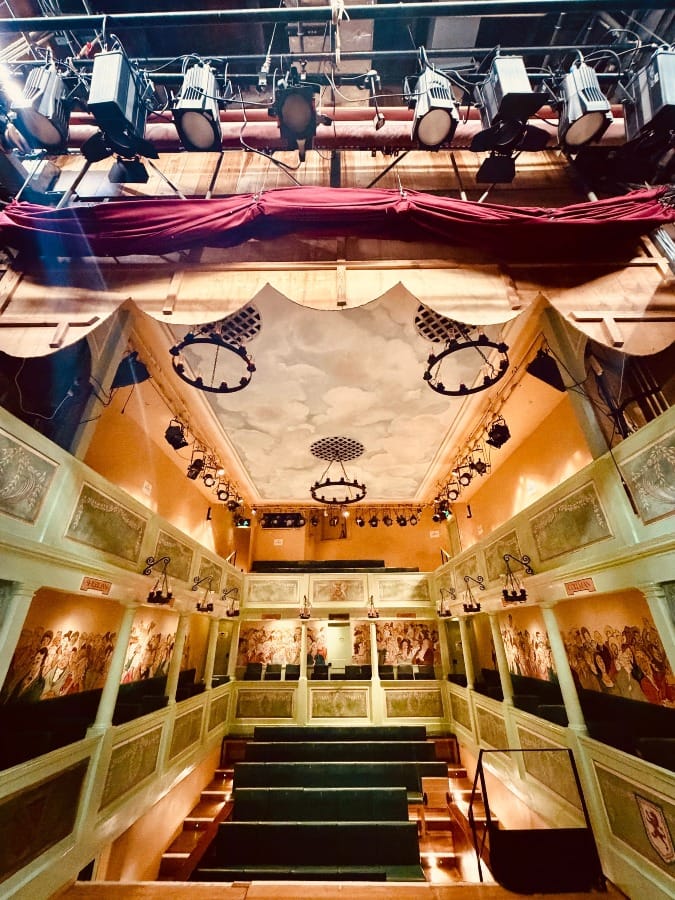
The paintings of people were completed during lockdown by two artists from London.
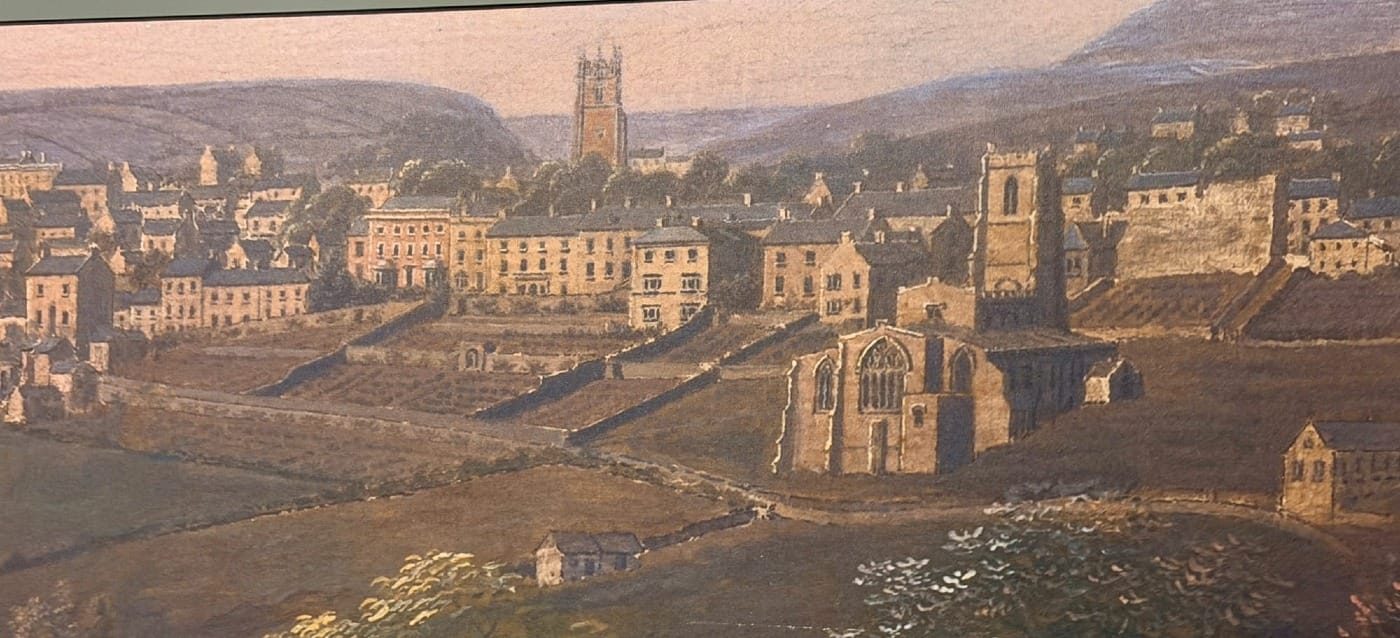
The Theatre now has a little museum showing some of the original stage sets and furnishings. On the wall is an old painting of Richmond which shows the church of St. Mary in the foreground. Essentially - nothing has changed other than infil along the road that goes past St. Mary's.
 Denis Campbell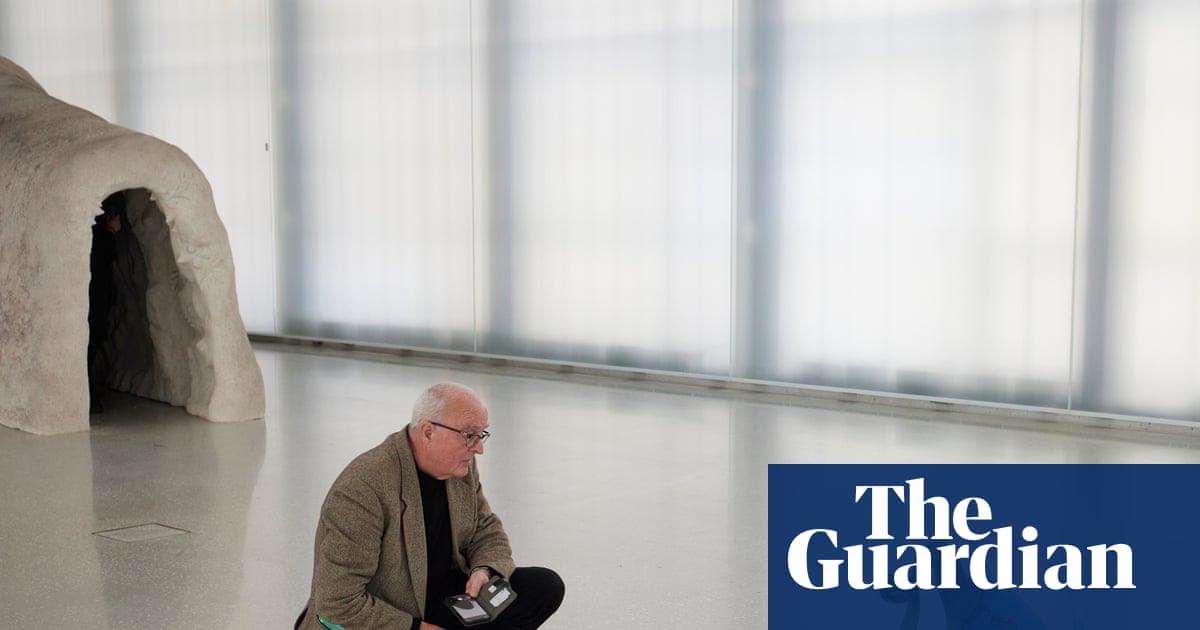


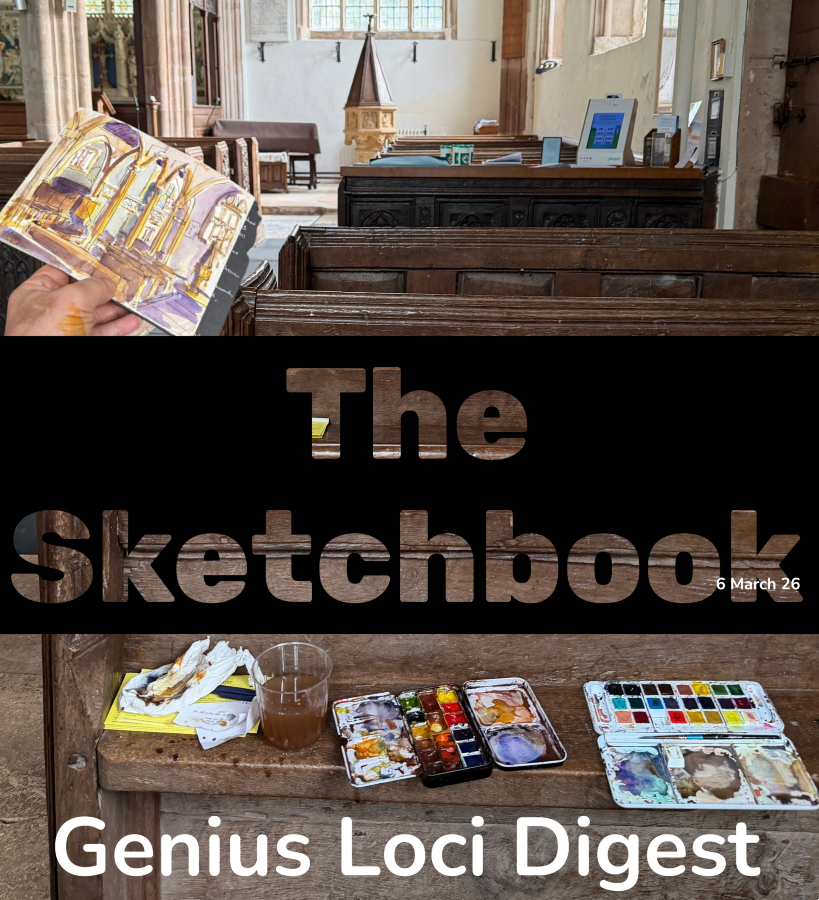
The Sketchbook
During my travels for In Pursuit of Spring - whilst I painted every day, my hands became a chromatic register of the day's findings - as well as my camera, pen and sketchbook. Read on 👉
 Andy Marshall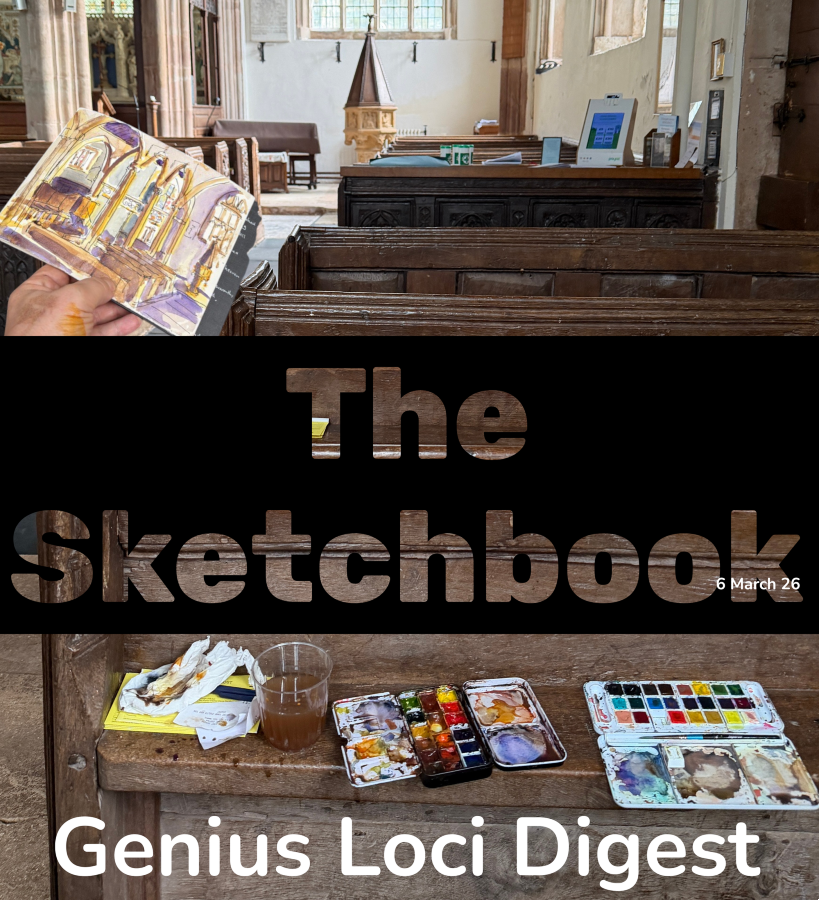
Ways of Seeing
The service is coming to an end. I can tell by the rhythm and the tone of the minister’s voice rather than the words. I look at the strangers sat around me and ask myself, ‘where do I fit in with all of this?’ Read on 👉
Andy Marshall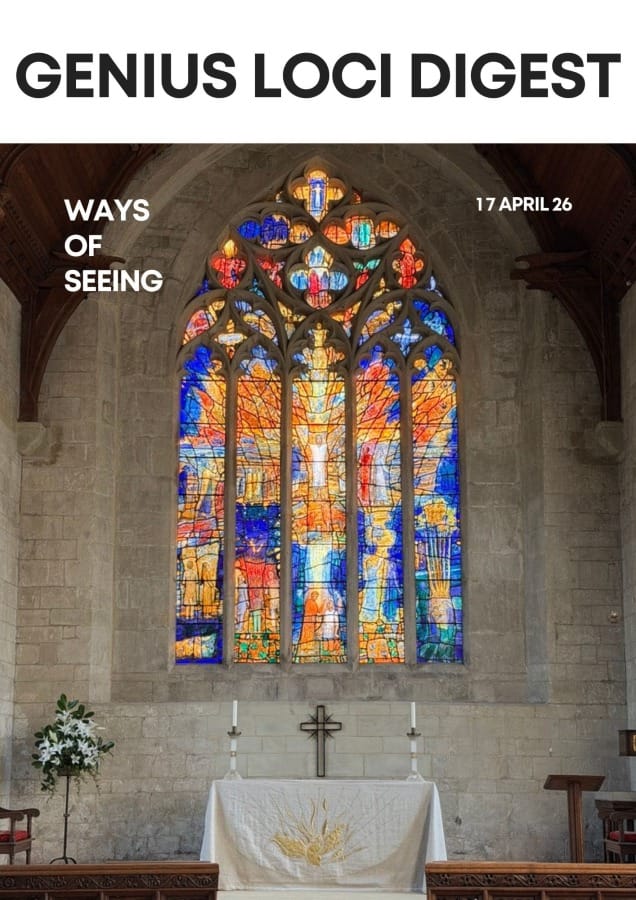
Recent Digest Sponsors:
 Andy Marshall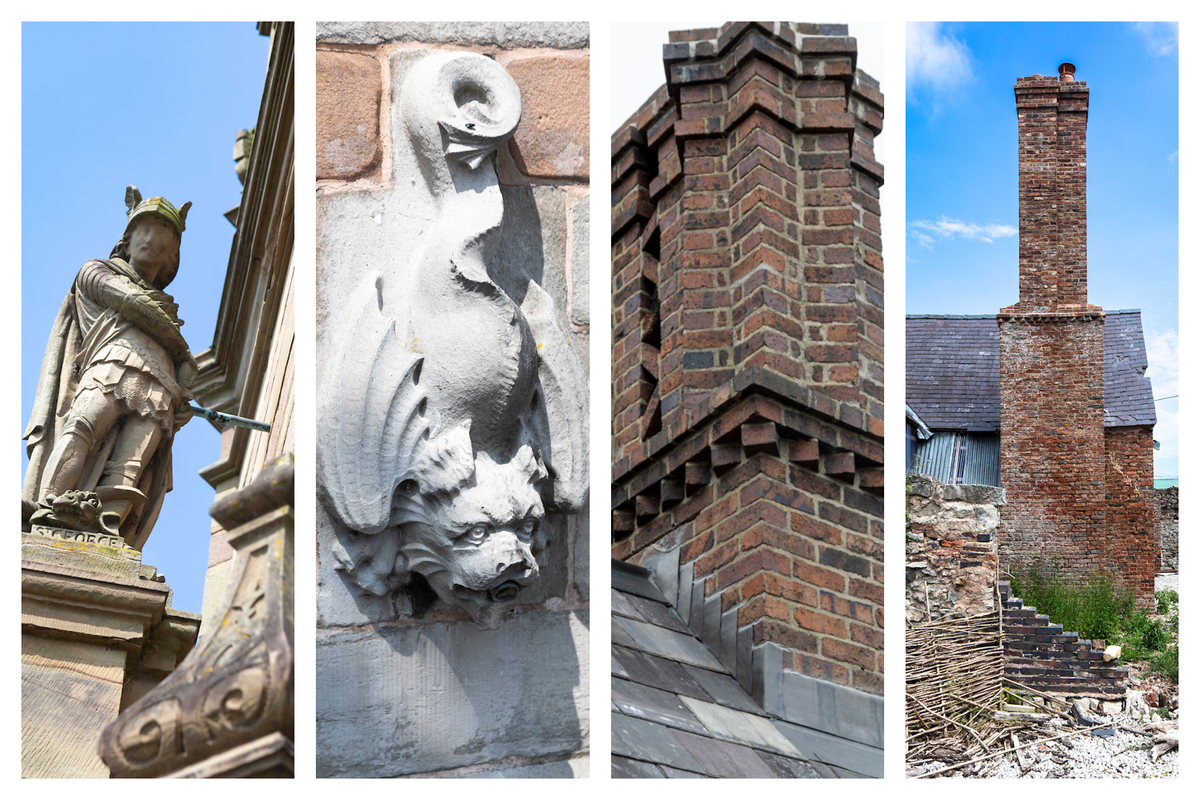
York Minster Art Commission - Artist Day in Residence - Thursday 4th June.
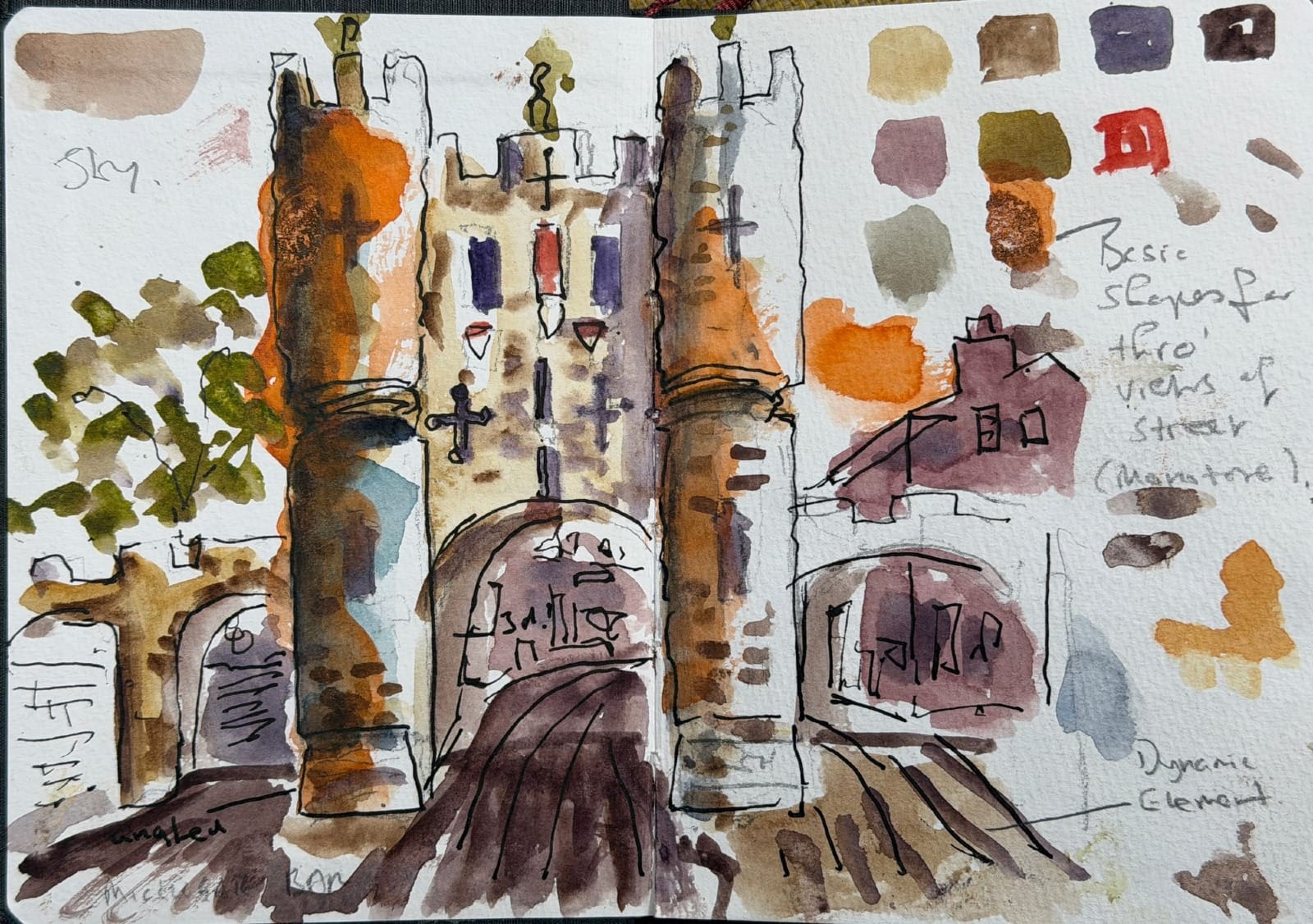
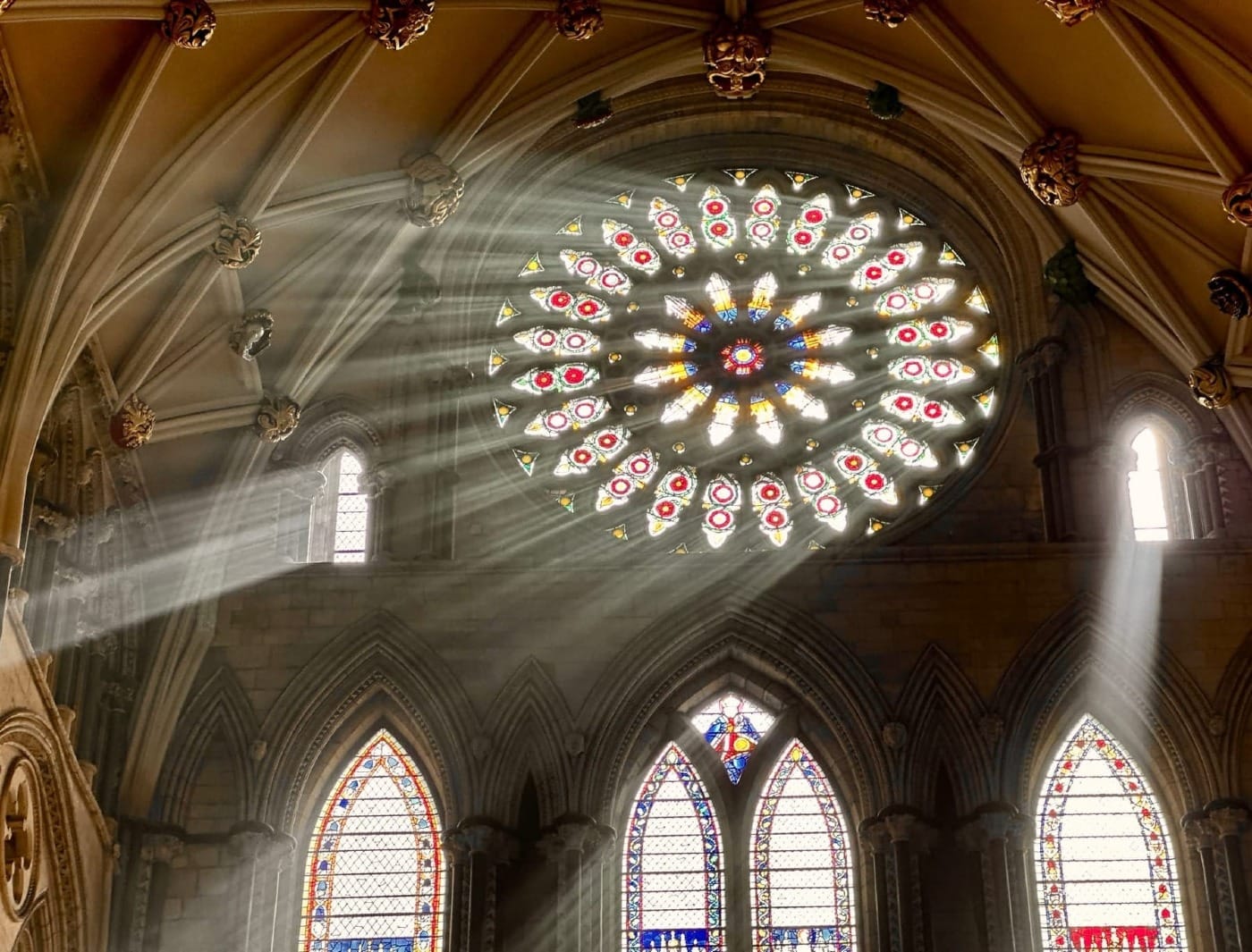
My commission for York Minster is well under way and I've shared some of primary work with members below this article. It's been a marvellous process working with the Minster and developing an art work about St. William, history, continuity and the million petalled flower of the present.
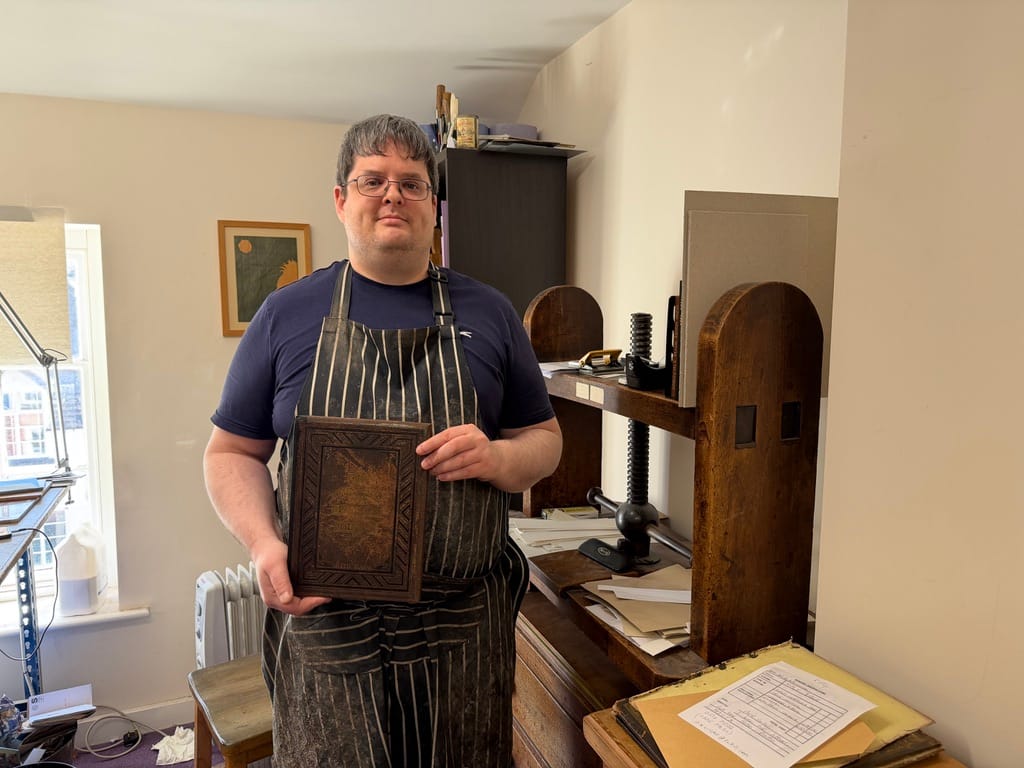
My art work is cradled within an accordion sketchbook that has been specially created by bookbinder Adam Jurkojc from two orphan bible covers. It was Adam who I photographed for Member Powered Photography.
My work focuses on some surviving buildings that were part of St. William's story in York. It also intertwines elements of the remarkable St. William window.
It's is a wonderful privilege and honour to be able to complete the art work in the Quire (opposite the St. William window) at York Minster on Thursday 4 June.
If you're in the area and plan on visiting the minster - please do come and say hello!
Members can view my process and more images of the work below:
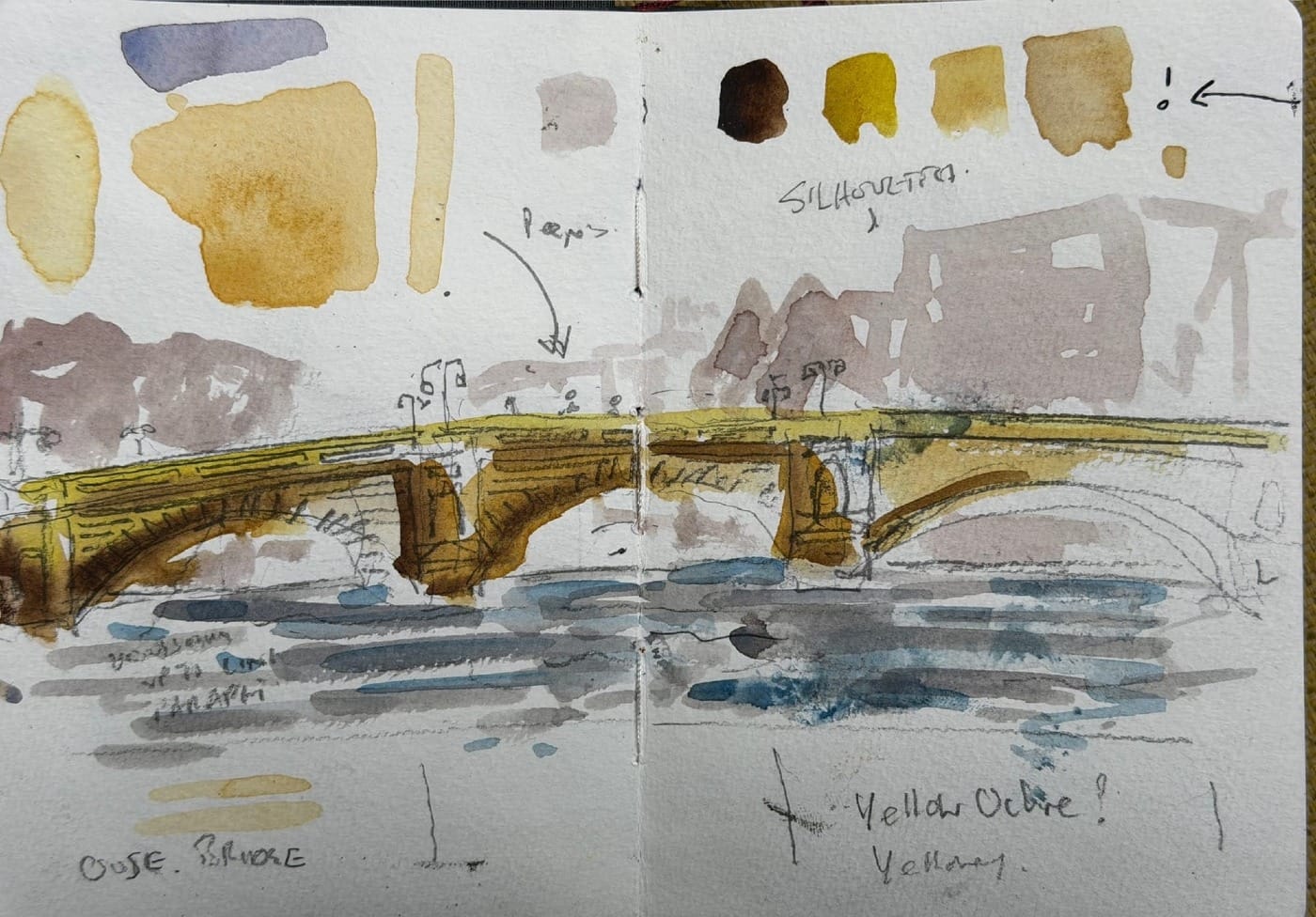
For Members - Finding St. William - York Minster Art Commission
Exclusive behind the scenes photographs for members
Click to View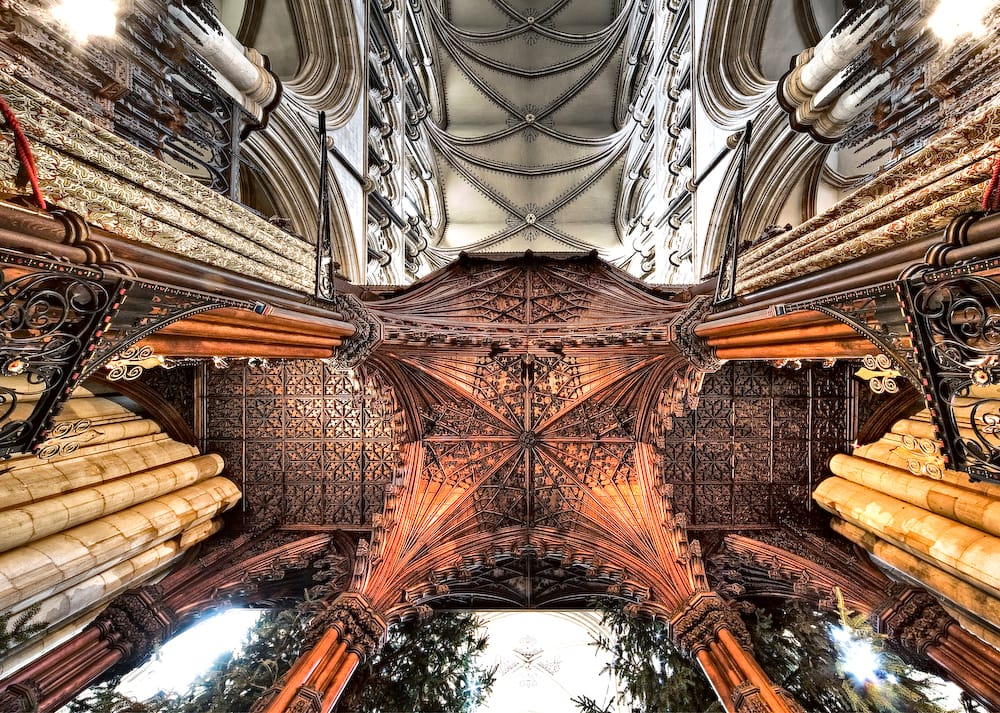
Thank You!
Photographs and words by Andy Marshall (unless otherwise stated). Most photographs are taken with iPhone 17 Pro and DJI Mini 5 Pro.
🔗 Connect with me on: Bluesky / Instagram / Facebook / X / Tumblr / Flickr / Vimeo / Pixelfed / Pinterest / Flipboard/ Fediverse: @fotofacade@digest.andymarshall.co

Member discussion