Each week I send out a short, fresh reflection from the road – photographs, sketches, and observations from old places that still have something to teach us. What follows is a moment from that ongoing journey.
"All art can have the power of poetic revelation about the material world - it can reveal the ensoulment of the universe."
Breaking The Frame: How a Single Photograph Became a Threshold.
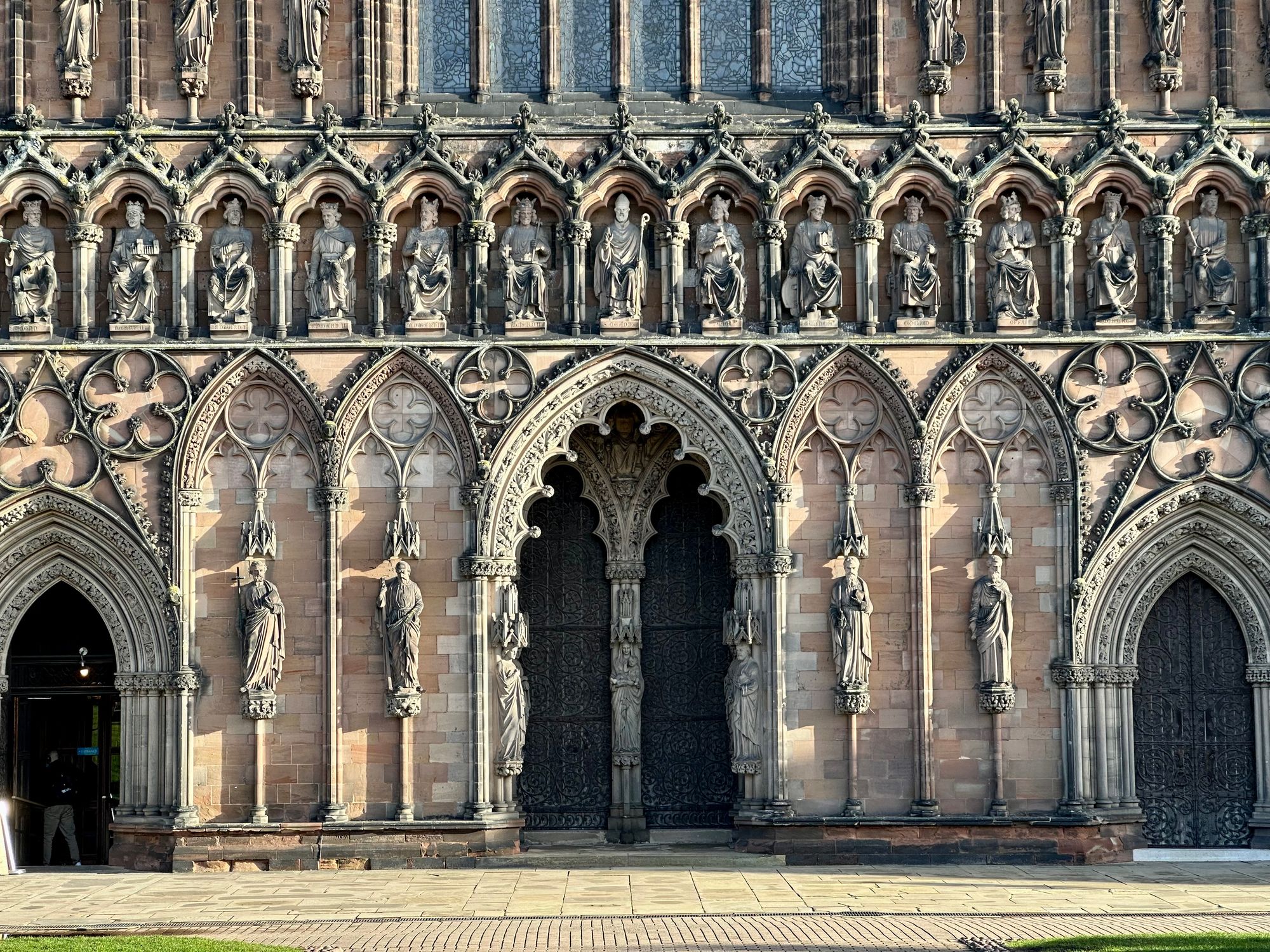
I’m sat in a particularly gnarly traffic jam on the M6, but there is respite. I have my BBC Sounds playlist on and I’m listening to the dulcet tones of Melvin Bragg taking on the Celts along with Barry Cunliffe, Alistair Moffat, and Miranda Aldhouse Green.
They talk of the Celtic obsession with heads - how decapitating the head of their foes acted as a kind of spiritual acquisition of the enemies soul. There’s an interesting line of development from those beliefs through to the protective head carvings and motifs we see around our church doors and openings.
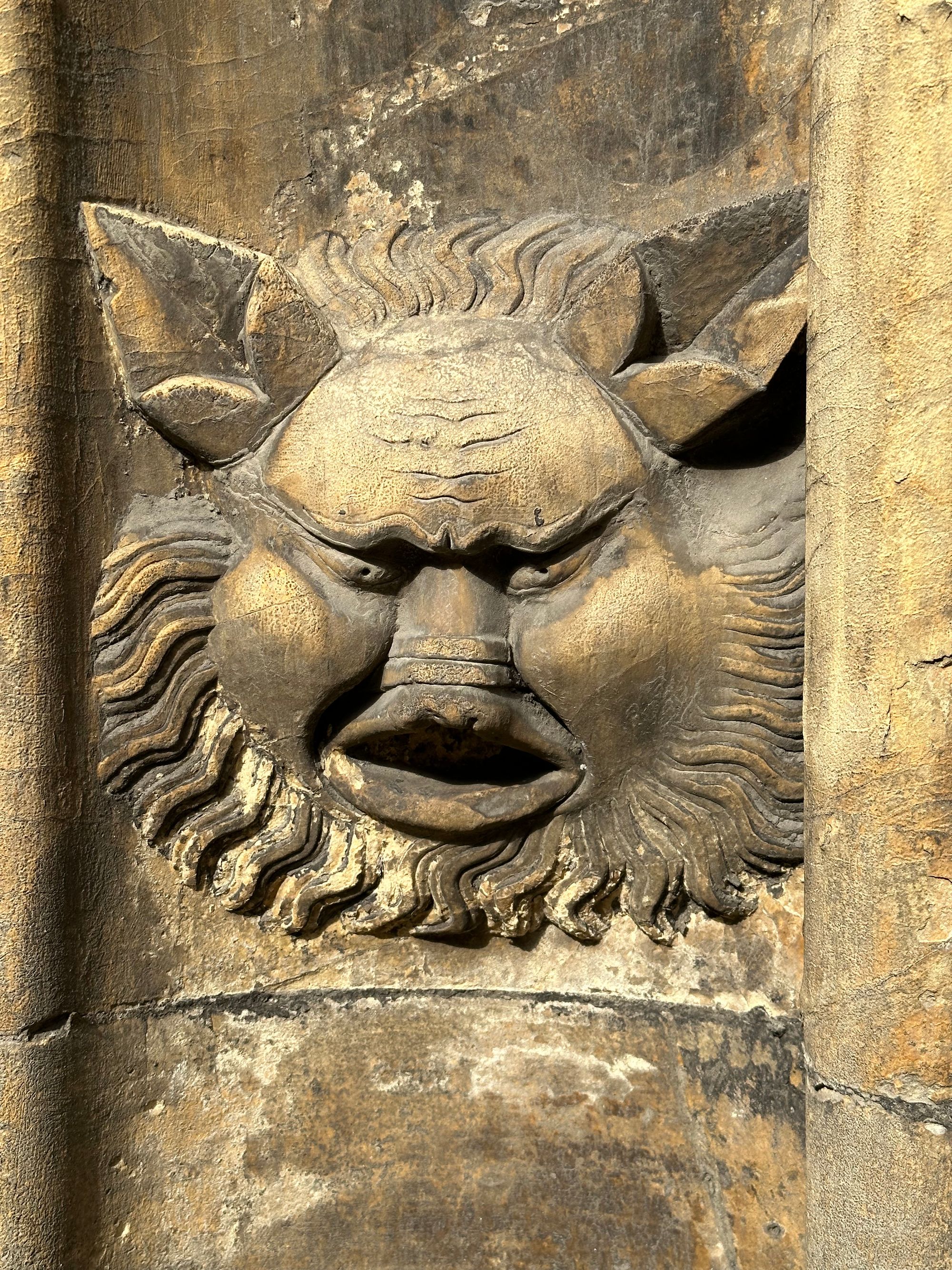
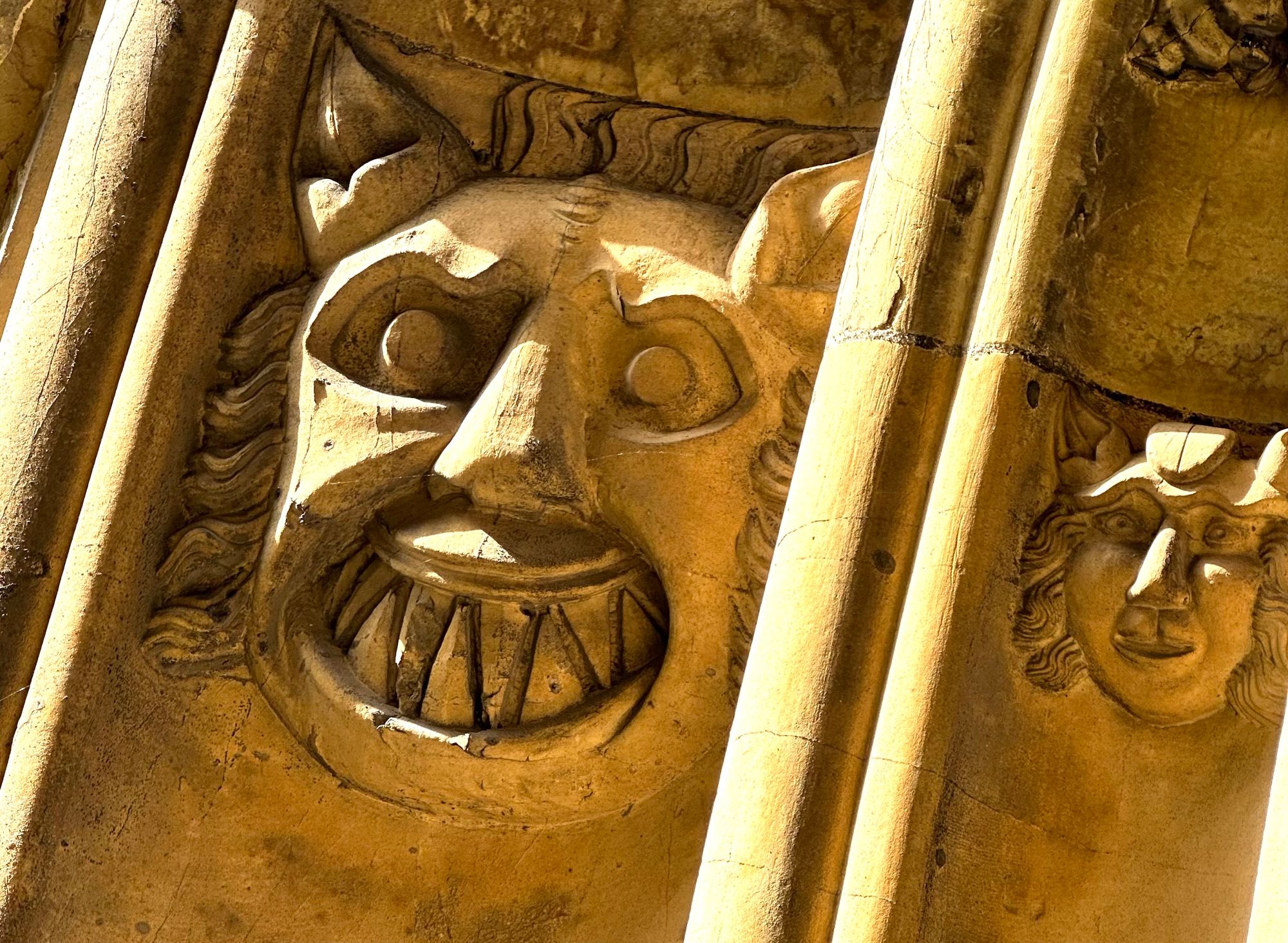
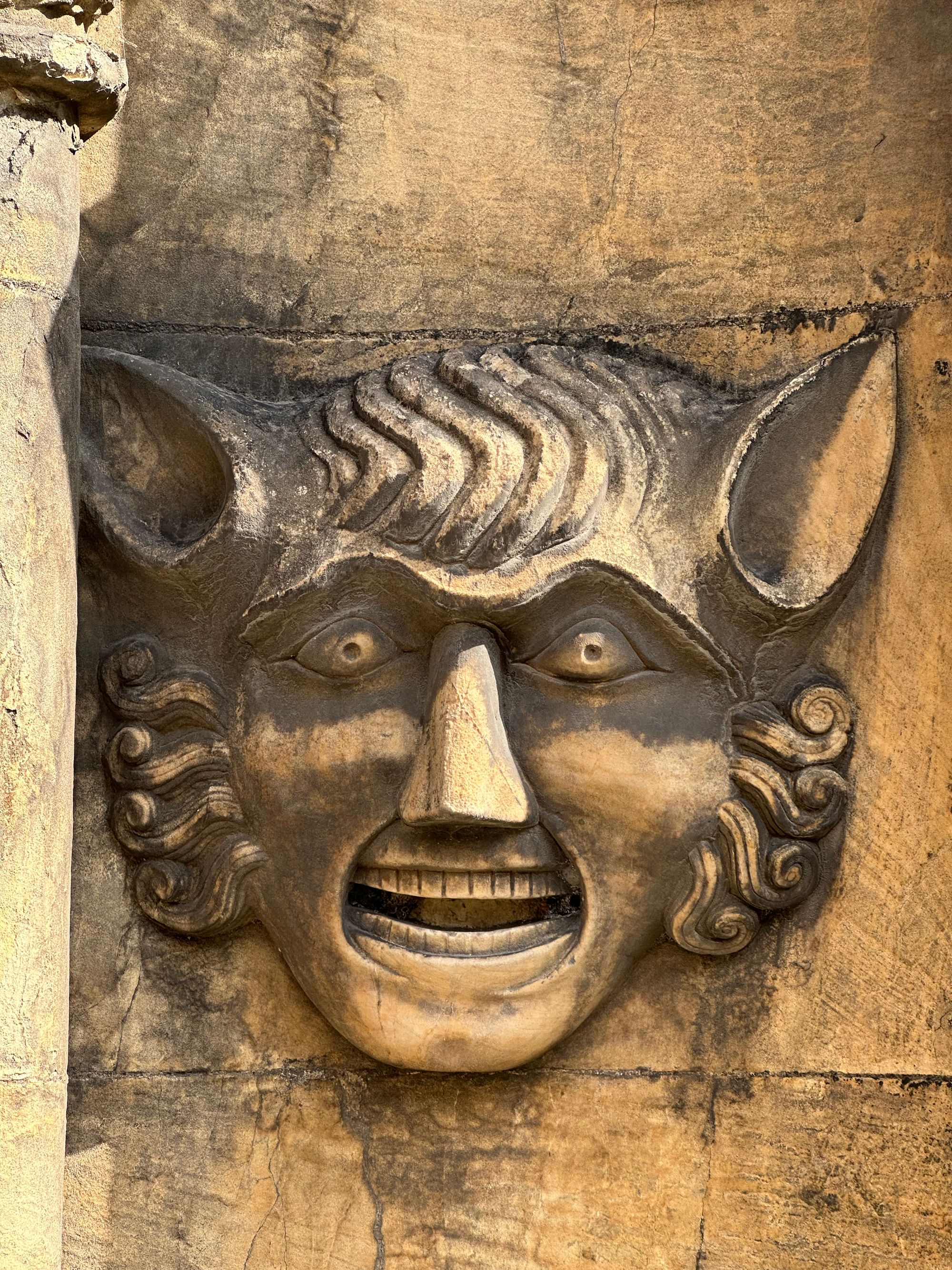
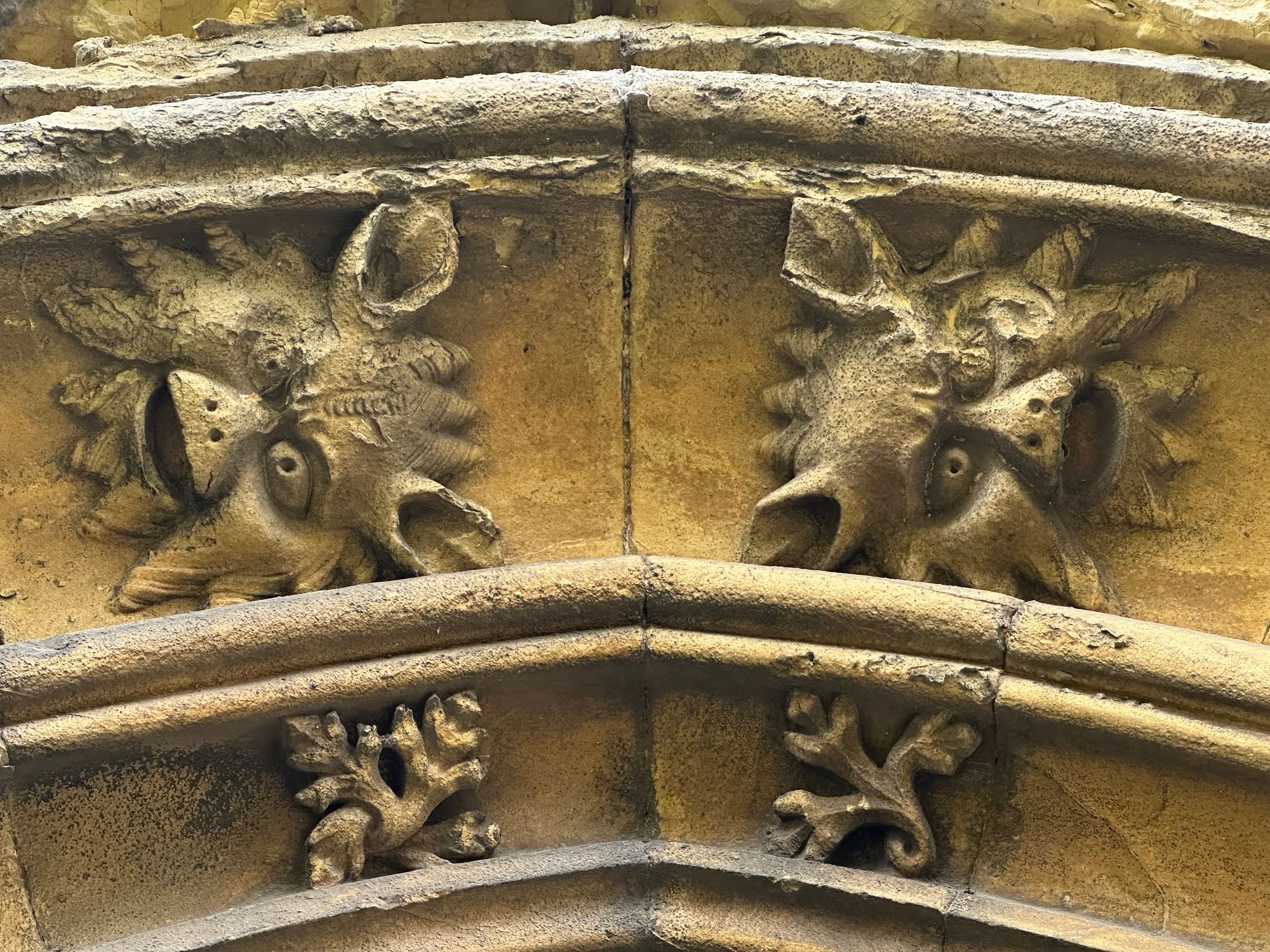
Heads or Tails? St. Mary Beverley.
When I’m photographing an older building, I’m caught up with the same sense of lust for acquisition albeit, thankfully, in a more refined way. With each click of the camera shutter I feel as though I’m carrying off the heads myself - captured within the prism of my lens - converted into binary digits and stored upon my digital SD card. Every now and then, I come across a piece of work that makes me put my camera down.
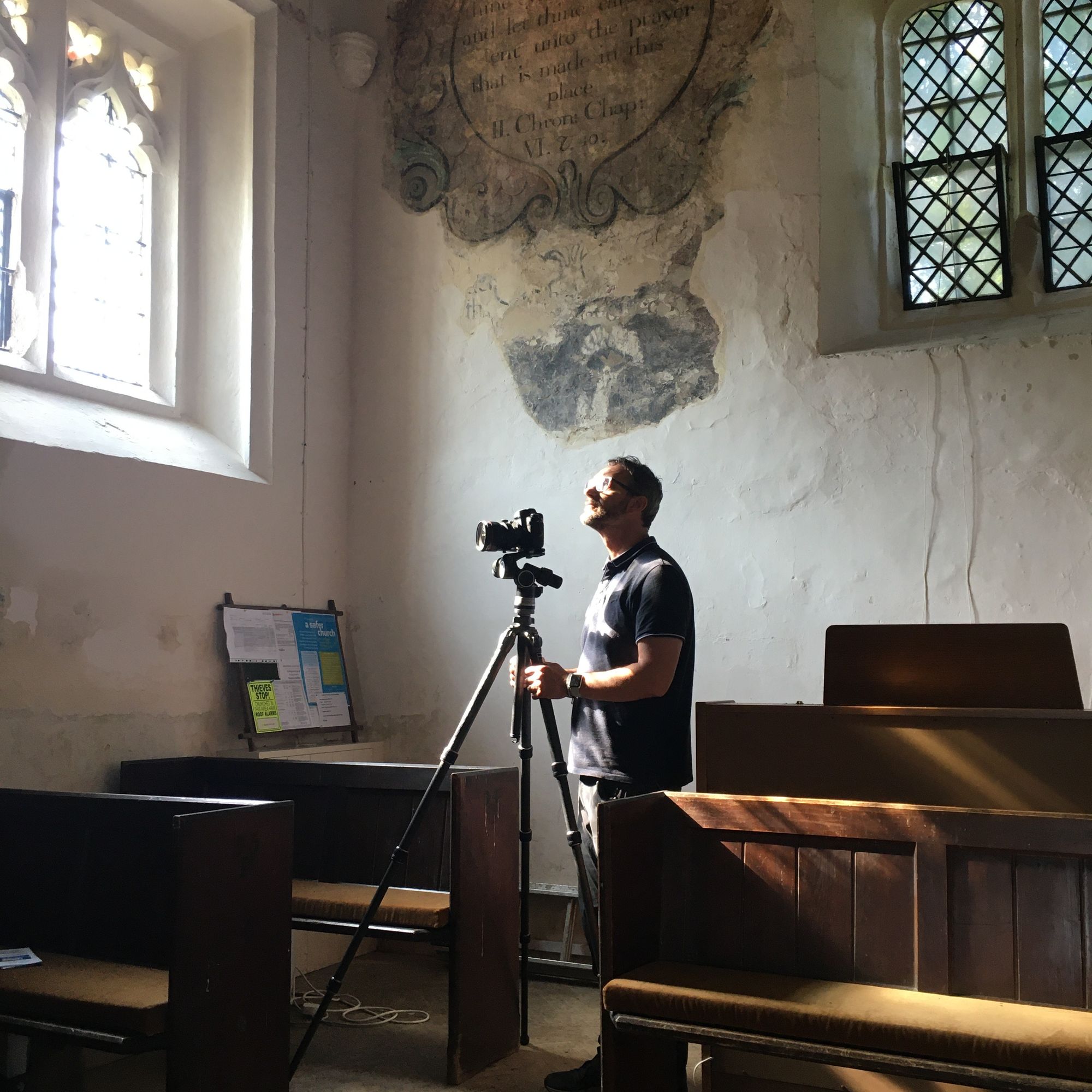
"Every now and then, I come across a piece of work that makes me put my camera down."
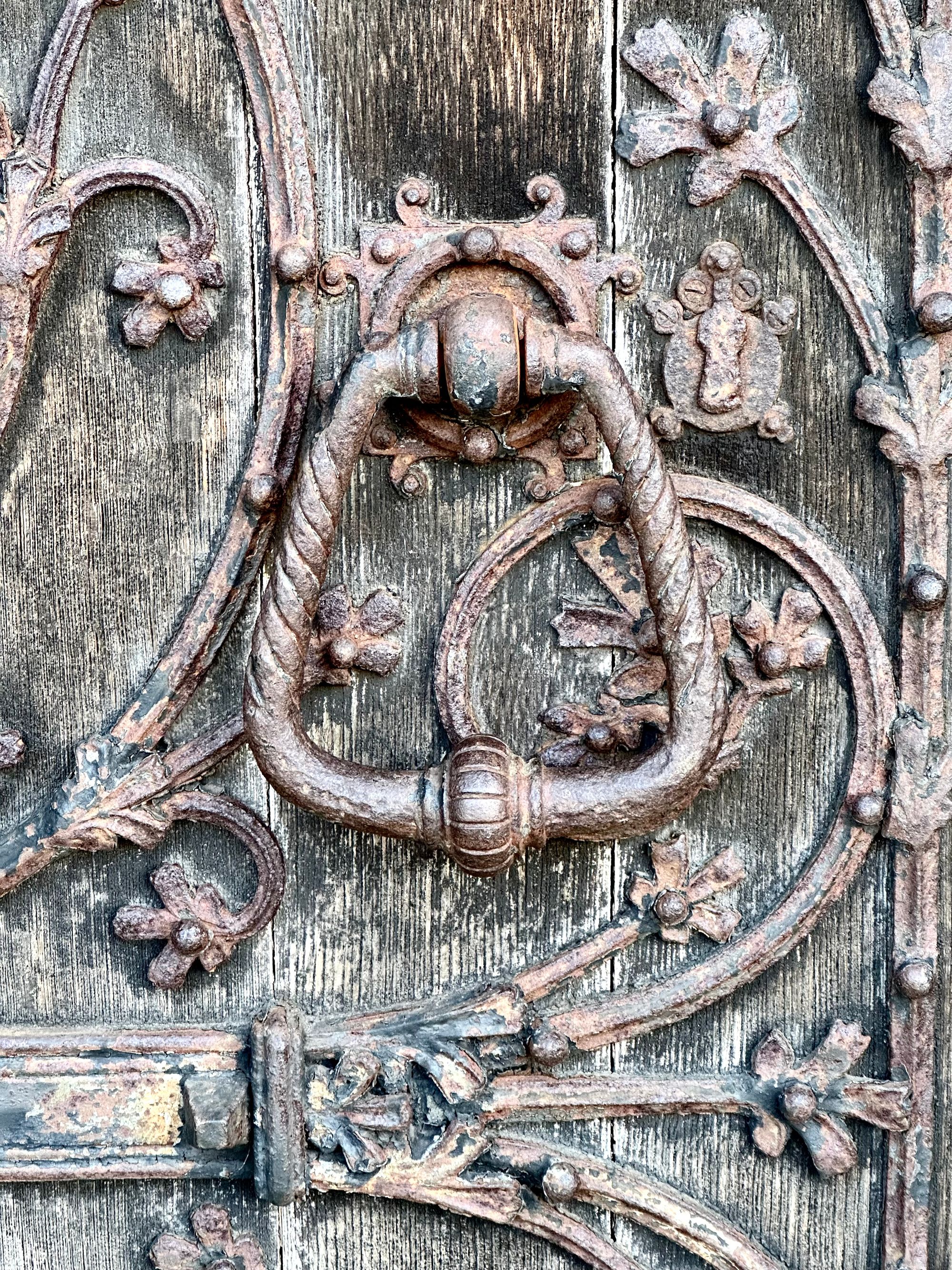
Take the clasp and strapwork on the door at Lichfield Cathedral. On this beautiful sun-lit day, I remind myself that all I really have is this given moment, so I stand and observe the intricate pattern and follow it with my eyes. I reach out and touch a nail head. I can feel the roughness of the patina on my hand. My fingers work in circles - tracing the line of movement of the blacksmith’s hand around the swirls and cusps of the Gothic genre, until it peters out into hammered wafer-like thinness.
And then I take a photograph. Now I am the master of all before me. I choose to leave out certain facets, but include others. It sits here now, in silence, below these words, but in the sharing of it - it becomes as powerful as taking the soul of another.
John Berger says of art (and photography):
“Occasionally this uninterrupted silence and the stillness of a painting can be very striking, it’s as if the painting, absolutely still, soundless, becomes a corridor - connecting the moment it represents with the moment at which you are looking at it. And something travels down that corridor, at a speed greater than light throwing into question our way of measuring time itself. ”
Out of the silence of this image, I see the blacksmith's hammer and tong wrought from faith and devotion. I see the silvering of the oak, and note the intricacy of the pattern. I think of the status it defines, the hands that have clasped it and what lies behind it. A tale of two ages unfolds before me, the playful angles of the flat head screws contrast with the delicate craftsmanship of the keyhole. It's voicefulness transcends the mere confines of the photograph.
And perhaps this is where the photograph does its best work. Not in what it contains, but in what it releases. The frame does not enclose meaning so much as pause it – briefly – before letting it travel elsewhere. The photograph becomes less an object to look at, and more a hinge – opening onto memory, imagination, and association. In this way, its stillness is deceptive. What appears fixed is, in fact, a point of departure.
Connect with me on: Bluesky / Instagram / Facebook / X / Tumblr / Flickr / Vimeo / Pixelfed / Pinterest

Member discussion