
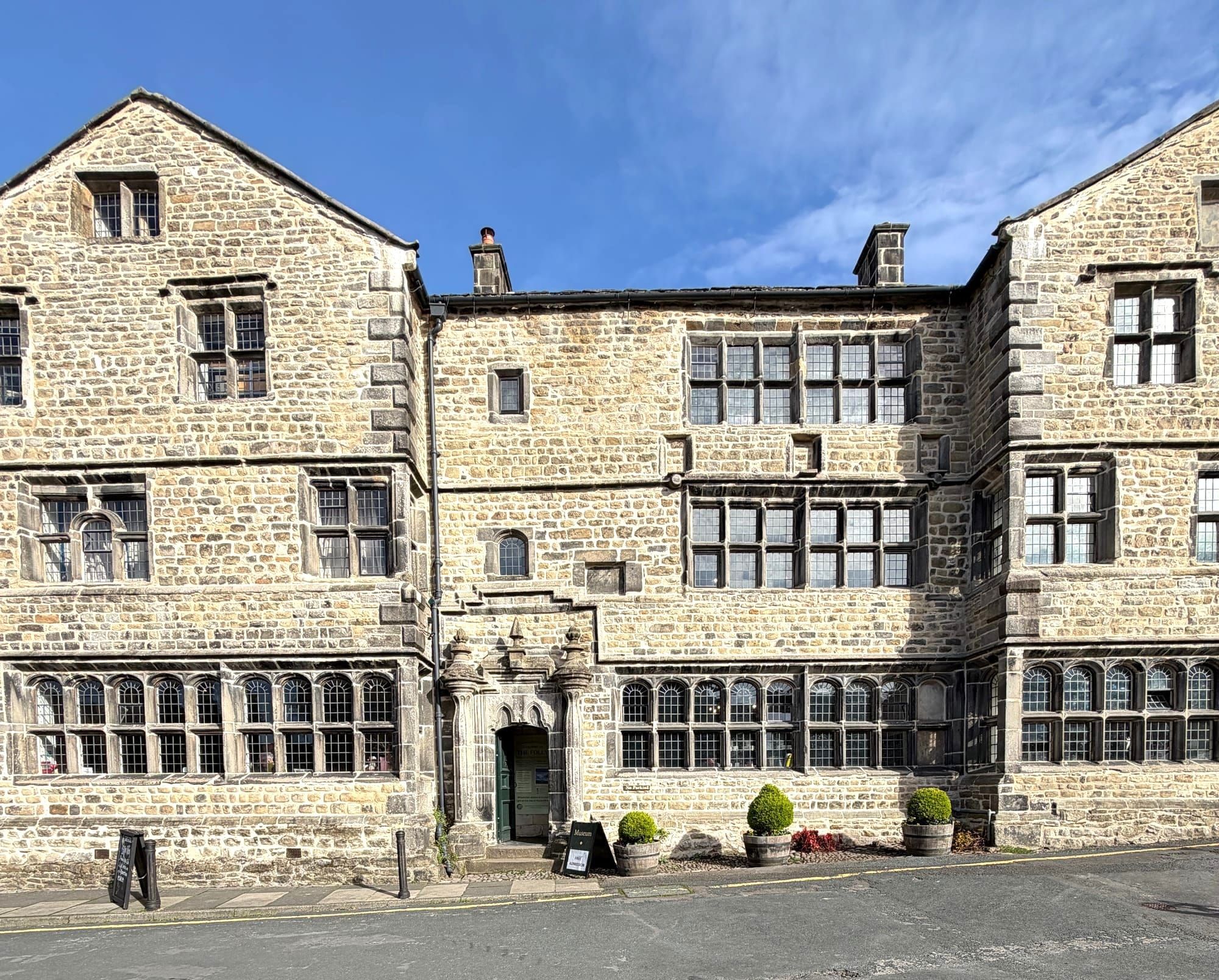
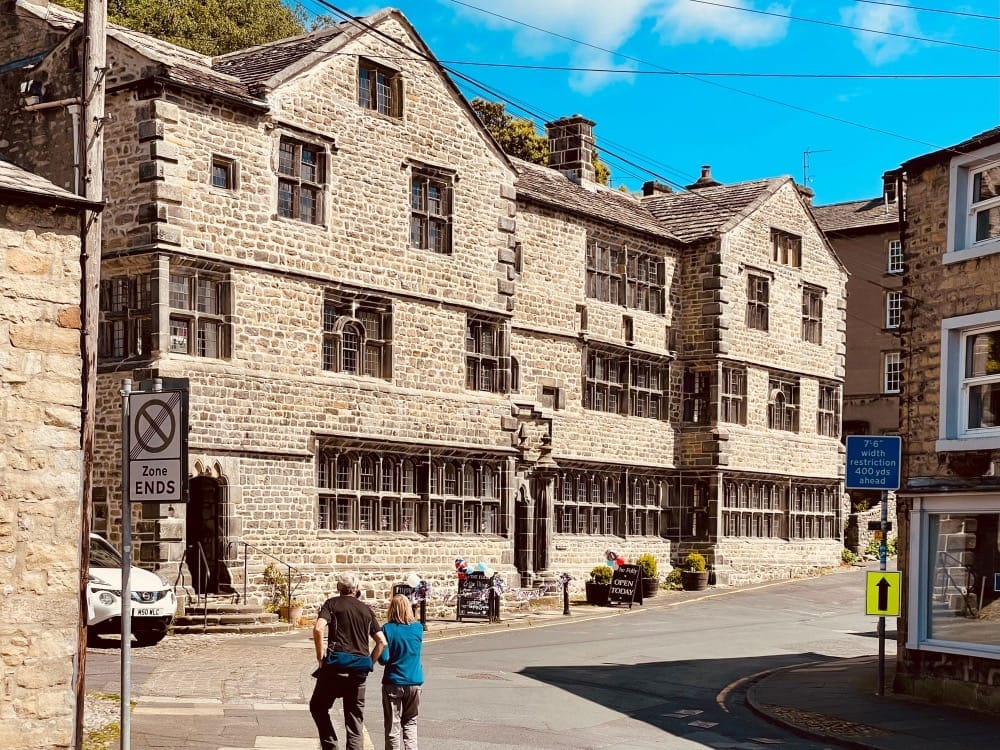
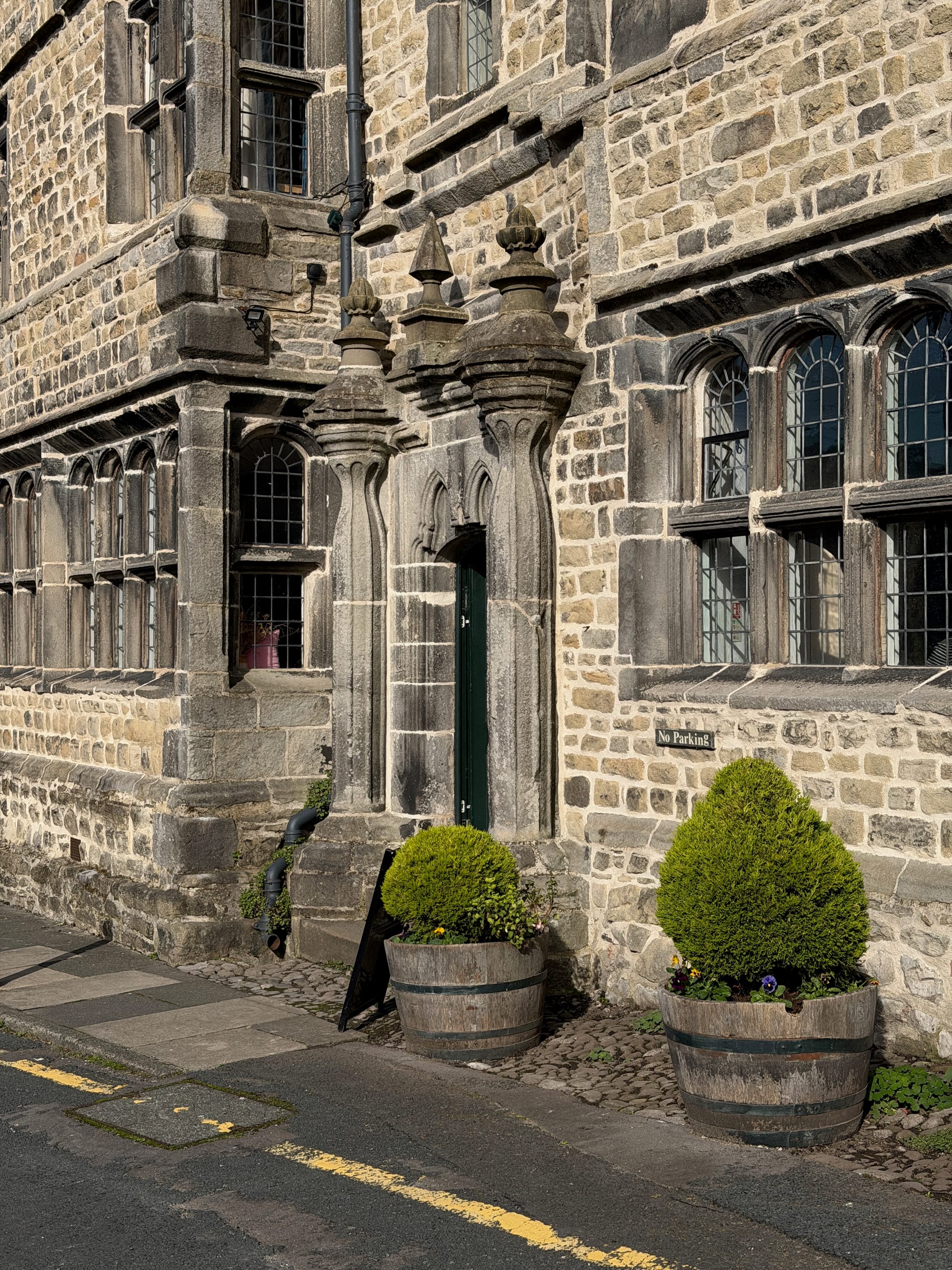
The Folly’s doorway is quirky architecture at its best. Built in 1679 for Richard Preston, a Settle lawyer, the townhouse borrowed the language of the Yorkshire Dales and made it exuberantly personal. Its swelling columns, layered lintel, Gothic arches and improbable crown of finials are joyfully assembled.
The Folly was then the largest house in Settle, standing beside the old southern road into town. After Preston’s death it passed to the Dawson family and, over three centuries, accommodated lodgers and an extraordinary succession of uses, including farmhouse, bakery, warehouse, furniture shop, bank and fish-and-chip shop. Rescued by the North Craven Building Preservation Trust in 1996, it opened as the Museum of North Craven Life in 2001.
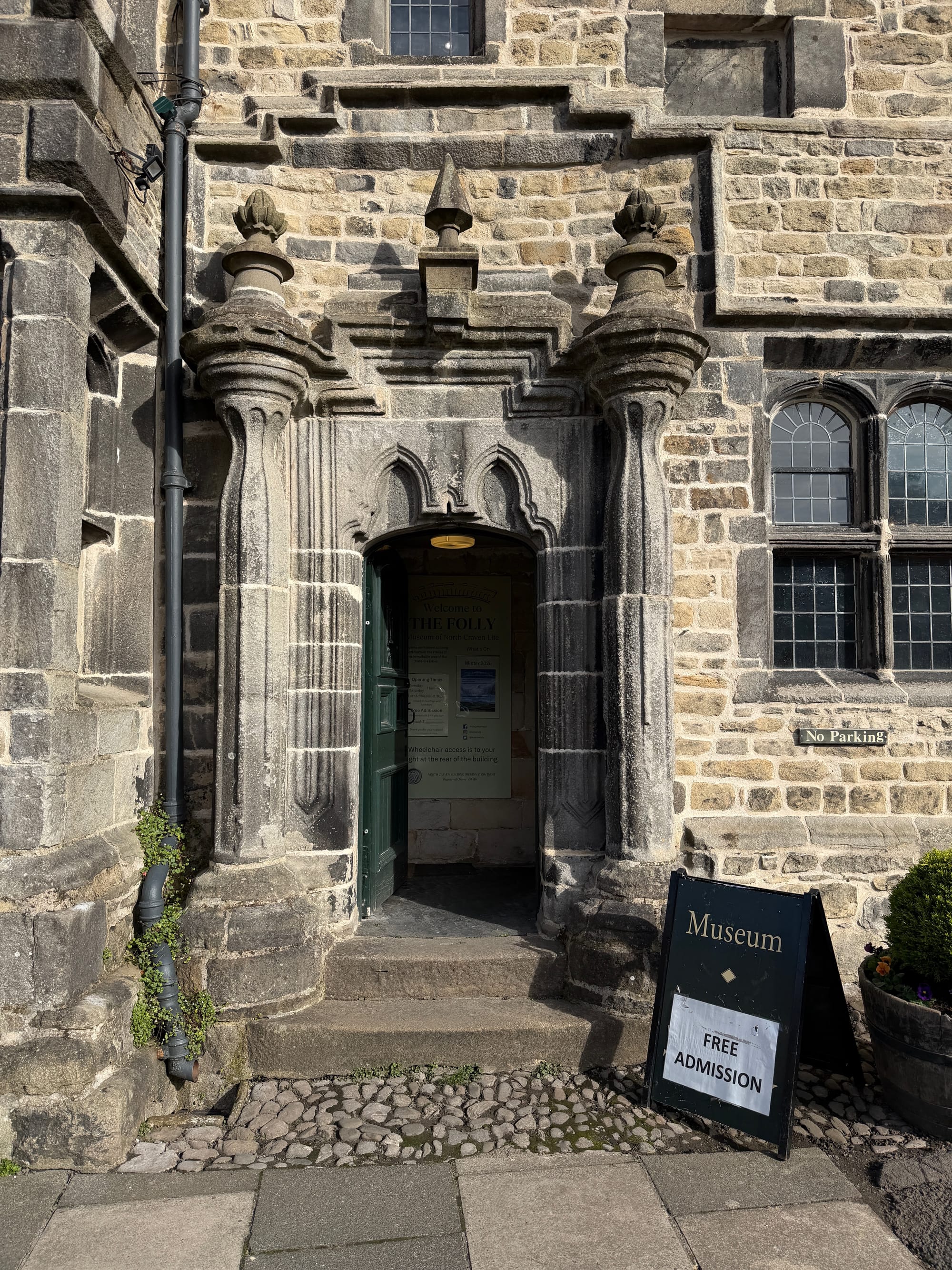
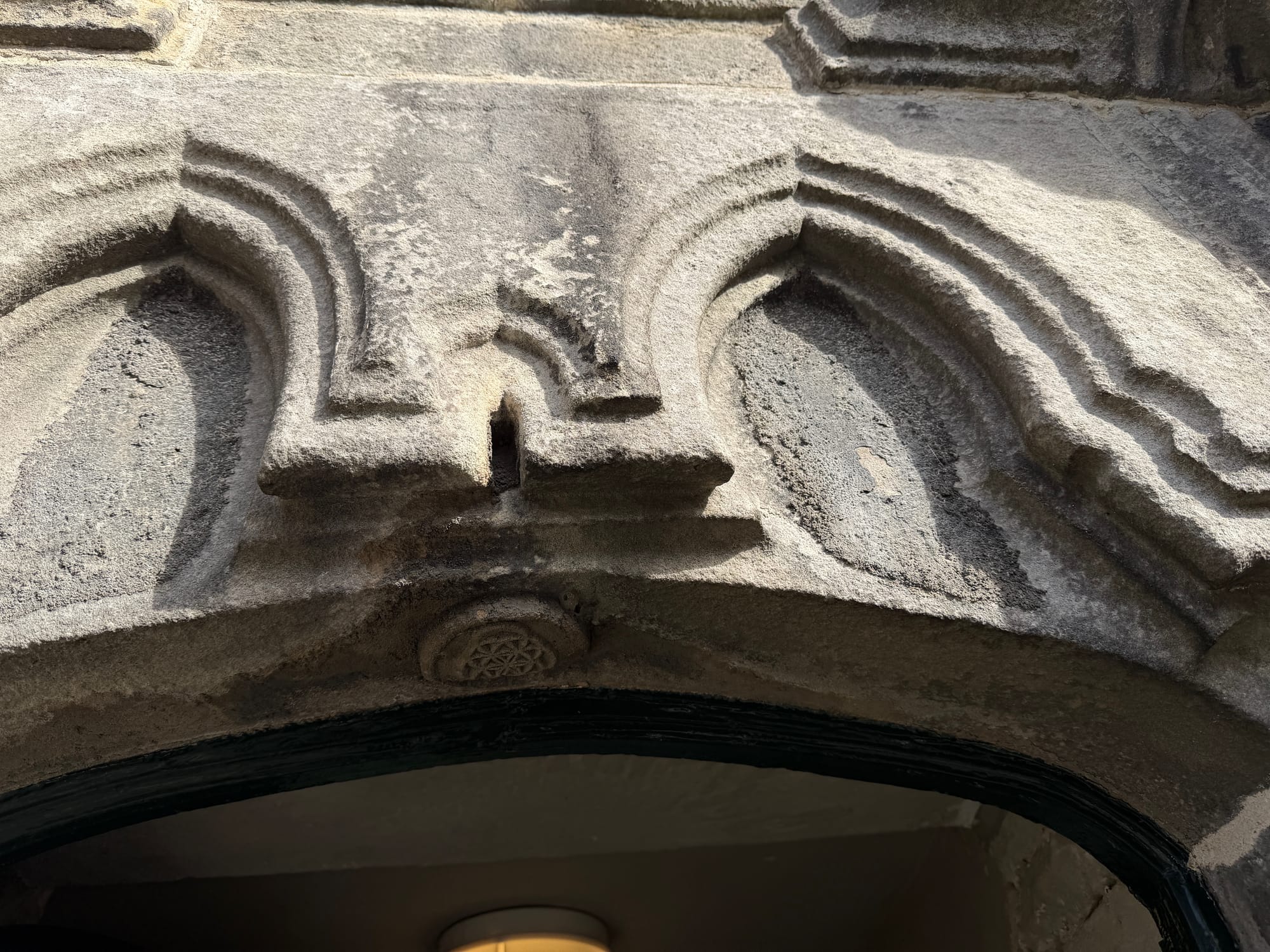
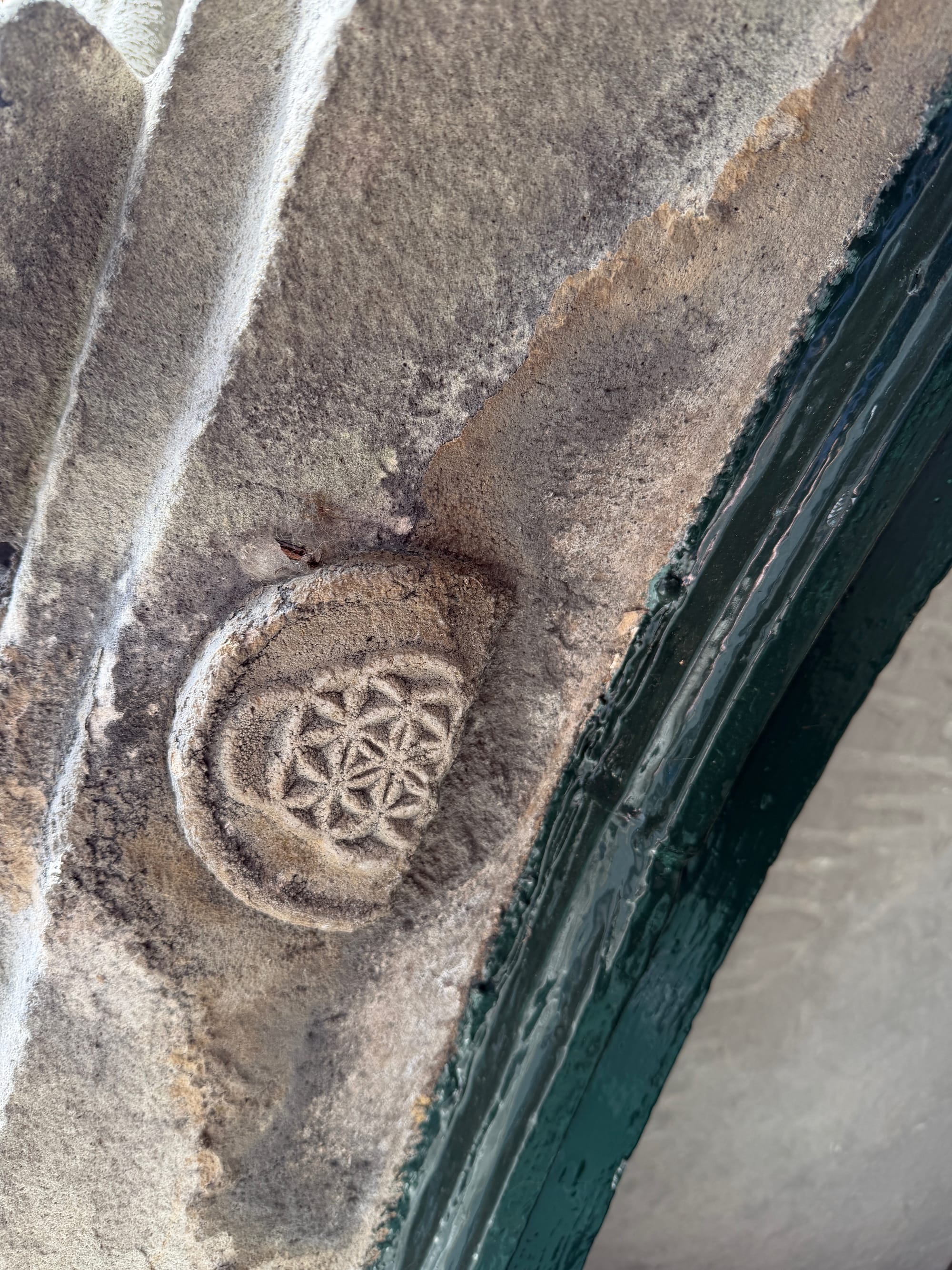
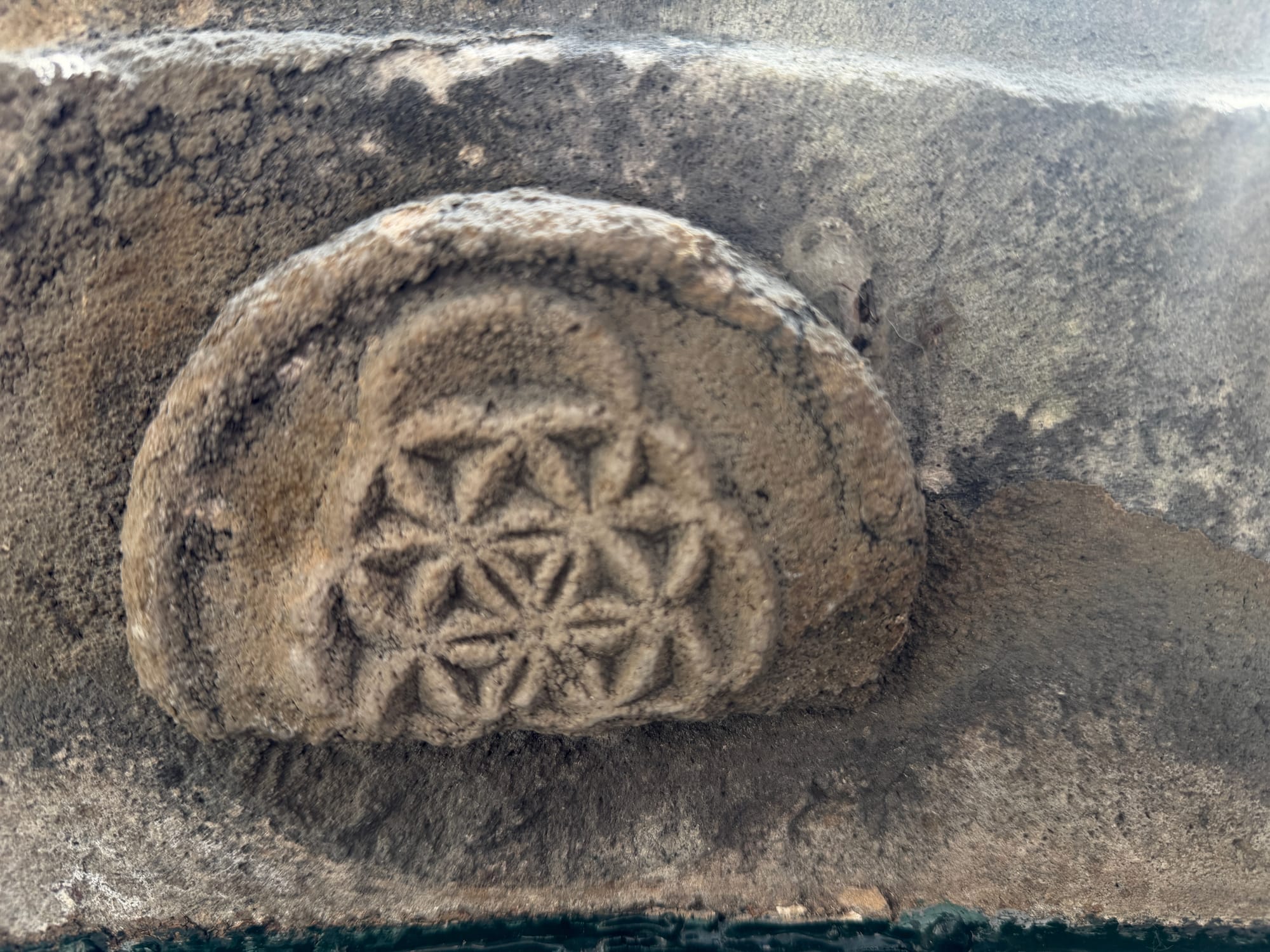
Its finest secret rewards a visitor who crosses the threshold and looks back, beneath the inner lintel. There, tucked out of sight, is a carved geometric rosette: an apotropaic mark incorporated into the doorway to confuse or repel evil spirits. Preston’s entrance was therefore more than display: it was also a charm in stone.
Connect with me on: Bluesky / Instagram / Facebook / X / Tumblr / Flickr / Vimeo / Pixelfed / Pinterest

Member discussion