Welcome!
Coming soon: Finding Lincoln
The story my dad left behind
⚡️ View the latest digest and the full archive here.
📐 My Goals ℹ️ Donations Page & Status 📸 MPP Status 🛍️Shop
🔗 Connect with me on: Bluesky / Instagram / Facebook / X / Tumblr / Flickr / Vimeo / Pixelfed / Pinterest / Flipboard/ Fediverse: @fotofacade@digest.andymarshall.co
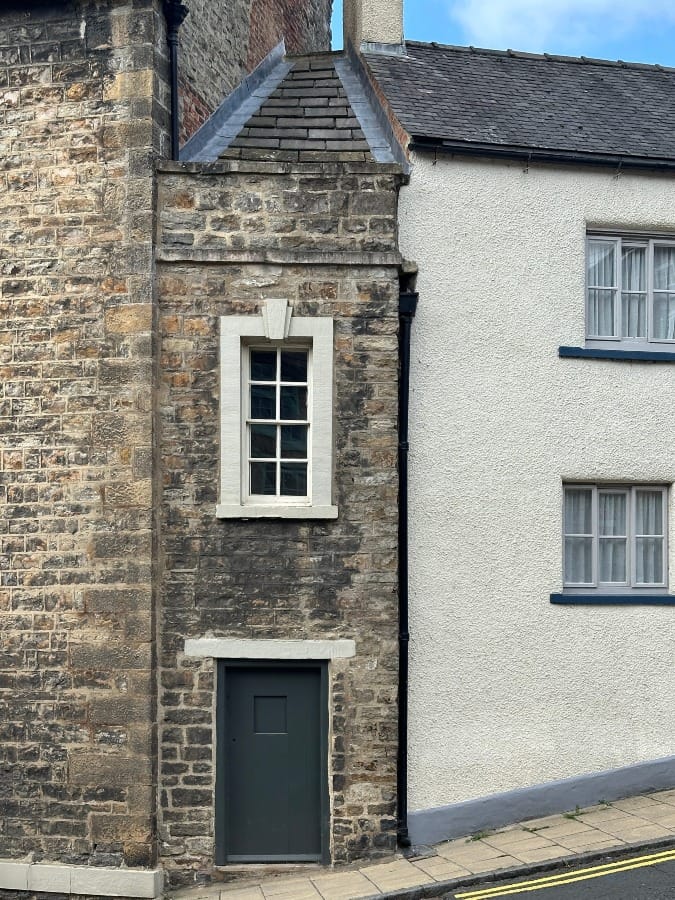
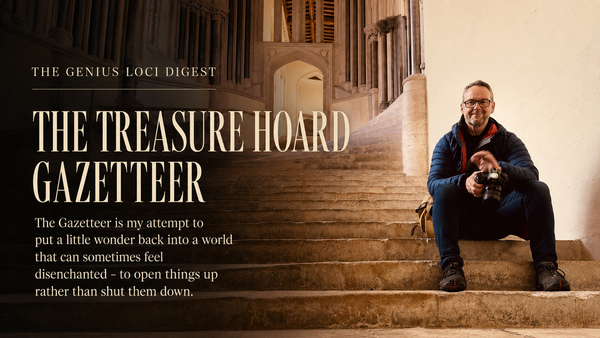
Every now and then you stumble across a tiny building that makes you smile.
This place in Richmond had me wondering whether hobbits had settled in North Yorkshire.
"There are places and things which make our thinking possible, and leave our thinking changed."
(Hugh Conway Morris - The Architecture of the Poetic Universe)
Through The Balustrade.
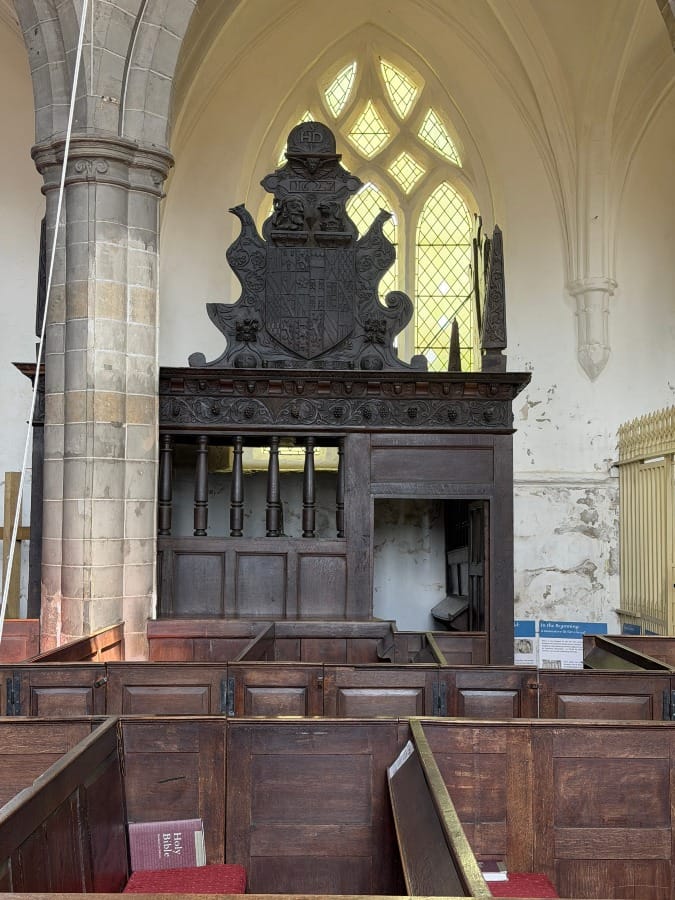
I’m sat inside a kind of Faraday cage for the senses - a muted construct of oak that tempers and splices my view of the remarkable place that I have found myself in. I felt the urge to retreat here and put some distance between myself and what I saw inside the nave. What I saw was rude to the eyes, unequivocally impudent in terms of how it challenges my notions of what the people of the ninth century were all about.
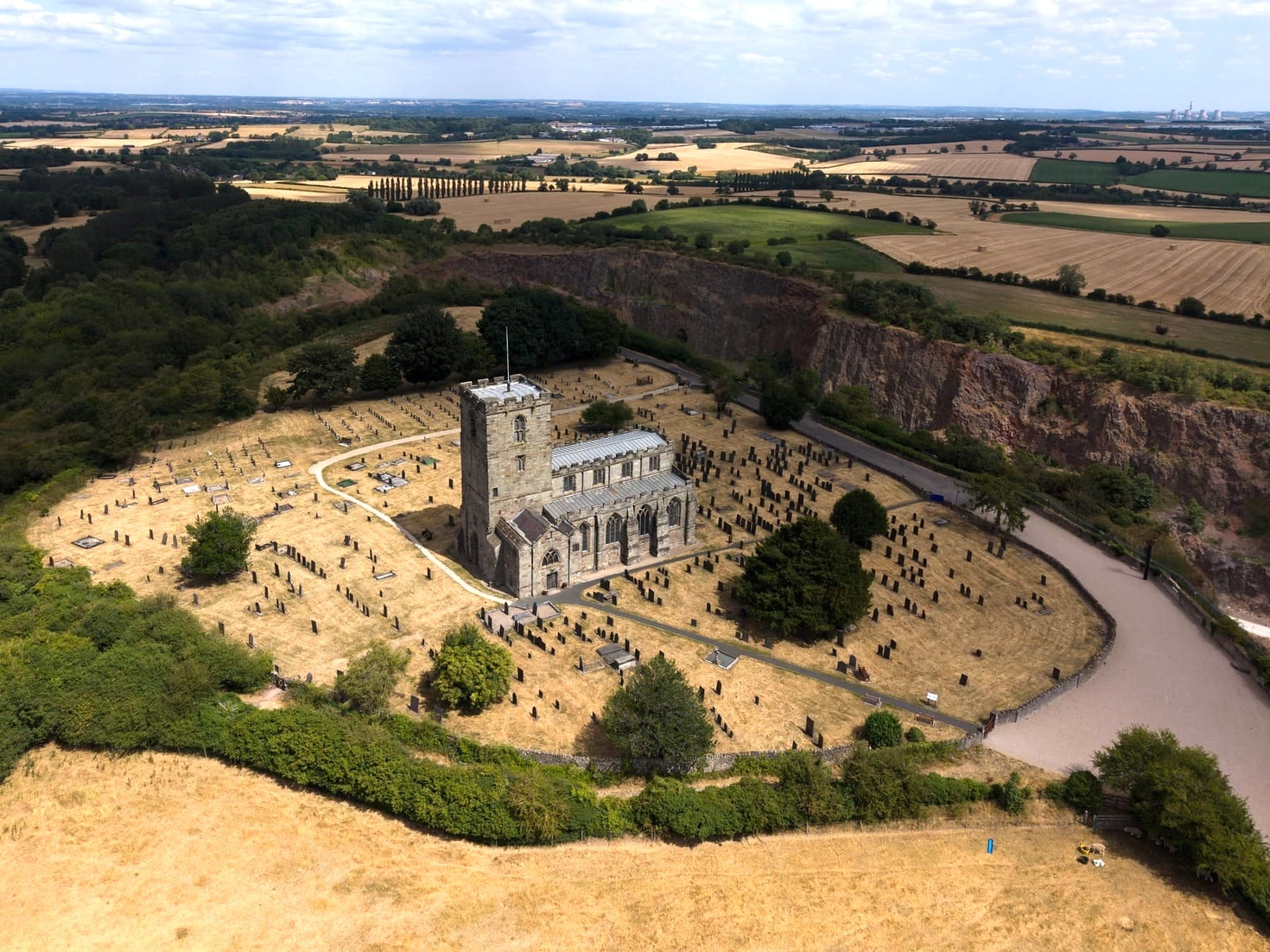
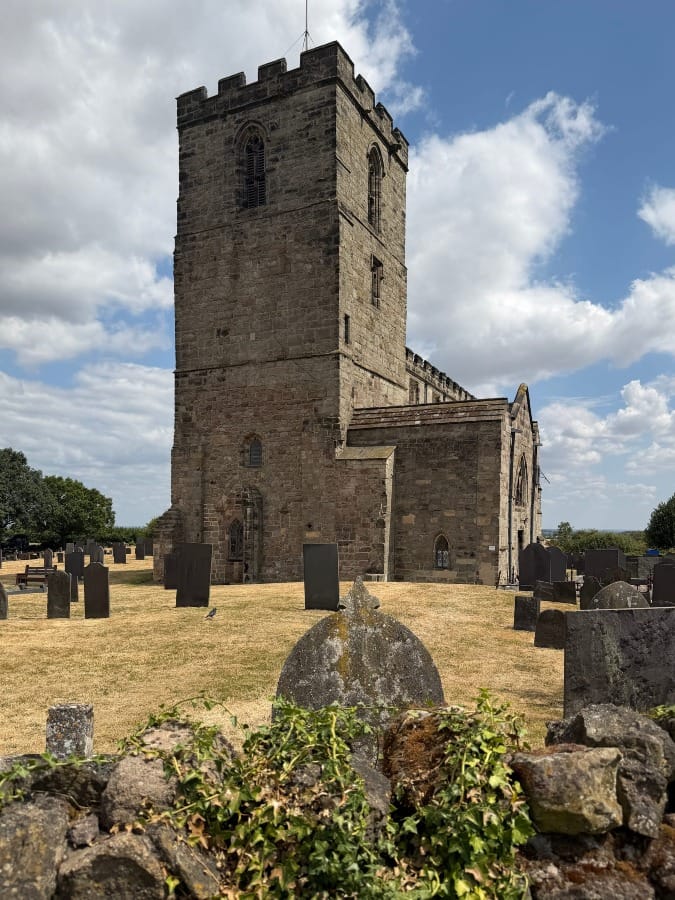
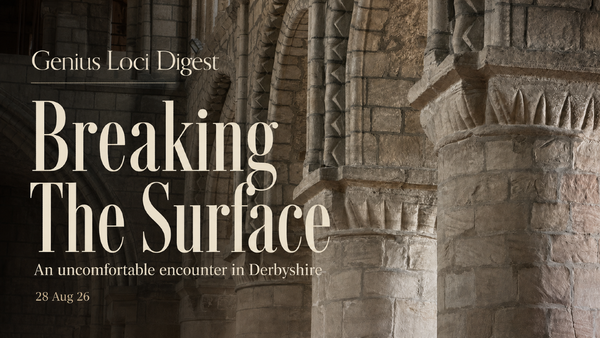
The Priory Church of St. Mary and St. Hardulph, Breedon on the Hill in Leicestershire, is said to hold one of the greatest surviving material records from Saxon times - thought to represent the re-awakening and re-connection with other continental cultures through the vernacular of a Mercian lens, muddied by the haunted inheritance of Roman ruins from a perceived land of giants.
I can’t get out of my head what I saw, even in the brief time that I walked beneath the low-slung ceiling and into the nave.
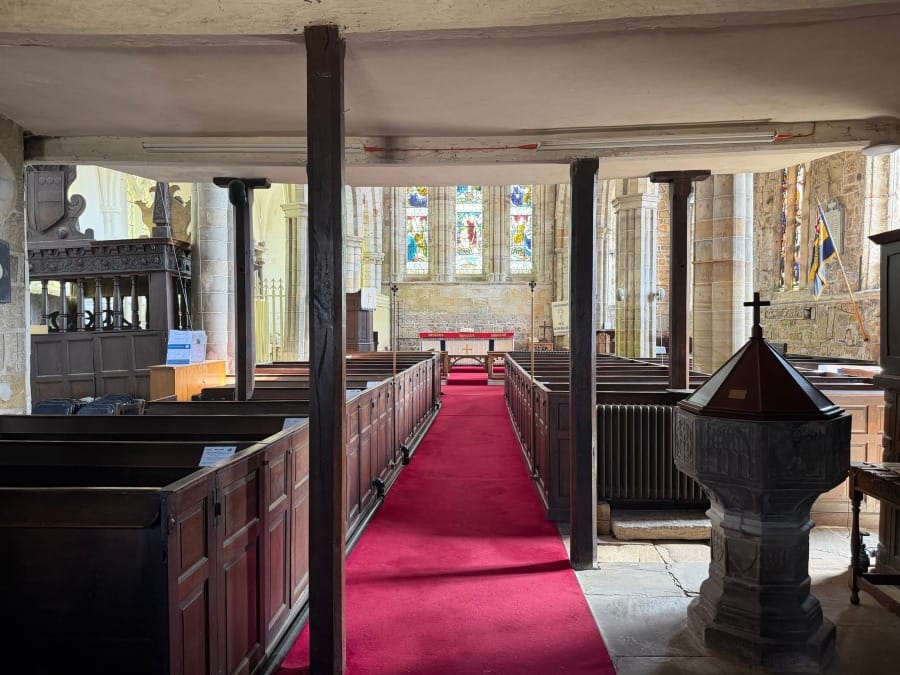
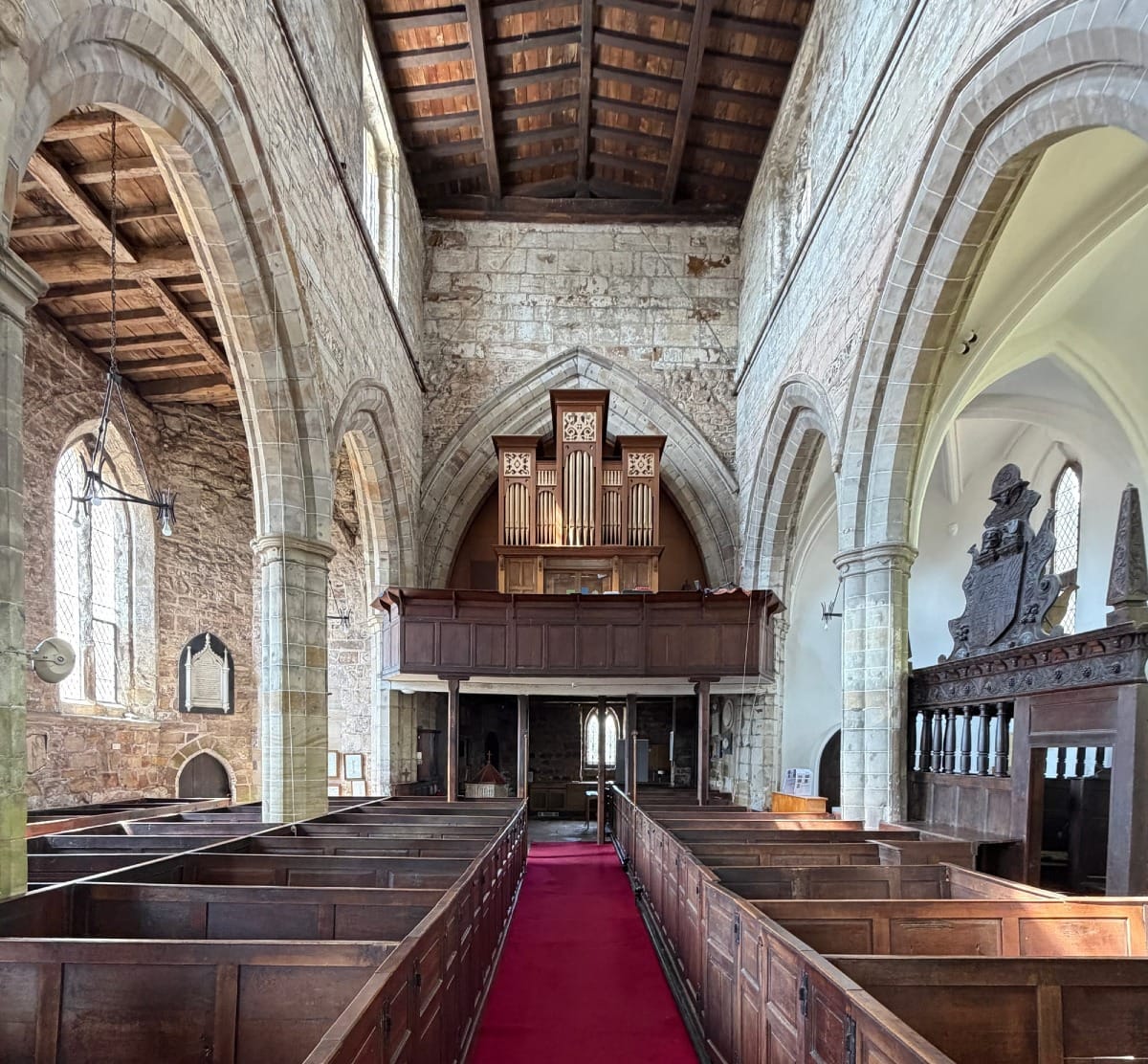
To one side is a peculiar thing - my Faraday cage - the Shirley family pew, all roofed over with crests and foliage, modillions and winged angels.
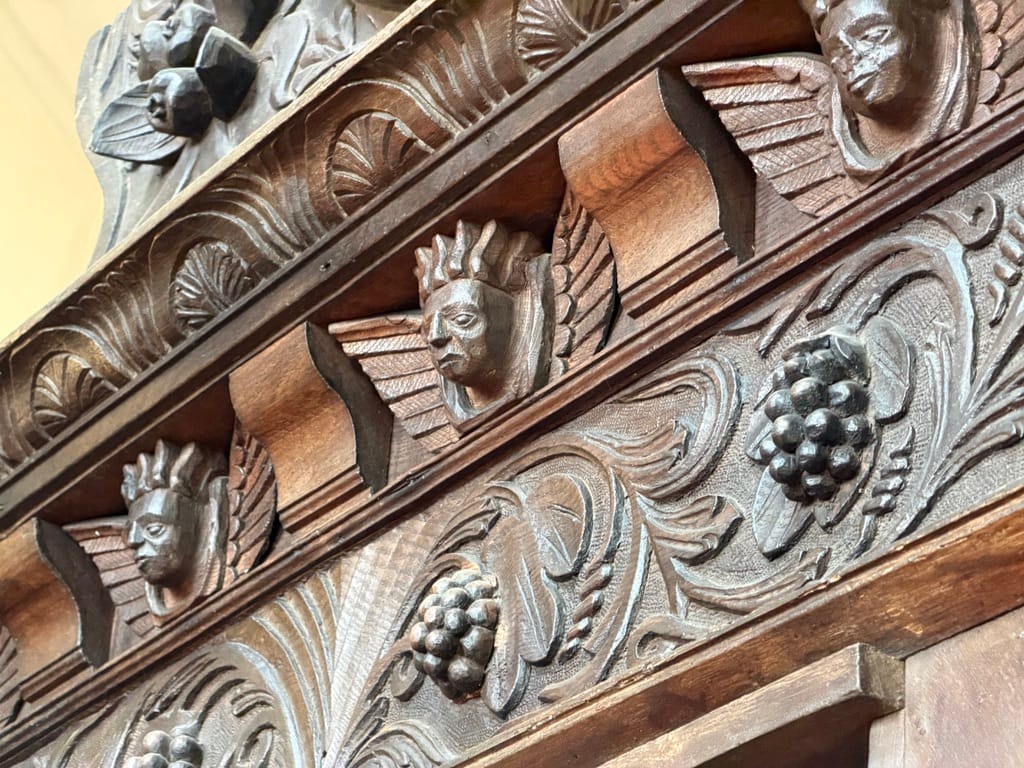
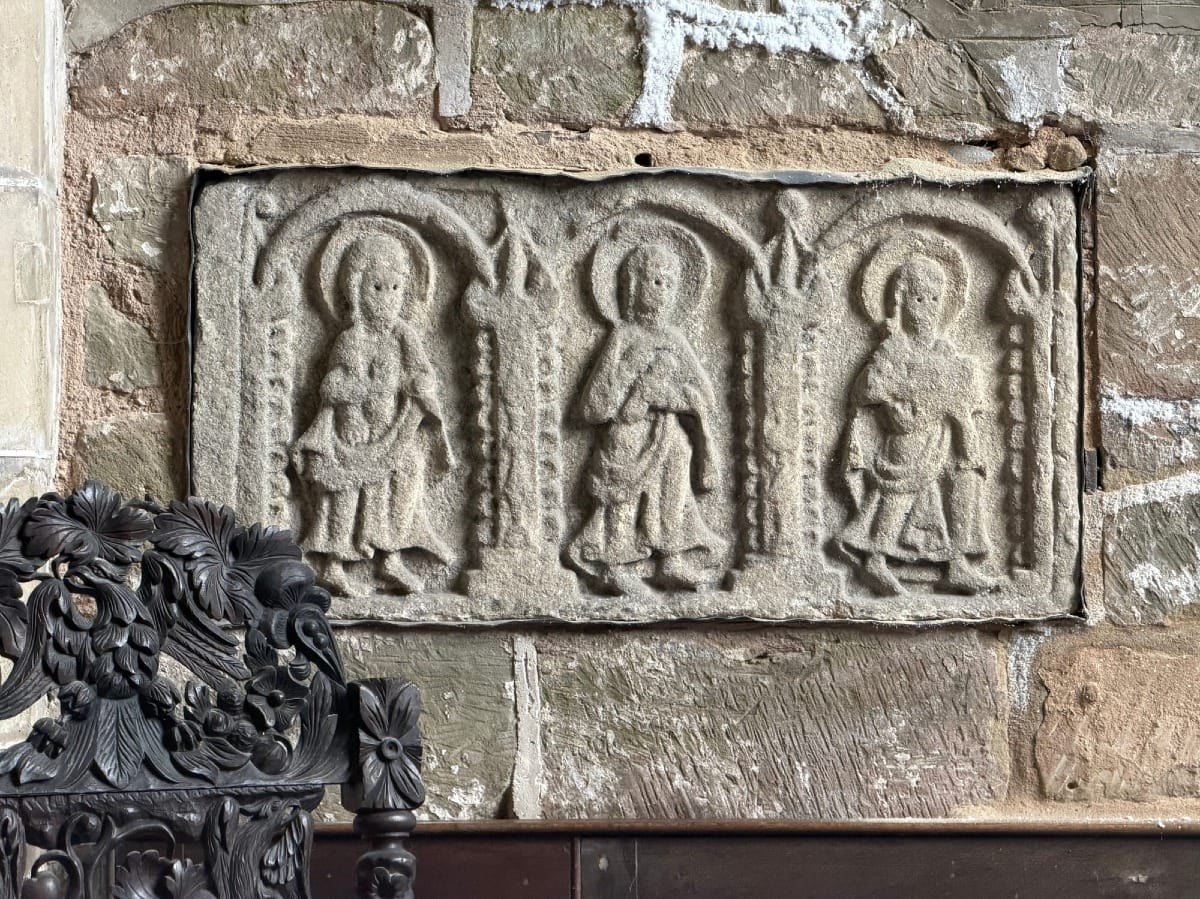
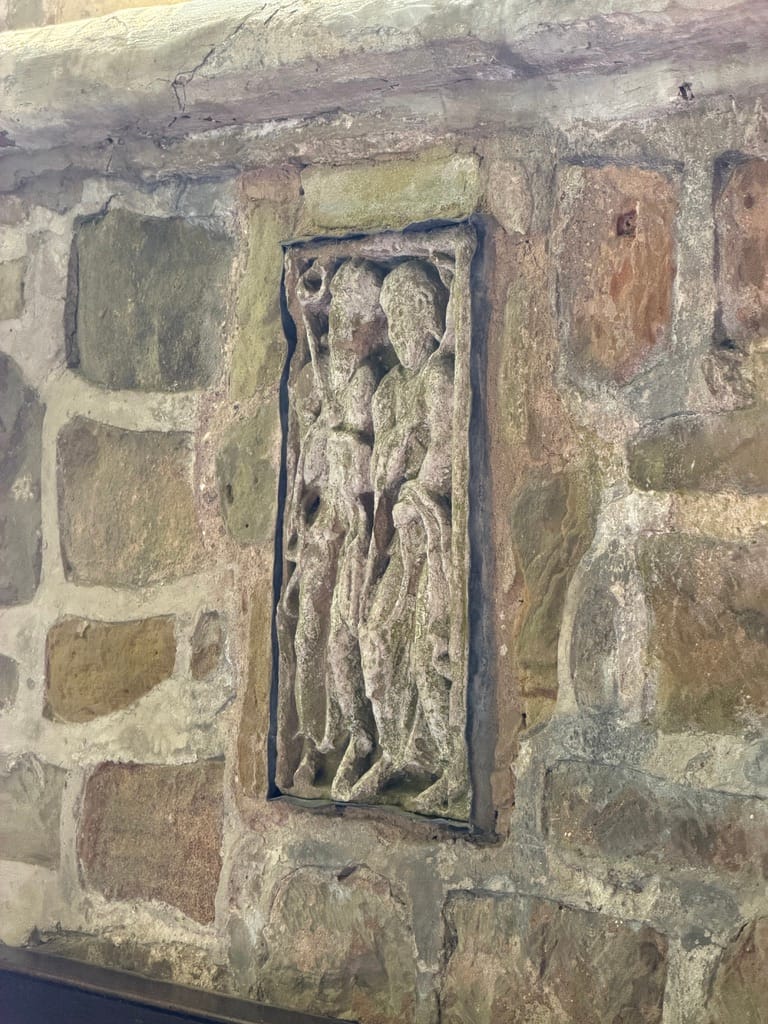
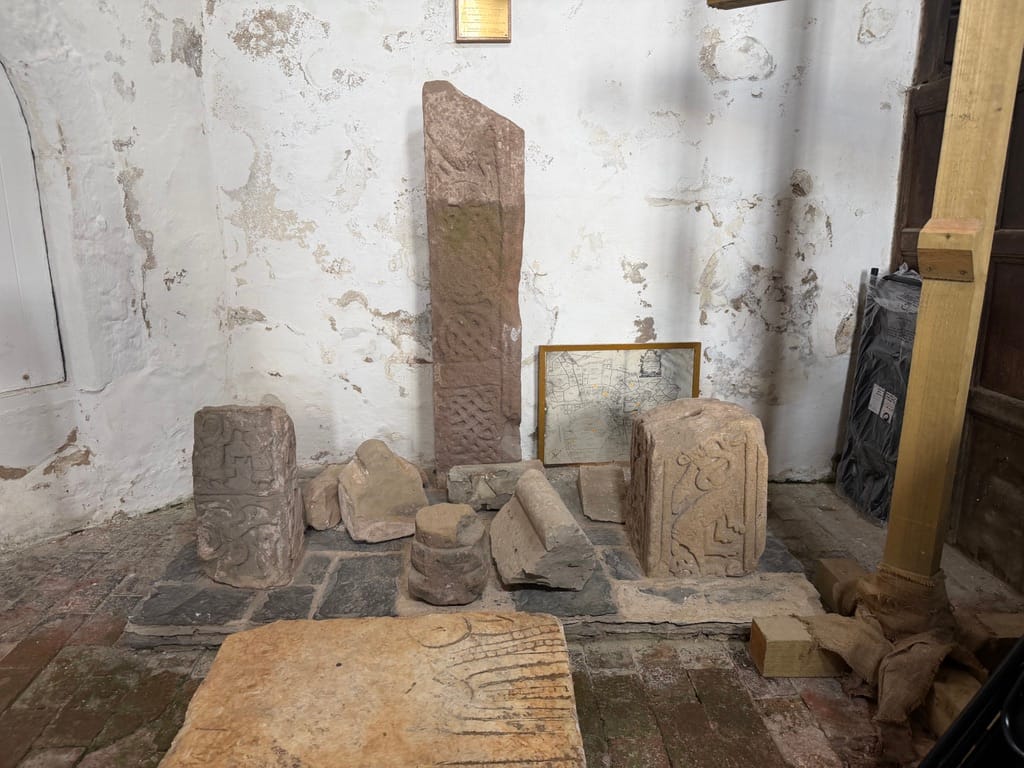
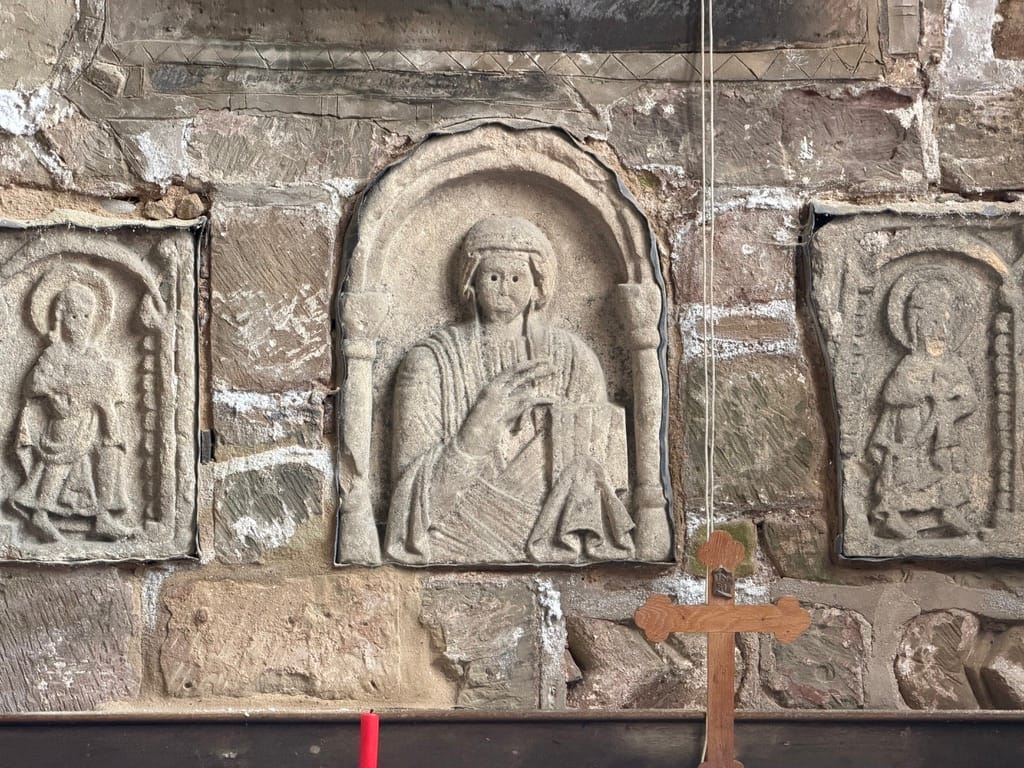
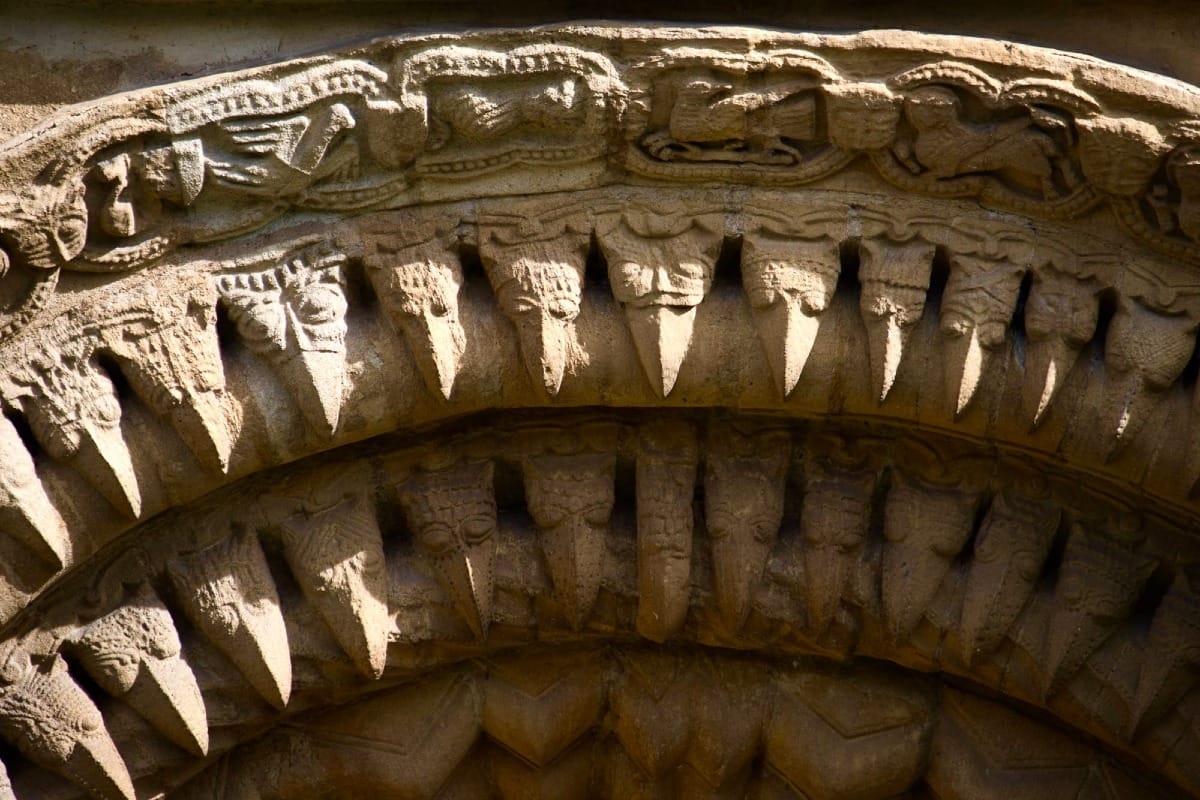
To the other is a string of ninth century carvings in the south aisle that prick the curiosity as soon as they are seen.
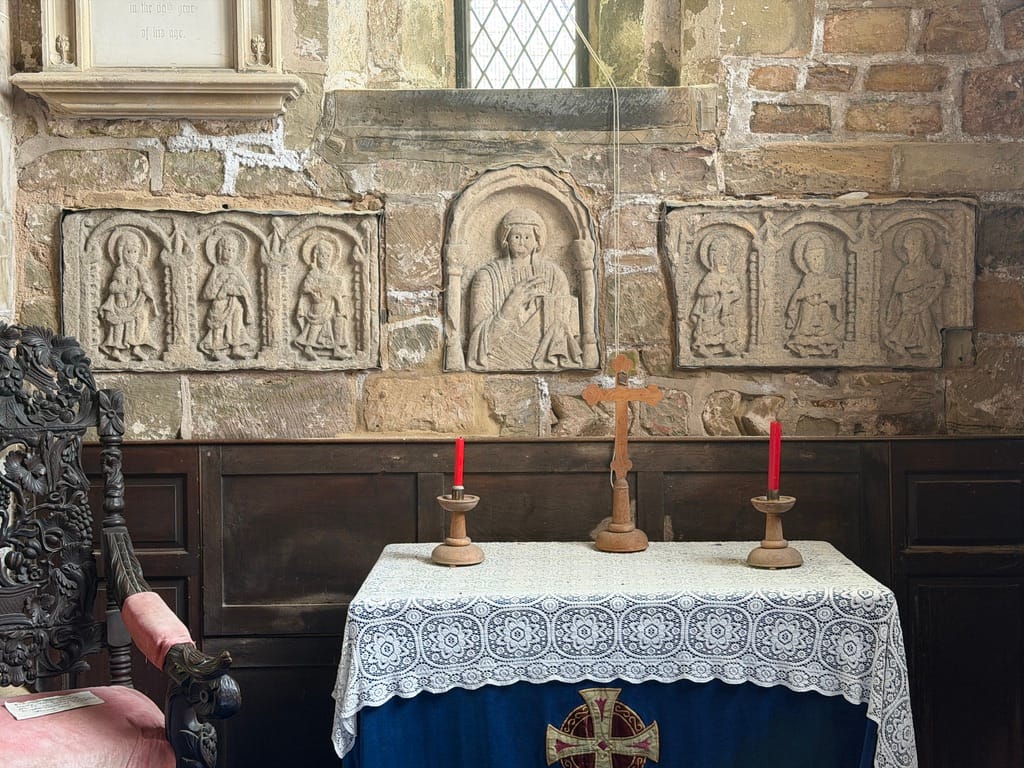
Inside the family pew, it is as if the balustrade is filtering and abstracting the complexity of what lies beyond: stone friezes full of vines, spirals and interlacing stems - forms that curl like fern fronds and spread like the honeycombed chambers of a seed head. Strange creatures are tangled in the undergrowth, while every line seems nested within another. Everything is fecund, restless and connected.
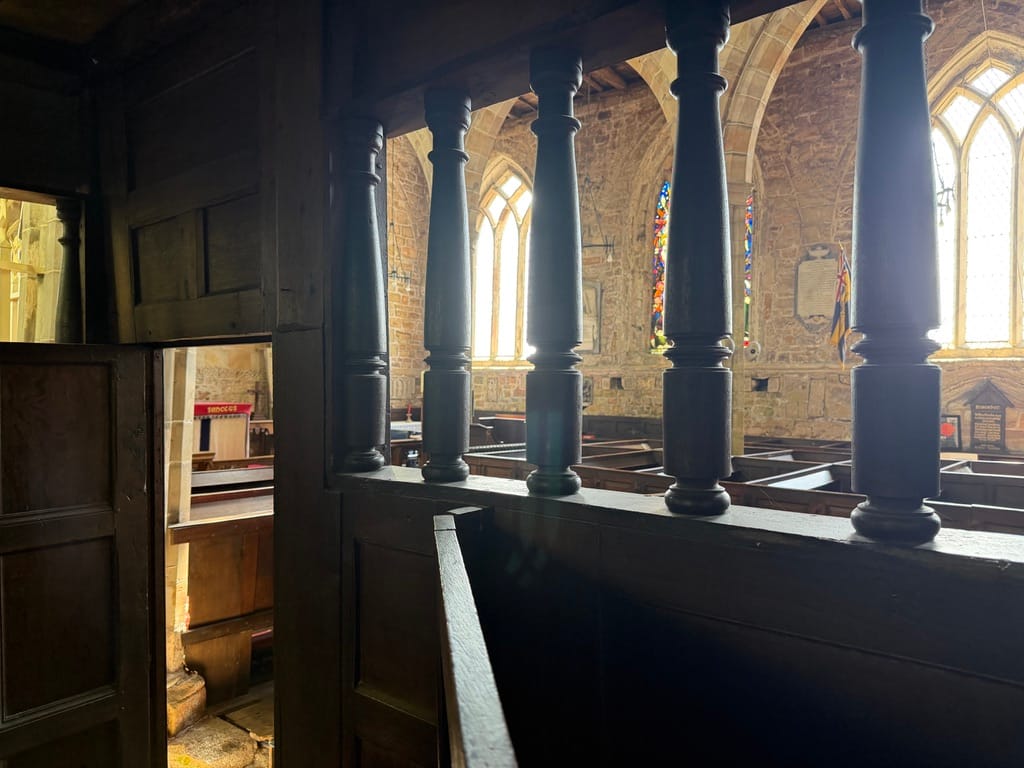
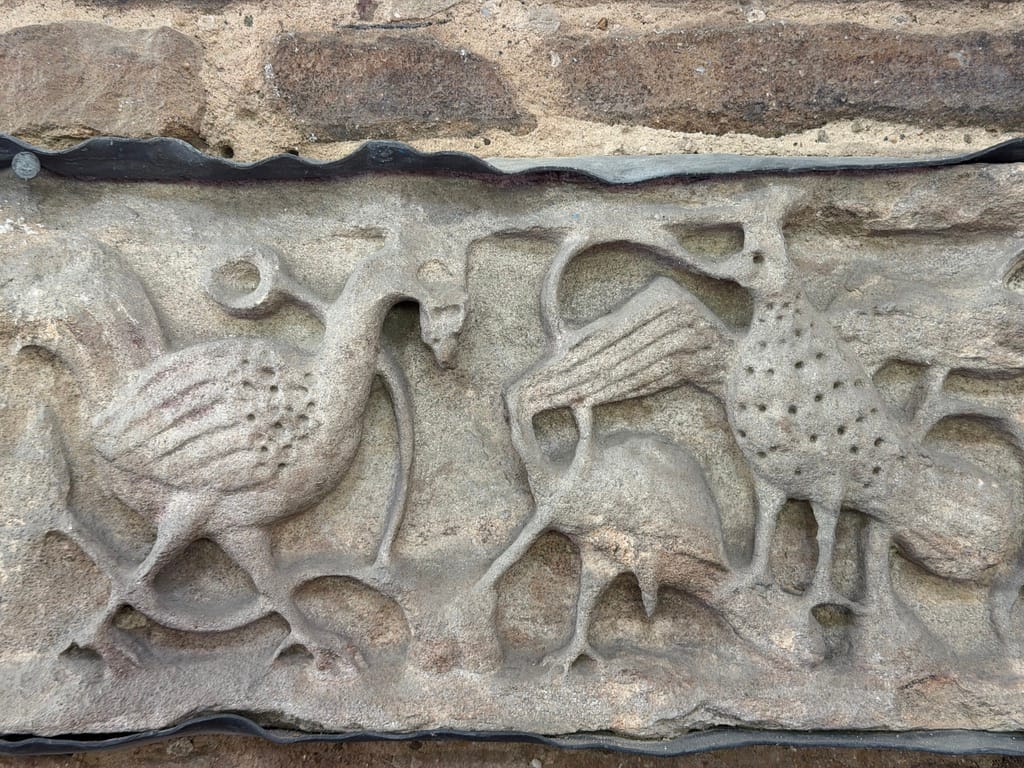
Even though the balustrade cuts and quarters my view, I catch a glimpse of something else - the curlicue and curvilinear lines of a figure - so beautifully carved that it looks as though it might evaporate into the ether.
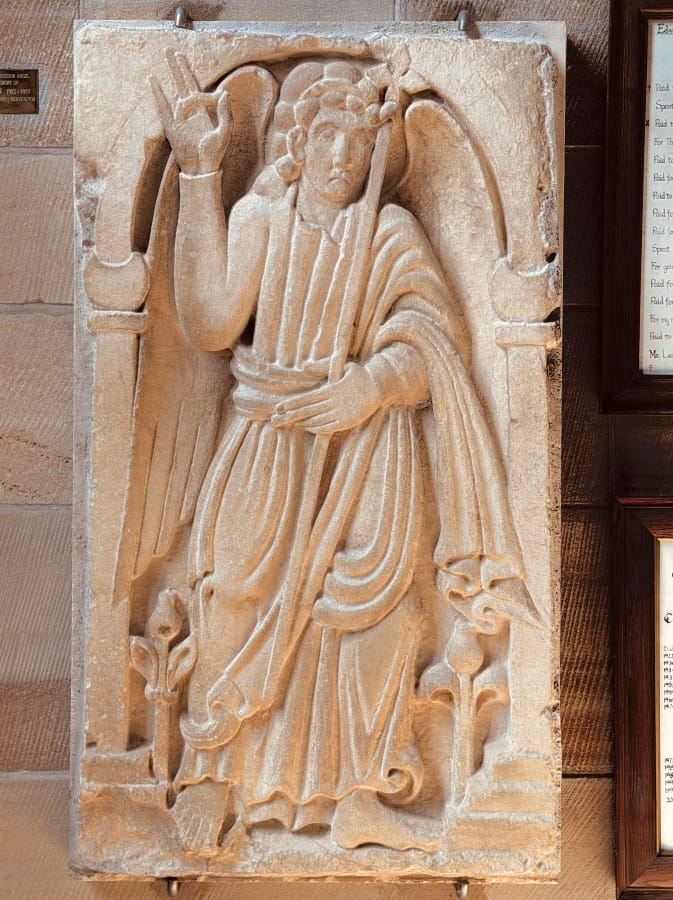
The figure is a depiction of an angel. The carver has brought the figure forward from the stone, as though it is peeping from behind the veil of time itself. One hand is raised in blessing while the folds of its robe fall in long, liquid lines before curling back upon themselves into the arm. Nothing feels static. The figure seems to be arriving and departing all at once.
And then, bravely, I walk beyond the threshold and into the dense thicket of concentrated abundance. Giddying as it is, I think of how this place and all it holds form only a small part of the vast accumulation of time. Time moves through this place like a glacier, gathering fragments from particular moments, carrying cultural moraine and depositing it into the fabric of the present.
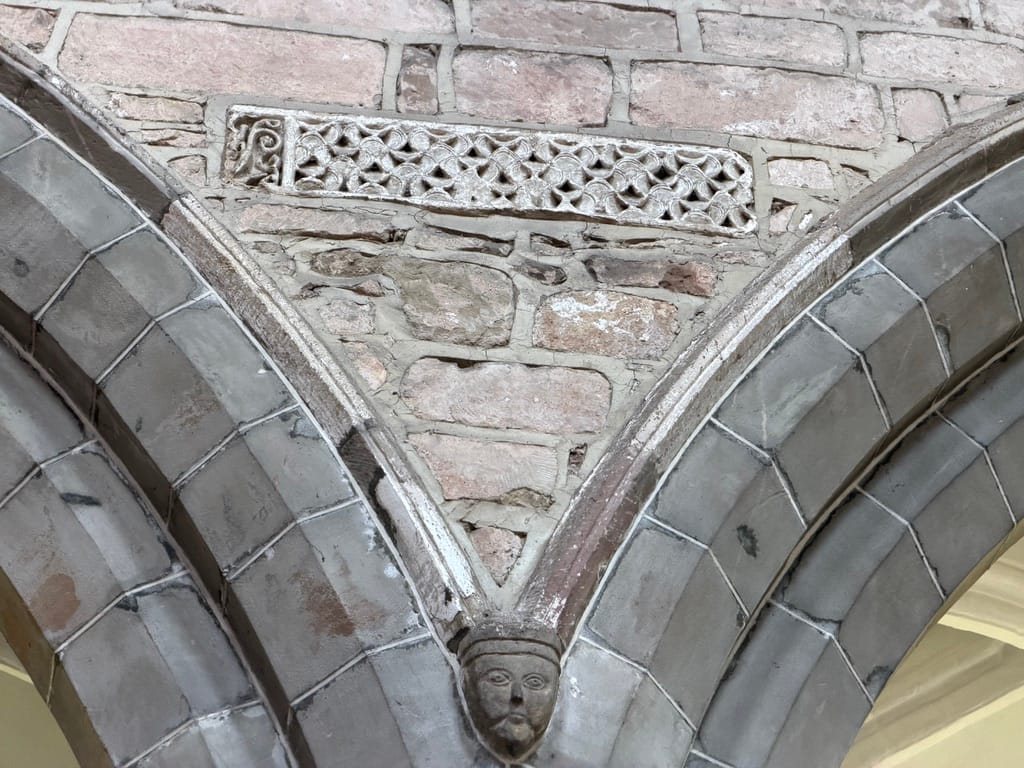
I begin to take in each piece of Saxon carving along the south aisle. At first, I follow the individual lines - a curling stem, the turn of a wing, a creature emerging from the foliage - but as my eye moves from one stone to the next, the separate forms begin to gather into something larger: a correspondence with the pulse of a pattern that seems to stem from the innately human instinct to find life, order and meaning in the forms of the natural world.
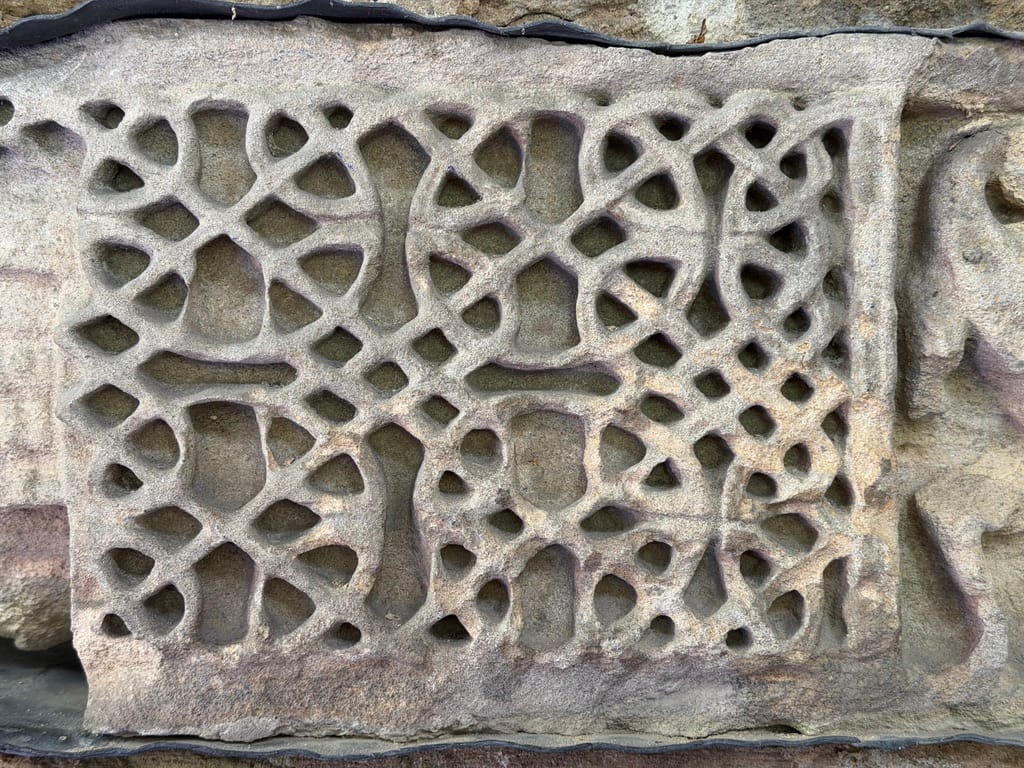
Gradually, the boundaries of the carving begin to loosen, and I get an inescapable feeling that the pattern and decoration are extending beyond the stone and into the imagination, where they take root and continue towards the interior - dividing, returning and beginning again.
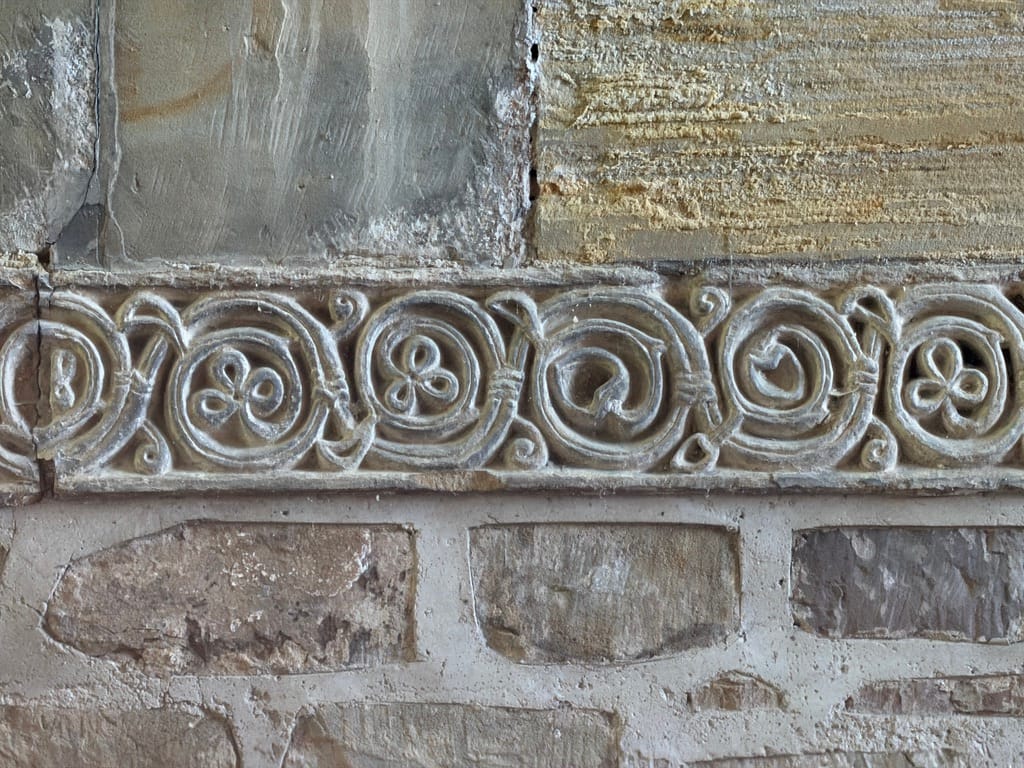
Perhaps this is how we are meant to experience these things: to unthink their meaning and allow their forms to settle inside us, take root and bloom into the wondrous.
I think of the line of Mona Lisa’s smile, the swirl of a Van Gogh sky, the spurt of a puddled Hockney raindrop. I have internalised them so completely that they have become part of the root system of my imagination. Long after I have left the gallery, their lines remain - branching, connecting and altering the way I see and work. Perhaps it is in that sense that the Saxon maker at Breedon achieved a kind of eternity.
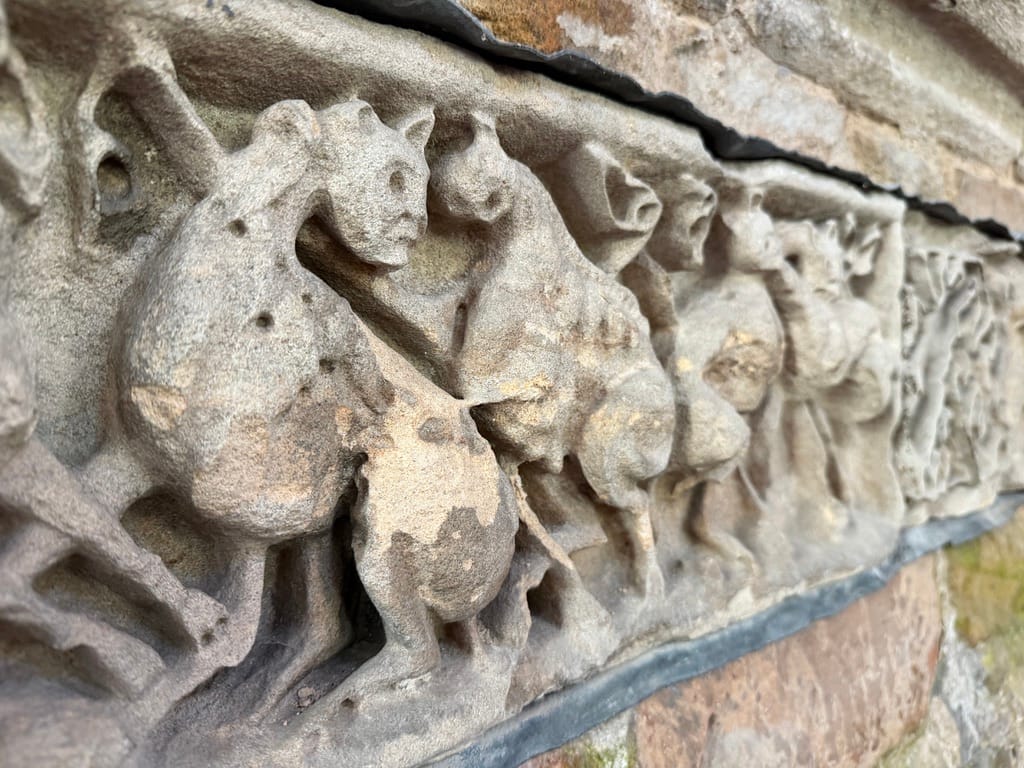
The church possibly lies on top of the remains of an earlier timber church, which might itself have been built upon a totem or a shrine to something other than a Christian God. It’s a marvel to think of how deep-rooted this building is.
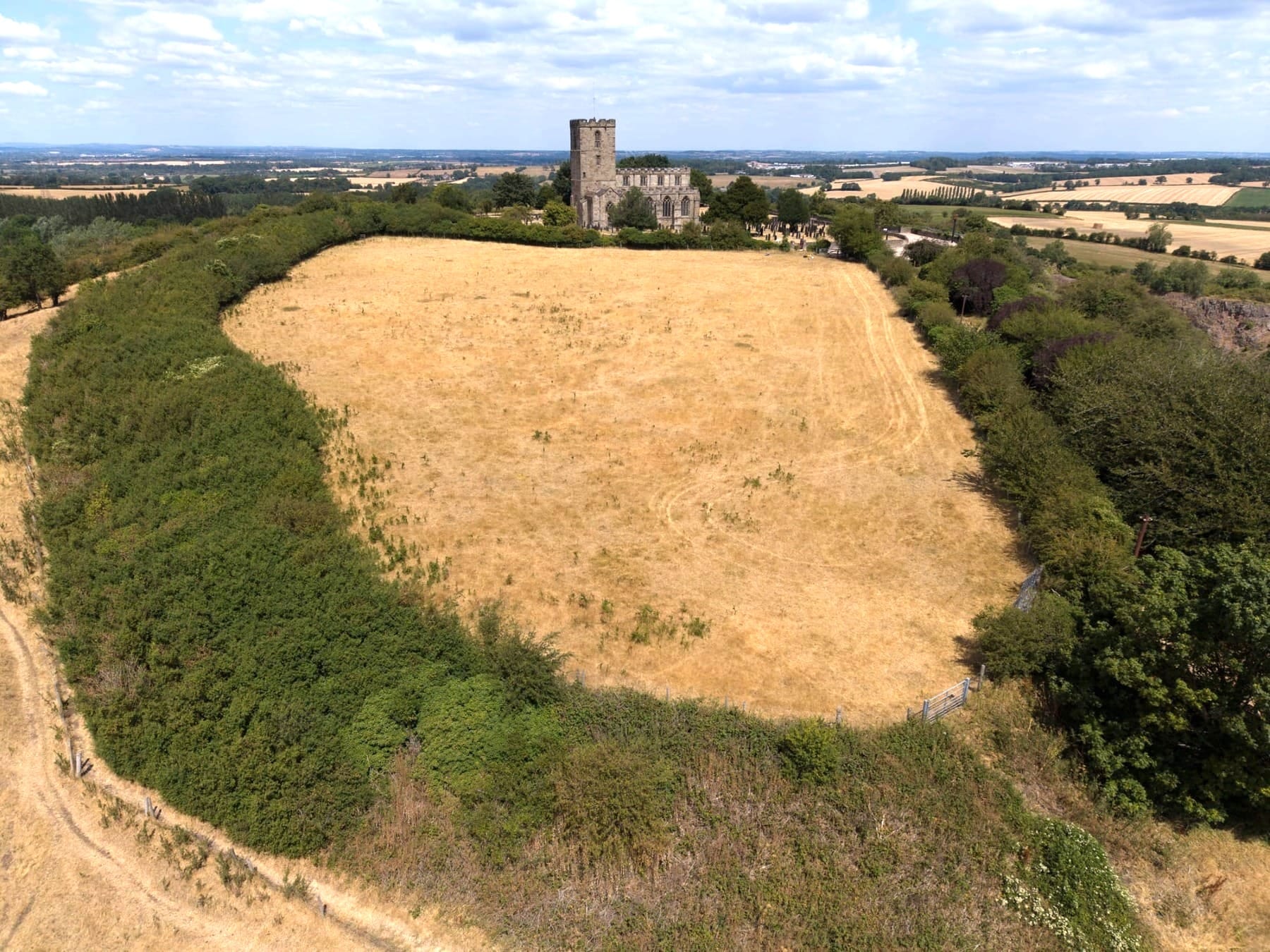
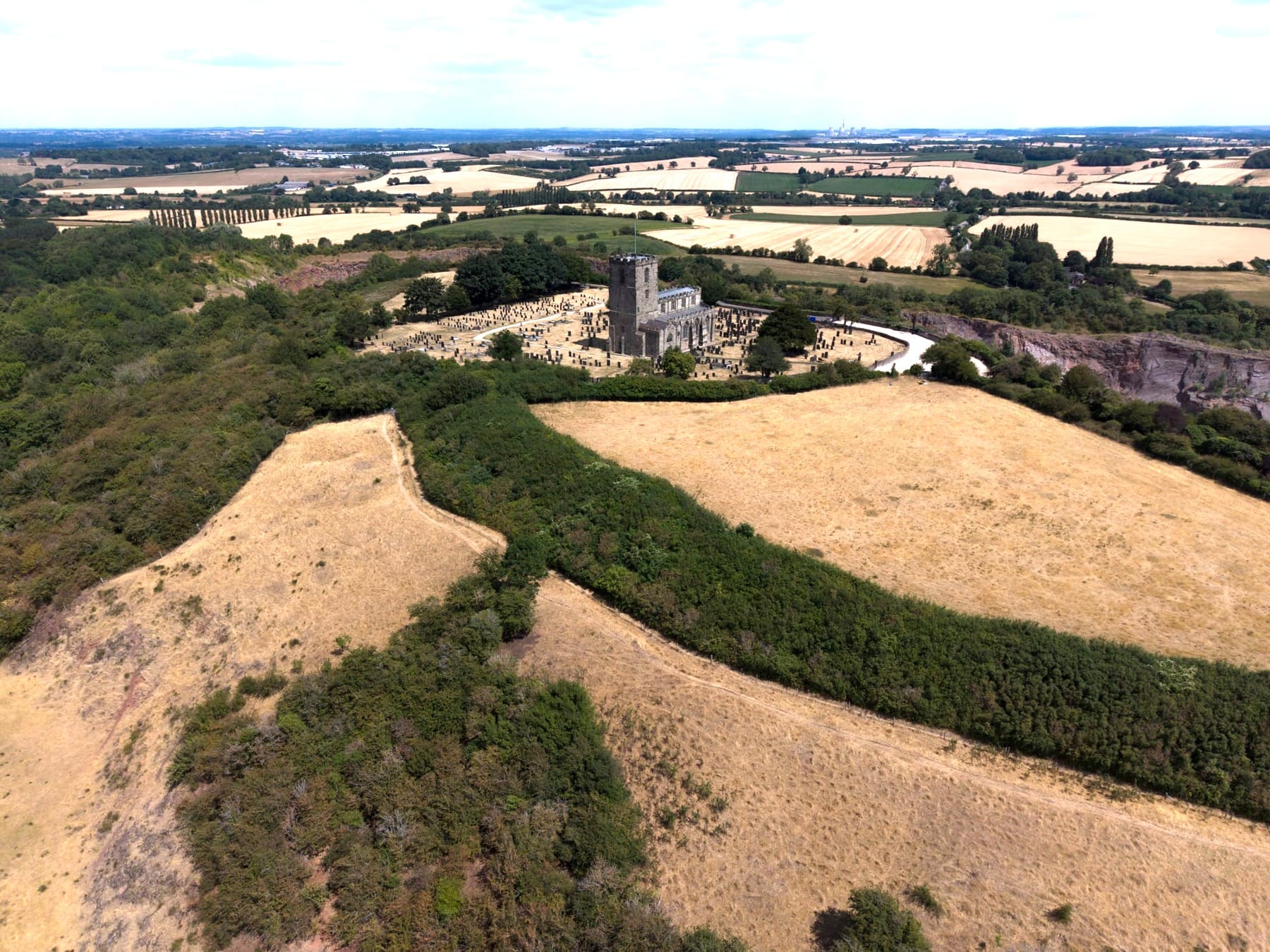
As I walk down the hill towards the village, I’m caught by the same dipping arc that I saw in the pattern of Saxon carving - but this time I am the chisel, tracing the line across the surface, moving over a slumbering giant of a landscape and cutting through the great defensive banks and ditches that circle the hill. The church is built within an Iron Age hillfort - one that reaches back more than two millennia.
It really does feel like time travel - my journey from the shelter of the timbered pew, through the nave and out onto the hill, becomes a passage through successive compartments of time, each threshold opening onto something older.
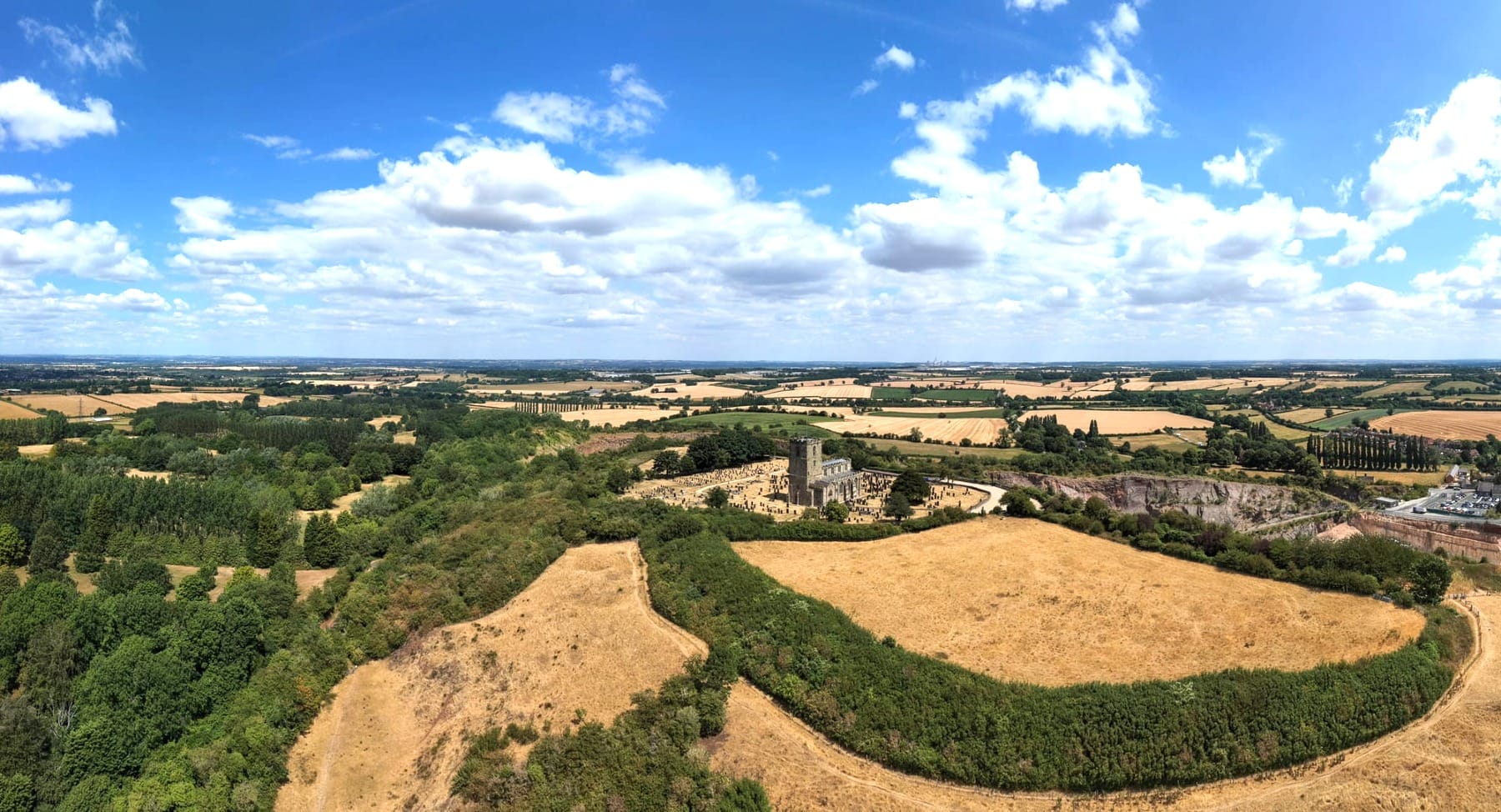
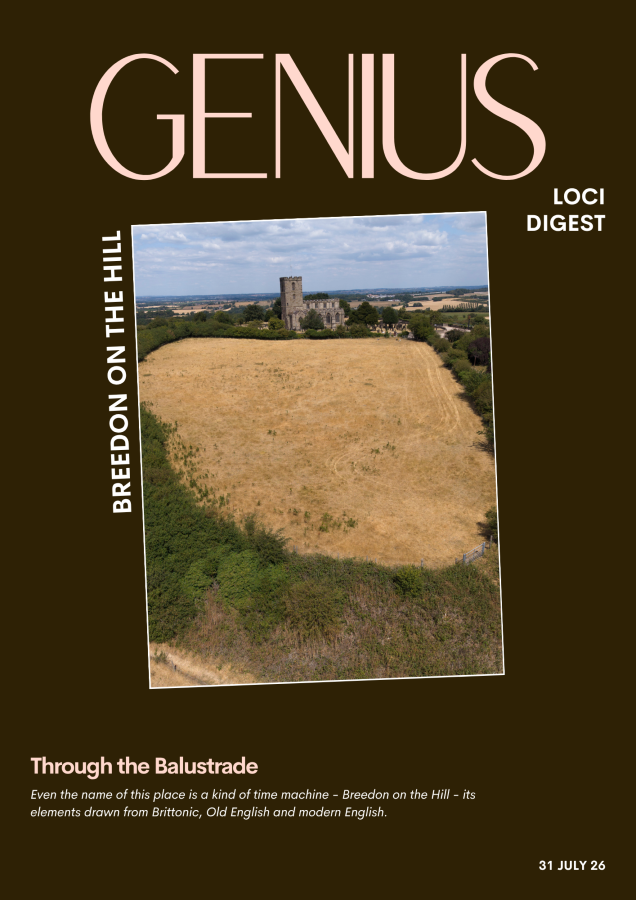
Even the name of this place is a kind of time machine - Breedon on the Hill - its elements drawn from Brittonic, Old English and modern English. It is a triple tautology - nested, like the artefacts in the church: the hill upon the hill upon the hill. When I say the words aloud, I feel time rolling over my tongue.
Here at Breedon, time seeps through the joints and into the words. It curls around the edges of form and syllable alike. It reaches forward through the hand of the carver, the folds of an angel’s robe, the bank of an ancient enclosure and the dipping contour of the hill, drawing them into a single line of continuity. The line passes through the balustrade, through stone and timber, through the name itself, through the body and out into the landscape. What was carved becomes what is spoken. What is spoken becomes what is walked. What is walked becomes what is carried elsewhere.
The Digest is free and public facing. Paid memberships and donations support the time needed to research, photograph, travel and write, as well as projects that provide professional photography for historic places and skills in need.
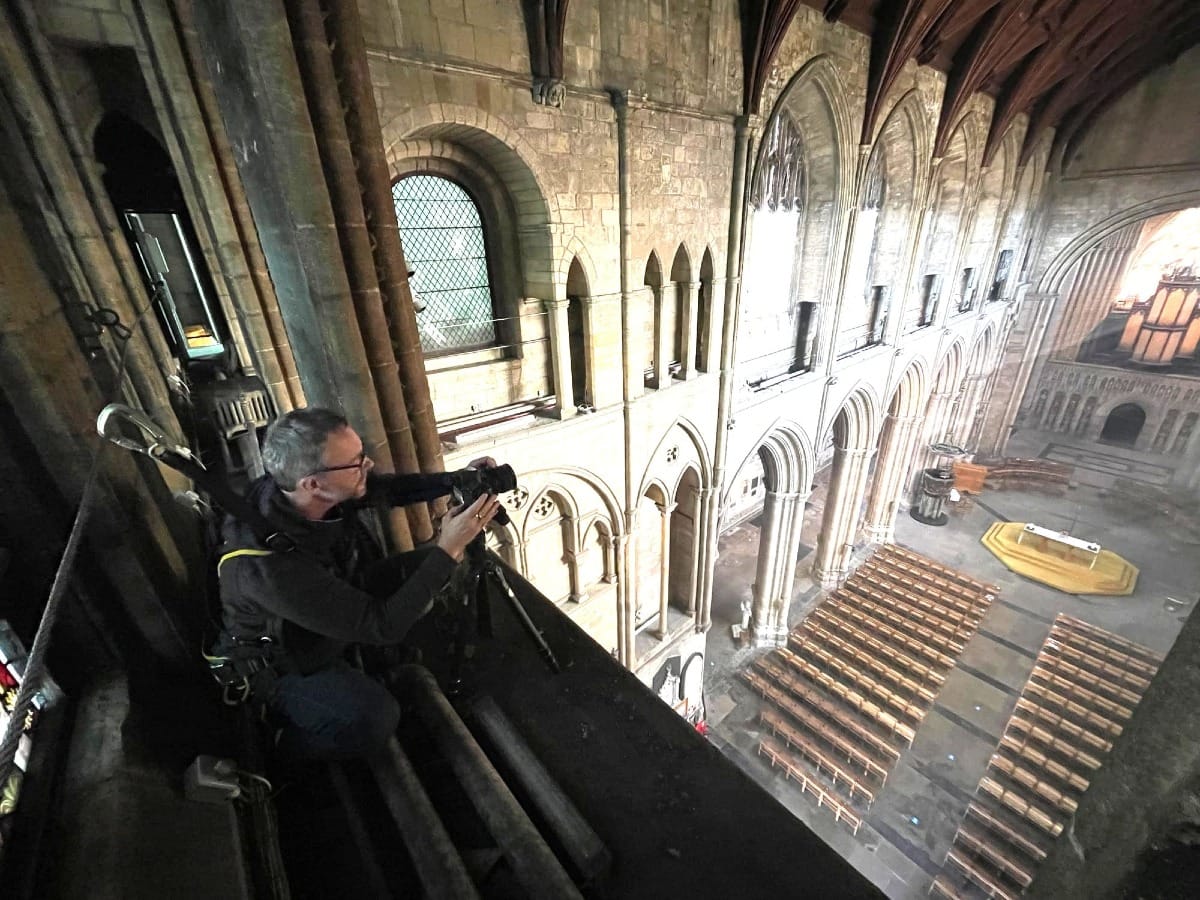
Help me keep going to extraordinary lengths for remarkable places.
Membership starts at £2/month, supporting the weekly Digest and free professional photography for historic places, charities and craftspeople.
See membership options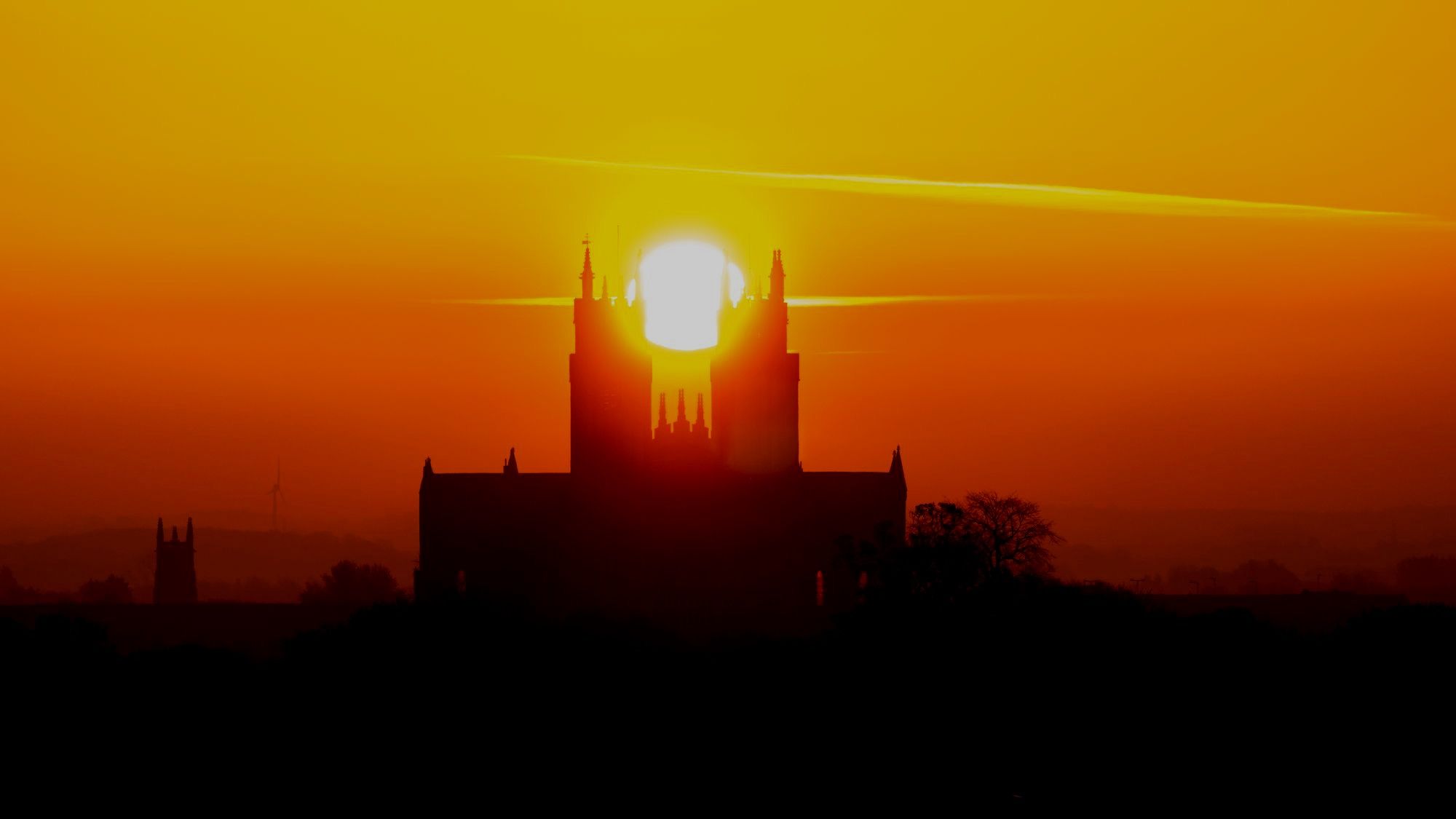
Breedon on the Hill
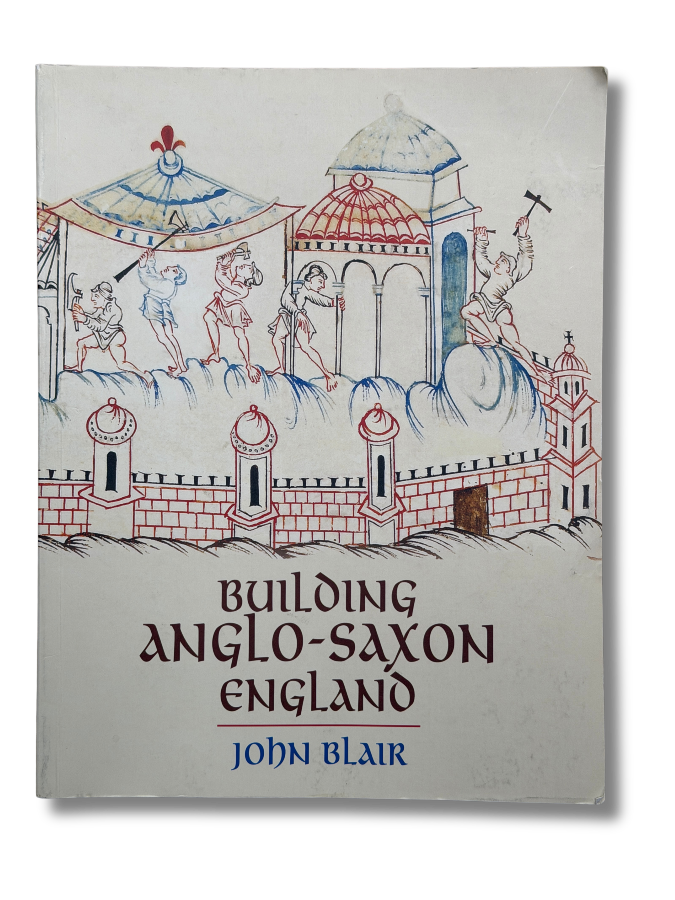
There are words by John Blair in his book 'Building Anglo-Saxon England' that talk generically of how the sacred landscape evolved over time. They seem to sum up the evolution of Breedon on the Hill perfectly:
"In England between 500 and 900 we can recognise a trajectory: from ephemeral and now invisible cult foci (traditional early Anglo-Saxon), to ritual structures in timber and earth (immediately pre-Christian), to ritual structures in stone (Christian and especially monastic), to an evolving dynamic in the public expression of power and self-identity: from the extravagant display of emergent and unstable elites, to an intense but relatively short-lived investment in the exotic possibilities of the Continental Church, to investment by more self-confident royal dynasties in communications, infrastructure and defence."
We might call the surviving remains from Saxon times at Breedon from that brief period that explored the Continental exotic. It makes it all the rarer.
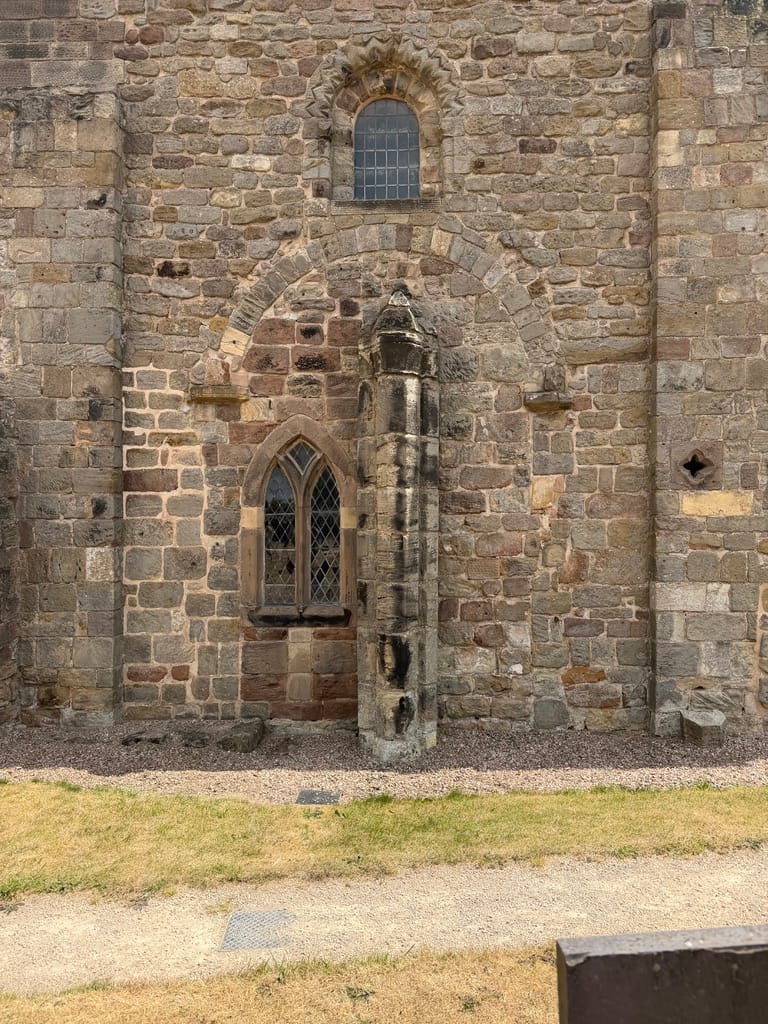
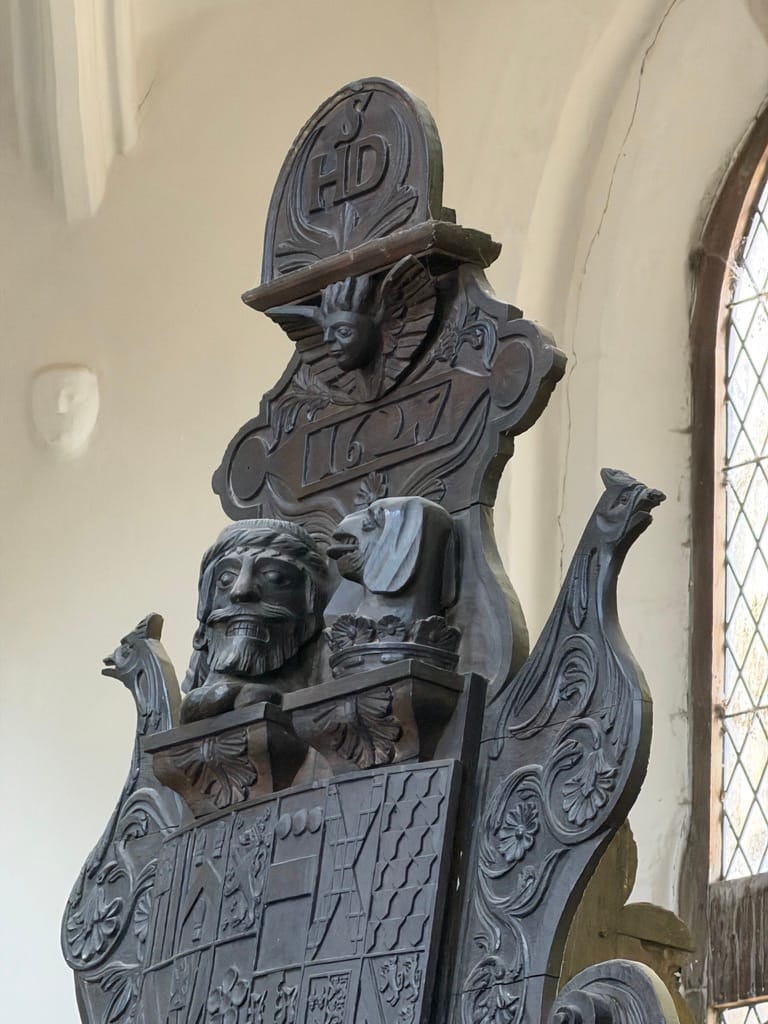
Inside the church I was also taken by the Shirley pew - which was originally situated at the centre of the nave - like some great gilded cage.
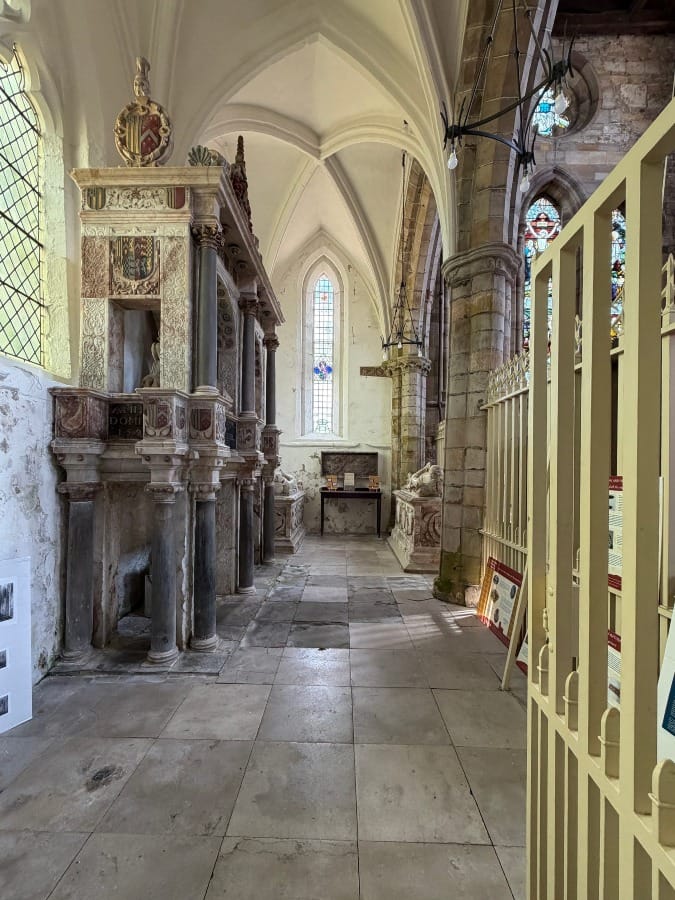
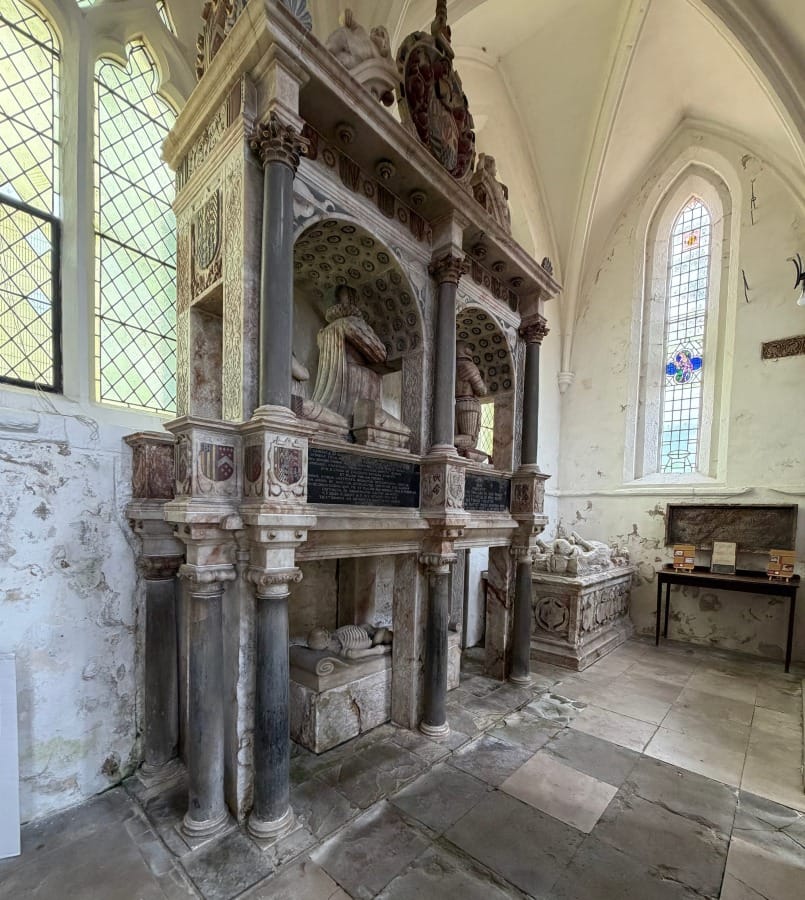
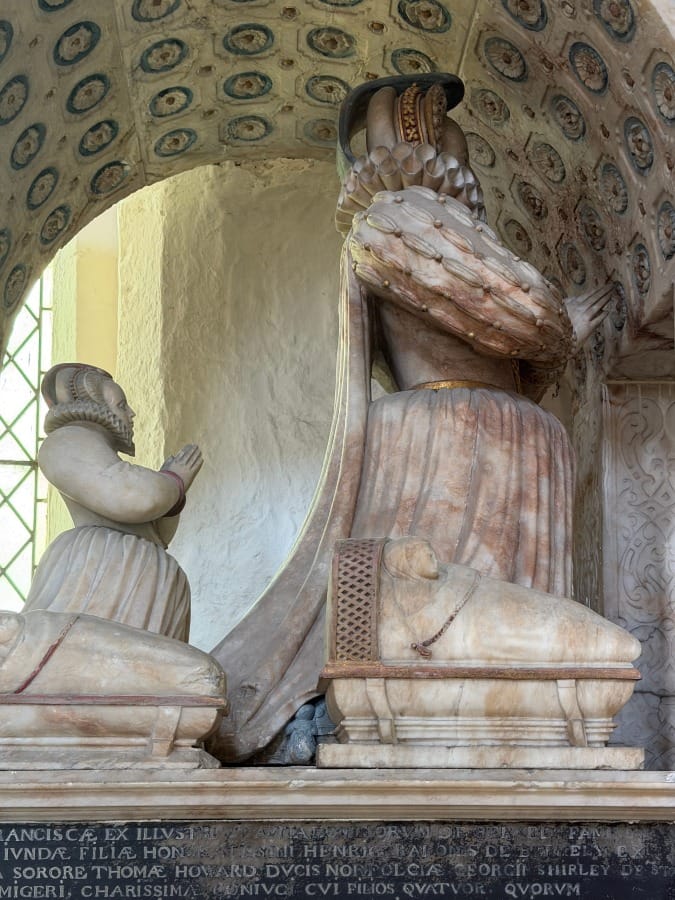
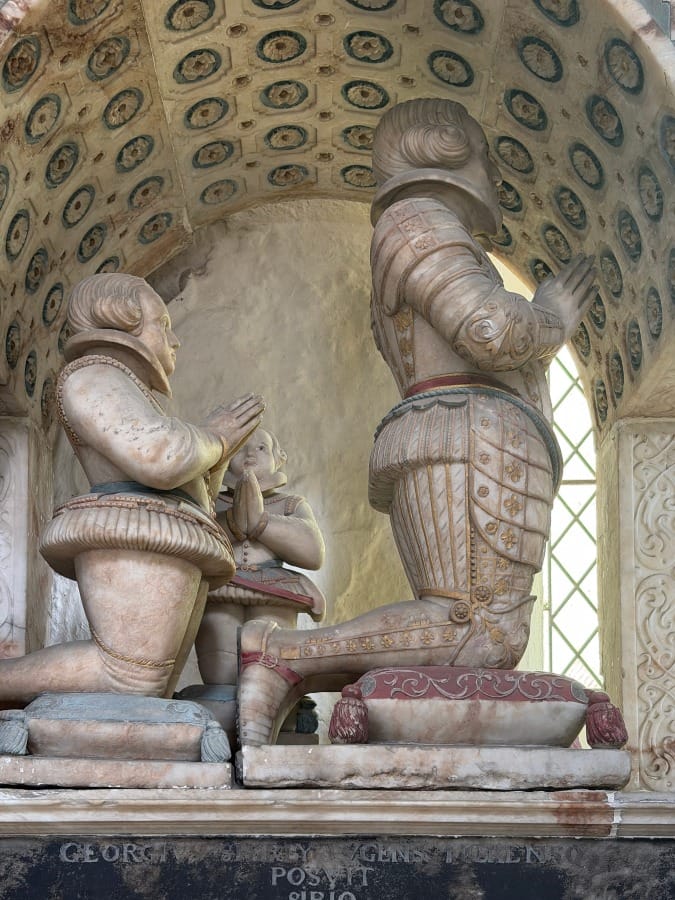
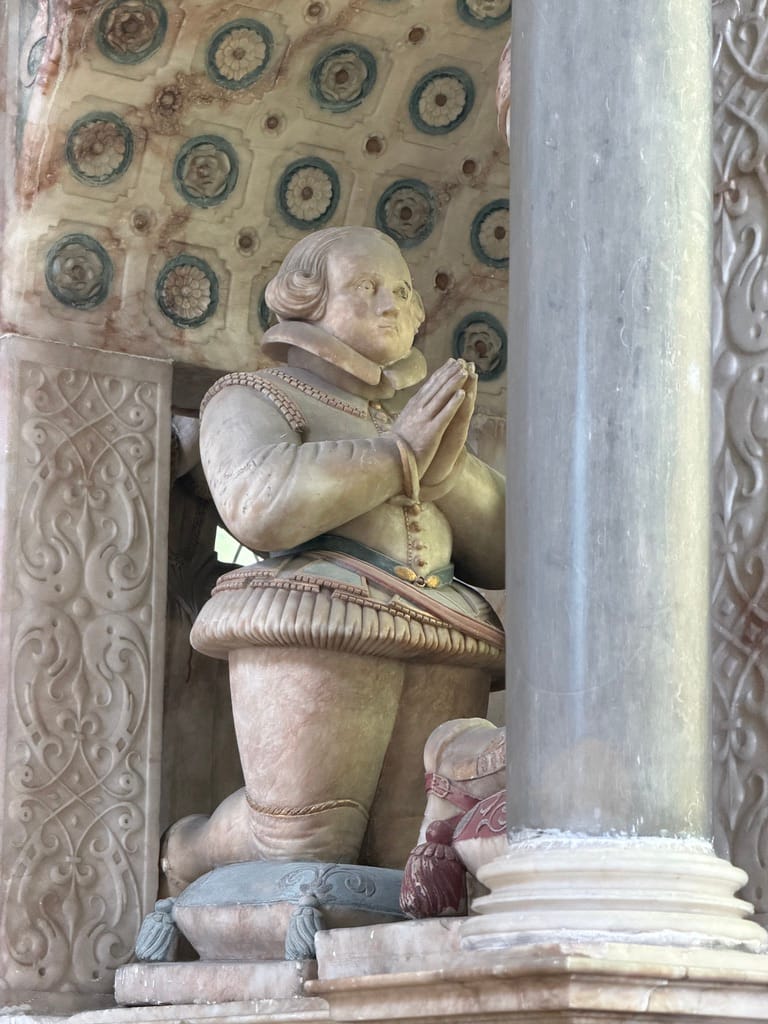
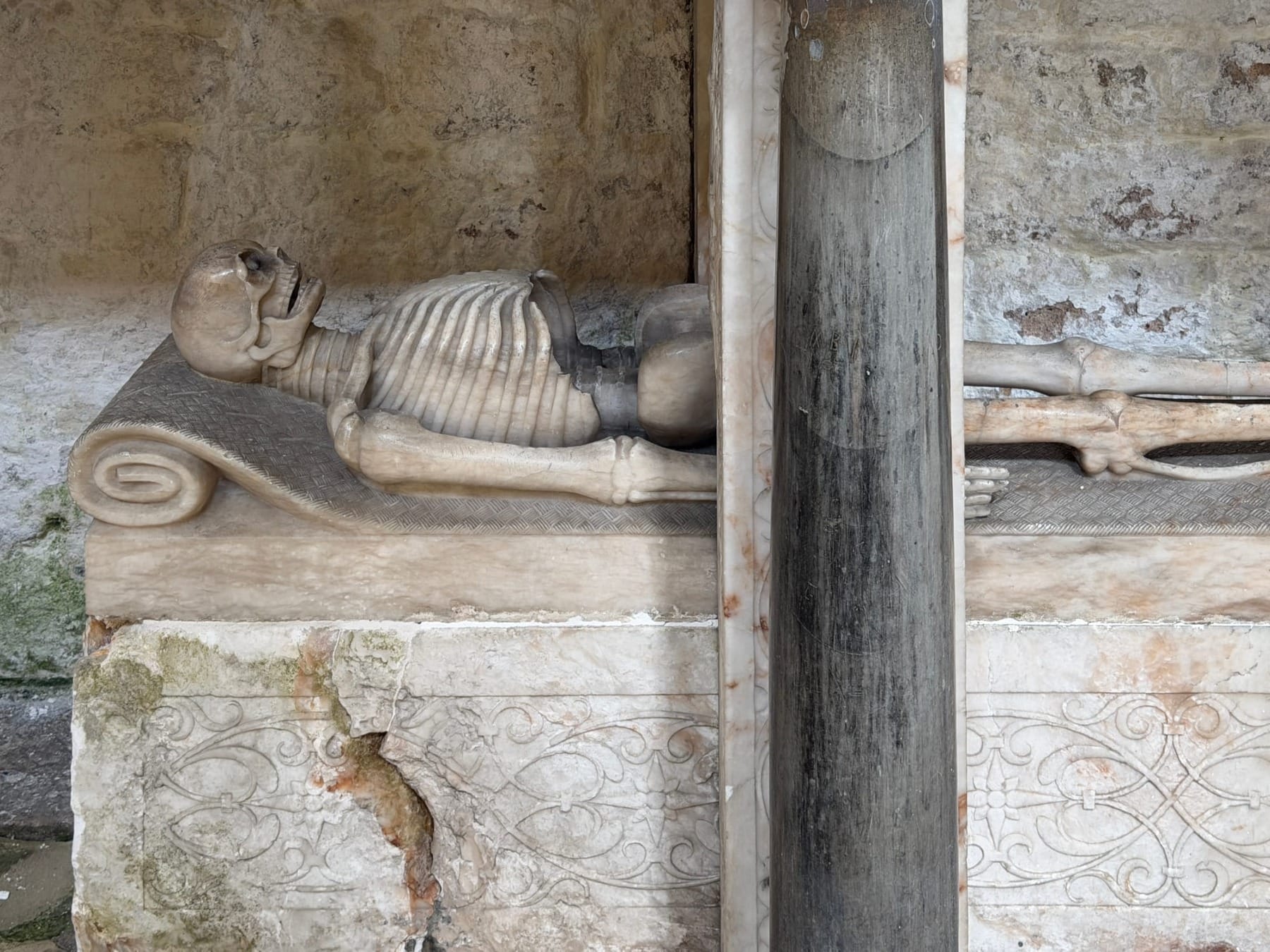
After acquiring Breedon Priory following the Dissolution, the Shirley family left a lasting mark on the church. Their richly carved Jacobean pew, alabaster monuments and cadaver tomb transformed the north aisle into a private family chapel and remain important examples of late Tudor and early Stuart funerary art.
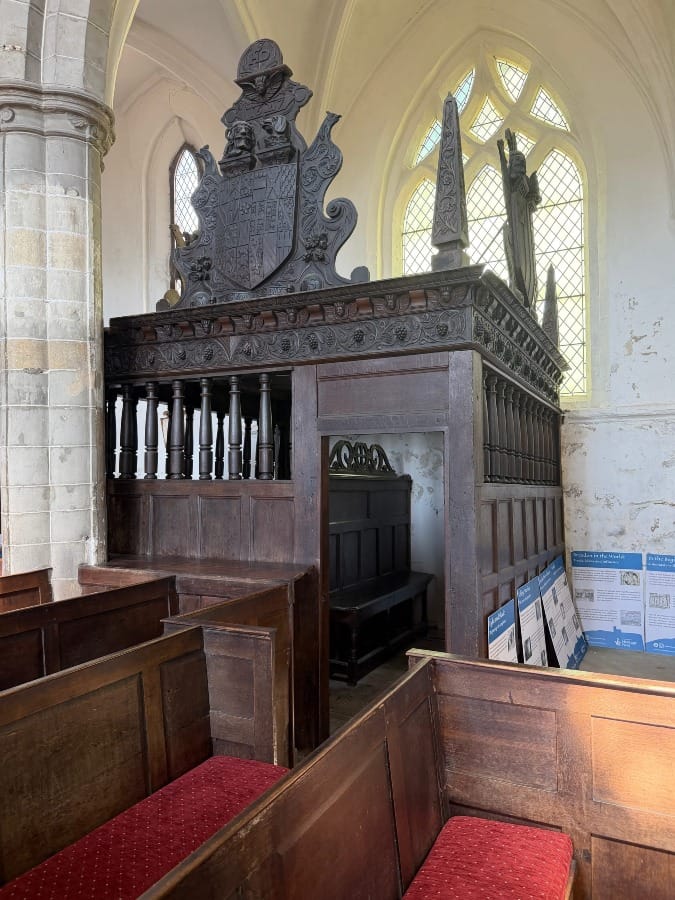
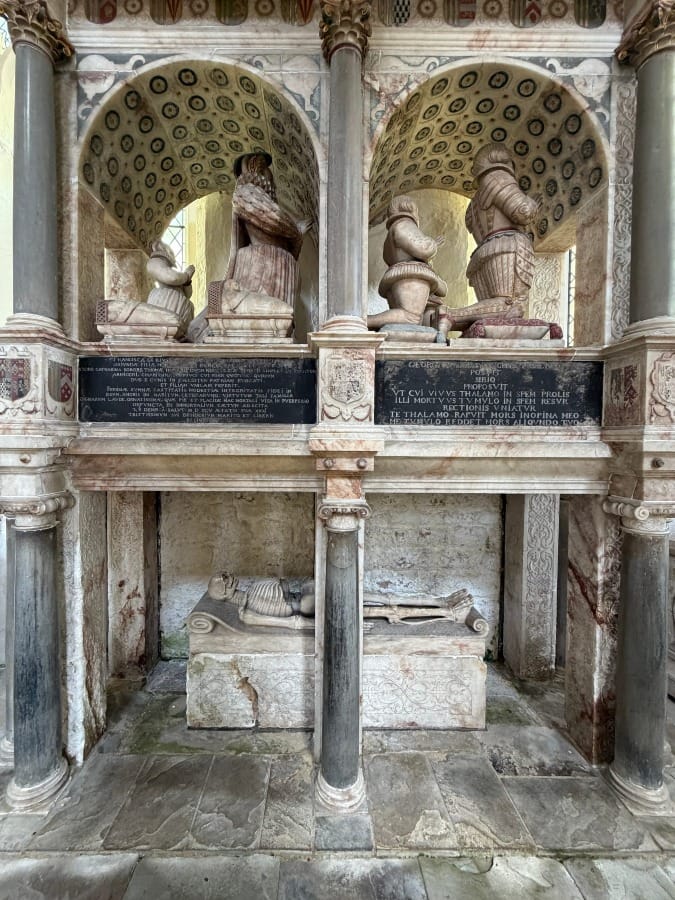
In the north aisle is a large wall monument to George and Frances Shirley of 1598 with kneeling effigies above and a cadaver below.
 Local Authority Westminster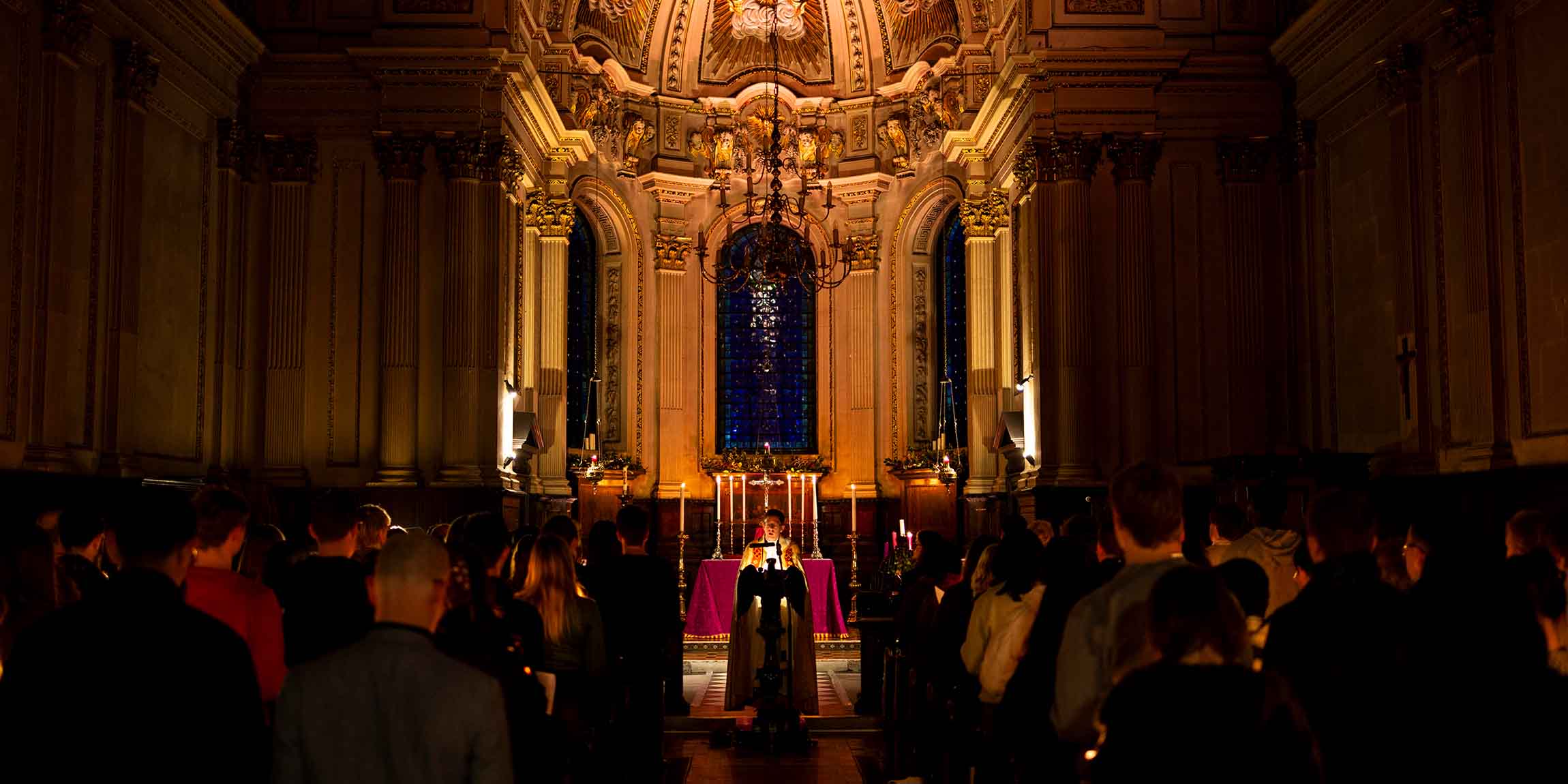


 Churches Conservation Trust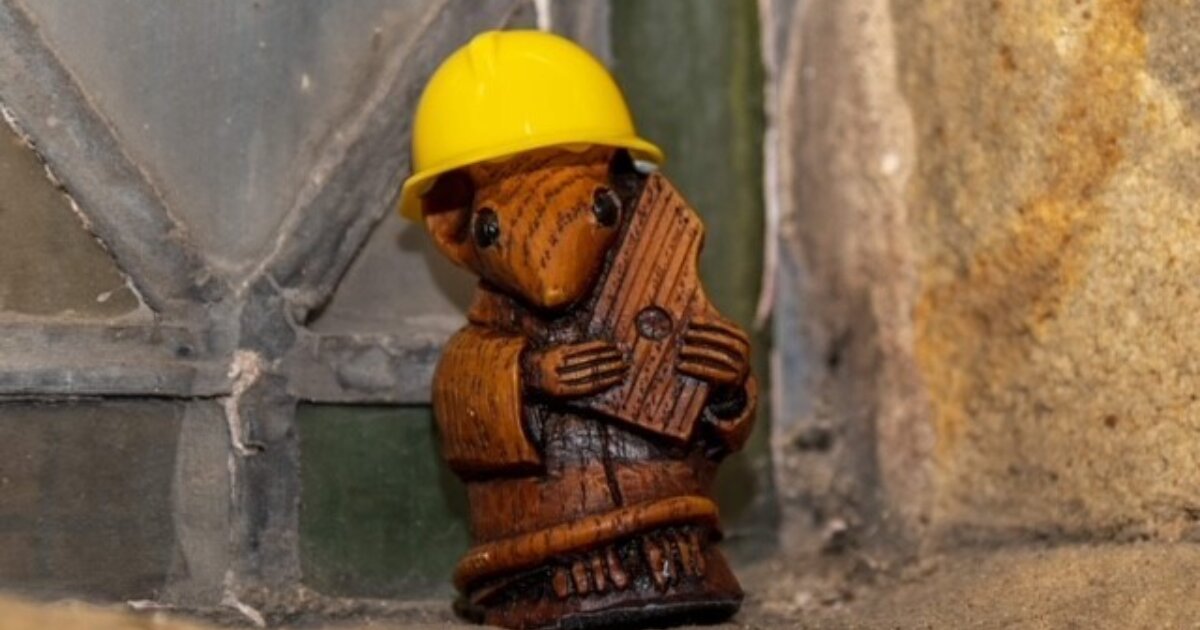
 Catherine Slessor

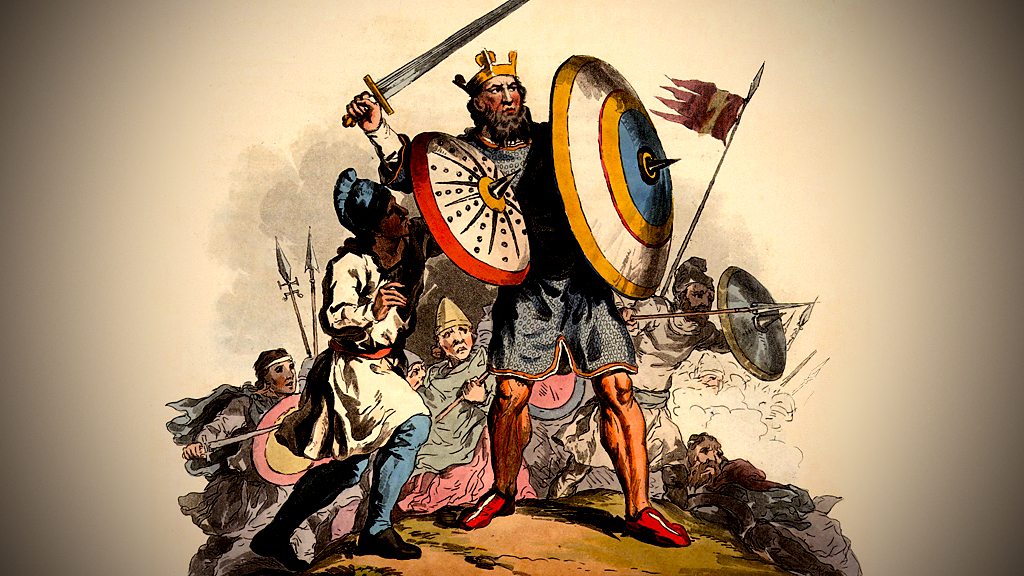
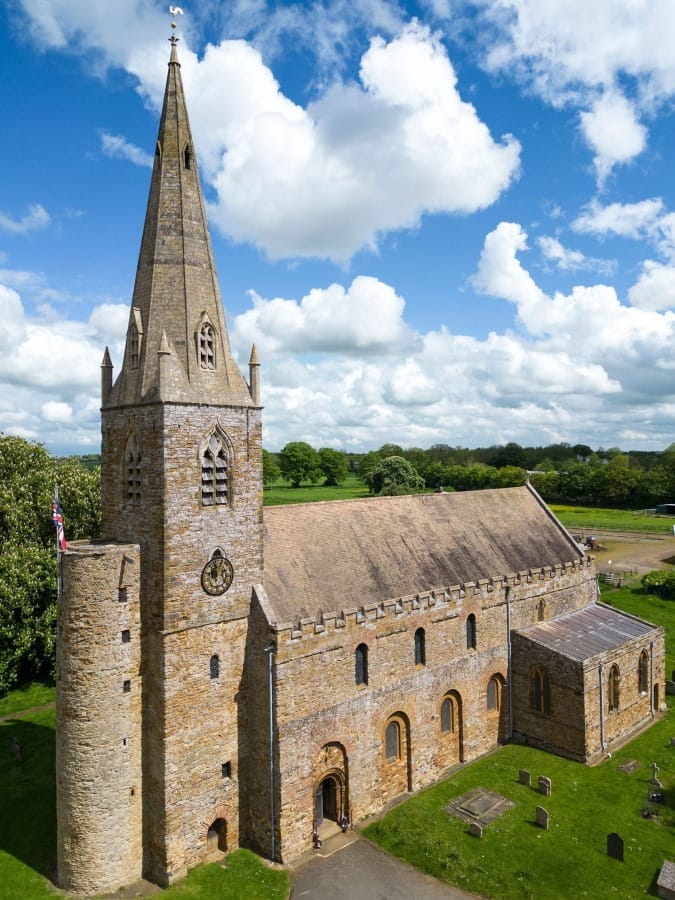
Brixworth
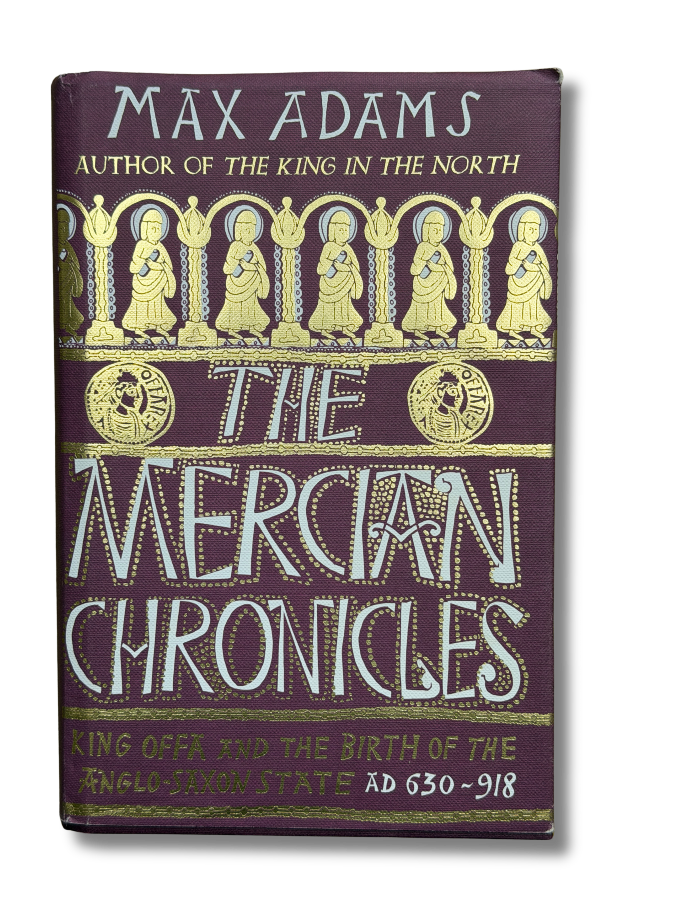
I also choose to nullify the notion that this place might have been the far reaching epicentre of the pomp and glory of Mercian kings - a building to show that they were equal to that of Rome.
Read on:
 Andy Marshall
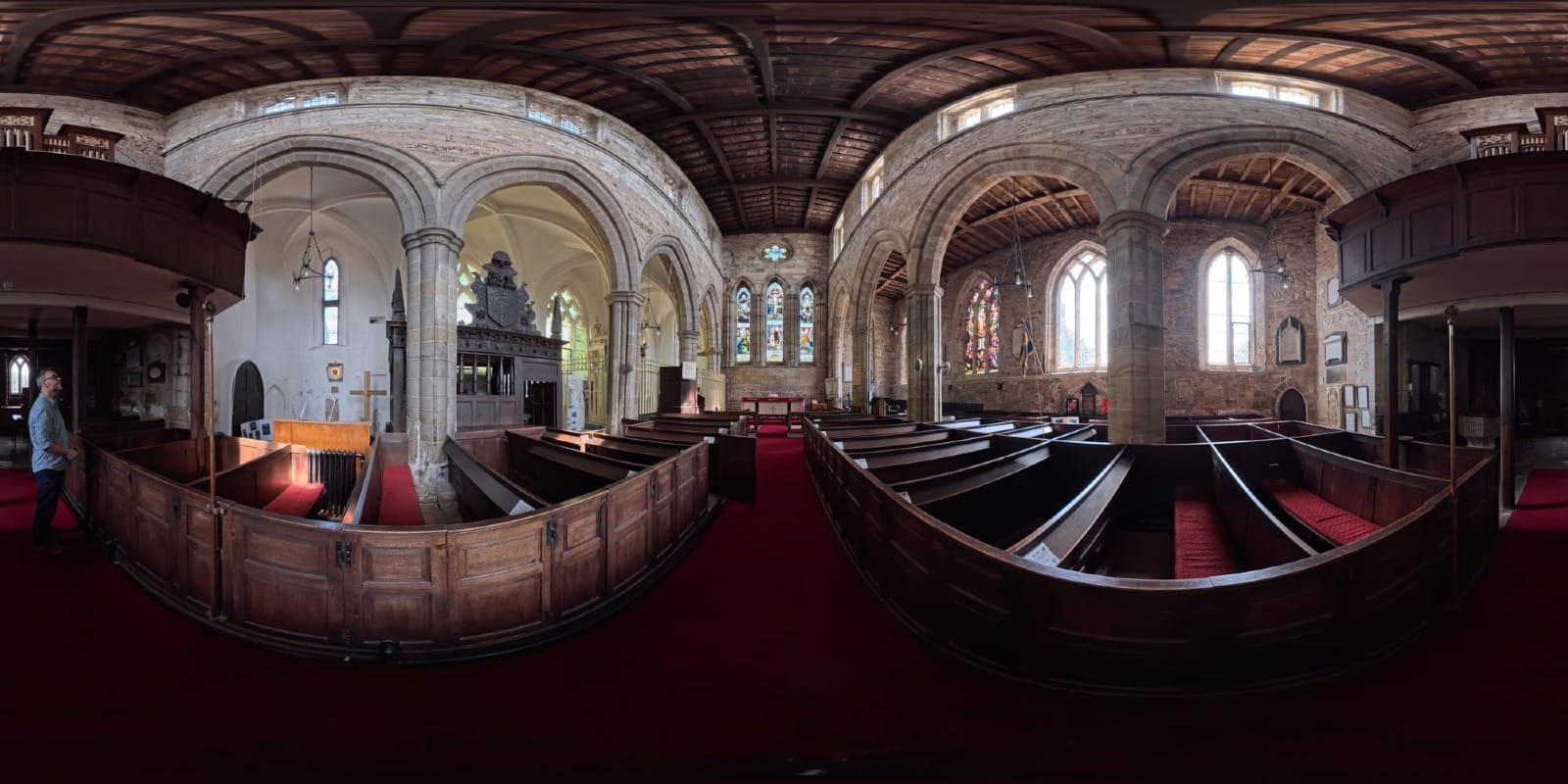
For Members - The Priory Church of Breedon on the Hill in glorious VR
Viewable on any device
Click to View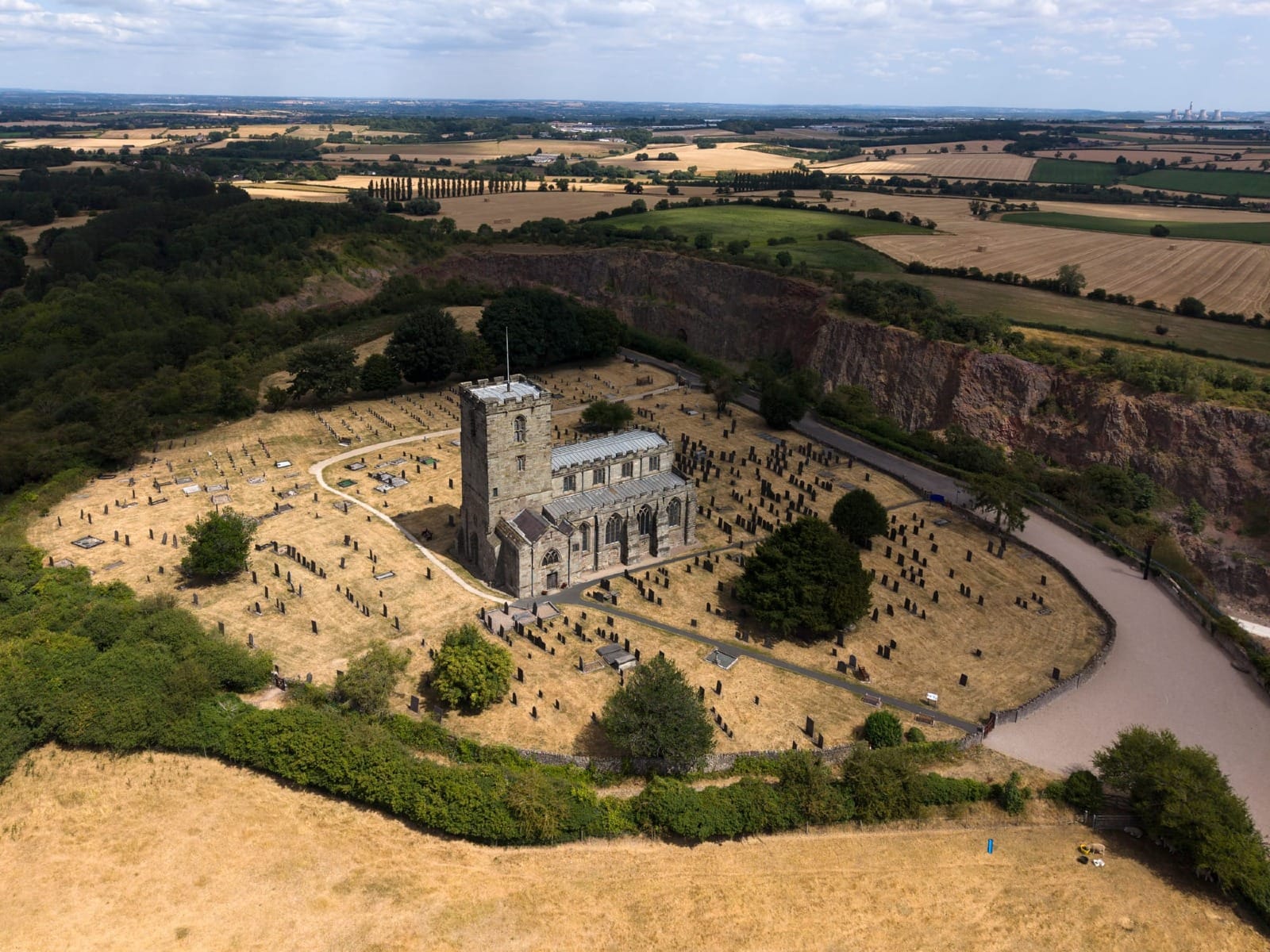
For Members - aerial video showing the Priory Church of Breedon on the Hill
The church in context within a prehistoric landscape
Click to ViewNew for Members: a better way to navigate your membership benefits - The Secret Door:
 Andy Marshall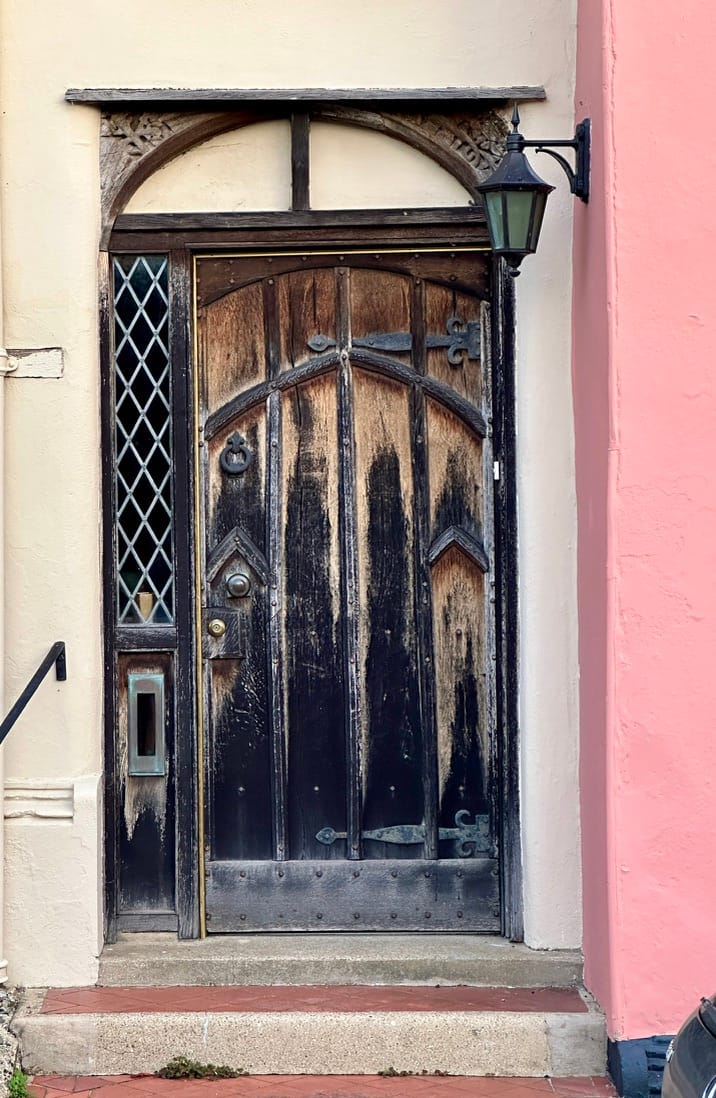
Breedon on the Hill was a Genius Loci Digest Destination. Help shape the next journey
A single membership can become part of the next journey, the next story and the next free photo shoot. Thank You.
Explore Membership Options
Kind words from a subscriber:
Andy your work is becoming wonderful, remarkable. A so-called breakdown has been milled into its constituent parts, becoming profound construction: through perception, architecture, the lens and the pen. In your Repton crypt essay a deep description of our social anxiety - and our reason to be....
Recent Digest Sponsors:
 Andy Marshall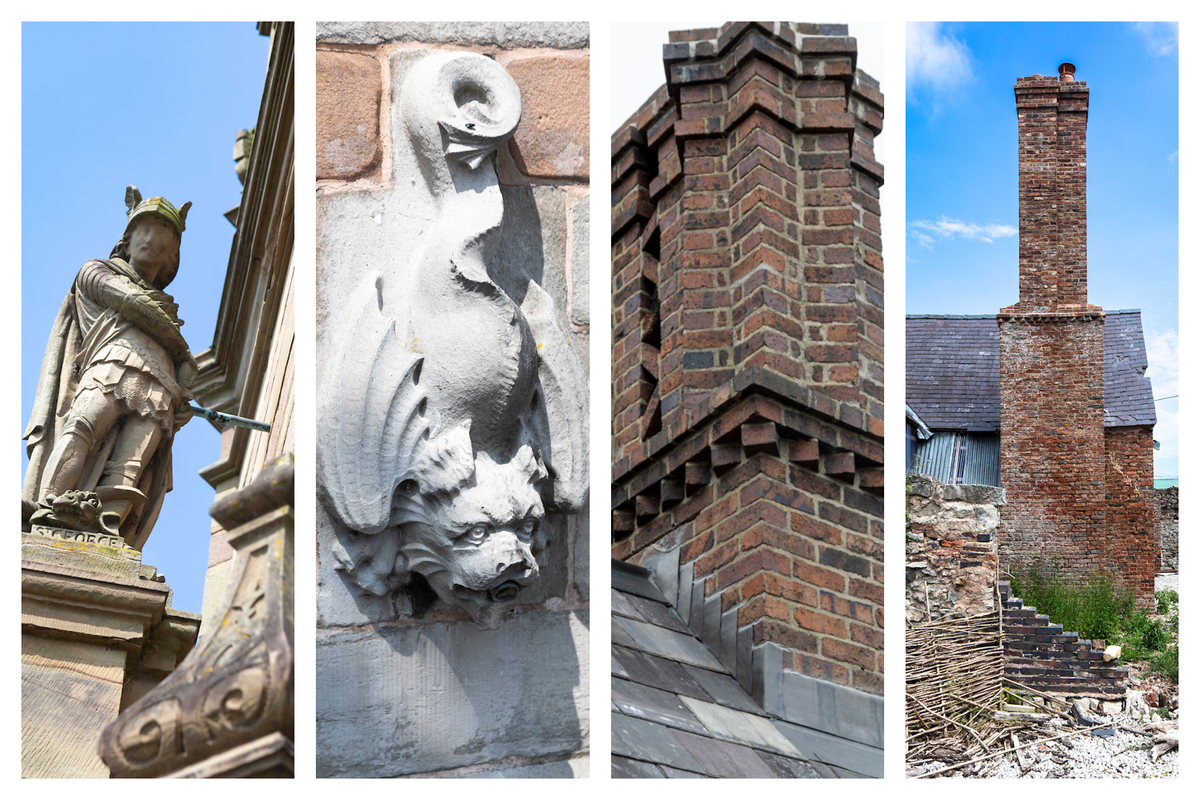

A better way to navigate the Genius Loci Digest for all members and subscribers:
I've created a themed and indexed page to all of the places and themes in the Genius Loci Digest.
Explore by Place
Travel through the archive by county, city, village, landscape or individual building. Search for somewhere specific, or simply follow a name that catches your attention. 👉
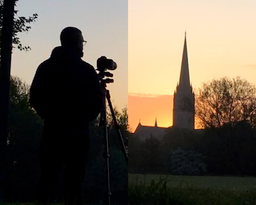
 Andy Marshall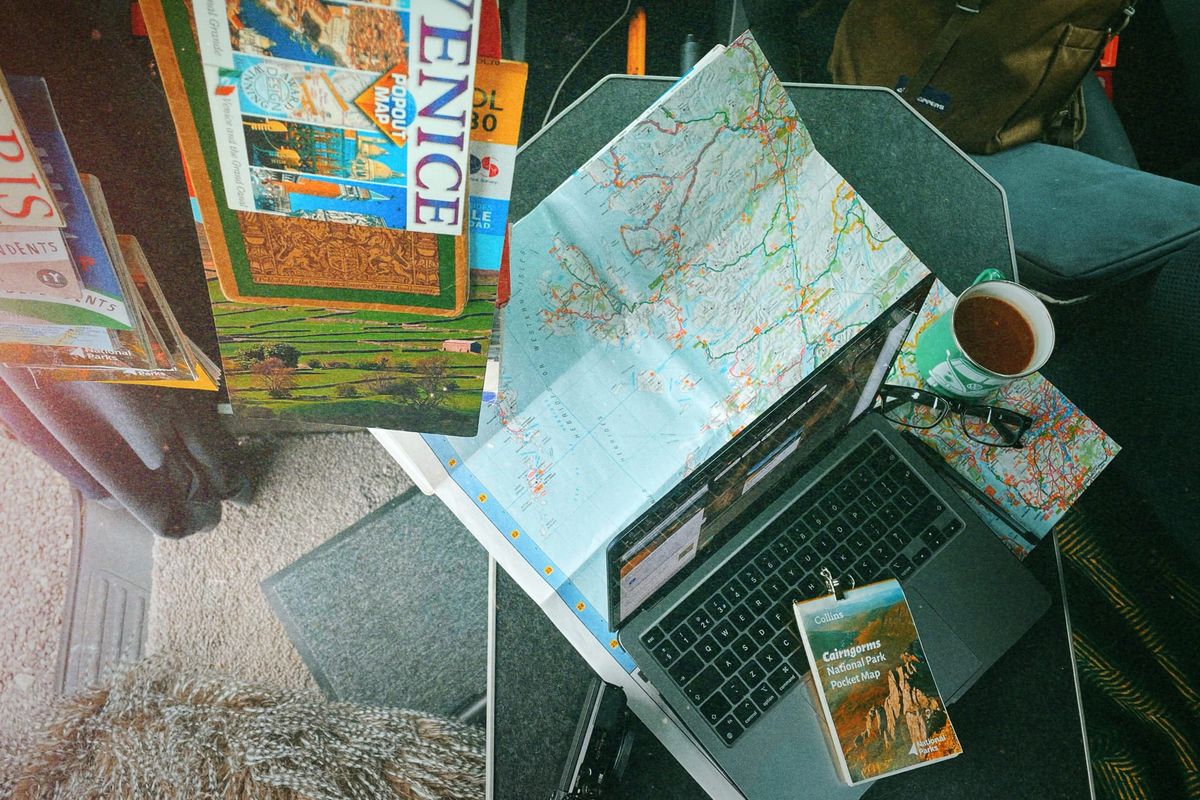
Explore by Theme
Follow the ideas that run through the Digest—from architecture, art and craft to nature, wellbeing and ways of seeing. Search for a subject, or simply choose a thread that catches your attention. 👉
 Andy Marshall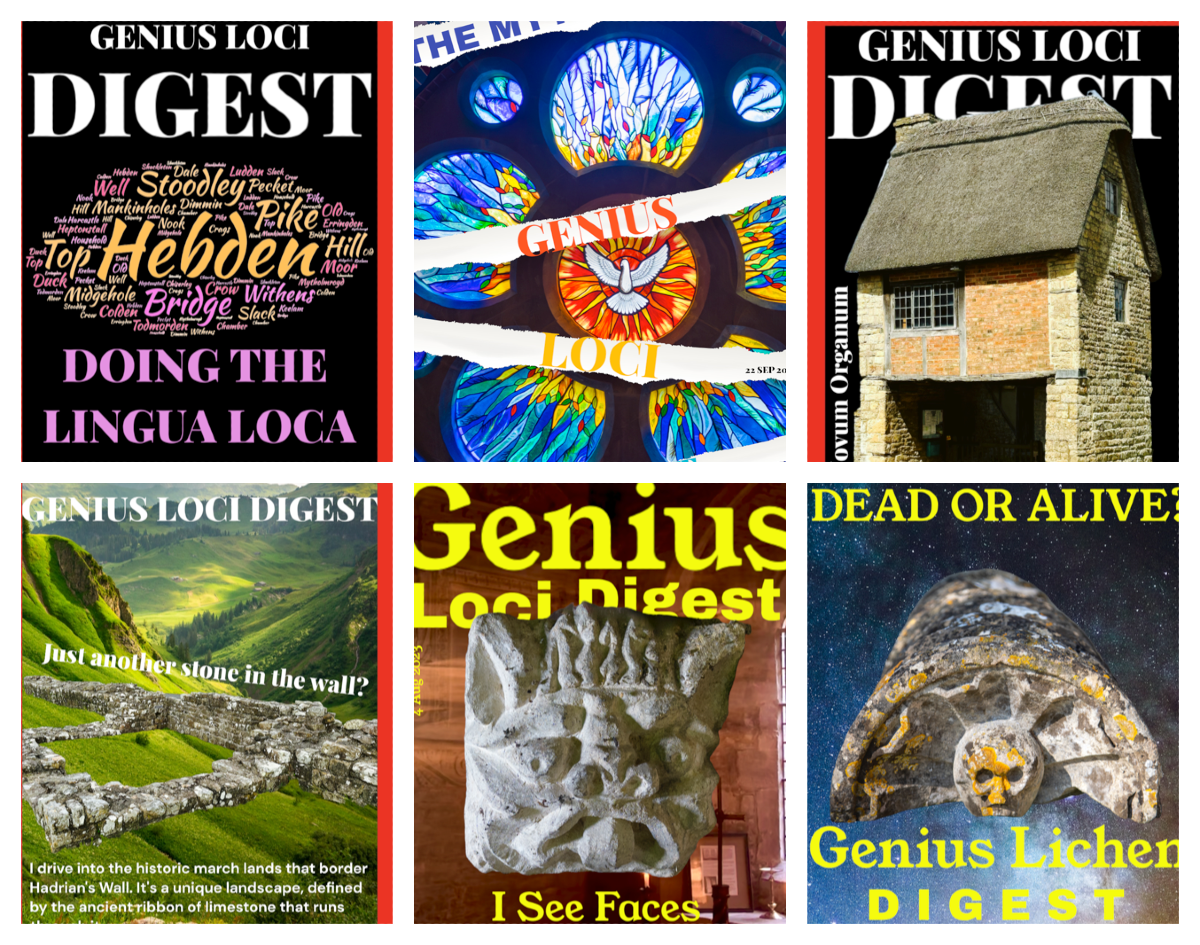
Thank You!
Photographs and words by Andy Marshall (unless otherwise stated). Most photographs are taken with iPhone 17 Pro and DJI Mini 5 Pro.
🔗 Connect with me on: Bluesky / Instagram / Facebook / X / Tumblr / Flickr / Vimeo / Pixelfed / Pinterest / Flipboard/ Fediverse: @fotofacade@digest.andymarshall.co

Member discussion