Welcome!
⚡️ View the latest digest and the full archive here.
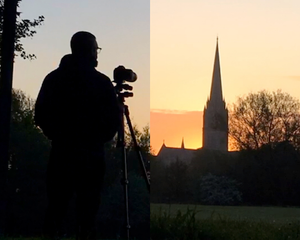
Member Powered Photography helps me shoot historic locations and traditional skills for free. Check out the status of the next free photo shoot here:
🔗 Connect with me on: Bluesky / Instagram / Facebook / X / Tumblr / Flickr / Vimeo / Pixelfed / Pinterest / Flipboard/ Fediverse: @fotofacade@digest.andymarshall.co
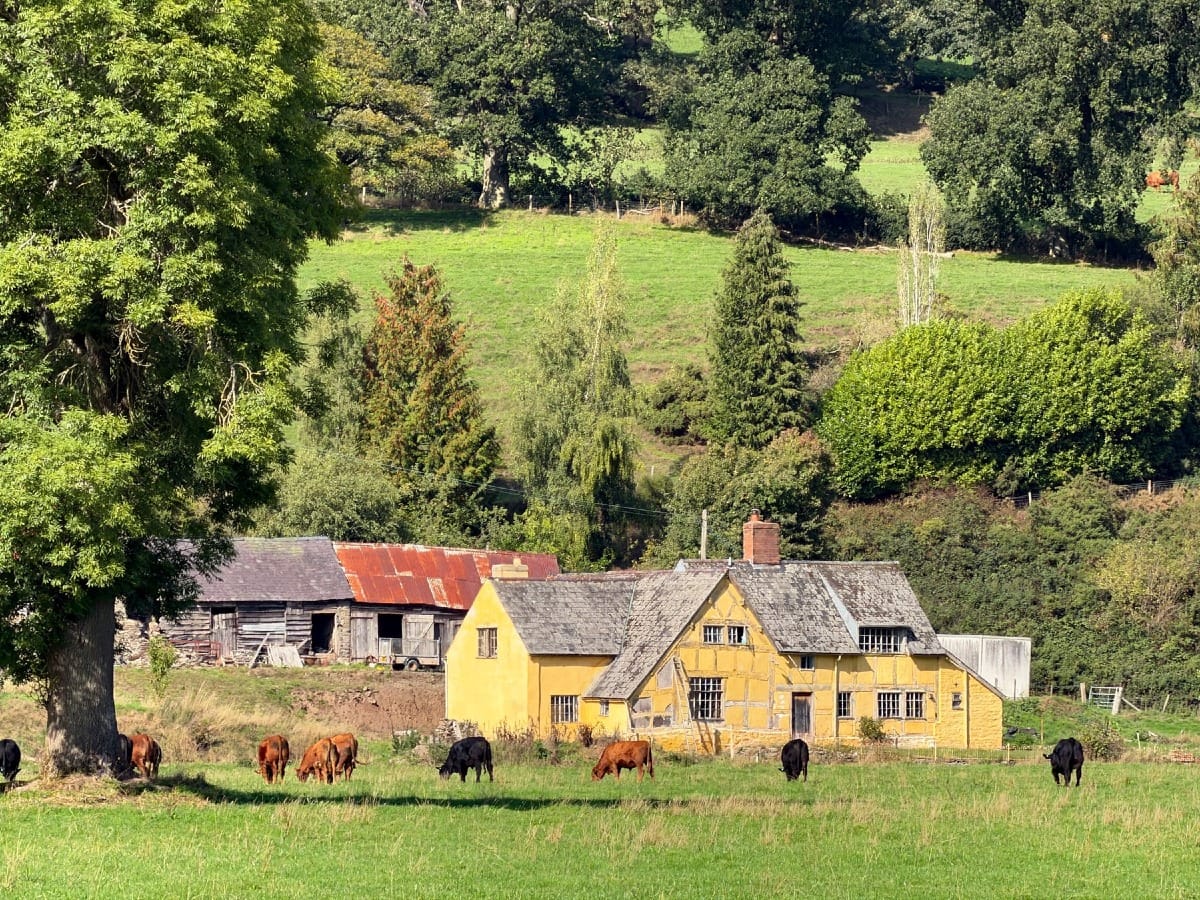
Coming Next Friday - Reading the Border Through its Buildings
The architecture of a place where England and Wales have been meeting, overlapping and influencing one another for centuries.
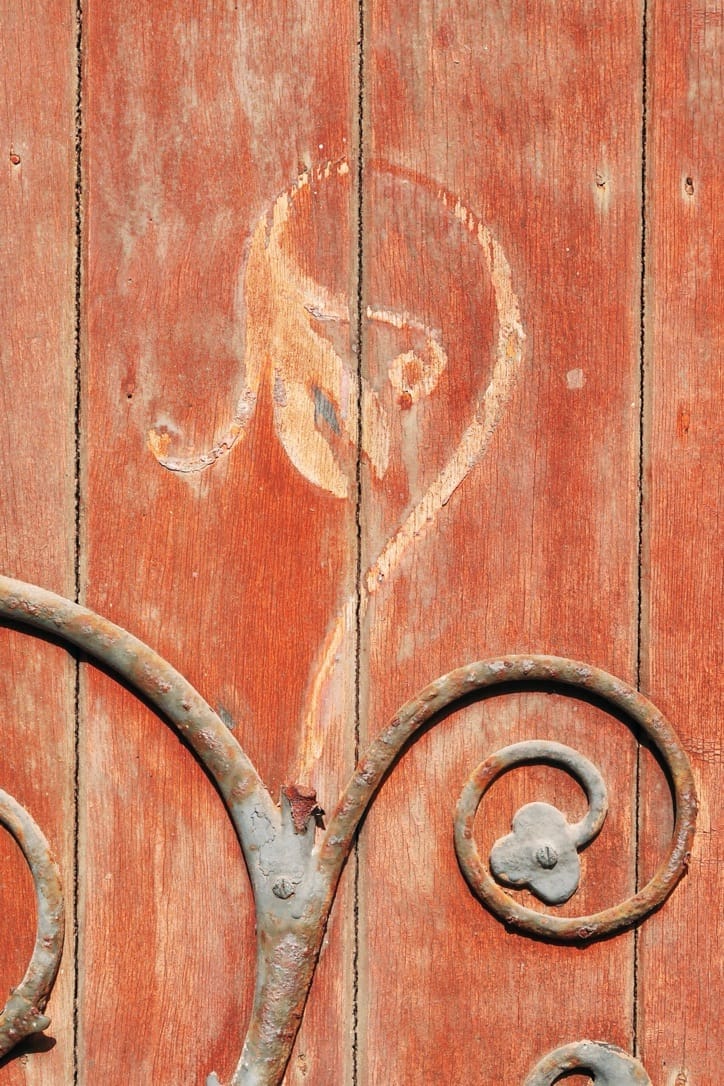
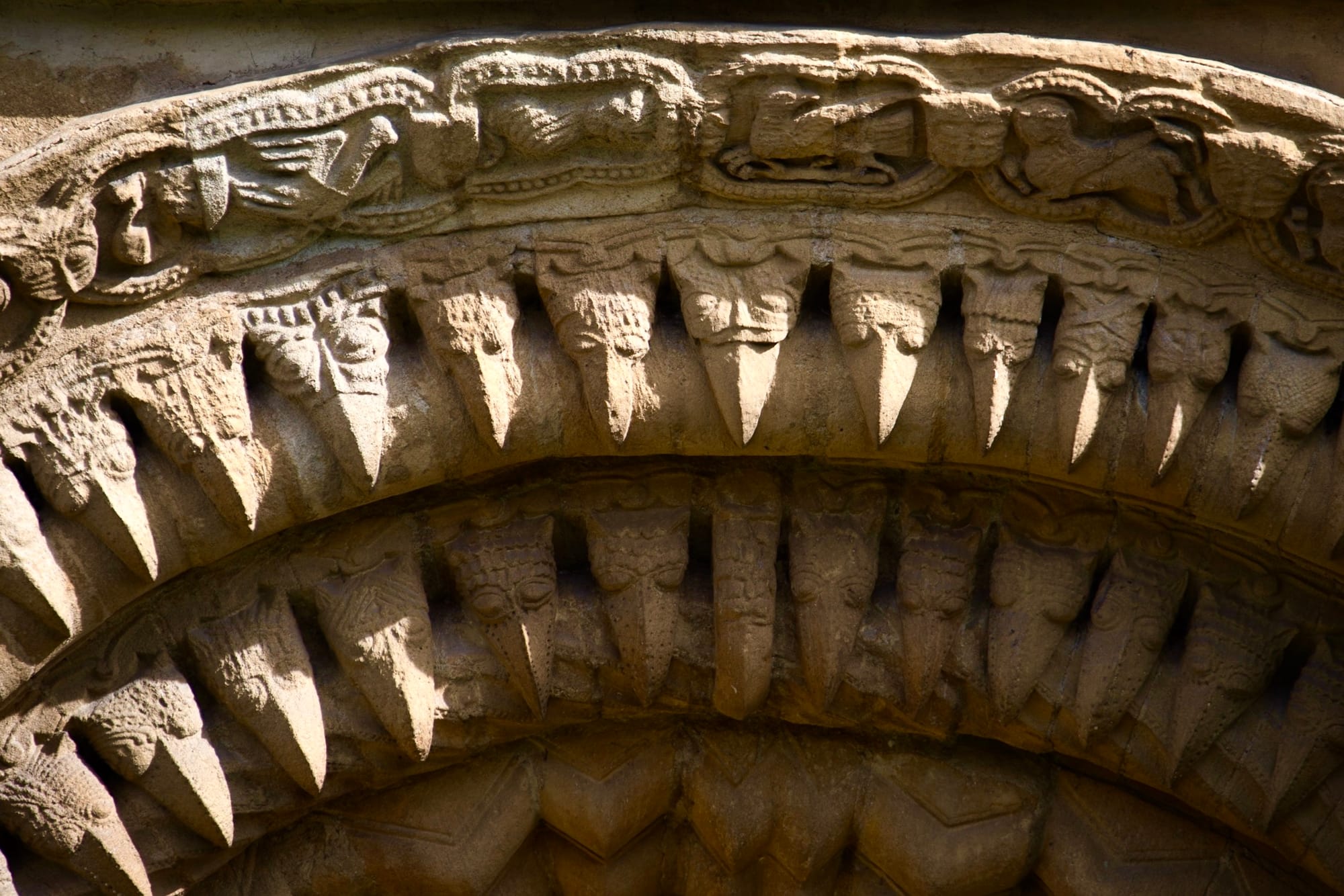
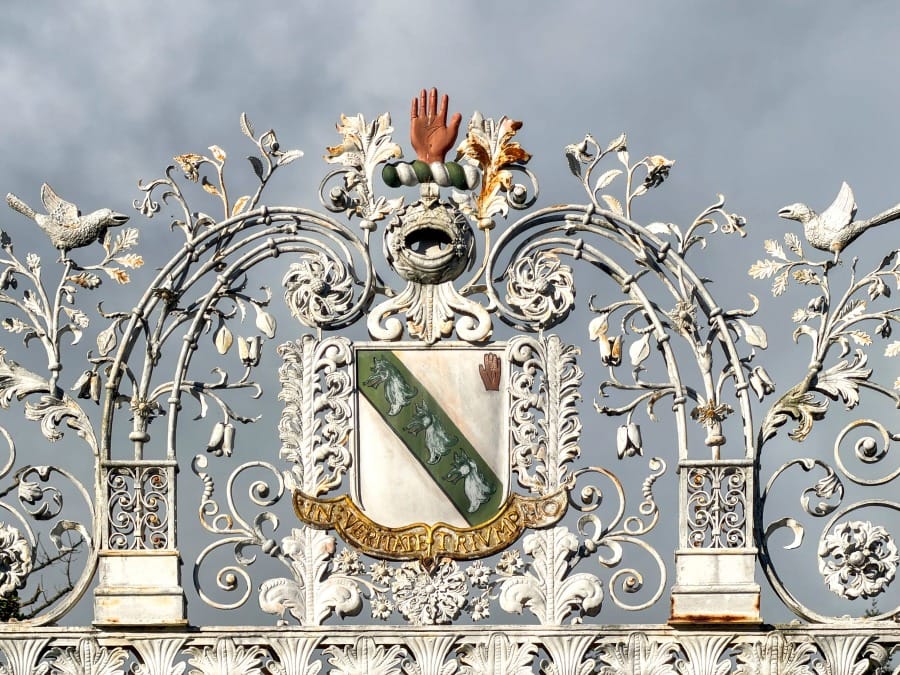
A real treasure at St. Mary's Priory, Monmouth: the missing ironwork has left its own delicate tracery: curlicue forms, faded and nuanced, yet seemingly bursting forth. You might return in a month or so and half expect another frond to have grown.
"The landscapes I have in mind are not part of the unseen world in a psychic sense, nor are they part of the Unconscious. They belong to the world that lies visibly about us. They are unseen merely because they are not perceived; only in that way can they be regarded as invisible."
Paul Nash
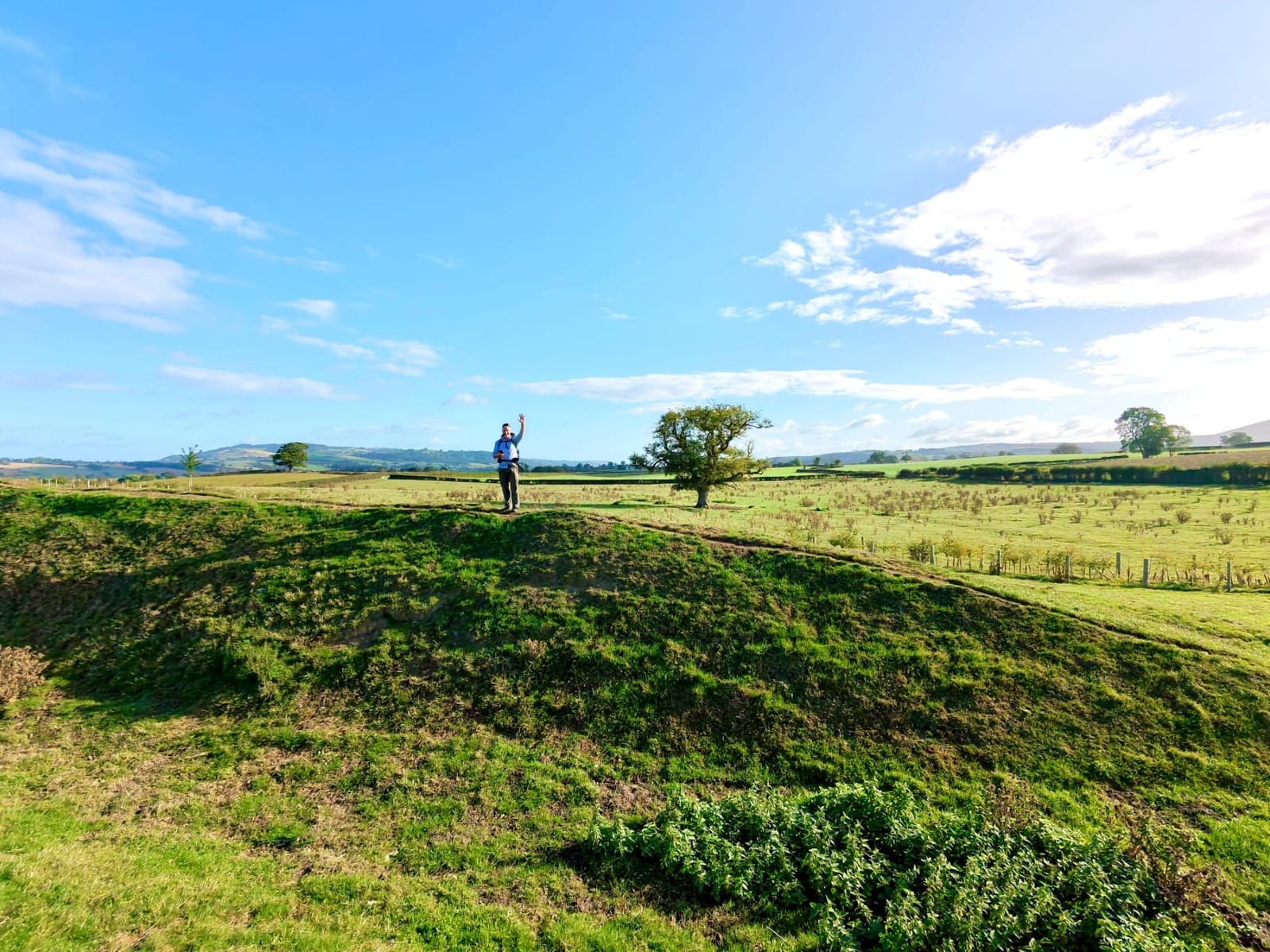
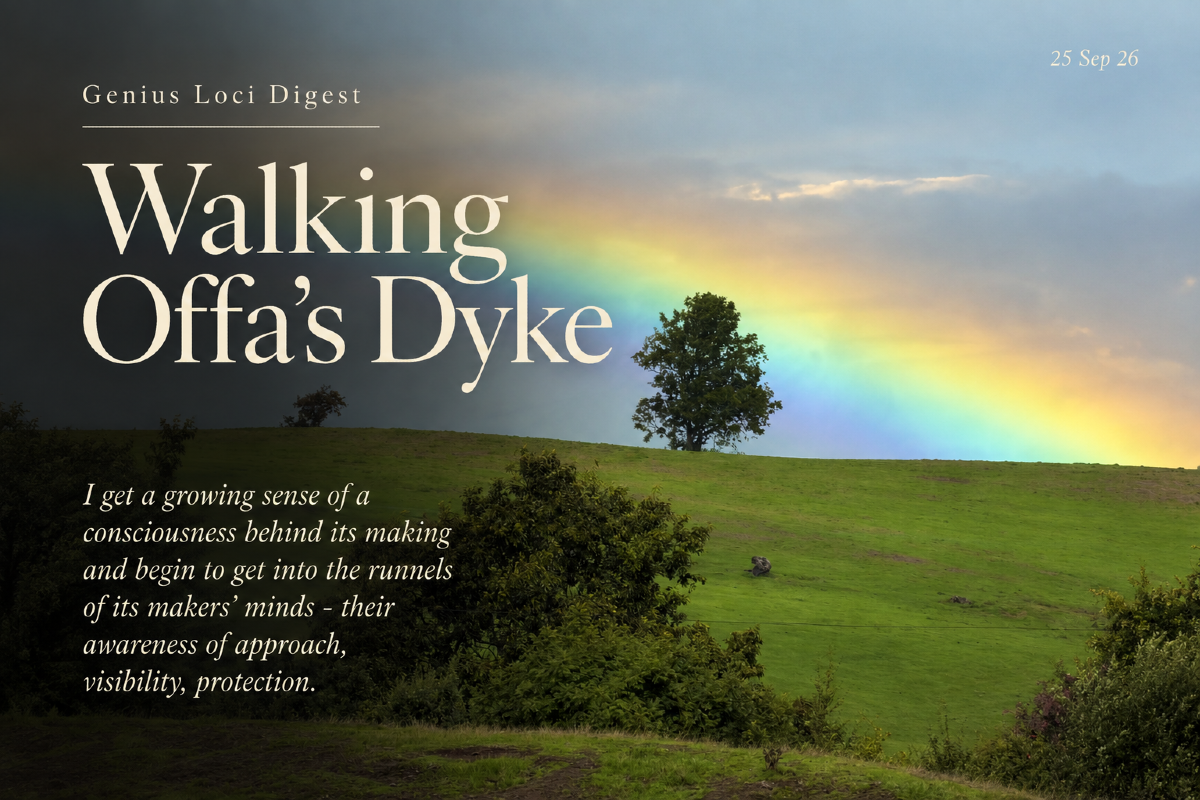
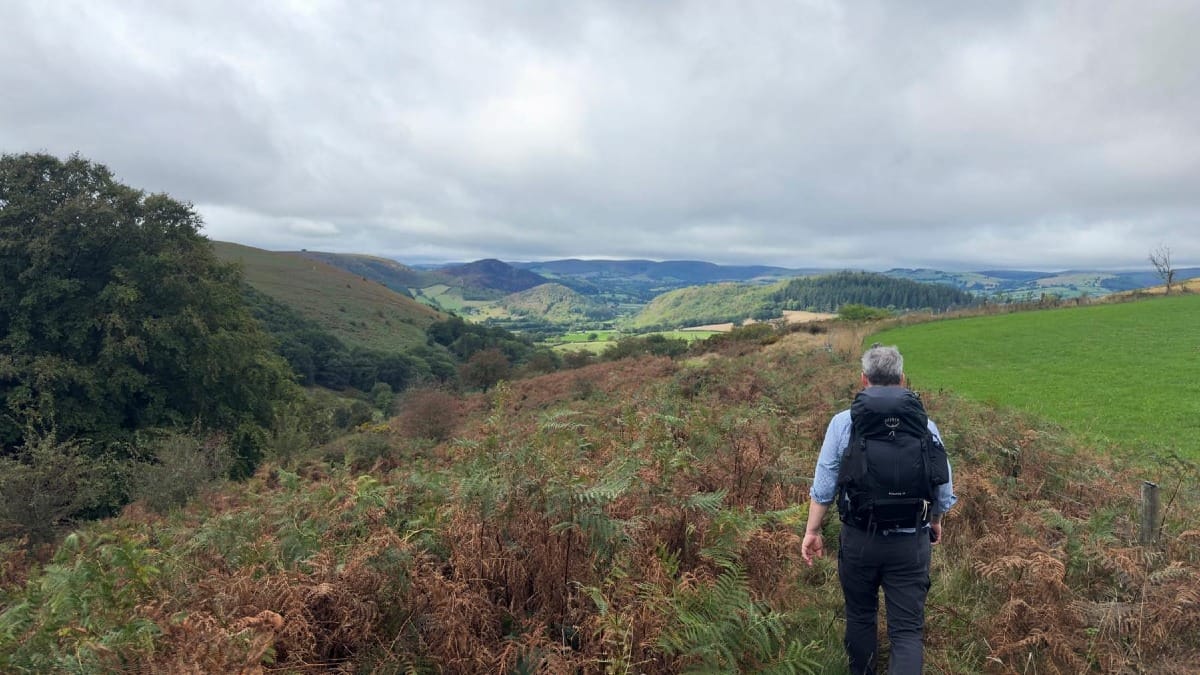
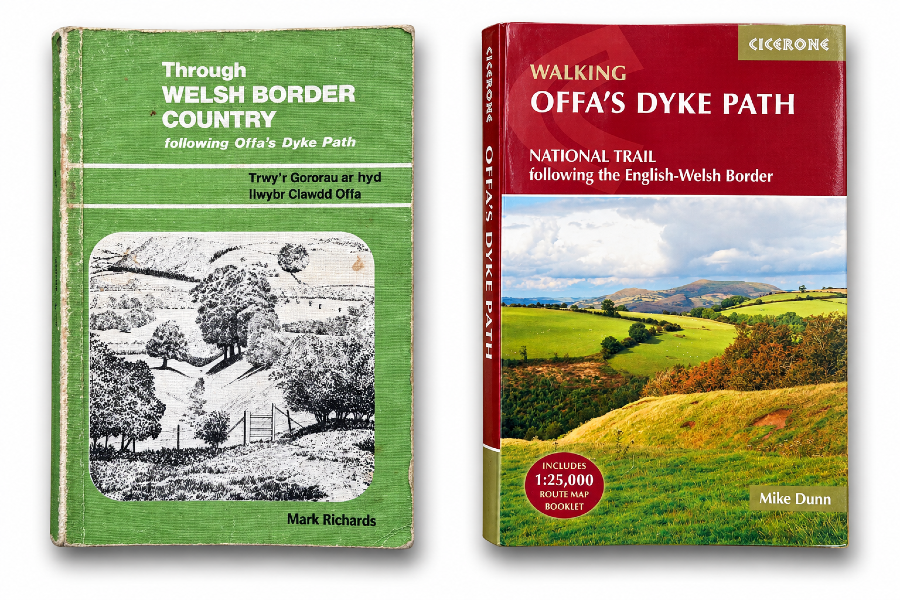
I’m walking a remarkable stretch of Offa’s Dyke Path from Hay-on-Wye to Llangollen - between ninety and a hundred miles of hills, valleys, settlements and borderland.
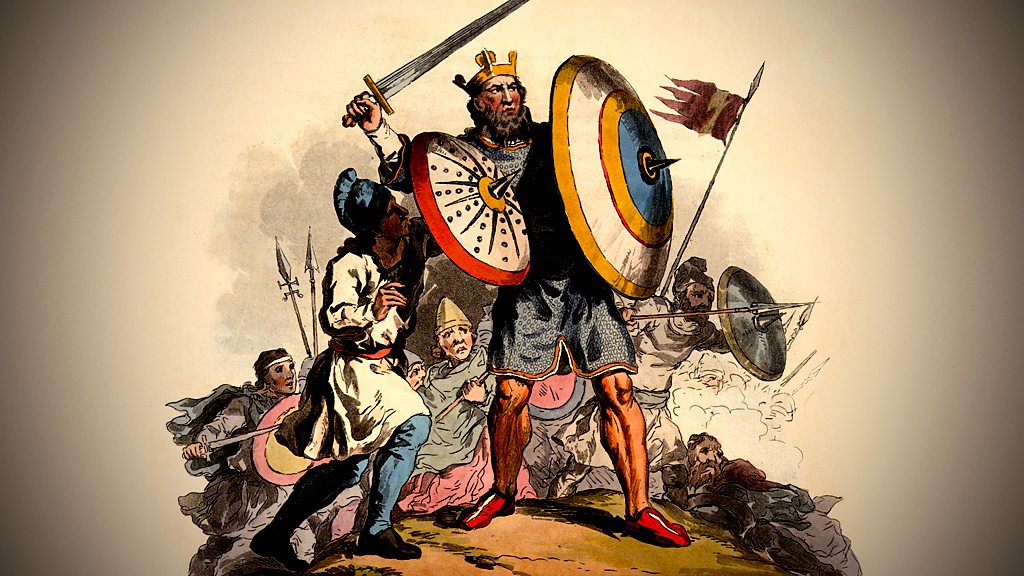
It was Asser, writing around a century after the Mercian king’s death, who attributed the great earthwork to Offa. What survives today does so in fits and starts along the Welsh border. Its purpose remains debated - part boundary, part border control - but there is also the compelling idea that its sheer scale projected Offa’s power far beyond the earthwork itself - making Mercian power visible in the landscape.
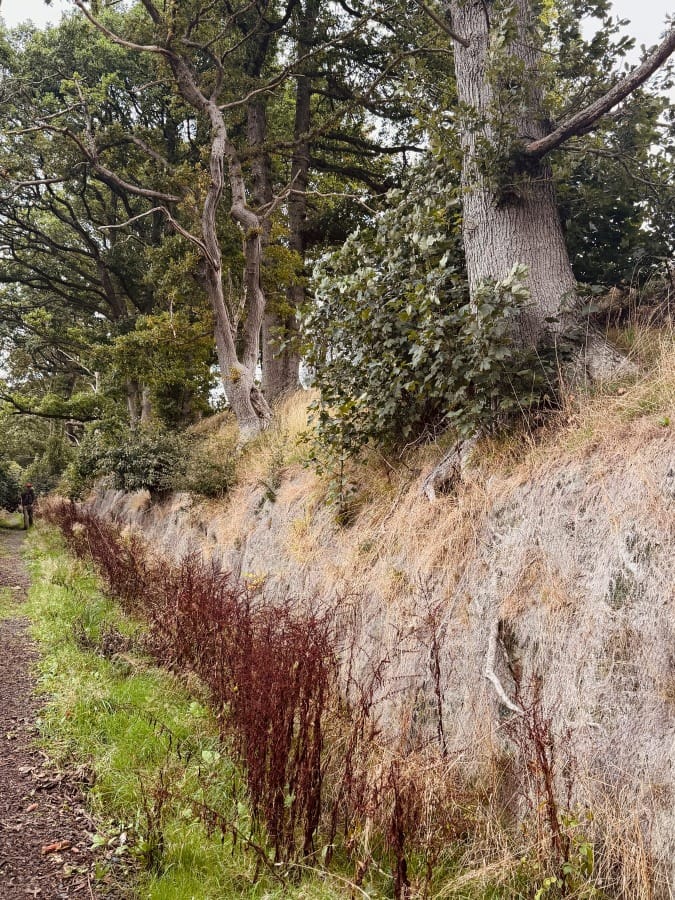
My aim, through the simple act of putting one foot in front of the other, is to try and understand what this ancient earthwork might have to say to us today.
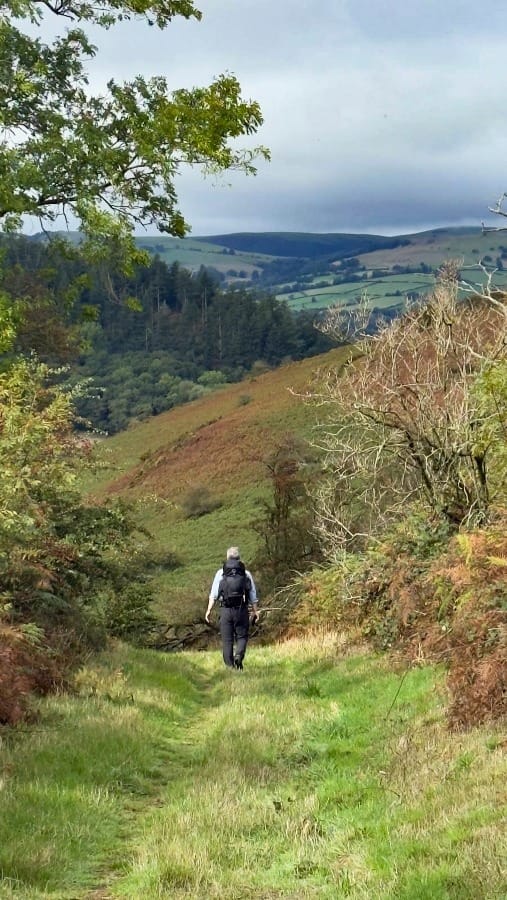
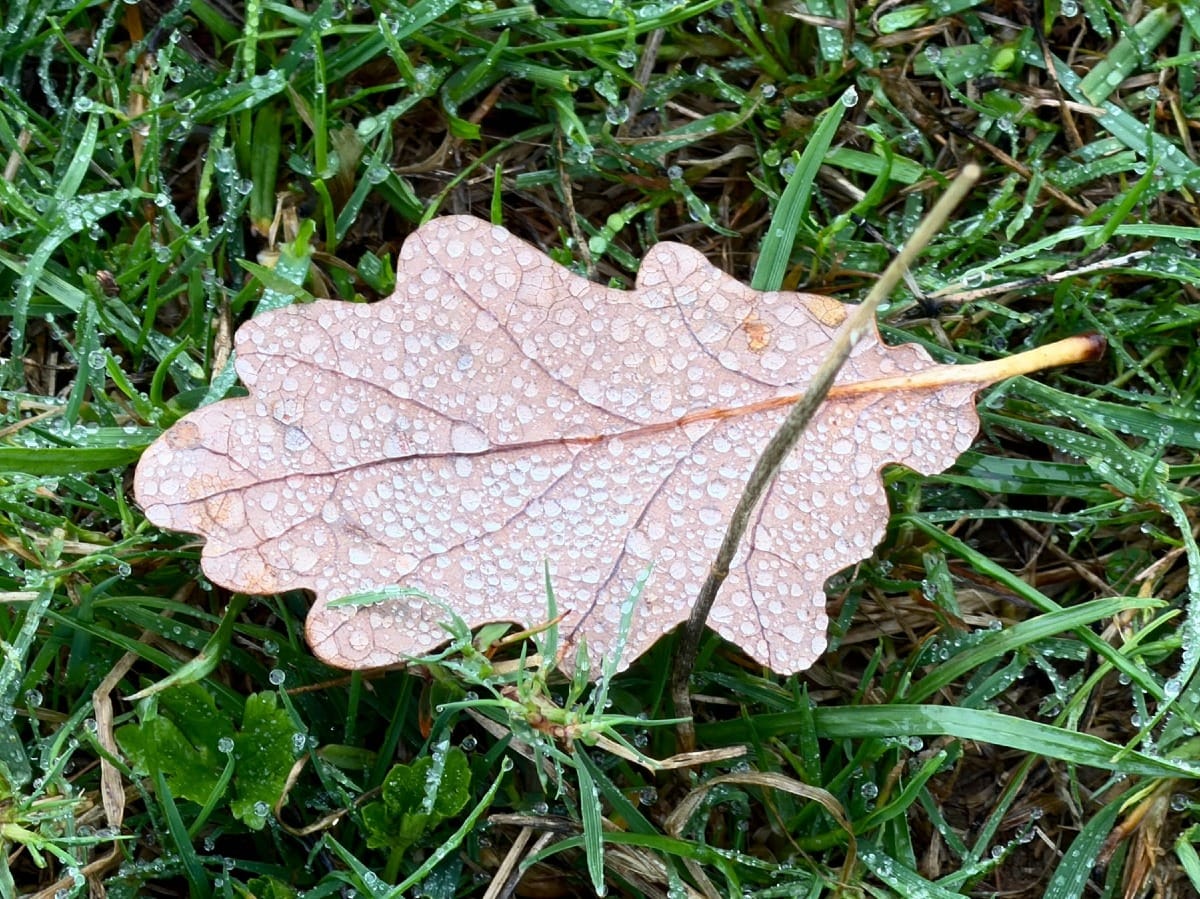
In the hollow lanes, my immersion in season and place is immediate. I pass blackberries, sloes and rosehips, chicory and the odd bony survival of cow parsley. Ferns are on the turn, as are the hares in the fields. Poplars bare the whites of their leaves in the breeze, and dragonflies dart above the nettles.
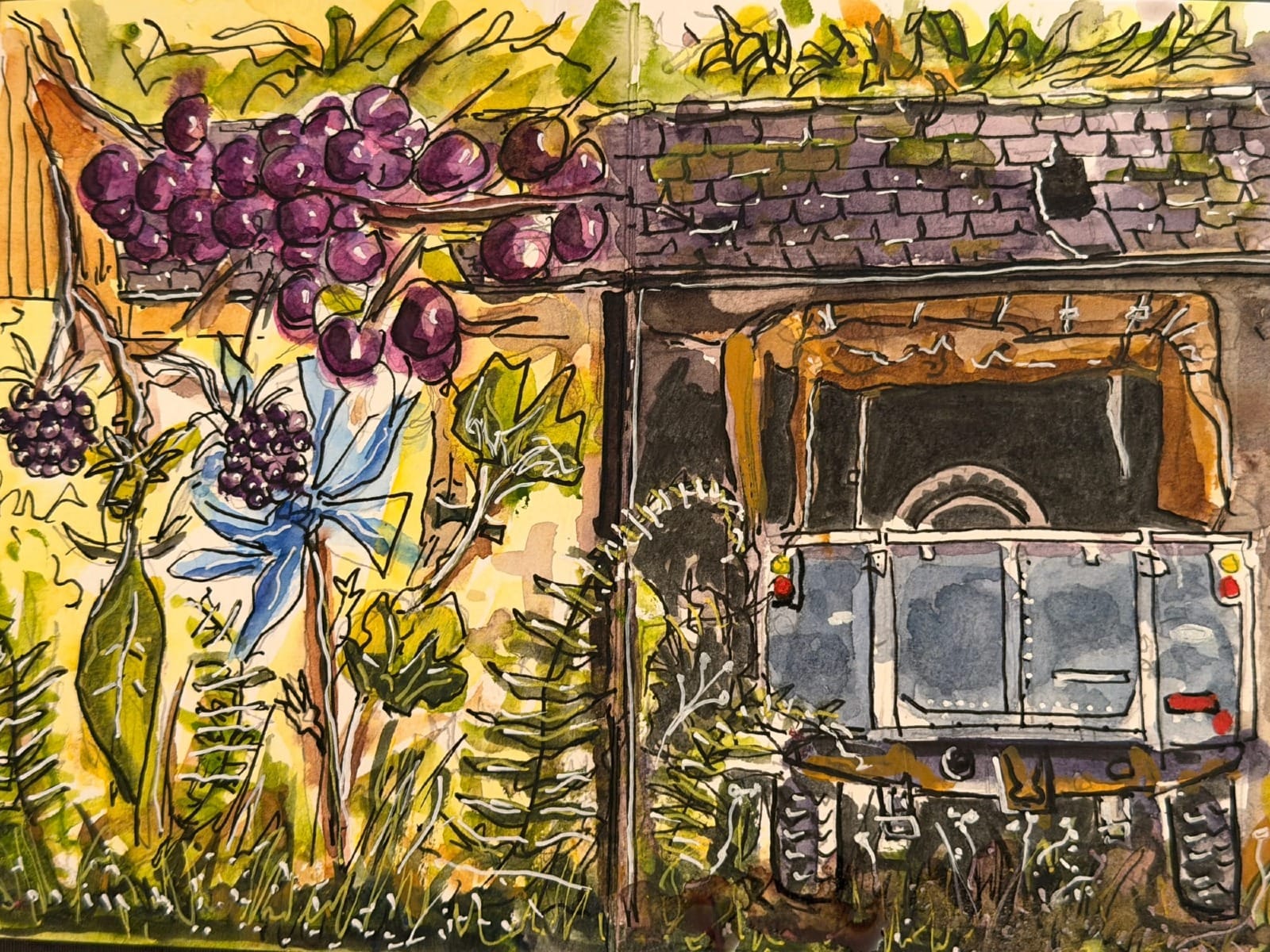
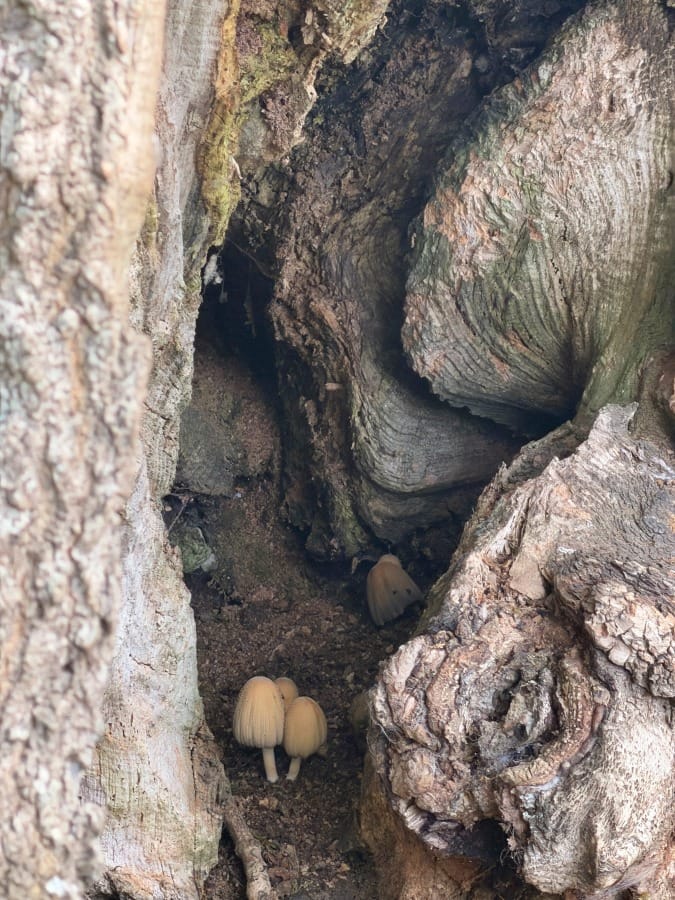
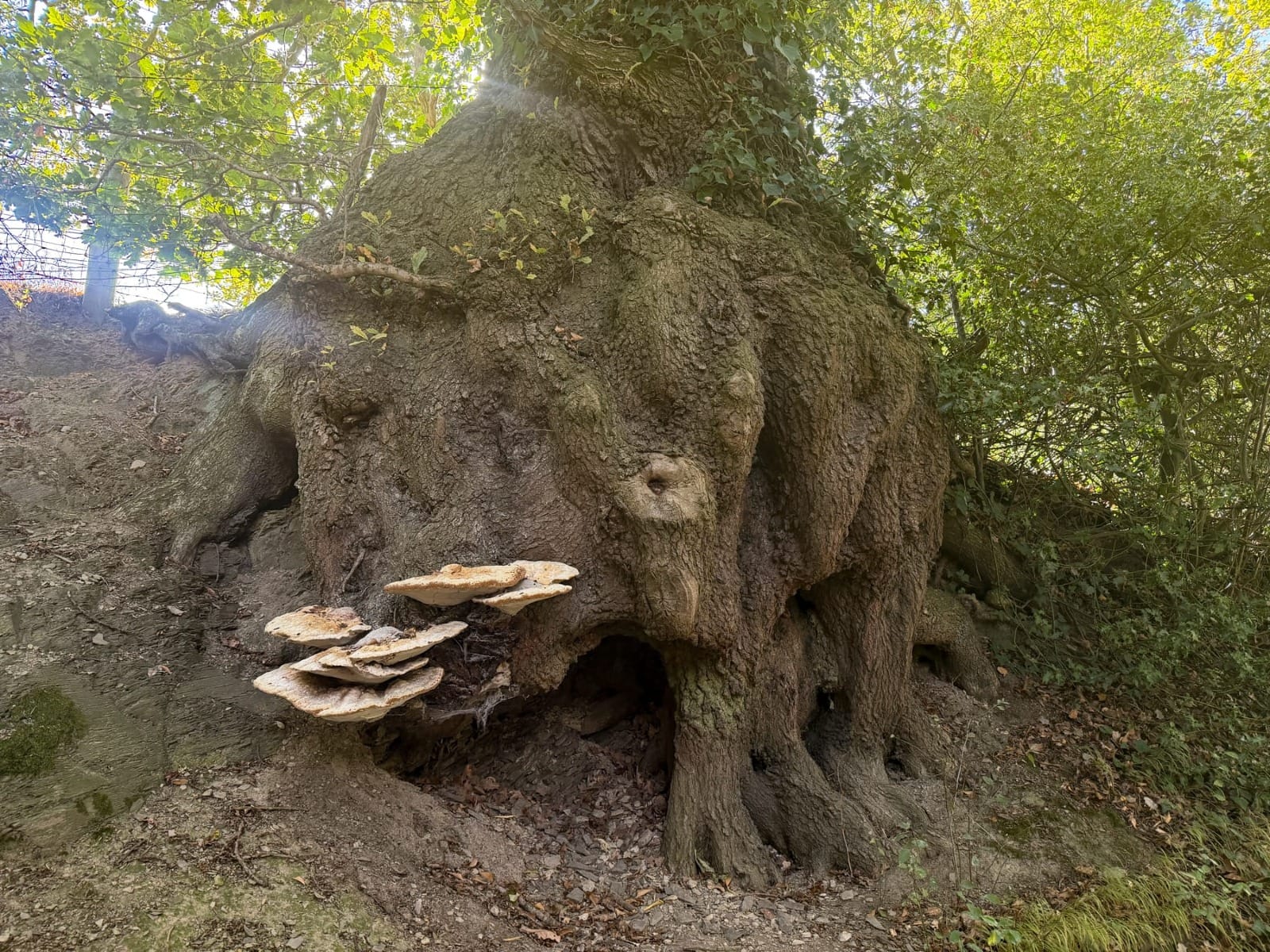
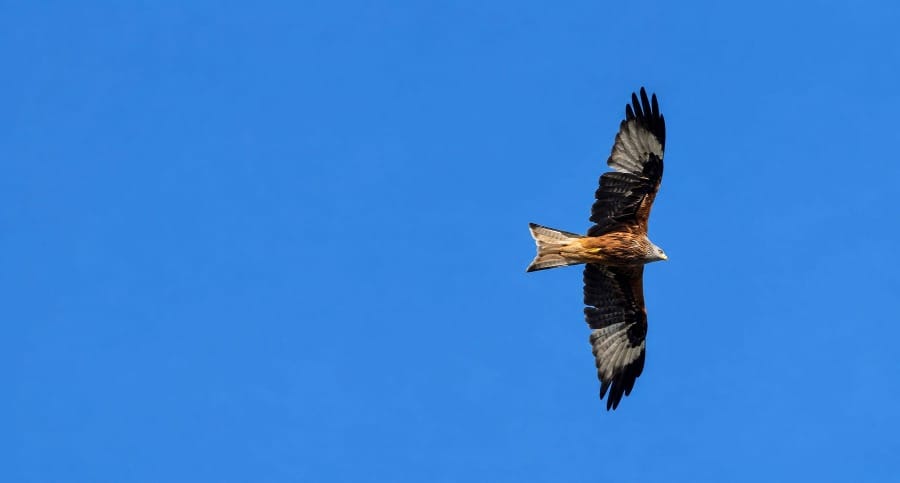
There are horse chestnuts scattered along the track and clumps of mistletoe in the branches. Fungi abound against gurning foliate faces which seem to leer from the hollow ways, as ravens cackle overhead chasing the tail of an intrusive kite.
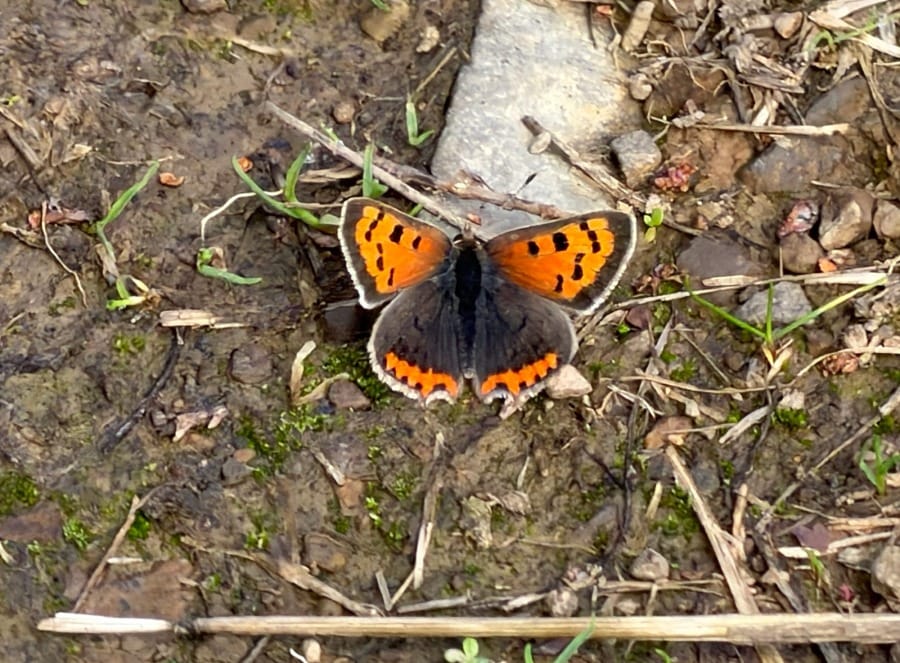
Then, during a moment of pure slog - on an incline that stretches me to my limit - I come upon small copper butterflies settled along the path for fifty yards or more. My approach lifts the first into the air, then a second, then another. With every step, more take flight, until I’m walking within a rolling, flitting procession. Little flashes of copper rise and tumble around me, my footsteps setting off a ripple of movement along the path. For a few moments, I forget the effort - caught up in the enchantment of a myriad of tiny auburn wing beats.
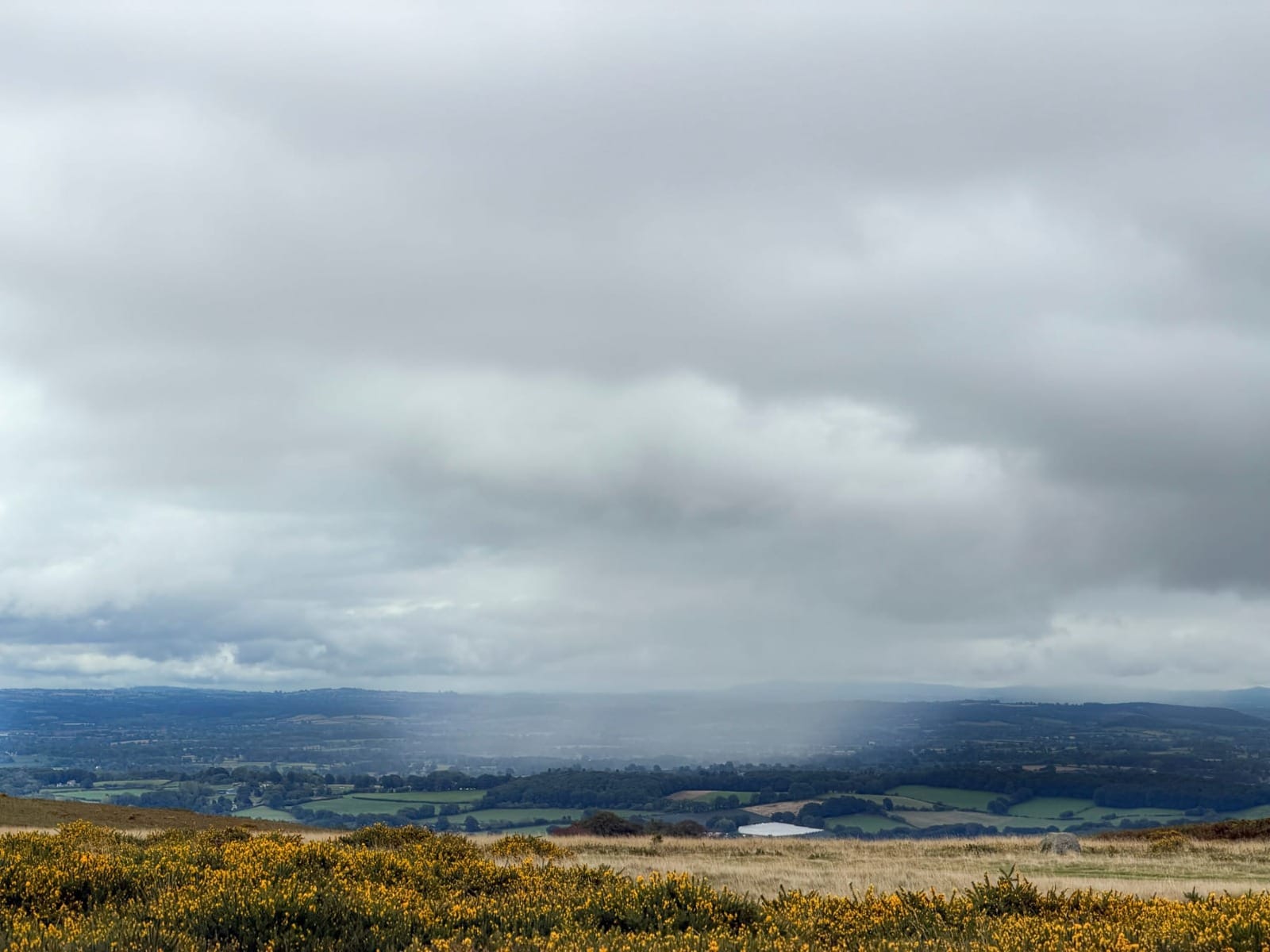
Up in the heights I feel as though I am part of the weather as I watch curtains of rain like glacial ghosts moving down the valleys.
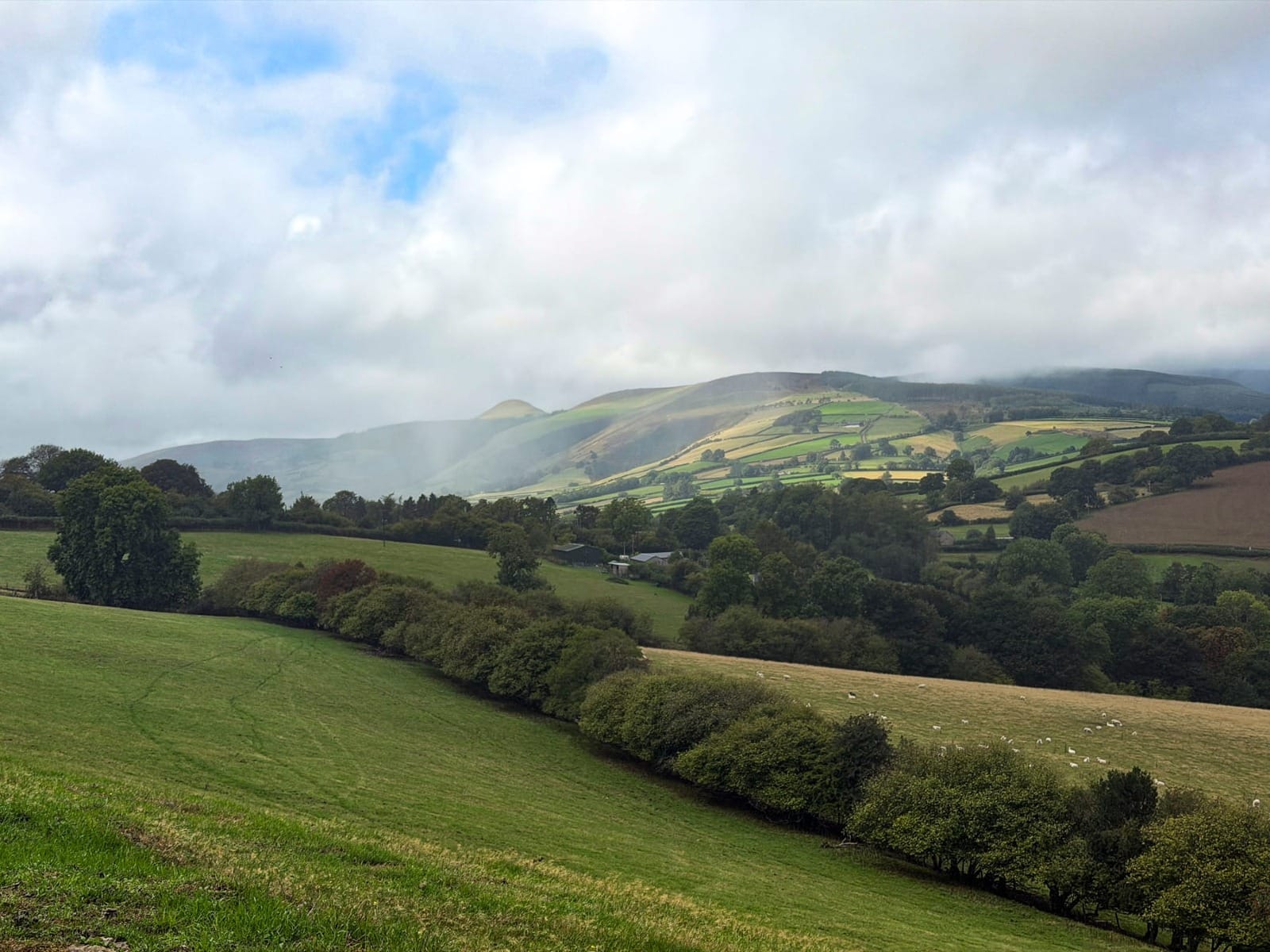
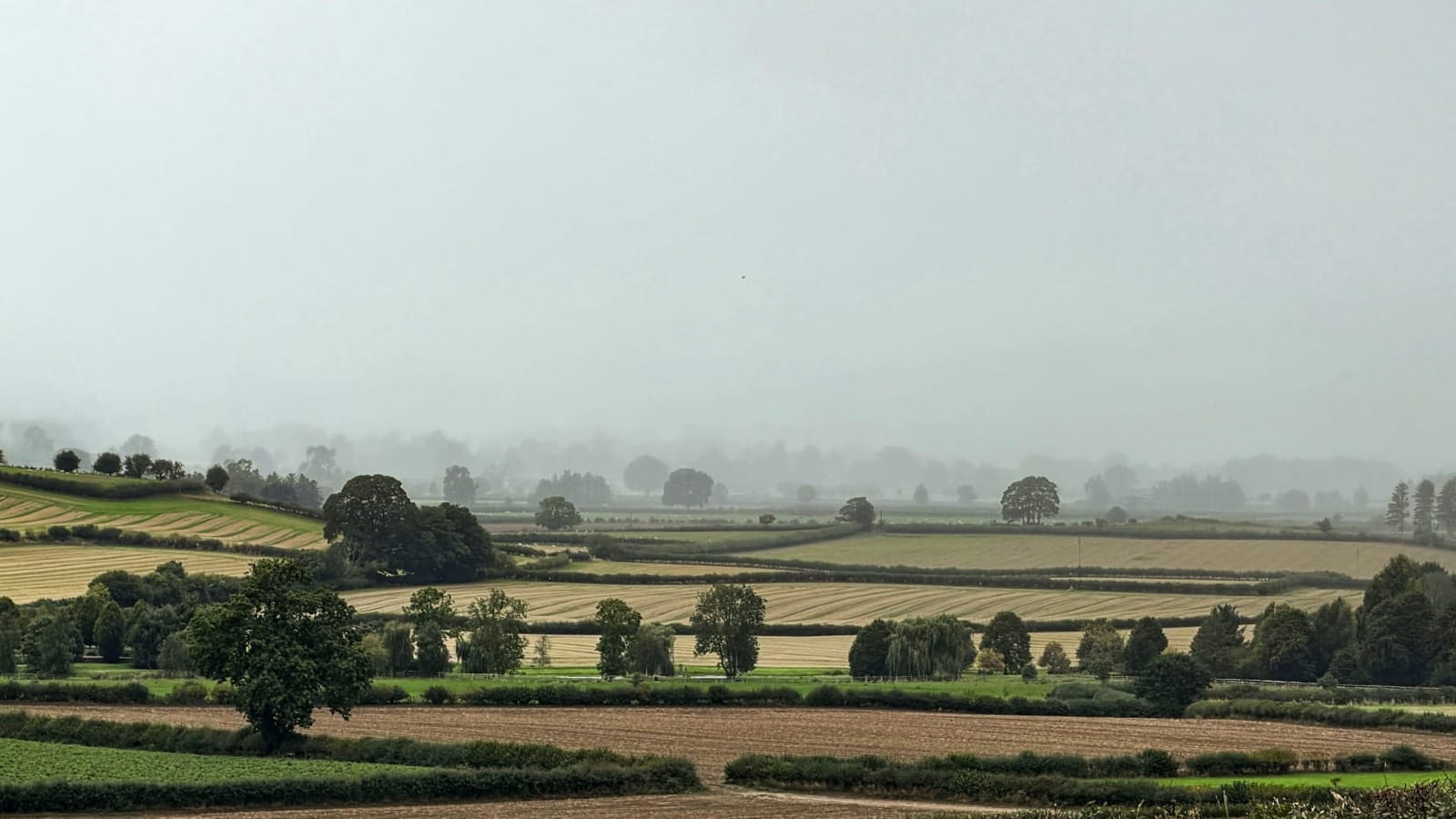
As I climb higher, the weather lifts with me. Pockets of sunlight pick out a valley, a field, a hollow where buildings seem to have settled into the nooks and folds by gravity alone.
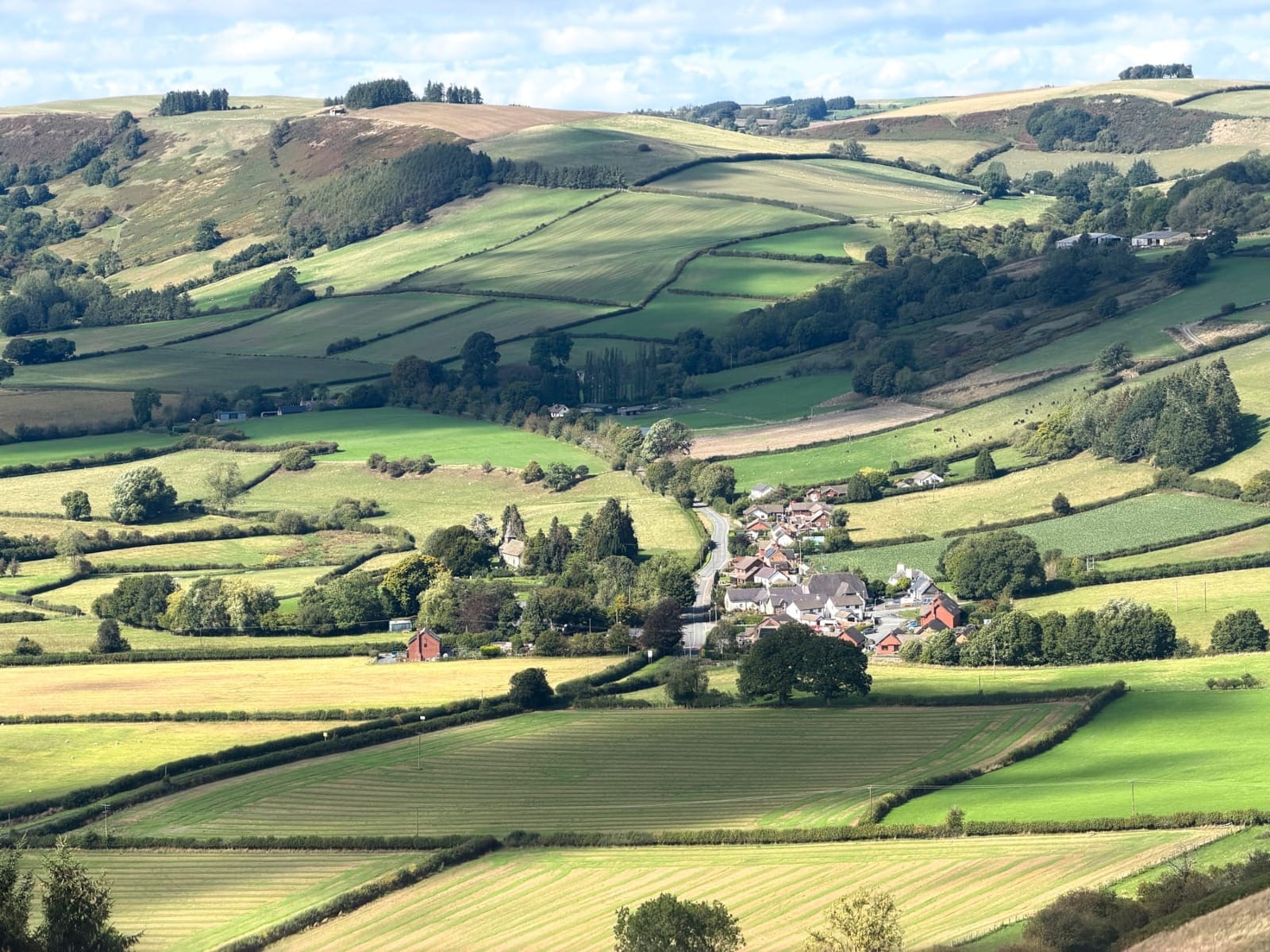
What I love about walking is the way connections with features in the landscape evolve. My eyes lock on to a building and, as the paths and lanes twist and turn, I follow its relationship with the surrounding hills until it slips out of sight.
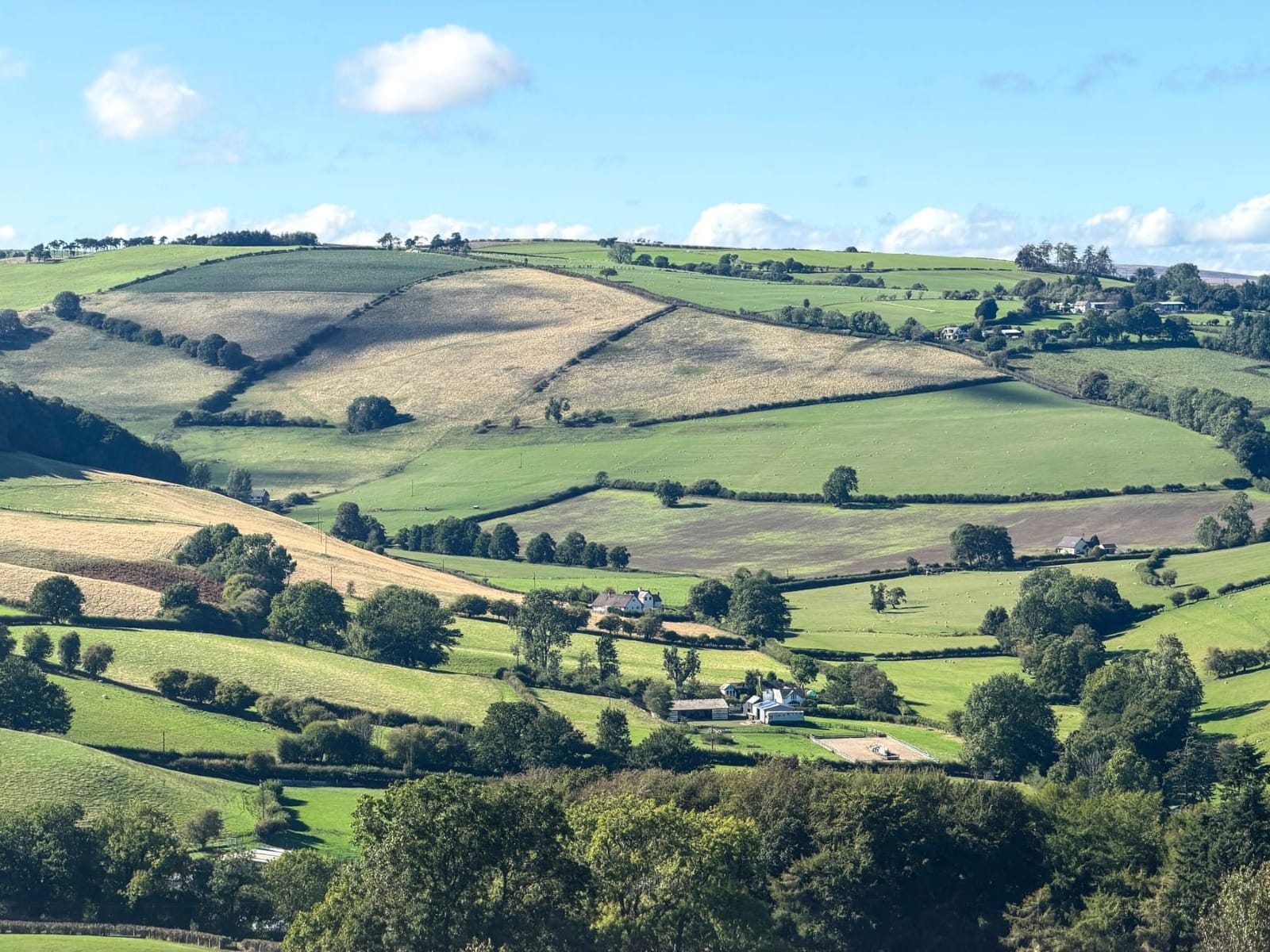
Crossing a ridge, I leave that whole arrangement behind. Then another valley opens, and my mind begins making its connections all over again. I can sense how a fold in the land might become the edge of somebody’s world - enclosing the places they know and the relationships they’ve built, until a natural feature takes on the meaning of a boundary.
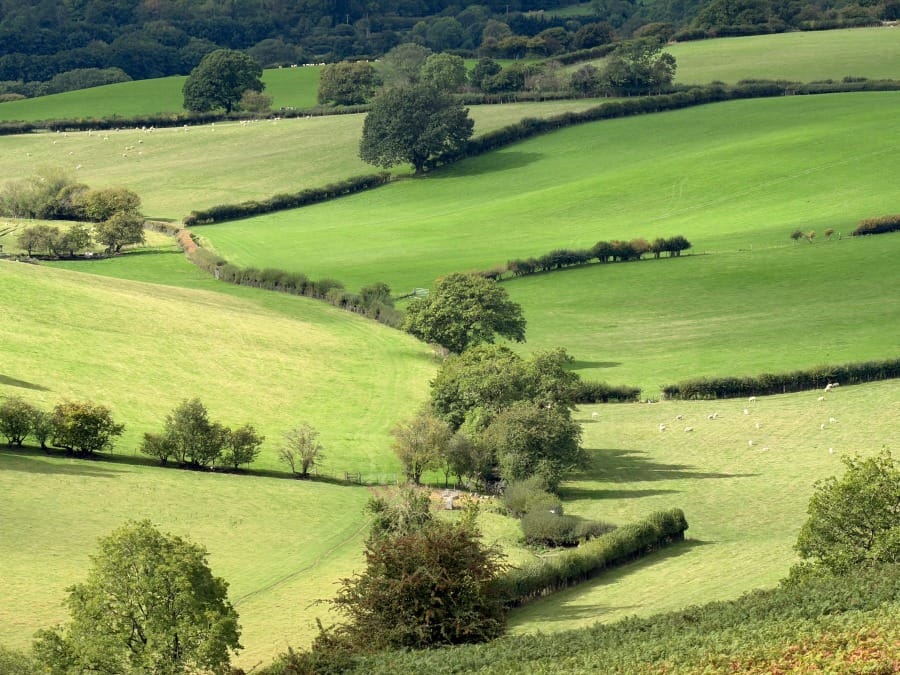
Before I set off on this journey, I read all the best tomes about the history and archaeology of the dyke, but reading about the Dyke and walking beside it are different kinds of understanding. On level ground, its bulk is unmistakable. Where it skirts a steep hillside, the earthwork draws upon the natural dips and hollows of the landscape. The landscape is doing the heavy lifting.
Seeing how the earthwork embraces the natural contours and waterways betrays a kind of consciousness behind its creation and, as I progress, I begin to get into the runnels of its makers’ minds - their awareness of approach, visibility, protection. As I pick up the miles I’m beginning to take on the idea that the earthwork is not a defining boundary, but a permeable frontier - with rules of engagement, passage and trade. In spite of the boundary - people got on and thrived in ways that impacted the way they spoke, worked and lived.
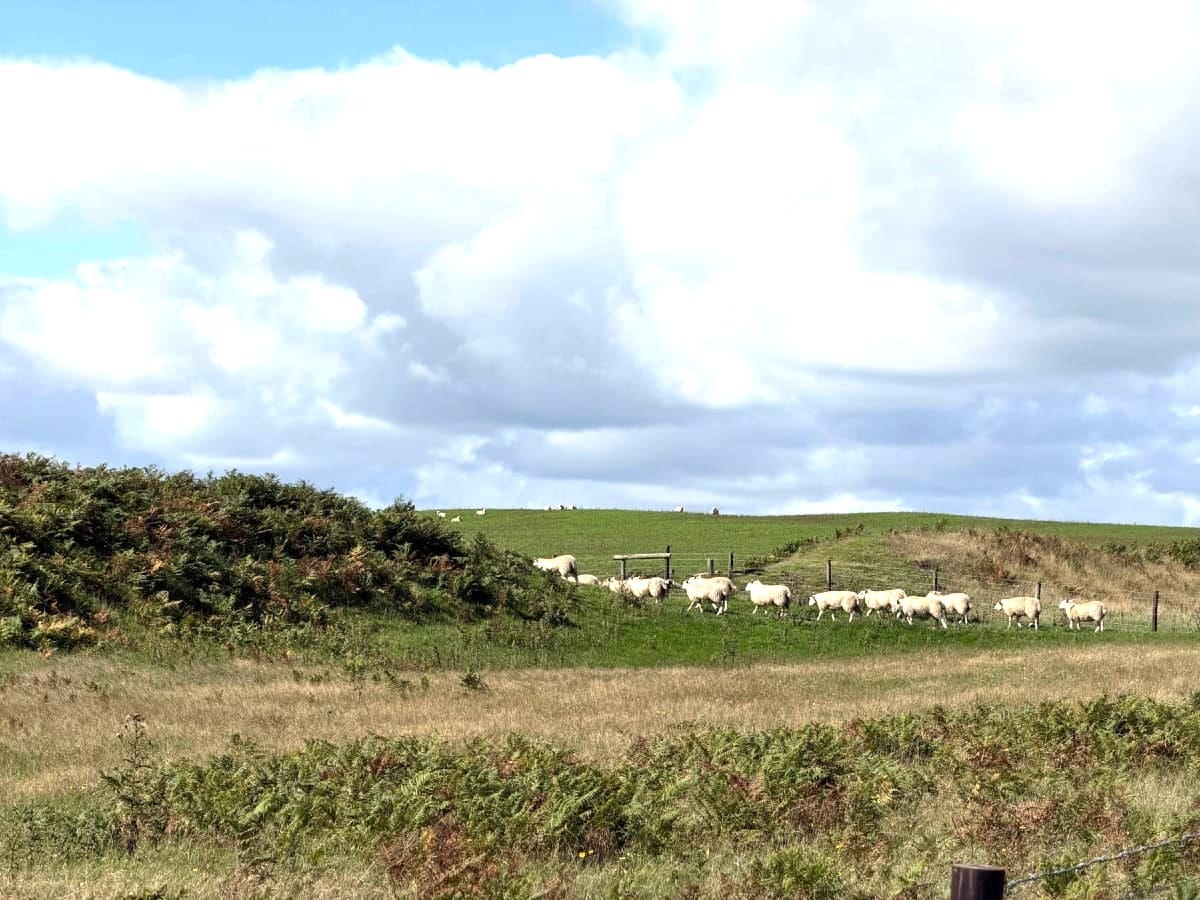
Near Knucklas, I turn over the tangled phonetics of Skyborry Green. Skyborry comes from the Welsh ysguborau, meaning ‘barns’, with an English ‘Green’ attached. Here, on the English side, a Welsh word survives inside an English-looking name, in the shadow of an earthwork that predates England and Wales as we know them. Later centuries have left their own evidence of lives and languages overlapping.
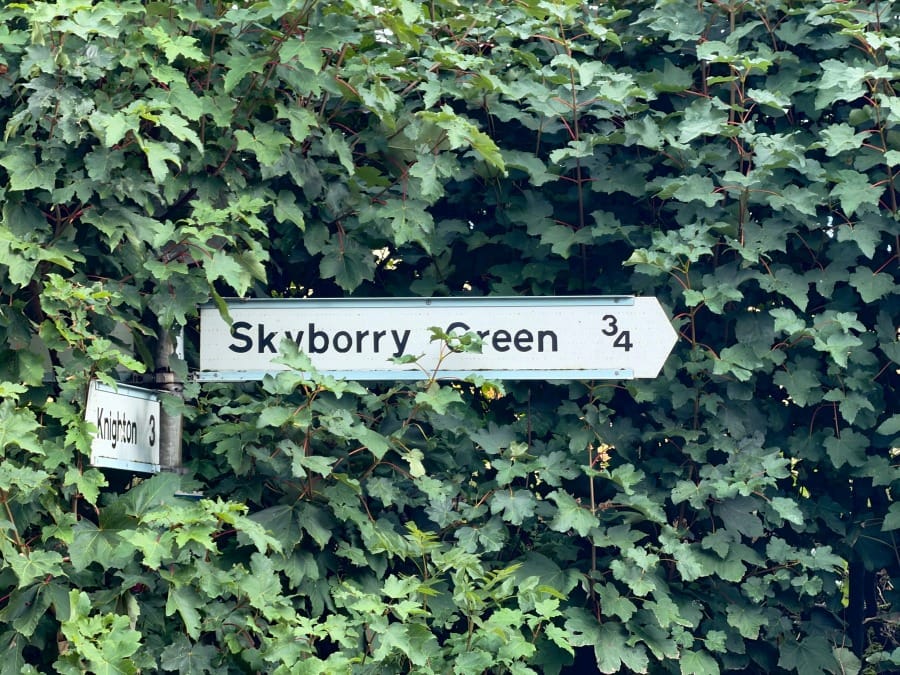
Between Kington and Knighton, I’m almost overwhelmed by the beauty. It’s the combination that gets me - landscape, borderland and history folded together.
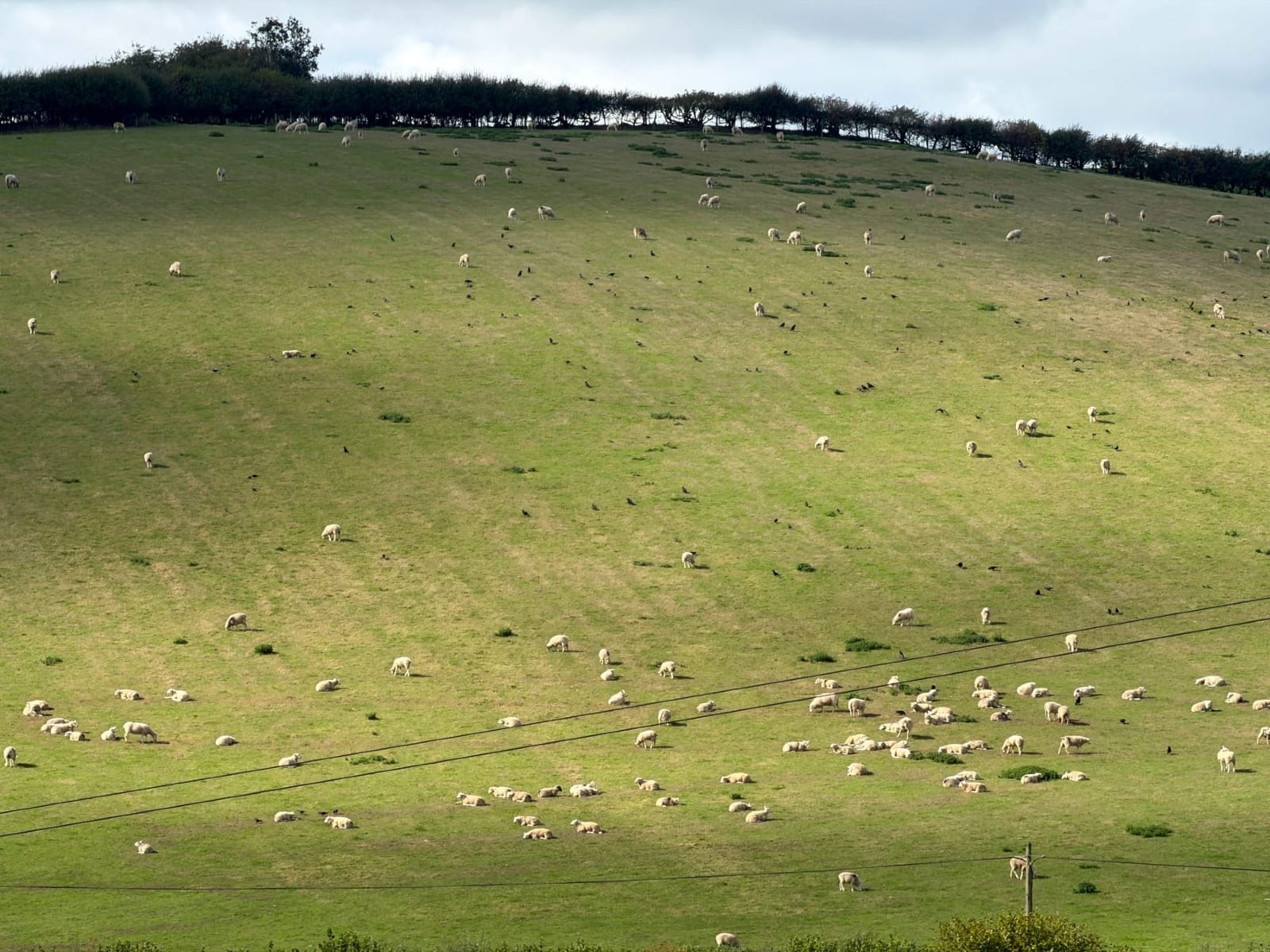
This is a place between places, a landscape apart, with well over a thousand years of human presence etched into its slopes. By walking this path - I can see how our need for refuge and respite has been translated into the landscape.
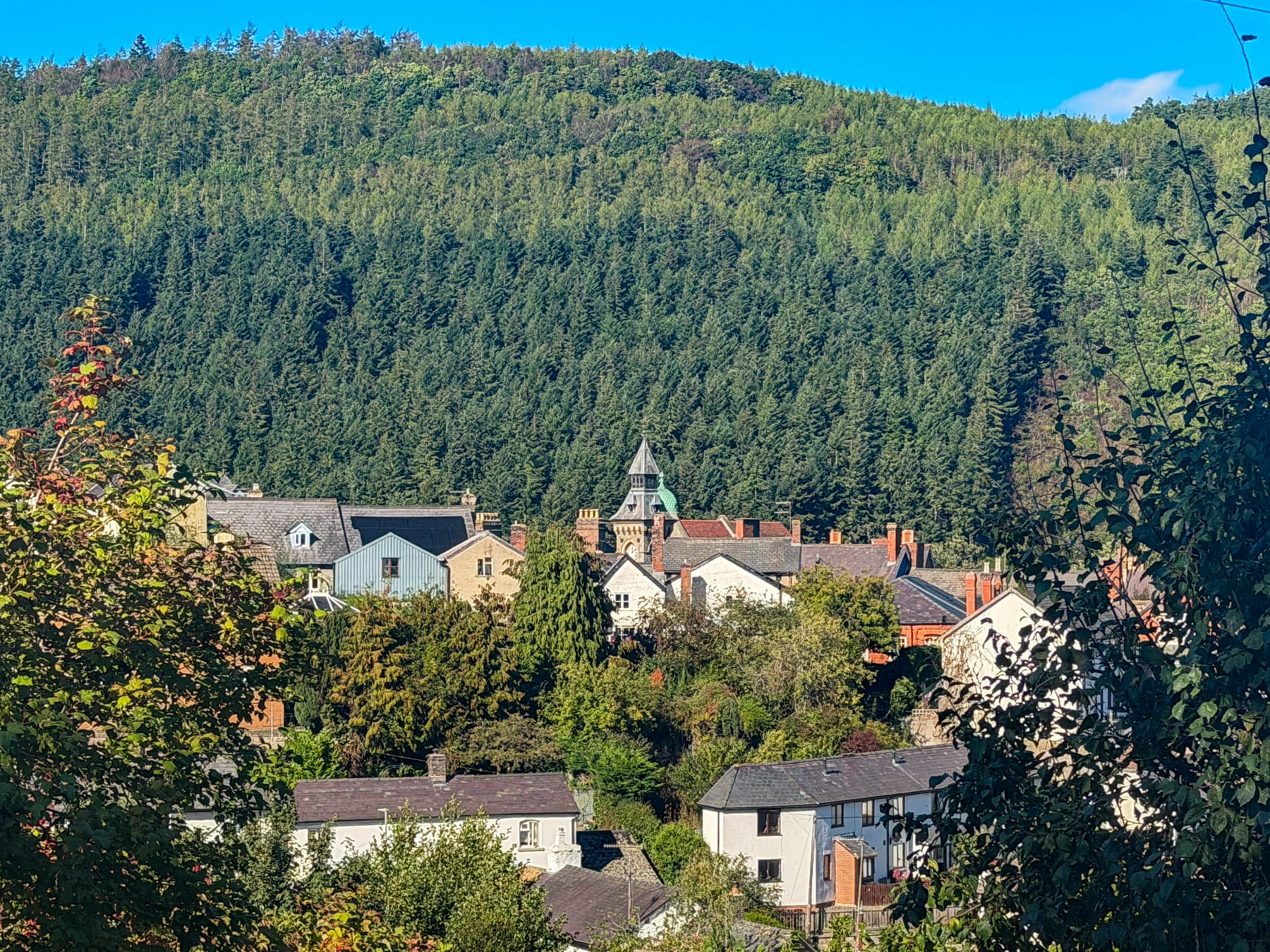
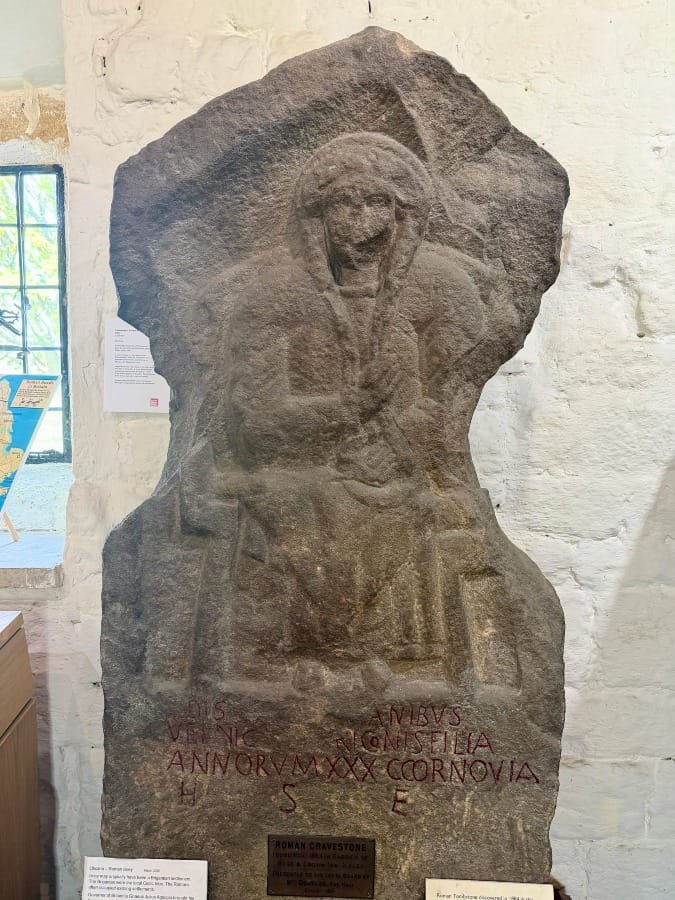
Walking north towards Newcastle, the twisting landscape brings to mind the long plaits of the Cornovian woman commemorated on a Roman tombstone in Ilkley. Her people belonged to the region around Shropshire, yet there she is in Yorkshire, remembered in Latin as a woman of the Cornovii. Her border origins remain part of her identity, even far from home.
Leaving Montgomery, I experience something that only slow travel permits. First I’m within the streets. Then I’m looking back at the buildings, then the fields holding them, until the town takes its place within the surrounding hills. Each view is nested, containing the one before it.
Further north, through Welshpool and towards Llangollen, something else begins to gather momentum. I’ve been looking for what the landscape can tell me, but increasingly it is people who help me understand it. I become dependent upon information from travellers I meet - warnings are bestowed, recommendations are made. The embankment itself becomes a kind of communication highway and, when I idle off the ramparts, hoteliers, locals and fellow travellers draw me into wider spheres of knowing. I begin to wonder how this linear earthwork might once have become a tapping livewire - a kind of human telegraph between folk.
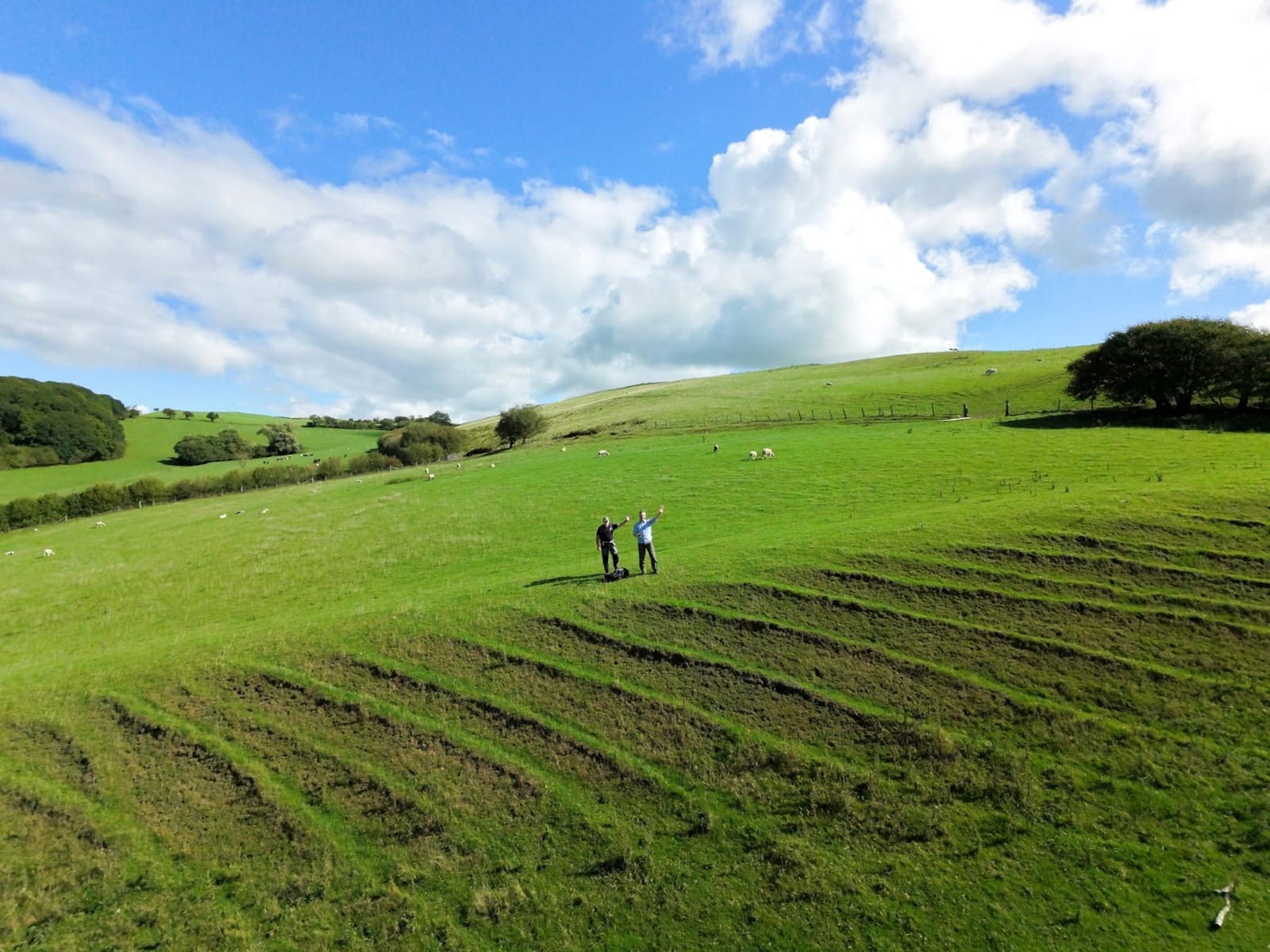
It’s this aspect that might have helped create the distinctive atmosphere here - tangled connections across the border, infused with the lateral movement of information along the Dyke. Beneath the constraints of an often invisible border, people simply get on with living. I don’t experience a place suspended indecisively between England and Wales. I encounter a borderland with an identity of its own - where both English and Welsh people seem protective of the distinctiveness of this in-between place. They are individuals whose lives and sense of belonging cannot be explained by a line on a map or simply by country of origin.
I find myself wondering whether something of this happened in Offa’s time. I picture a Mercian overseer asking a farmer from the other side to lend a hand - the eighth-century equivalent of offering him a few bob. It is only my imagining, not evidence that the Dyke was a collaborative undertaking. Nor do I mistake this mighty earthwork for a friendly garden fence. But might ordinary people have found their own accommodations beneath the demands of kings?
Aren’t we still doing that today, in a way?
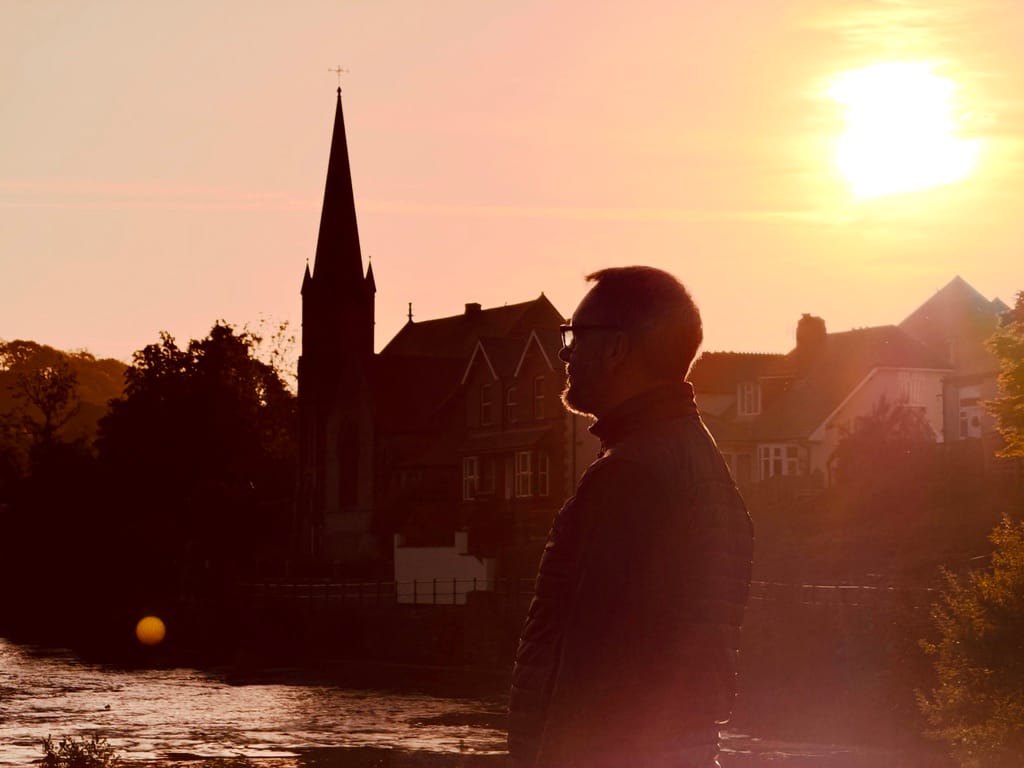
By Llangollen, I feel uplifted and changed. I came seeking an understanding of division and found myself dependent upon connection. Perhaps this is what the landscape knows of me - how much I need to belong, and how readily I respond when somebody makes room for me.
The Dyke became a kind of walking, pulsing creed for me, though not in the way I expected. What I carried home with me was our capacity to make common ground without giving up who we are. Along a symbol of division, I have found a metaphor for unity - and, in answer to my question about its relevance today, a glimmer of hope.
The Digest is free and public-facing. Paid memberships and donations help sustain my work.
Help me keep the journey going
See membership options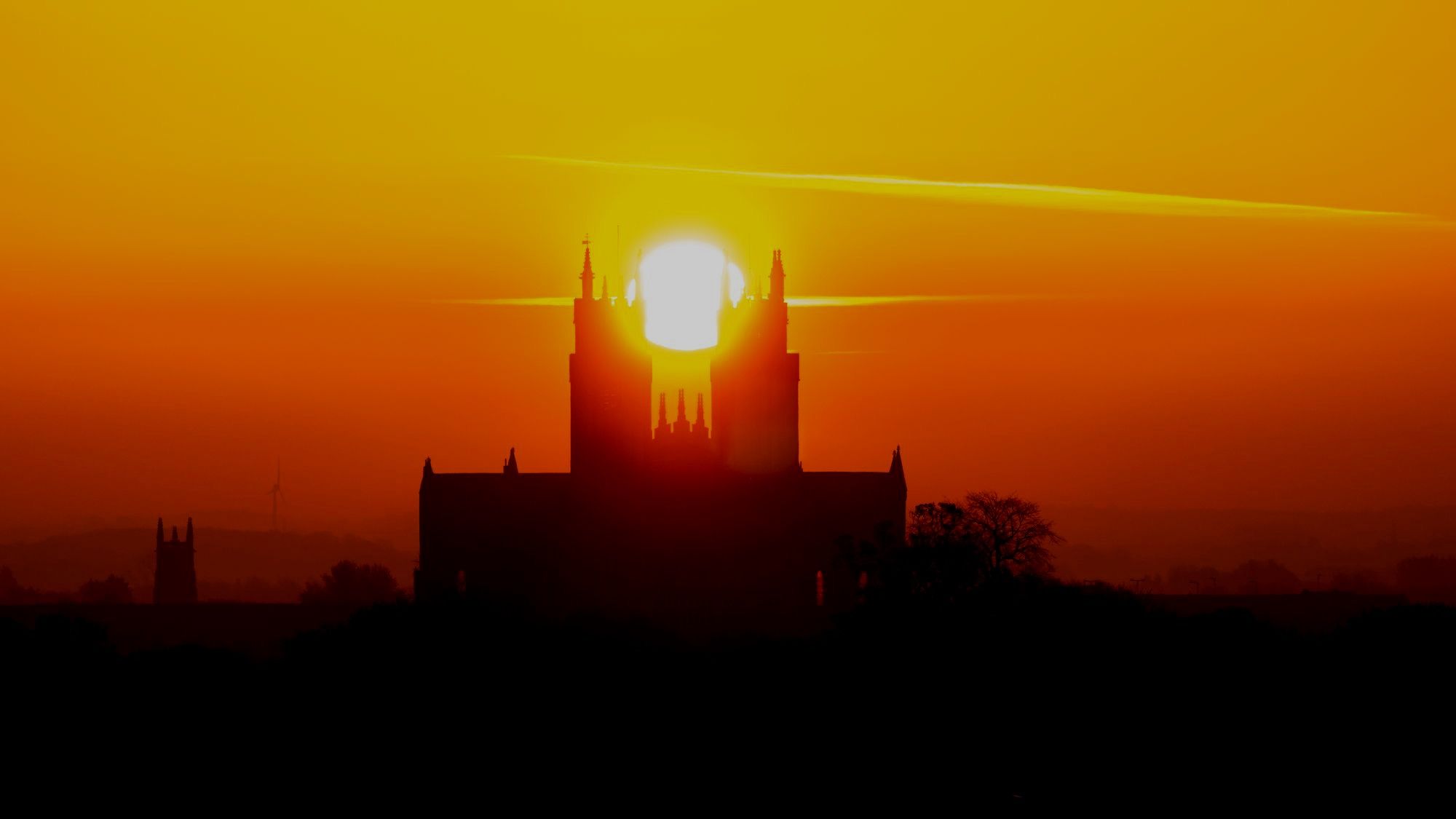
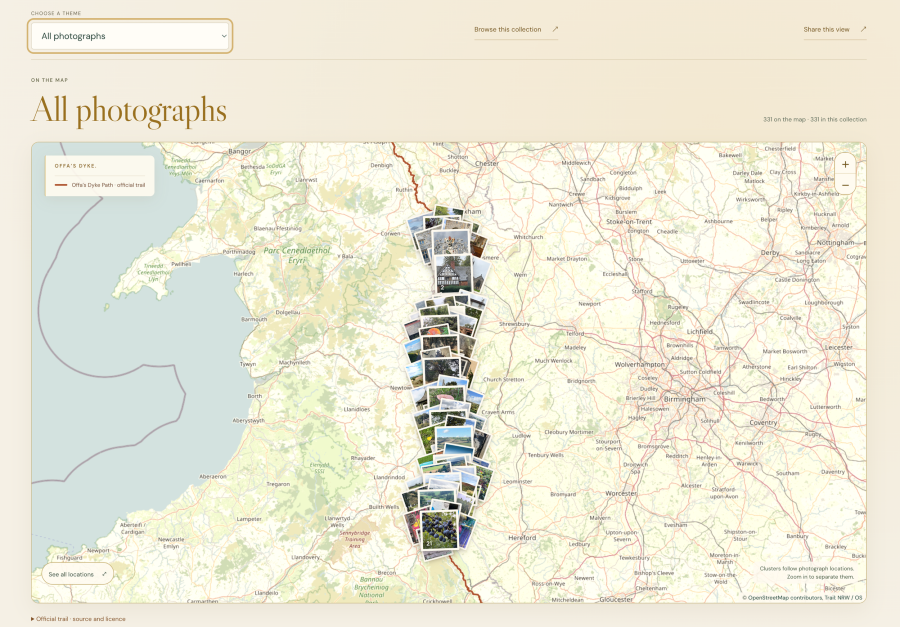
Offa's Dyke - Photographic Atlas
I have had a long standing frustration about how difficult it is to share the many photographs that I take (often purely for pleasure) on my travels - until now.
Here is an immersive way to interact with the unfolding miles of my journey from Hay to Llangollen - you can choose to see all of the photographs or just a themed section such as, for example: insects, weather or just the earthwork itself. Enjoy and please feel free to share this: 👇
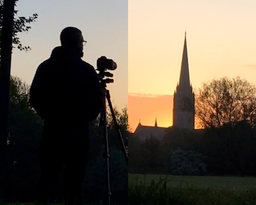
 Andy Marshall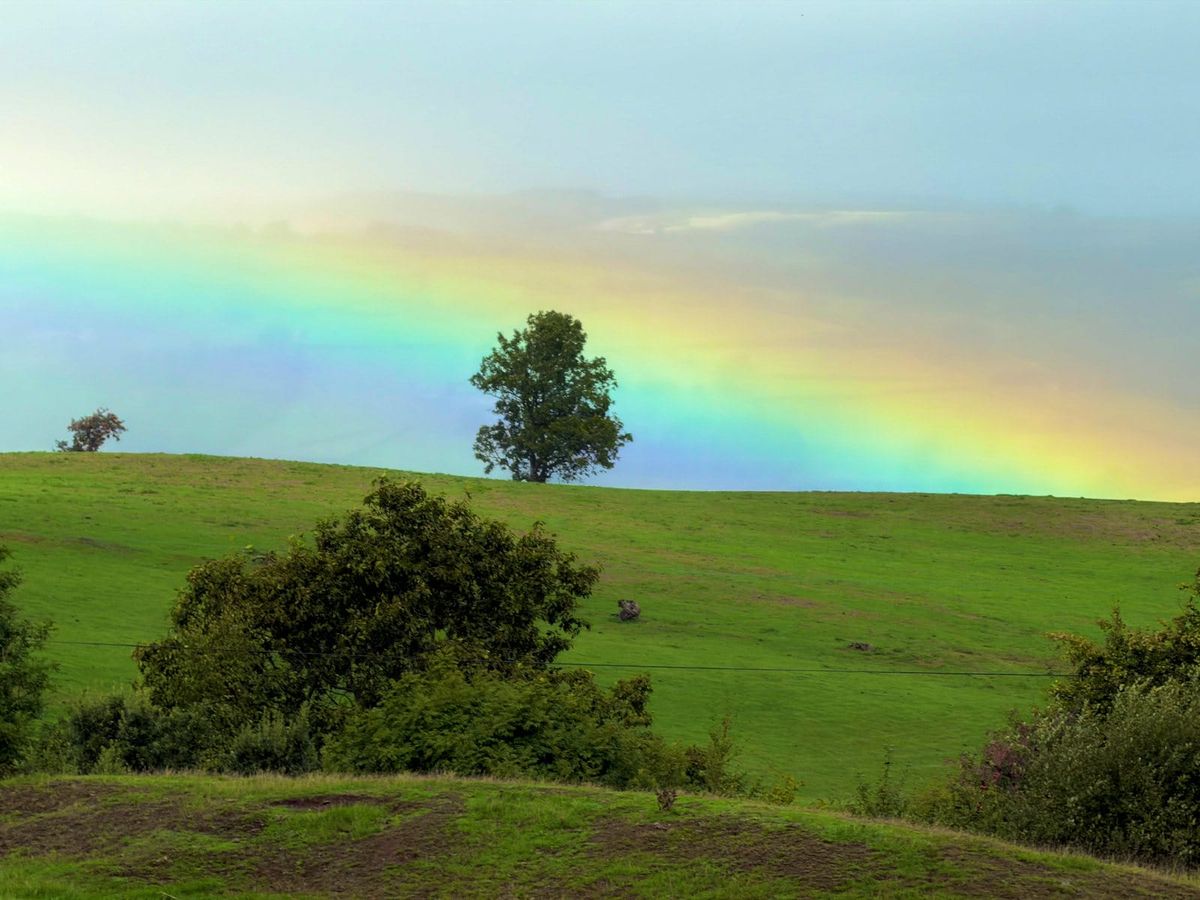
If you weren't able to catch up or access the field journey as it unfolded - you can now do it from your armchair here:
 Andy Marshall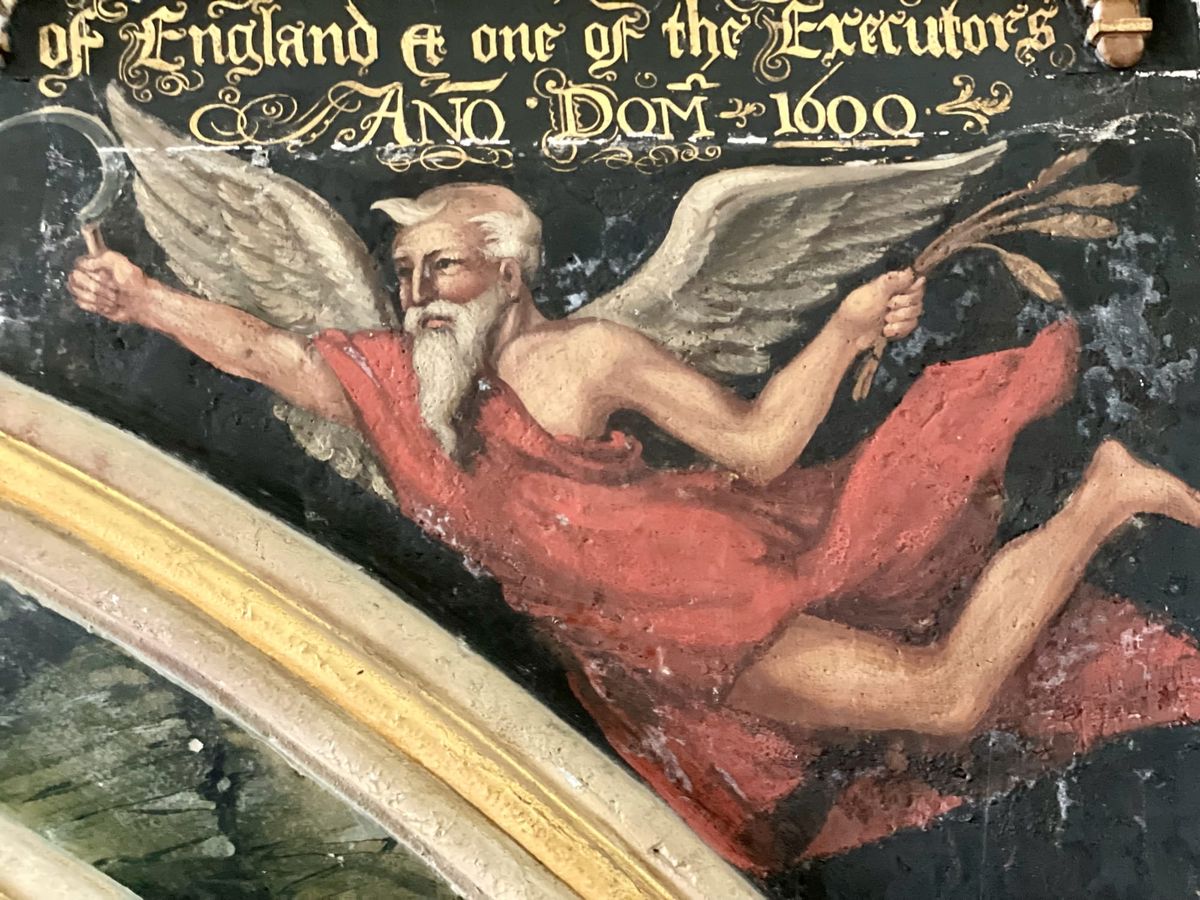
Please do share, like and comment.
 David McGlade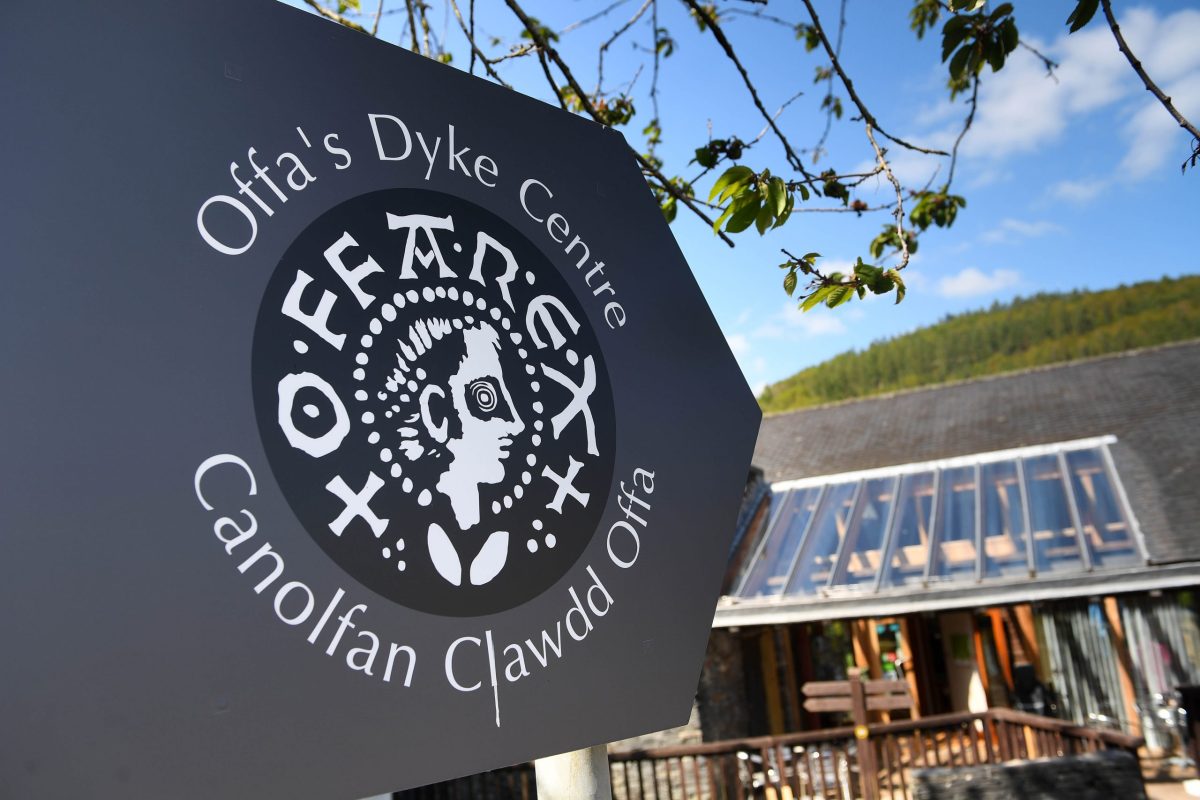

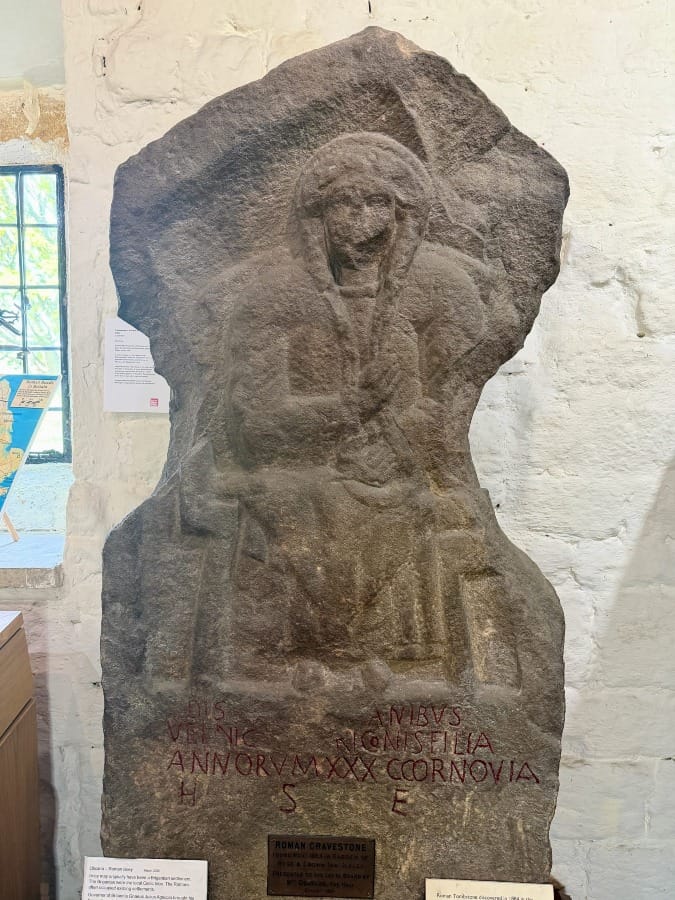
"It opens up so many questions. What brought a Cornovian woman from the western Midlands to Wharfedale? Who was she? What circumstances gave her the status and means to be commemorated in stone? What does her monument tell us about women, family, mobility and identity in Roman Britain?" 👇
 Andy Marshall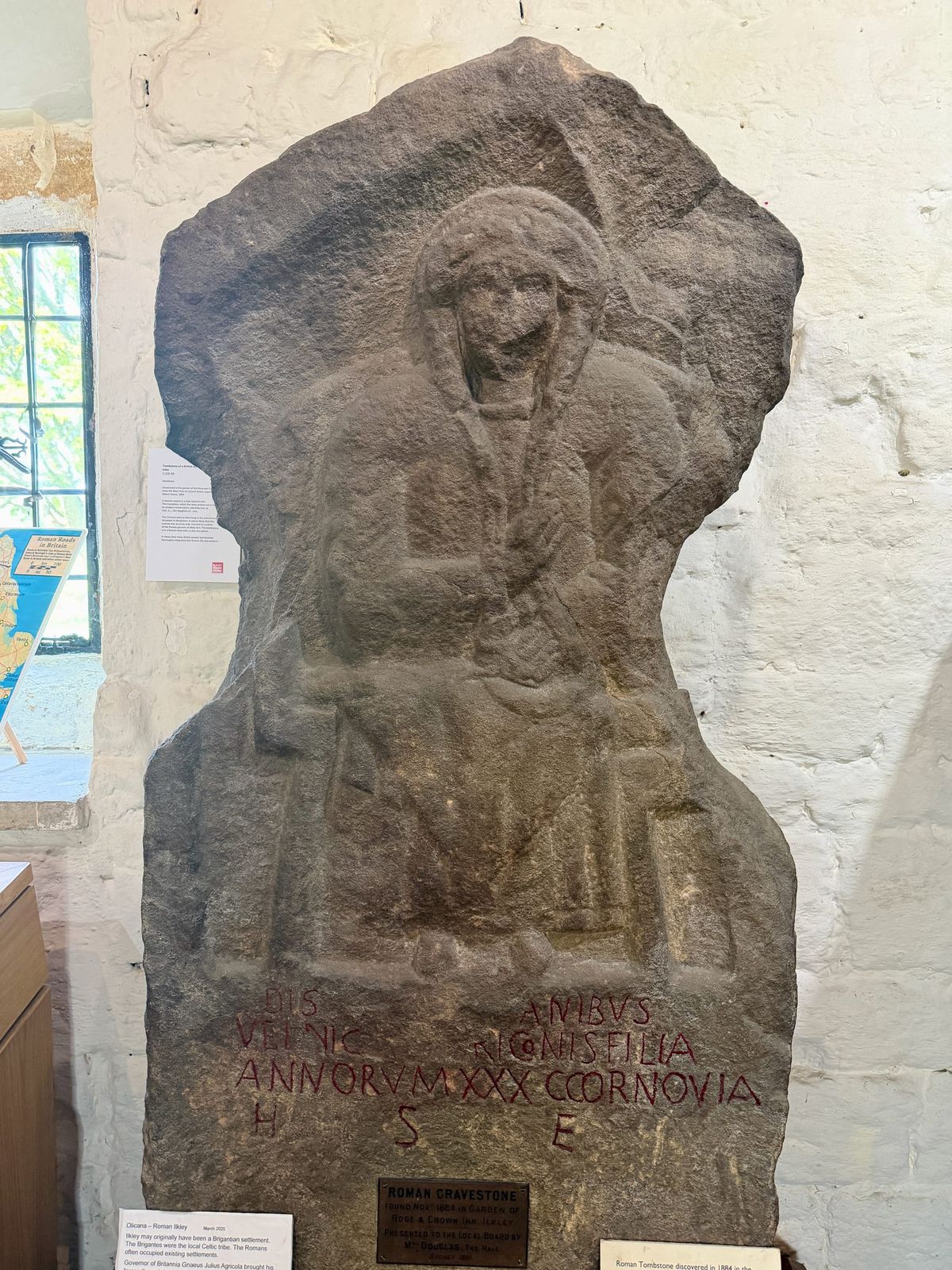
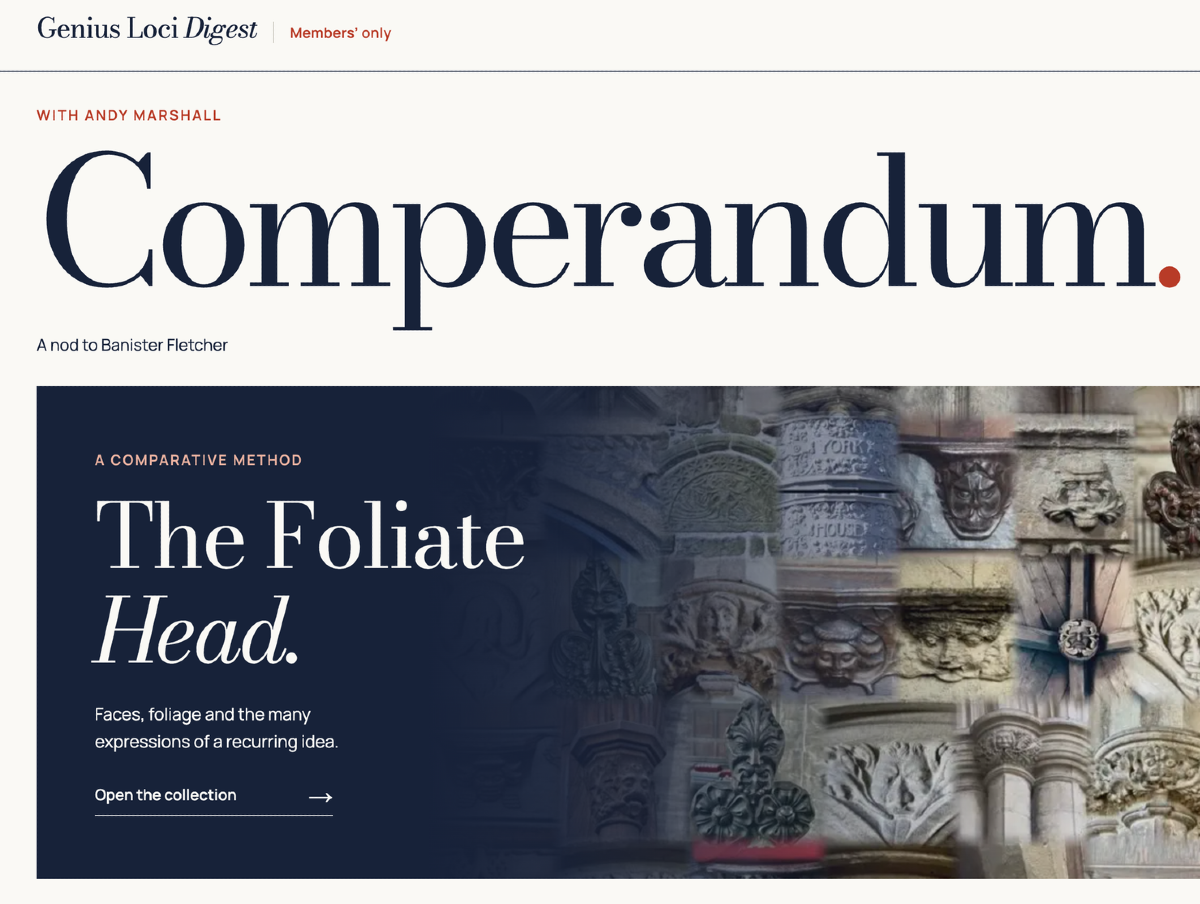
For members - a new way to experience The Comperandum
Including a way to print some of the images.
Click to View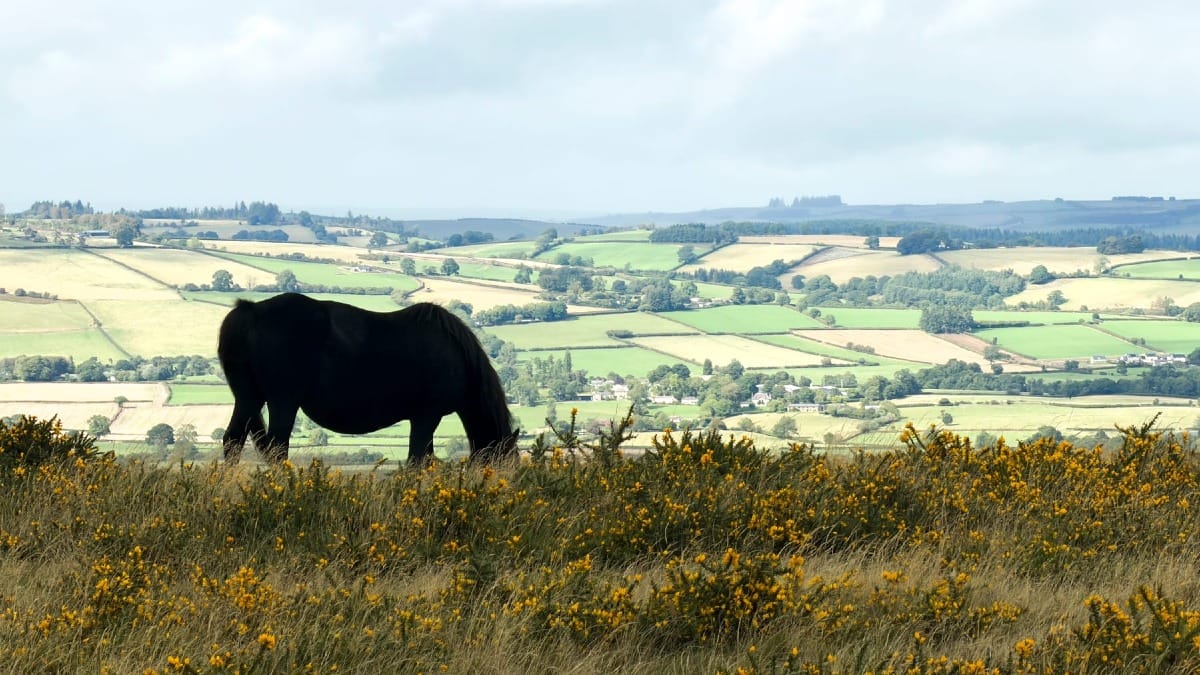
Can you help shape the next journey?
A single membership can become part of the next journey, the next story and the next free photo shoot. Thank You.
Explore Membership Options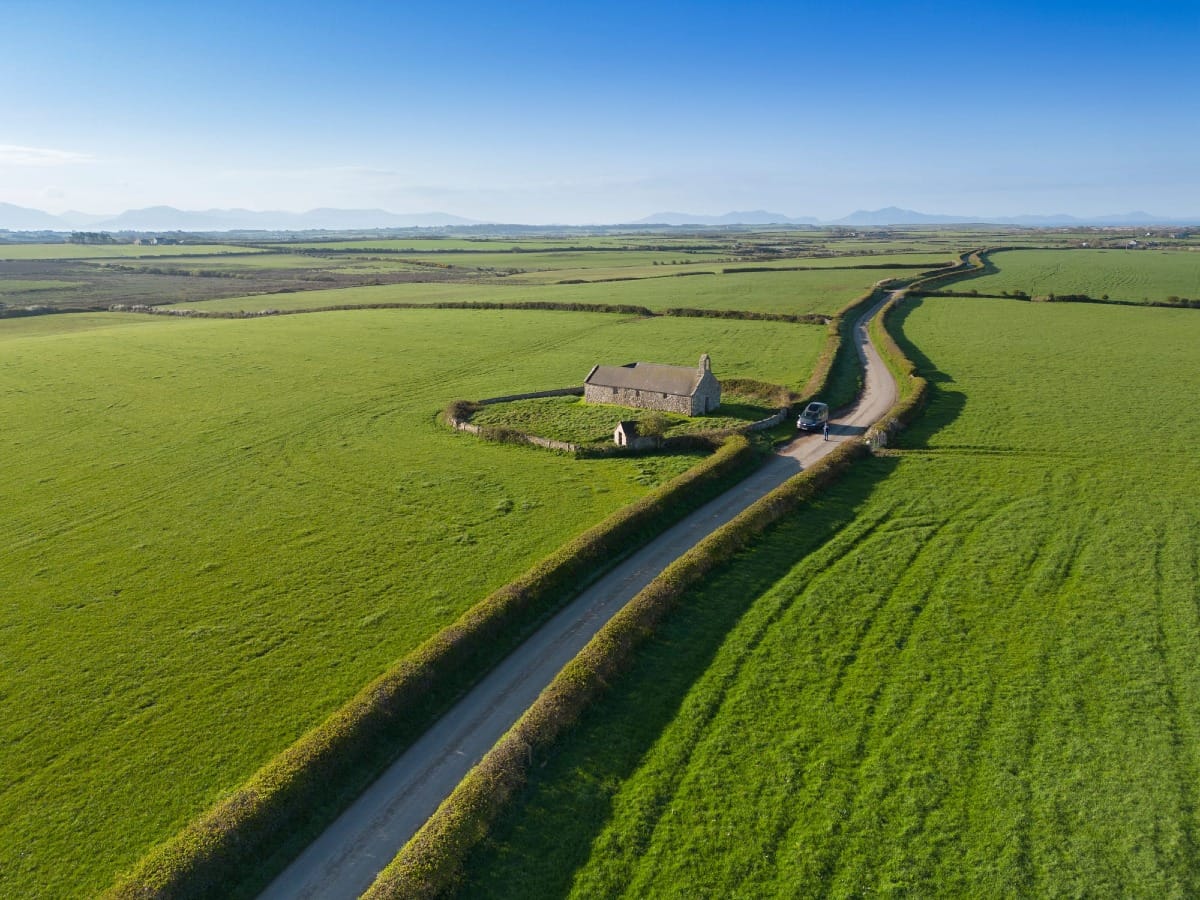
Kind words from a subscriber:
Andy your work is becoming wonderful, remarkable. A so-called breakdown has been milled into its constituent parts, becoming profound construction: through perception, architecture, the lens and the pen. In your Repton crypt essay a deep description of our social anxiety - and our reason to be....
Recent Digest Sponsors:
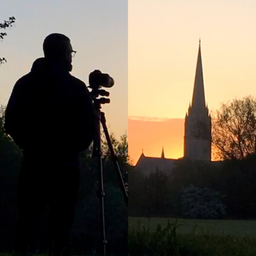 Andy Marshall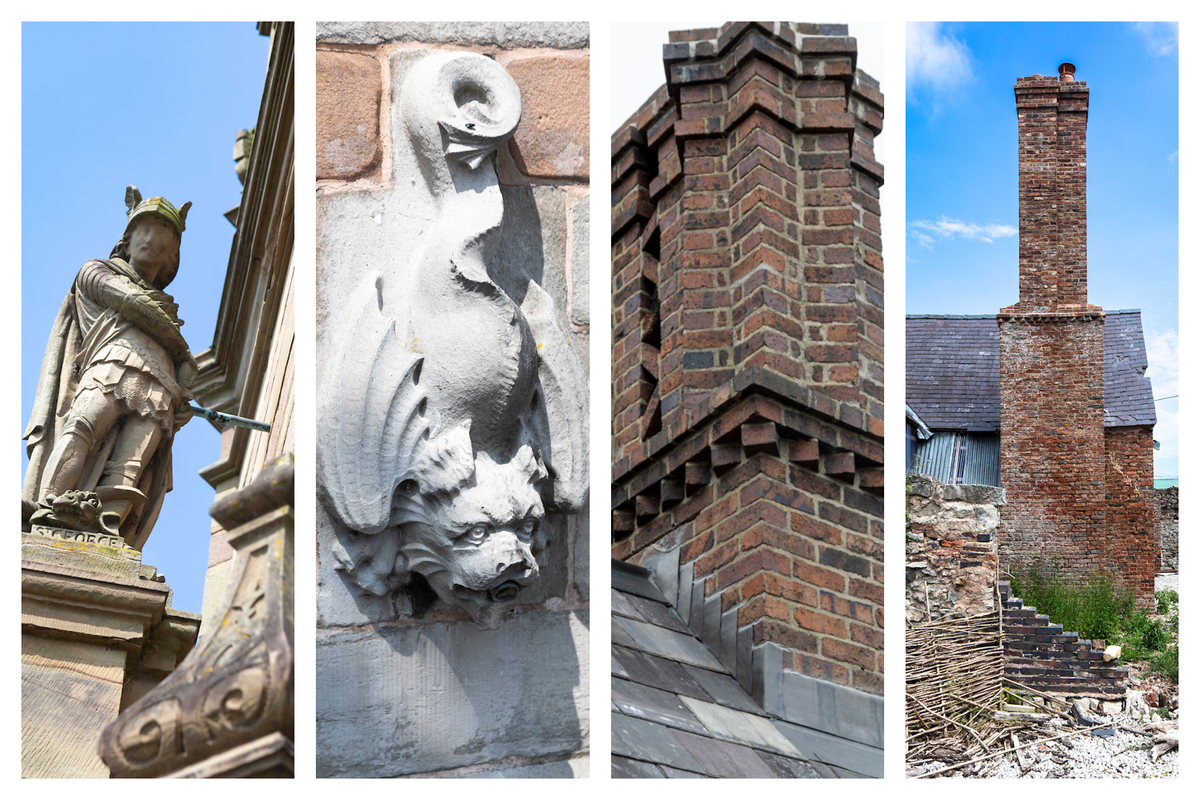
The best pub/accommodation on the walk
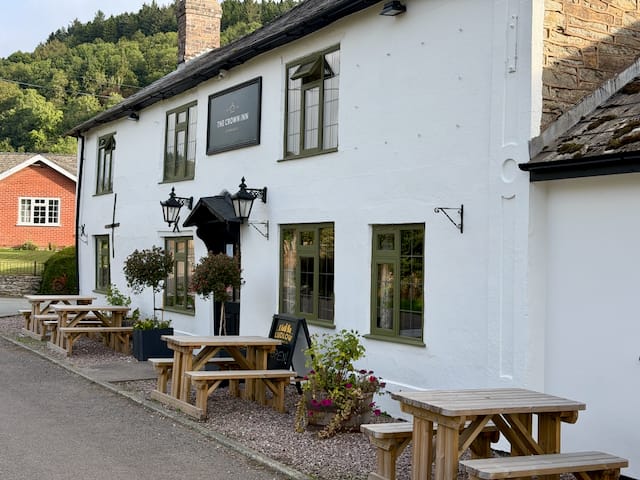
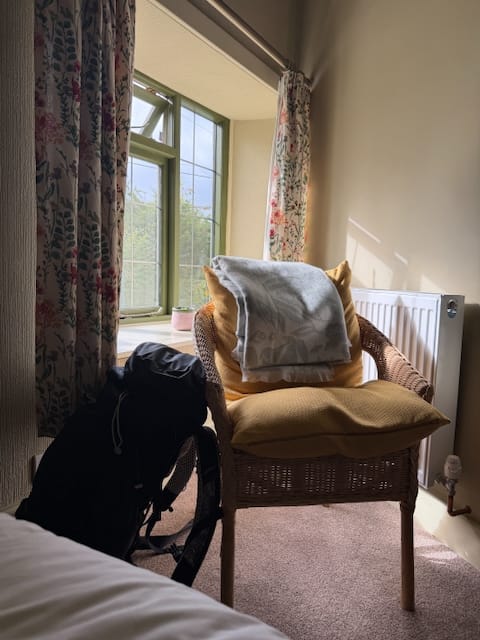
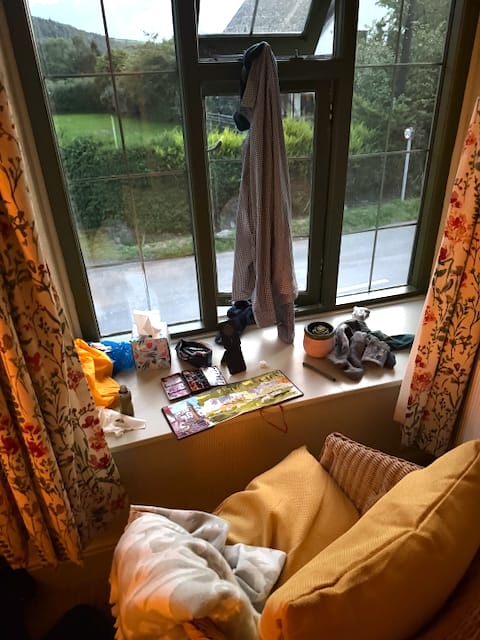
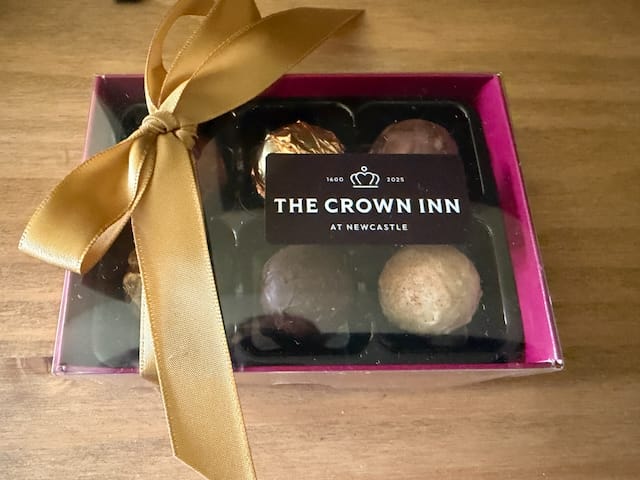
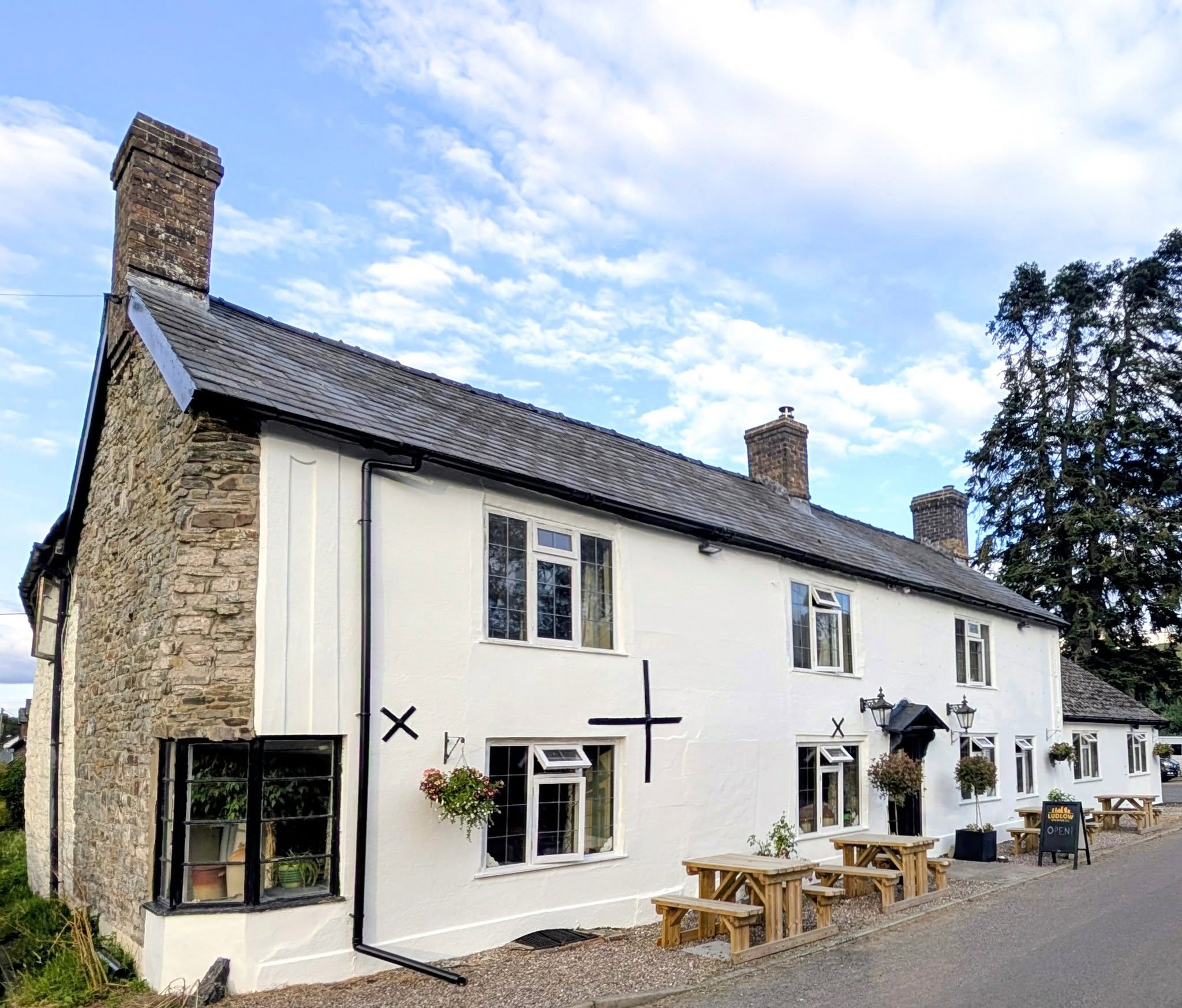
My favourite stay of the walk was The Crown Inn at Newcastle on Clun. Sue and John were wonderfully accommodating, warm and friendly; the pub delightfully cosy, and the rooms an absolute delight - exactly the sort of place you hope to stumble upon at the end of a long day’s walking.
What makes The Crown even more special is that it very nearly disappeared. After closing in January 2023, the pub - already registered as an Asset of Community Value - was bought by Newcastle Parish Council with support from the Government’s Community Ownership Fund.
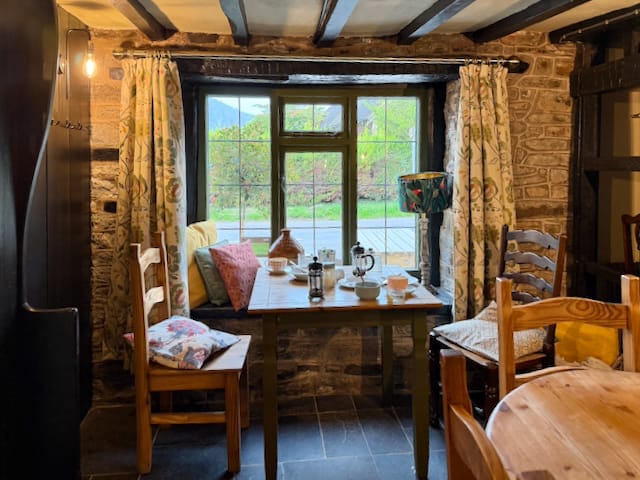
The Friends of the Crown Inn formed to raise additional money and help bring the building back to life. After refurbishment, it reopened in November 2025 under a not-for-profit company, before Sue and John took on the tenancy in 2026. It feels like much more than a rescued pub - it is a village choosing to keep its heart beating.

Thank You!
Photographs and words by Andy Marshall (unless otherwise stated). Most photographs are taken with iPhone 17 Pro and DJI Mini 5 Pro.
🔗 Connect with me on: Bluesky / Instagram / Facebook / X / Tumblr / Flickr / Vimeo / Pixelfed / Pinterest / Flipboard/ Fediverse: @fotofacade@digest.andymarshall.co

Member discussion