

Welcome!
⚡️ View the latest digest and the full archive here.
Member Powered Photography helps me shoot historic locations and traditional skills for free. Check out the status of the next free photo shoot here:
🔗 Connect with me on: Bluesky / Instagram / Facebook / X / Tumblr / Flickr / Vimeo / Pixelfed / Pinterest / Flipboard/ Fediverse: @fotofacade@digest.andymarshall.co
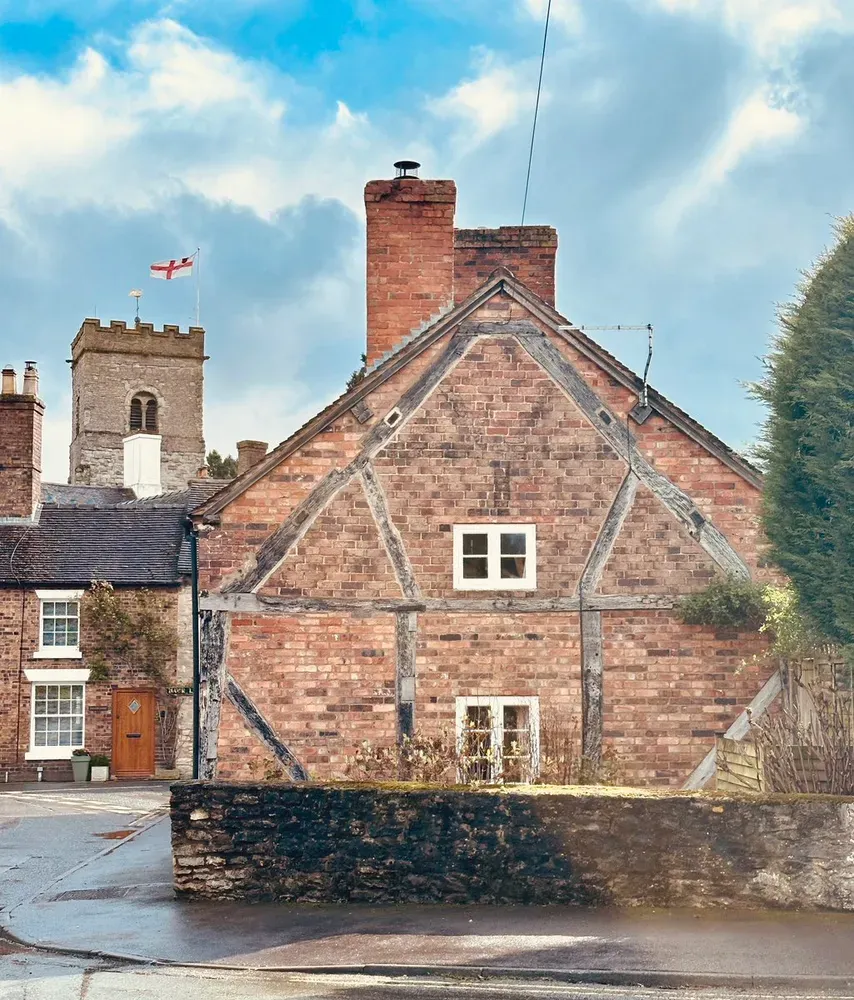
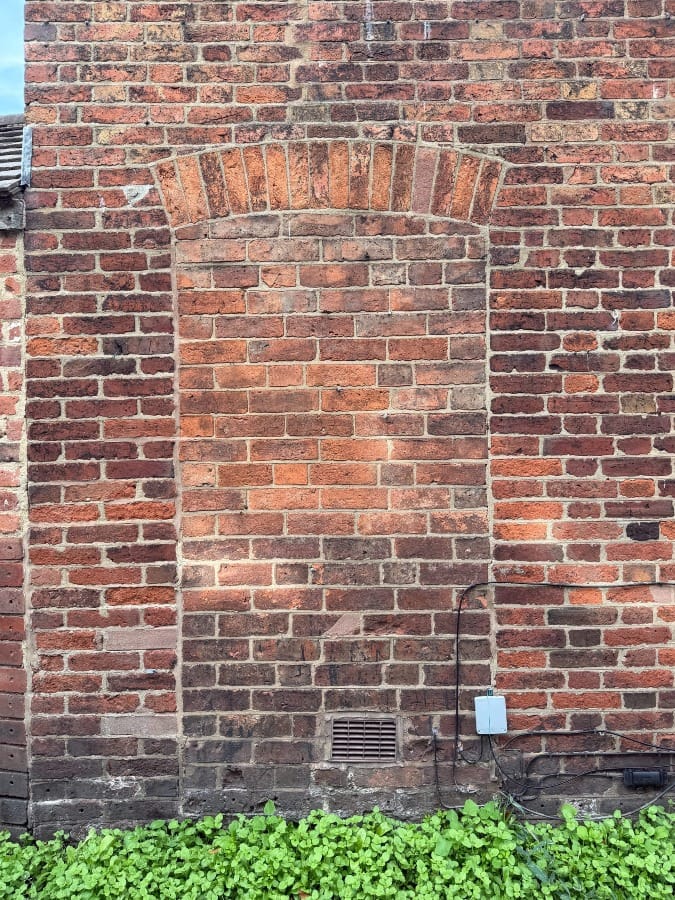
👻 I do love it when I stumble across the ghost of a house within a house - here at Much Wenlock - time and continuity in wood, bricks and mortar.
“The world is full of magic things, patiently waiting for our senses to grow sharper.”
— W.B. Yeats
Another History Is Playing Out.
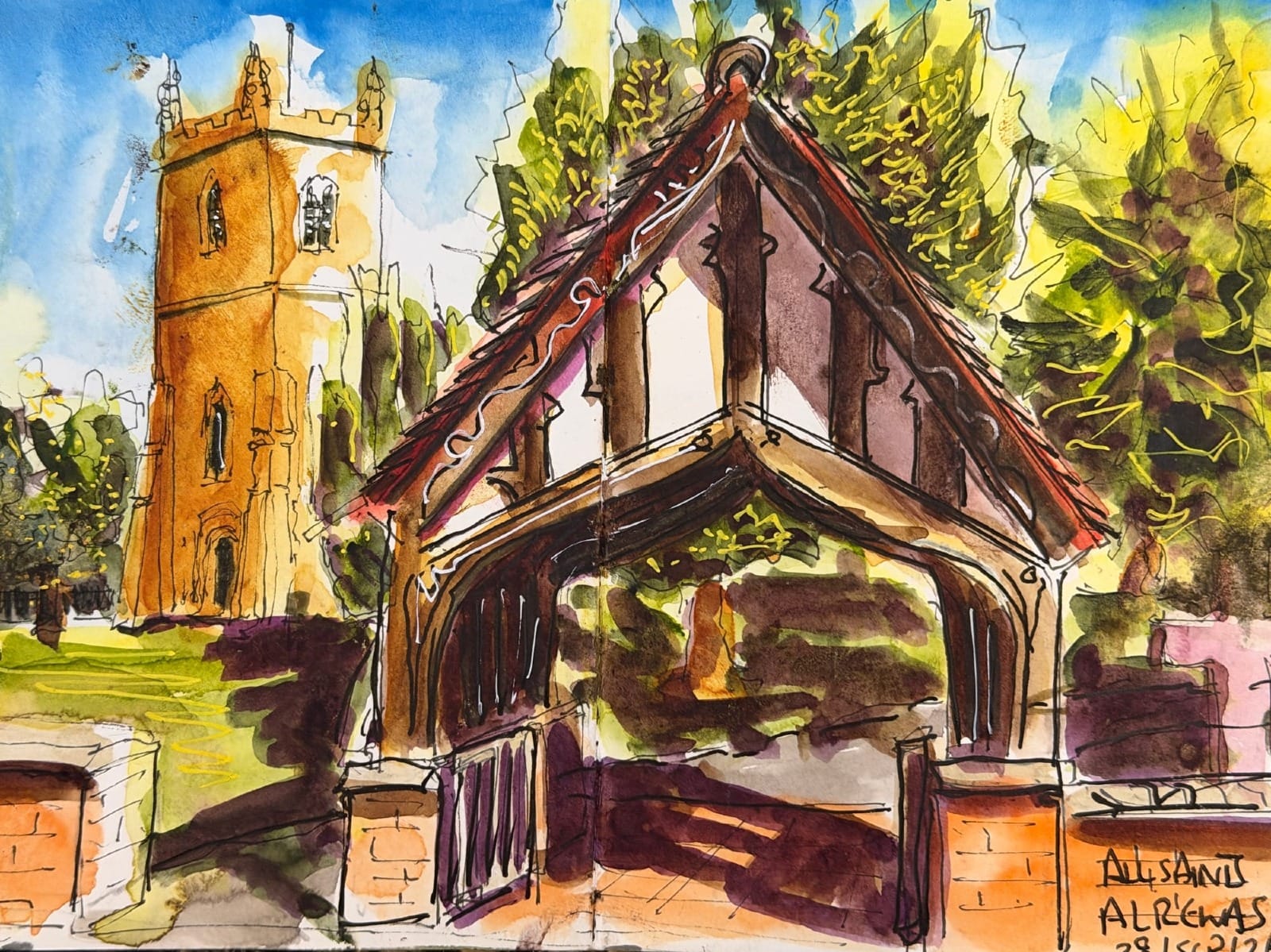
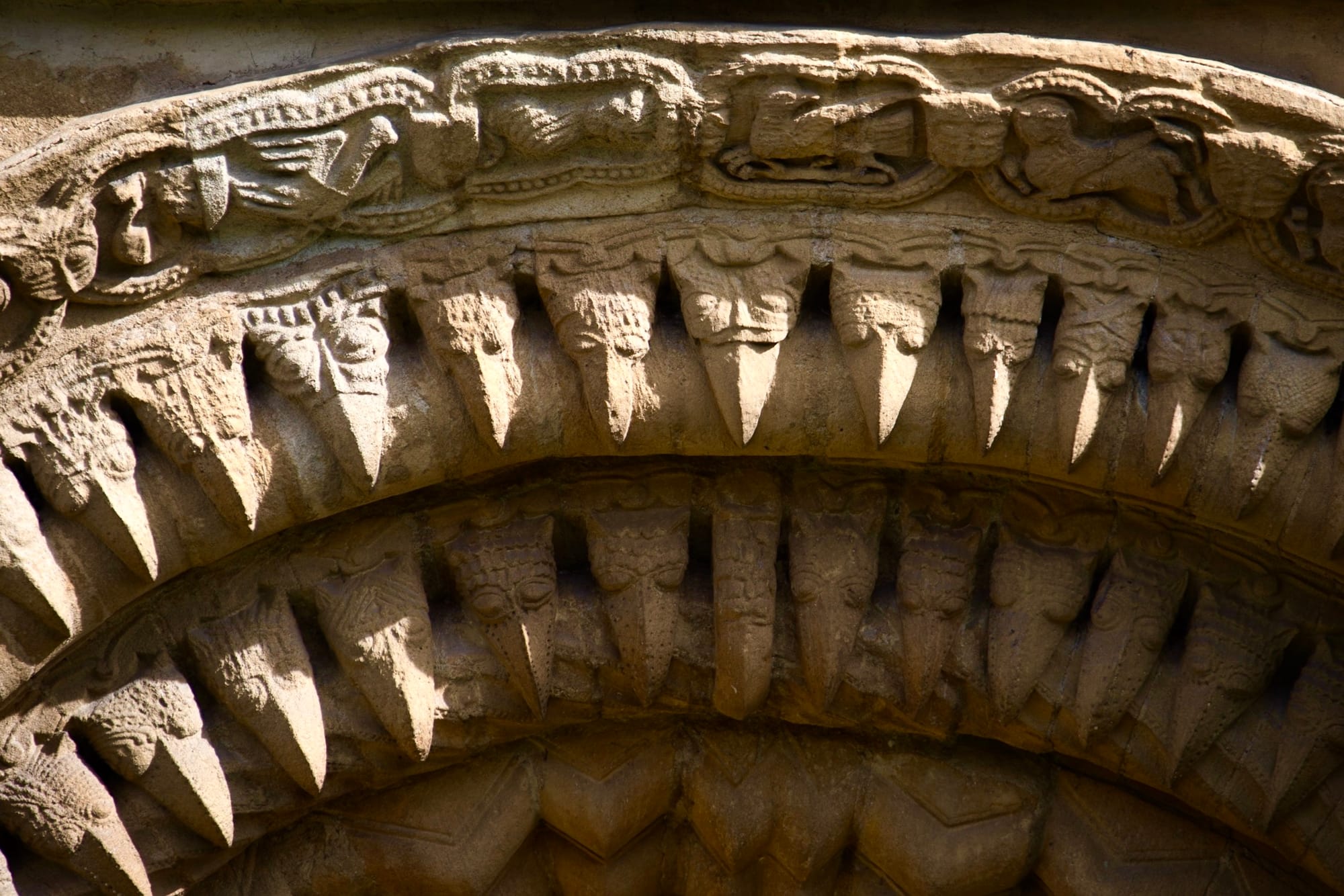
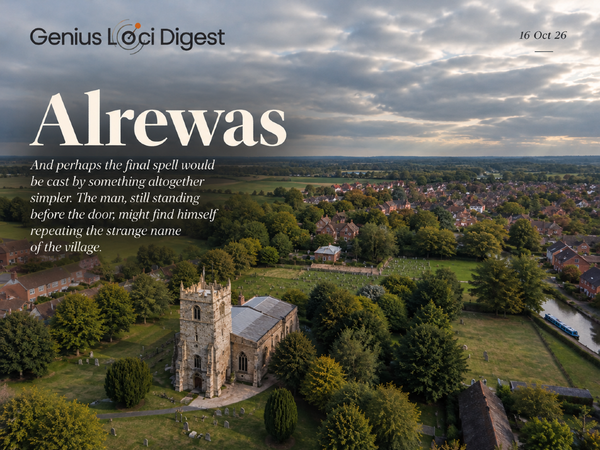
Continued from last week's Digest where I discuss the door at the church at Alrewas.
I find it difficult to convey or express how certain places make you feel - lifting you up and out beyond the confines of the everyday, beyond bodily exertions and mental ruminations. It feels like worlds aligning, crosshairs coming together on the spot: a kind of temporal entanglement. Over the years, I’ve become convinced that some places have a genius loci strong enough to pierce the gelatinous membrane of the present and allow the cool, calm waters from other dimensions to wash over you.
David Cohen, in his book Common Ground, sums it up perfectly:
“It’s moments like these that make you think places have a memory all of their own…It’s hardly a theory, more a feeling born of so long spent outside, but what if landscapes somehow become repositories of personal and collective memory? What if traces are imprinted or stored in an imperceptible or intangible way, and the land itself retains the culture of a place? Then what if, when a certain set of stimuli is triggered, a kind of molecular union occurs between that place and a person whereby memories and experiences are passed on like the sting of a nettle?”
I think the feeling I’m trying to describe comes from an embodied recognition of all of this, combined with the sense of tapping into, ever so briefly, the continuum - of looking into a conduit to the past.
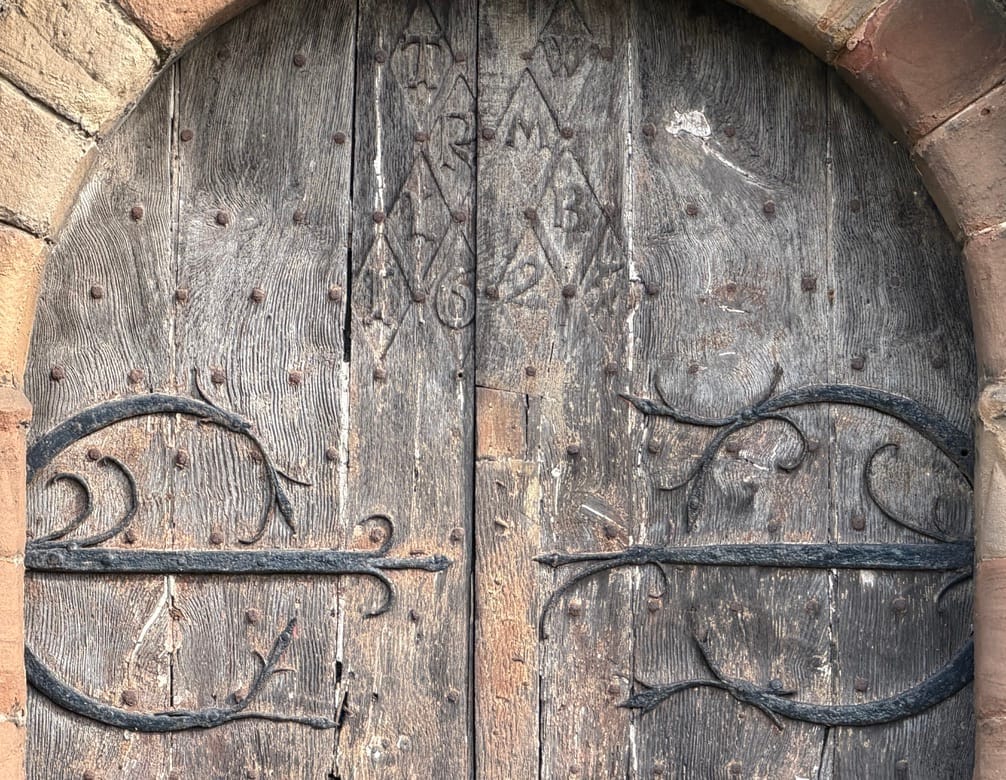
There was something else here, at Alrewas, too - I knew the names of the people behind the initials.
Thomas Worley, Richard Marshall and John Browne.
The door I was standing in front of had been a threshold for over 700 years. The inscription - T.W. – R.M. – J.B. – 1627 - etched into the lozenges had been added centuries after the door was made, and even longer after the tree from which its timber was fashioned had first been a sapling.
When I entered the church, it was as if some strange combination of time, location, circumstance and light had shut down every century but theirs.
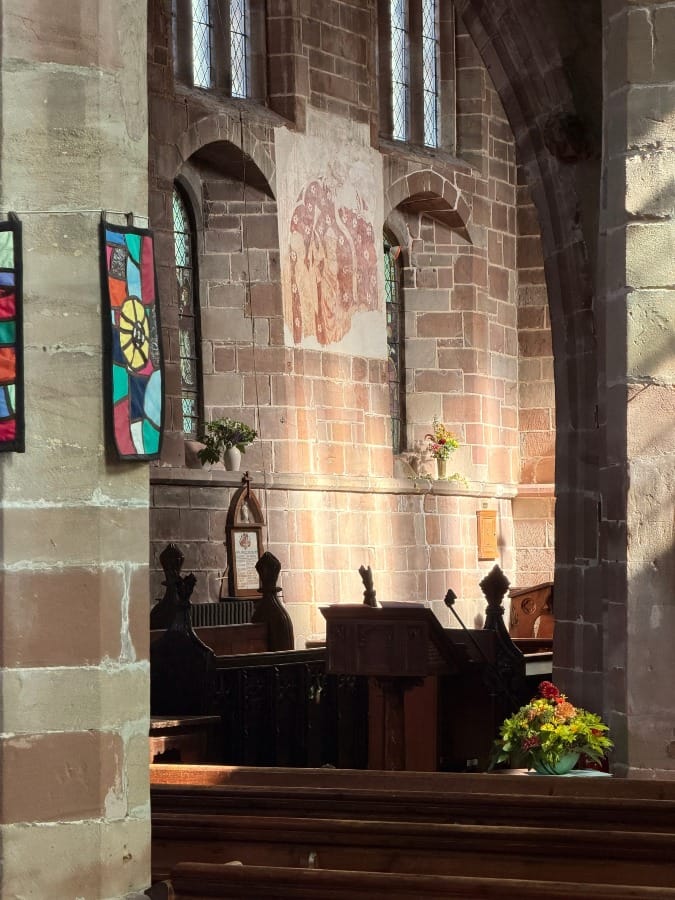
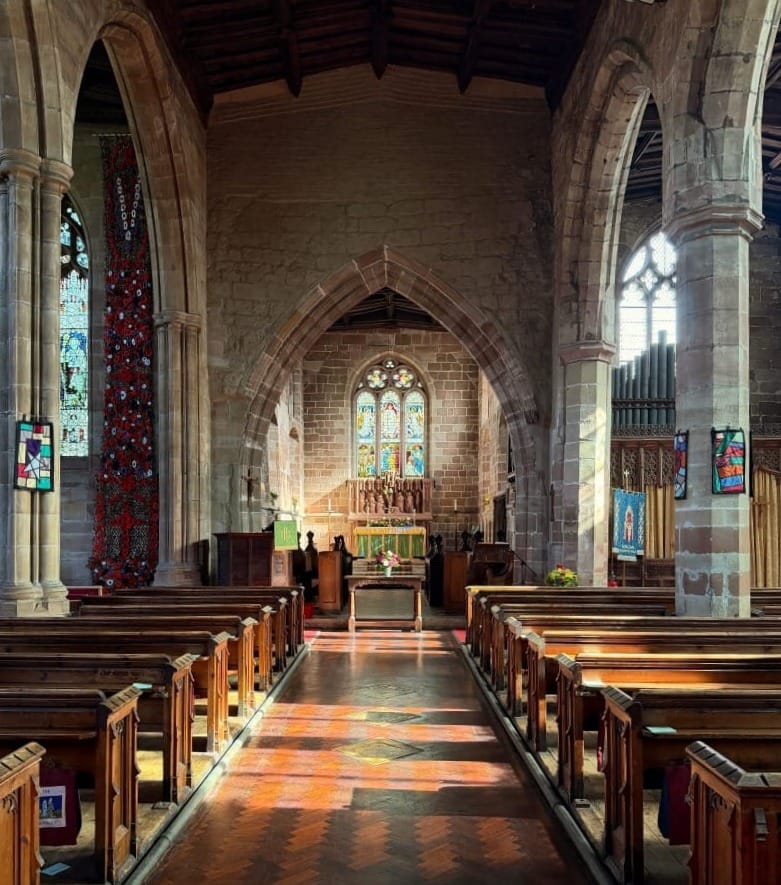
Objects and artefacts that they might have made or commissioned, or perhaps even broken bread over, were suddenly lit up - like the lighting in a West End stage show, carefully directed to illuminate certain elements of the plot.
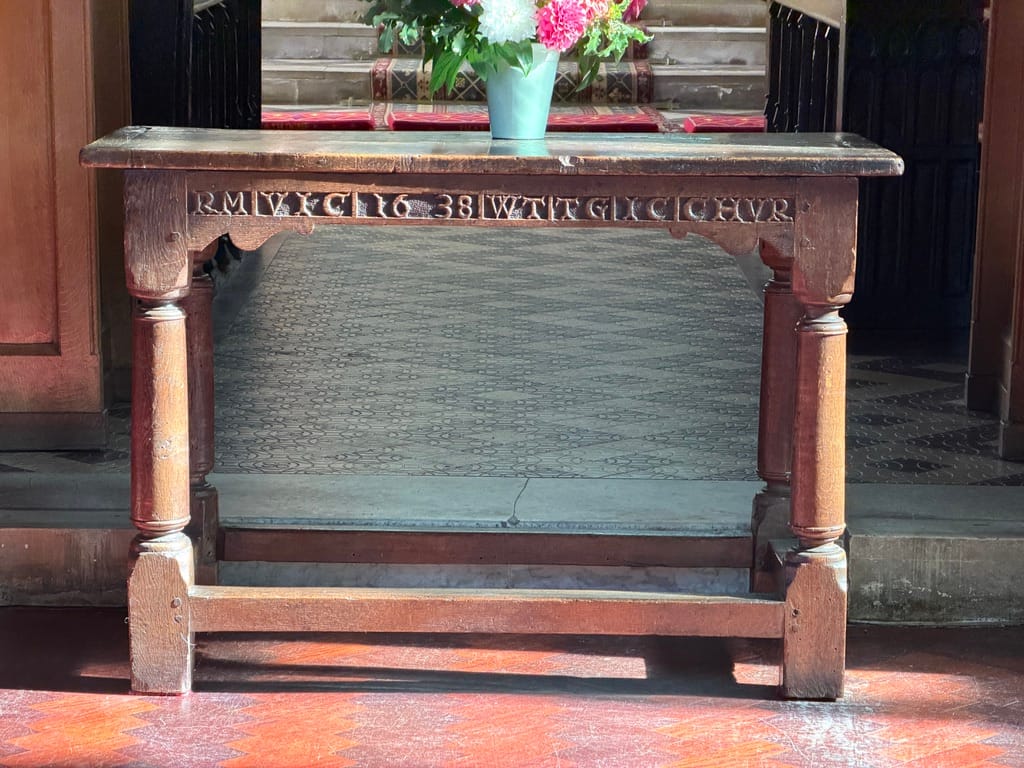
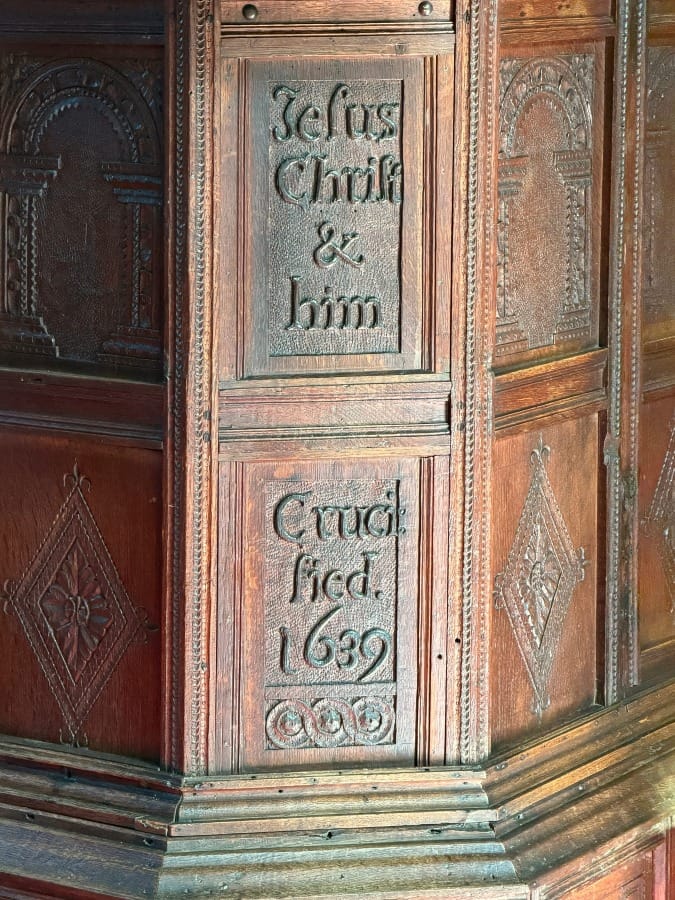
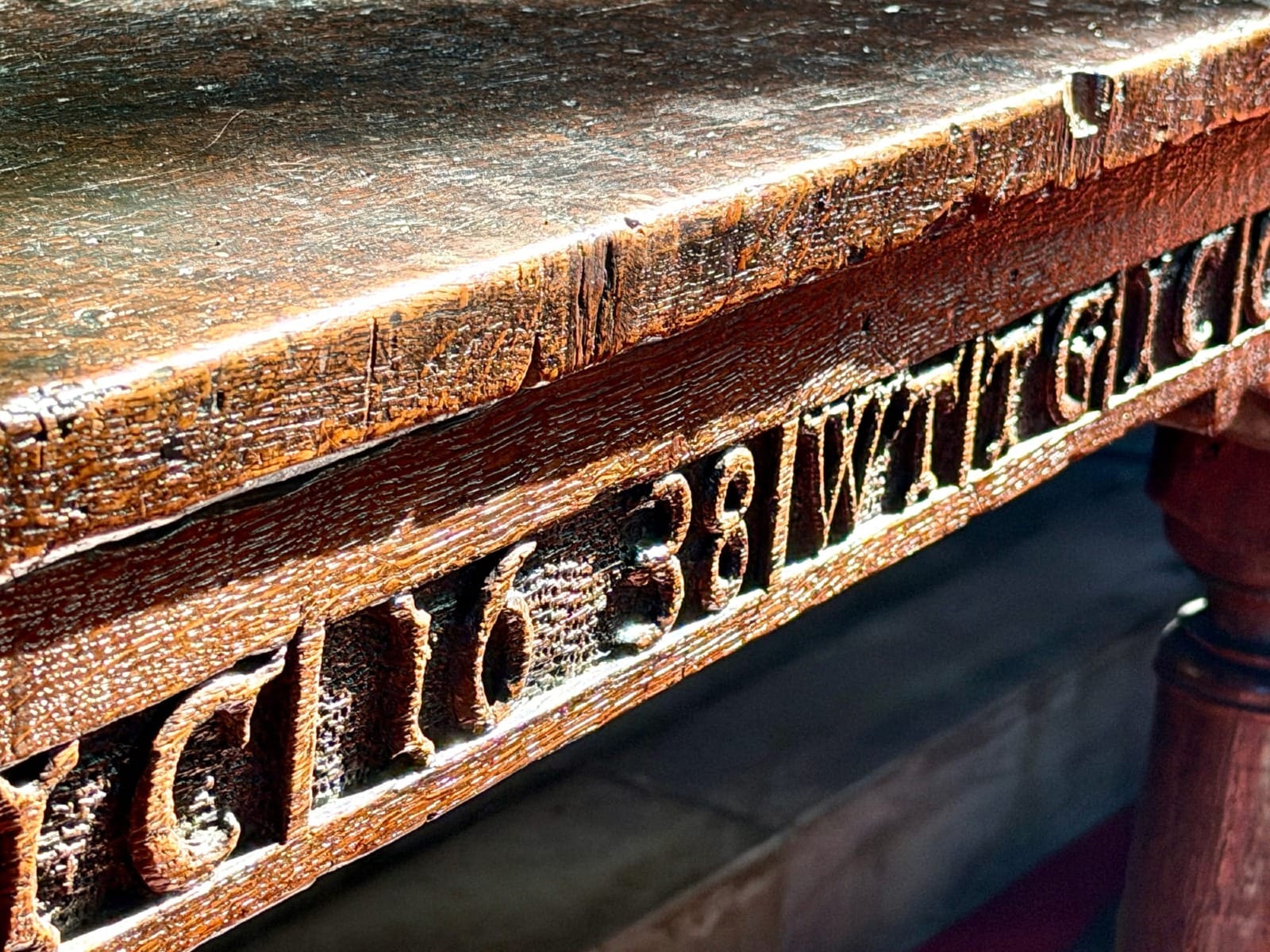
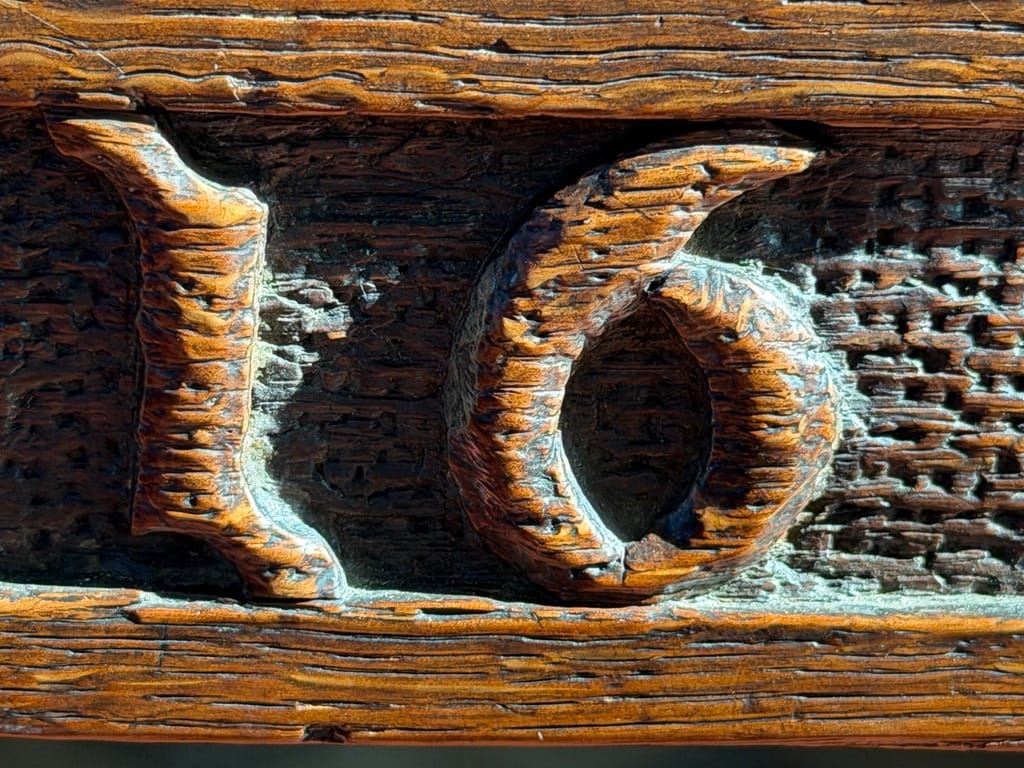
And this is how it happens. I note the dates and begin to think of the things occurring in their world - 1627, 1638 and 1639.
The reign of Charles I. A king at odds with Parliament, religious divisions deepening, arguments over authority, liberty and belief. Within three years of 1639, England would be at war with itself.
I wonder what Thomas, Richard, John and their families made of it all. Whether they felt the slightest pang of anxiety about the direction in which their world was travelling. Whether they worried about the future, argued over the news, or wondered what sort of world their children might inherit.
And yet, amidst all this uncertainty, people were tending to their church: repairing a door, commissioning an altar table or carving a pulpit. Probably unaware of the enormity of the events that lay ahead, they were leaving something for those who would follow.
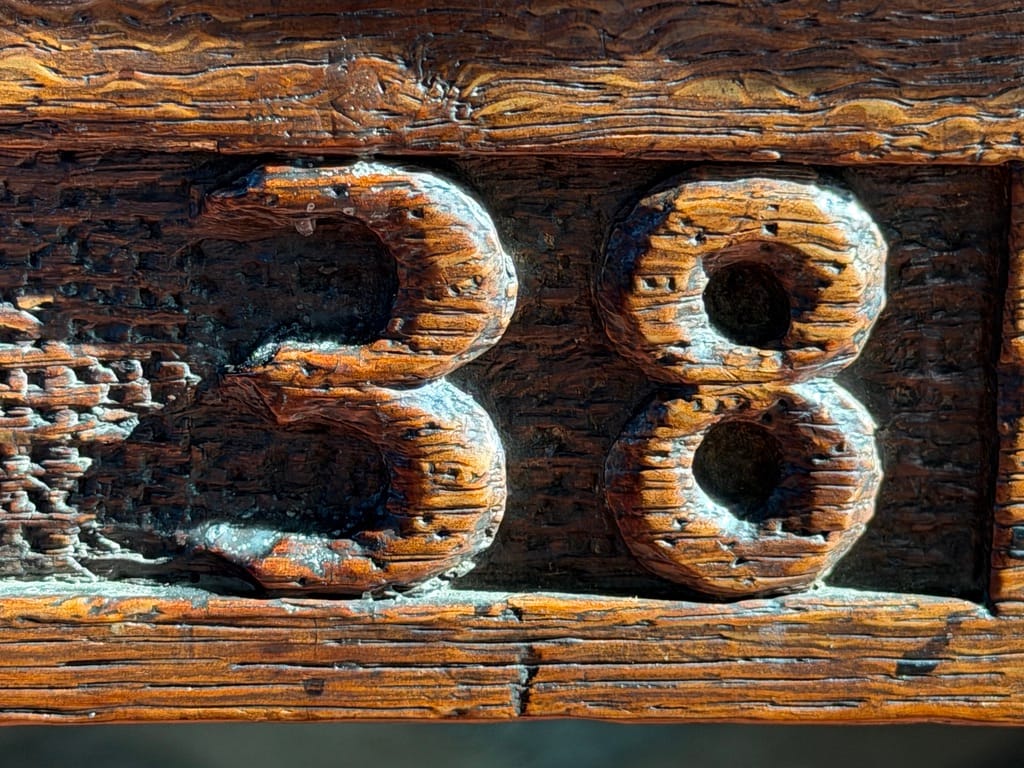
I feel a slight flicker of anxiety myself. There's something unsettling about standing amongst the artefacts of people who lived through such troubled times, knowing what was to come, and then wondering what those who follow us might make of our own times.
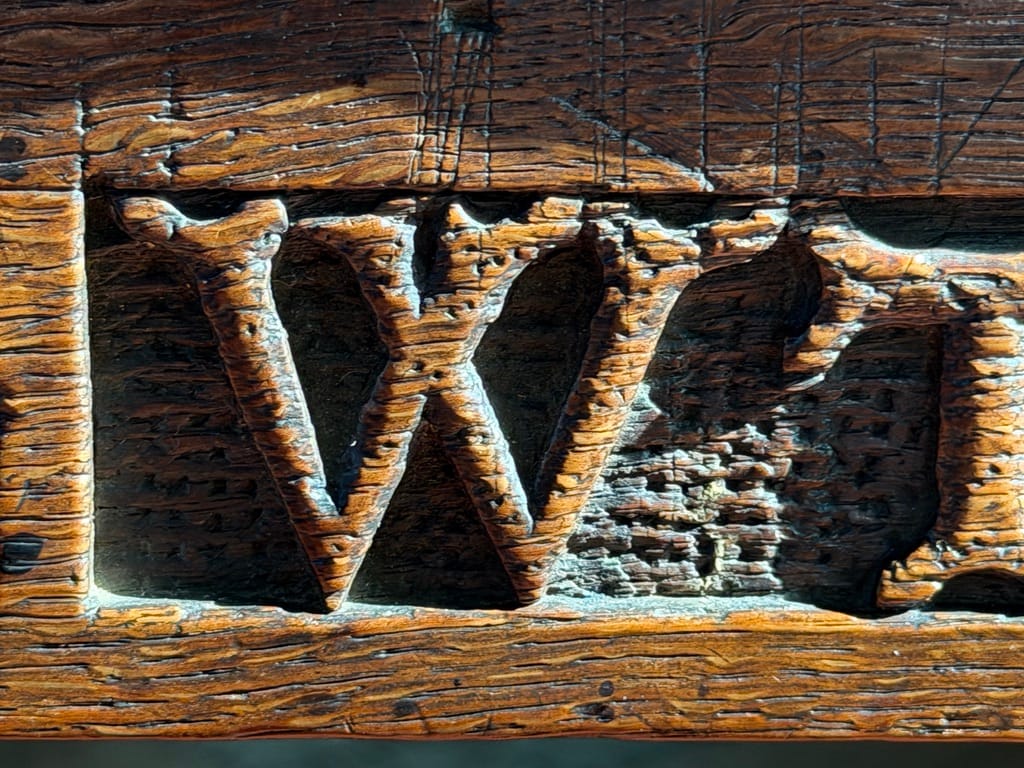
But when I look around the centuries begin to pile up again. One generation building upon another, each leaving its own layer of time. The church has continued to evolve, absorbing the changes, the upheavals, the losses and the acts of care that have brought it to this moment.
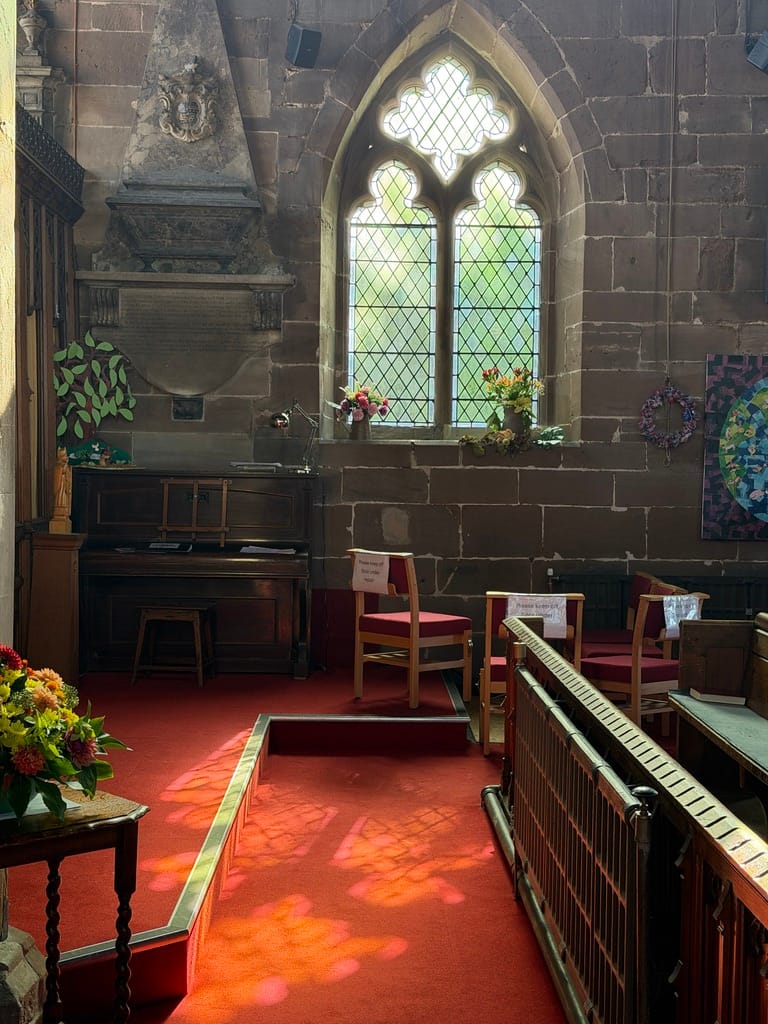
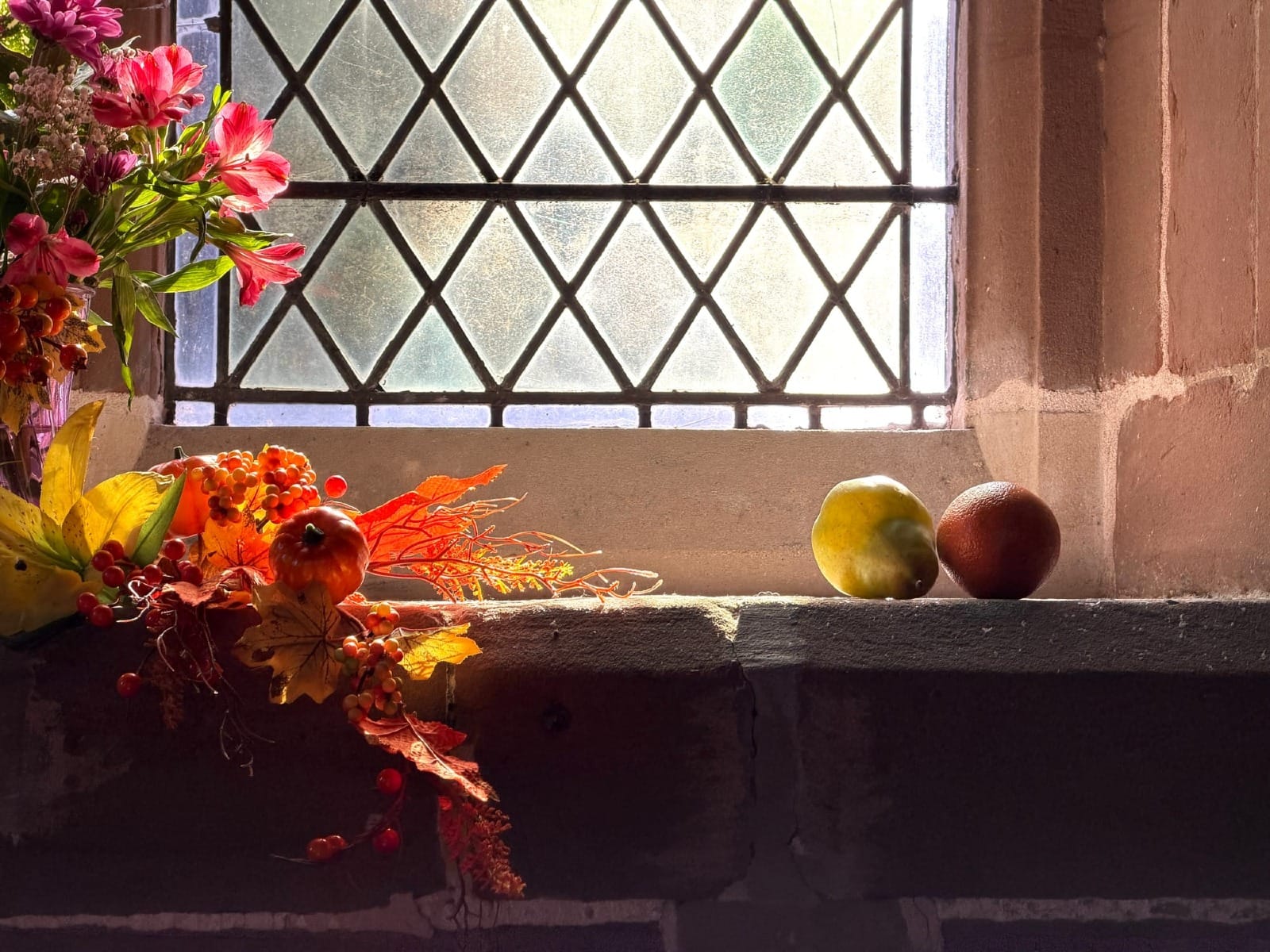
And all the while, the light is changing. I find myself drawn towards the south aisle, where the sunlight has found its way through the windows and fallen upon the carpet in great patches of colour. The light is still leading the way, illuminating something else that catches my attention.
Beyond the lighted floor, there are a few chairs with notices attached to their backs that say, “Please keep off. Floor under repair.”
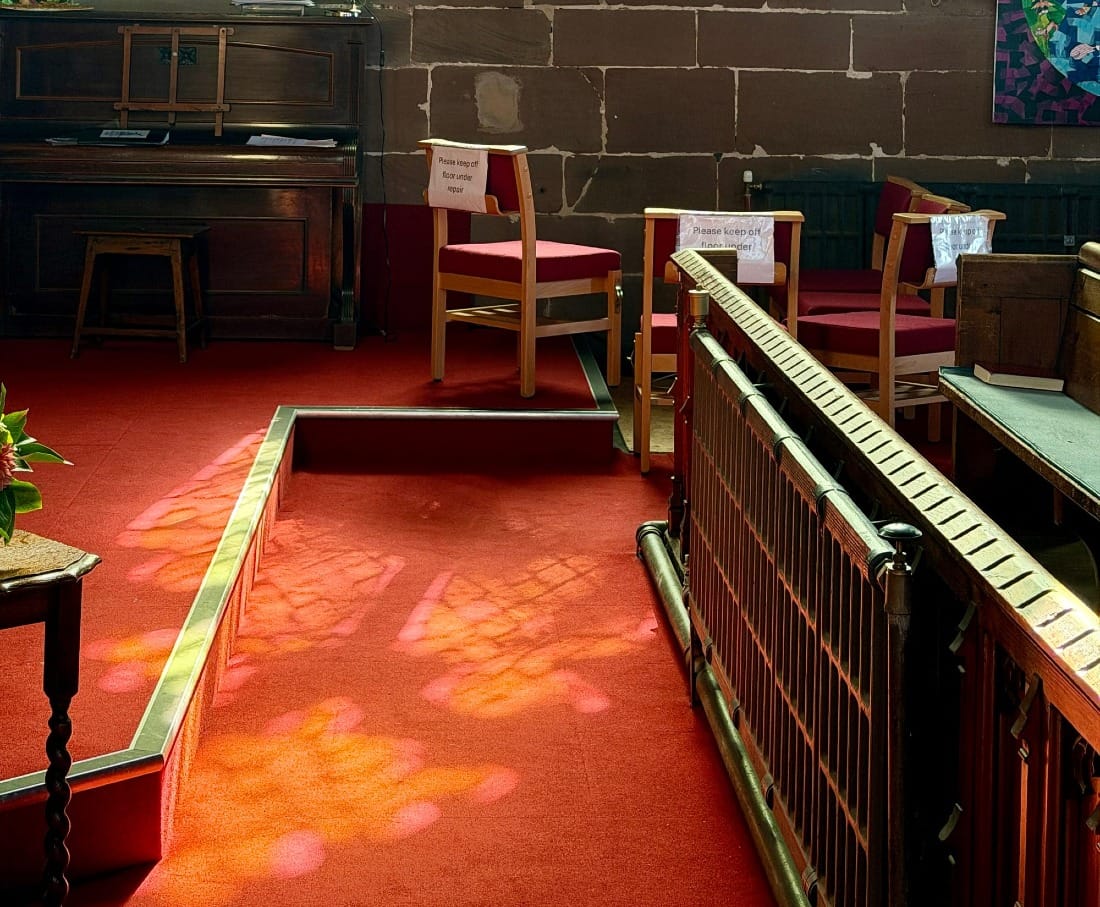
And there it is.
Almost four hundred years after three men had their initials carved into the door, someone is tending to the floor.
And I find myself thinking about the world beyond these walls. About the great upheavals of the seventeenth century, when so many of the established strands that held society together were stretched or swept away. And yet, here in Alrewas, through all that turmoil, the church survived, sustained by generations of people making, mending, adapting and caring.
I think back to the door - a universe in the particular - but now, looking around the church, I begin to see another universe unfolding. A universe of humanity told through the accumulated fabric of the building.
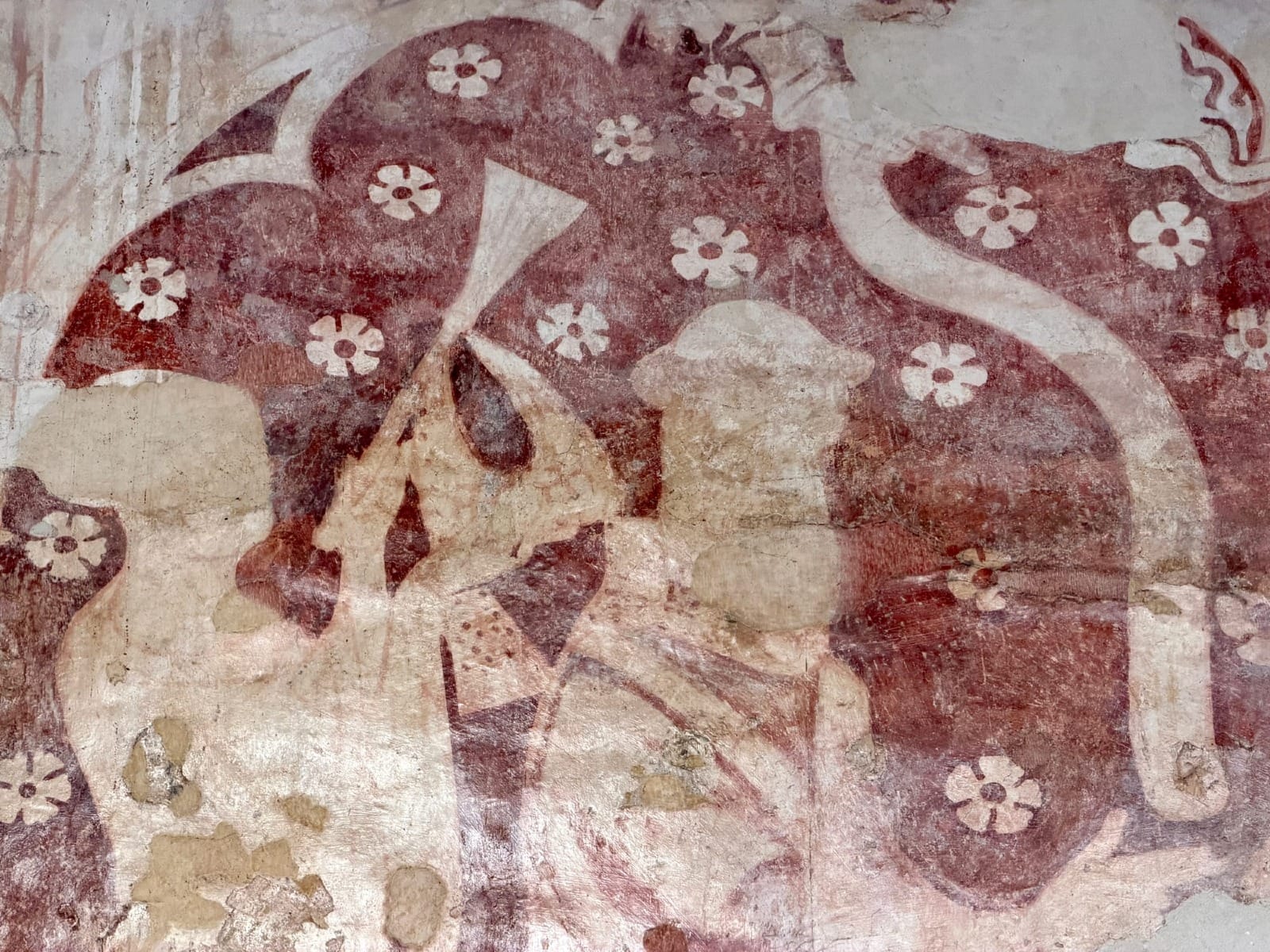
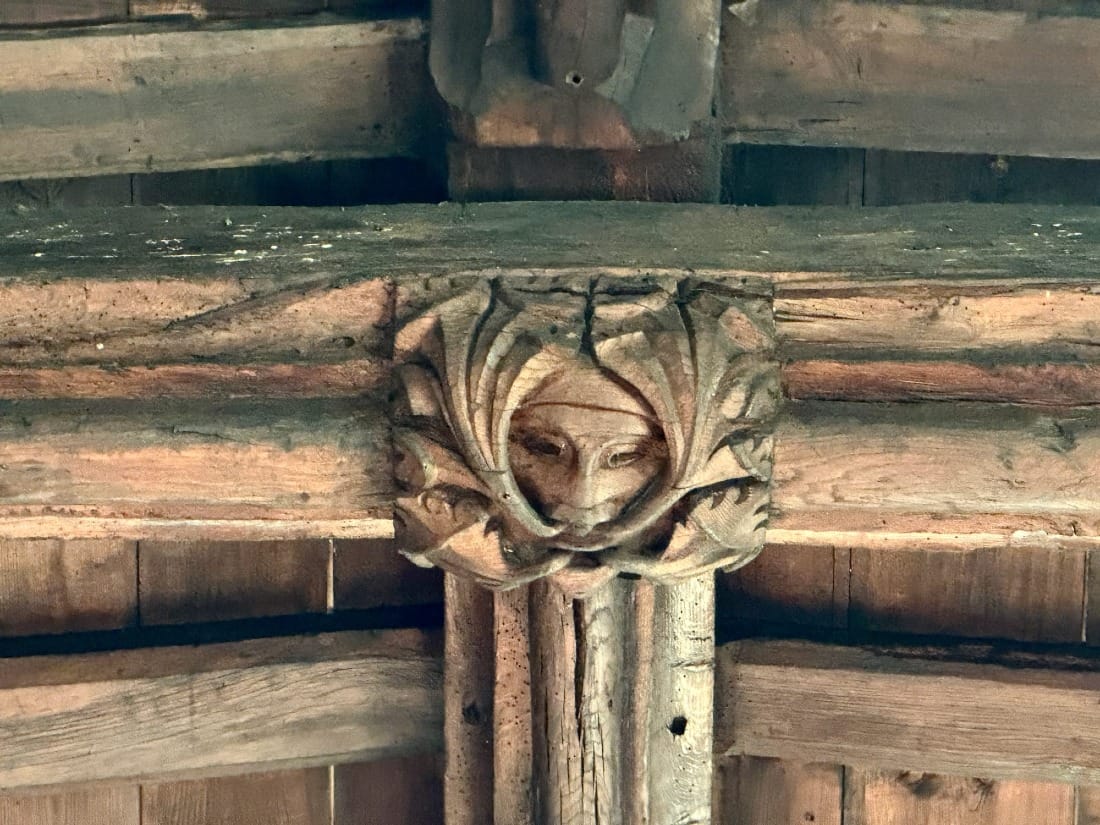
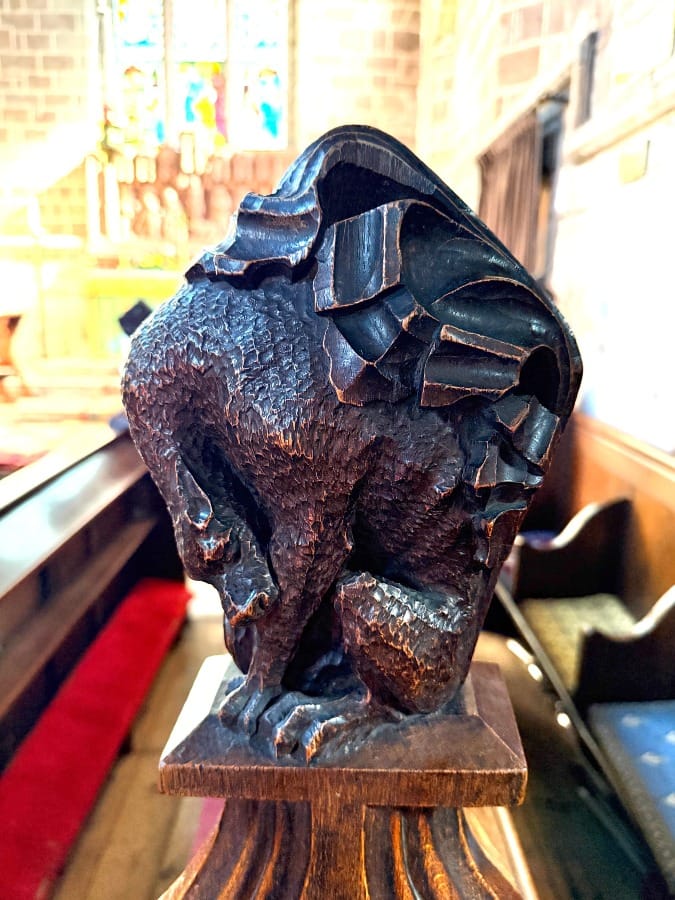
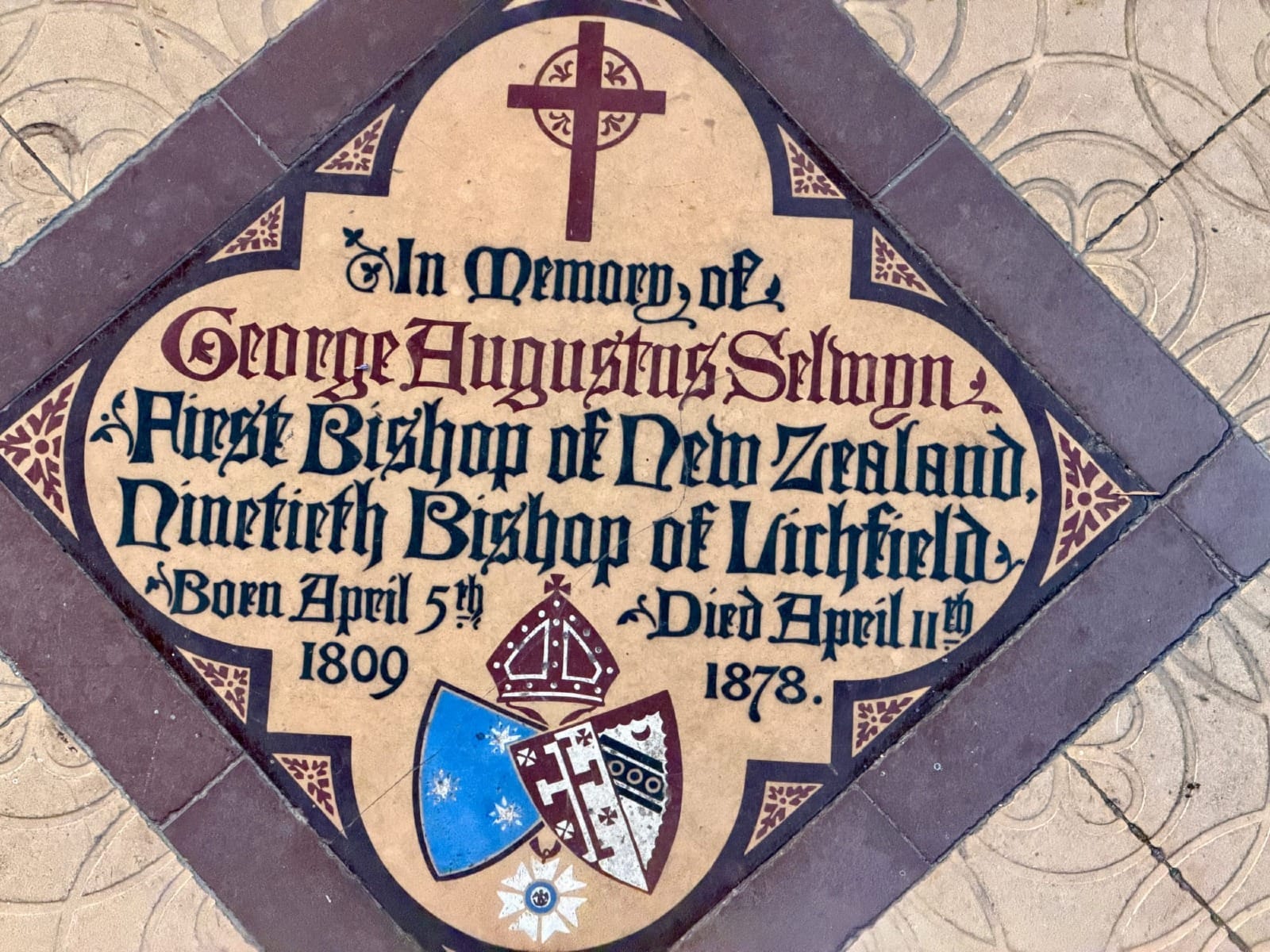
Each generation adding something of itself, each repair another chapter in a story that has never really stopped being written.
What strikes me most here is that the great events of history are so often told through the actions of kings and governments, through conflict, upheaval and the rise and fall of institutions. But here, in the fabric of a village church, another history is playing out - one of ordinary people getting on with the business of living, making, maintaining and passing things on.
Help me keep going to extraordinary lengths for remarkable places.
Membership starts at £2/month, supporting the weekly Digest and free professional photography for historic places, charities and craftspeople.
See membership options
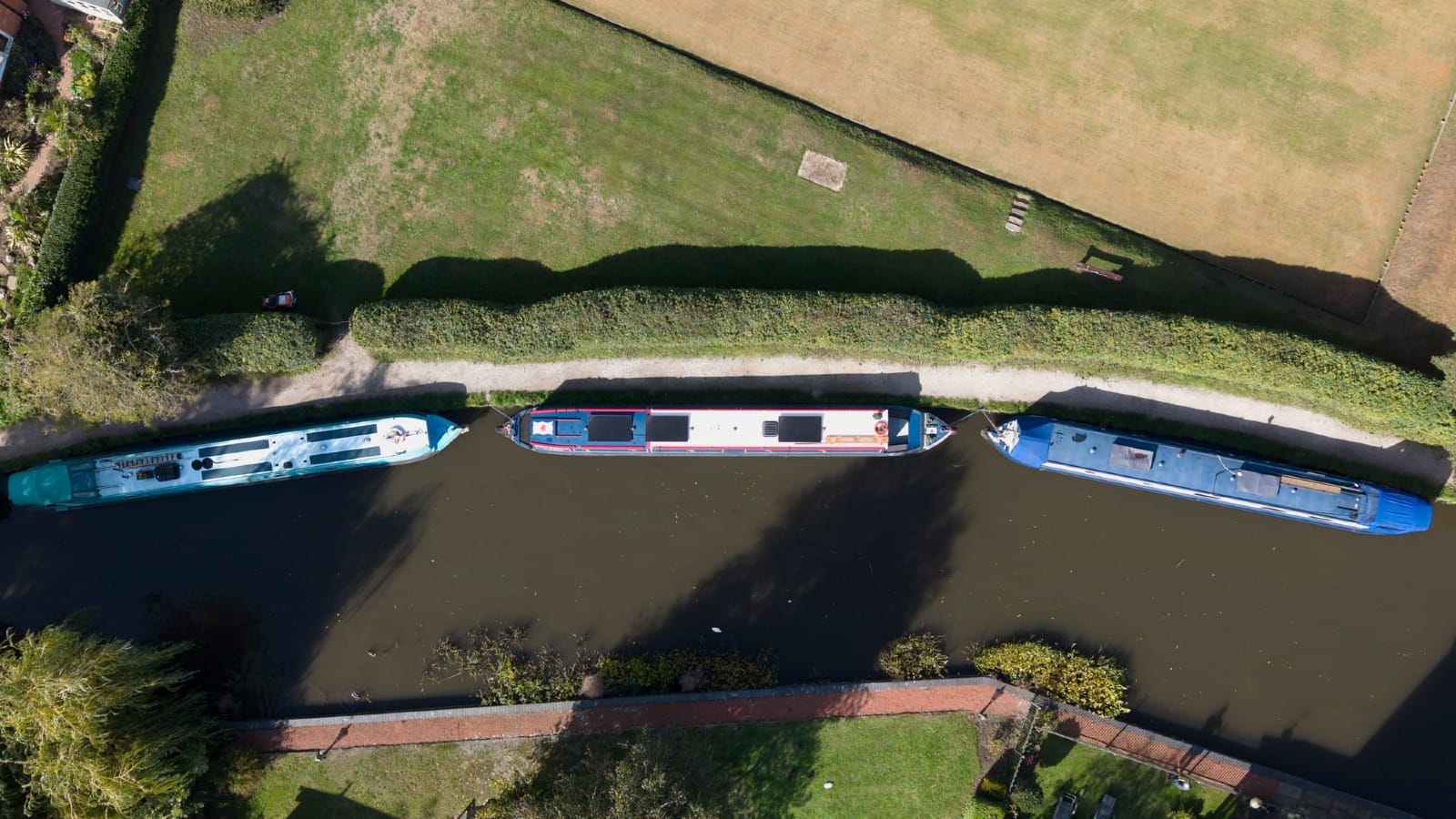
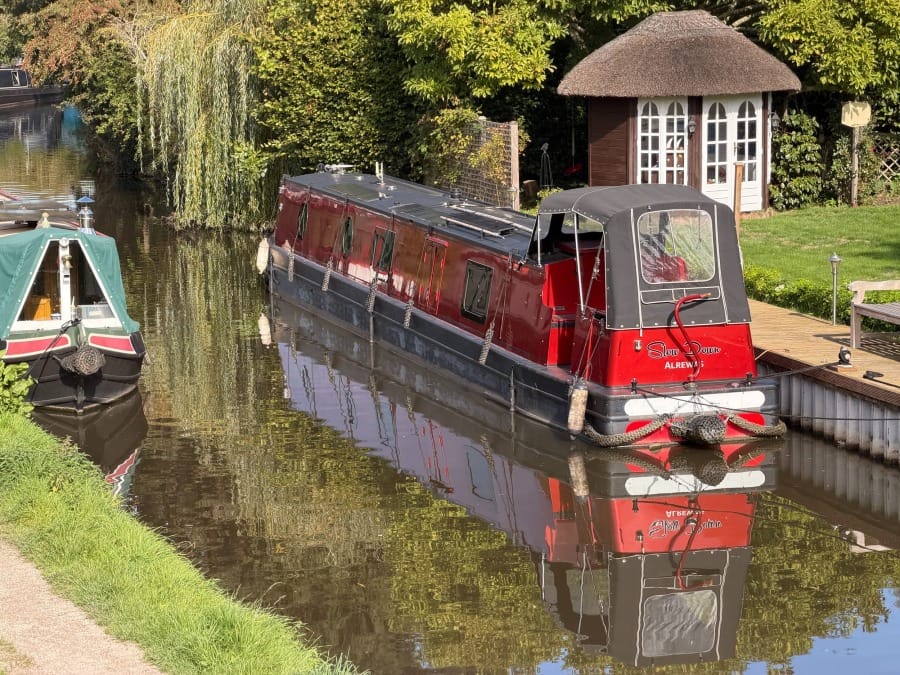
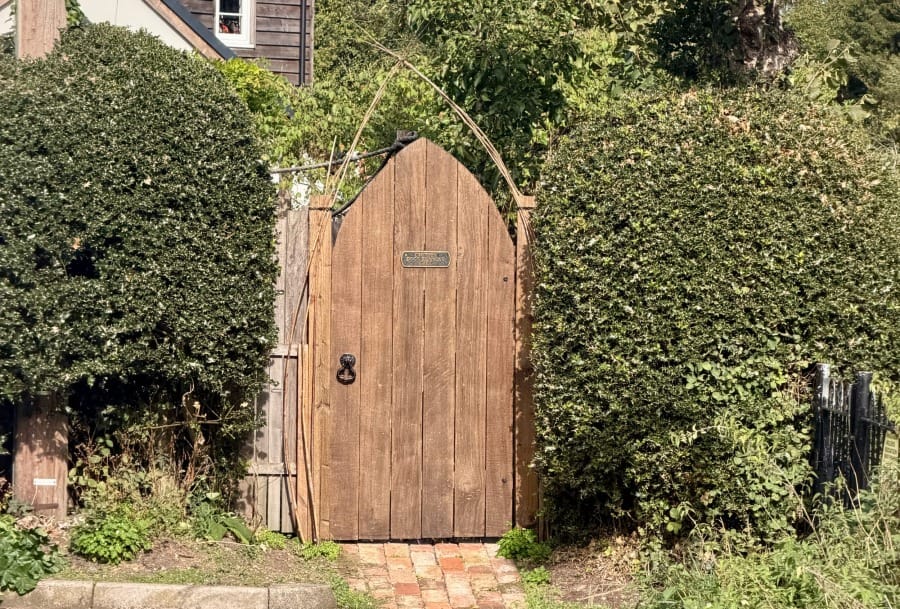
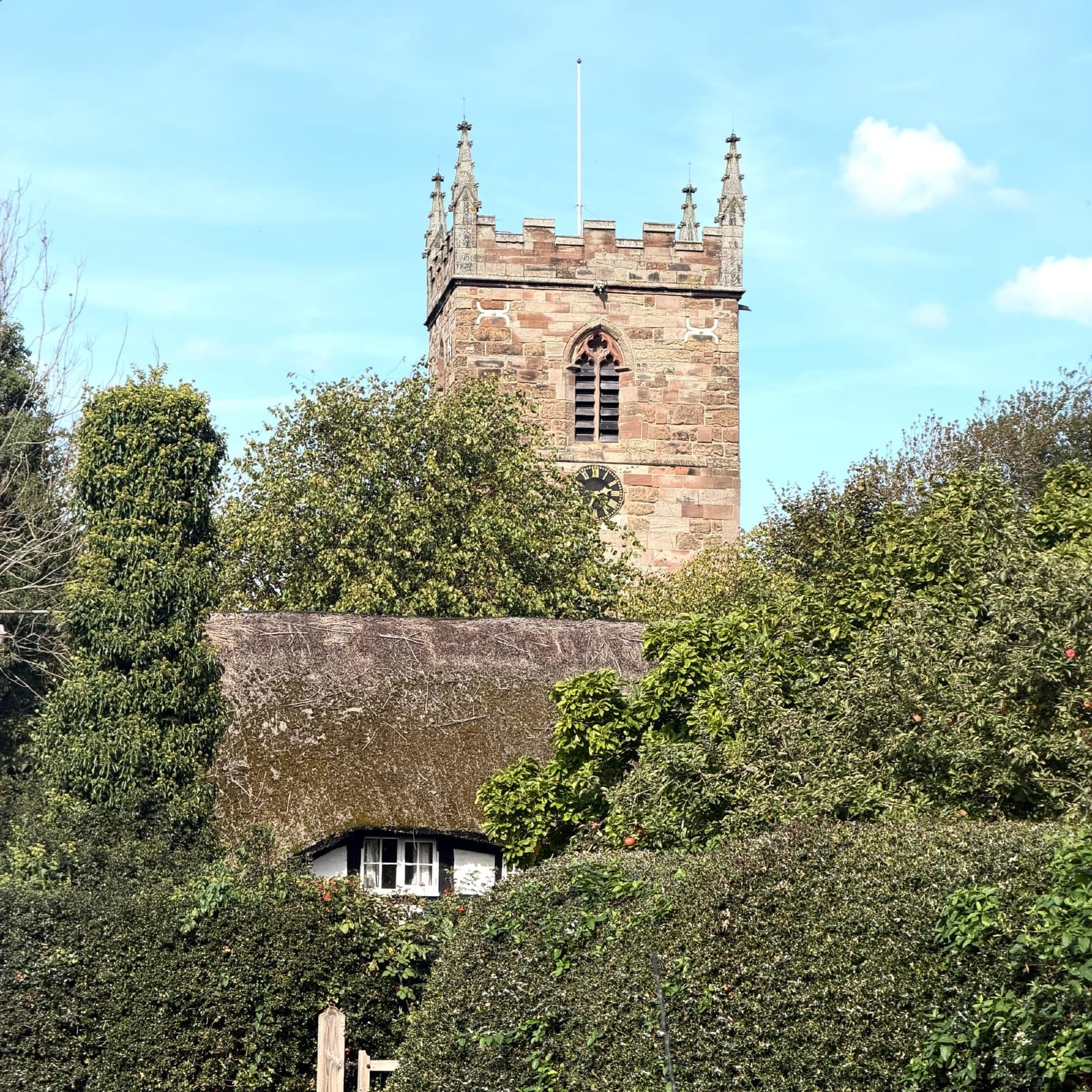
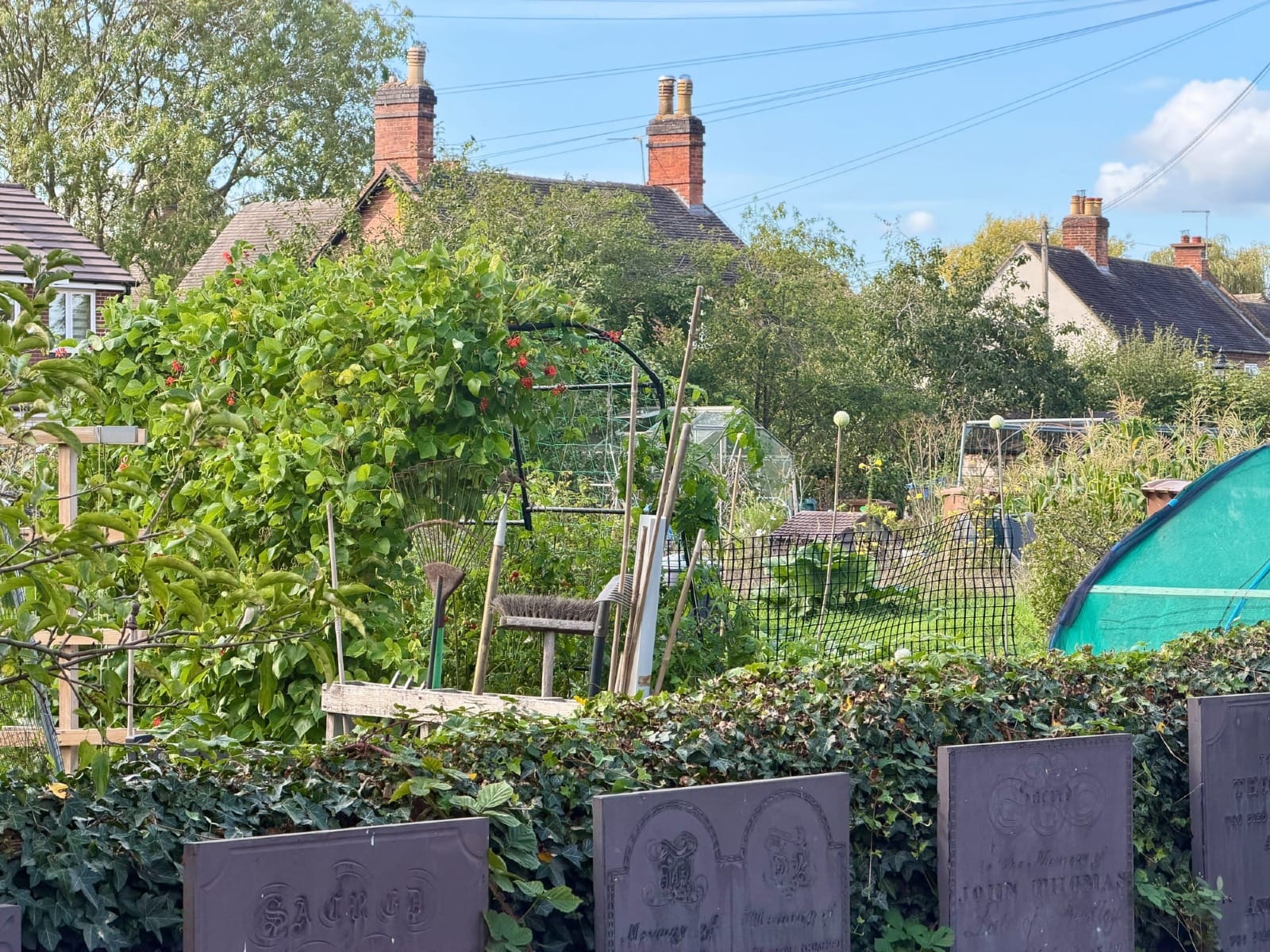
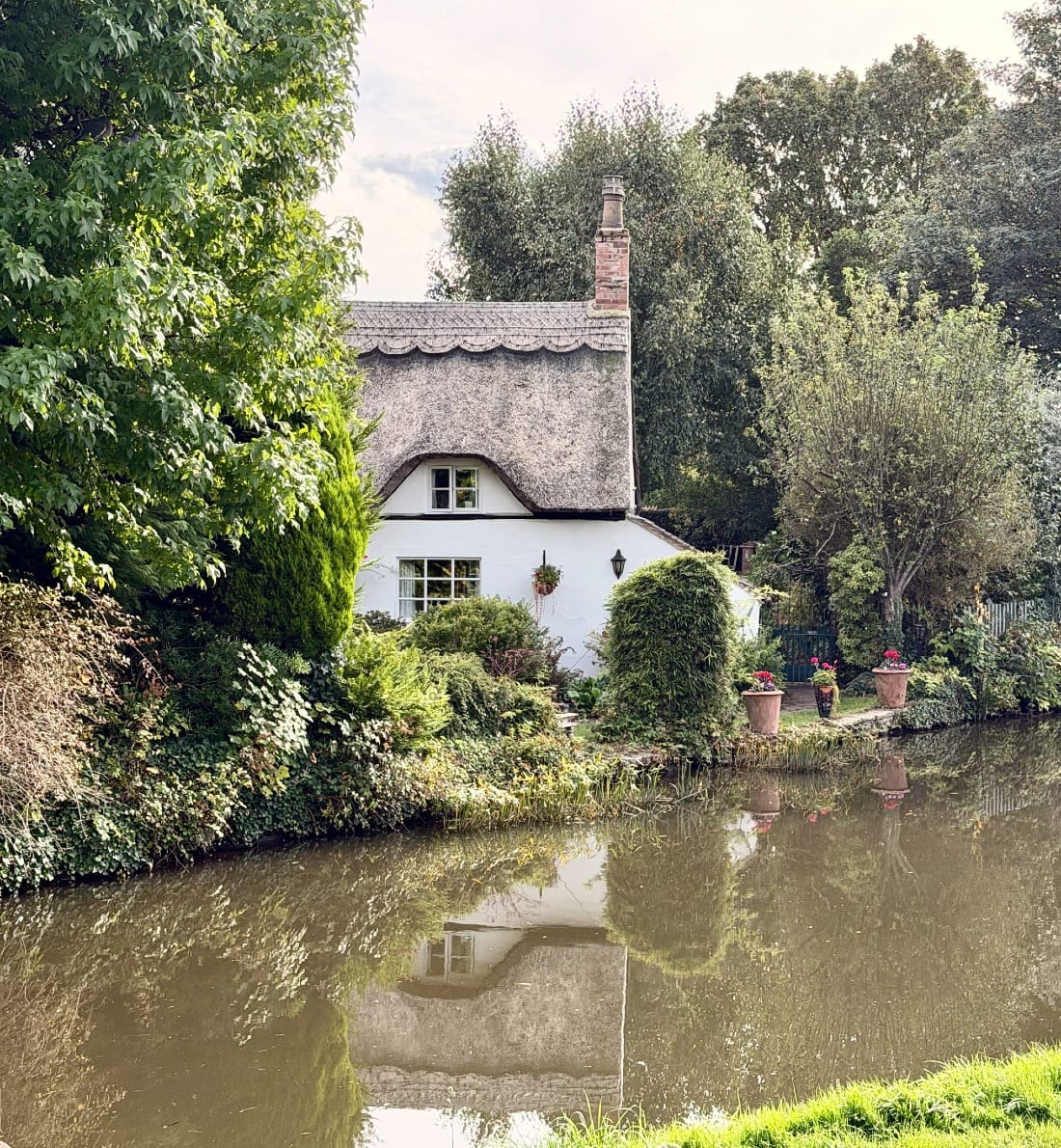
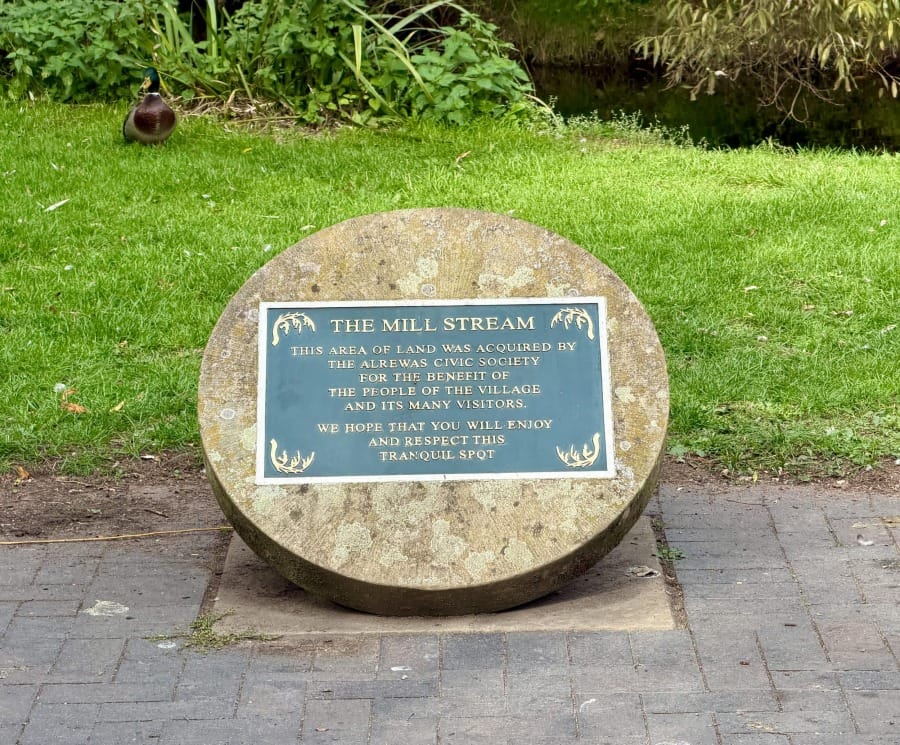
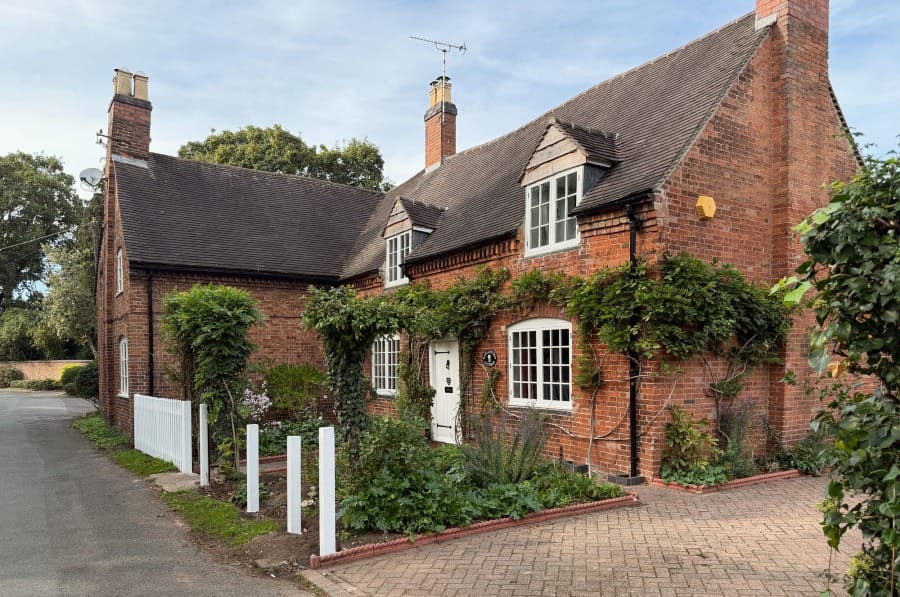
The Village of Alrewas
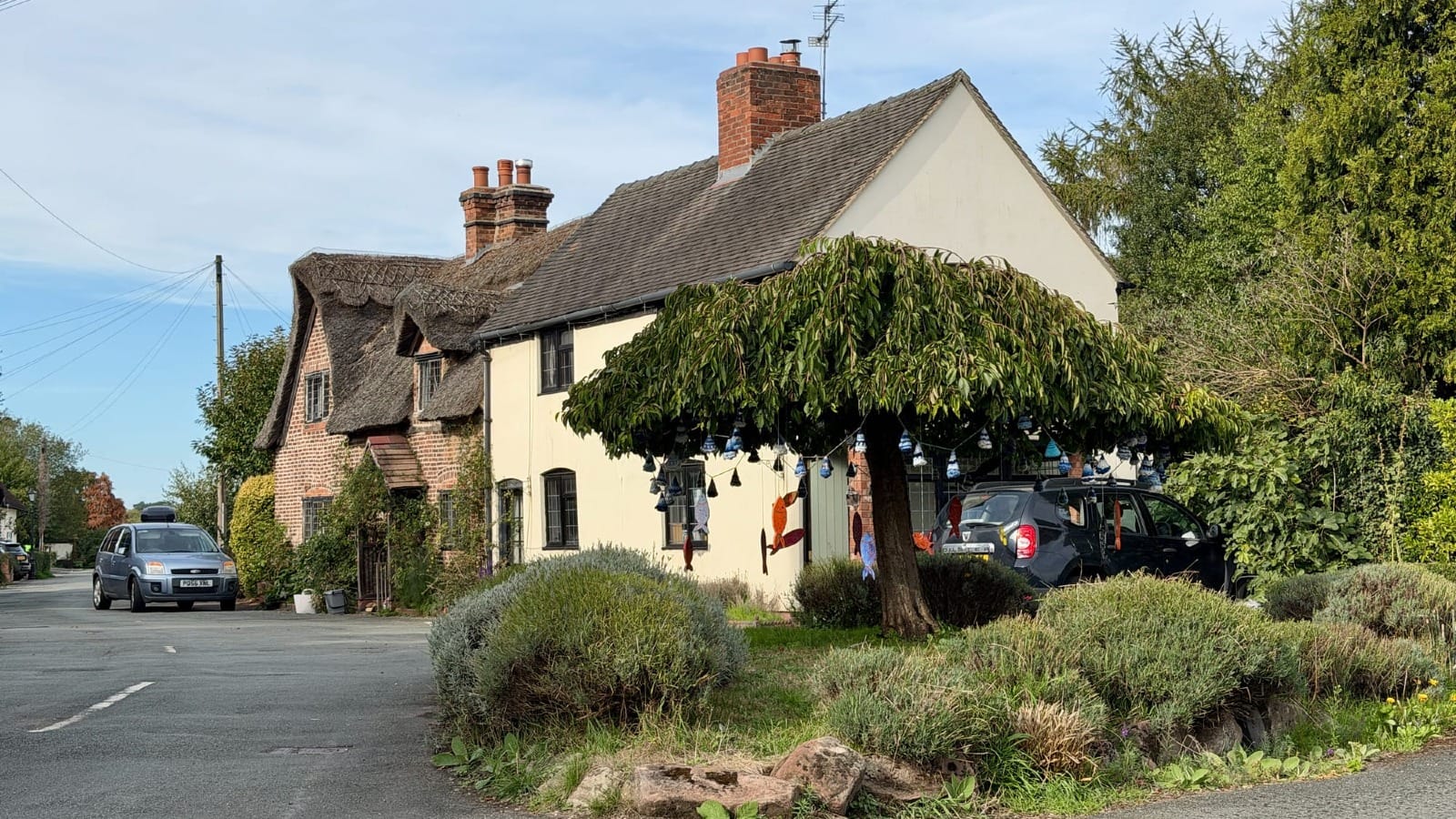
And in a world of worry, of threats of war, of polar opposites - the people of Alrewas came together and decorated a tree for their Arts Festival.
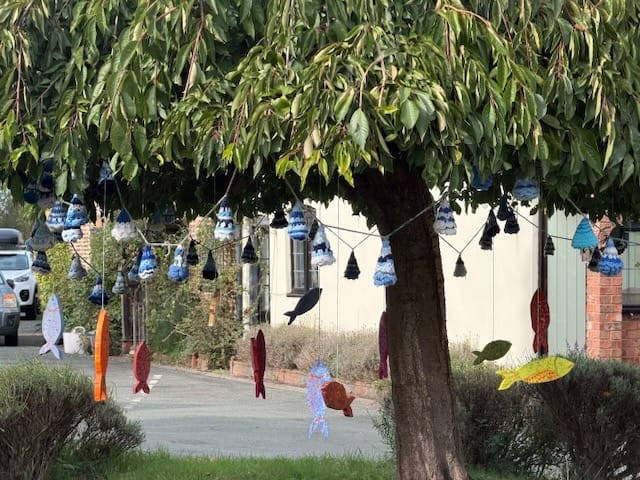
Thomas Worley, Richard Marshall and John Browne would still recognise much of Alrewas we see today - the lanes and boundaries haven't changed much - and perhaps, they might gasp at the fact that, after all they went through, the civil wars, the beheading of a king and the restoration of another - that there survives in fits and starts certain things that they came to know.
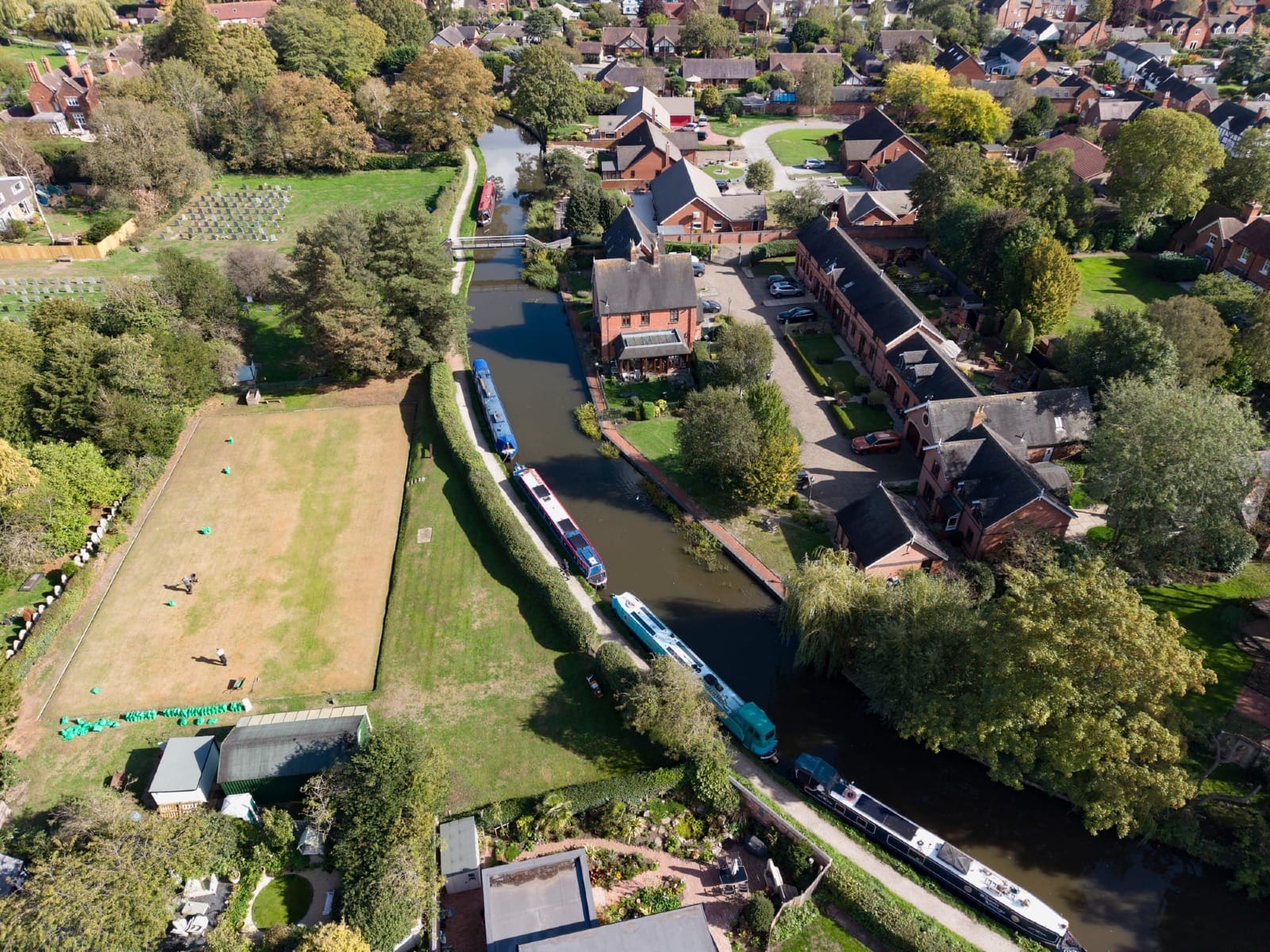
Alrewas developed on low-lying ground beside the Rivers Trent and Tame, at a crossing associated with an ancient salt route. By the Domesday survey of 1086, it was a royal manor with a priest, agricultural land and a valuable fishery. A market charter was granted in 1290.
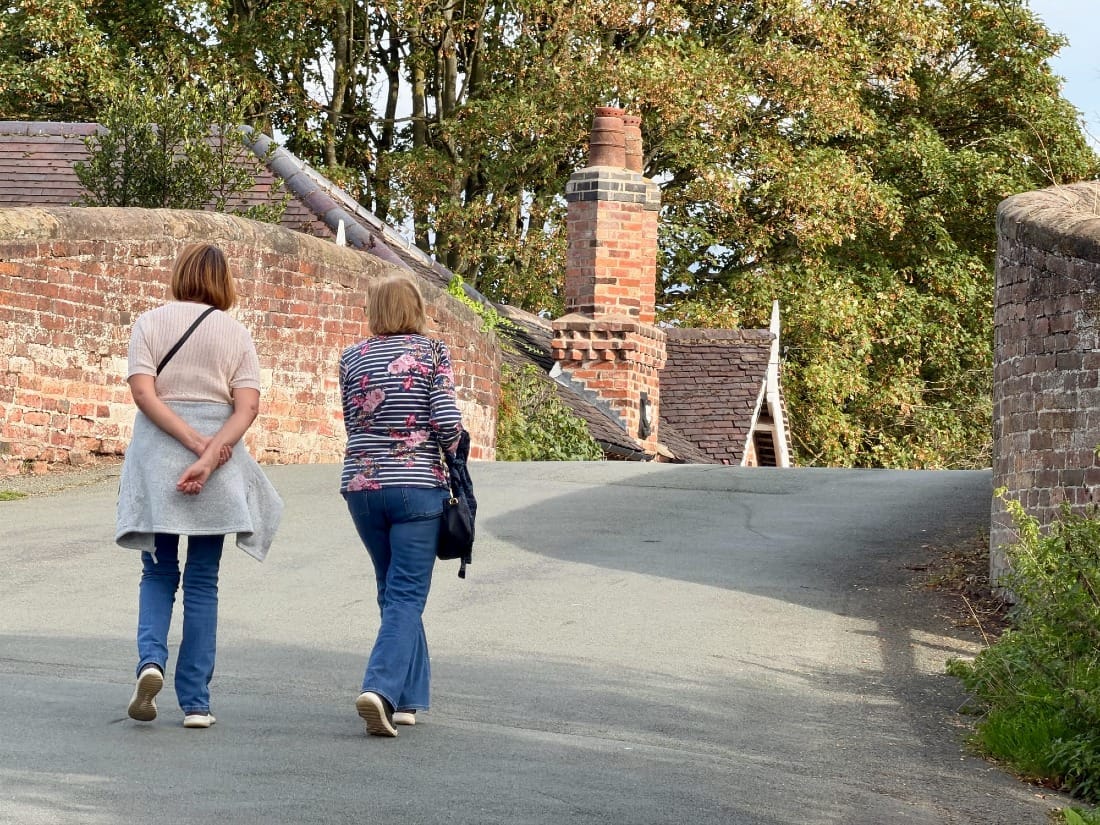
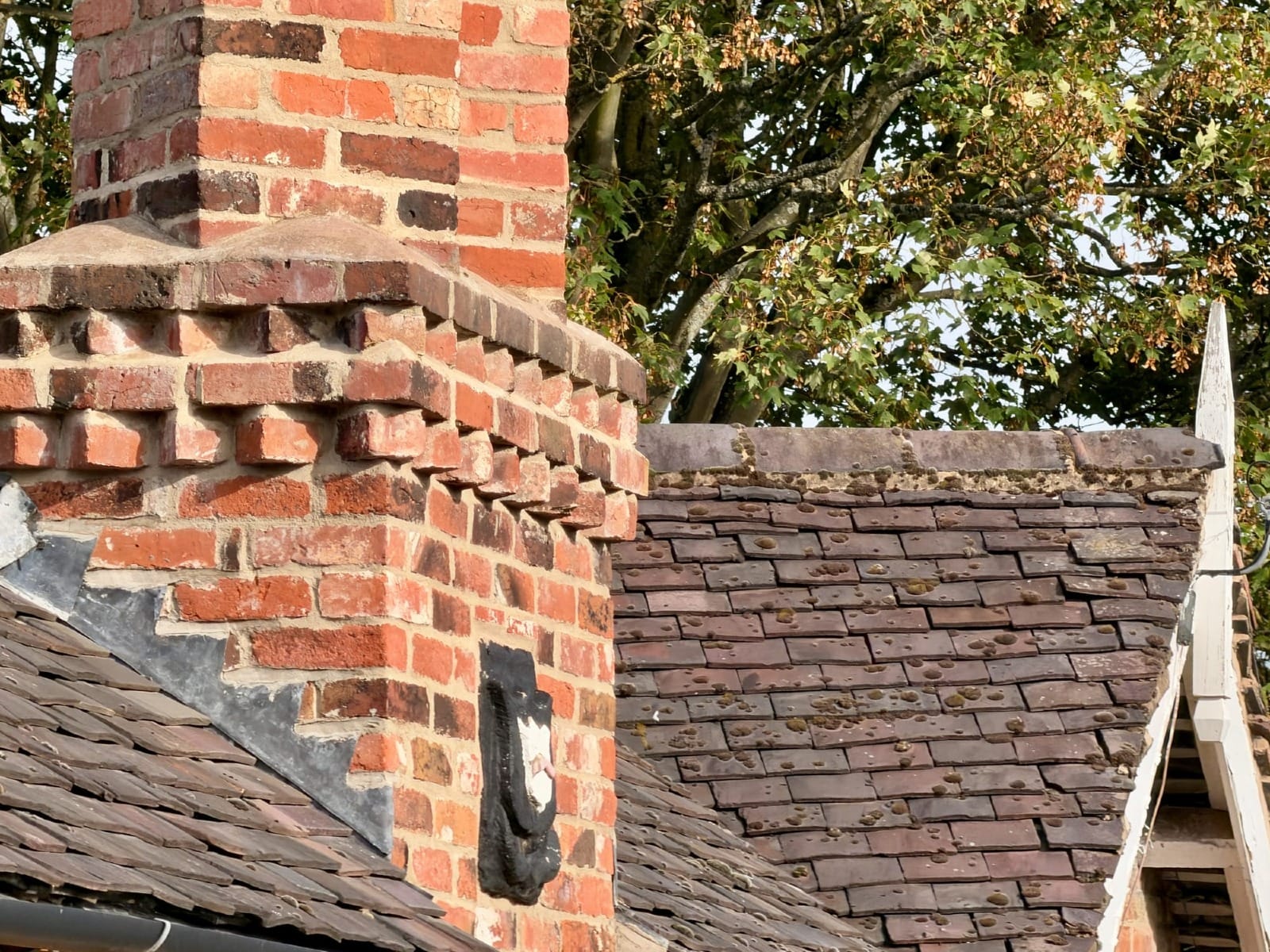
Timber-framed houses, thatched cottages and later brick buildings reflect centuries of gradual rebuilding and adaptation. The opening of the Trent and Mersey Canal in the 1770s connected the village to wider trading networks, followed by the railway in the nineteenth century. Alrewas retains its historic character, with its medieval church, traditional buildings, old streets and waterways.
The village of Alrewas (Pure Scroll - no words)
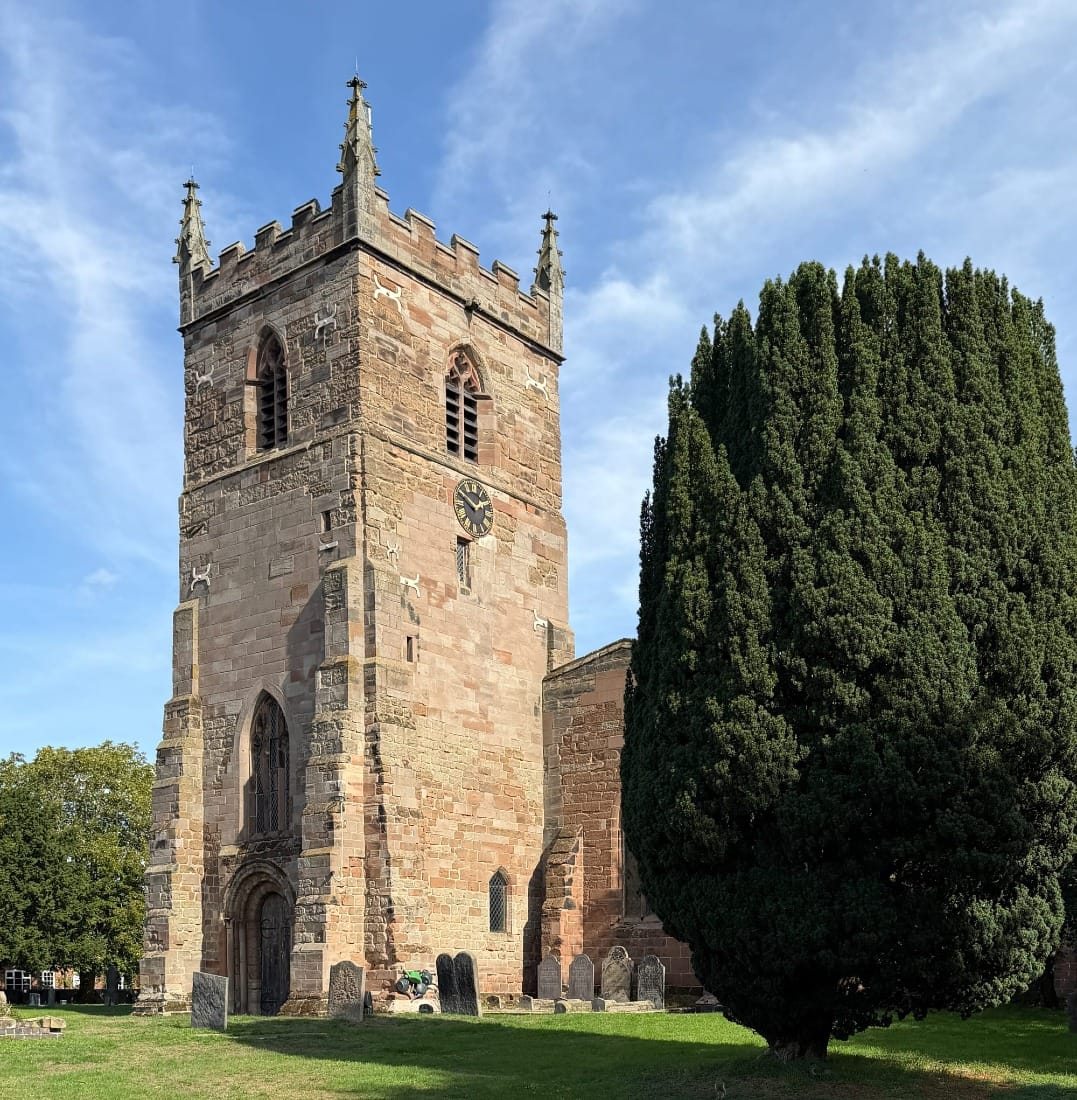
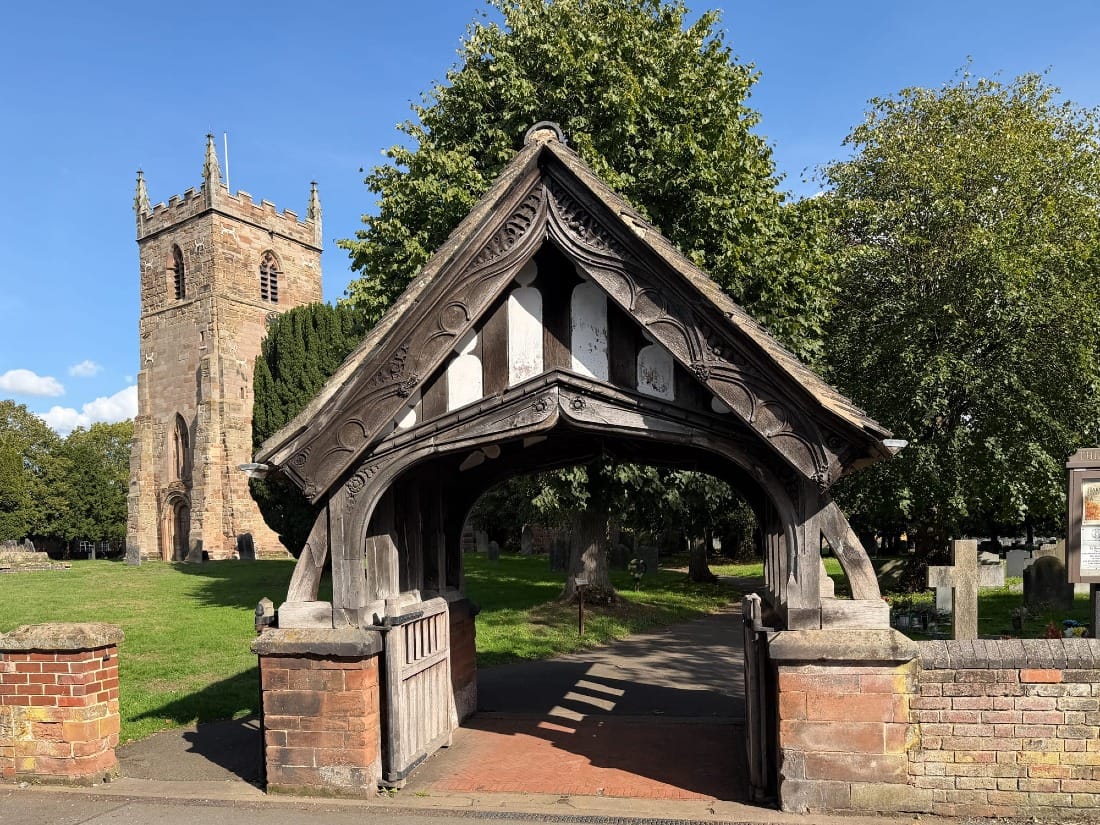
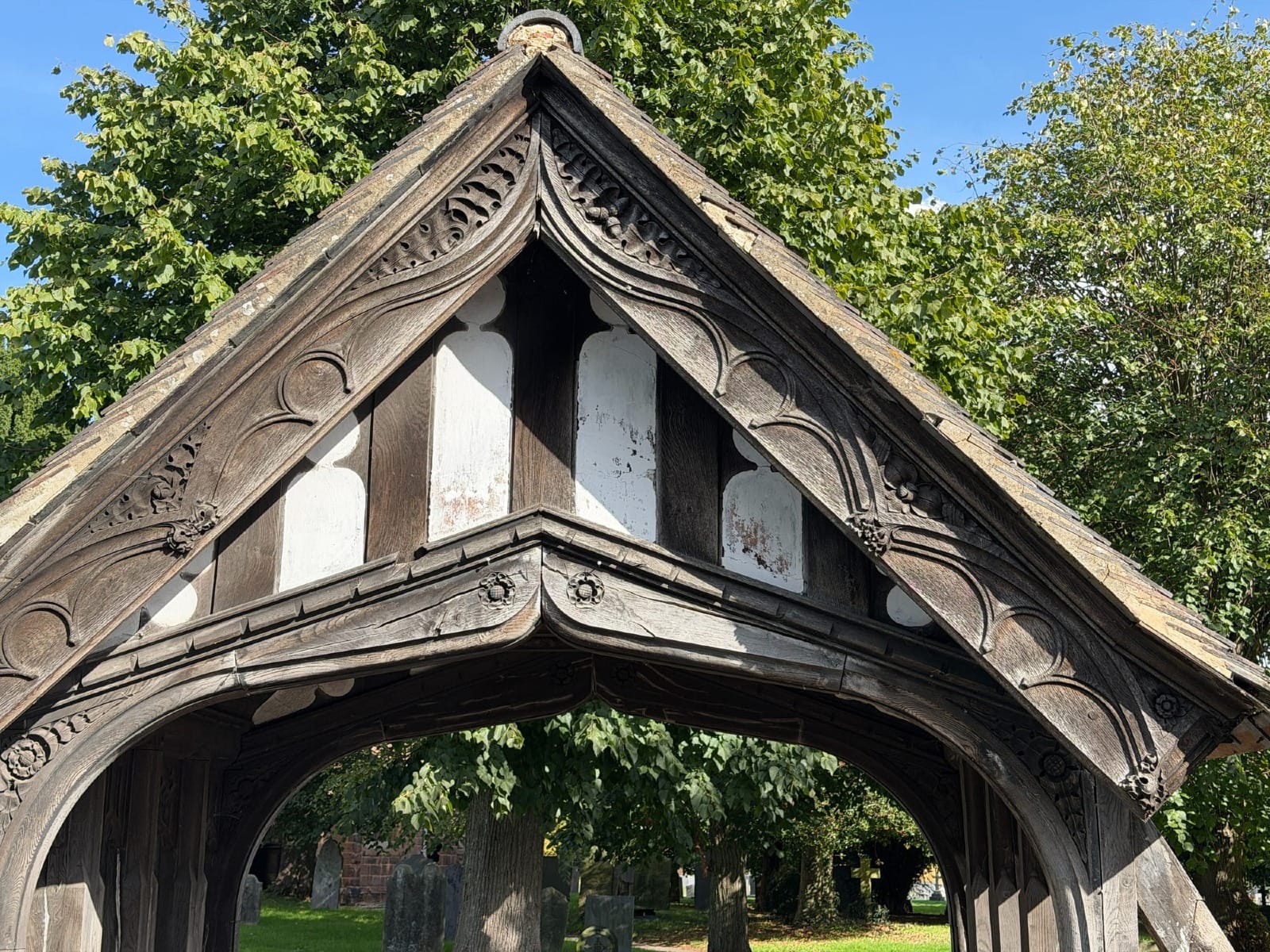
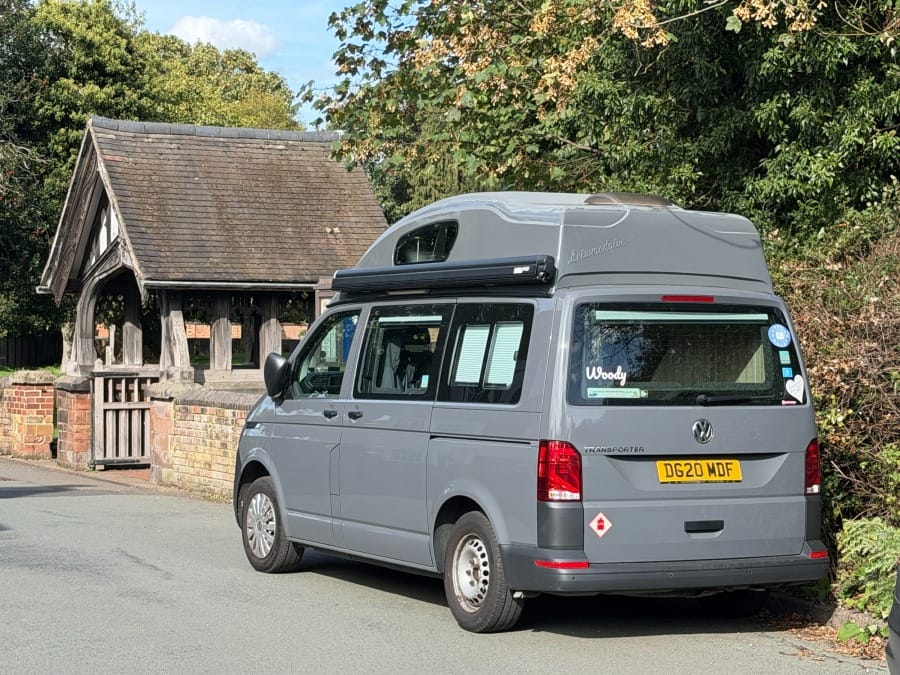
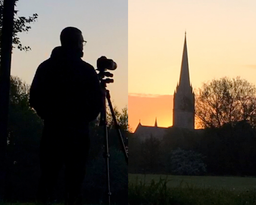 Andy Marshall
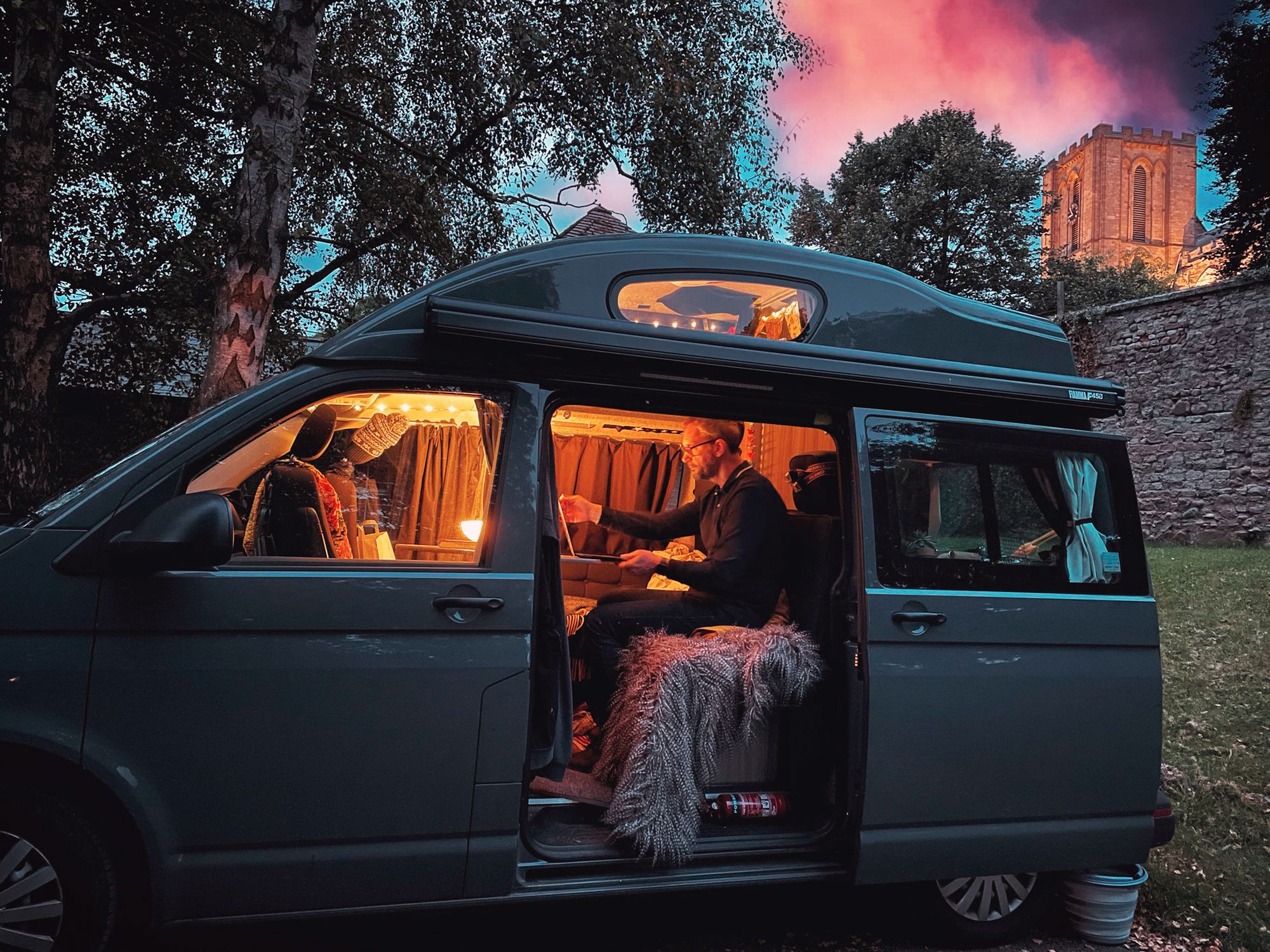
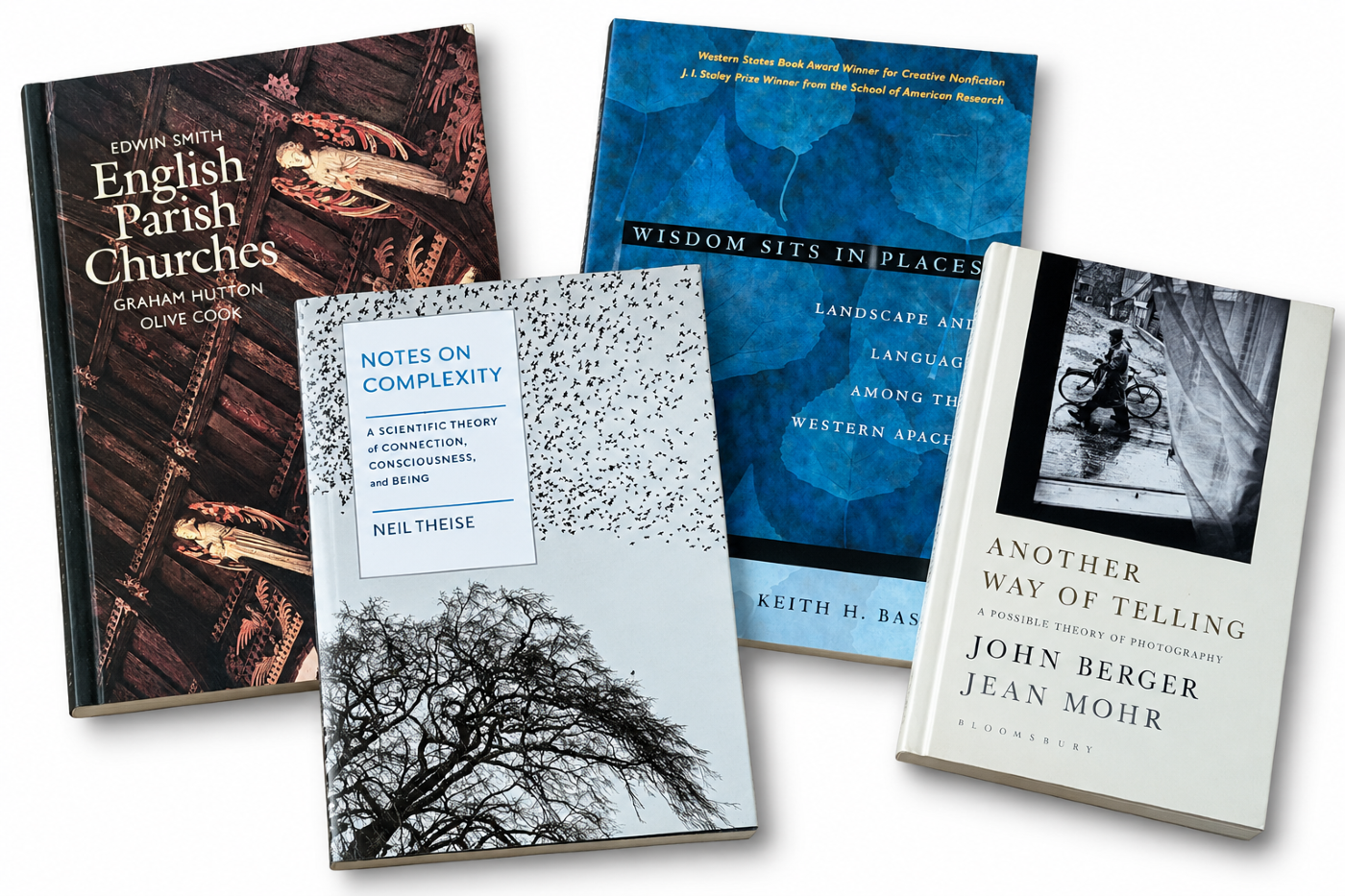

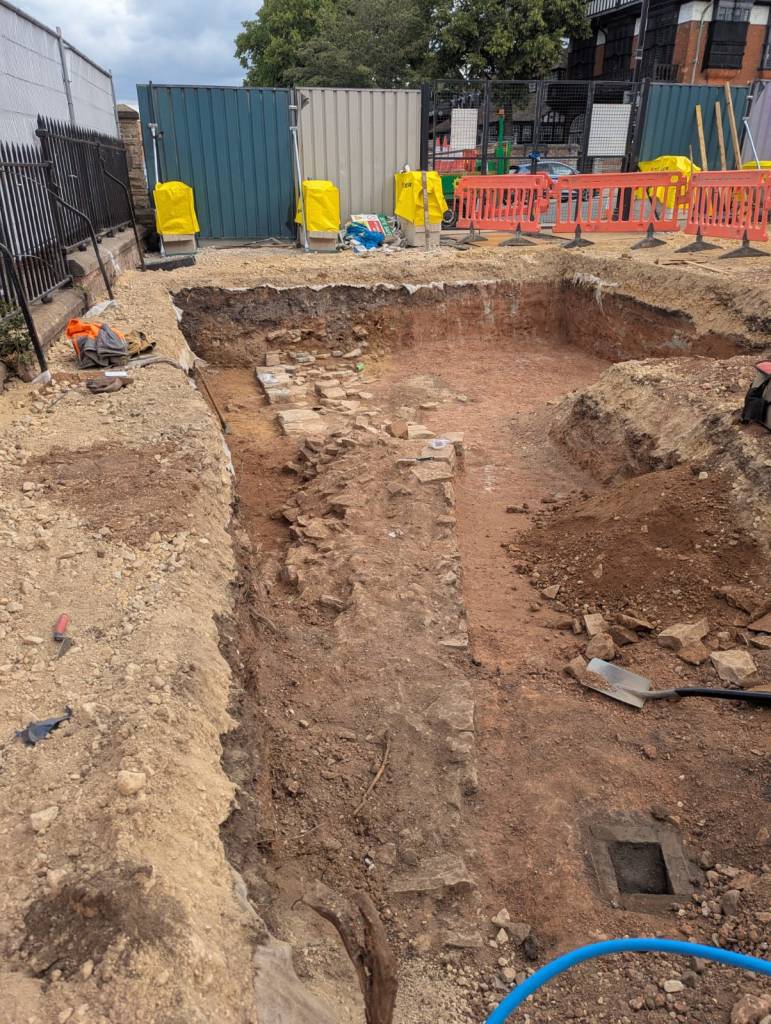
 Alice Benbow

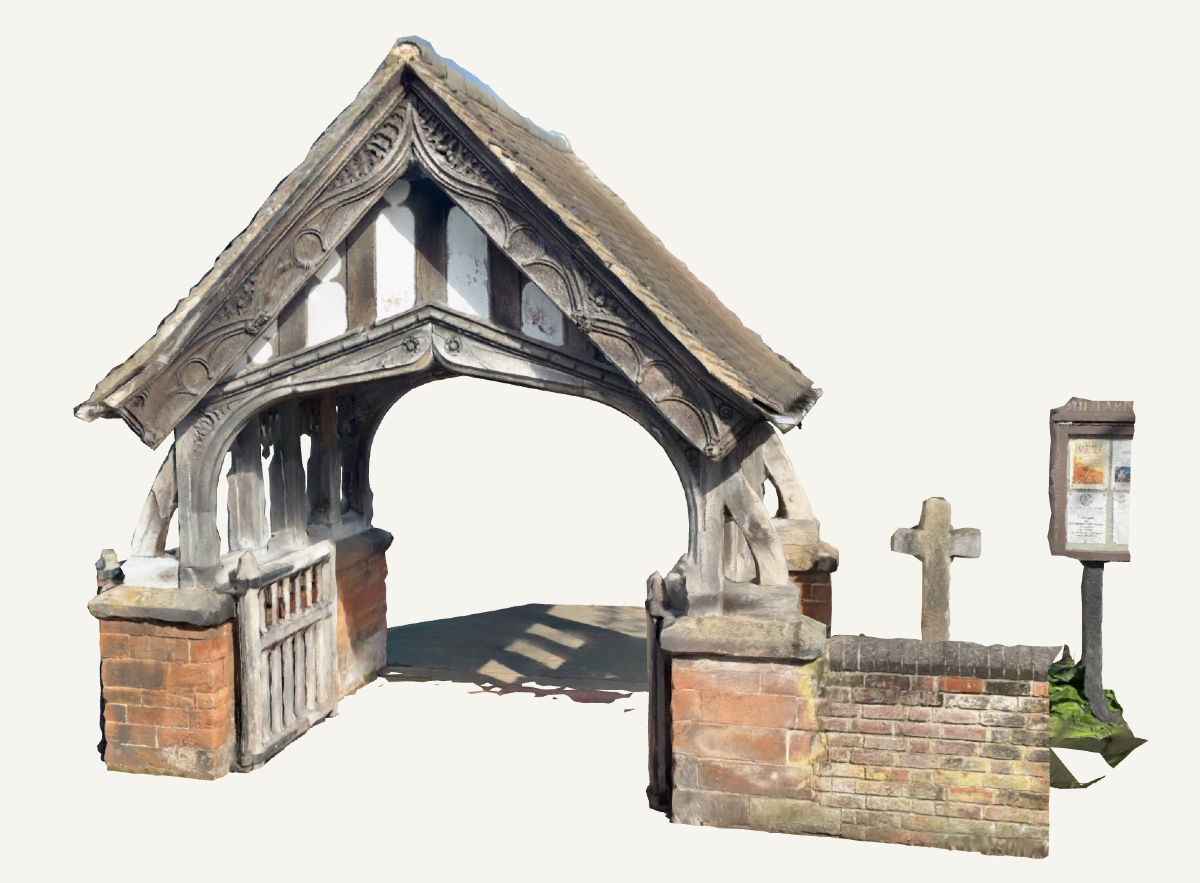
For Members - The Cast Room - Lych Gate and Dragon Finial in Augmented Reality
Viewable on any device
Click to View
Sacred Springs and Hidden Faces
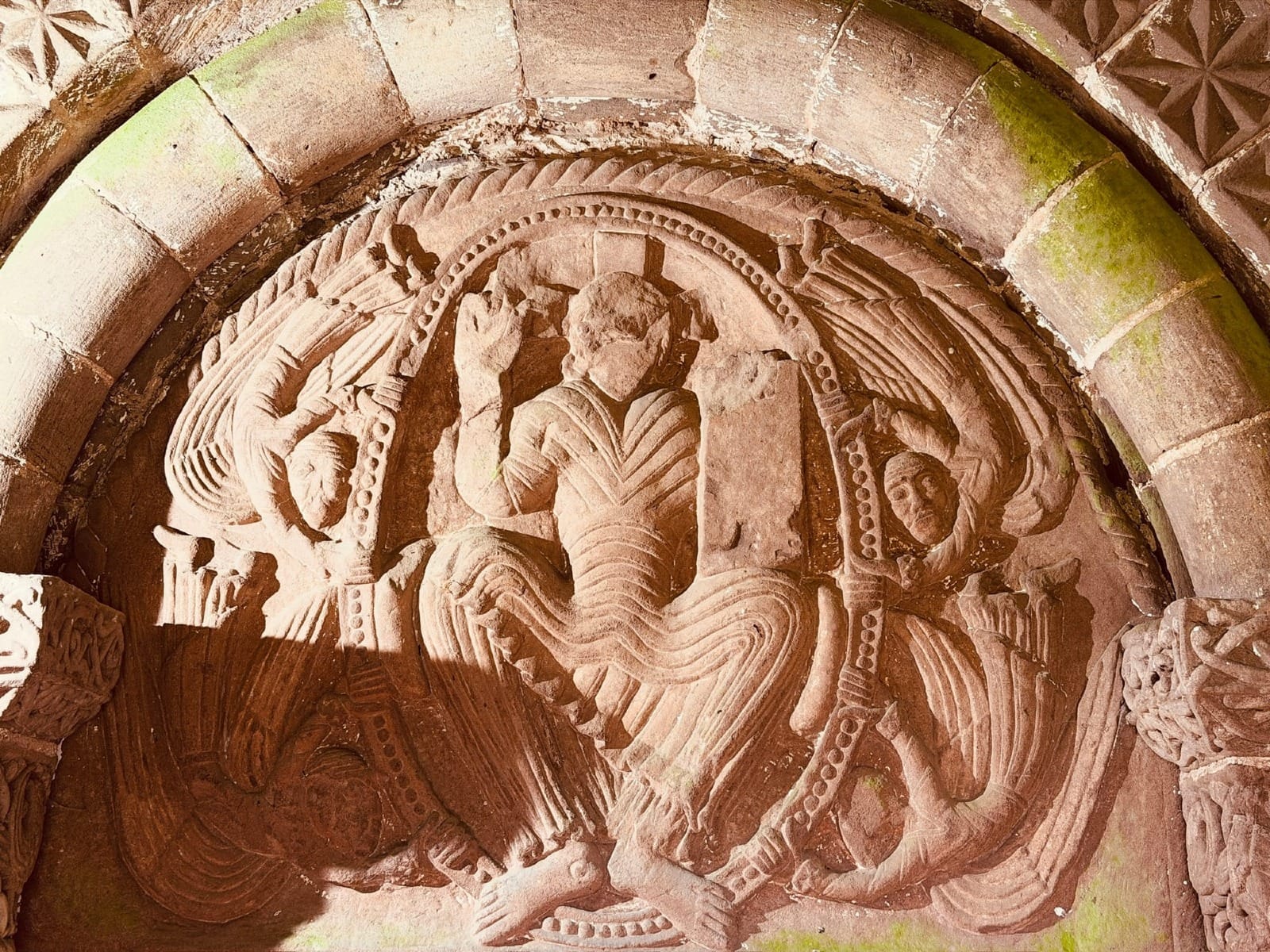
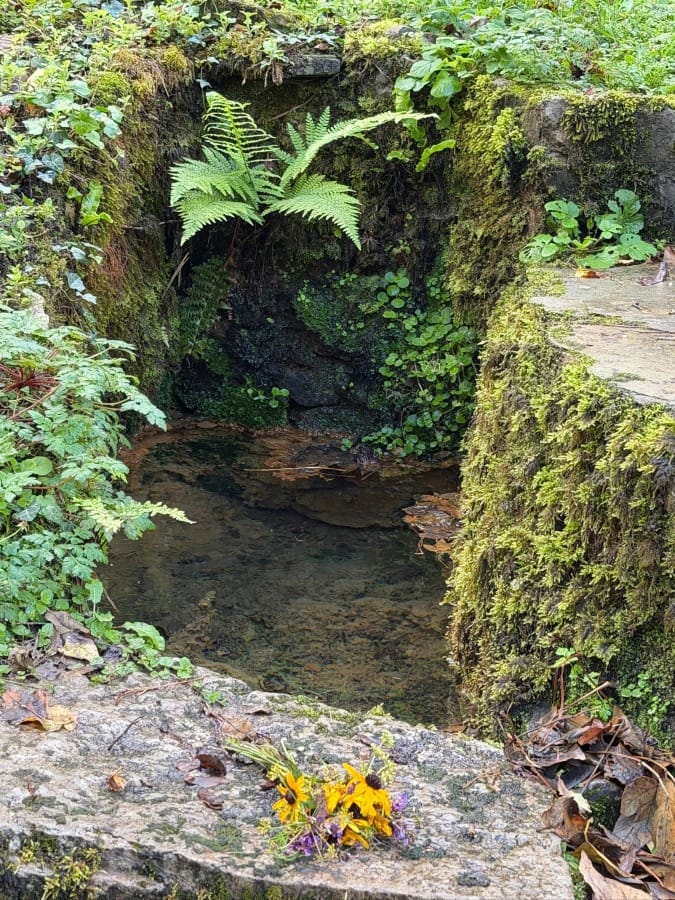
It's a tricky final day of travel with the storm forecast today, but I've seen and captured some remarkable places so far.

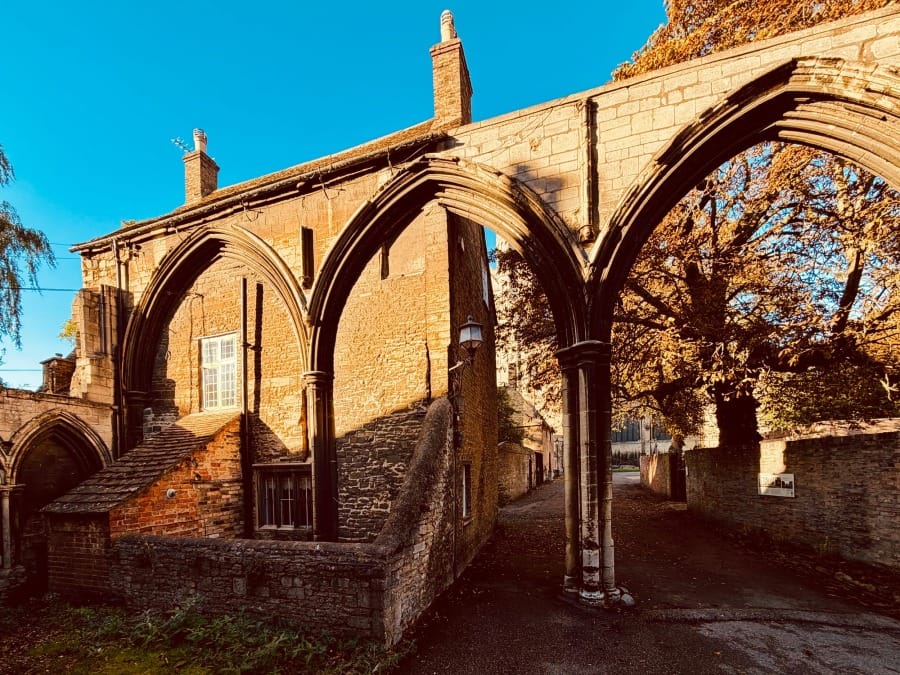

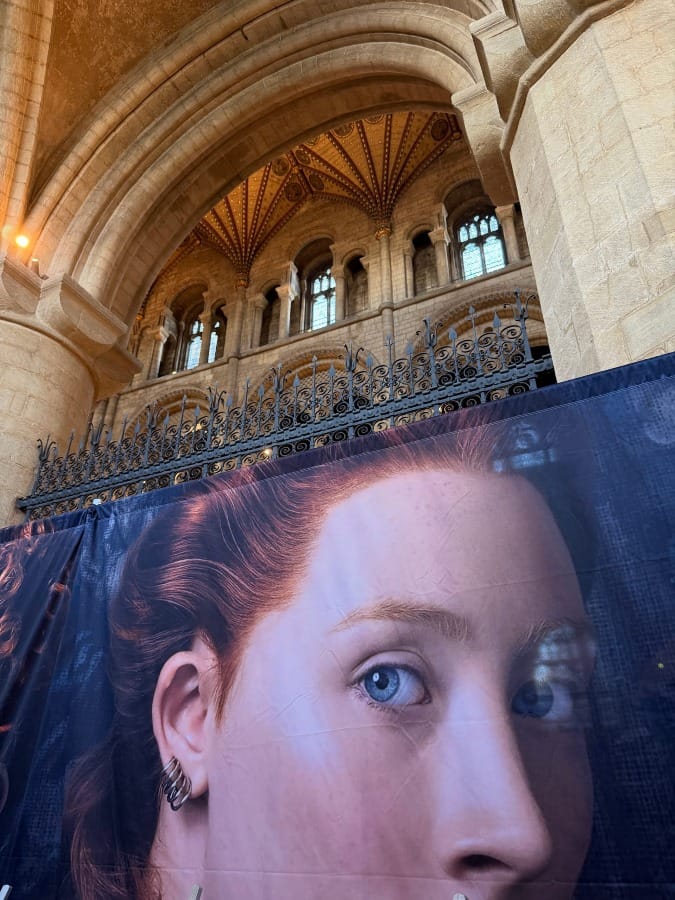
Sign in and say hello. Follow the journey from your armchair - catch up with me on my final day of travel on this project: 👇
 Andy Marshall
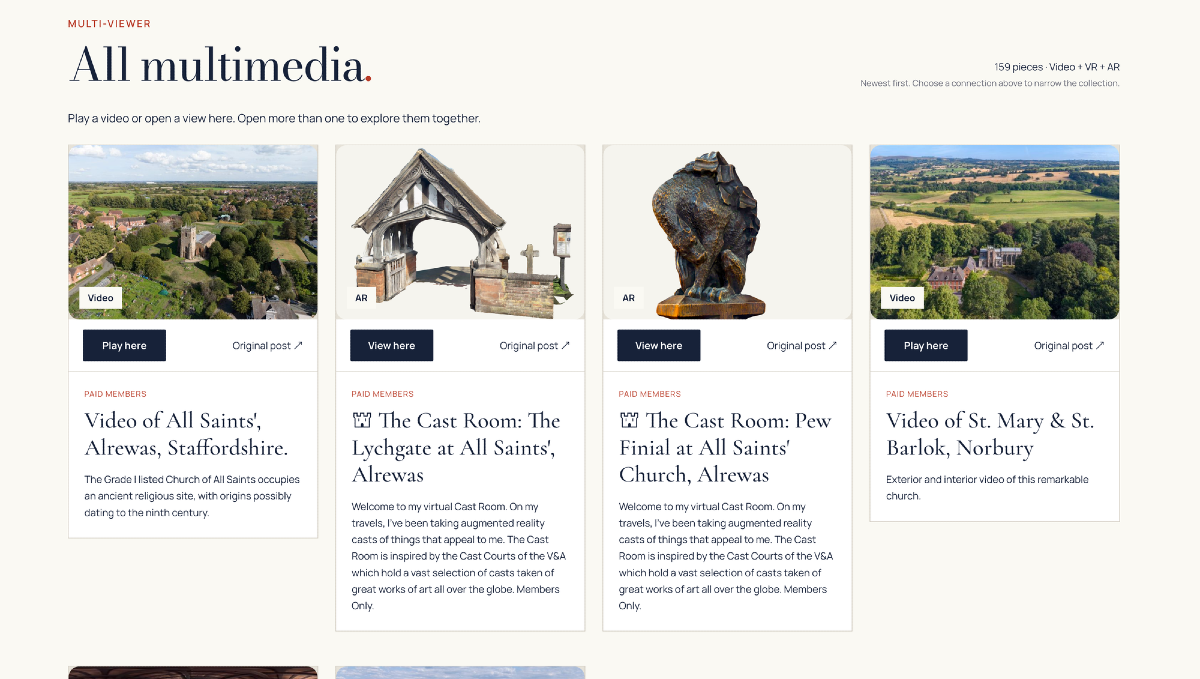
Member benefits include the new multimedia viewer - compare places, themes, counties. Help shape the next journey
A single membership can become part of the next journey, the next story and the next free photo shoot. Thank You.
Explore Membership OptionsThank You!
Photographs and words by Andy Marshall (unless otherwise stated). Most photographs are taken with iPhone 17 Pro and DJI Mini 5 Pro.
🔗 Connect with me on: Bluesky / Instagram / Facebook / X / Tumblr / Flickr / Vimeo / Pixelfed / Pinterest / Flipboard/ Fediverse: @fotofacade@digest.andymarshall.co
Member discussion