Compact Edition!
Coming soon: The Shock of the Old
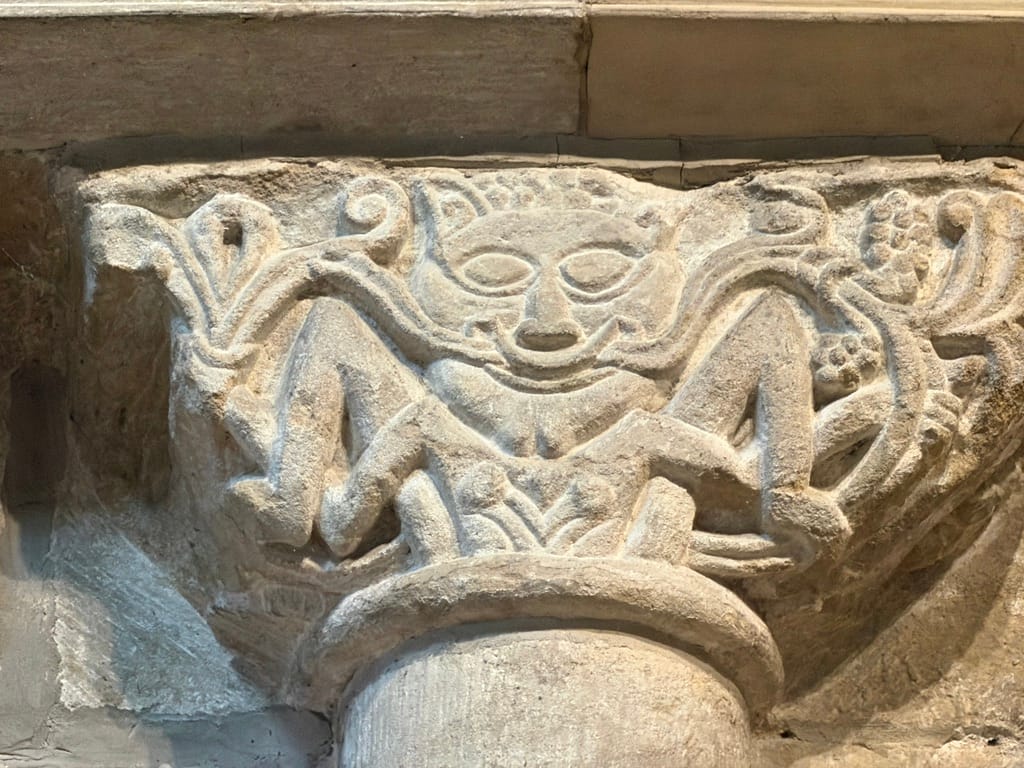
A fresh encounter with the strange, unruly imagination of the Middle Ages.
⚡️ View the latest digest and the full archive here.
📐 My Goals ℹ️ Donations Page & Status 📸 MPP Status 🛍️Shop
🔗 Connect with me on: Bluesky / Instagram / Facebook / X / Tumblr / Flickr / Vimeo / Pixelfed / Pinterest / Flipboard/ Fediverse: @fotofacade@digest.andymarshall.co
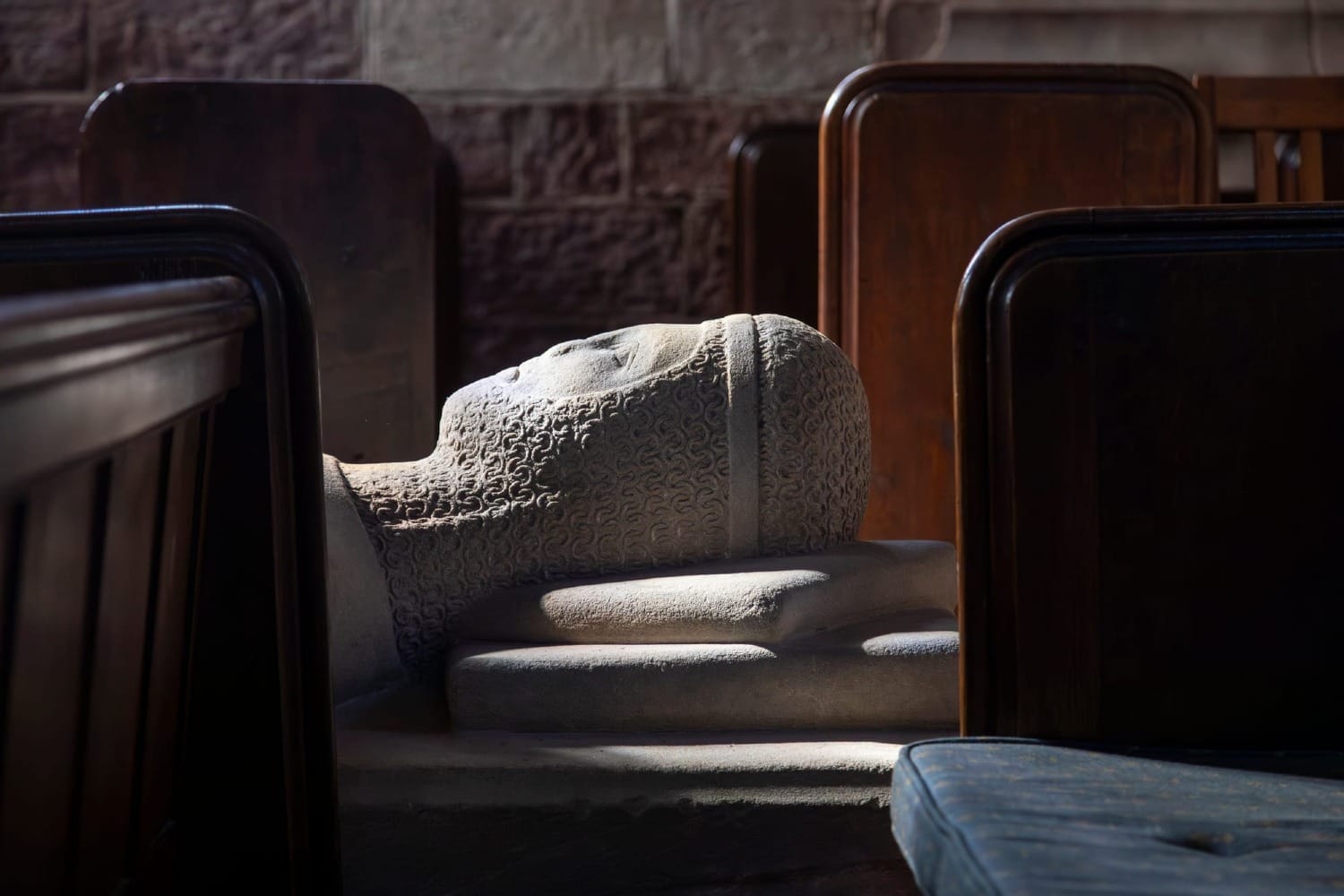
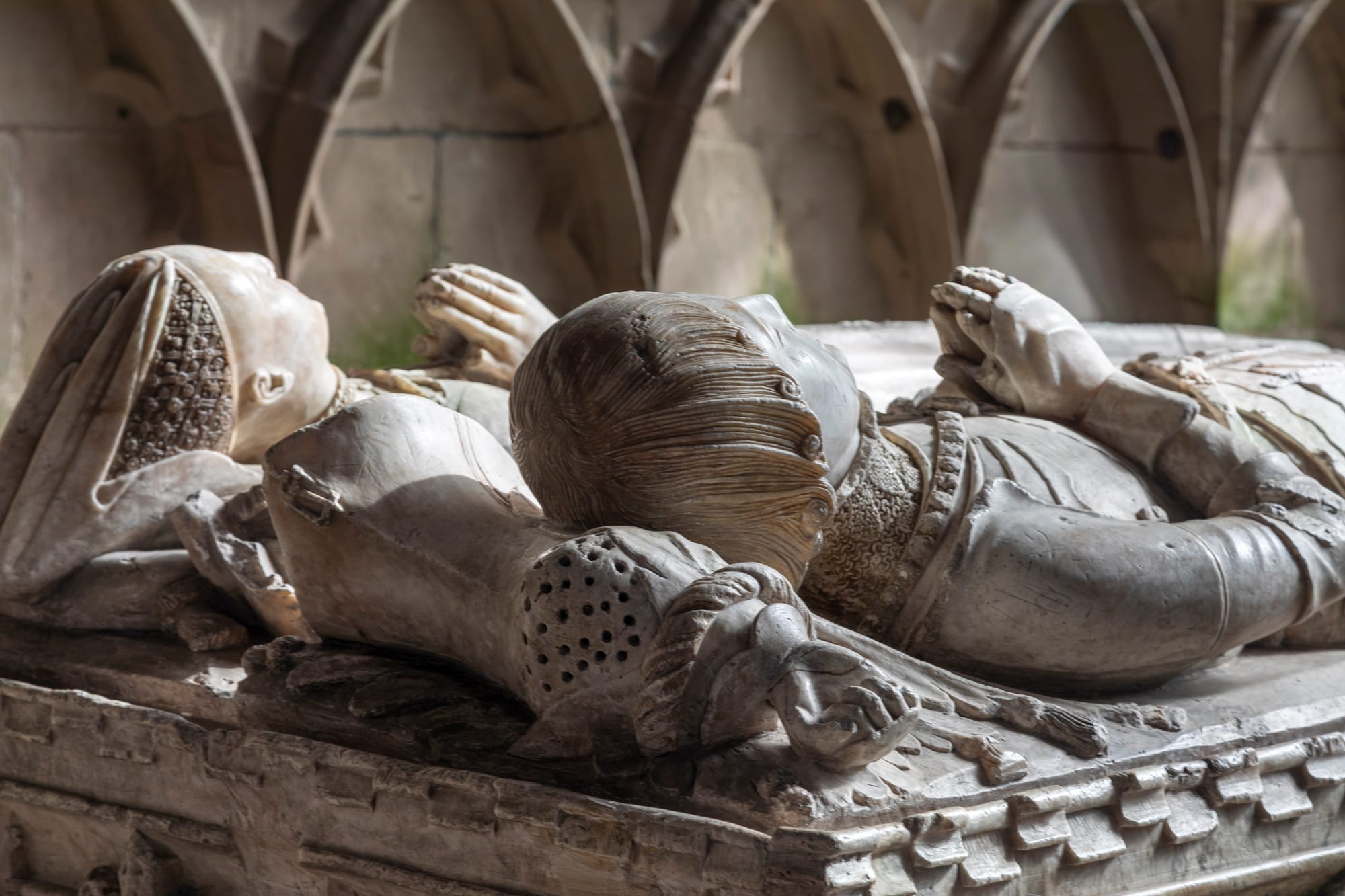
I came to a sudden halt inside St Mary and St Barlok, Norbury. For a moment, I thought I’d caught someone slumbering in the summer heat. Turns out he’s been there for several hundred years - not a peep.
" With sophisticated technology, we strive to see what is beyond us, but are often blind to the myriad sparkling facets that lie so close at hand. We think we're seeing when we've only scratched the surface. Our acuity at the middle scale seems diminished, not by any failing of the eyes, but by the willingness of the mind. Has the power of our devices led us to distrust our unaided eyes? Or have we become dismissive of what takes no technology but only time and patience to perceive? Attentiveness alone can rival the most powerful magnifying lens."
Robin Wall Kimmerer: Gathering Moss.
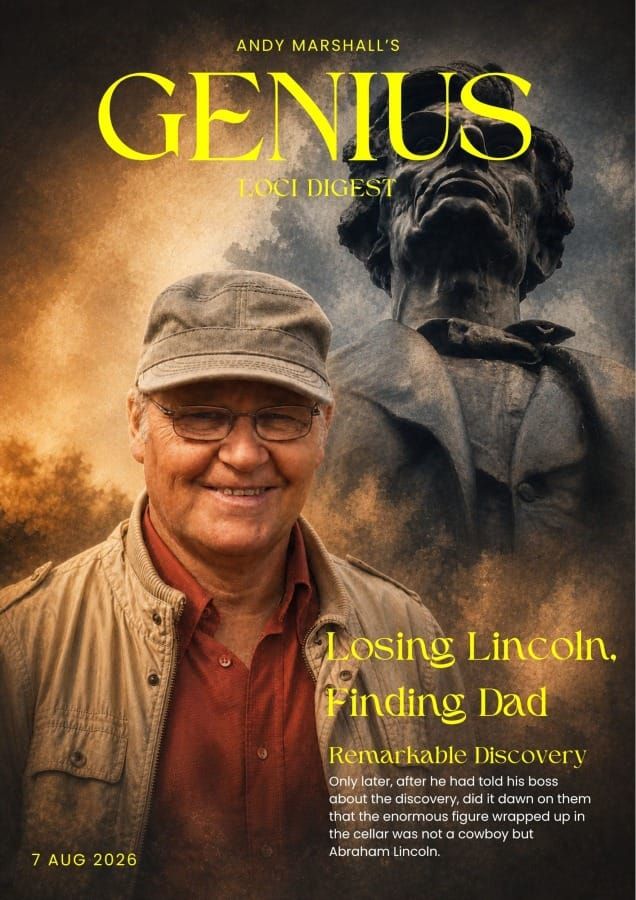
Losing Lincoln, Finding Dad
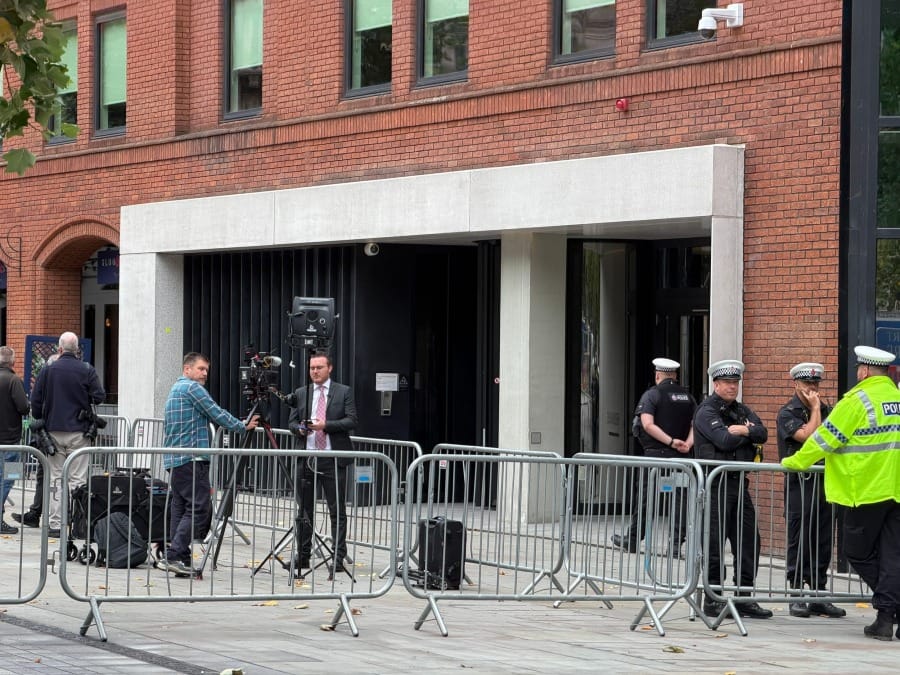
I’m sat on a bench in Lincoln Square, Manchester, surrounded by a buzz of expectation. The Prime Minister, Andy Burnham, is in town for his first day at Number 10 North, the government’s new northern base inside Heron House, immediately in front of me. Police officers are stationed around the square, keeping watch on all the entrances. In the middle of it all, Abraham Lincoln stands looking out across the square with the weary air of somebody who has seen it all before.
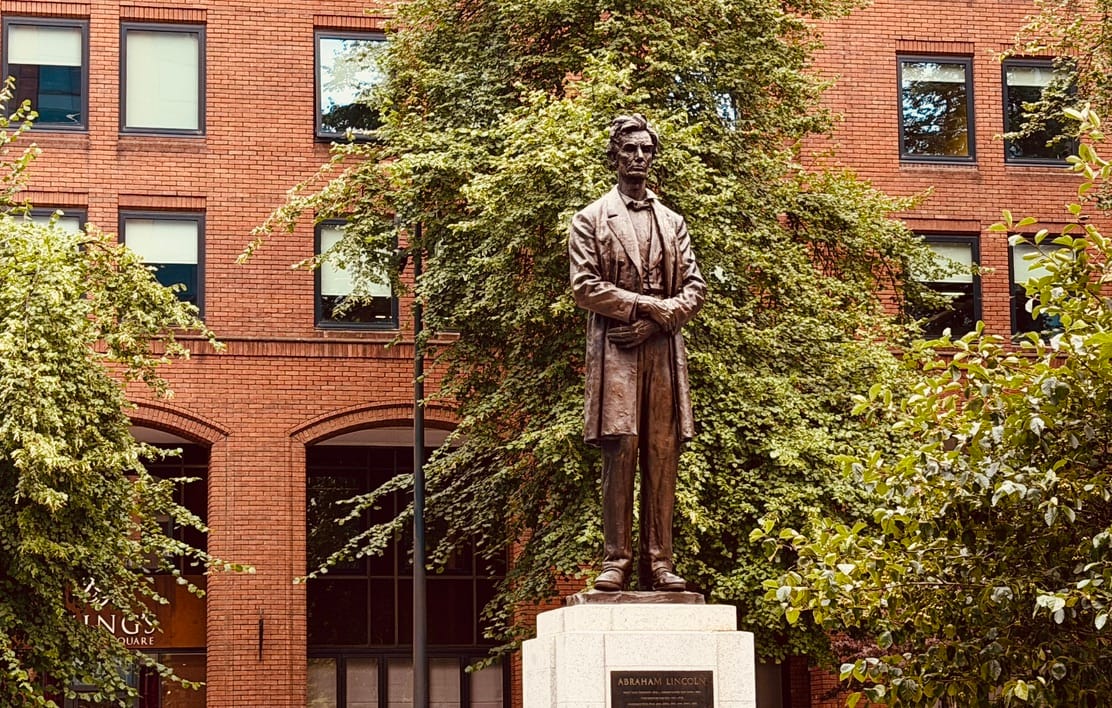
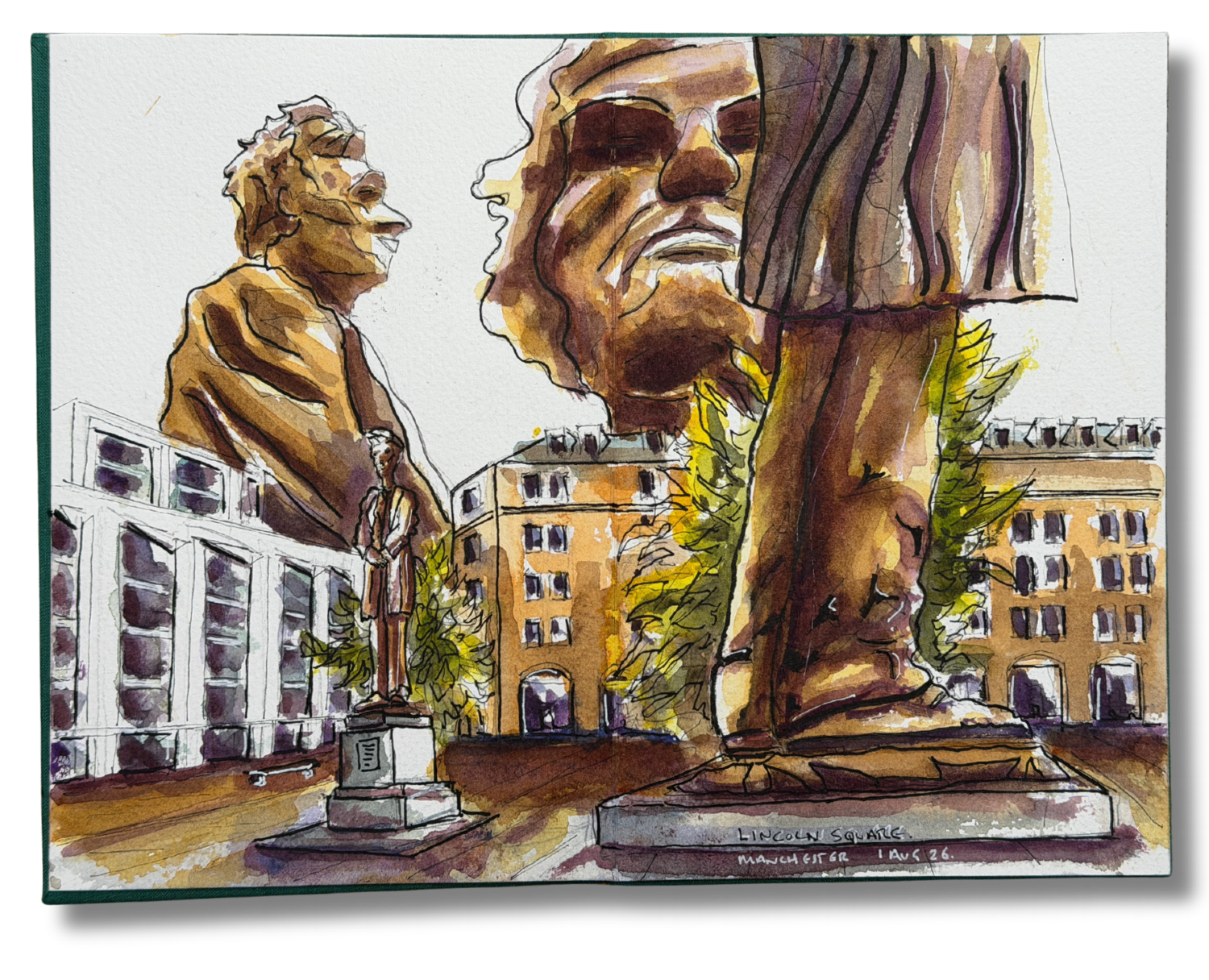
I’m here to sketch the Lincoln statue. Twenty minutes into the sketch, I’m approached by two plain-clothes officers. While one stands in front of me, the other sits beside me and, while looking at my sketchbook, asks me what I’m doing. “I’m sketching Lincoln,” I reply.
The officer explains that I’ve been observed looking towards Heron House and taking notes. For a few seconds, I don’t know what to say. I look down at the page and try to see what he sees. Bizarrely, I notice all the flecks from my constant erasing on my trousers and feel a bit embarrassed.
As the officer turns to speak to his colleague, I look around me. Apart from a couple to my left, vaping next to a bin, everybody else is sat on a bench scrolling through their devices.
I feel as though I’m in a kind of dystopian bubble of my own making - an aberration in the continuum, as though I’ve slipped into the square from another century, carrying some obsolete way of looking at the world.
The act of drawing seems to have marked me out. My visible and repetitive form of attention is difficult to disguise, whereas the phones around me might be recording all and sundry without earning a second glance.
For me, in this moment, the spirit of the place suddenly seems altered. I notice the gaps between people and place, the pigeons and the vape cloud, and wonder how many people here know the story behind the Lincoln statue.
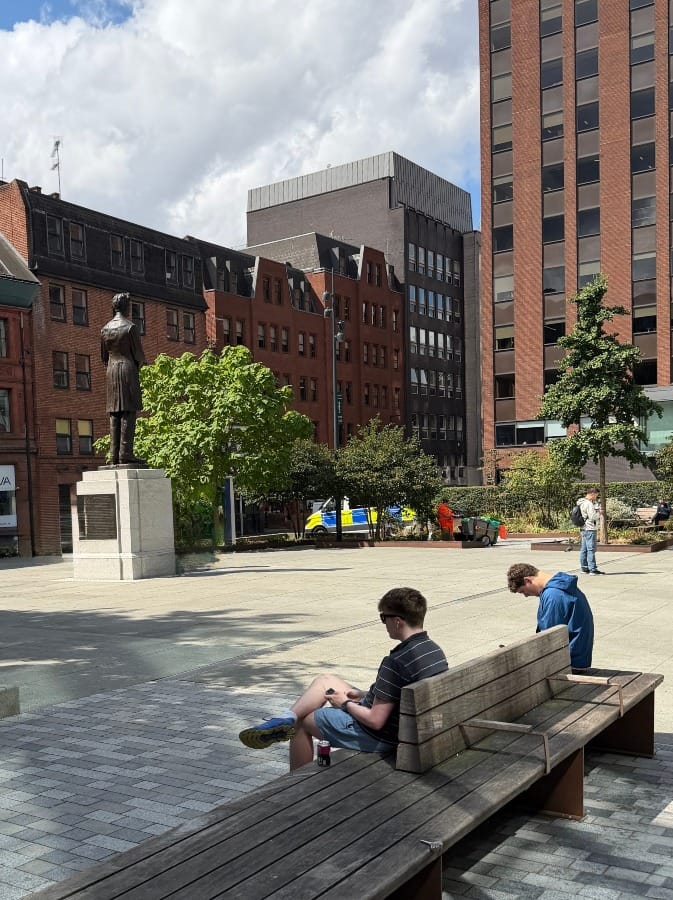
His presence reaches back to the American Civil War, when the blockade of the Confederate states cut off the raw cotton upon which Lancashire’s mills depended. Unemployment and hunger spread through Manchester and the surrounding towns, yet many workers continued to express their support for the Union and the abolition of slavery. In a letter to the working people of Manchester, Lincoln acknowledged the sacrifices they had made.
Of course, it isn’t a straightforward story. Manchester’s wealth had itself been built upon cotton cultivated by enslaved people, and support for the Union wasn’t universal. Yet many ordinary people in and around Manchester endured genuine hardship while continuing to support emancipation.
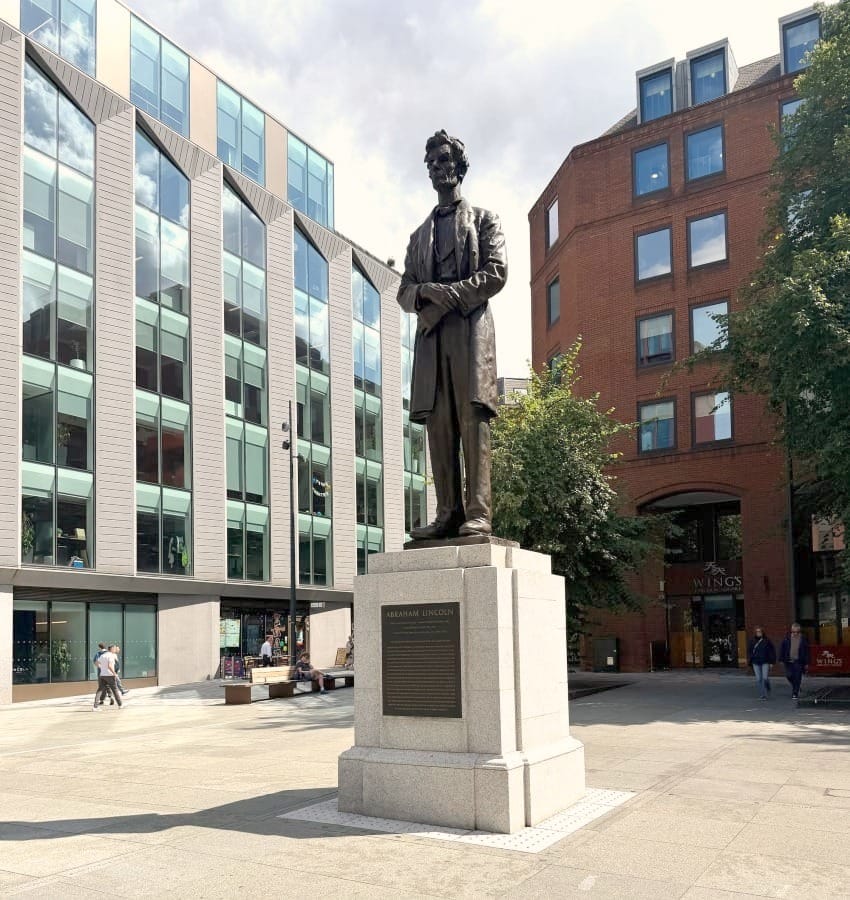
The Lincoln in front of me is a cast of a sculpture by the American artist George Grey Barnard. The original is in Cincinnati, USA. Manchester received it as a gift in 1919 and placed it in Platt Fields Park until, in 1986, it was moved to its present position in Lincoln Square. It is somewhere in the space between those two locations that my Dad enters the story.
Dad, who is no longer with us, was a plumber for Manchester City Council, and his working life took him into parts of the city that most people never saw. While the rest of us entered through the formal thresholds, Dad often arrived around the back with a toolbox pass.
He told me that one day, while searching through the cellar of a council building for some lengths of pipe, he came across something hidden in the darkness. Temporarily released from the mundane round of blocked toilets, leaking cisterns and stubborn u-bends, he began feeling his way among the municipal debris until his hand came across what felt like a body of immense proportions.
First, he felt a nose. Then the deep sockets of a pair of eyes, protruding cheekbones and then the angular shape of a face with bushy eyebrows.
“Bloody hell,” he said. “I think I’ve found a statue of Clint Eastwood.”
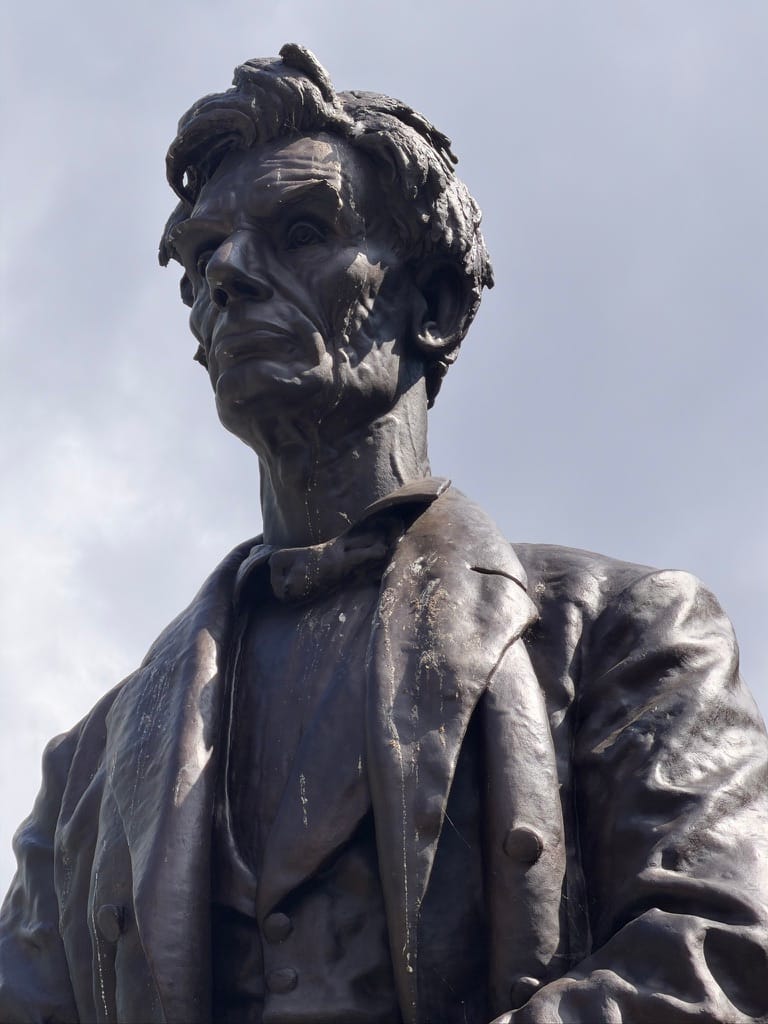
Only later, after he had told his boss about the discovery, did it dawn on them that the enormous figure wrapped up in the cellar was not a cowboy but Abraham Lincoln.
Now, I don’t know whether Dad discovered Lincoln exactly as he described, whether he had been sent into the cellar knowing the statue was there or whether Lincoln’s whereabouts had ever been in doubt. The official account moves Lincoln from Platt Fields to Lincoln Square in a sentence. Dad’s juicy version allows Lincoln to linger for a while underground. His Lincoln is no longer a remote civic figure, but shrink-wrapped in the dark, mistaken for a cowboy and rediscovered by a Manchester plumber in search of a piece of pipe.
Perhaps that is why Dad’s version has stayed with me. In his telling, Lincoln had not simply been put into storage - he had disappeared long enough to make his discovery feel important.
During the time when Lincoln was shrouded from public view, his absence seems to have given him a peculiar presence. Dad announced the finding of him as though it were a national event, as if something of significance had been returned to the city.
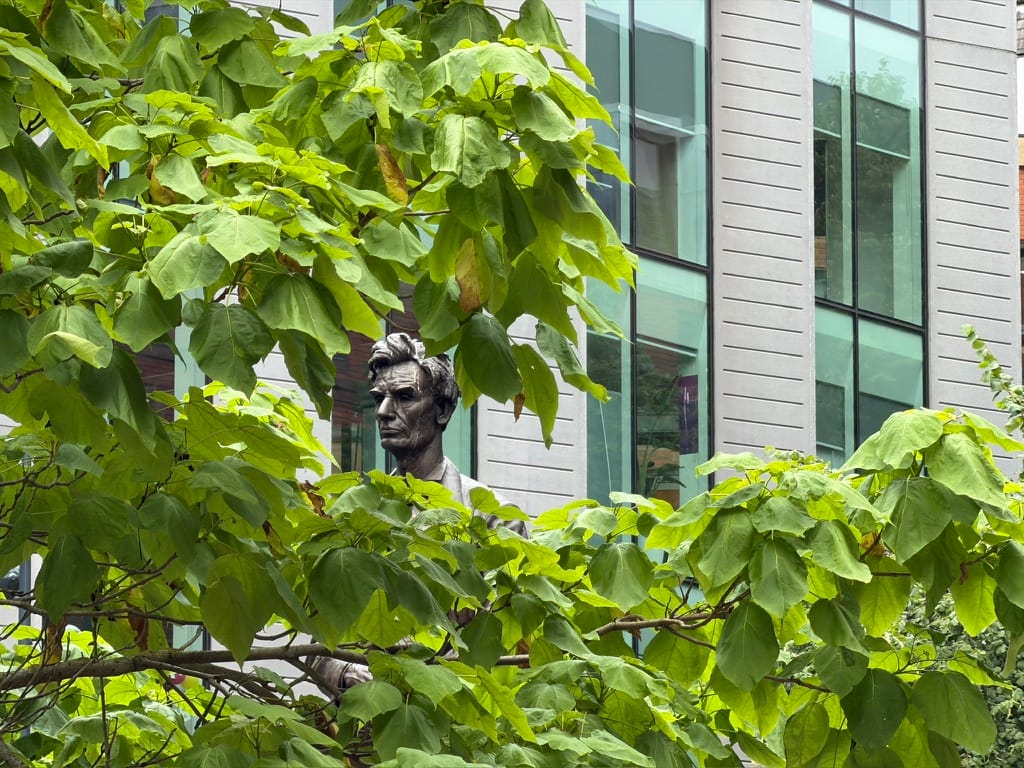
Today, with Lincoln standing in full view, it seems possible to pass him every day without really seeing him. The statue directly in front of me has become part of the background to a hundred private screens. And yet there was something in my encounter with the police that gave me hope - my analogue act of engagement seemed to break through the sleep-walking surface of things. There is something potent in that - a way of seeing that returns us to the world. If it can happen here, it can happen anywhere.
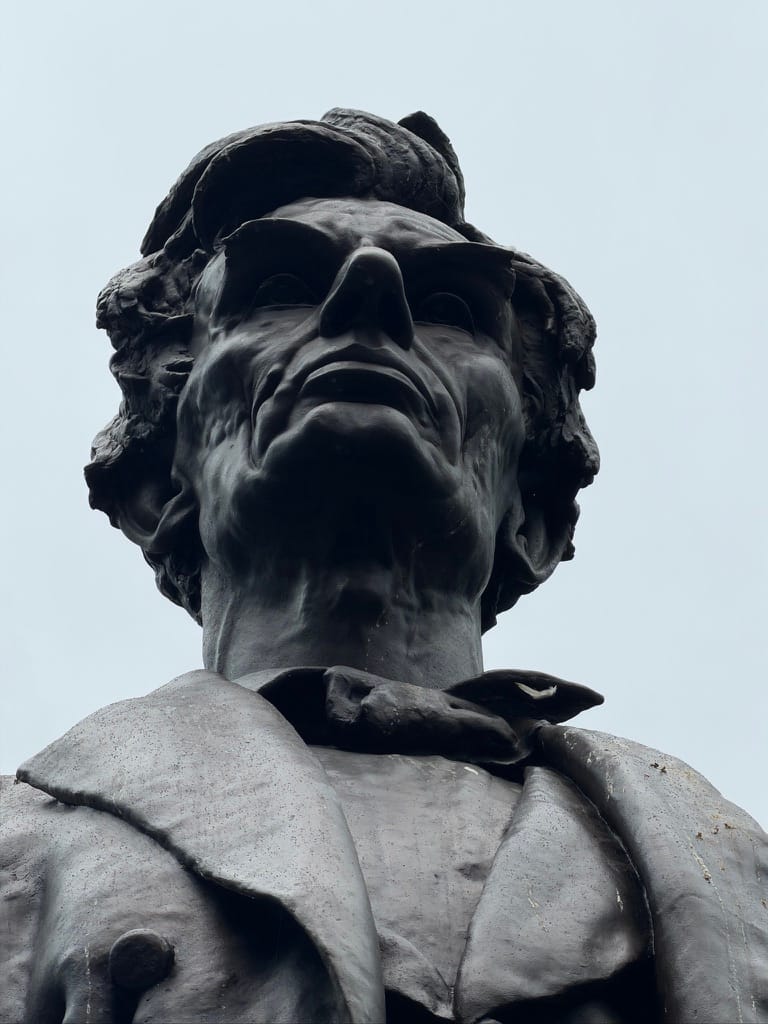
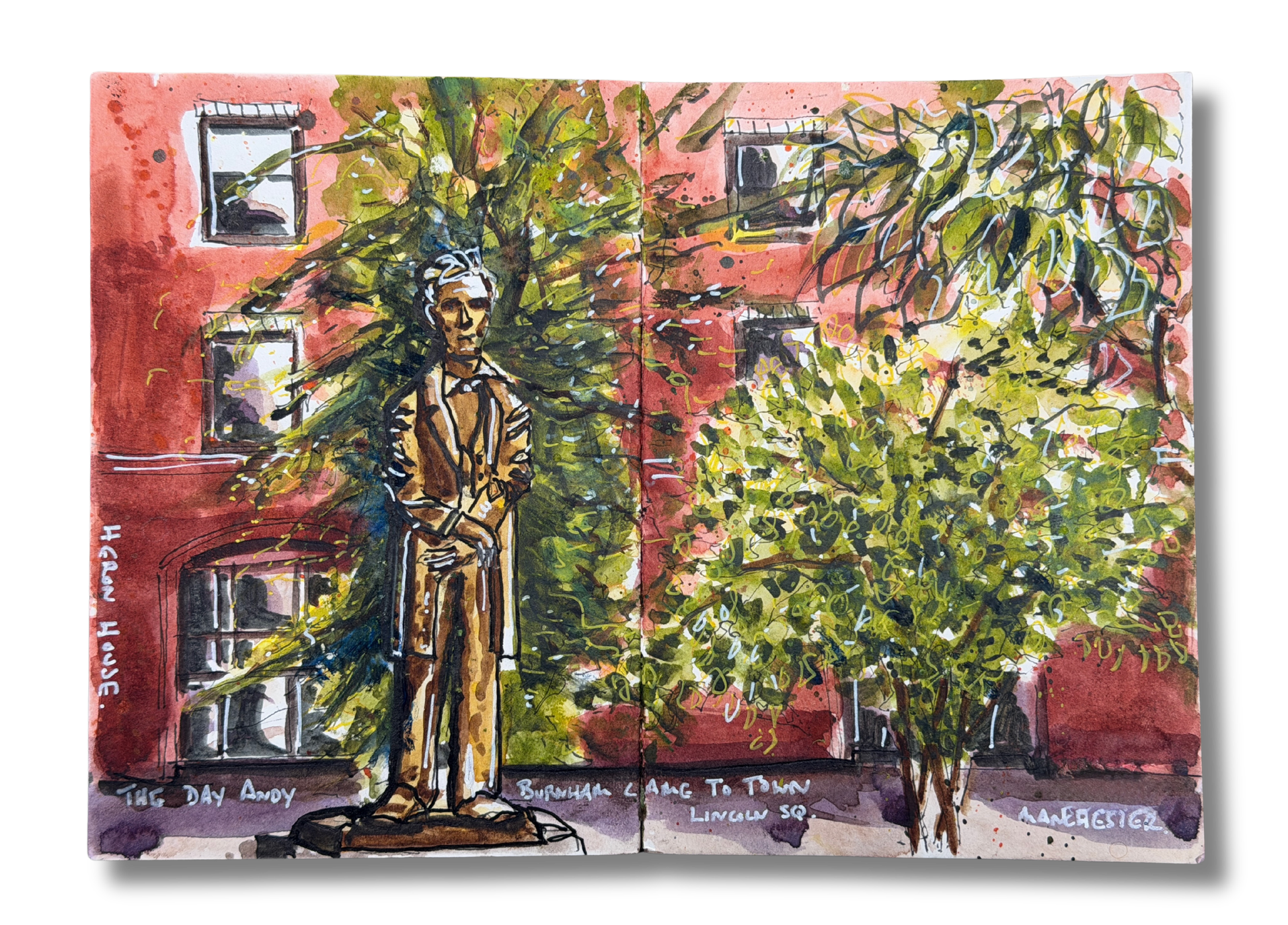
A little later, I return to Lincoln Square and draw the statue again, but the purpose has changed for me. Dad is somewhere within the ink and wash, feeling his way through the municipal darkness and arriving once again at the man behind the statue. I sketch in full view of everything going on around me, as a small counter-current to the flow of a screen-filled day. I don’t think drawing is nobler than using a phone, but it asks me to remain with the thing in front of me for longer than I otherwise might. My eyes linger over Lincoln’s deep-set eyes and protruding cheeks, much as dad’s hands once did, until the figure begins to detach itself from the scenery and become present again.
I draw him in remembrance of Dad and the day he found Lincoln.
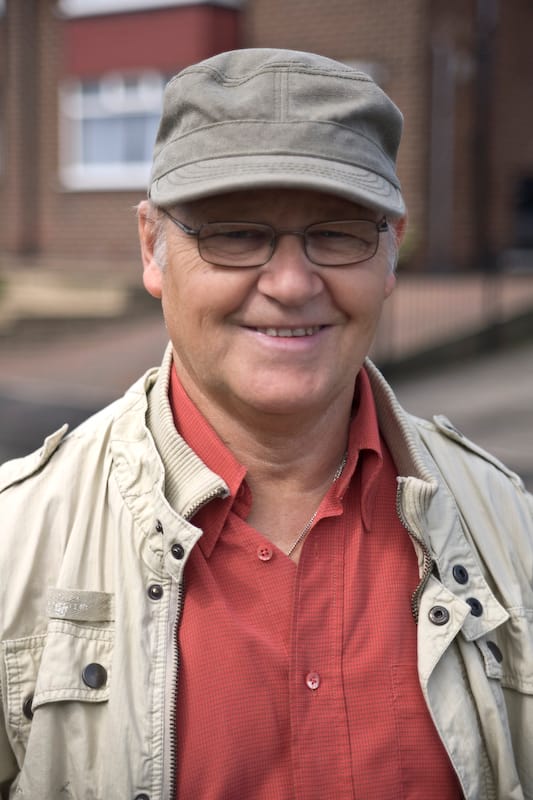
I would like to think that perhaps, given enough time, the details of dad’s story might become further tangled. Names might slip loose from their owners, dates might blur and the civic record might merge with family myth. Five thousand years from now, after some unfortunate loss of information has wiped our collective memory clean, somebody might conclude, from a scrap of story passed on between generations, that Alan Marshall - plumber of Manchester, unstopper of toilets and explorer of the municipal underworld - was himself President of the United States.
The Digest is free and open to everyone. If it gives you something worth pausing for, a membership or donation helps keep the journeys, stories and photographs coming. Thank You. 🤗
Help me go further for extraordinary places
Membership starts at £2/month, supporting the weekly Digest and free professional photography for historic places, charities and craftspeople.
See membership options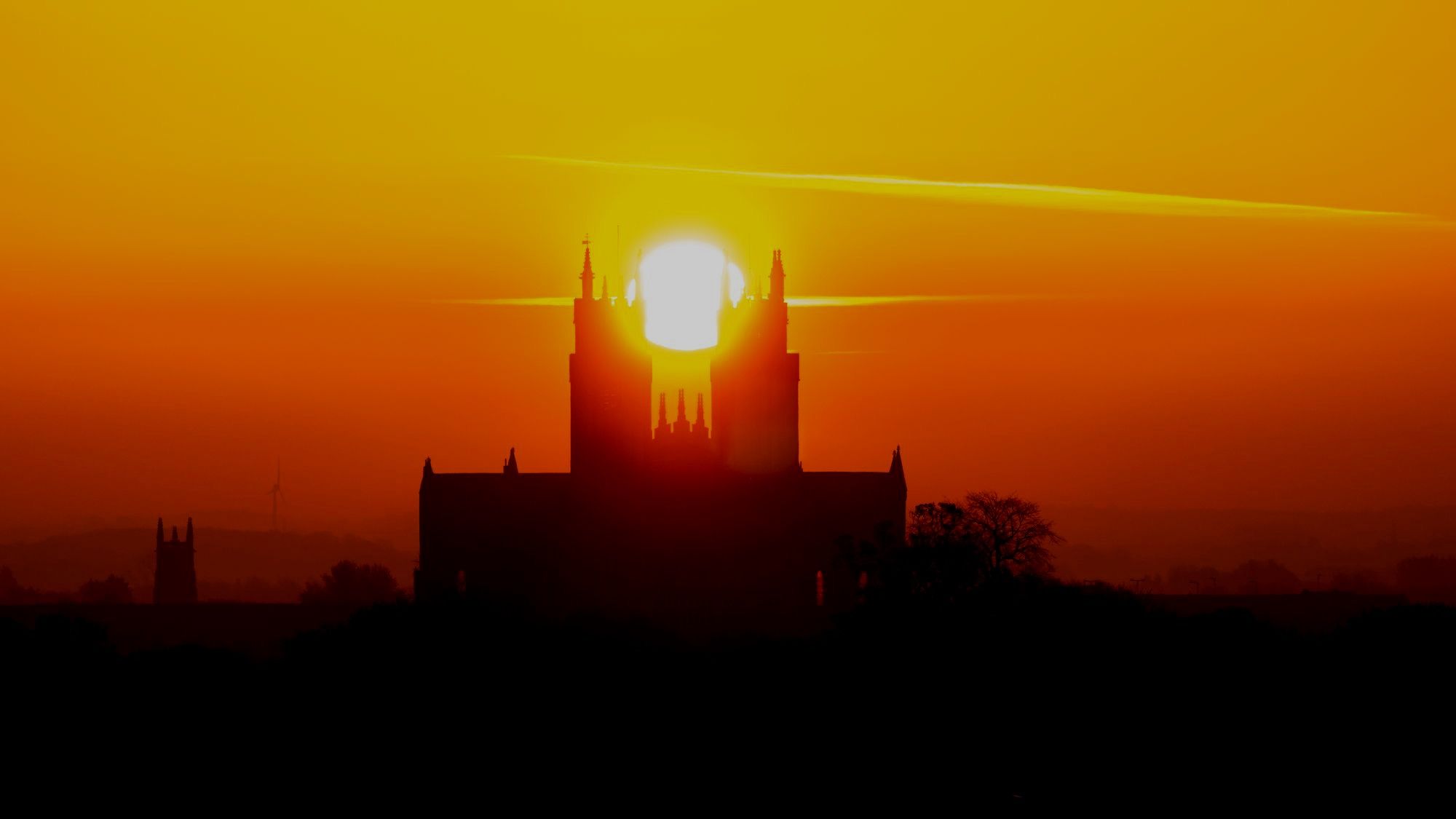
For Members - The Pro Photos at Norbury
The full set of professional photography at Norbury - thanks for making this possible.
Click to View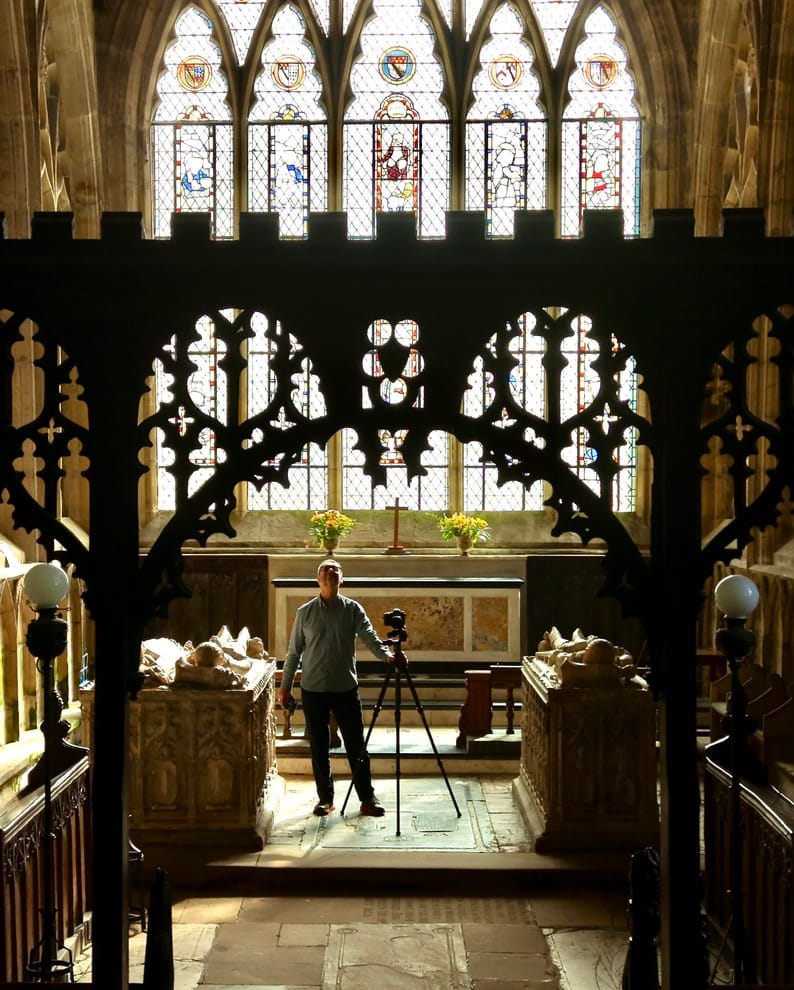
Norbury was photographed for free because of Member Support. Help shape the next journey
A single membership can become part of the next journey, the next story and the next free photo shoot. Thank You.
Explore Membership Options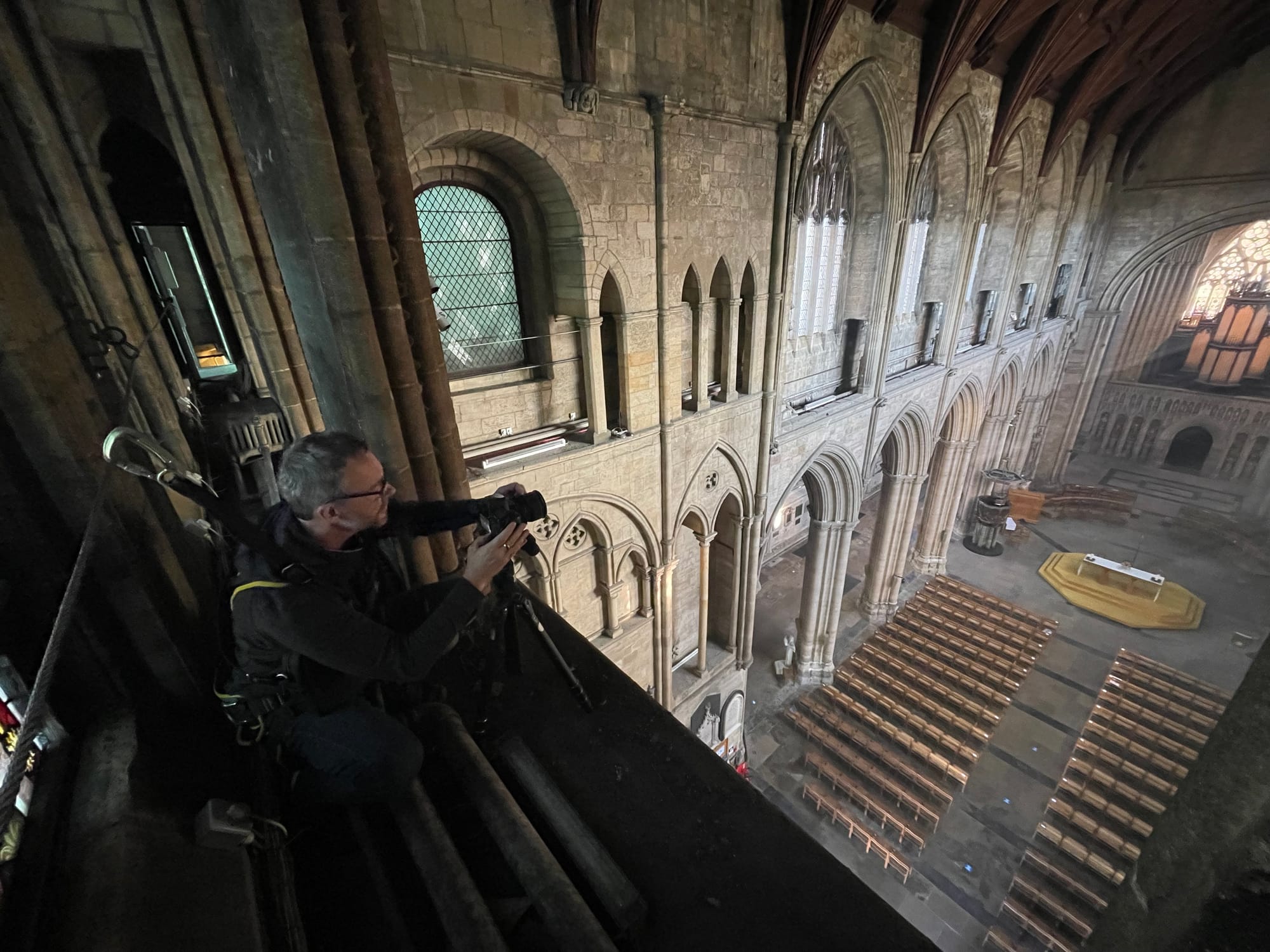
Kind words from a subscriber:
Andy your work is becoming wonderful, remarkable. A so-called breakdown has been milled into its constituent parts, becoming profound construction: through perception, architecture, the lens and the pen. In your Repton crypt essay a deep description of our social anxiety - and our reason to be....
Recent Digest Sponsors:
 Andy Marshall
Thank You!
Photographs and words by Andy Marshall (unless otherwise stated). Most photographs are taken with iPhone 17 Pro and DJI Mini 5 Pro.
🔗 Connect with me on: Bluesky / Instagram / Facebook / X / Tumblr / Flickr / Vimeo / Pixelfed / Pinterest / Flipboard/ Fediverse: @fotofacade@digest.andymarshall.co

Member discussion