Welcome!
⚡️ View the latest digest and the full archive here.
📐 My Goals ℹ️ Donations Page & Status 📸 MPP Status 🛍️Shop
🔗 Connect with me on: Bluesky / Instagram / Facebook / X / Tumblr / Flickr / Vimeo / Pixelfed / Pinterest / Flipboard/ Fediverse: @fotofacade@digest.andymarshall.co
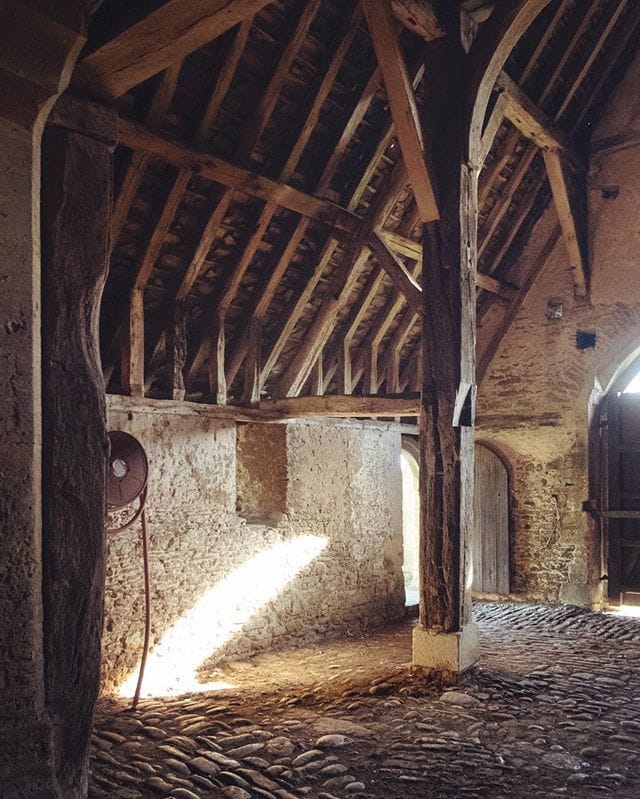
Great Coxwell barn in Oxfordshire was built in 1292. Dendrochronology has shown that some of its timbers were felled in 1256, whilst the majority were felled in the winter of 1291. It was part of a Cistercian abbey founded by King John. I forgot all that when I first saw inside - jaw dropping.
"Apophenia is the tendency to find patterns. It can be a disorder but, for me, finding patterns is sustaining. Unbidden, certain objects glow with relevance."
Amy Liptrot, The Instant.
The Font
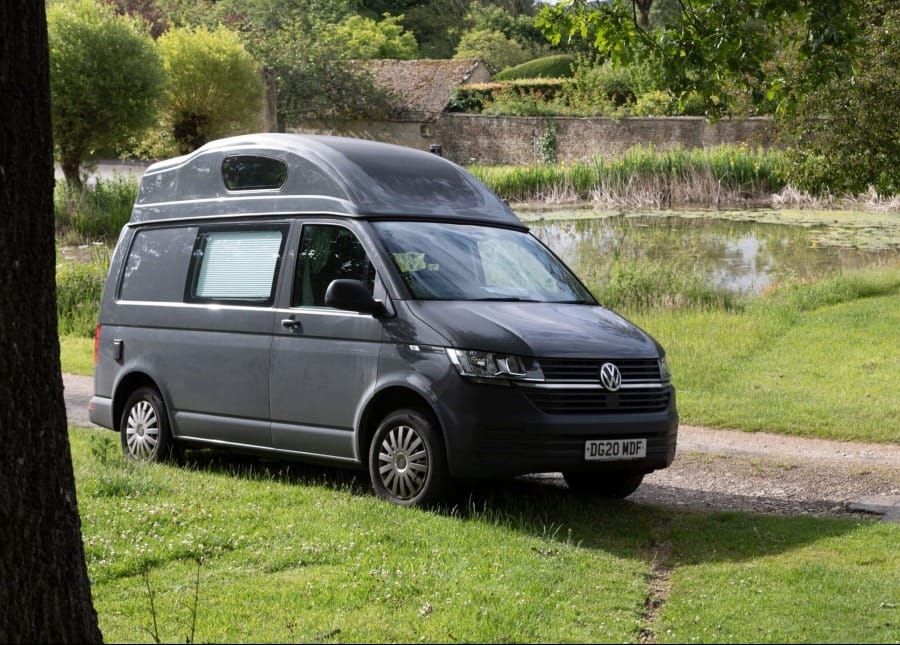
I arrive early at St. Mary’s, Westwell and park Woody up in one of the most idyllic corners of the Oxfordshire Cotswolds. At first light, the church seems to glow, as do the bale tombs and monuments in the churchyard.
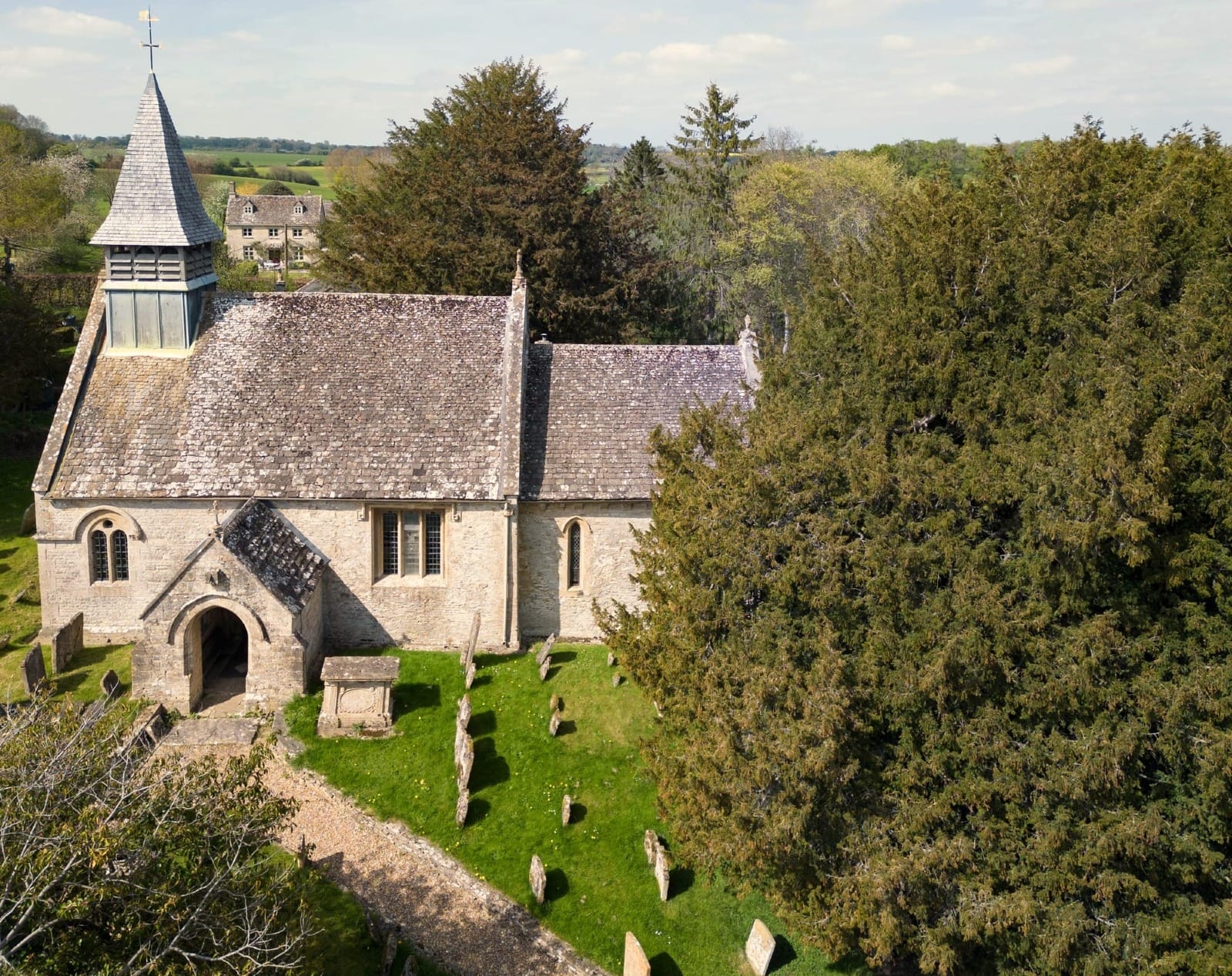
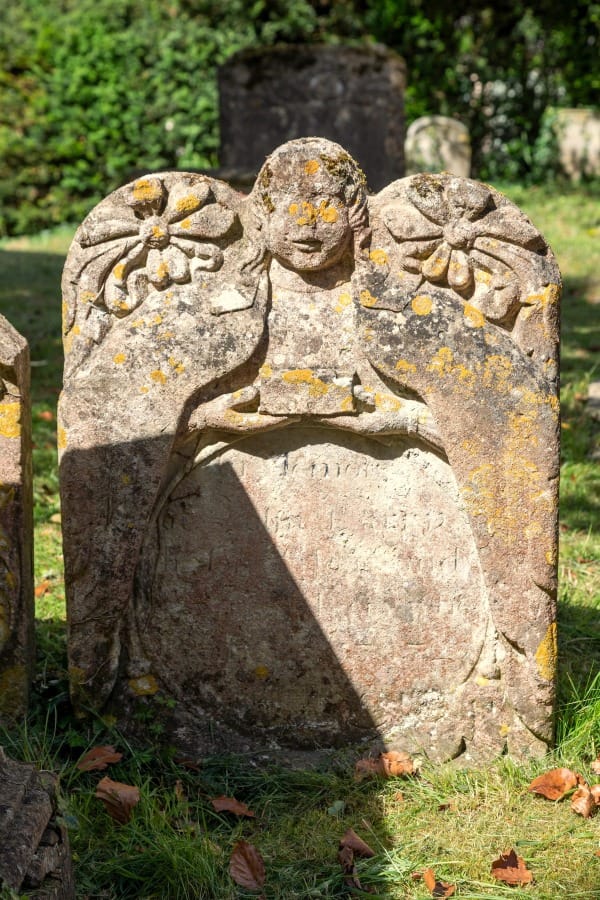
I pull out my watercolours and try to find a combination that matches the colour - but it shifts with the burgeoning light - so I include them all. The painting becomes a record of passing light and a time machine of colour.
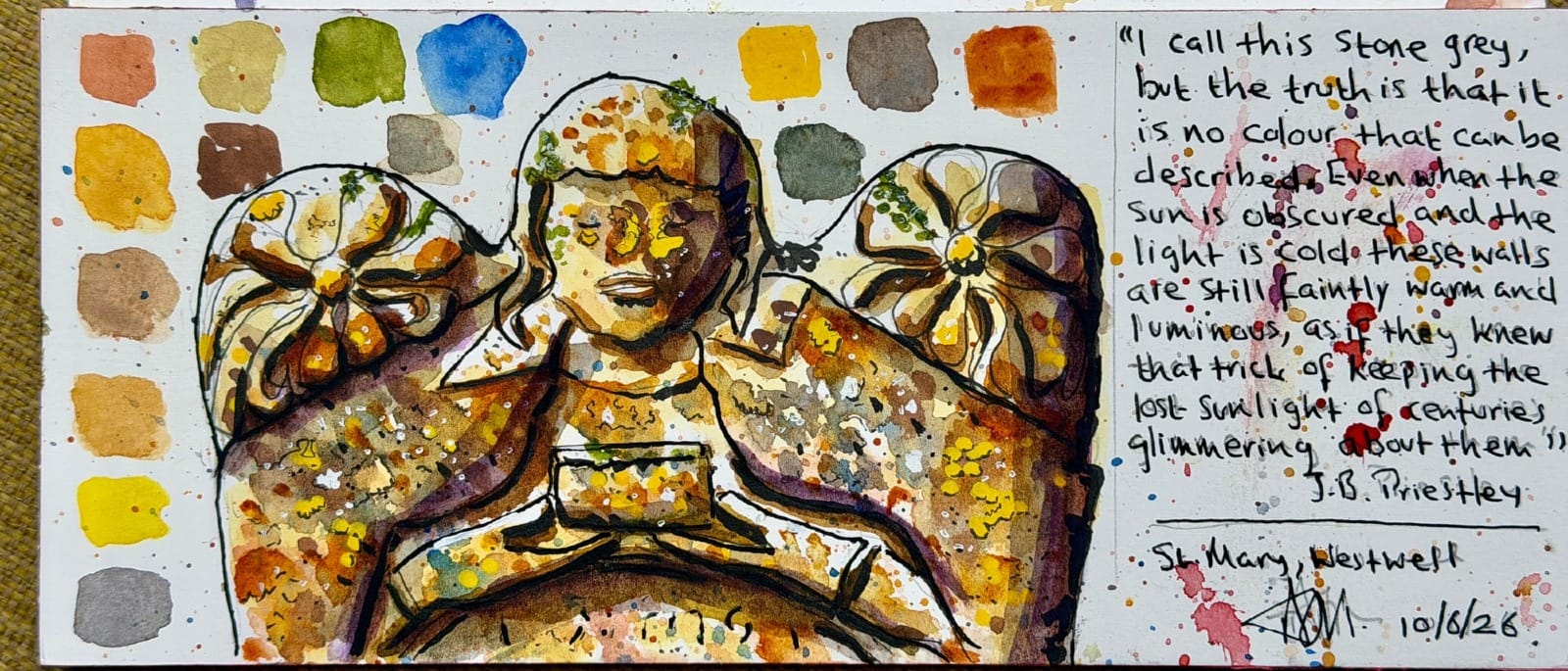
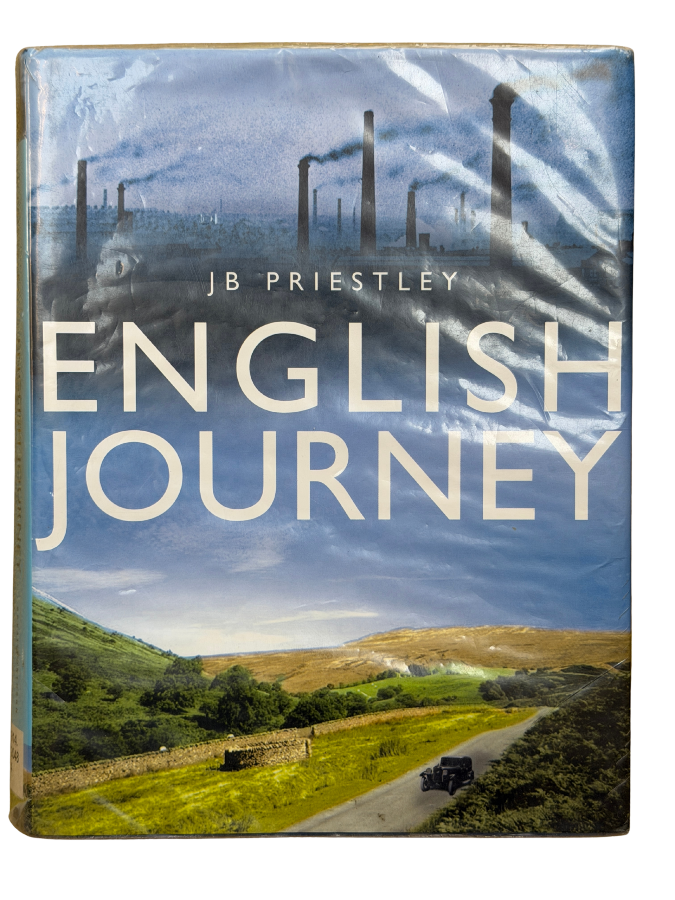
I’m reminded of some words by J. B. Priestley describing Cotswold stone:
“I call this stone grey, but the truth is that it is no colour that can be described. Even when the sun is obscured and the light is cold, these walls are still faintly warm and luminous, as if they knew that trick of keeping the lost sunlight of centuries glimmering about them.”
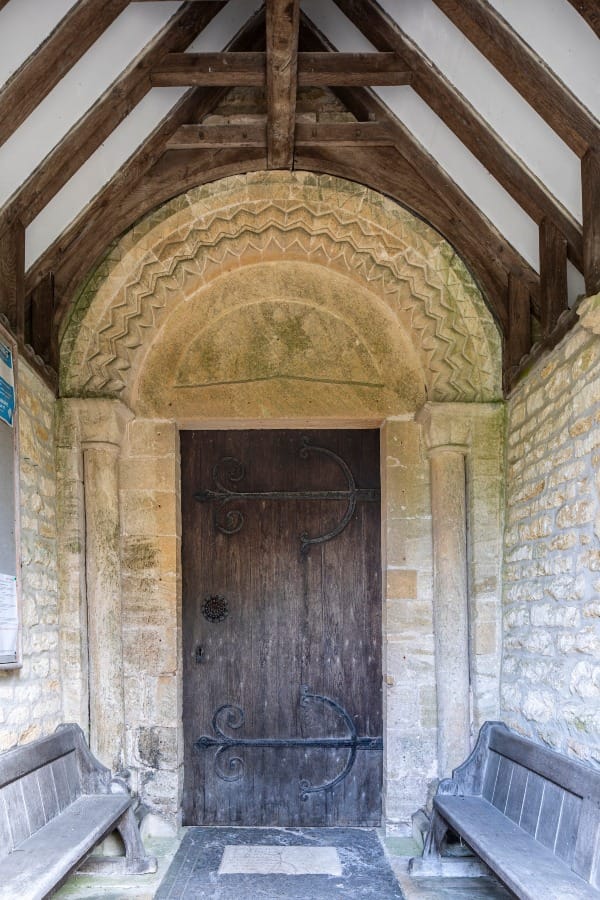
I head for the porch and look at the door inside. It’s a Romanesque door surround with a mass dial carved on the segment above (known as a tympanum). The pre-Reformation dial, with a stick (known as a gnomon) placed in the hole at its centre, was for marking the liturgical hours. Its presence, shrouded by the porch, tells us that the porch came later.
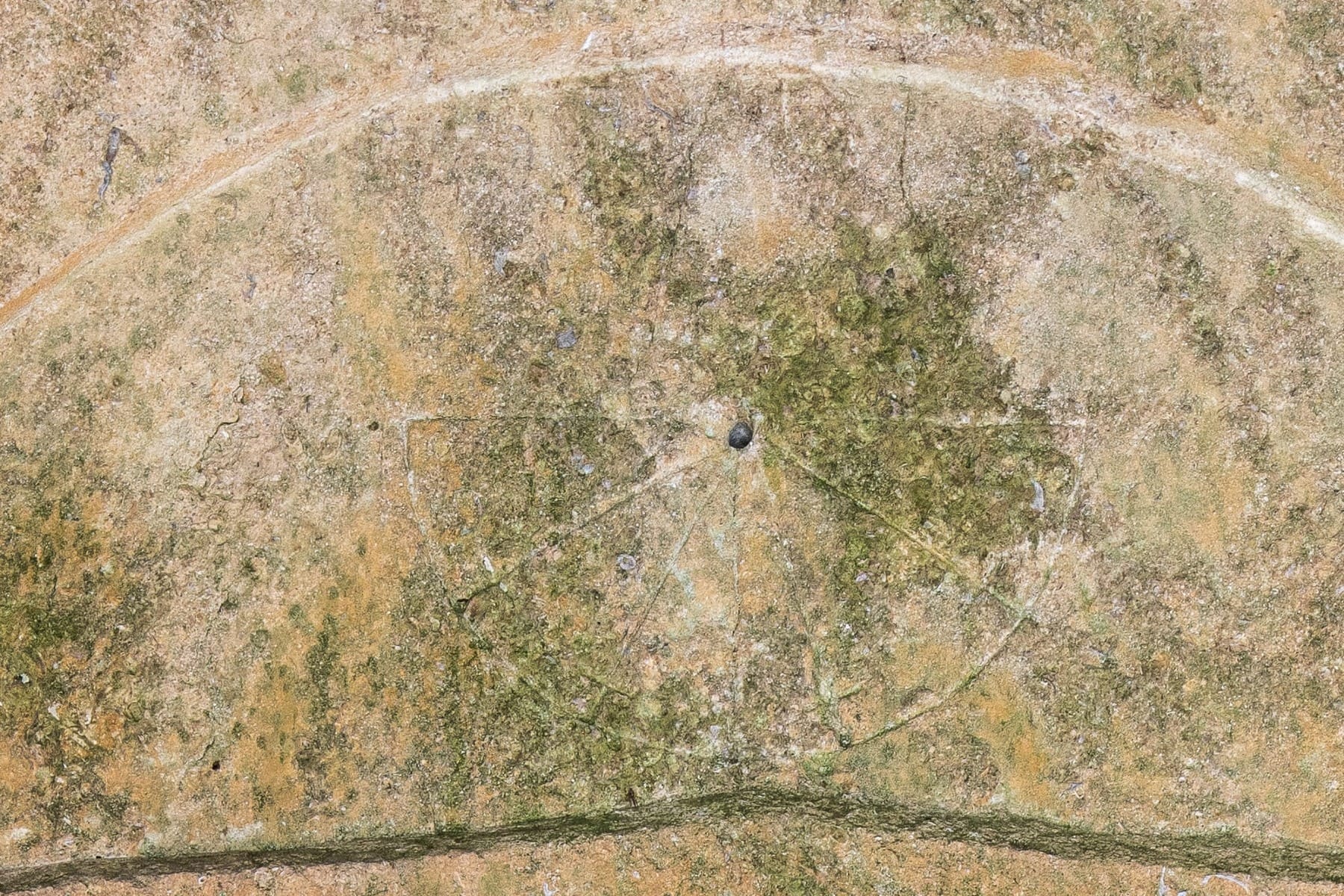
There is something fitting about encountering a timepiece at a threshold. I am reminded that churches are places shaped by passage through time and, as I stand before it, I recall a morning spent at St Andrew’s, Bolam, recording the movement of light across another ancient doorway.
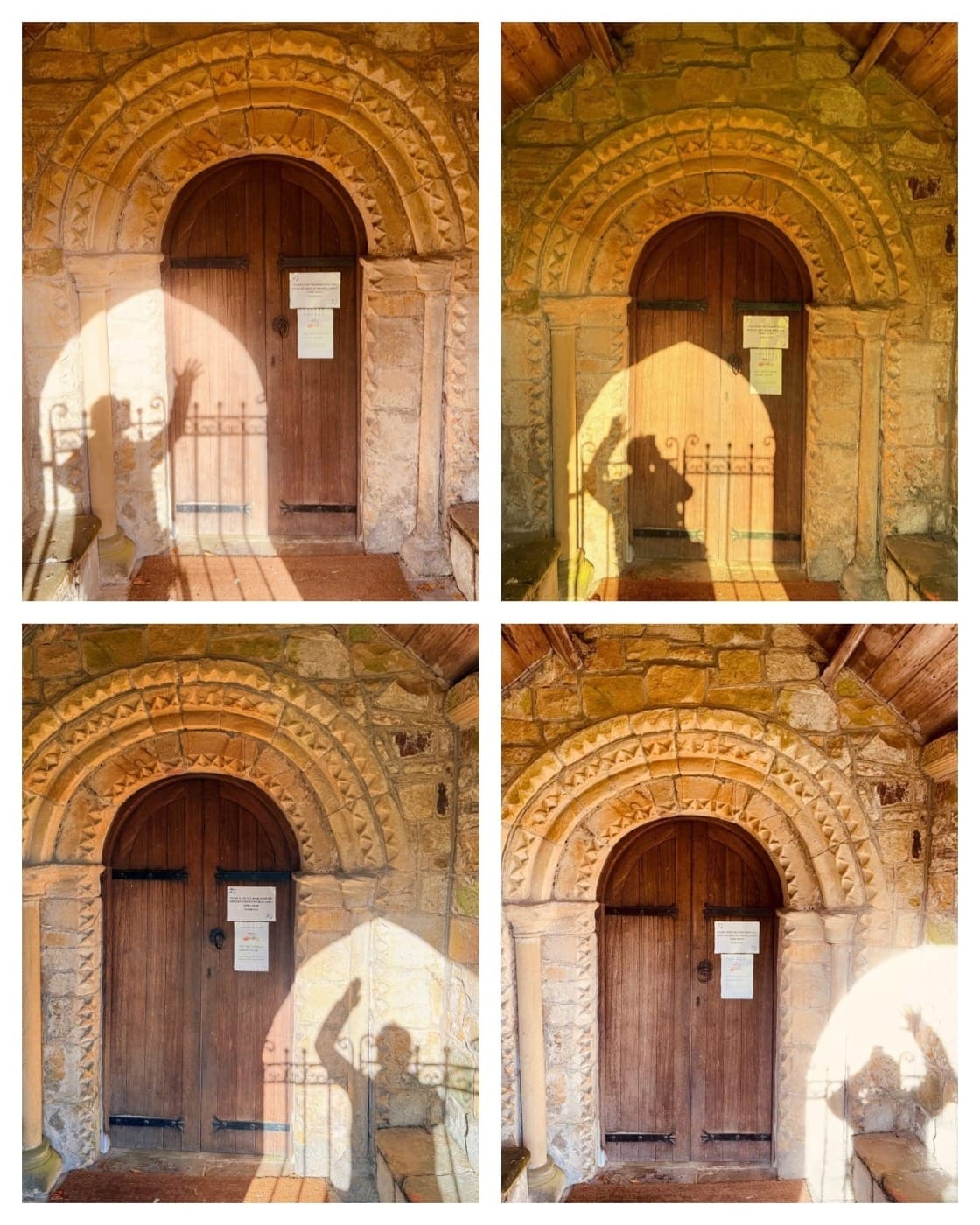
Over the course of the day at Bolam, I found myself becoming part of the experiment. My shadow crept across the stonework and I realised that I had become the gnomon - the pointer that marks the movement of the sun.
All of this, perhaps, is a way of delaying my gratification in anticipation of entrance.
I think there needs to be a word that describes the feeling we get when we open the door of an ancient church - one that seems to tether anticipation, passage, orientation and arrival into a single sensation.
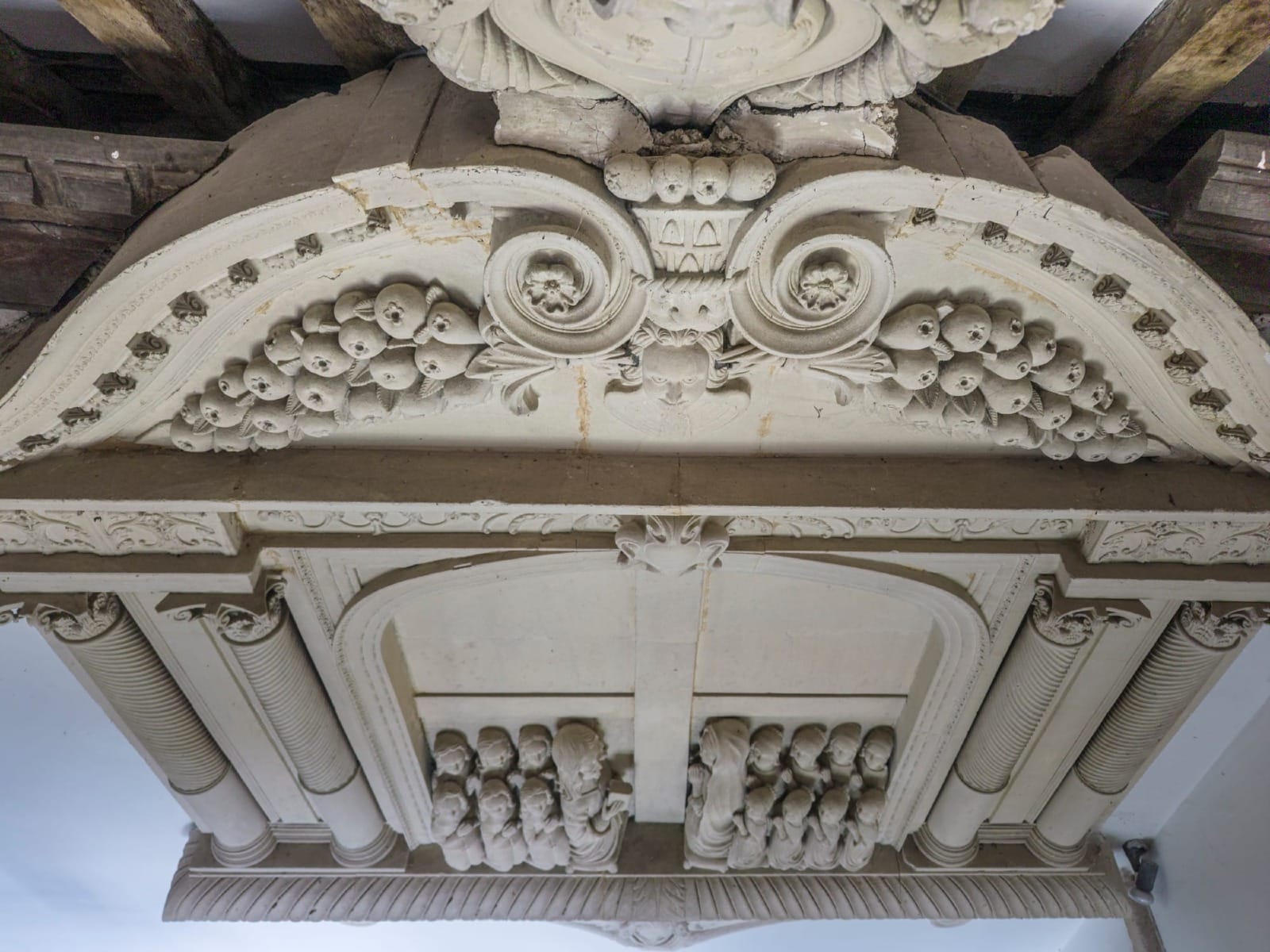
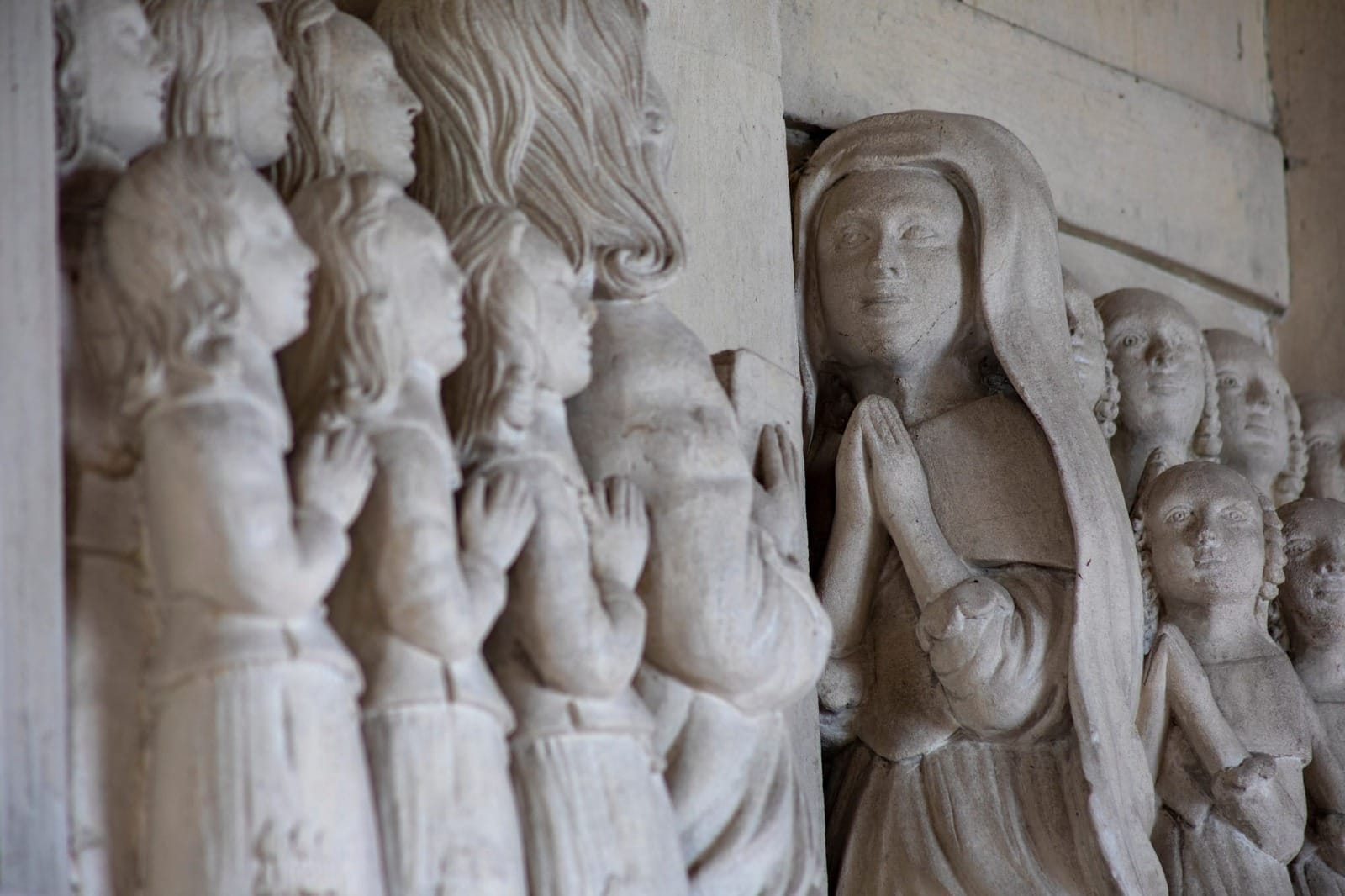
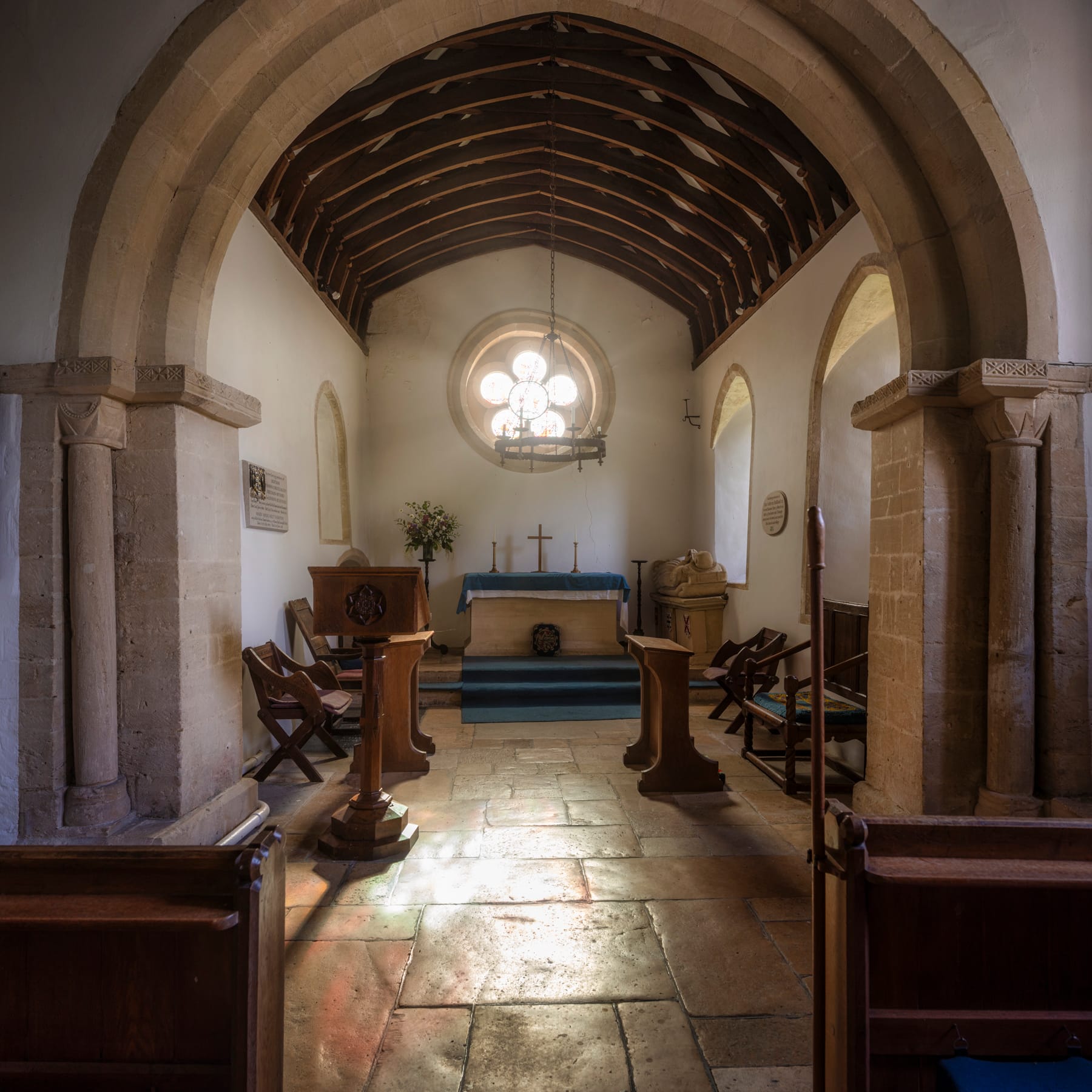
Here at Westwell, my eyes pick up the dynamic of the Trinder Monument on the north wall and then rake along its tender offerings into the chancel where the floor is softened by coloured light from the rose window.
Within seconds, the church has gathered itself into a single impression.
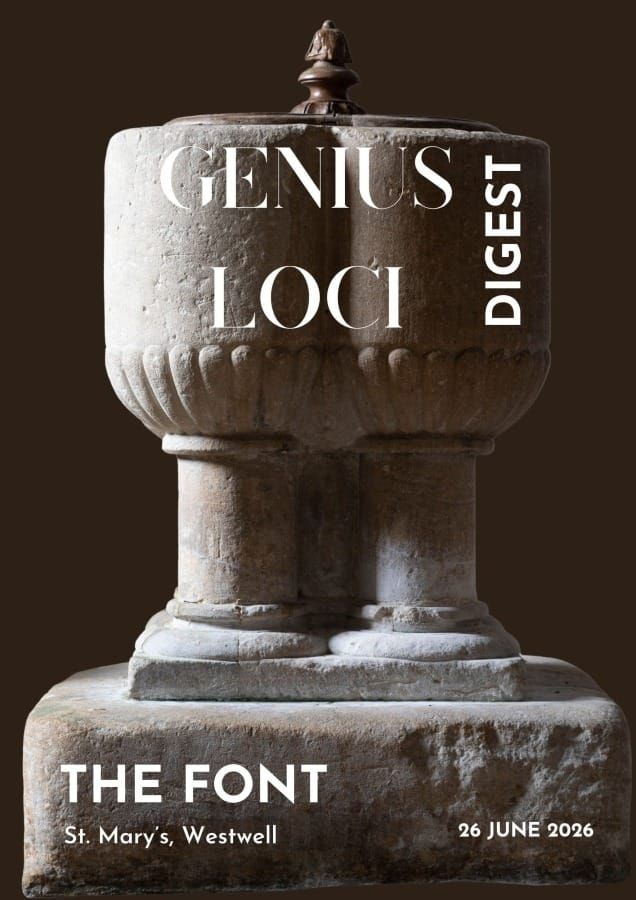
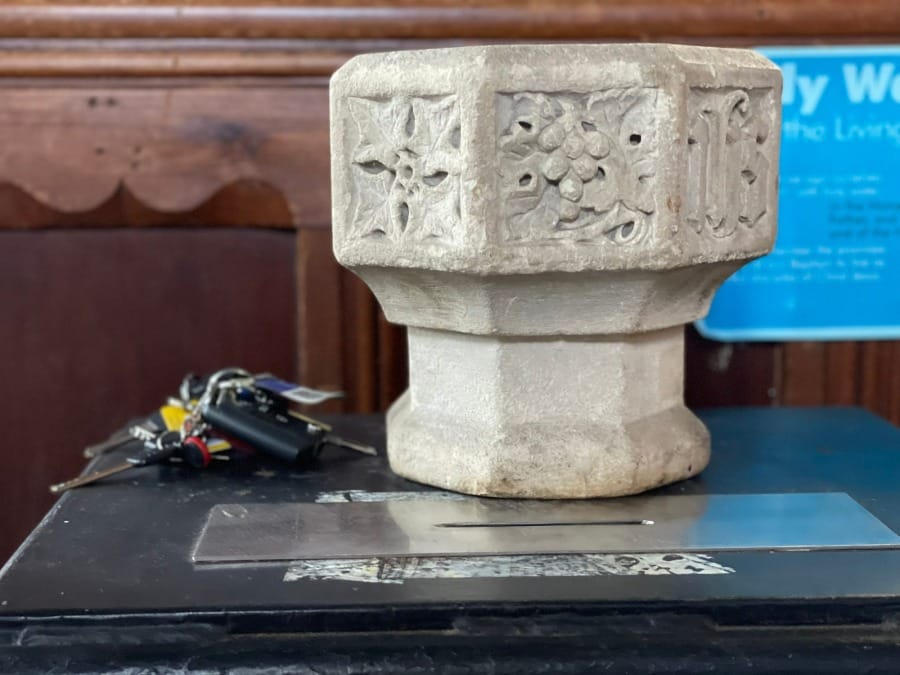
When I turn to look west, I’m caught by a particular detail. The font looks as though it is floating - a pure piece of oolitic sculpture.
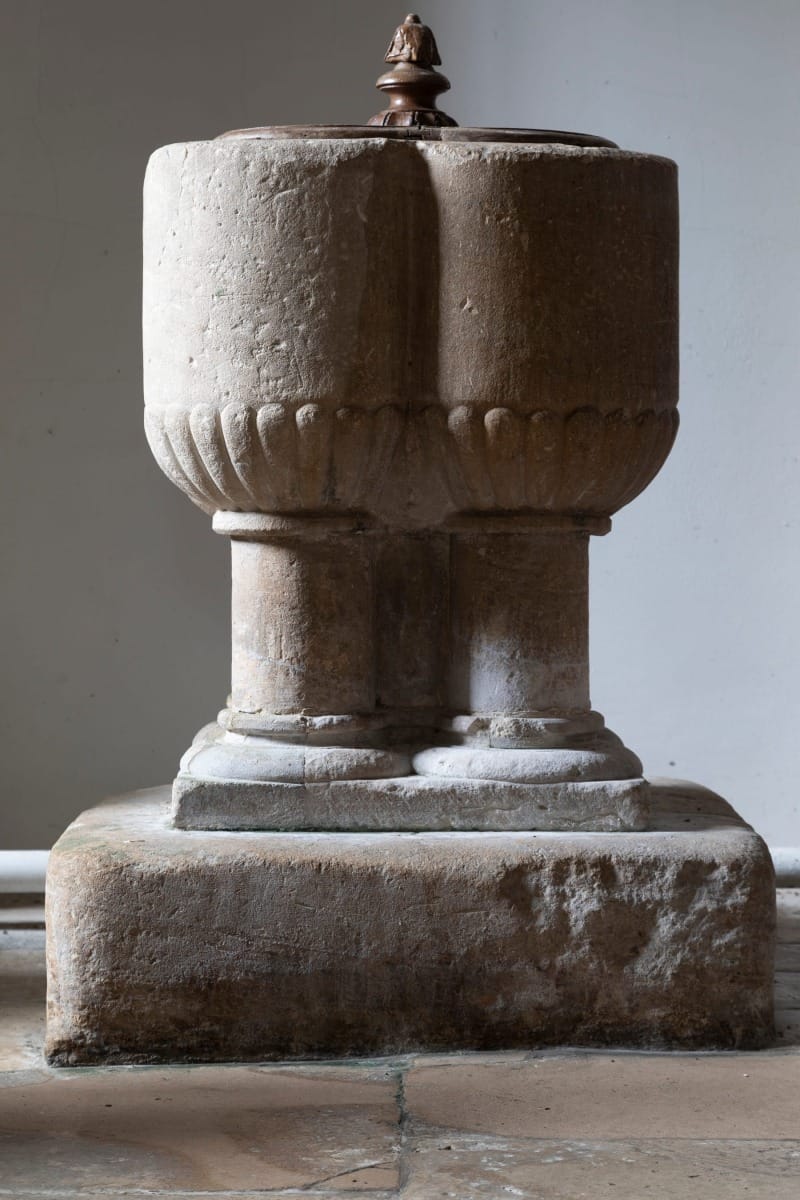
The diffused side light seems to desaturate and draw out its form. It feels appropriate that it should reveal itself only after passing through the door. One threshold giving way to another.
The style is a nod to its origins in the C12th - a contemporary of the door inside the porch and perhaps of the respond of the chancel arch. I sit for a moment and watch the light shorten the shadows. There is something remarkable about the way a simple form can contain such depth. The chalice-like body of the font unfolds into scalloped multiples that prosper in my imagination.
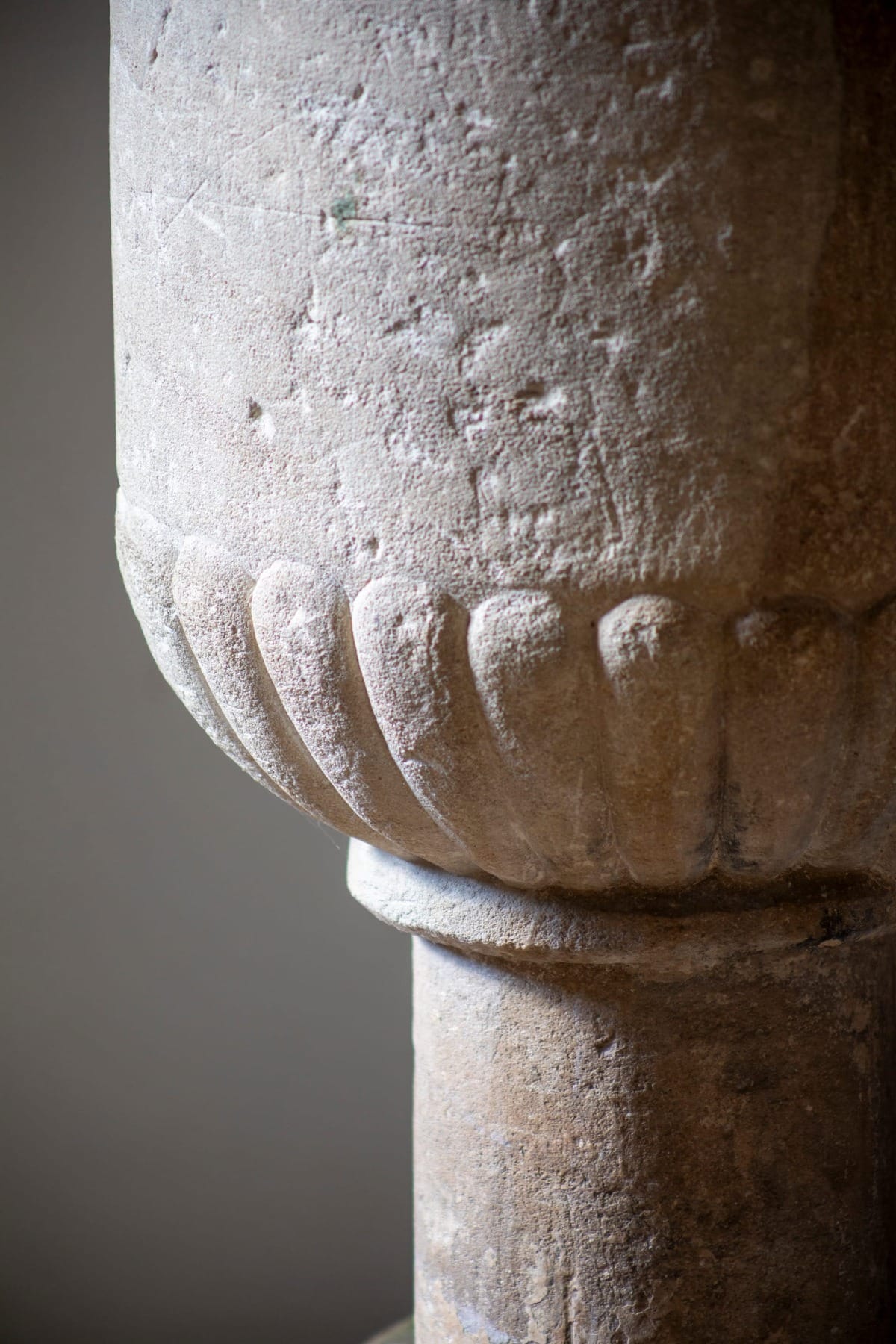
The motif feels ancient and familiar at once. At first glance, a reeded base; at second glance, a cupping, sausage-fingered embrace. Here is a pattern that has travelled through centuries, finding expression wherever human beings have sought order, rhythm and delight.
I see it again in the petals of a remnant from the medieval decorative scheme at Westwell.
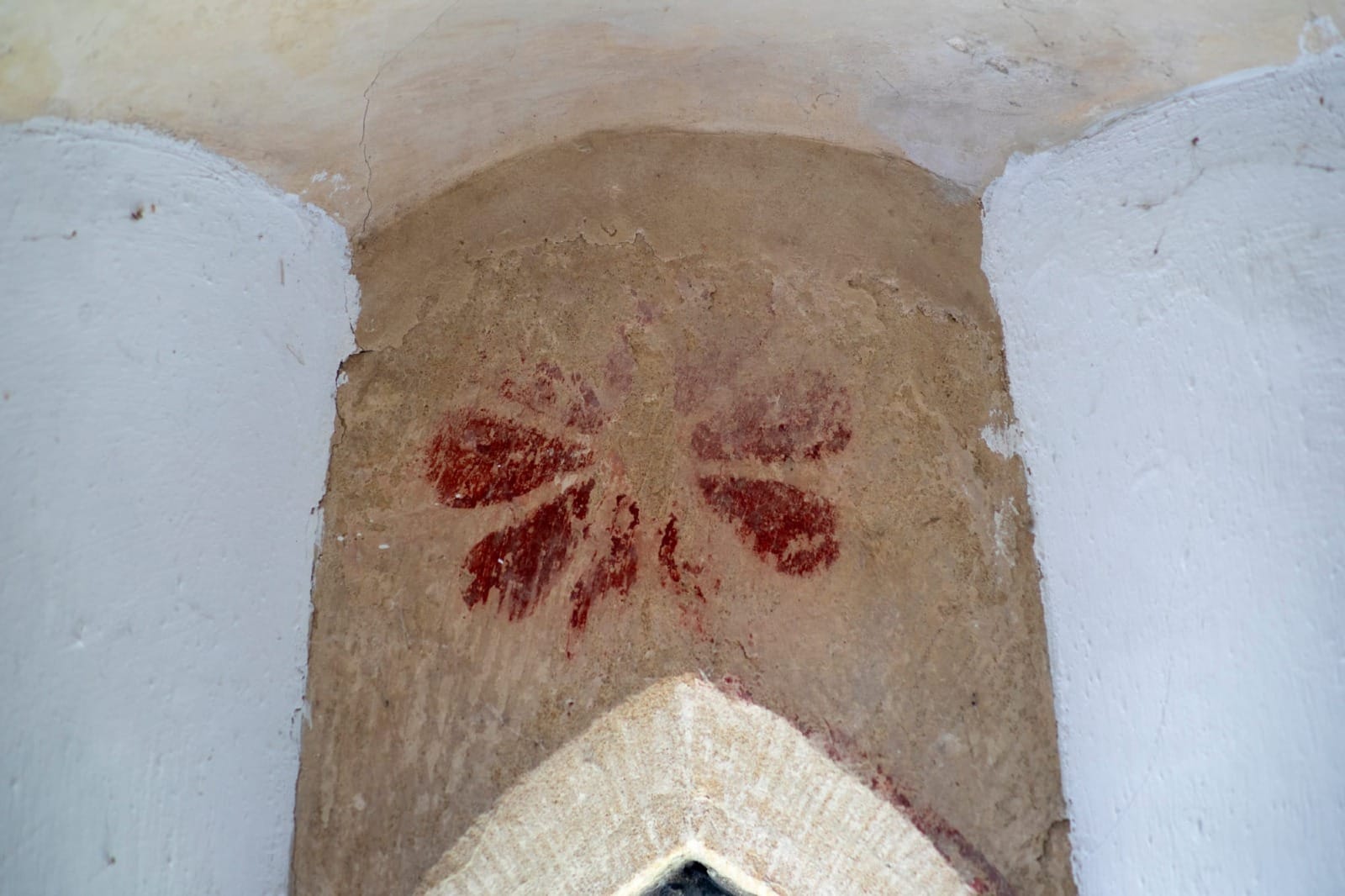
I think of Jacobean carving and the Beverley Minster font. Curiously, I think of Preston Bus Station too. There is a faint echo there - the same impulse carried forward into concrete, softening the brutal - comforting forms gathering strength through repetition.
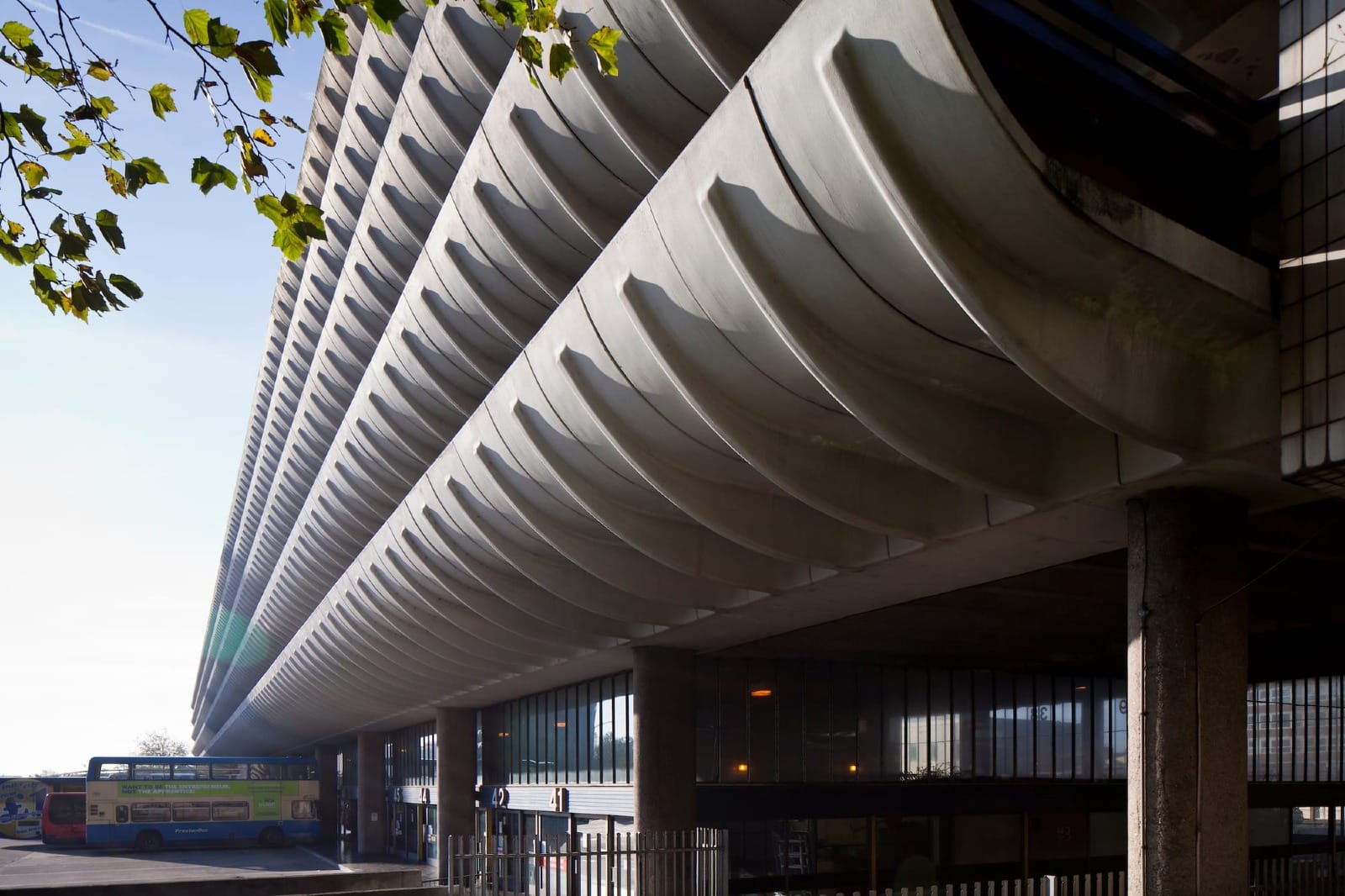
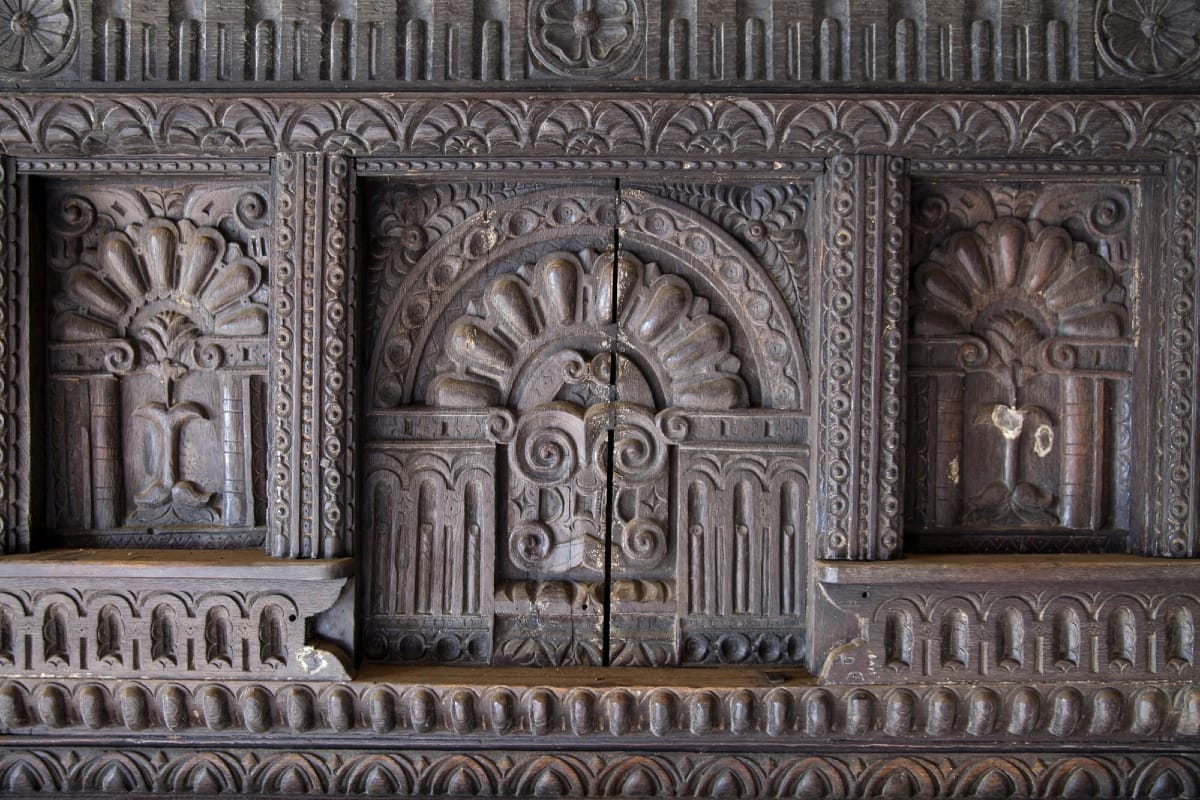
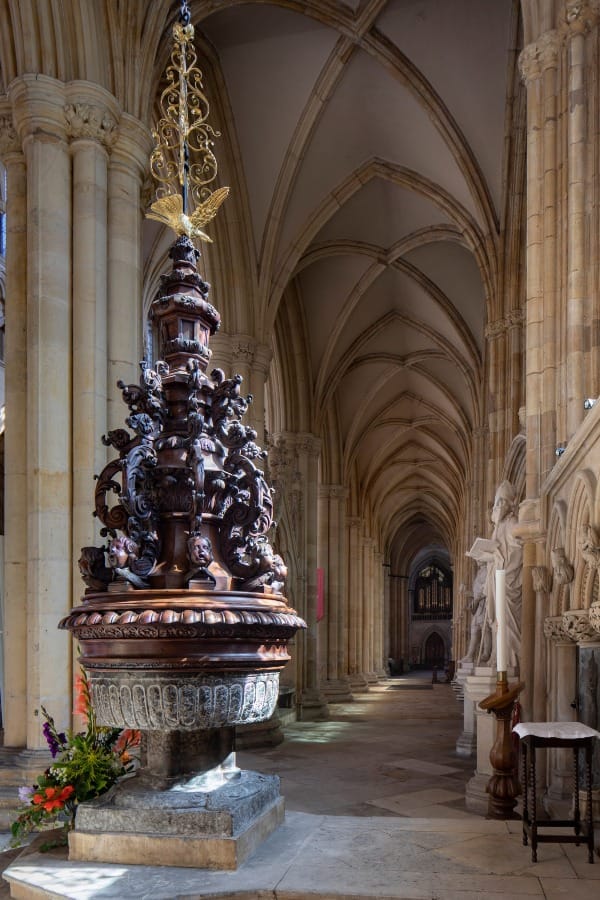
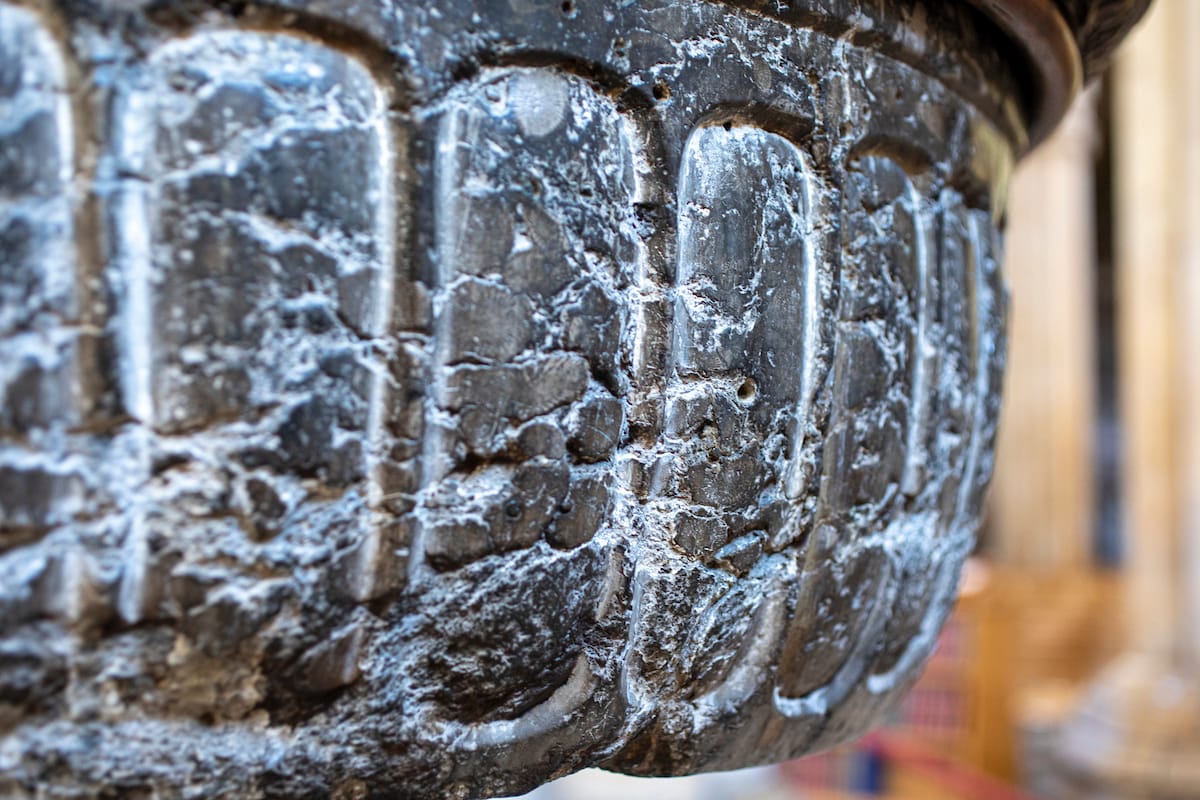
Certain patterns endure.
After five minutes I pull open the tripod and latch on the camera. I laugh at myself. This small font has taken me from a village church into a thousand years of human making and back again.
For a moment I am looking at more than a font. I am looking at an idea that has lasted long enough to find its way into other buildings across the centuries. The mason is gone, but the mark of his chisel has travelled intact into this early summer morning.
There is a wonder in that.
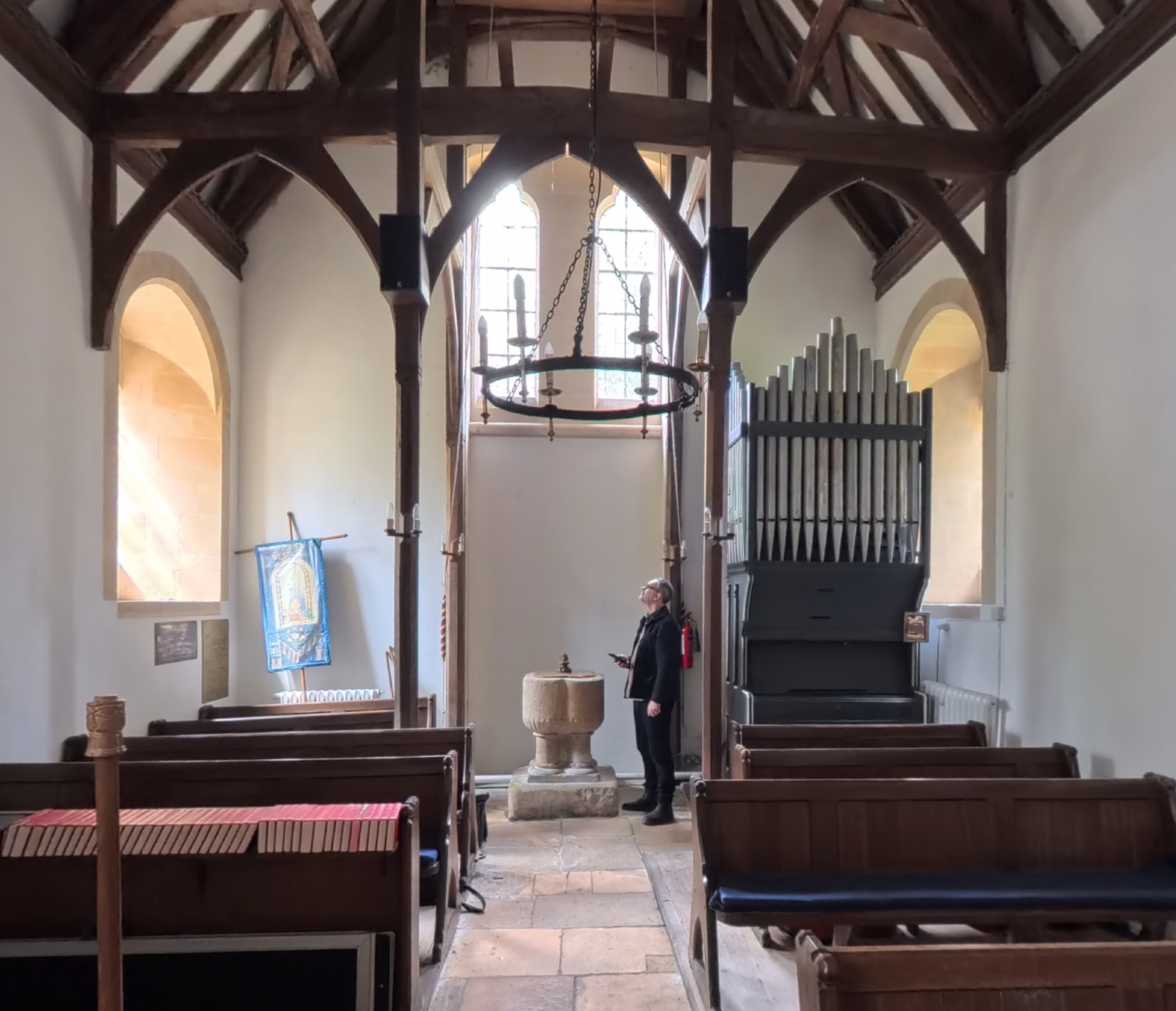
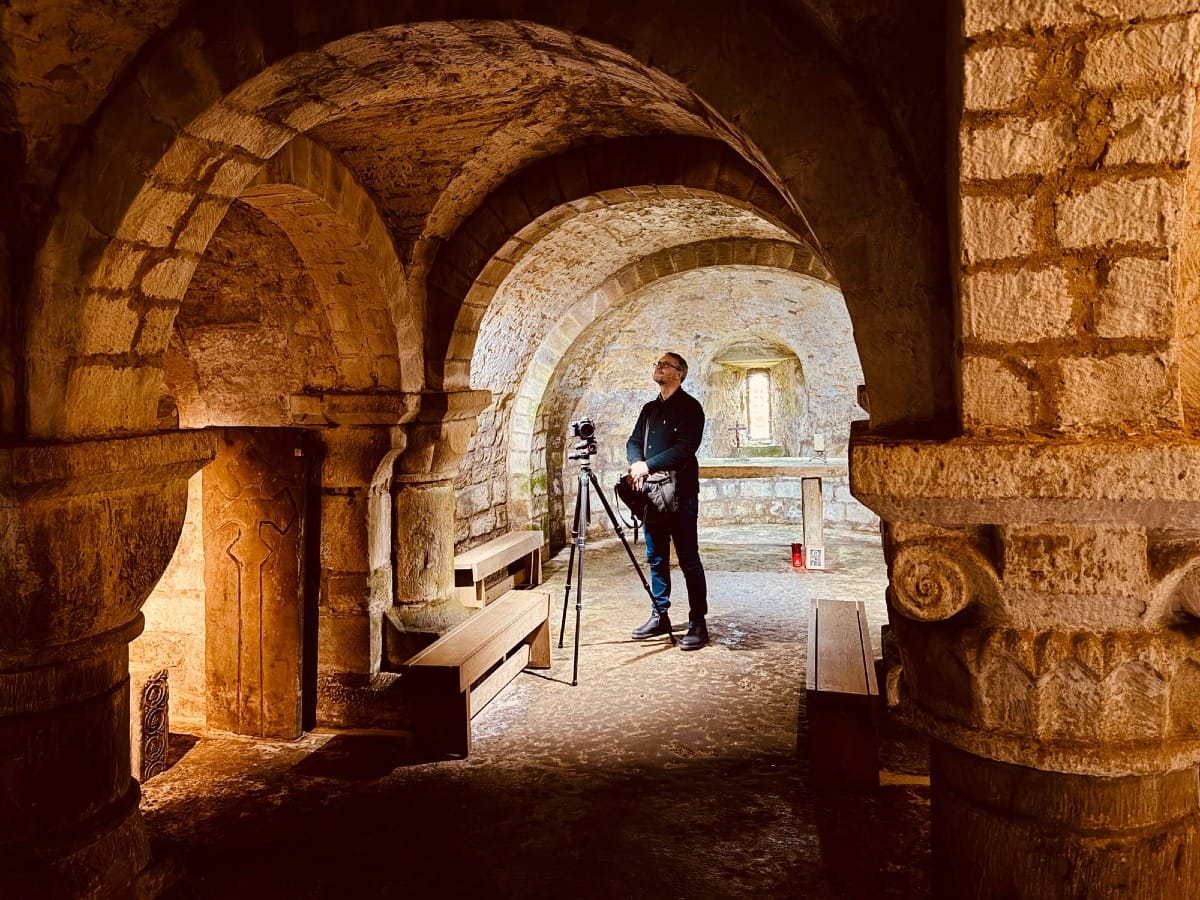
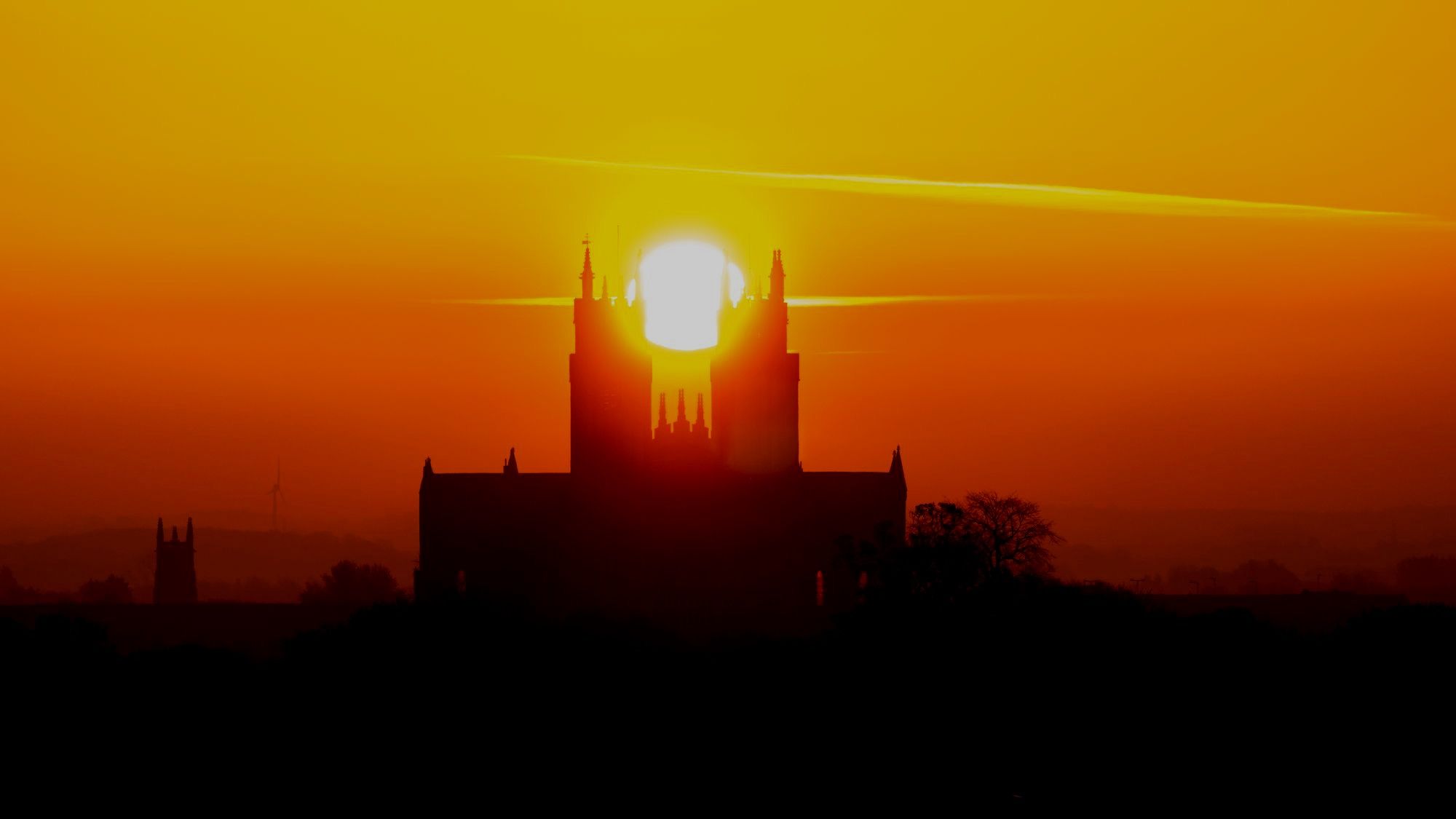
St. Mary's, Westwell, Oxfordshire.
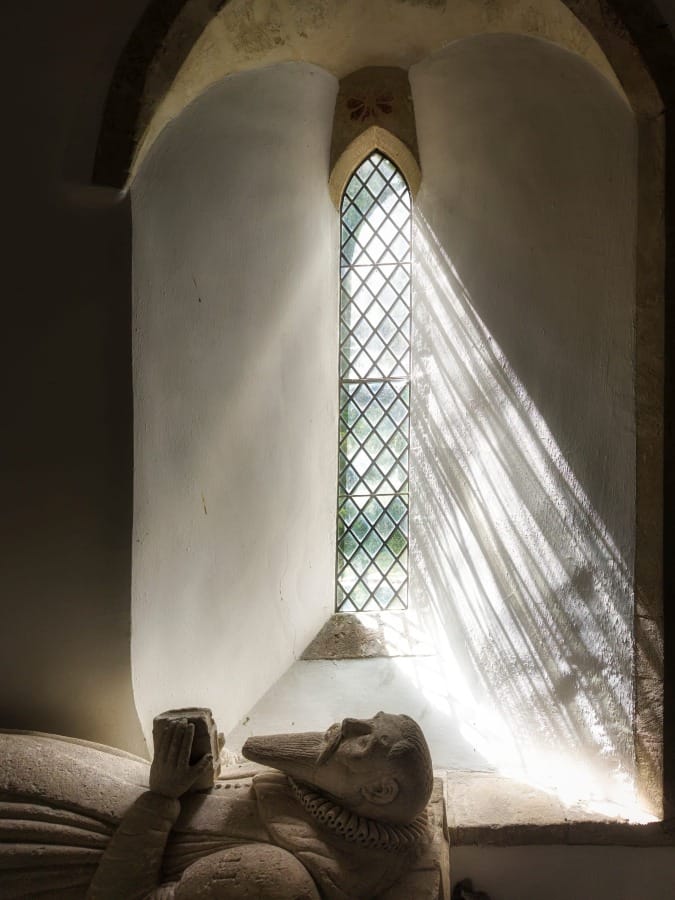
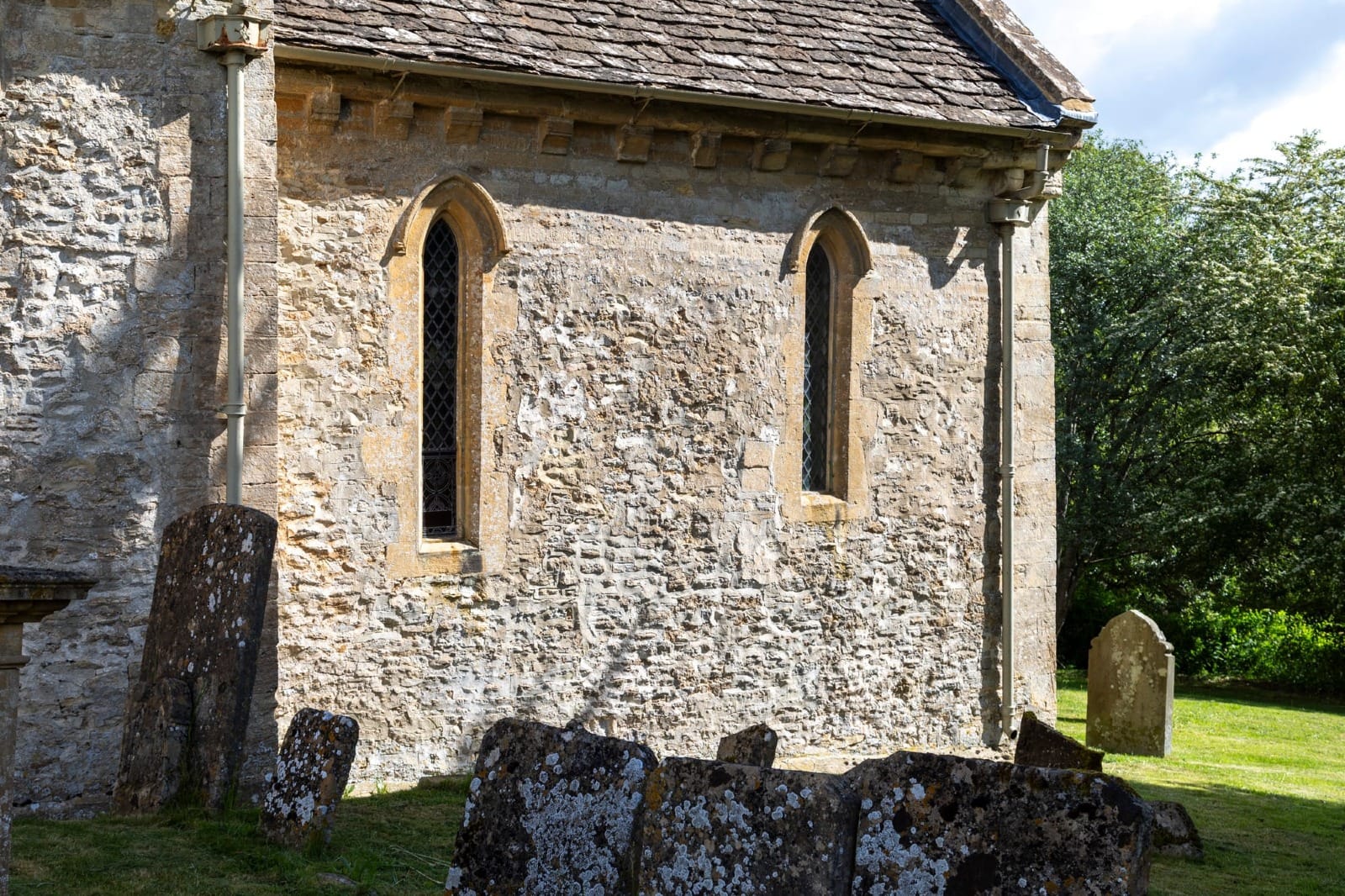
St Mary’s, Westwell is a place apart – a small Grade I listed parish church set within an idyllic hamlet of the Oxfordshire Cotswolds, south of Burford.
The church has C12 origins, with a C13 chancel, a C15 porch and Victorian additions. Inside are traces of medieval painted decoration, important monuments, a rare chalice-type font with a reeded base, and a reused medieval altar slab. St Mary’s rewards slow looking, revealing layer upon layer of craftsmanship.
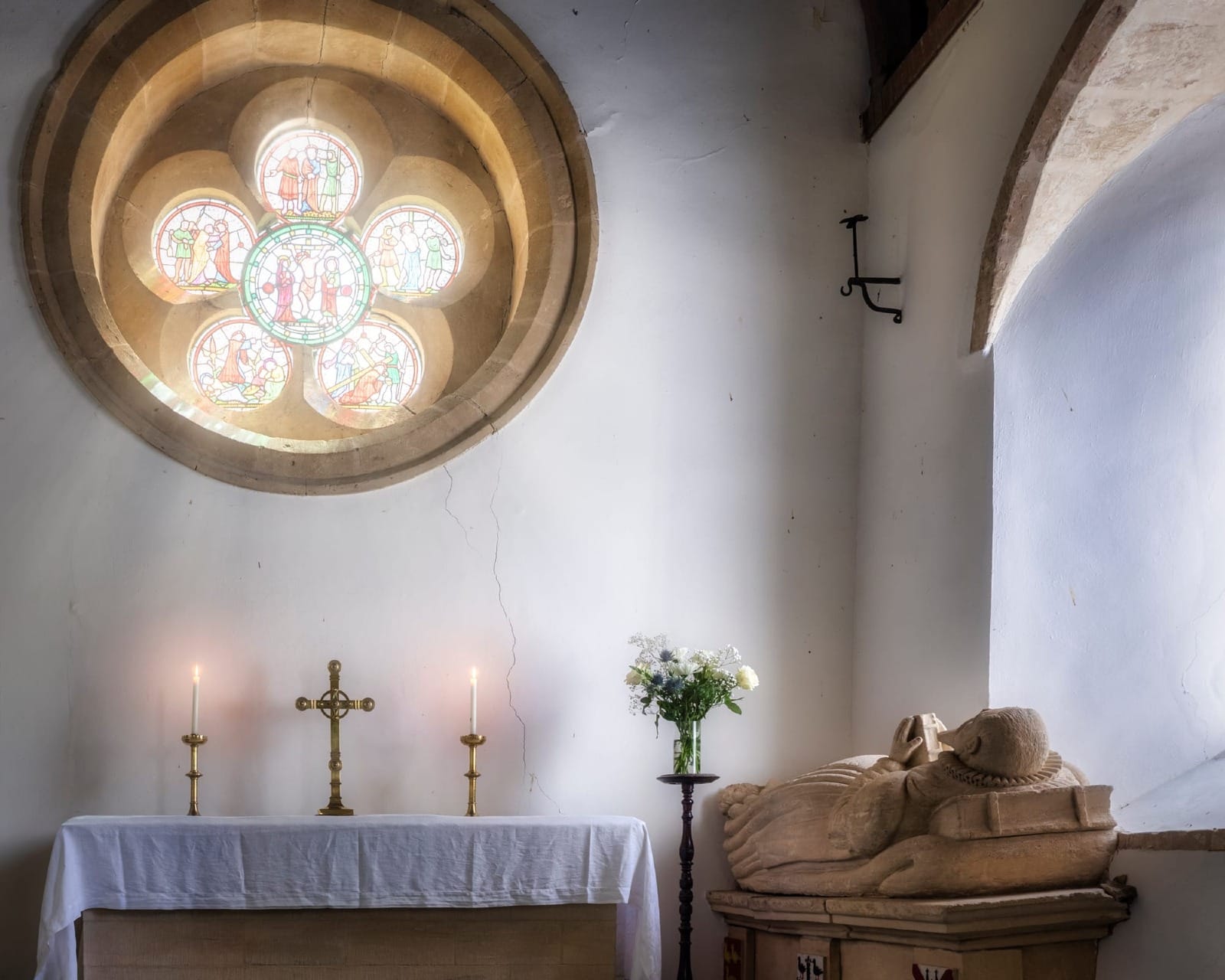
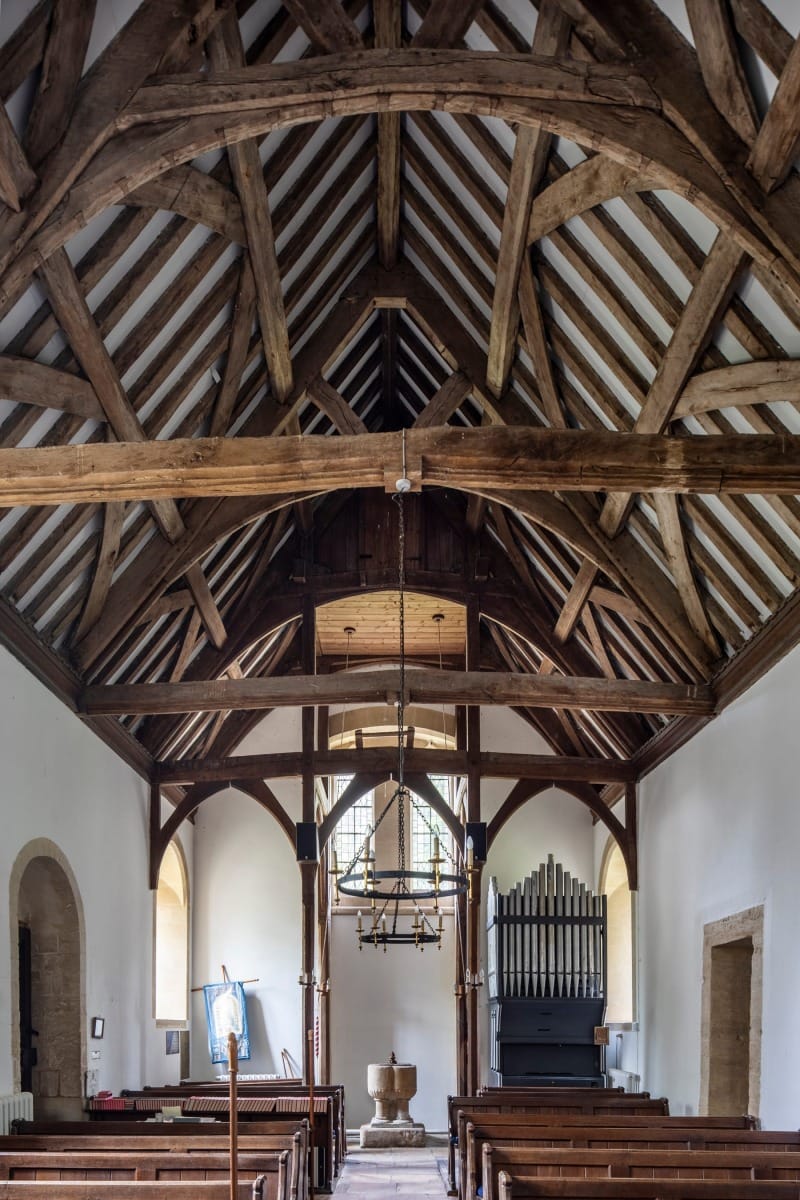
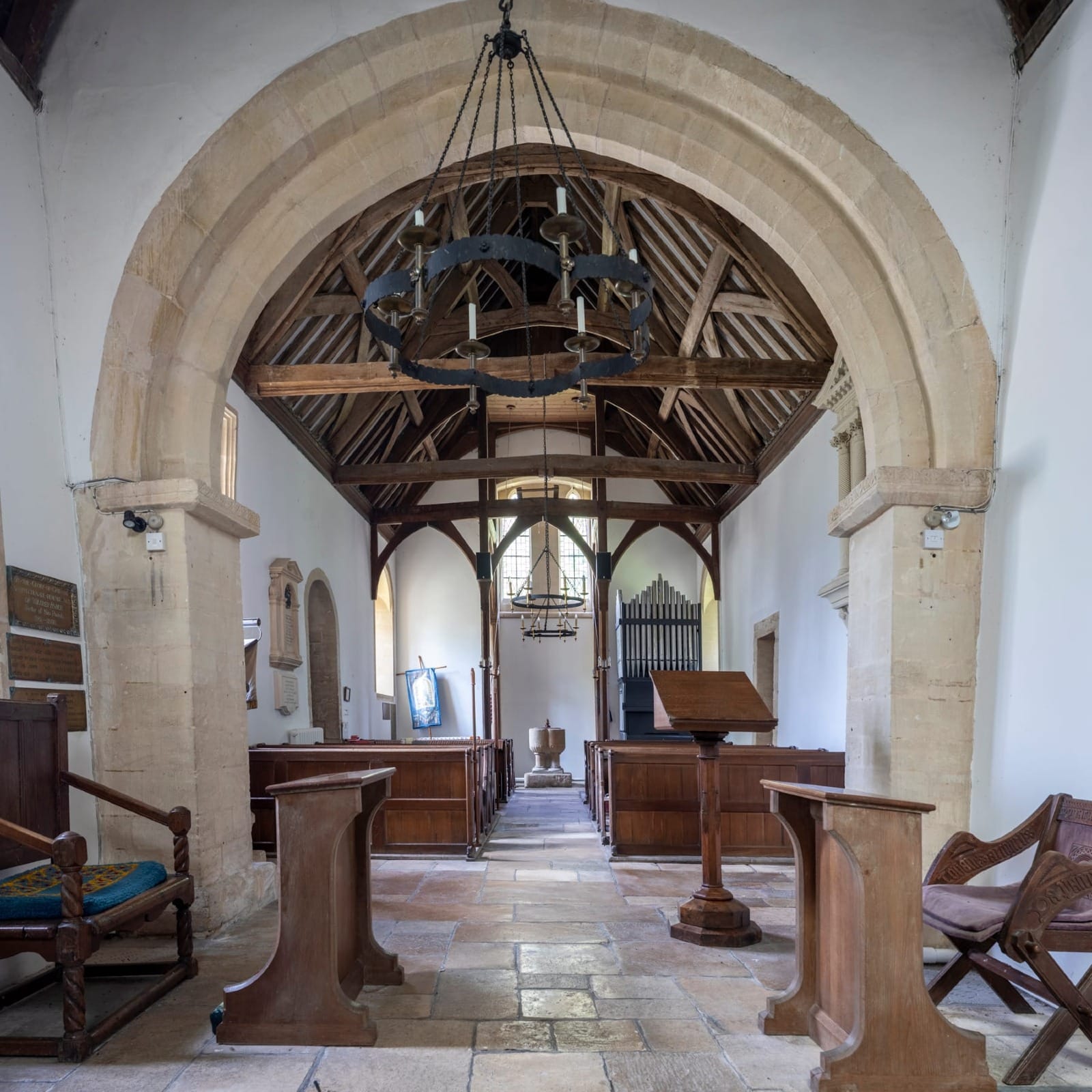
If you plan on visiting - here's more information
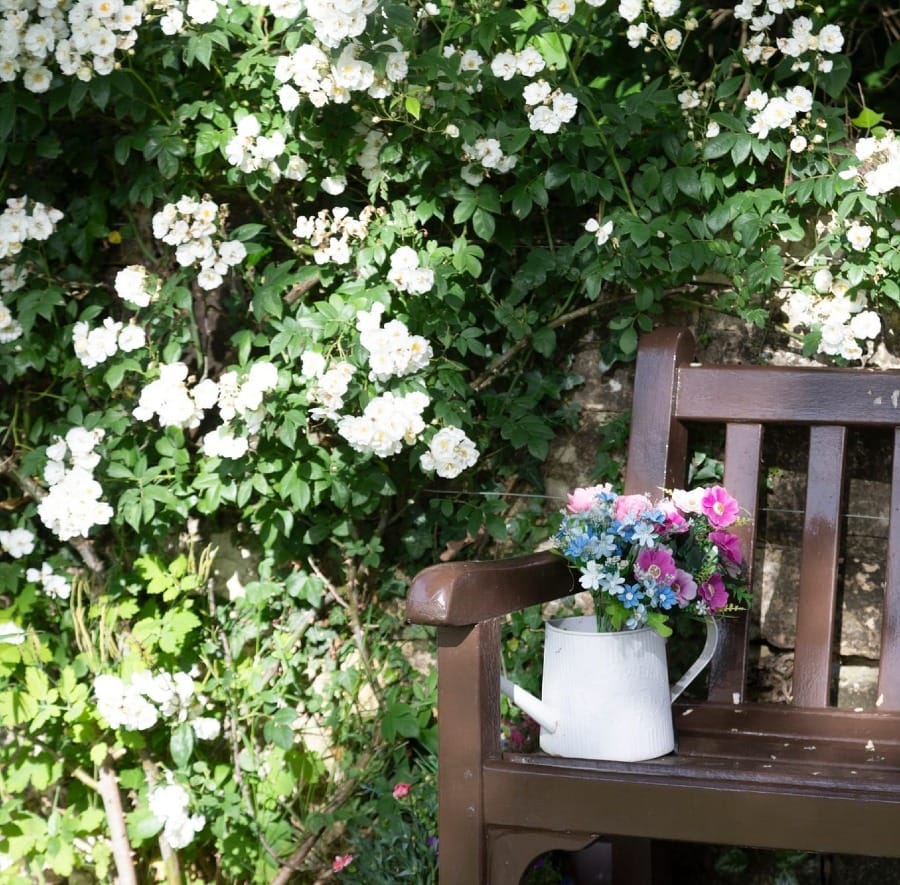
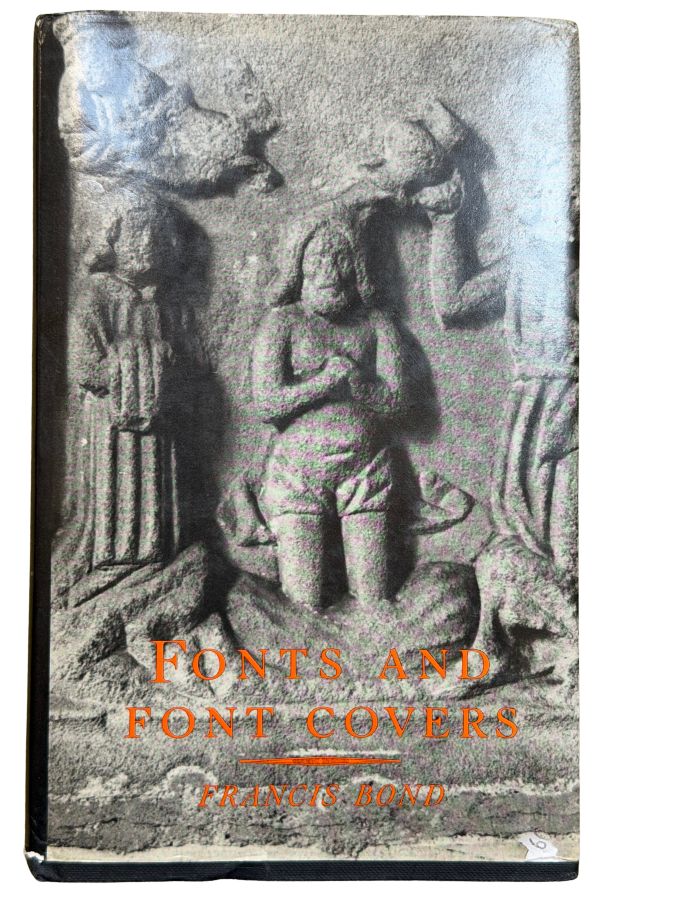
More Amazing Fonts
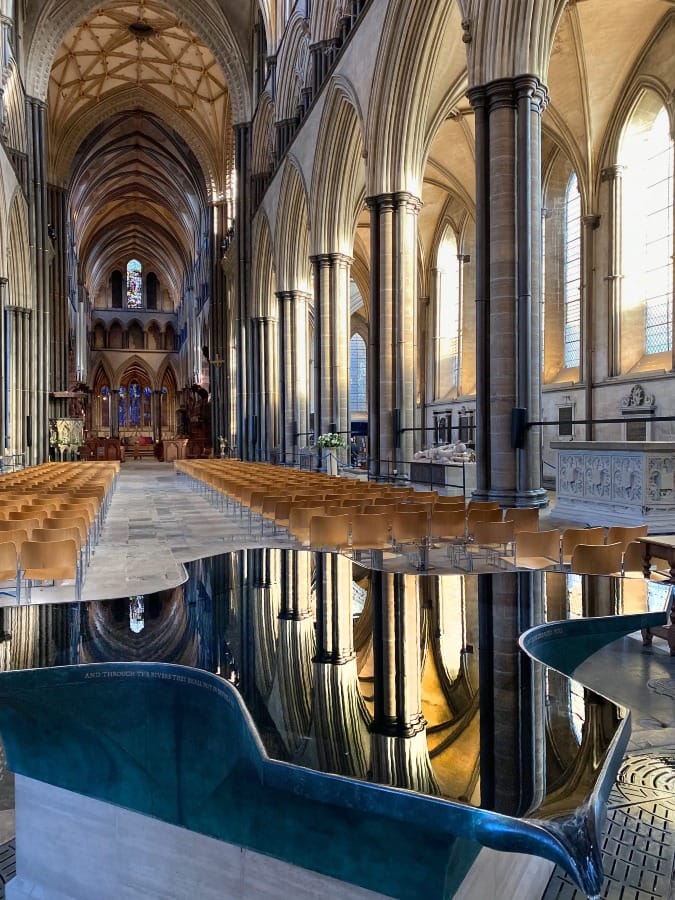
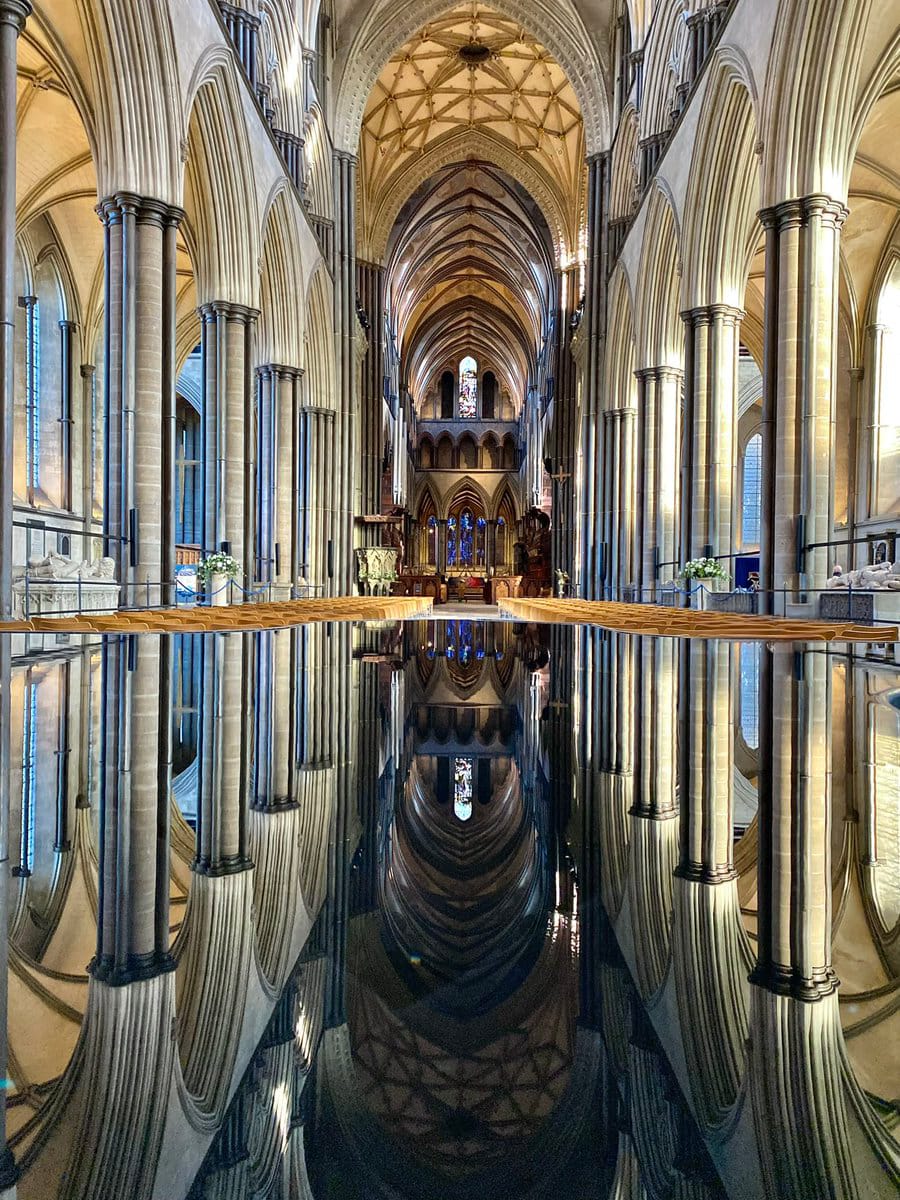
The William Pye infinity font at Salisbury Cathedral
The font at Winchester Cathedral depicts scenes from the Miracles of St Nicholas of Myra on its four sides and may have been commissioned by Bishop Henry of Blois in around 1150.
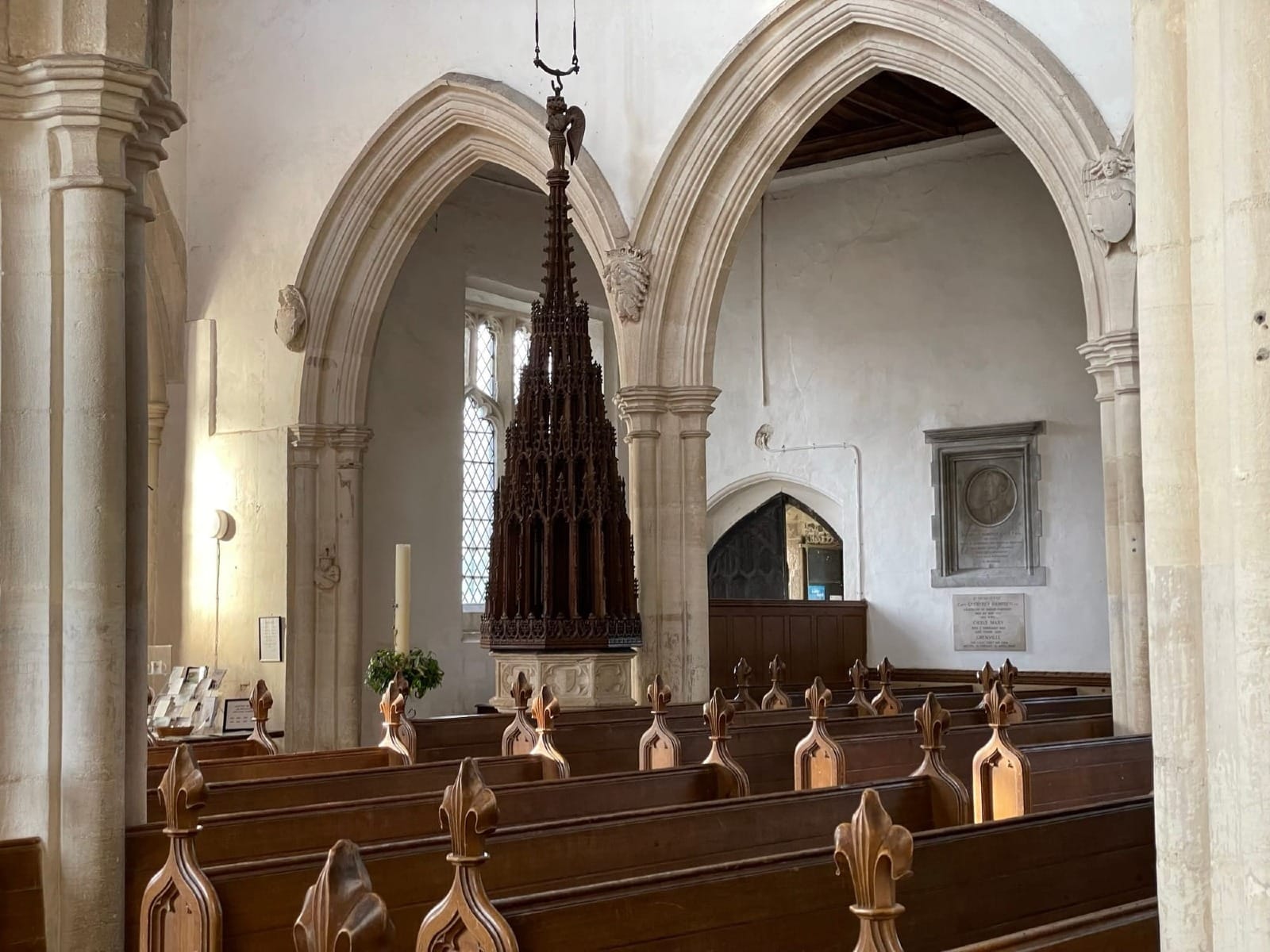
When I looked back across the nave at St. Mary the Virgin Ewelme, my first thought was that a hovering Gothic space ship had entered it.
Suspended above the font is a cover of 1475 that was meant to stop others from stealing the holy water for devilish use.
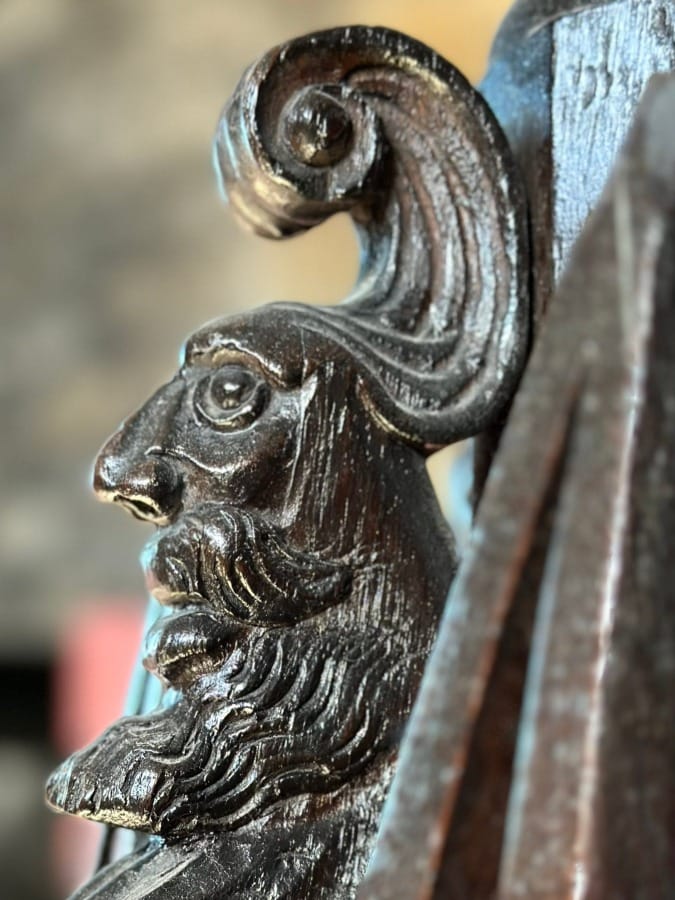
This C17th evil warding serpent head is carved atop the baptismal font cover at All Saints, Ilkley, Yorkshire. A watery symbol set fair to divine the purity of the baptismal water.
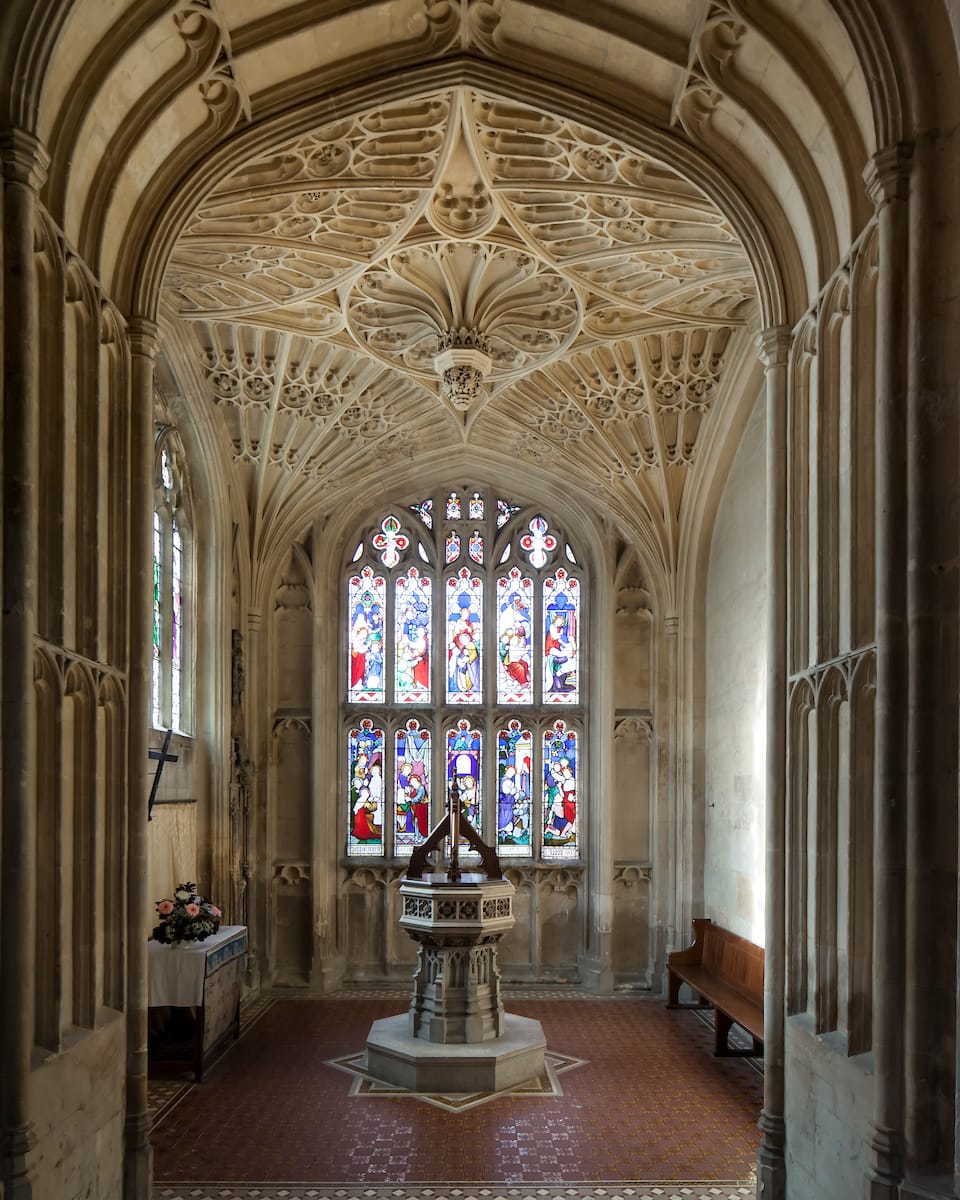
A font with a view at St. Lawrence, Evesham, Worcestershire.
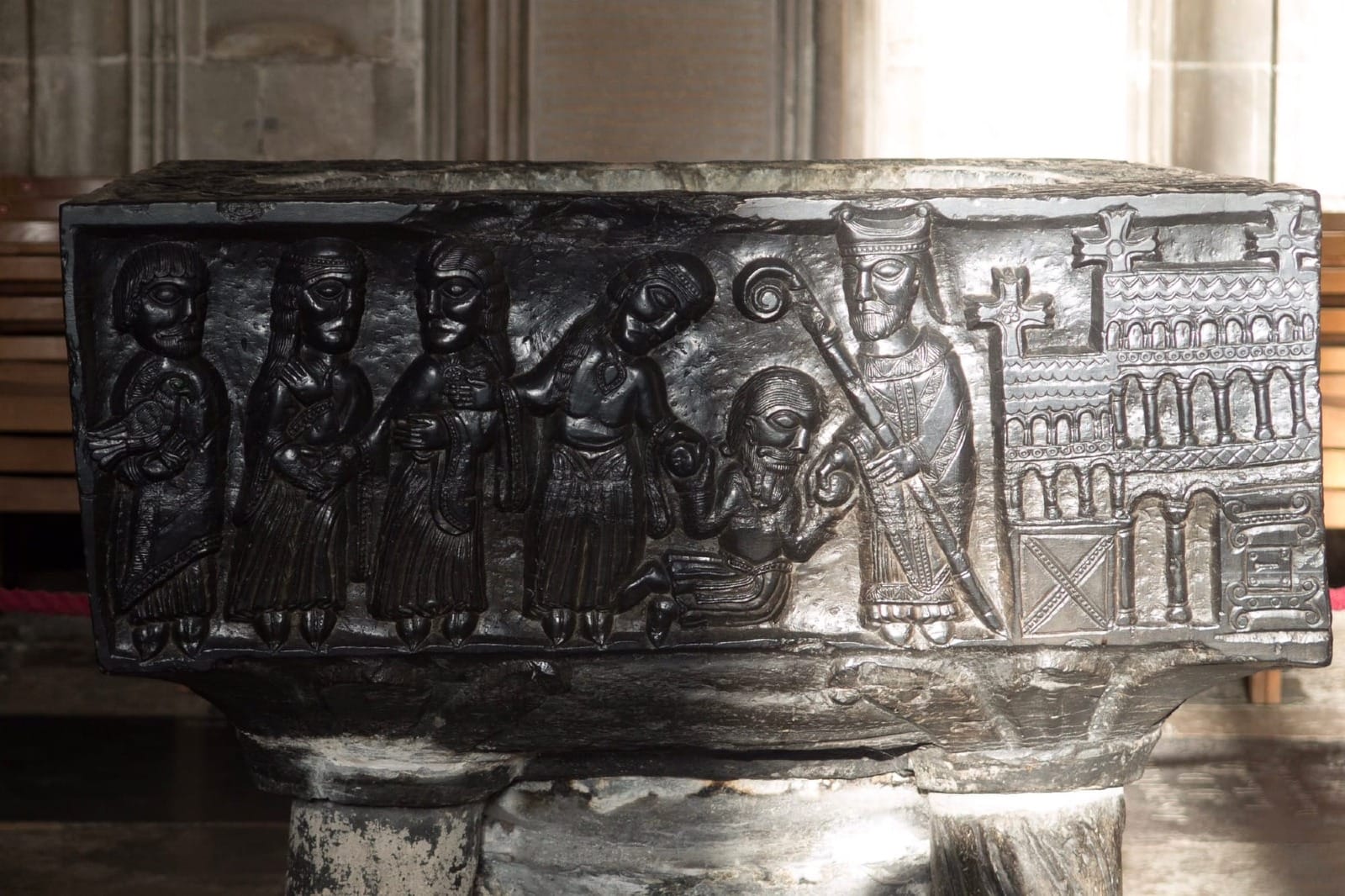
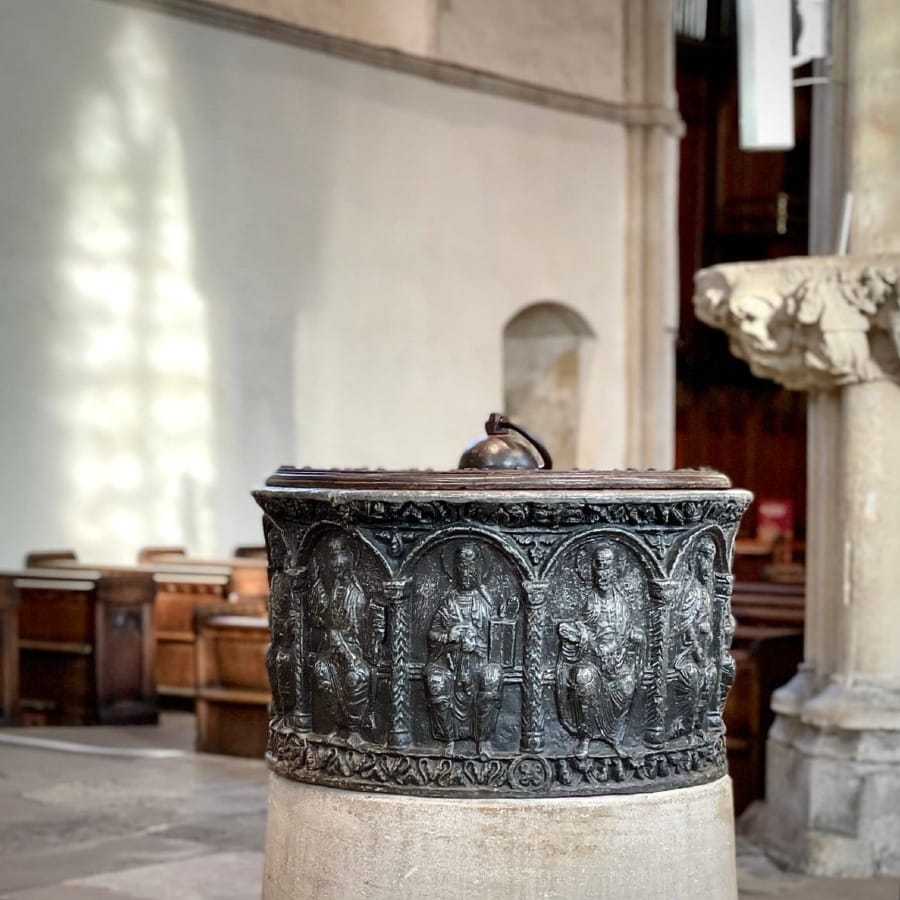
A thing of rare beauty - only 30 lead fonts remain in Britain. This font is the only surviving lead font in a monastic church - dated to c. 1170 at Dorchester Abbey, Dorchester on Thames, Oxfordshire. It shows the apostles seated within a chevroned arcade.
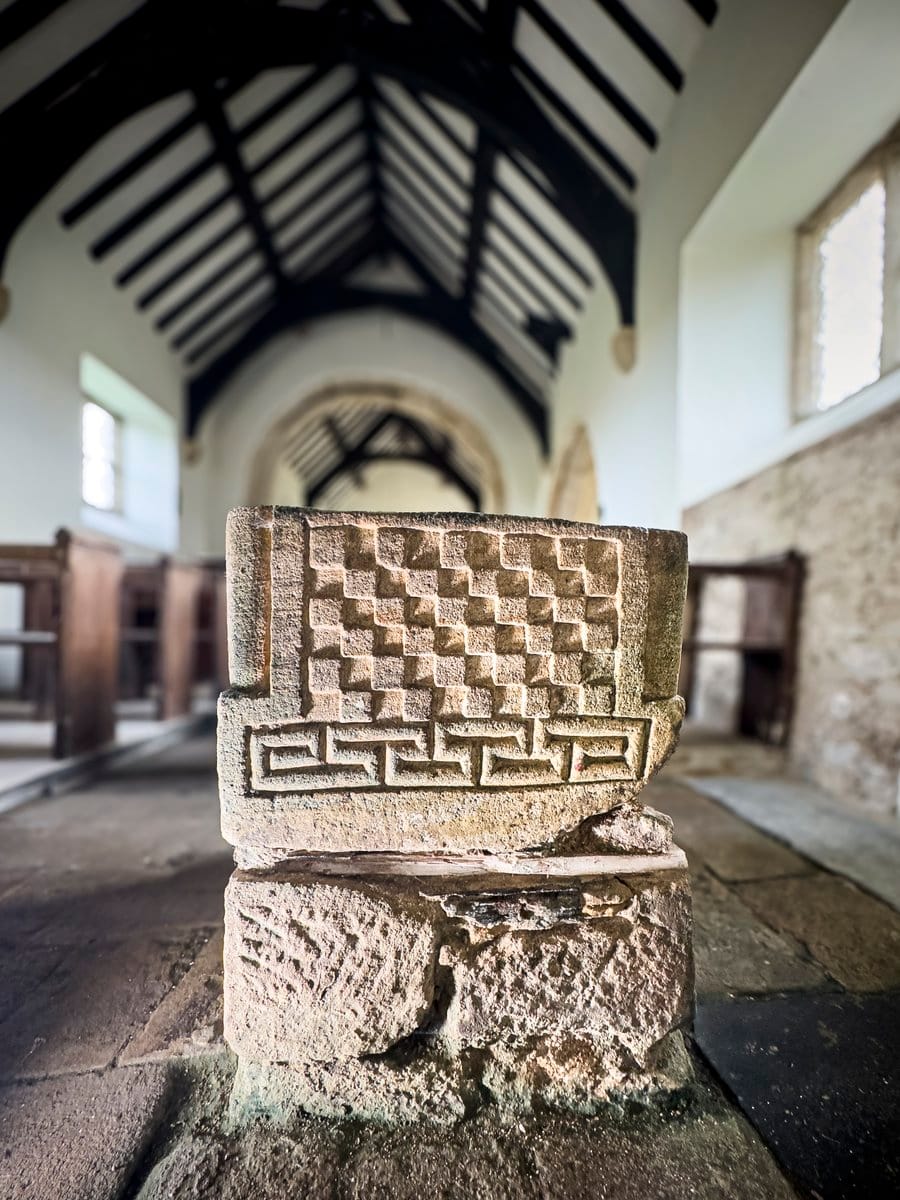
The C11th font at St. Peulan in Anglesey. The key work pattern echoes ancient Egypt and has been found in early Peruvian and Aztec cultures It stands as common ground between humans that spans time & place.
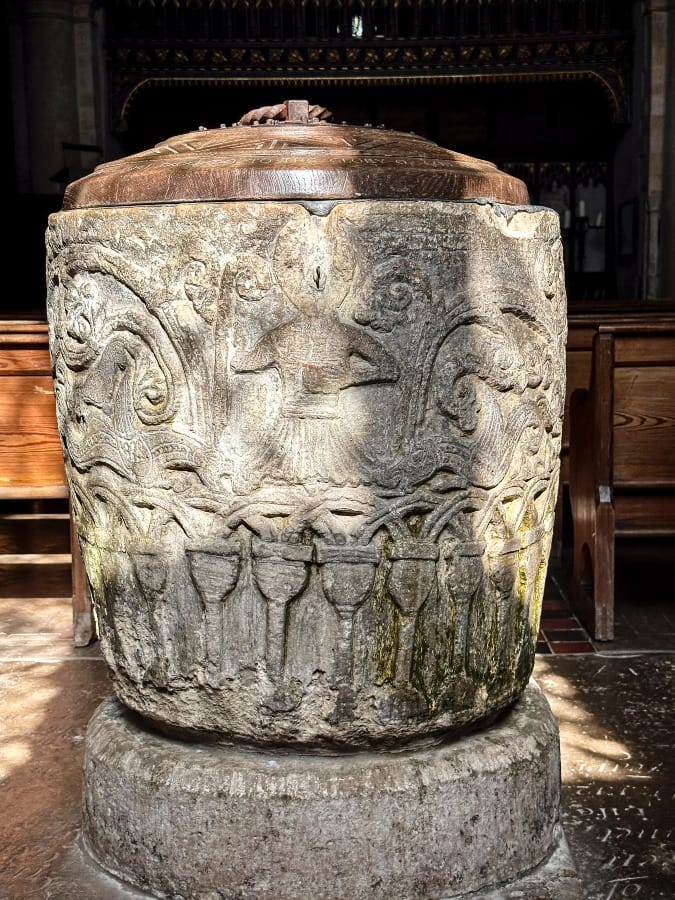
Divine C12th Romanesque barrel font depicting a bishop holding a crozier from the pilgrim church of St. James, Avebury in Wiltshire.
Convenience isn’t just a part of the modern age. Here’s a C14th pocket font for the discerning travelling priest. Found at Waltham Abbey church.
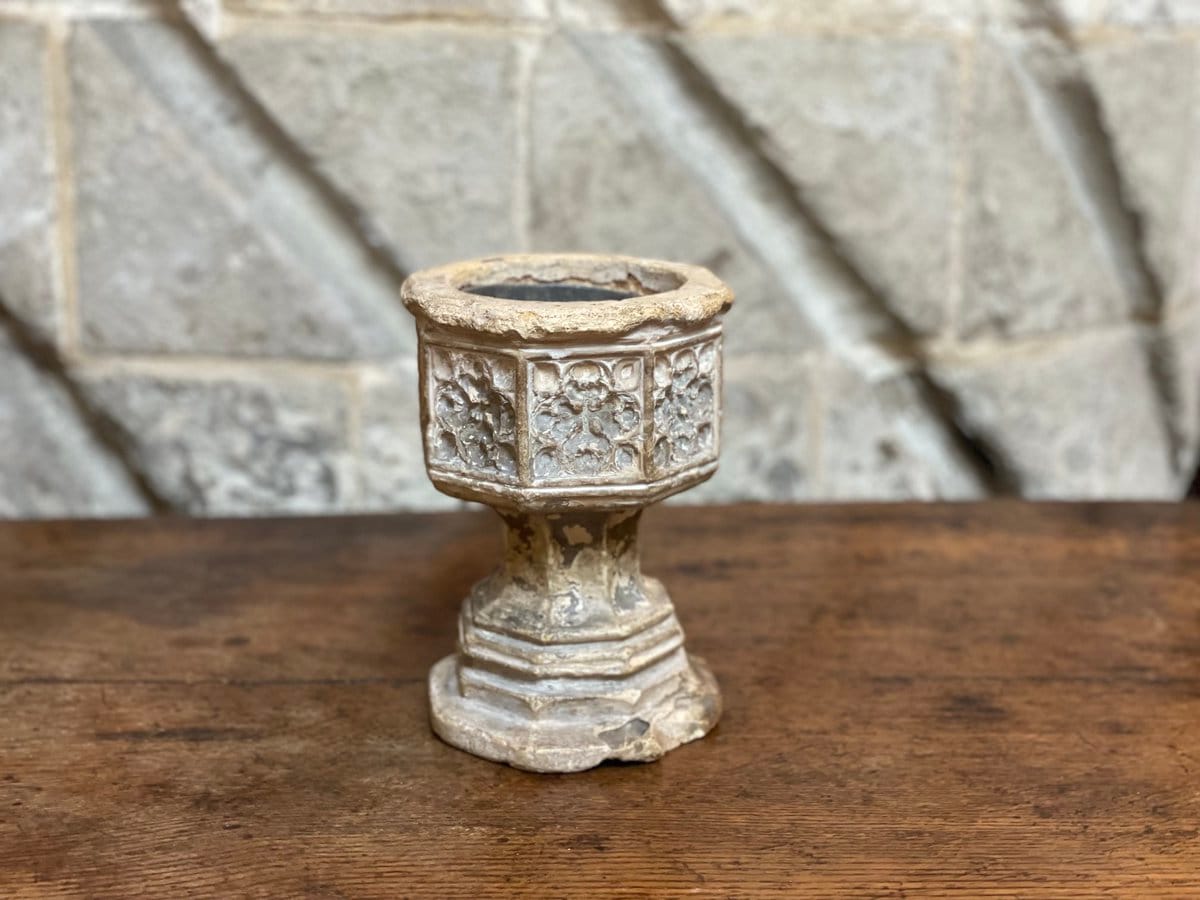
A pocket font to add to the medieval one I found at Waltham Abbey. This one from St. Mary, Barton-upon-Humber.
I'm giving away my original Westwell sketch to the next person that signs up for membership.
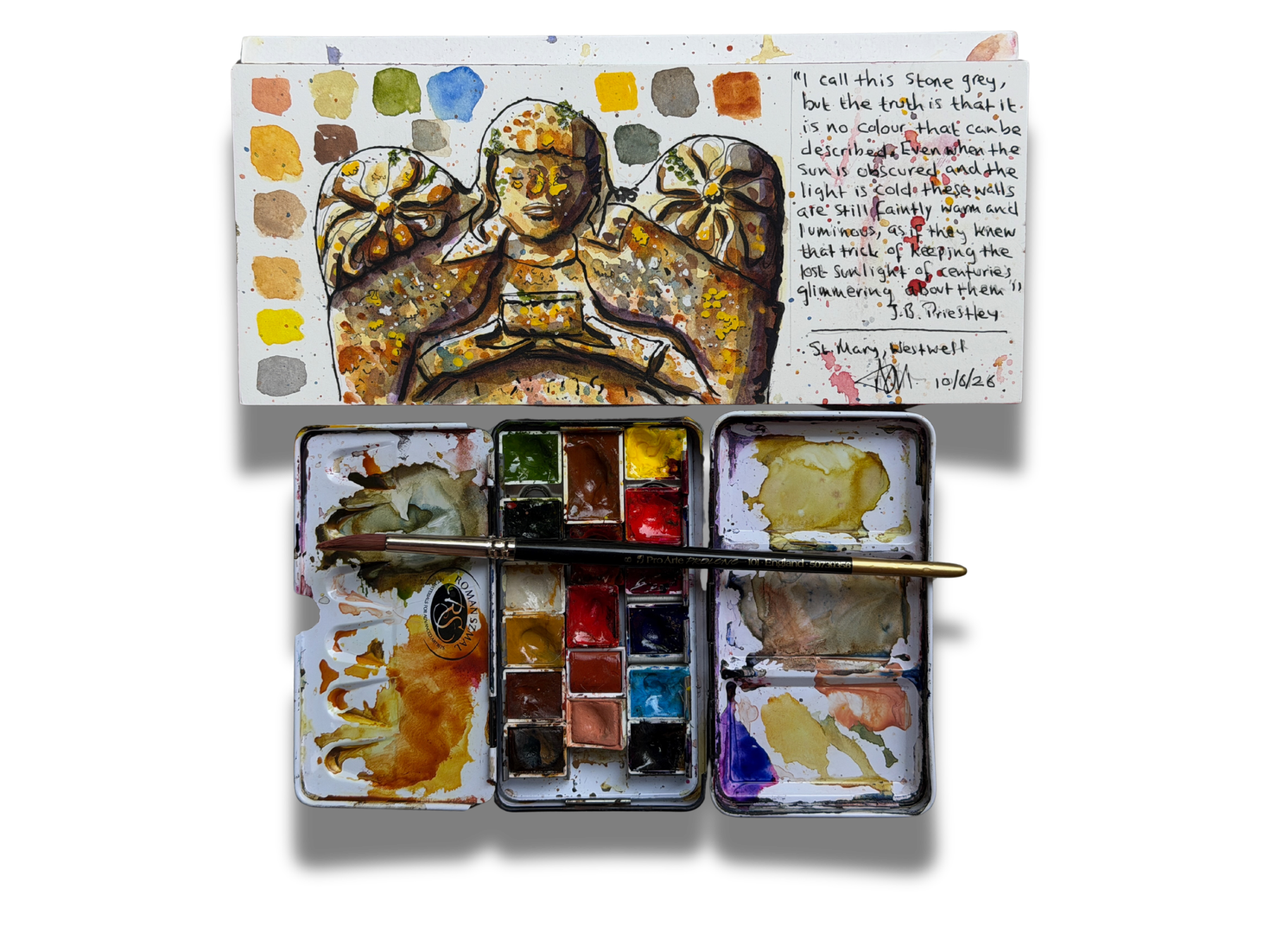
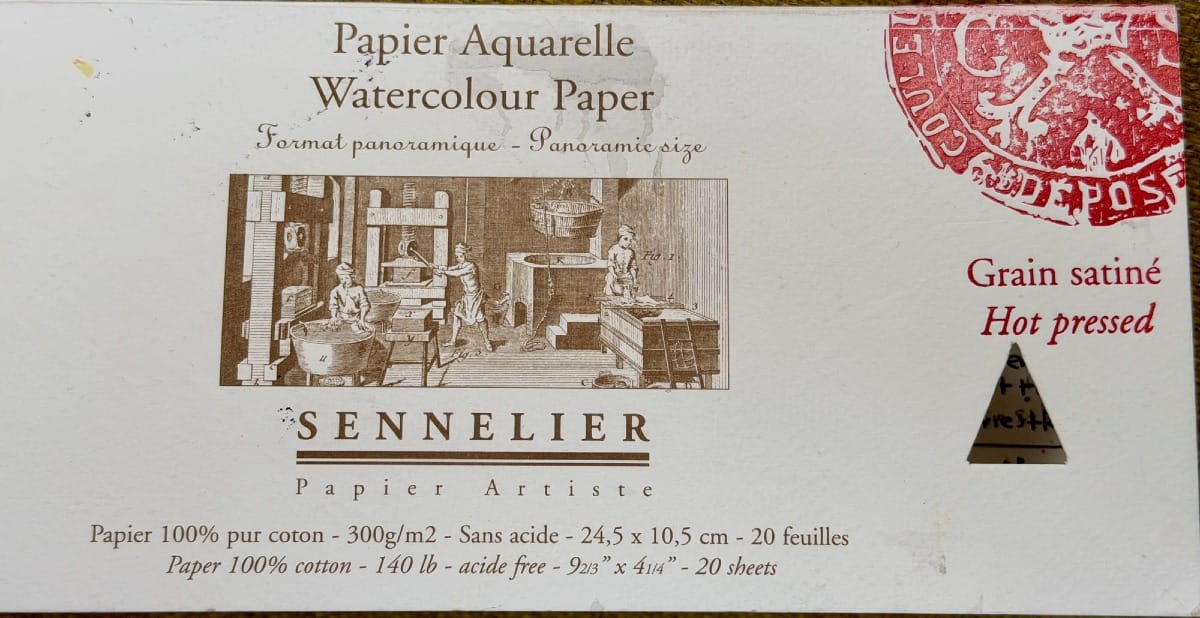
Painted with Roman Szmal watercolours on Sennelier watercolour paper purchased at the Sennelier Paris art store.
Membership Offer
I'm giving to the next person to sign up for membership my original watercolour detail from Westwell in the Cotswolds
Become a Member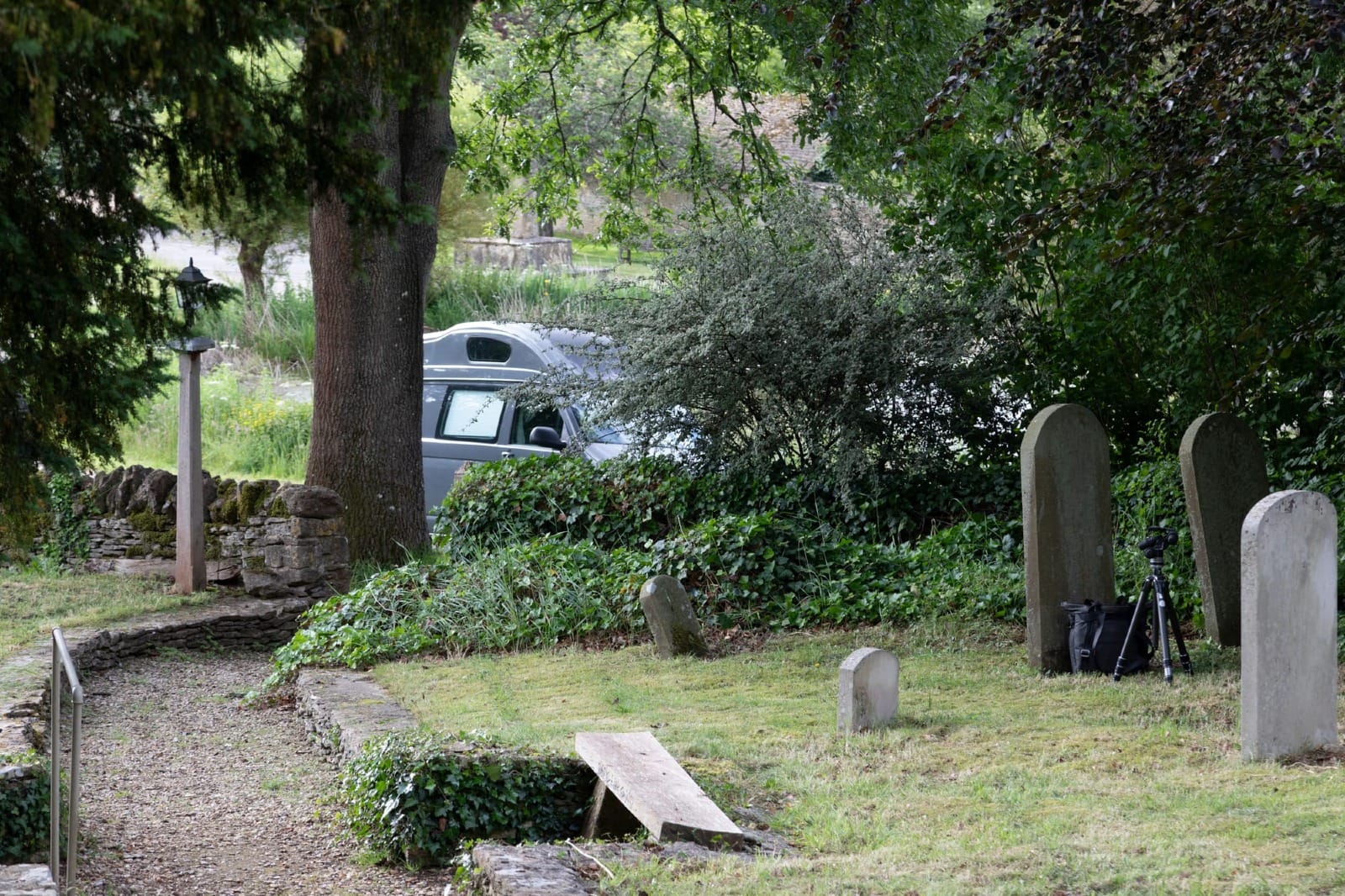
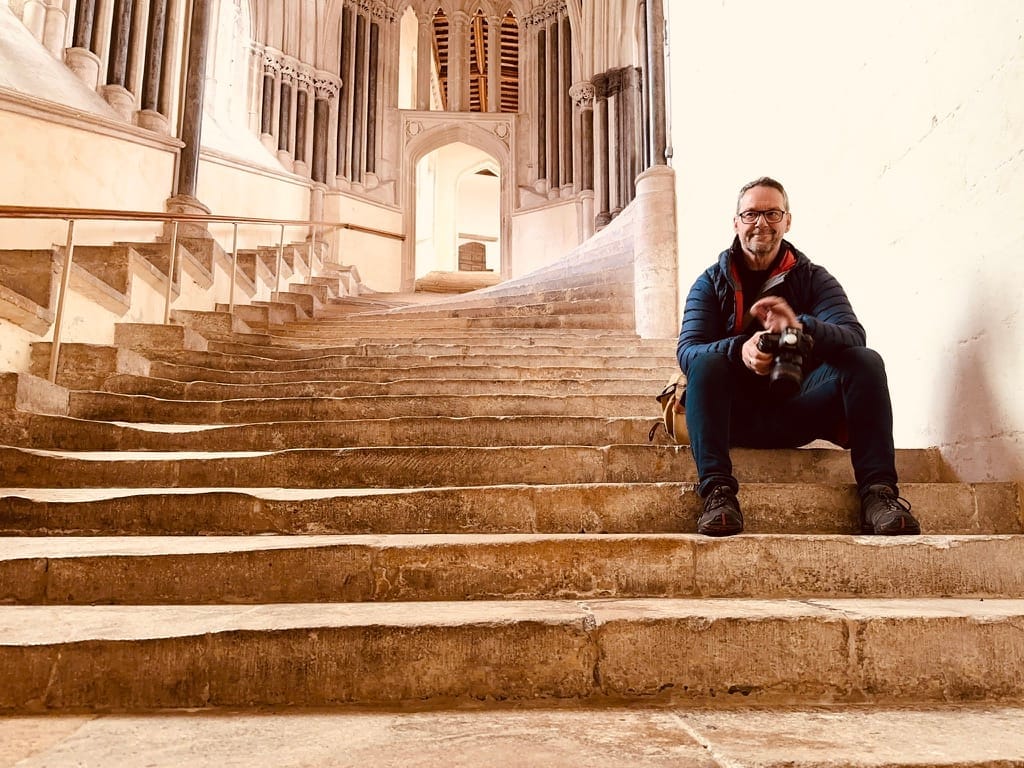
 Andy Marshall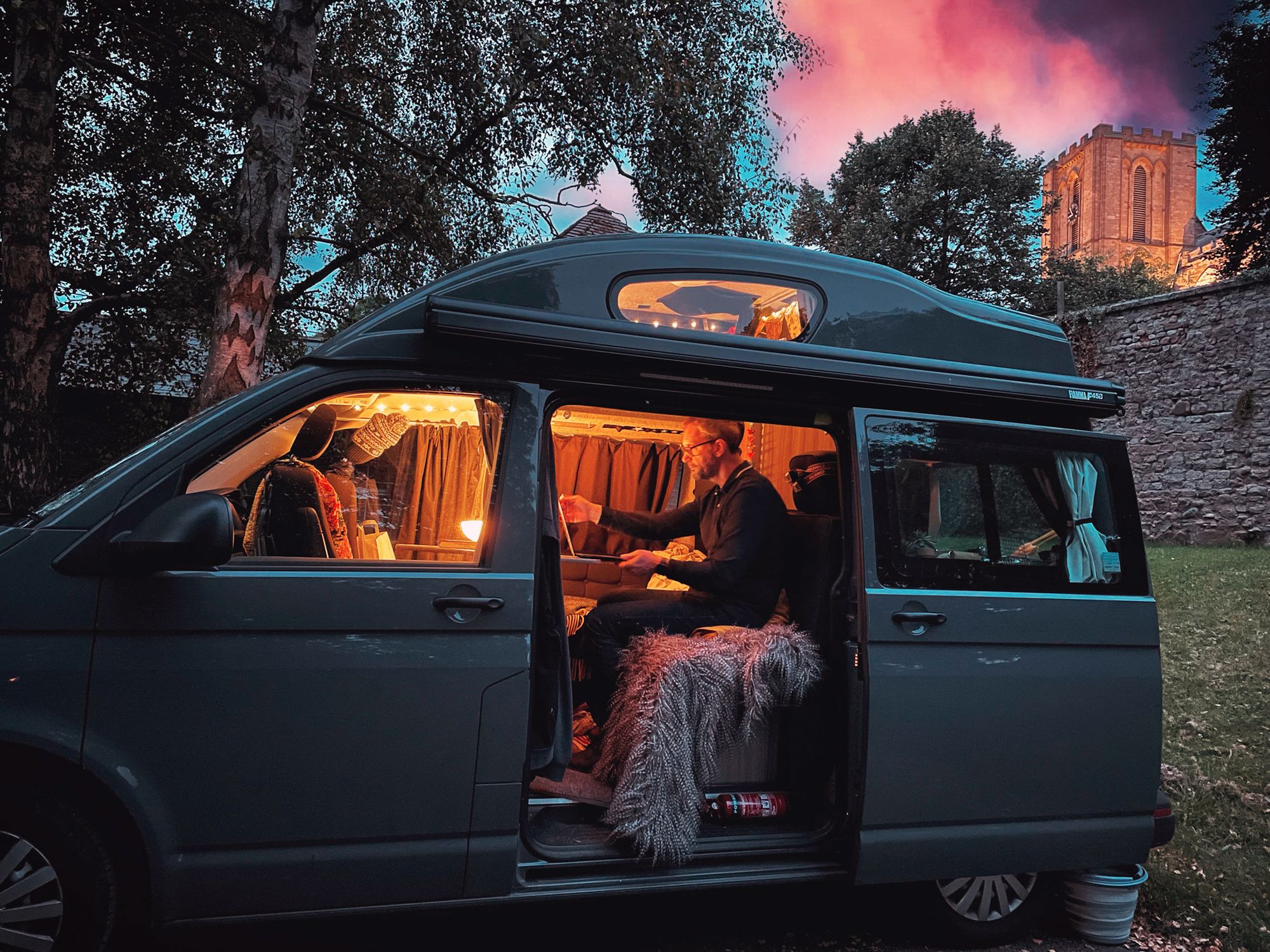


 Pan Pylas

 Author:
If you're keen to visit Westwell - you might want to include the churches at Burford and Widford too.
My post on Burford:
 Andy Marshall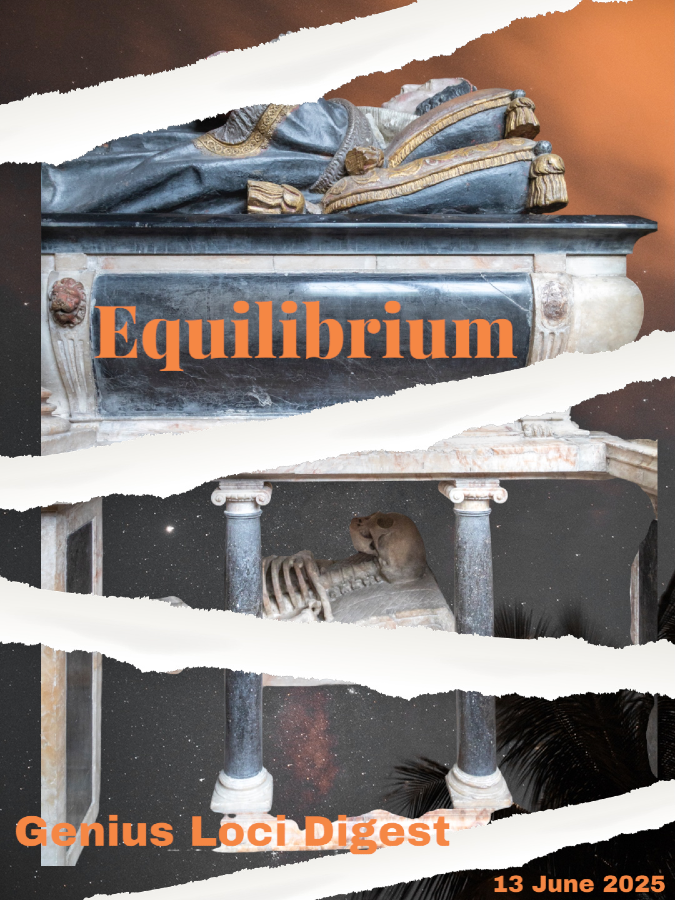
My post on Widford:
 Andy Marshall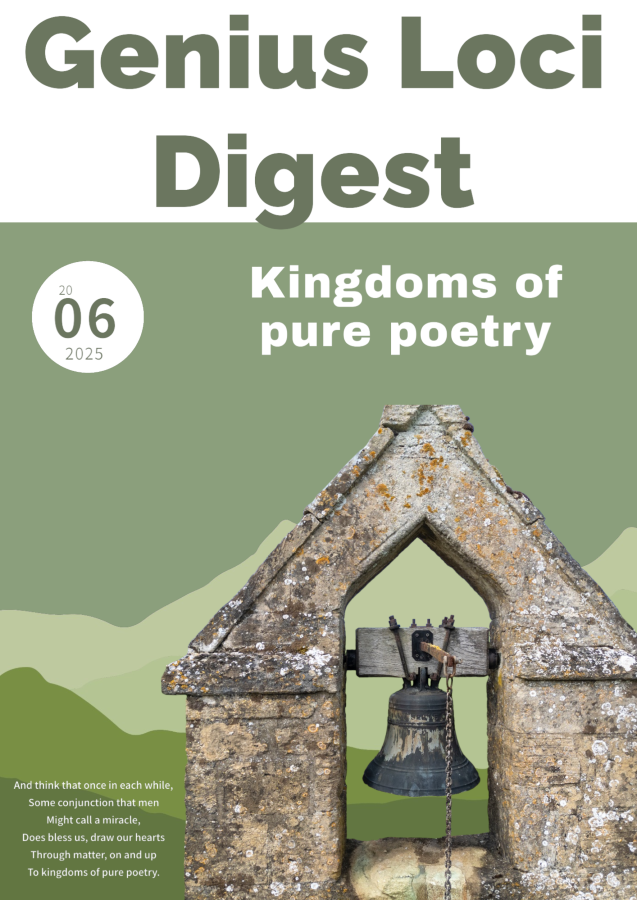
St. Andrew's, Bolam
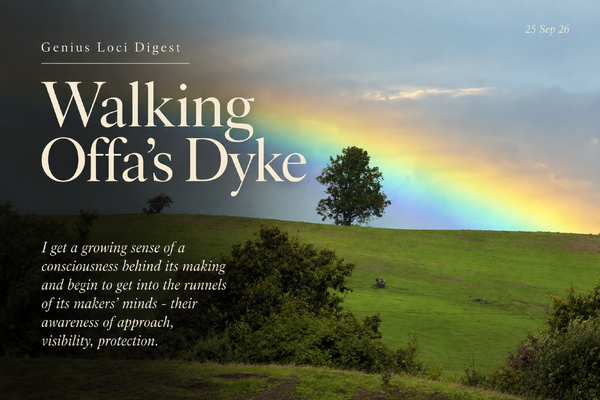
 Andy Marshall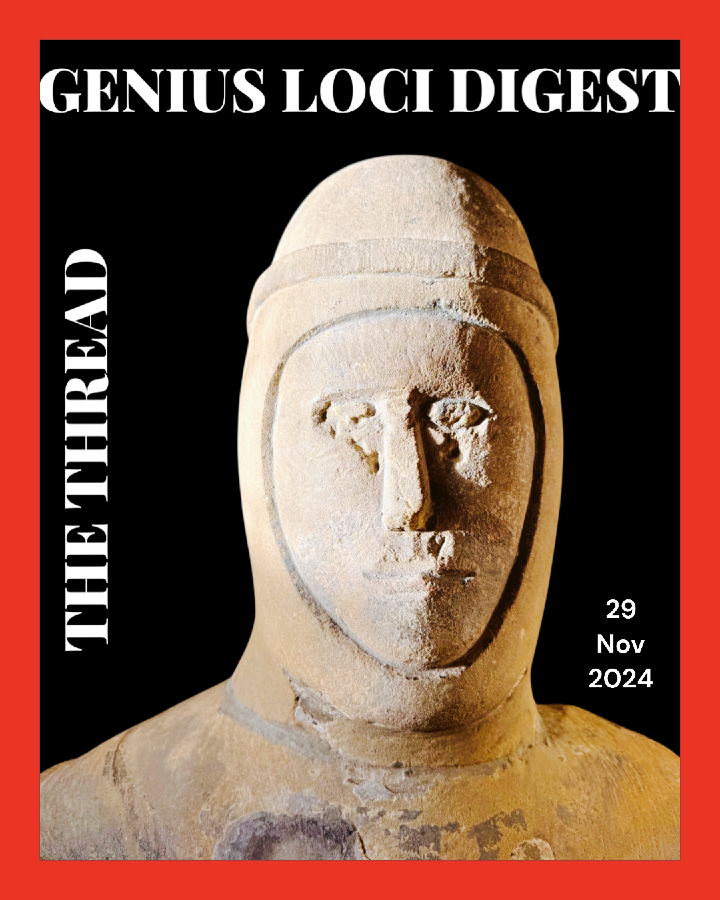
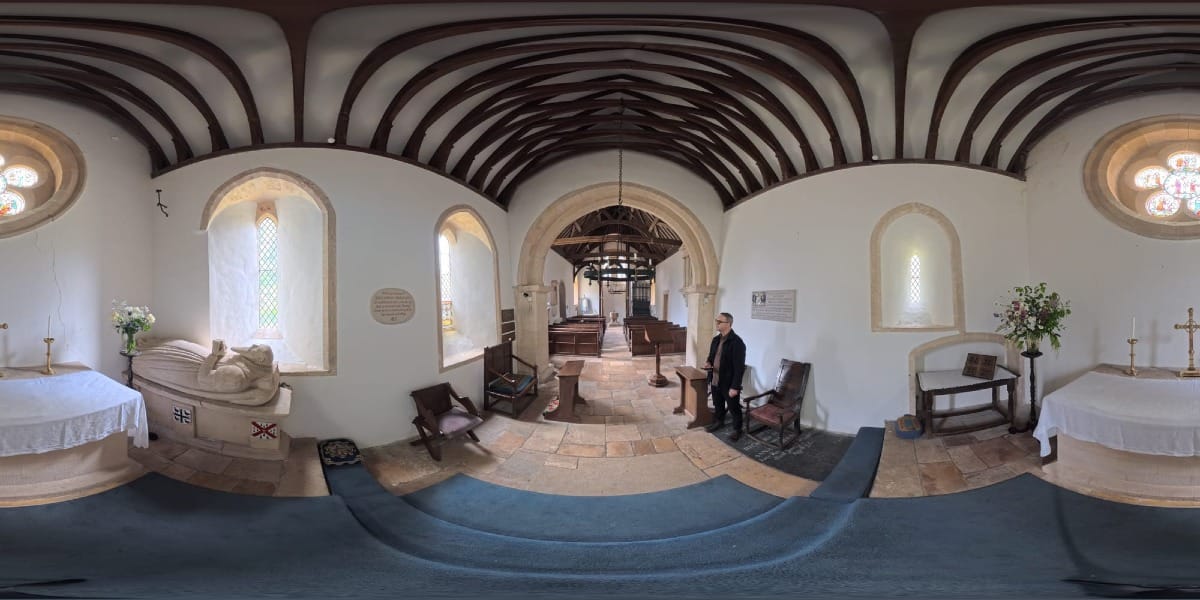
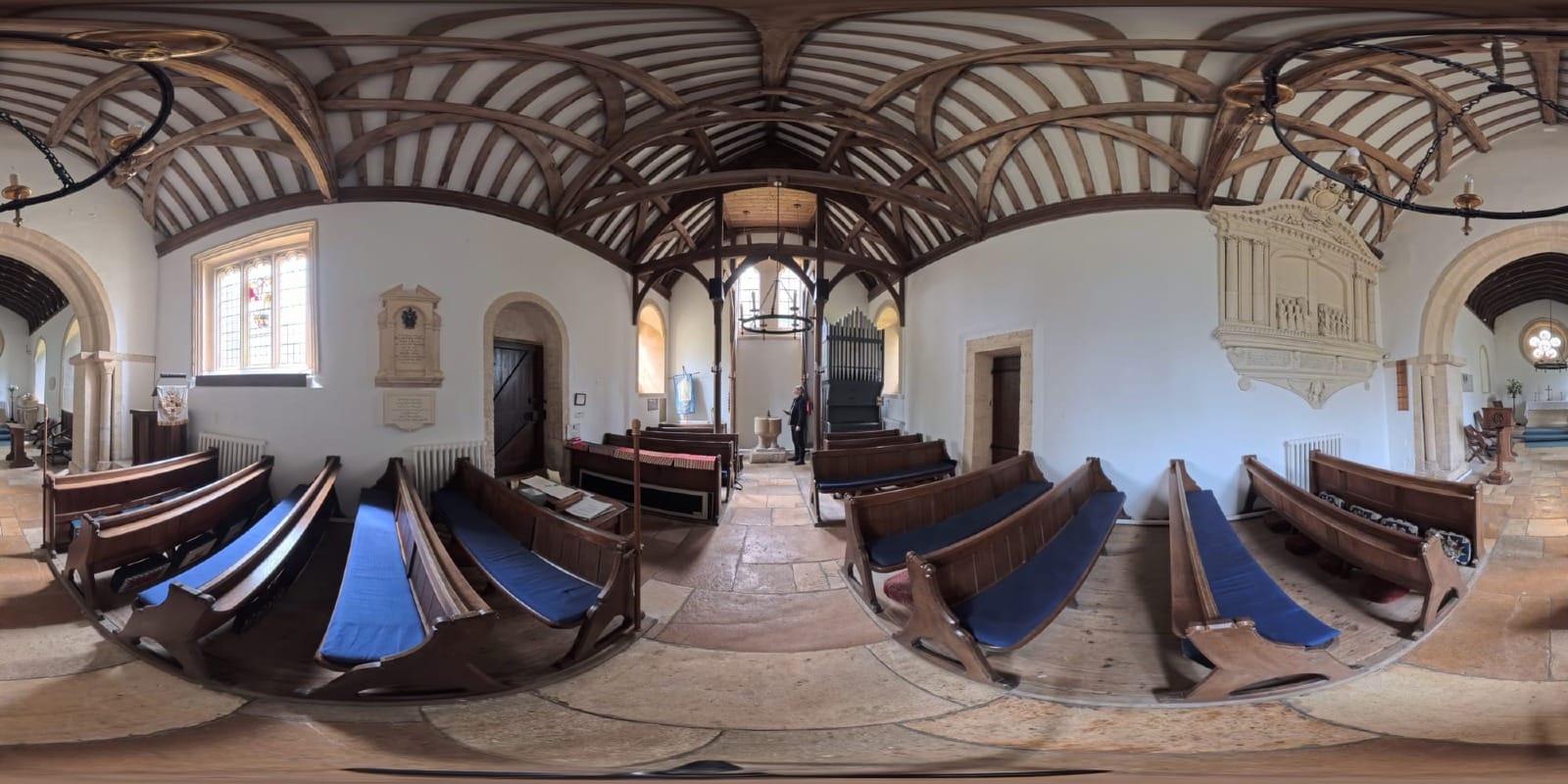
For Members - St. Mary's, Westwell in Glorious VR
Immersive moments in this beautiful church. Three viewpoints to choose from. Viewable on any device.
Click to View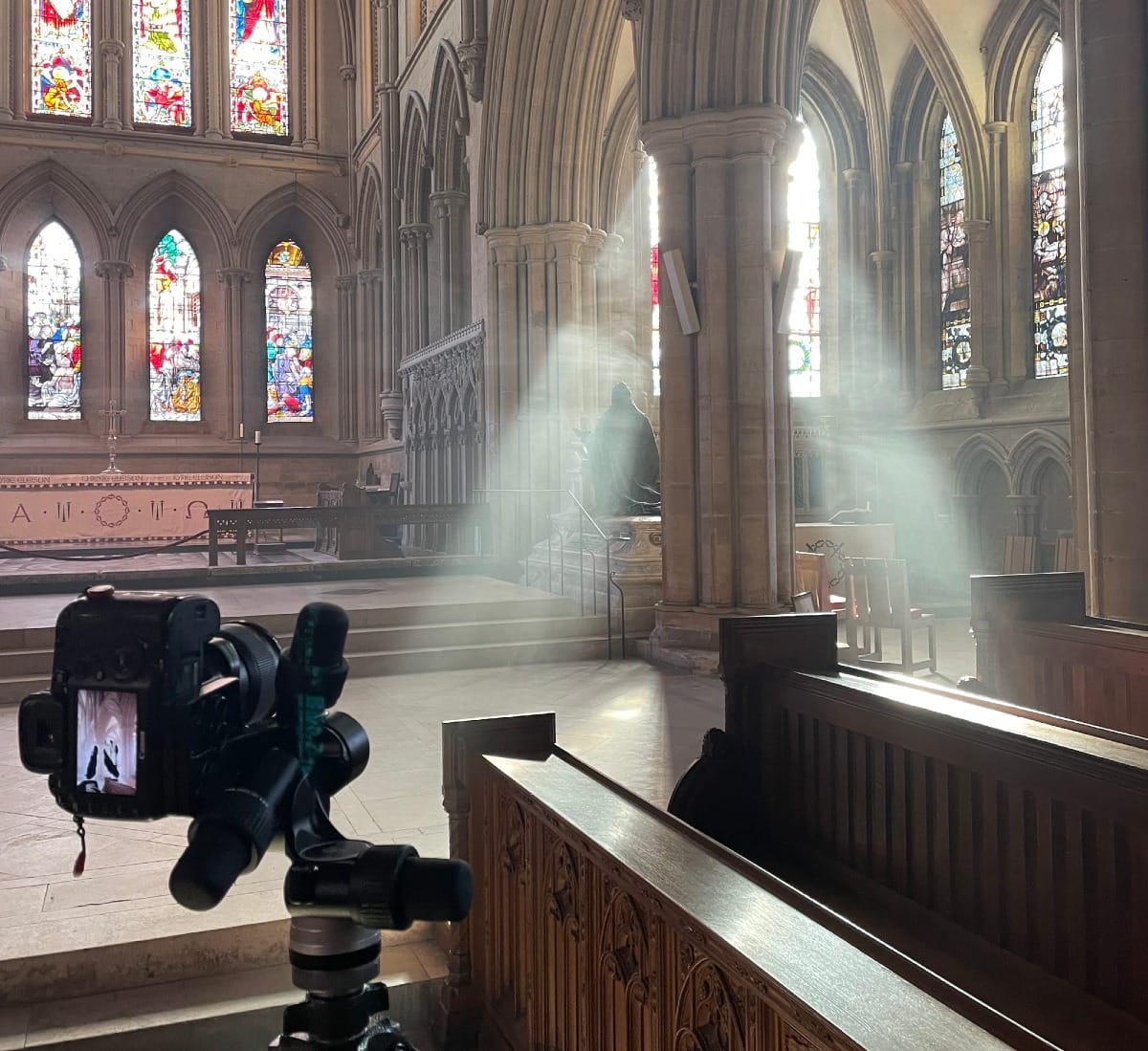
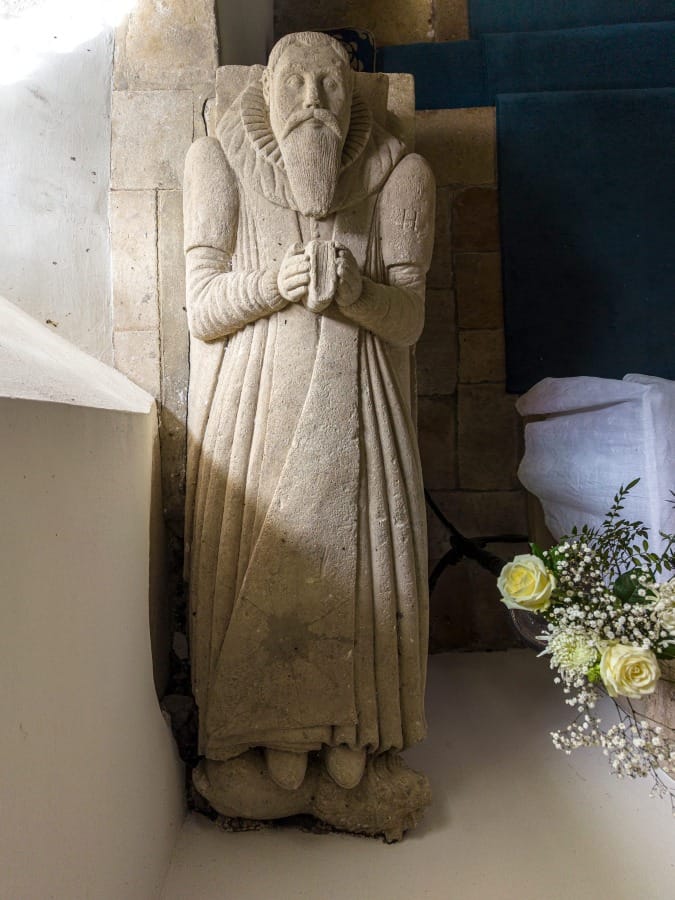
The photographs taken at St. Mary's, Westwell were made possible with the support of members. They were taken via Member Powered Photography - where memberships help sustain a programme of free photography for historic locations and skilled trades.
Kind words from Moray, church warden at Westwell
‘I learnt about Andy’s work 3 years ago via a fellow churchwarden at St.Peter’s and St.Paul’s, Broadwell in the Shill Valley & Broadshire Benefice, West Oxon www.svbb.org.uk . I signed up to Genius Loci and registered for a member powered photography shoot of our small early Norman Church in the hamlet of Westwell near Burford. The aim was to have a photographic record of the interior and exterior of the Church not only for aesthetic reasons but also to aid our Quinquennial Inspection and provide an archive for future churchwardens and parishioners. We also plan to compile an album of selected photos and print new postcards for sale. The resulting 116 photographs exceeded expectations and Andy’s creative eye has resulted in some stunning shots. Huge thanks to Andy for his time and expertise in perfectly capturing the quiet essence of the place.’
To date I have carried out shoots at 14 locations. Thank you.
 Andy Marshall
Check out the Member Powered Photography Page here:
 Andy Marshall
Members can view exclusive content from all of the previous MPP shoots here:
 Andy Marshall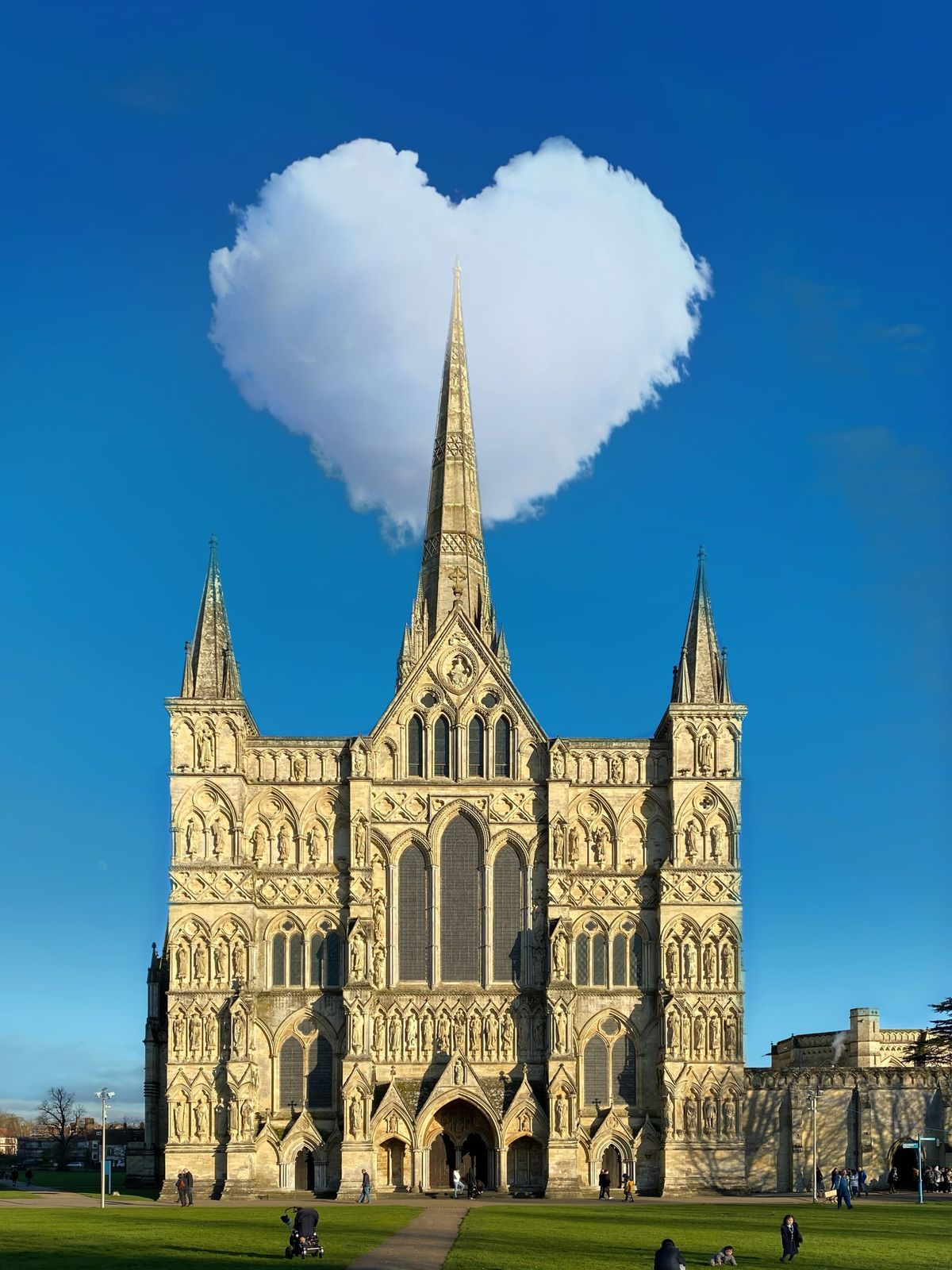
Thank You!
Photographs and words by Andy Marshall (unless otherwise stated). Most photographs are taken with iPhone 17 Pro and DJI Mini 5 Pro.
🔗 Connect with me on: Bluesky / Instagram / Facebook / X / Tumblr / Flickr / Vimeo / Pixelfed / Pinterest / Flipboard/ Fediverse: @fotofacade@digest.andymarshall.co

Member discussion